
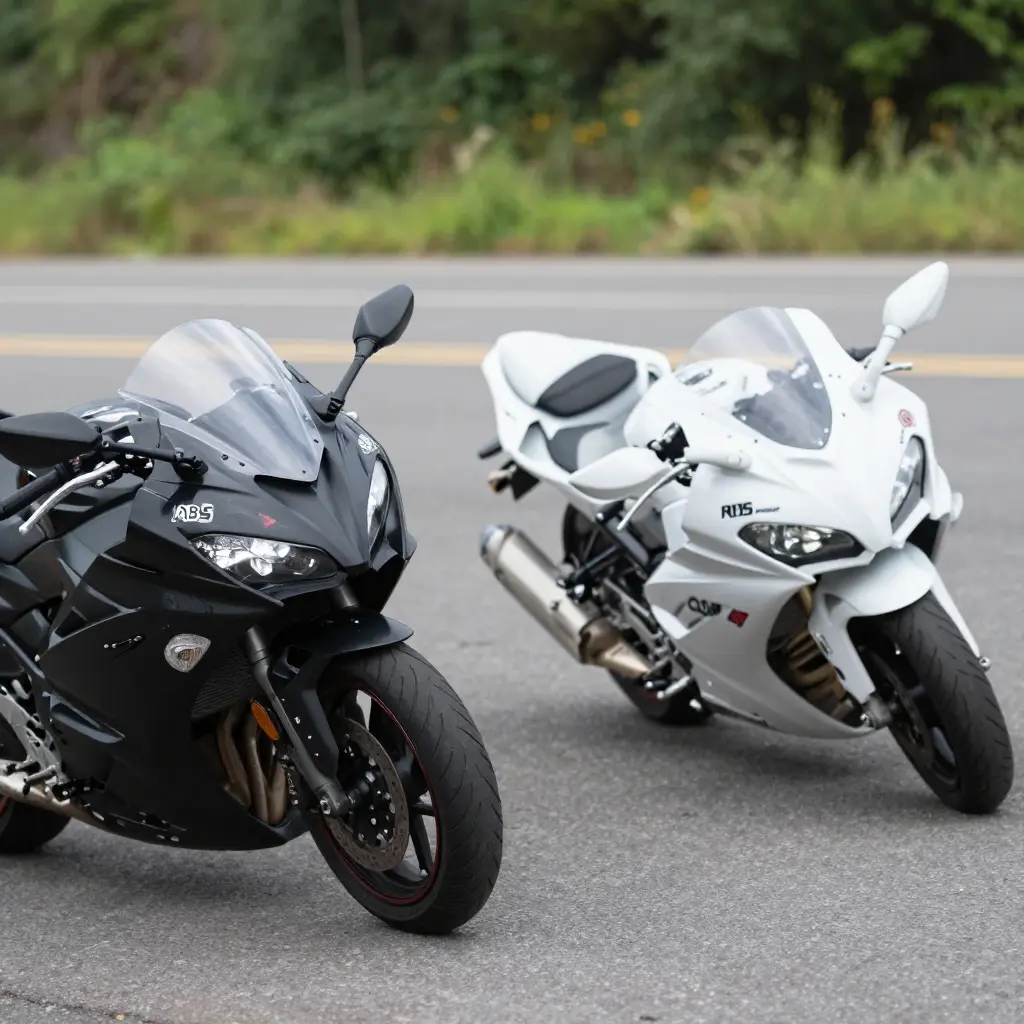
Introduction: ABS vs Fiberglass Fairings
The ABS-versus-fiberglass argument usually starts in a garage, with the bike already on its side. In a low-side drop the fairing meets the asphalt first, and its material decides whether you’re looking at a scuff or a cracked panel. Riders and repair shops want one straight answer about which one survives.
Both materials are common across the market, from track-focused sportbikes to long-distance tourers. Whether a panel makes it through comes down to three things: how the material behaves under load, how the impact is delivered, and what it costs to put the bike right afterward. Neither material wins every case.
ABS is a thermoplastic, so it flexes under load and can often be reshaped, welded, or patched. Fiberglass is a thermoset composite: it resists scratching and holds paint well, but it cracks or shatters rather than bending. Those two behaviors drive everything that happens as the bike slides.
Repair economics matter as much as toughness. A cracked fiberglass panel needs resin work and repainting; a deformed ABS panel can sometimes be warmed and pressed back into shape. Cost, downtime, and whether replacement parts exist all shape the verdict.
ABS Fairings: Flexible Bodywork Built to Take a Hit
ABS is what you want if you’d rather your bodywork bend than break. Because it is a thermoplastic engineered to be impact-resistant, it deforms and springs back after a low-side drop, where stiffer materials crack. Here is how that works in practice.
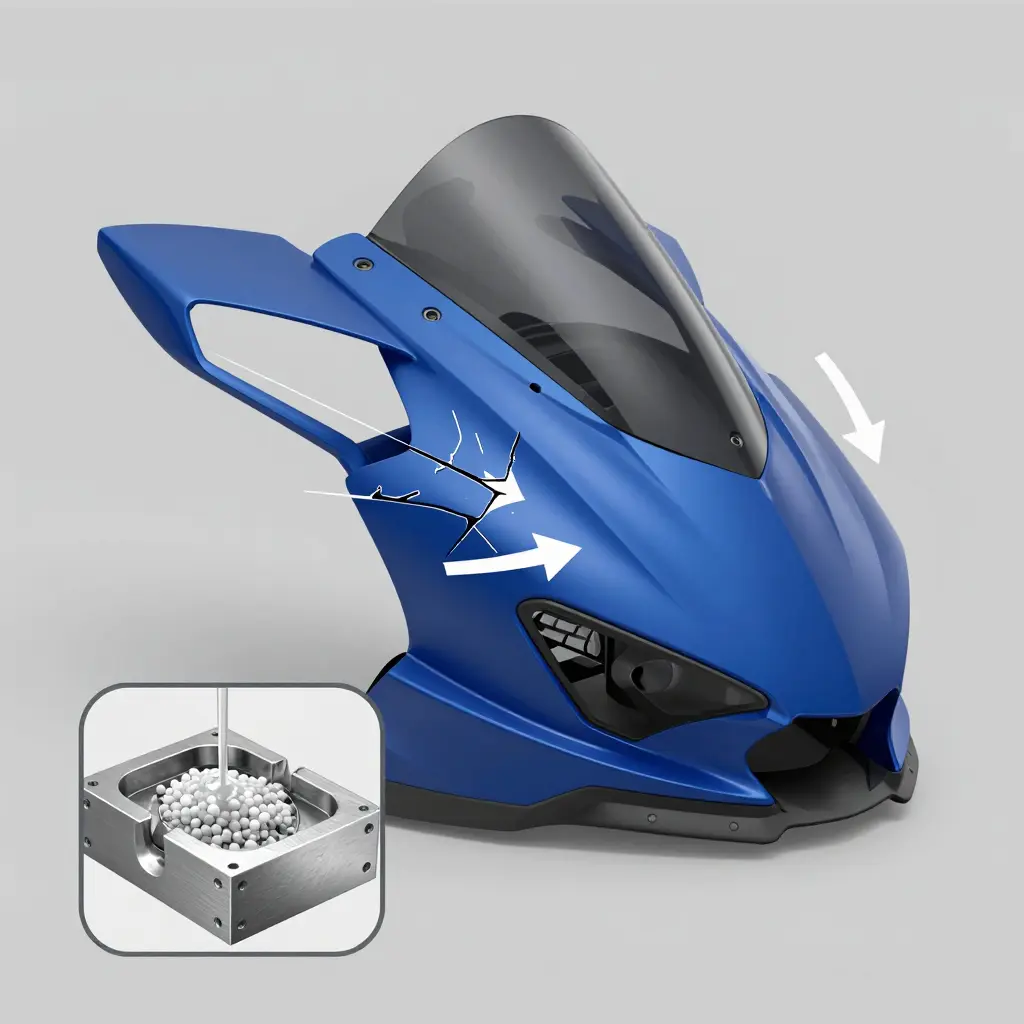
- Molding. ABS arrives as plastic pellets, heated until molten and injected into a steel mold under pressure. The plastic fills the whole fairing shape in one shot and hardens into a shell. Because it is a thermoplastic, it can be re-melted and re-formed; thermoset fiberglass resin cures permanently and cannot.
- Flex under impact. The butadiene in ABS is what makes it tough. When the panel meets pavement, the polymer chains slide and stretch, spreading the energy of the blow across the whole panel instead of concentrating it in one spot. That spread is what impact resistance means here.
- Sun and heat. ABS handles everyday riding well. Stabilizers slow UV degradation, and the material keeps its shape through normal sun exposure and engine heat. Sustained extreme heat will soften it, but on the road the tolerance is fine.
What this means on the ground
Fiberglass tends to crack; ABS fairings flex and often come away with scuffs instead of fractures. ABS is at its best in the moderate impacts of everyday street riding, where thermoplastic resilience and cheap replacement matter more than maximum stiffness.
Fiberglass Fairings: The Rigid Composite Standard
Why riders still use it
Fiberglass has been the default material for race bodywork and customs for decades. Stock sportbike panels are usually molded ABS, but racers and custom builders keep coming back to fiberglass because it is a true rigid composite — cloth bonded with resin by hand — rather than a single molded shell. How it is built shapes how it feels and how it fails.
How it is made and how it fails
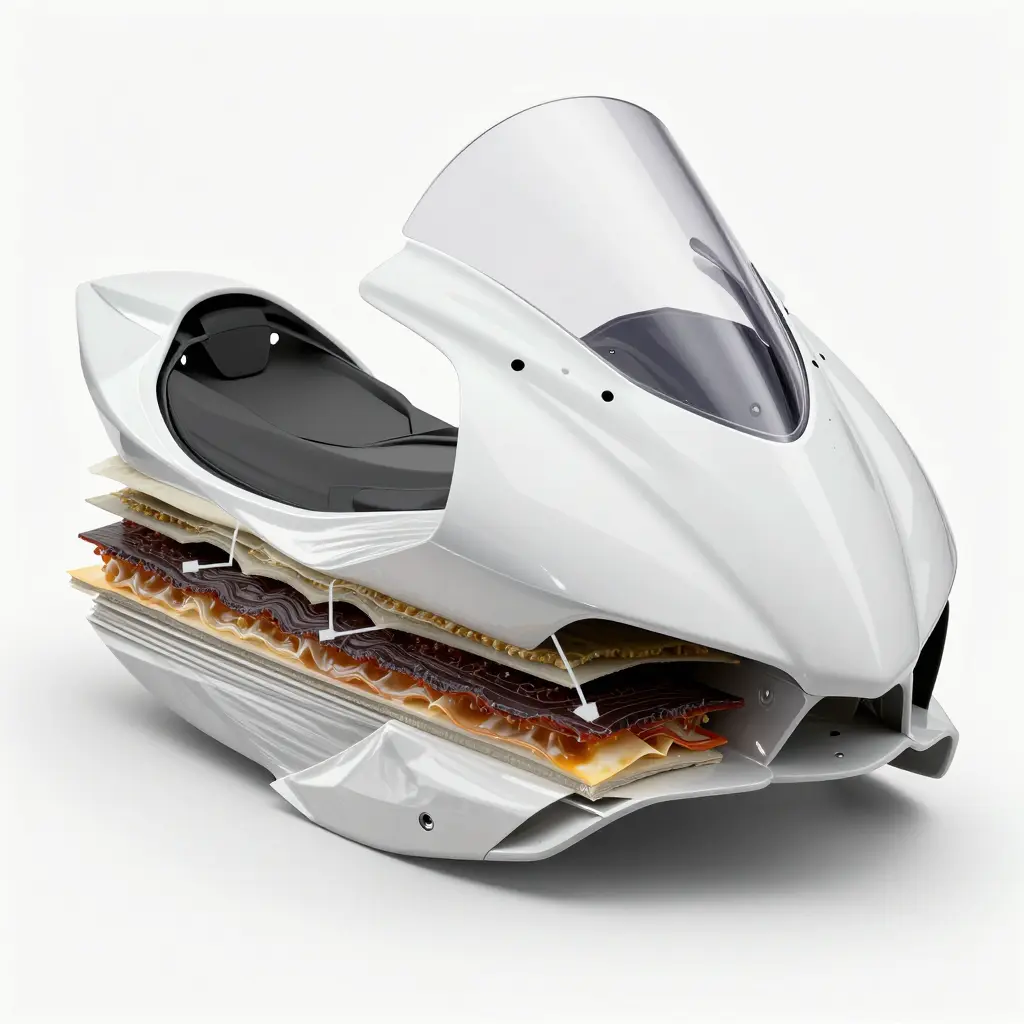
A builder lays fiberglass cloth into a mold, saturates it with catalyzed resin, and stacks layers until the panel reaches the target thickness. As the resin cures it becomes a thermoset: a plastic that hardens permanently and cannot be melted or reshaped.
The cross-linked structure is where the stiffness comes from. It resists cracking under steady flex, which is why these panels hold crisp, angular shapes so well. The same structure affects weight. A hand-laid panel is usually heavier than a comparable injection-molded ABS piece, and because thickness varies from one builder to the next, panel weights vary too.
Impact is the real dividing line. A thermoset resists cracking but does not absorb energy the way ABS does. In a low-side drop, ABS flexes, scuffs, and bounces back. Fiberglass turns the same impact into a hard, sudden load, so it fractures or develops spider-web crazing around the contact point instead of bending. A slow tip-over may only scratch it. A slide at speed can take out an entire section.
What this means on the ground
If you want glass-smooth, paint-ready curves and maximum stiffness, fiberglass delivers. If you want to get through a low-side without cracking, remember that a thermoset resists flex but breaks on hard hits, and plan your repairs accordingly.
The table below compares the two materials on the traits that matter most after a low-side drop.
| Attribute | ABS | Fiberglass |
|---|---|---|
| Material type | Thermoplastic (injection-molded) | Thermoset composite (resin + glass fiber) |
| Weight | Lighter | Heavier |
| Flexibility | High – flexes and rebounds | Low – rigid and stiff |
| Impact behavior on a low-side drop | Flexes, may scuff but often stays intact | Can crack or shatter at impact points |
| Crack resistance | Good – resists cracking | Moderate – prone to spider cracks |
| Repairability | Limited – replacement usually easier | High – can be patched and refinished |
| Finish quality | Good factory finish; harder to custom paint | Excellent – takes paint and custom finishes well |
| Cost | Lower upfront cost | Higher upfront cost |
Low-Side Drop Mechanics
A low-side starts when a tire loses grip, most often the front. With steering leverage gone, the bike falls toward the inside of the turn and lands on its side rather than flipping over the top. From there the machine stops being a vehicle and becomes a heavy object sliding on pavement.
Three forces at once
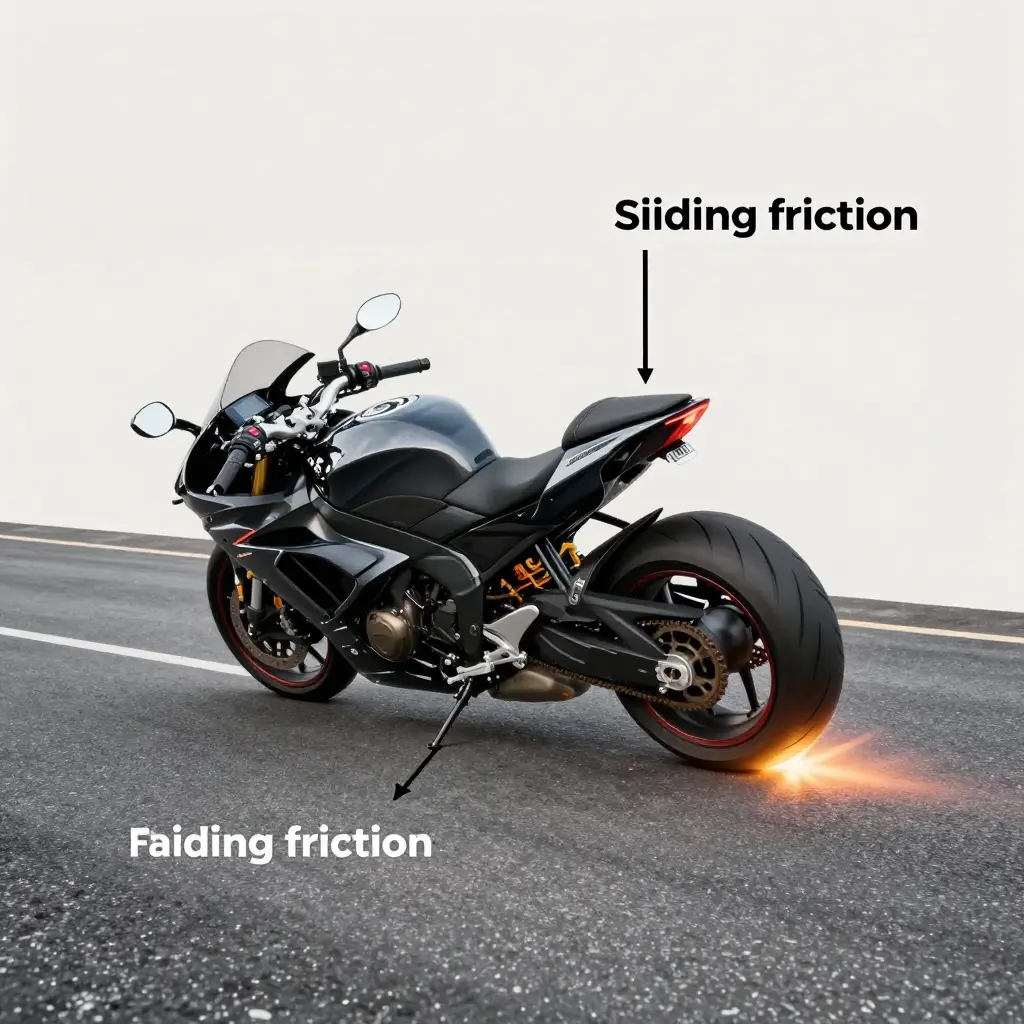
Three forces act at nearly the same moment. Sliding friction drags against the direction of travel and grinds every surface that touches the road. Point-load impact concentrates force where a corner, bolt head, or fairing edge strikes first. Heat builds as friction turns kinetic energy into thermal energy at the contact patch. A sliding bike can be moving 30 to 50 mph (48-80 km/h), so the energy arriving at a single edge is substantial.
What it leaves behind
The damage follows a pattern. Wide, smoothed abrasion marks show where friction dragged across a panel. Sharp gouges and cracks mark where point-load impact hit an edge. Discoloration, softened plastic, and burnt paint show where heat outran what the panel could absorb. Flat panels spread the load and wear gradually; edges and mounting tabs concentrate it and fail first. Fiberglass cracks and splinters at those points, while ABS flexes and smears before it tears.
Because friction, impact, and heat all land on the fairing surface and its edges, the material’s toughness and heat tolerance settle how much damage the bike carries afterward.
Impact Resistance and Survival Analysis
In a low-side drop the fairing rarely takes a square hit. It skids and scrapes across asphalt at an angle, and that is where the two materials separate. The question is not whether a panel fails, but how.
How each one gives way
ABS bends, absorbs energy across the whole panel, and often comes back with little more than scratches. Fiberglass takes point loads well but passes stress straight through the resin, so a curb edge or a sharp rock cracks it rather than deforming it.
What favors which
The mechanics of a low-side reward ductility. ABS yields locally, spreads the load, and springs back. The trade-offs are heat sensitivity and paint that cracks after repeated flexing.
Fiberglass spreads energy through stiffness. Its woven layers carry load over a wider area, which handles large, blunt impacts well, but a concentrated hit on a rock or curb chips it and starts star fractures. That one difference drives most of the ABS-versus-fiberglass argument.
- Edges: ABS chips less and gouges more; fiberglass chips and delaminates.
- Mounting: ABS panels usually stay bolted to the bike; cracked fiberglass sections can break free and drag.
- After the drop: scuffed ABS often keeps riding; cracked fiberglass usually means replacing the section.
Those patterns match the comparison table above, where flex and attachment favored ABS for surviving a real-world drop.
The verdict
ABS: It wins on impact resistance for a low-side drop. It flexes, stays attached, and holds its shape, which suits street riders picking their bikes up in parking lots and slow corners.
Fiberglass: It does better against blunt, high-energy track impacts but loses on edge chipping and detachment. It suits racers who already plan to repair and replace panels.
Weighing ABS vs. Fiberglass: The Decision Factors That Actually Matter
The choice rarely comes down to one variable. If you commute through sun-baked city streets on weekdays and carve canyons on weekends, the trade-offs shift with how, where, and why you ride. Rank the factors below by what matters in your own riding, especially if you have already been down once and want a smarter repair or upgrade path.
- Riding style — Track riders and canyon carvers who expect to go down often pick fiberglass for its repairability. Commuters and tourers lean toward ABS for flex and low maintenance.
- Climate and UV exposure — Constant sun, salt air, and temperature swings punish unpainted gelcoat and cheap plastic. UV-stable ABS holds color longer; fiberglass needs quality paint and clear coat to keep from chalking.
- Repair budget — Fiberglass materials are cheap: resin, mat, sandpaper. The labor is skilled and slow. Replacing a factory ABS panel has a fixed price and no bench time, and a minor deformation on ABS may need no labor at all.
- Finish and paint — For a mirror-smooth custom finish or a one-off scheme, fiberglass gives painters more freedom. ABS usually relies on molded-in color or a factory-matched wrap.
- Weight sensitivity — Riders chasing grams will notice fiberglass’s heavier layup. ABS keeps mass predictable and consistent from panel to panel.
- Replacement availability — Popular models with strong aftermarket support make ABS easy to source. On rare bikes, fiberglass is often the only realistic option.
- DIY repair skill — If you can mix resin and lay mat, fiberglass is open to you. If you want a bolt-on fix, stay with ABS.
- Crash frequency — Riders who go down now and then want a material that absorbs the hit and hides the damage.
The smarter pick is the material whose strengths match your climate, budget, and repair habits, not the one that is cheaper on paper today.
Repair or Replace? Making the Right Call After a Low-Side Drop
The first question
When you are standing over a bike that just slid down the pavement, the first question is not how bad it is. It is what the panel is made of. That decides whether you will be heating, patching, or ordering.
Two different repair jobs
This is where ABS vs fiberglass fairings split. ABS softens when heated instead of burning. Cracks, dents, and warped edges can often be heat-repaired and reshaped with a heat gun or plastic welding tool, then blended to a near-seamless finish. Torn or badly cracked ABS is another matter: it is harder to repair cleanly than fiberglass, and replacement is often the faster route.
Fiberglass will not melt. It scorches. Repair means grinding back the damage, layering resin and mat, then sanding, priming, and repainting to match the rest of the bodywork. The materials cost little; the skill and the hours are what you are paying for, which is why the bill rarely stays small.
| Factor | ABS (Thermoplastic) | Fiberglass (Thermoset) |
|---|---|---|
| Heat reshaping | Yes, can be softened and reshaped | No, scorches or burns |
| Crack repair | Weld, reshape, blend | Resin patch plus mat layer |
| Finish work | Often minimal | Sand, prime, repaint |
| DIY friendliness | Moderate | Low |
When does fairing replacement win? When repair labor plus a paint match lands at or above the price of a fresh panel. A single cracked fairing repainted can cost more than a complete aftermarket set, and a matched set avoids the patchwork look of a repaired original.
The call
Repair makes sense on small ABS damage. Replacement usually wins once fiberglass finishing costs pile up. That is why riders and shops go to summitfairings.com, which carries over 3,000 styles across almost all motorcycle models, sells for 10-40% less than other sites, and promises an answer to any question within six hours. Run the numbers, then take the route that gets you riding sooner.
Frequently Asked Questions: ABS vs Fiberglass Fairings and Low-Side Drop Damage
Does ABS or fiberglass survive a low-side drop better?
ABS generally does better. It flexes and partly springs back instead of shattering, which is why it is common on street bikes. Fiberglass is stiffer and tends to crack or splinter on a hard hit, though it can flex and recover under lighter loads before it fractures. In most low-speed tip-overs the comparison favors ABS. On long, sustained slides fiberglass can hold up better.
Can fiberglass fairings be repaired after cracking?
Yes. Fiberglass is one of the most repairable fairing materials. Cracks are fixed by grinding back the damaged area and layering new resin and glass mat, which bonds chemically to the original panel. Sanded and repainted, a sound repair typically restores most of the panel’s original strength.
Do ABS fairings bend or break?
They bend more than they break, especially in low-energy impacts. The plastic flexes, takes the hit, and usually returns partway to shape. Under severe or repeated stress it can crack or tear, and torn ABS is generally harder to repair cleanly than fiberglass.
Does material weight affect drop damage?
Yes. Heavier panels carry more momentum into the ground, so a fiberglass fairing’s extra mass produces a harder strike. Lighter ABS reduces that energy, which helps in a slow tip-over.
Which material is more cost-effective to replace?
ABS is usually cheaper to replace outright. Injection molding makes full panels inexpensive and widely available. Fiberglass is often the better value to repair, since damaged sections can be rebuilt from low-cost resin and cloth. Which is cheaper overall depends on whether you plan to swap the panel or fix it.
Is one material always better?
No. The best choice depends on how you ride and how you handle damage. Riders who go down often and want quick, bolt-on replacements tend to favor ABS. Riders willing to repair and repaint generally prefer fiberglass.
Conclusion and Key Takeaways
After impact type, repair economics, and rider priorities, one thing holds: there is no universal winner in the ABS vs fiberglass fairings debate. Each material handles a low-side drop on its own terms. ABS flexes and absorbs minor slides, often escaping with scuffs that polish out, though a hard hit can leave stress fractures that are easy to miss. Fiberglass is more brittle on contact but forgiving to repair, since sections can be sanded, re-glassed, and repainted without replacing the whole panel. Which one is “better” depends less on the material than on how and where you ride.
A low-side drop is rarely catastrophic for either material. What decides the outcome is the speed of the slide, the angle of contact, and how much of the fairing actually touches down. Drop the bike in a parking lot or a slow corner and ABS tends to be forgiving. Demand easy, customizable repairs after a track spill and fiberglass usually wins.
Final Takeaways
- Impact type matters most. ABS flexes through glancing, low-speed spills. Fiberglass resists scratches but cracks under sharp, concentrated hits.
- Repair economics differ sharply. Fiberglass is cheap to rebuild in sections if you have the skill; ABS often means replacing a whole molded panel.
- Rider priorities tip the scale. Weight, cost, finish quality, and customization all factor in.
- Neither material is drop-proof. Both survive a low-side under the right conditions, and neither is immune to damage.
Match the material to your riding habits, budget, and repair expectations rather than chasing an absolute winner.