
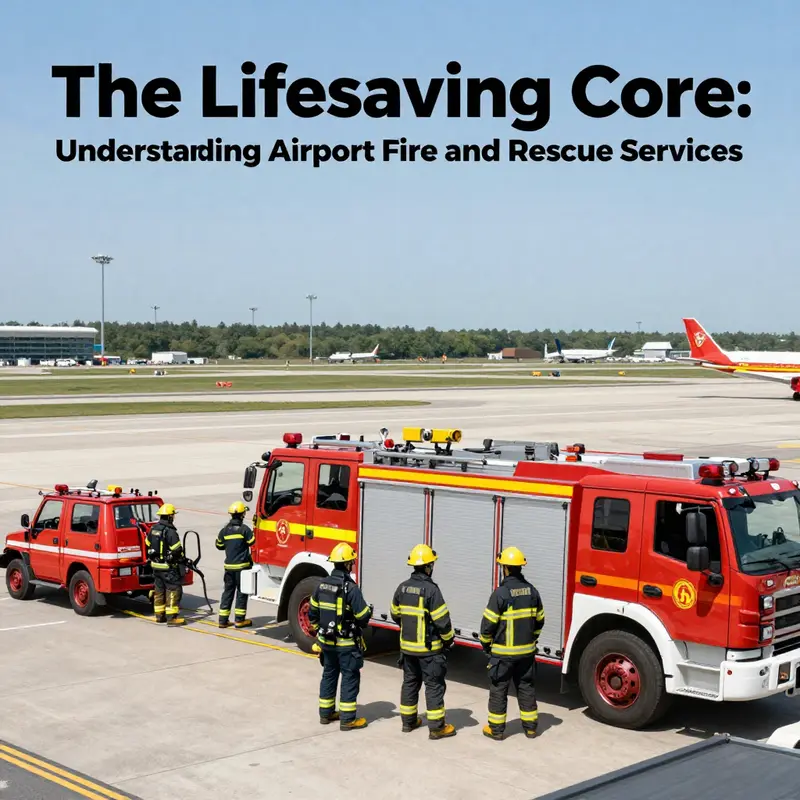
Airport fire and rescue services play an essential role in ensuring the safety of passengers and crew during aviation emergencies. Their primary objective is to respond quickly to aircraft accidents, limiting casualties and damage in the process. In today’s context, understanding the nuances of these services becomes increasingly relevant, especially as air travel continues to grow. This article will delve into the crucial aspects of airport fire and rescue services, focusing on their lifesaving role, their capability to prevent and mitigate fire risks, their collaboration with other emergency services, and the regulatory frameworks that guide their operations and training. Each chapter aims to enrich your understanding of how these services work to protect lives and property.
Guardians at the Gate: How Airport Fire and Rescue Safeguards Human Life in the Skies
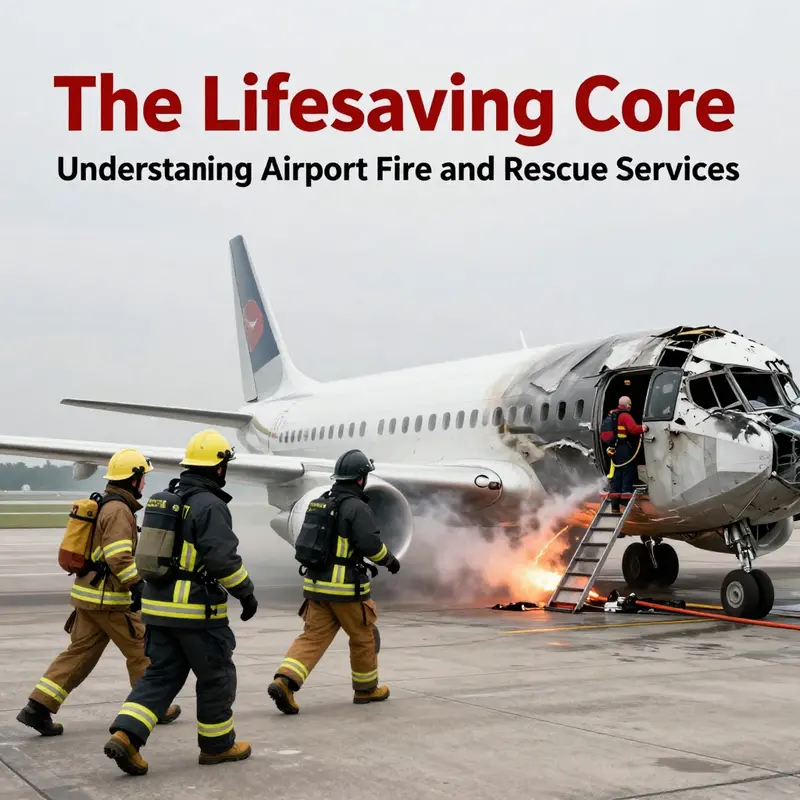
When the engines cool and the smoke clears, the first minutes after an aviation incident determine how many lives can be saved and how many scars a community must bear. The airport fire and rescue service stands as the frontline shield between catastrophe and recovery, a specialized emergency workforce whose mission is not merely to fight flames but to shepherd victims to safety, stabilize trauma scenes, and restore order amid chaos. In the broad arc of aviation safety, this unit is the practical heartbeat of life preservation. Its work unfolds within a realm of time, technique, and teamwork that makes the difference between a tragic event and a story of resilience. The core idea guiding this chapter is straightforward yet powerful: rapid, expert intervention in the critical window after an incident is the decisive factor in saving lives, reducing injuries, and supporting the broader safety ecosystem at every airport around the world, with particular emphasis on the context and regulations that shape practice in China.
The urgency of response is anchored in a simple arithmetic of danger. Aircraft fires can ignite and intensify with astonishing speed due to the presence of jet fuel, lubricants, and the dense combination of composite materials and metals found in modern airframes. The architecture of airport firefighting life is built to interrupt the fire’s growth before it breaches fuselage integrity, before evacuation routes become compromised, and before medical teams face even more complex challenges. This is where the three-minute target emerges as more than a guideline; it is a defined standard, a contract with safety that states that a properly equipped and well-drilled unit must reach the scene with alacrity after the alarm sounds. In practice, that means fire vehicles and personnel arrive at the incident site from the moment the alarm is triggered, to begin the delicate choreography of rescue and suppression. The intention behind such a narrow window is practical: once a fire begins to propagate, it can trap more people and degrade structures, dramatically increasing the risk to both passengers and responders. The sooner responders reach the scene, the greater the chance to save lives and to keep the accident from spiraling into a multi-fatal event.
This dynamic is not solely about extinguishing flames; it is about preserving life through a continuum of operations. The rescue mission starts with triage in a zone where time is measured in breaths and seconds rather than minutes. Trained responders rapidly assess the condition of passengers and crew, identify those in immediate life danger, and prioritize extraction from wreckage with specialized breaching tools designed to cut through damaged metal, glass, and other obstructions. The emphasis on rapid extrication is not simply a matter of removing people; it is about maintaining airway, circulation, and consciousness in the immediate aftermath of trauma. The responders must also anticipate the needs of people who may be trapped in seats, in the fuselage, or inside compartments that require delicate handling to avoid further injury. In these moments, the air is thick with uncertainty and pressure, yet the team works with disciplined calm because every action must be deliberate and synchronized to avoid creating new hazards.
Equally vital is the duty to prevent the fire from spreading. Firefighters approach fuel leaks and hot zones with a combinations of suppression tactics and cooling techniques that aim to stabilize the incident while preserving the possibility of safe evacuation. The fire service relies on a mix of water, foam, and heat-absorption strategies, along with careful management of ignition sources, to curb flame spread and minimize secondary fires. In an airport environment, where fuel systems, passenger structures, and support facilities cluster in a concentrated footprint, the capacity to control a fire rapidly is essential to limiting collateral damage to passengers, aircraft, and infrastructure. The practical skill set required to execute this suppression work is honed by years of training and regular drills, where teams practice deploying hoses, establishing secure water supply lines, and coordinating with ground support and airside operations so that the firefighting effort does not inadvertently impede essential airport functions.
The procedural backbone of this work rests on a well-defined command structure. On the ground, the fire commander—identified by distinctive red gear—steers the on-site response with a clear line of authority and responsibility. This leadership is not a mere symbol of rank; it is an operational imperative that ensures decision making is prompt, information is shared, and tasks are allocated according to priority, risk, and resource availability. The red gear visually signals to all responders which individual is leading, enabling fast recognition in the heat of the moment when every second counts. A coordinated incident command system integrates firefighting, rescue, medical triage, security, and airfield operations, so that the scene becomes a single, comprehensible operation rather than a collection of parallel tasks. The aim is to ensure that as responders move through the wreckage, there is a logically ordered sequence: from scene marking and hazard identification to entry, breach, extraction, medical treatment, and eventual scene clearance.
The scope of the airport fire and rescue service extends beyond this immediate response. A modern system emphasizes continuous readiness through training, maintenance, and evolution of procedures. The January 2026 updates from the Civil Aviation Administration of China (CAAC) highlight how maintenance schedules for aircraft fire vehicles have become more rigorous, with standardized inspection, testing, and retirement criteria. This shift addresses a simple but critical reality: equipment ages, components wear, and performance can wane if vigilance lapses. The new standards stress that vehicles must be battle-ready, with communications gear, pumps, foam systems, and accessibility features all functional at the moment of need. This attention to equipment integrity is inseparable from personnel readiness; a fire department that arrives quickly but is under-equipped to suppress or rescue has not truly served the aim of saving lives. The integrated approach—where tool readiness and human skill reinforce each other—ensures that response is not a momentary event but a durable capability.
The human dimension of this work is equally central. A culture of relentless training underpins the service’s effectiveness. The CAAC and airport authorities emphasize drills that simulate real incidents and the operational realities of the airport environment. The practice known informally as real-life simulations re-creates the chaos, noise, smoke, and shifting priorities of an actual crash or incident. These exercises train responders to maintain situational awareness, coordinate with medical teams, navigate to victims, and communicate clearly under stress. The value of such programs is not merely procedural; it cultivates the judgment that responders need to distinguish between a problem that can be managed on-site and one that requires rapid transport to medical facilities. The idea is to produce responders who do not simply perform a checklist but who can improvise within an ethical and procedural frame to maximize survivability and minimize harm.
Beyond the immediate scene, the airport fire and rescue service contributes to the broader safety ecosystem through planning, prevention, and rapid recovery. Airports are complex organisms with runways, taxiways, terminals, cargo facilities, and maintenance zones all tightly interwoven. The fire service, working with airport operations, develops access maps, identifies choke points, and designates priority passage routes for fire vehicles. These plans are not static; they adjust to evolving airport layouts, new construction, or changes in traffic patterns. They also consider special terrain and environmental conditions that may demand unique response capabilities, such as challenging slopes, water bodies nearby, or extreme weather that could hinder mobility or visibility. In this way, the fire service is as much a strategic partner in safety as it is a tactical responder to incidents.
Public safety in the aviation sector depends on seamless collaboration with other emergency services and agencies. Medical teams, police, air traffic control, and airport security must operate in a concert with fire and rescue to ensure a smooth patient handoff, a secure scene, and an orderly evacuation when necessary. The layered coordination is designed to reduce delays and avoid duplication. In practice, this means establishing unified communications channels, clearly defined roles, and pre-arranged protocols for incident escalation. When a passenger is discovered in a compromised position, time is converted into life years saved or lost. The interlocking chain of command thus extends beyond the fire vehicle and into the broader airport community, making the fire and rescue service an essential node in a network of lifesaving capabilities.
The human stories behind these operations are as instructive as the technical details. Consider the resilience of responders who train for the worst while serving the public in everyday routines, the engineers who design equipment so it can be deployed under smoke and heat, and the medical teams who triage and transport victims with careful precision. Each element—skill, equipment, coordination, and courage—contributes to a composite that is greater than the sum of its parts. The culture of continuous improvement is not an abstract ideal; it is visible in every drill, every maintenance check, and every change to regulations that seeks to make safety more reliable and more predictable. It is also reflected in the way airports communicate with travelers about safety protocols, reassuring the public that when an incident occurs, skilled teams are prepared to respond quickly, compassionately, and effectively.
A key aspect of this readiness is the pursuit of knowledge and adaptation. The ongoing emphasis on training and equipment maintenance is matched by a willingness to update procedures in light of new insights, new materials, and new threats. The 2025 initiative in Zhaotong to train 149 airport fire specialists illustrates how nations invest in the next generation of responders, not merely to fill current needs but to build capacity for future challenges. Likewise, the draft regulatory updates in January 2026 signal a recognition that the aviation environment is dynamic, requiring a living set of standards that can respond to technological advances, evolving aircraft designs, and changing risk profiles. In this sense, the airport fire and rescue service is not a static institution but a living system that grows with the field it serves.
The technical and organizational framework of the service is complemented by a precise focus on lifecycle management for vehicles and equipment. Regular inspection, testing, and retirement of fire vehicles are not bureaucratic chores; they are essential safeguards that ensure response times are not compromised by worn or unreliable gear. The work of maintaining fleet readiness is inseparable from the craft of firefighting and rescue because a fleet that cannot perform as needed nullifies the impact of even the most well-trained crew. The CAAC’s standards for inspection and retirement recognize this link between equipment health and life-saving outcomes, reinforcing a broader commitment to accountability and professional excellence within airport operations.
In this light, the airport fire and rescue service can be understood not only as a dedicated emergency unit but as a steadfast guardian of trust between the flying public and the complex infrastructure that supports modern air travel. The promises it makes—to respond within minutes, to prioritize human life, to work with other responders in a disciplined, unified fashion—are assurances that give passengers confidence when they board an aircraft. They also remind aviation professionals and policymakers that safety is a system attribute, not a singular event. The success of this system hinges on countless small acts of preparation, the leadership of a clear command, the rigor of training, and the relentless pursuit of improvements across procedures, equipment, and collaboration. In this sense, every runway, every fire station, and every drill is a testament to a collective dedication: a commitment to saving lives, even when the skies turn uncertain.
For readers who want to explore the professional development and knowledge pathways connected to this field, industry discourse frequently circles back to the practical realities of career growth and certification. The journey from trainee to seasoned responder is marked by a blend of hands-on skill, theoretical training, and real-world judgment. A resource that discusses these pathways emphasizes how certifications shape opportunities, competence, and readiness. The emphasis on certification complements the operational focus of the airport fire and rescue service by ensuring that personnel possess standardized competencies that translate across airports and jurisdictions. You can explore this perspective here: the vital role of fire safety certificates in your career journey.
As this chapter connects with broader themes in aviation safety, it is important to acknowledge the evolving regulatory and strategic environment that frames daily practice. The CAAC’s updated guidelines in early 2026 are more than administrative adjustments; they reflect a deeper recognition that readiness is a dynamic enterprise. They signal a commitment to keeping pace with emerging technologies, new aircraft designs, and changing airport configurations. They also underline the need for robust drills that test the interplay between emergency services and airport operations under realistic conditions. In many ways, these developments serve as a barometer of safety culture within the aviation sector, indicating how seriously regulators, training providers, and airport authorities view the imperative to protect life and minimize harm during aviation incidents.
The story of airport fire and rescue, then, is not merely about fires and crashes. It is about people—patients who require swift medical attention, families waiting for news, and a traveling public that depends on secure systems operating smoothly under pressure. It is about responders who carry the burden of risk with professional discipline and who bring a blend of courage, technique, and care to the moment when a crisis unfolds. It is about the design of systems that anticipate danger and marshal resources with intention, speed, and precision. This is the essence of why airport fire and rescue services exist: to convert danger into managed risk and to protect life where air travel intersects with daily life. The golden trio of rapid response, skilled extraction, and coordinated care forms the backbone of a safety architecture that keeps the world moving, even when the road ahead looks uncertain.
External references and evolving standards do not replace the human element; they support and amplify it. They provide a framework within which brave individuals can perform their crucial duties with confidence, knowing that the rules they follow, the equipment they use, and the training they undergo are aligned with international best practices and national regulations. The sum of these efforts is a system that reduces casualties, preserves critical infrastructure, and maintains the public’s faith in air travel as a safe mode of transport. The role of airport fire and rescue service, in this sense, is both practical and aspirational: practical in its immediate ability to save lives in the wake of an incident, and aspirational in its continuous pursuit of excellence through training, technology, and thoughtful governance. This is how the profession remains relevant, respected, and enduring in a rapidly changing world.
External reference: https://www.caac.gov.cn/XXGK/FGJG/202601/t20260120_257898.html
null
null
Rising Together: The Delicate Architecture of Coordination Between Airport Fire and Rescue and the Wider Emergency Response Network
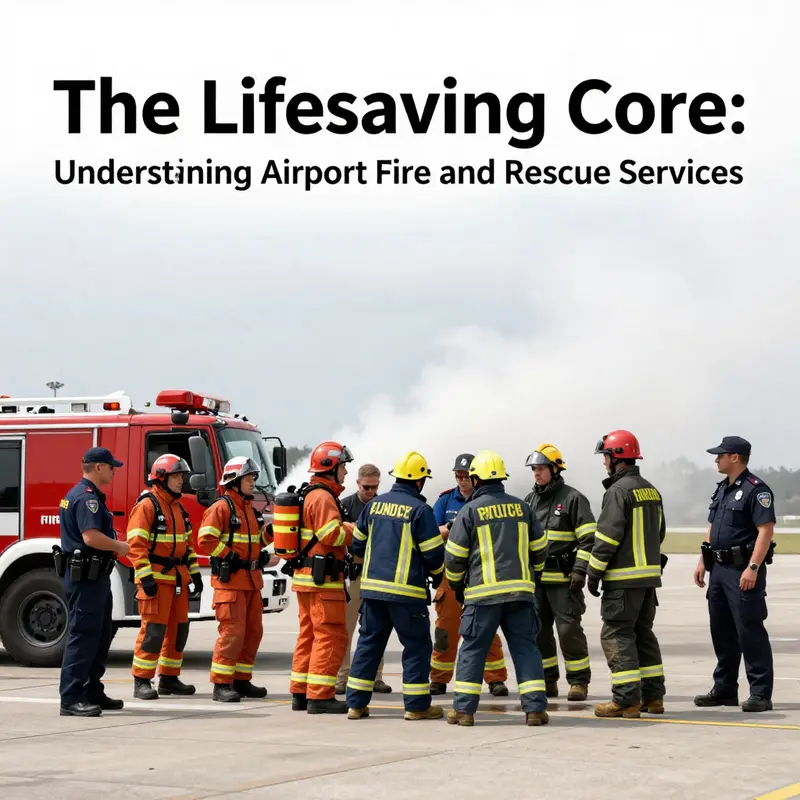
Every aviation event tests the reach and resilience of the people who respond to it. The airport fire and rescue service is not a lone responder patrolling a closed perimeter; it is the lead strand in a broader safety web that includes local fire departments, police, medical services, air traffic control, and hospital networks. When a incident occurs, the aim is not only to reach the scene quickly but to synchronize a complex sequence of actions so that trapped passengers are freed, hazardous conditions are contained, and the right teams converge at the right moment. In practice, this requires a deliberate architecture of coordination that turns a potentially chaotic moment into a disciplined, unified response. The core idea is simple in name but intricate in execution: rapid, well-coordinated action saves lives. Achieving that outcome depends on the strength of interagency relationships, the clarity of roles, and the agility of information flow. The more seamless the collaboration, the more resilient the response. And as aviation threats evolve, so too must the choreography that binds responders together across jurisdictions and agencies.
A strong foundation for coordination is regional cooperation. In places where regional leadership has matured, ARFF teams operate not as isolated squads but as members of a larger emergency management ecosystem. Regional cooperation builds trust before a crisis hits. It creates shared mental models about incident prioritization, resource availability, and decision-making pathways. In regions like New England, this collaborative fabric has become a model for how airports, neighboring jurisdictions, and civil authorities can align their training, equipment, and protocols. The value of such alignment becomes especially evident in large-scale or multi-site events, where a single airport’s resources may be insufficient on their own. A regional approach expands the pool of personnel and assets available for deployment, reduces duplication of efforts, and accelerates the provision of specialized capabilities when they are most needed. It is in these shared frameworks that the practice of coordination shifts from a desirable ideal to a practiced standard, enabling faster decision-making and more coherent action across multiple sites.
Resource sharing is another cornerstone of effective collaboration. Airports do not live in isolation when emergencies occur; they sit at the intersection of municipal and regional emergency services. The pooling of personnel, equipment, and expertise means that a single incident can be managed with greater depth and flexibility. Shared resources might include heavy rescue tools, hazmat capabilities, medical teams, and media liaison capacity, all coordinated through a central incident command structure. Trust in resource sharing grows when agencies participate in joint planning, audits, and drills that prove compatibility of equipment and procedures. When responders from diverse agencies become comfortable working side by side, the line between ARFF and external partners blurs in the most productive way: as a single, capable team with a clear chain of command and a united set of objectives.
Joint training exercises are the practical heartbeat of coordination. Theoretical understanding matters, but it is the repeated, realistic practice that builds fluency in decision-making under pressure. Interagency drills simulate a spectrum of emergencies, from aircraft fires to mass casualty incidents and hazardous material releases. Such exercises test every link in the response chain—from triage and medical treatment to communications, traffic management, and crane or heavy equipment operations for removing wreckage. The most successful drills reveal each agency’s strengths and gaps, allowing partners to adjust protocols and schedules so real events unfold with minimal friction. Importantly, joint training also reinforces social and organizational bonds. When responders know each other’s norms, language, and expectations, the chance of miscommunication declines sharply. A practical touchstone for many programs is a focus on interoperable communications, so that a fire commander in one agency speaks to a police sergeant or an ATC supervisor without delay or confusion. For readers curious about how these drills take shape on the ground, see the focused training environment described in the article on firefighter training tower dedication, which offers a window into the kinds of hands-on exercises that translate plan into action. firefighter training tower dedication.
Communication protocols form the nervous system of coordinated response. Clear, standardized communication is essential when incidents involve multiple agencies and overlapping jurisdictions. Pre-incident plans lay the groundwork for how information will be shared, who will communicate with whom, and what data must be available to decision-makers in real time. Interoperable radio systems, shared mapping platforms, and common incident command language help ensure that everyone understands the same picture of the evolving scene. Beyond the moment of impact, these protocols support the transition from response to recovery, guiding accurate reporting, careful scene management, and the orderly demobilization of teams once the risk has diminished. The value of a well-designed communication framework becomes especially clear in the management of large or cascading events, when confusion can magnify risk and delay critical actions. The integration of communication standards with command structures is what keeps a response from dissolving into parallel, error-prone tracks and instead channels energy toward decisive, coordinated action.
Technological advances have accelerated the pace and clarity of interagency coordination. Real-time data sharing platforms and interoperable networks provide a shared situational awareness that no single agency can generate alone. When responders can see each other’s locations, resource statuses, and evolving hazard information, decisions about staging areas, medical triage zones, and the sequencing of fire suppression activities can be made with confidence. This shared awareness supports faster decisions about when and where to deploy specialized assets, how to balance life-saving priorities against safety risks, and how to shift resources as the scene evolves. In practice, technology helps prevent the duplication of effort and reduces the time spent aligning disparate procedures that have grown out of separate organizational cultures. The result is a more efficient, more adaptive response that preserves lives while protecting responders from unnecessary exposure and strain.
The ongoing cadence of coordination is reinforced by regular drills, mutual aid agreements, and integrated command structures. Drills ensure that relationships remain functional, not merely formal. They test activation timelines, the sequence of interagency responses, and the ability to scale operations to accommodate larger emergencies. Mutual aid agreements formalize the expectation that agencies will lend support when the scales of an incident exceed local capabilities. They define who will respond, what resources will be shared, and how costs and legal liabilities will be managed. These agreements, together with an integrated command structure, support a unified approach during emergencies. An integrated command system keeps decisions centralized enough to maintain coherence, yet flexible enough to incorporate the specialized expertise of each participating agency. In practice, this means a single incident action plan that orchestrates fire suppression, medical care, law enforcement, and air traffic control without succumbing to competing priorities or conflicting instructions. The result is a streamline of actions that avoids redundancies and minimizes opportunities for miscommunication—precisely the kind of efficiency that saves lives when every second counts.
For readers seeking a broader lens on how regional cooperation plays out in emergency response, the literature offers practical frameworks and case studies. The discussion of regional cooperation, coordination, and communication by JF Smith provides a rich backdrop for understanding how cross-agency collaboration can mature into a reliable, repeatable system. While the source itself sits outside aviation, its core message about building interagency trust, defining shared goals, and institutionalizing communication protocols resonates deeply with airport fire and rescue operations. This cross-pertilization—where aviation safety borrows from broader emergency management practices—strengthens the whole enterprise and helps airport responders stay ahead of evolving threats.
In the end, the purpose of airport fire and rescue service is anchored in a simple, enduring aim: save lives by mounting the most effective, integrated response possible. Coordination with other emergency services is not a supplementary function; it is the mechanism by which life-saving actions are realized at the pace and scale demanded by aviation incidents. The more robust the regional networks, the more capable the mutual aid, the more realistic and frequent the joint training, and the more disciplined the communication and command, the more effective the entire system becomes. The tension between speed and accuracy is resolved not by heroic action alone but by the strength of collaborative practices that keep responders aligned when hours can feel like minutes and minutes can feel like a lifetime for those awaiting rescue. The chapter on coordination thus reveals not only how ARFF operates in isolation but how it flourishes as part of a connected emergency management ecosystem that spans airports, cities, and regions. The consequence is a consistent reduction in response times, a tighter management of risks, and a higher likelihood that people will emerge from fires and incidents with their lives intact.
External resource: https://www.researchgate.net/publication/234567890RegionalCooperationCoordinationand_Communication
Regulations and Training as the Engine Behind Efficient Airport Fire and Rescue
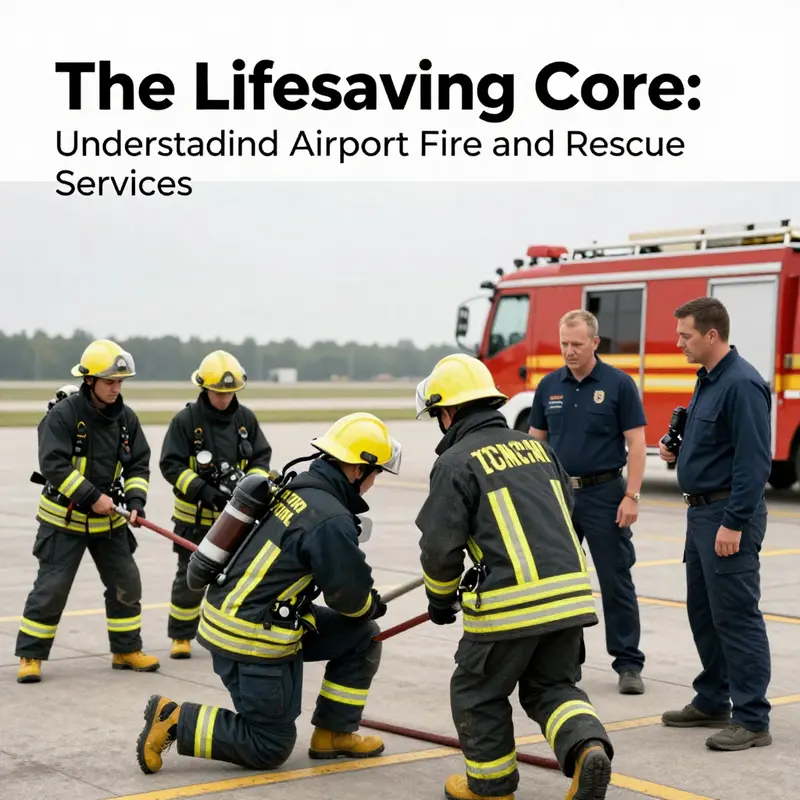
Efficient airport fire and rescue is not a happenstance of equipment alone; it is the product of regulation, training, and disciplined command. This chapter traces how these strands are braided into a living framework. International standards, national rules, and on-the-ground practice translate into a predictable, life-saving performance when every second counts. The following sections discuss how the global framework guides airports of all sizes to a common logic: faster response saves lives. At the international level, ICAO Annex 14 and the ICAO Airport Services Manual provide categories and detailed guidance on equipment, response times, and incident management. Nations translate these into laws and procedures—Fire Law, Civil Aviation Law, and Civil Airport Regulations—plus specialized rules for airport firefighting brigades. A recent development is the ongoing revision of the Transport Airport Specialized Fire Brigade Management Regulations opened for comment in 2026, signaling tightened governance and clearer expectations for training and equipment lifecycle. A core requirement across airports is the three-minute response to any point within an eight-kilometer radius of the runway centerline, which shapes station placement, fleet readiness, dispatch procedures, and incident command.
Final thoughts
In conclusion, understanding the purpose of airport fire and rescue services highlights their crucial role in safeguarding lives during aviation emergencies. By rapidly responding to incidents, preventing fire spread, collaborating with other emergency services, and maintaining strict training and operational protocols under established regulations, these services embody a dedicated commitment to safety. The ongoing evolution and enhancement of their capabilities ensure that they remain effective in protecting the public and airlines alike. Therefore, recognizing their hard work and dedication can foster greater appreciation for airport safety measures and enhance your awareness as a traveler.

