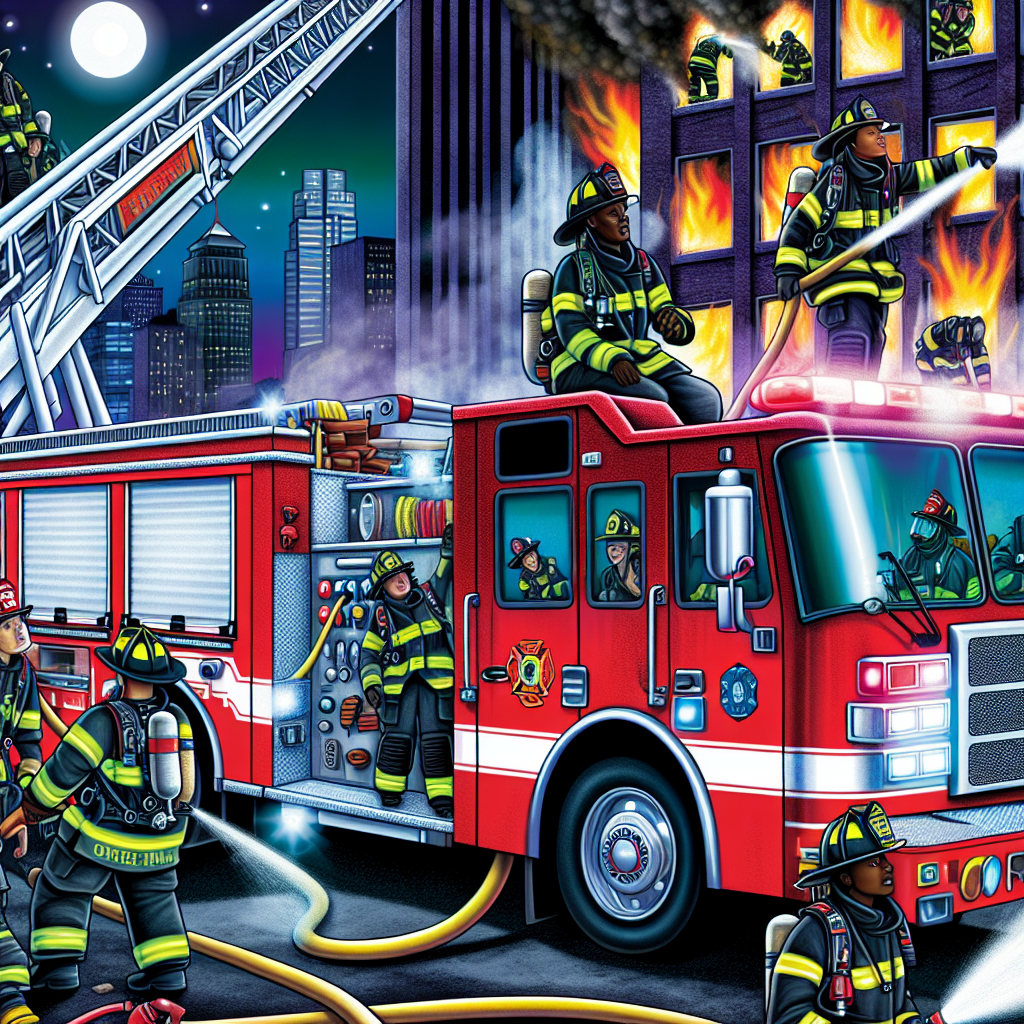
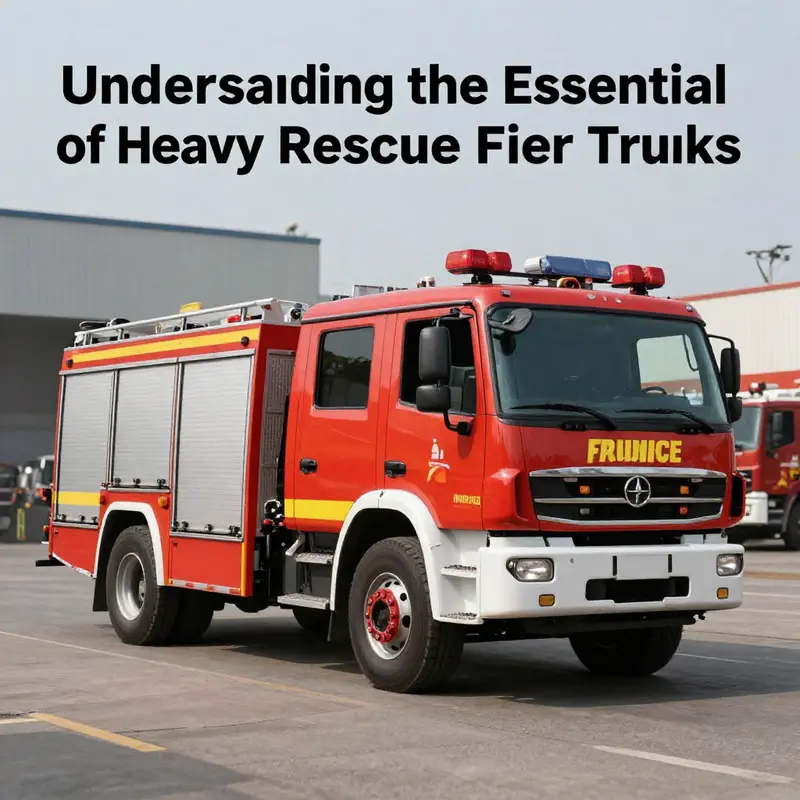
Heavy rescue fire trucks stand at the forefront of emergency response, bridging the gap between traditional firefighting and advanced rescue operations. Used primarily in vehicle extrication and structural collapse situations, these specialized trucks are equipped with tools that are vital in saving lives during emergencies. With the ability to navigate complex, hazardous environments, they are indispensable not only in urban settings but also in disaster zones. This article delves into the various functions of heavy rescue fire trucks, from vehicle extrication and structural collapse rescue to advanced medical support and onboard power systems. Each chapter will illuminate how these vehicles enhance emergency response capabilities, ultimately highlighting their pivotal role in safeguarding lives when every second counts.
Powerful Precision: How Heavy Rescue Fire Trucks Redefine Vehicle Extrication in Crises
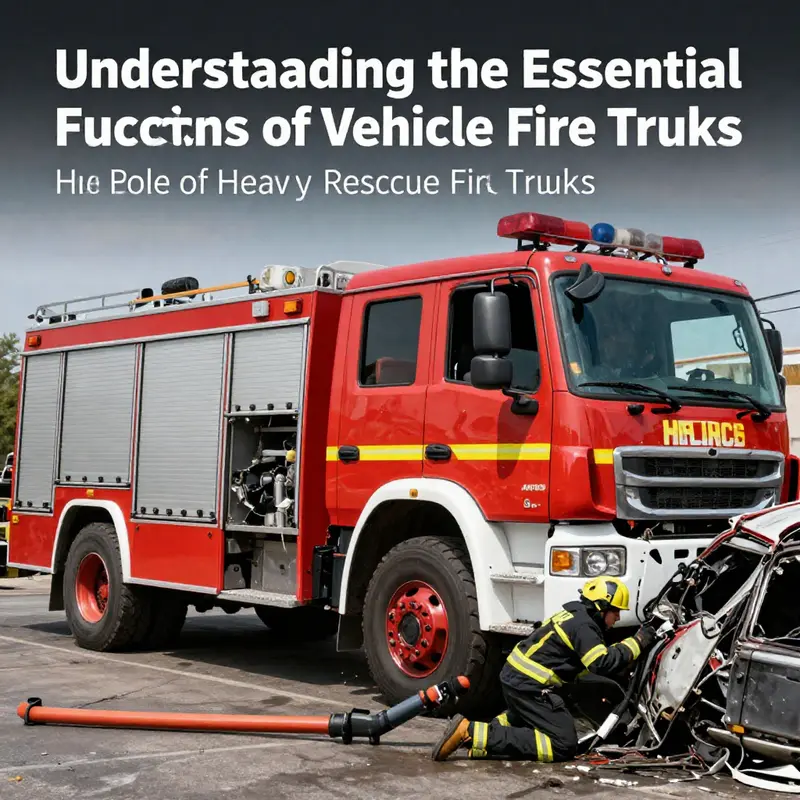
When a crash clamps a vehicle with the weight of a small building, a different kind of rescue response takes the stage. Heavy rescue fire trucks arrive as mobile command centers and tool depots, carrying not just equipment but a philosophy of operation that blends durability, power, and meticulous planning. In the most brutal moments, when standard firefighting apparatus cannot reach or free the trapped, these machines become the bridge between a frantic scene and a safe, controlled recovery. Their role in vehicle extrication is not simply about pulling victims from metal; it is about orchestrating an environment where space, access, and patient outcomes can be actively improved in real time. The truck itself, with its robust chassis and integrated systems, serves as a platform from which responders deploy an array of tools, assess evolving risks, and coordinate life-saving actions under pressure. The narrative of extrication unfolds here as a sequence of deliberate choices: where to cut, how to stabilize, when to pause for a reassessment, and how to protect the patient while the vehicle is slowly reshaped into a form that allows gentle egress rather than rough extraction.
The heart of vehicle extrication lies in hydraulic strength applied with surgical precision. Heavy rescue trucks bring to the scene powerful hydraulic systems that drive spreaders, cutters, and rams. The spreaders pry apart crumpled metal to create a corridor of space around a trapped person. Cutters slice through reinforcing structures and seat belts that otherwise bind the victim to the shell of the vehicle. Rams push open doors, loosen dashboards, and gently withdraw limbs from crushed positions. These tools do not operate in isolation; they rely on the truck’s robust power supply and stabilized platform. The vehicle’s own deformation becomes a variable in the equation rather than an insurmountable obstacle. The operator’s skill marries with machine force to expand access while maintaining the integrity of the patient and preventing further injury. In the most delicate scenarios, a slight miscalculation could jeopardize a spine or limb; in the most successful extrications, a small increase in opening space becomes the gateway to life.
Stability is not an afterthought but a foundational requirement in every heavy rescue operation. The truck’s ability to stabilize a vehicle sits at the core of safe extrication. Air bags, heavy-duty shoring systems, and steel-beamed supports are deployed to counteract shifting, tilting, and potential collapse of uninjured components or the surrounding wreckage. The process may involve lifting or lowering to relieve pressure on an occupant or to reposition a vehicle for better access. A winch may be used to reposition the wreckage, repositioning it just enough to allow a rescuer to reach a hand, a leg, or a torso without compromising the victim’s safety. The goal is to convert a dynamic, unpredictable scene into a stabilized work zone where tools can be applied with controlled force. The truck’s weight and traction become allies, enabling responders to anchor structures and manage leverage without succumbing to the inertia of crushed metal or shifting debris.
Beyond cutting and lifting, the rescue truck’s role becomes a blend of sensor-assisted search and medical readiness. Integrated imaging systems—acoustic sensors that detect movement, seismic detectors that reveal hidden vibrations, and thermal imagers that reveal body heat through debris—guide responders to the positions of victims who cannot be seen. In vehicle crashes, these tools help locate occupants who are pinned under crushed frames or entangled in safety devices. The imaging data informs the crew where to place cuts, where to brace the vehicle, and which door or roof segment to remove first. While metal may hold fast, the human body remains the quiet, urgent center of the operation. Onboard trauma kits and medical supplies ensure that life-saving care can begin, even before the patient is fully freed. The truck thus functions as a moving clinic and a transition point, ensuring minimal delays between rescue and stabilization.
Power and light are the quiet gears that turn a rescue into a reachable outcome. The self-contained electrical system powers lighting that cuts through darkness in garages, street shadows, or collapsed tangle. Adequate illumination reduces the risk of secondary injuries to the patient and to responders moving under the hood, within doorways, or along the vehicle’s interior. Onboard generators keep communications equipment ready, so the incident commander can coordinate with dispatch, hospitals, and other responding units without depending on external power sources. This independence is one of the truck’s most valuable attributes in chaotic environments where a blackout or damaged electrical grid could otherwise jeopardize a rescue. The combination of light and power also supports the use of additional tools; stabilizers, saws, and diagnostic devices can operate simultaneously, allowing the crew to work methodically rather than frantically.
The choreography of extrication often demands more than hardware; it requires disciplined teamwork and adaptive planning. The heavy rescue truck serves as a mobile command post where supervision, strategy, and safety checks converge. The team must evaluate risk continuously: the integrity of the vehicle’s roof, the potential presence of fuel or battery hazards, and the possibility of secondary collapse as metal yields to force. Time is both an ally and a constraint, because every minute could influence the patient’s prognosis. Therefore, the responders on board the truck learn to orchestrate multiple sub-operations at once: one team stabilizes; another pries; a third monitors patient condition and communicates with EMS. The vehicle’s capacity for rapid redeployment—moving tools, repositioning supports, reconfiguring the interior—ensures that the rescue remains dynamic without becoming chaotic. In this sense, the truck embodies a balance between brute mechanical capability and the refined choreography of a well-drilled crew.
A crucial dimension of heavy rescue operations is the way equipment is organized and deployed. The term “depot” often appears in rescue literature, and it is apt here. The truck is a compact library of specialized devices arranged for quick access. The spreaders and cutters are not just tools; they are the manifestation of a rescue plan scaled to the demands of a wreck. Long, reinforced blades, blades that resist bending under pressure, and hydraulic hoses capable of delivering sustained force all contribute to a decisive intervention. The truck’s design emphasizes durability and modularity. When a scenario shifts—from a two-door passenger car to a heavy-duty SUV, or even a truck with a different structural profile—the same platform can adapt. Responders may swap or reconfigure tool assemblies on the fly, matching the equipment to the geometry of the wreck without losing momentum. This flexibility is not incidental but a deliberate outcome of the training and design philosophy embedded in heavy rescue operations.
The extrication narrative also weaves in the importance of patient-centered care within the logistics of rescue. While the blueprints of the vehicle and the mechanics of force capture attention, the patient sits at the center of every decision. In the cramped confines of a damaged car, the responders must translate complex medical needs into actions that keep the patient stable and comfortable. Pain management, airway protection, hemorrhage control, and systematic monitoring become the thread that holds the operation together as metal parts shift and the structure changes shape. The on-scene medical kit, while not a substitute for hospital care, provides critical interventions that can influence outcomes in the minutes between entrapment and transfer. The heavy rescue truck, therefore, is not a detached instrument of force. It is a platform that integrates rescue mechanics with compassionate, educated medical care under pressure.
In the broader arc of emergency response, the heavy rescue truck’s significance extends beyond the moment of extraction. It often functions as a bridge to hospital care and to longer-term recovery. By reducing the time to access and stabilize a patient, it enhances survival chances and reduces the risk of secondary injuries. It also supports the mental and emotional resilience of the responders themselves. Knowing that there is a capable, well-equipped platform ready to step in can offset the fear and fatigue that accompany long, complex rescues. The truck’s presence signals a comprehensive approach to emergencies—the recognition that some incidents demand more than fire suppression, that the scene demands a broader repertoire of tools, and that safety for both victim and rescuer must be built into every action from the first cut to the final patient handoff.
For practitioners, the lessons embedded in heavy rescue operations extend into ongoing training and organizational readiness. The complex, multi-layered tasks require not just technical skill but disciplined teamwork, clear communication, and a shared understanding of priorities. The equipment is an enabler, not a replacement for judgment and coordination. Thus, the chapter of vehicle extrication written by the heavy rescue truck is a continuous one—an ongoing dialogue between capability and constraint, between the physics of metal and the biology of human life, between the immediacy of a scene and the longer arc of medical care. The truck does not decide outcomes; it enables responders to decide, with greater precision and fewer uncertainties, how best to free a trapped person and bring them to safety.
The value of preparation echoes through every aspect of this work. Training environments that simulate the pressures and the physics of real crashes help responders translate theory into action. The importance of drill and readiness can be seen in dedicated facilities where teams rehearse the delicate balance of force, space, and patient care. As responders practice with cutters, spreaders, stabilizers, and imaging equipment, they build muscle memory and a shared language that makes the difference when faces become pale and the clock ticks louder on the scene. This preparation, visible in every controlled cut and every stabilized stance, is what allows the heavy rescue truck to fulfill its promise: to transform a dangerous, unstable wreck into a solvable, survivable scenario where a rescued person gains a chance at life. For readers who want to explore how training environments shape real-world performance, the related reflection on specialized training facilities provides a lens into why this work requires both heart and hardware—an understanding that the vehicle is only as effective as the team that commands it. firefighter training tower dedication.
In essence, vehicle extrication with heavy rescue fire trucks blends engineering prowess with human judgment. It translates the abstract power of hydraulics into life-saving action. It converts the chaos of a crash into a structured sequence of steps where every tool, every movement, and every decision serves the patient. It demonstrates how robust platforms, when paired with disciplined crews, can shorten the path from entrapment to rescue and from rescue to recovery. This continuum—power, stability, imaging, power again, patient care, and training—defines the core contribution of heavy rescue trucks to modern emergency response. As communities grow more complex and vehicles become more resistant to impact in new ways, the role of these vehicles remains not only essential but foundational to the ethics of rescue: act with speed, act with care, and act with a plan that keeps life at the center of every operation.
External resource: For authoritative standards on how these tools are applied and the safety framework surrounding them, see the National Fire Protection Association guidelines. https://www.nfpa.org/
Carrying Hope Through Rubble: How Heavy Rescue Fire Trucks Power Structural Collapse Rescue
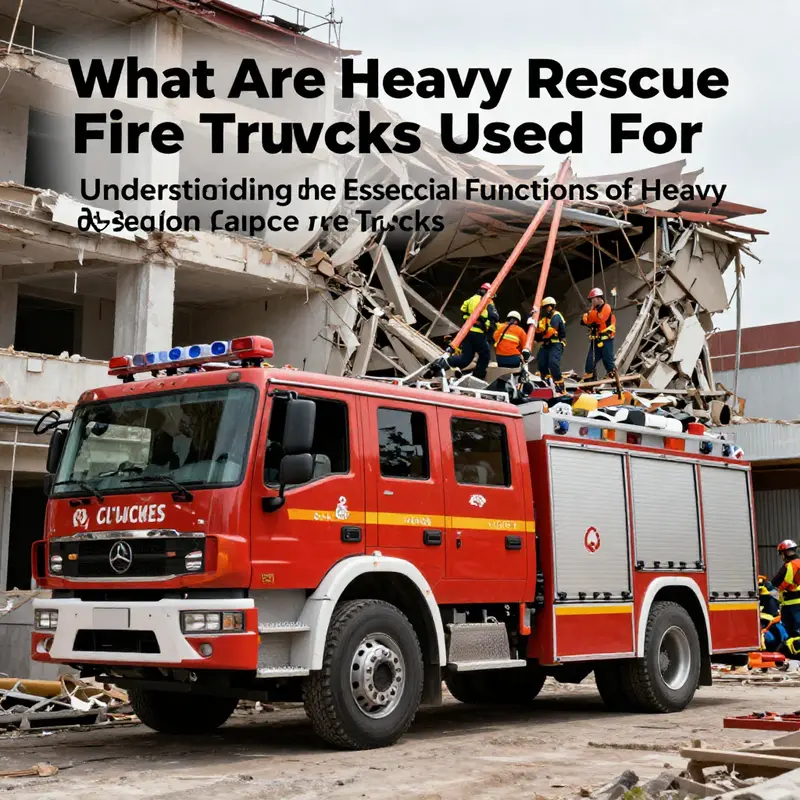
When a city’s sirens pierce the air and dust settles in the streets after a collapse, a heavy rescue fire truck often appears as a wheeled pivot around which rescue teams organize life-saving action. These machines are not just more powerful versions of standard fire apparatus; they are purpose-built platforms for urban search and rescue (USAR), combining brute strength with precision engineering, meticulous organization, and the stamina to work in environments that test human limits. In complex structural collapses, the truck acts as a mobile workshop, a staging ground, and a defensive perimeter all at once. Its presence embodies a philosophy of rescue that acknowledges time as a critical factor in survival. The right combination of tools, systems, and trained crews can convert a scene that seems insurmountable into a sequence of executable steps, each designed to minimize harm and maximize the chance that a trapped person can be found and freed before conditions worsen.
At the heart of the heavy rescue truck’s mission is access. The vehicle carries a suite of hydraulic cutters and spreaders that makes the so‑called jaws of life look almost ceremonial by comparison. These cutters are built to bite through materials that would block a rescue in seconds—reinforced steel, twisted wreckage, and debris that refuses to yield. The spreaders, used in tandem, pry apart collapsed sections, creating safe channels where a rescuer can reach a victim without triggering further collapse. There is a quiet poetry in the way a trained operator can judge the right degree of pressure, the exact angle, and the moment to stop, all while the clock keeps ticking. This is not demolition; it is controlled, compassionate inflow and outflow of energy aimed at freeing someone who cannot move under their own power.
To complement cutting and spreading, lifting and stabilization systems are essential. Cribbing—a lattice of wooden or metal blocks—provides a foundation that prevents shifting debris from pinching a trapped person or crushing a rescuer. High-capacity winches and heavy-duty air bags act in concert to lift heavy slabs of concrete or fallen steel without creating new hazards. The bags can be calibrated to lift at measured rates, relieving pressure on a trapped limb, creating space for intubation or a careful extraction, and reducing the risk of secondary collapse. This is where the truck’s design speaks to durability: every component must withstand repeated, high-stress use under challenging conditions. A miscalculation in stabilization can undo hours of careful work, so the equipment is not only powerful but predictable in its performance, with redundancies and fail-safes that keep operations moving even when a scene is at its darkest.
Access and visibility are equally critical. An extendable lighting tower turns a night scene into a functioning worksite. The brightness is more than a convenience; it is a force multiplier that improves distance estimation, tool orientation, and the safety of every movement. When space is tight, ladders, rope systems, and compact cranes extend the rescuers’ reach and provide safer routes into voids and under slabs. In debris fields where air can be thin and acoustics change with every gust of wind, the ability to see and be seen becomes a non-negotiable aspect of incident management. Hazardous materials awareness often follows this thread. Collapse scenarios frequently intersect with unknown chemical or gas lines, leaking containers, or contaminated debris. The truck carries containment kits, PPE, and secondary containment options that help prevent secondary exposures while responders work to evacuate or protect nearby civilians. The integration of such capabilities onto a single platform reduces the need for rapid, maladapted improvisation in a high-stakes environment.
Because a heavy rescue operation is as much about coordination as it is about tools, the truck serves as a mobile command center. It houses a communications hub, a workspace for incident command, and a power source capable of sustaining radios, monitors, lighting, and life-support equipment for extended operations. The importance of a robust, reliable communication backbone cannot be overstated. As crews shift from search to stabilization to extraction, the ability to relay evolving strategies, map locations of victims, and position crews with real-time information becomes the difference between orderly progress and confusion that slows recovery. The on-board presence of planning and logistics spaces reduces the time required to transition from one phase of the rescue to another. In the most demanding scenes, the truck’s role as a command post becomes the glue that keeps a multi-disciplinary team synchronized—fire personnel, structural engineers, hazardous materials specialists, medical staff, and law enforcement—moving toward a common objective.
This structure, however, does not emerge in a vacuum. It rests on the dual pillars of specialized training and field experience. The tools are only as effective as the hands that wield them. Training must simulate real-world pressures: the weight of collapsing floors, the stubborn inertia of debris, the evolving risk of secondary collapse, and the emotional fatigue that accompanies the discovery of victims. Crews drill together to map out a rescue scenario from first contact to the extraction of a patient, learning where to position equipment, when to push or pull, and how to maintain air supply and medical readiness under stress. The importance of cross-training cannot be overstated. While the rescue truck provides a technical toolkit, it is the team’s ability to communicate, to anticipate shifting hazards, and to coordinate with outside agencies that converts hardware into life-saving action.
Within this framework, the heavy rescue unit becomes a paradox: a formidable machine designed to minimize harm. Its strength is unleashed in small, deliberate increments that respect the delicate balance of an unstable environment. The cutting bite is gentle enough to spare vital structures when possible, yet decisive enough to free a trapped person who has little time left. The stabilizing lift is precise, spreading the weight load to relieve pressure while avoiding further damage. Each motion is tempered by safety protocols, including scene control measures and continuous risk assessment. The vehicle’s operators are charged not only with technical manipulation of tools but with the moral calculus of rescue—deciding when to push for a breakthrough and when to hold a position to preserve life until help can arrive from additional teams.
A structural collapse is rarely a single‑line incident. It is a choreography of pausing and moving, of listening to sounds that emerge through time and dust, and of watching for changes that could reverse a rescue narrative in an instant. Heavy rescue units, with their lighting towers and portable access systems, extend the window of opportunity for survivors by extending the reach and reliability of responders. They enable rescuers to work in what would otherwise be untenable conditions: confined spaces, voids behind fallen masonry, and the often‑forgotten micro-environments created by rubble. In the best outcomes, victims are located quickly by search dogs, acoustic sensors, and thermal imaging integrated into the field workflow. The sequence then hinges on controlled, patient extraction rather than brute force, preserving limb function, airway integrity, and the possibility of a full recovery after hospital care.
The role of these trucks in urban settings is a reminder that cities, by their very design, create unique risks in the event of a collapse. High-rise structures, underground networks, and dense surrounding development can complicate every aspect of a rescue. Debris patterns shift as vibrations settle, dynamic loads change, and new hazards emerge from the interplay of structural elements and utilities. Heavy rescue units are designed with this reality in mind: to be adaptable, modular, and capable of reconfiguring for a spectrum of emergency needs. The equipment bays are arranged so that responders can retrieve a tool with minimal movement of others, reducing the chances of further destabilizing the site. Even the aesthetic of the machine—the sheer mass of metal and hydraulics—serves a psychological purpose, signaling to bystanders and potential victims that help is present, that a deliberate plan is underway, and that there is a path through the chaos.
In practice, a rescue operation often looks less like a linear march and more like a living, breathing system that responds to new information. Dispatchers analyze initial reports, engineers assess structural integrity, and on the ground, teams weave together entrapment relief, debris management, and medical stabilization. The heavy rescue truck is the anchor of that system, anchored not only by its physical heft but by the discipline and readiness it represents. Its tools and capabilities are not a luxury but a necessity when every second matters and every decision carries weight. The scene’s dynamics demand that responders adapt to evolving conditions, protect responders’ safety, and maximize the chance of returning someone to their family. In the language of rescue, the heavy rescue chassis is a portable, scalable, and reliable platform that translates a city’s promise of safety into measurable outcomes on the ground.
The broader standards and best practices that govern how these operations are conducted are captured in professional guidance and research. For those who wish to explore formal expectations and case studies, an extensive body of knowledge exists that outlines structural collapse rescue operations, the roles of different agencies, and the critical steps that underpin safe and effective interventions. As operations evolve with new materials, sensor technology, and stabilization methods, the core principles endure: early, accurate assessment; careful risk management; and an extraction process that prioritizes life without creating new hazards. Those who study these standards recognize that heavy rescue units are not stand-alone solutions but essential components of a larger, coordinated response that includes scene management, medical care, and ongoing recovery planning. The practical takeaways for communities are clear: investment in training, maintenance of equipment, and the establishment of interoperable protocols across agencies are the best guarantees of rapid, safe, and effective responses when the worst occurs.
For practitioners seeking structured guidance and exemplars of best practice, it is valuable to review training resources and documented standards that accompany field operations. Those who want to deepen their preparation can explore dedicated training facilities and self-guided modules that bridge classroom theory with real-world application. The combination of hands‑on practice and property‑level risk assessment helps develop the intuition required to operate heavy rescue tools safely and efficiently. In this light, the rescue truck becomes not just a vehicle but a moving classroom, a testament to the idea that readiness is a continuous pursuit rather than a fixed achievement. And as responders seek to refine their craft, they carry forward a practice grounded in both science and solidarity: a commitment to lift others from danger, while preserving the structural integrity of the environments in which they work.
Contextually, this chapter aligns with broader investigations into how rescue operations adapt to evolving urban hazards and how equipment design supports that adaptation. It also nods to the ongoing work of professional standards bodies, which synthesize field experiences into guidelines that keep responders safe and victims found. The narrative of the heavy rescue truck is not only about the machine itself but about the people who operate it—their judgment, their teamwork, and their unyielding focus on saving lives under pressure. It is a narrative that points to a future where continued innovation in sensing, stabilization, and rapid access will further shrink the gap between collapse and rescue, making every scene a story of resilience rather than loss. And in that future, the heavy rescue unit remains a steady, dependable partner at the edge of danger, turning the unpredictable into a guided, life-saving pursuit.
To delve deeper into the standards that shape structural collapse rescue operations and to understand how these guidelines translate into on‑scene practice, readers can consult the authoritative resources that document these practices. For a rigorous overview of structural collapse rescue operations and the surrounding framework, see the official guidance from the National Fire Protection Association (NFPA): https://www.nfpa.org/About-the-NFPA/News-and-Research/Reports-and-Studies/Structural-Collapse-Rescue-Operations. This external reference offers a comprehensive view of how rescue concepts are formalized and shared across jurisdictions, reinforcing the idea that heavy rescue trucks are integral, not incidental, to modern lifesaving strategies.
As the narrative of rescue continues to unfold in real incidents, crews will rely on both the proven capabilities of their heavy rescue platforms and the evolving science of stabilization, sensing, and scene management. In the chapters that follow, we will explore how these elements interact with prevention, preparedness, and community resilience, further illustrating why heavy rescue fire trucks remain indispensable when the ground beneath a city can shift in an instant. The next installment moves from field realities to the systems that support them, examining training pathways and certification frameworks that prepare responders to meet these demanding challenges with skill, speed, and compassion. For readers seeking practical, hands-on insight, a window into dedicated training facilities and the realities of tower-based practice can be found through the resource linked here, which focuses on the critical importance of structured, ongoing training in rescue operations: firefighter-training-tower-dedication.
Seeing Through Smoke and Wreckage: How Heavy Rescue Fire Trucks Merge Advanced Detection with Onboard Medical Care
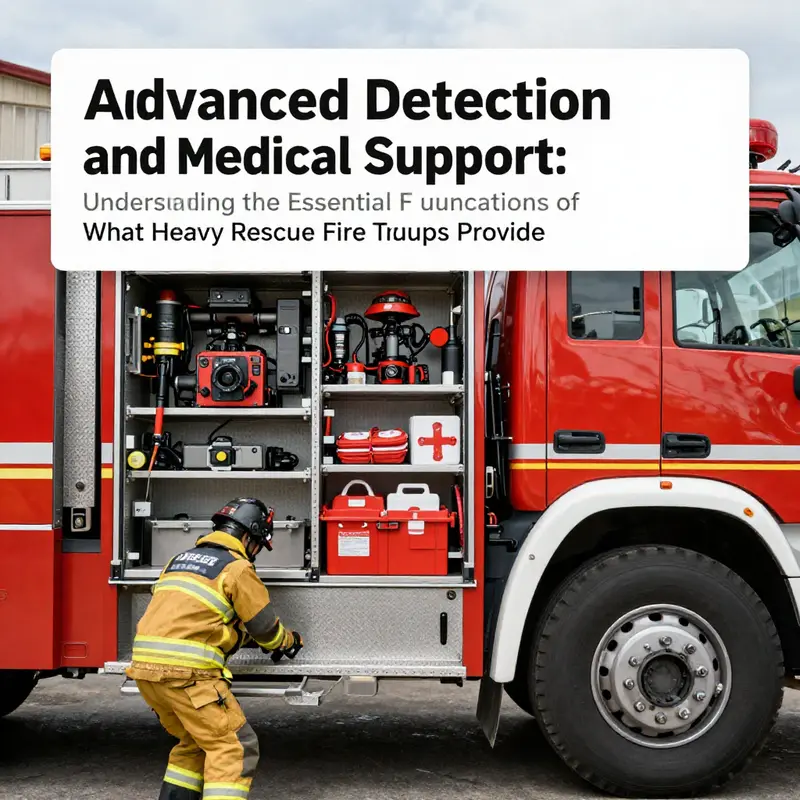
When a heavy rescue fire truck arrives at a scene, it rarely looks like a typical fire engine. Its silhouette is built for endurance and versatility, a rolling hub where sensing, medical care, stabilization, and command converge. In complex emergencies where smoke reduces visibility and debris shifts with every step, seconds matter, and the vehicle becomes a mobile nerve center. It is not merely a machine that fights fire; it is a carefully designed platform that gathers information, interprets it in real time, and translates insight into life saving action. The core idea is simple: detection and medical support on the same rolling platform expand the window of opportunity to locate, stabilize, and transport victims while keeping responders safe. This integration turns a scene of chaos into a coordinated operation with clearer purpose and timing.
To see how these vehicles work in practice, imagine a city scenario after an earthquake. A tall building has partially collapsed, leaving occupants scattered among fallen concrete and twisted rebar. Smoke lingers, wind shifts debris, creating new hazards. The first priority is to assess the scene quickly and accurately. Heavy rescue trucks accomplish this with intelligent sensing systems that can see through smoke, darkness, and shifting rubble. A 360-degree panoramic monitoring system delivers a continuous view around the vehicle and to the crew inside. This is not just driver safety; it provides the team with reliable situational awareness from which every decision stems. In moments like these the value of a full circle field of view cannot be overstated. It reduces blind spots, helps guide placement of stabilizing equipment, and informs which entry points to prioritize for search.
Infrared thermal imaging is the second pillar in the detection framework. In the glow of smoke or the gloom of dense smoke, heat signatures tell a story that eyes cannot read. A firefighter can see hot spots that might indicate a survivor behind a wall or a ruptured pipe feeding a flame front. More critically, thermal imaging helps identify areas of structural stress where steel, concrete, and wood respond to heat differently. The camera system translates those patterns into actionable guidance for crews planning entry routes, ventilation points, and the placement of shoring or lifting systems. It is a powerful reminder that visibility is not a fixed condition; it is a live data stream that the crew can interrogate and cross-check with other sensors for a robust assessment.
Integrated hazard detection rounds out the detection triad. Toxic gas sensors embedded in the truck’s detection system scan for contaminants or atmospheres that pose an immediate risk to responders and victims alike. The moment a dangerous leak or explosive atmosphere is identified, the team can adjust approach angles, reconfigure PPE protocols, or pause entry until mitigation steps are taken. This capability is especially vital when responders confront unknown chemicals, compromising the air quality inside a collapsed structure, or when there is a risk of secondary explosions caused by lingering fuels. The overall effect is a layered, proactive risk management model that keeps people safer while expanding the operational envelope in which rescuers can operate effectively.
All of these detection capabilities feed into a core operational question: where do we focus our lifesaving medical response? The heavy rescue truck answers that by turning the vehicle itself into a moving medical facility. Onboard medical equipment resembles a compact, high functioning intensive care unit. Ventilators, cardiac monitors, and automated external defibrillators are arranged to support rapid triage and stabilization. The design acknowledges that a patient’s trajectory can hinge on the moment of first intervention: a stabilized airway, controlled breathing, and a steady heart rhythm bought in the field can dramatically improve outcomes once the patient reaches a hospital, if not before.
But the medical mission goes beyond monitoring. There are specialized patient handling capabilities built into the chassis. Some stretchers are designed to support patients who are too large, too unstable, or too injured to move with ordinary equipment. Hydraulic lifting systems enable careful, gradual repositioning without compromising spinal integrity or causing further trauma. In a chaotic scene, that precision matters. It means responders can extract a patient from a heap of debris with less risk to the patient and fewer additional injuries to the rescuers themselves. The emphasis on safe transport extends into the vehicle interior life-support systems. Independent oxygen supplies and, in some configurations, internal air filtration and positive-pressure environments help crews maintain a breathable, low-contaminant space even when the external environment is full of smoke, dust, or hazardous fumes. The crew can continue patient stabilization during extraction and transport, bridging the gap between rescue and definitive care.
The vehicle’s medical function also embraces the realities of urban and disaster environments. Time is not a constant; it stretches and contracts with conditions on the ground. The onboard power generation and robust lighting networks guarantee that care can proceed around the clock, regardless of whether electrical infrastructure is compromised. In dark stairwells or after hours rescue operations, bright, reliable illumination makes a tangible difference in the precision of both detection and treatment tasks. The result is a unit that does not simply arrive at the scene; it enters the scene as a fully self-contained platform capable of supporting advanced medical action from the first moment rescue begins.
The synergy between detection and medical capability is not incidental. It is cornerstone practice that shapes how teams plan, respond, and evaluate risk. When thermal imaging reveals a potential survivor, the medical team is ready to respond with immediate airway management or hemodynamic support. If gas sensors indicate a toxic plume, the team can pivot to patient triage outside the hazardous zone, using lighter protective configurations while still preserving the opportunity to access potential victims later. This dynamic interplay increases the probability that a casualty is found quickly, assessed correctly, and treated in a way that aligns with the patient’s evolving needs as the scene evolves. The vehicle’s design reflects this reality: detection and medical support are integrated into a single operational philosophy rather than isolated capabilities parked in separate compartments.
The day-to-day impact of these integrated systems extends beyond dramatic rescue scenarios. For emergency services, the presence of a heavy rescue unit signals a readiness to confront a broad spectrum of conditions—from collapsed structures after seismic events to complex vehicle extrications where the person trapped in a vehicle can suffer from spinal injury or compromised airways. In both cases, the same core promise holds: advanced detection reduces uncertainty, while onboard medical care reduces the time to first life-saving intervention. Combined, they shrink the window in which a victim can deteriorate, which can be a difference-maker between life and death. The department’s crew becomes not merely responders but stewards of a high-stakes continuum—from the moment first contact is made to stabilization in transit to a hospital bed.
This continuum also highlights a broader, sometimes underappreciated truth: the equipment is only as effective as the people who operate it. Advanced sensors and patient-centered care workflows require training, not just access to hardware. The best detection systems yield insights only when a crew knows how to translate that insight into a safe, efficient plan. That is where ongoing education and certification become a critical partner to technology. The same principles that govern conventional firefighter training—targeted practice, scenario-based drills, and disciplined safety protocols—are adapted to the specialized demands of heavy rescue operations. For individuals considering a career path in this field, the idea of a mobile, technology-rich unit offers a compelling picture of how frontline work can intersect with cutting-edge science. The link between training and capability matters because a crew with robust proficiency can exploit the full potential of the detection and medical systems, making every second count when the stakes are highest. For readers exploring professional routes and the steps to readiness, see the discussion on the vital role of fire safety certificates in your career journey.
In the end, heavy rescue trucks embody a holistic approach to emergency response. They are designed to endure the most demanding environments, sense risk with a level of precision that human senses cannot achieve alone, and translate that data into immediate, life-preserving action. The onboard medical systems, carefully arranged for rapid triage and stabilization, ensure that when a casualty is found, response stops being a linear sequence of events and becomes a coordinated, patient-centric operation. The interdependence of detection and medicine turns the truck into a mobile command center, where information, care, and logistics converge to produce better outcomes for victims and a safer, more controlled working environment for rescuers. Even as the scene evolves and new hazards emerge, these systems continue to function in concert, providing the predictability that enables improvisation—precisely the balance that defines advanced rescue work.
From a policy and planning perspective, the implications are meaningful. Communities that anticipate the need for rapid, adaptable response in the face of urban complexity and natural disasters invest in heavy rescue capabilities not only for dramatic emergencies but for the everyday grind of rescue work. The investment signals a commitment to readiness: a mobile, self-contained platform that can be deployed to the most challenging locations and immediately begin to gather information, deliver care, and reduce risk—before the patient’s condition can deteriorate further. For municipal agencies, this translates into a strategic advantage: a platform that expands the reach of resuscitation and stabilization capabilities, increases the likelihood of survivors in the critical first hours, and enhances safety for responders who must work in unstable environments. The result is not only more lives saved but a system that can adapt to changing circumstances with a level of confidence that only integrated technology can supply.
Ultimately, the story of heavy rescue fire trucks is the story of how modern emergency response merges science, engineering, and human judgment into a single, effective practice. It is a narrative about turning complex information into decisive action, about converting a mobile facility into a lifeline, and about ensuring that when disaster strikes, the window for saving a life remains open longer because the vehicle can both see what is happening and treat what is found. For those who want to explore how the science behind these capabilities translates into real world outcomes, manufacturers technical documentation offers a deeper dive into sensor arrays, life-support configurations, and the rugged design choices that keep these systems functional in harsh conditions. External reference: https://www.sanyglobal.com/en/
In sum, heavy rescue trucks do not merely accompany the fire service to incidents; they function as the backbone of a comprehensive response that blends detection with direct medical intervention. They are the embodiment of a practical science of rescue: a vehicle that makes sense of a dangerous environment through sight, heat, and gas readings, then acts on that understanding with life-support tech, careful patient handling, and a path to definitive care. The result is a more capable, more confident, and more compassionate response—the kind of capability that can mean the difference between a fatal outcome and a survivor’s chance at recovery.
Powering Hope on Scene: The Critical Role of Onboard Power and Lighting in Heavy Rescue Fire Trucks
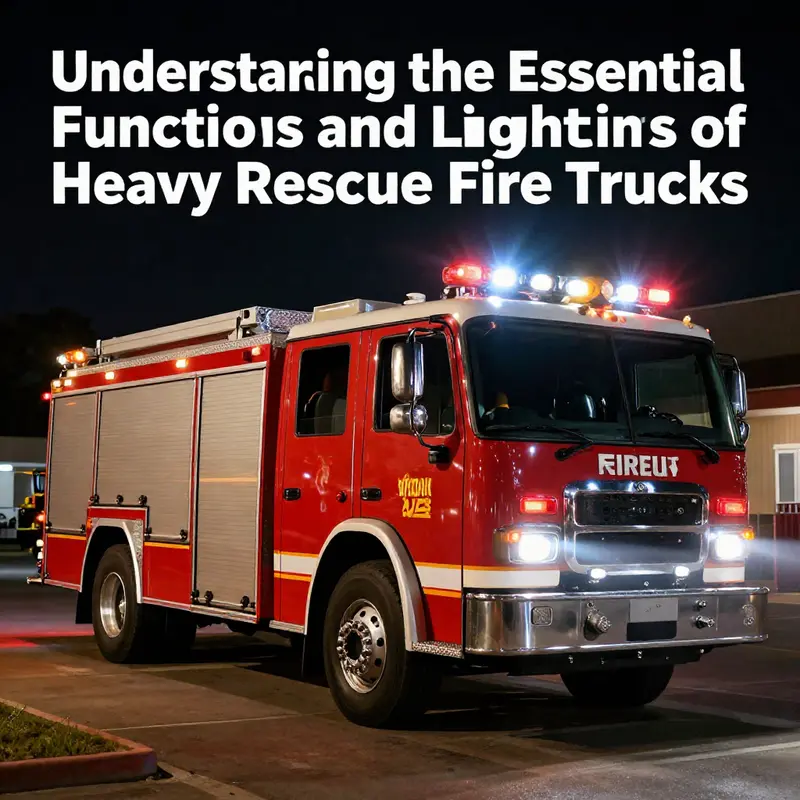
When a heavy rescue operation erupts in the wake of a structural collapse or a devastating vehicle crash, the equipment that truly carries the day is often the one that goes unseen by many outside the crew: the onboard power and lighting system. In the most challenging environments, where every minute tightens the risk of further harm and every inch of extrication costs precious energy, the ability to generate power and cast steady, reliable light is not a luxury. It is a lifeline. Heavy rescue fire trucks are designed to keep critical tools alive and functioning even when external power is scarce or completely absent. In those moments, the heart of the apparatus beats through its generators, battery banks, and lighting arrays, which together sustain a chain of life-saving actions from initial assessment to final extraction and stabilization at the scene. The power plant and the lights are not decorative features; they are the operating system that makes hydraulic cutters open metal and reveal trapped victims, that allows sensors to see through dense debris, and that keeps radios, tablets, and medical devices speaking to a unified command. In other words, onboard power and lighting determine how quickly responders can move, how accurately they can plan the next move, and how safely they can carry it out under pressure.
The core of onboard power rests in a pragmatic philosophy: power must be readily available, robust, and capable of sustaining long operations without tying up the vehicle’s main engine. Generators and auxiliary power units provide electricity to the hydraulic systems that drive spreading tools and cutters, to the pumps that operate stabilization devices such as airbags and struts, and to the electrical basements of the truck itself—control consoles, communication gear, lighting controllers, and cooling systems that keep sensitive electronics from overheating. This autonomy is vital because relying on the scene’s power supply—or on the idle state of the engine—can create delays at every turn. A stalled door can become a stubborn obstacle; a damper in the process can ripple into longer exposure to heat, fumes, and shifting debris. By ensuring that essential equipment remains powered when the engine is off or when responders move between zones, onboard power reduces the cognitive load on crews and minimizes the time from scene arrival to the first actionable rescue maneuver.
Beyond sheer availability, the capacity and resilience of onboard power shape what rescue teams can attempt and how they attempt it. Hydraulic tools, the so-called jaws of life, demand consistent, high-flow electricity to operate at peak performance. The tools’ cutting heads and spreading mechanisms rely on hydraulic power that must be generated from a reliable source on the vehicle. When the main engine is running, energy is diverted to drive the hydraulic pumps, but in a collapse scenario where engine idling is minimized or the truck is parked in a tight space with limited access to external power, the onboard system must carry the load on its own. A well-designed power architecture also guards against voltage drops during peak demands, which could otherwise stall a tool mid-cut or a sensor mid-scan. In practice, responders learn to budget energy much like a field medic budgets a supply kit, prioritizing devices that unlock victims’ access and those that keep comms open during chaotic, loud, and dusty environments. The result is a more deliberate, more controlled operation that can progress even as the scene evolves unpredictably.
Lighting systems perform a complementary and equally consequential function. In the crucible of a night operation or a dawn with heavy atmospheric haze, bright, broad-spectrum lighting illuminates not only the area where a rescuer stands but the shadowy recesses where heat pockets and voids might conceal danger. Advanced LED lighting arrays deliver high-intensity illumination across wide swaths of ground, enabling crews to map debris fields, identify potential fall hazards, and track the placement of stabilizing equipment with clarity that would be impossible under improvised flashlights or dim ambient light. Lighting is not merely for visibility; it is a tool for safety and coordination. When crews can see clearly, they can coordinate more effectively, reduce the risk of secondary collapse, and create safer corridors for victims to be accessed without triggering new failures in a compromised structure.
The arrangement of lights on a heavy rescue vehicle is itself a language of urgency and command. Rotating beacons and strobe signals, color-coded lighting bands, and modular floodlights can be coordinated to guide teams through complex tasks. A scene can be divided into zones of operation through lighting cues, allowing incident commanders to communicate priorities without lengthy radio exchanges. Clear, powerful illumination also reduces the cognitive strain on responders by enabling rapid visual assessment of debris consistency, void spaces, and the relative stability of surrounding columns or walls. In this way, light becomes the frontline instrument that aligns teams, communicates intent, and keeps individuals oriented as they maneuver through treacherous spaces.
But the value of onboard power and lighting extends well beyond the immediate extrication. The same power that runs hydraulic tools and lights also powers the sensors that are indispensable in heavy rescue work. Acoustic and seismic detectors, thermal imaging devices, and advanced scanning cameras are all energy-dependent tools that help locate victims who may be buried under rubble or crushed within the confines of a vehicle wreck. In a scenario where seconds count, the ability to deploy a thermal imager or a ground-penetrating acoustic probe without delay can spell the difference between a successful rescue and a missed opportunity. Onboard power ensures these sensors can be activated the moment responders arrive, maintaining continuous monitoring as crews reposition, reallocate resources, and pursue a patient extraction strategy that minimizes further harm.
The importance of keeping power and light consistent is underscored by standards and training that guide how heavy rescue vehicles are designed and used. The orchestration of power and lighting is not a haphazard matter but a disciplined craft that rests on established performance benchmarks. Within professional practice, the National Fire Protection Association’s standards for fire apparatus, including power and lighting performance and testing, provide the framework that ensures reliability in the most demanding conditions. These standards, while technical, translate directly into the street-level realities crews face when responding to disasters. When a truck adheres to rigorous testing and maintenance schedules, the crew can rely on a steady rhythm of tool operation, sensor readouts, and scene illumination, rather than battling intermittent failures. This reliability inflates the odds that every action taken at the scene is informed, deliberate, and safe.
To ground this discussion in practical terms and to acknowledge the human element, consider how a crew uses a single onboard system across the many phases of a rescue. Upon arrival, the generator powers scene lights that carve out clear areas for entry and triage. The hydraulic system, energized by that same power source, enables rescue personnel to create passages through twisted metal and crushed materials. Simultaneously, the onboard power supports radios and a command laptop, keeping the incident commander informed as the team expands or reshapes its approach. Sensors that locate buried victims keep feeding outcomes to the medics who must stabilize and treat, with power for defibrillators, monitors, and portable suction devices. Lighting, in every sense, is a force multiplier. It reduces error, speeds up decision making, and reinforces safety protocols at every turn.
The practical consequences of reliable onboard power and lighting become even clearer when one considers the environments in which heavy rescue trucks operate. Urban canyons with limited access to electrical grids, disaster zones where power lines are down, or remote locations where the only available light is from a vehicle’s lamps—all of these demand that the truck carry its own power braid, its own lighting constellation, and its own rhythm for how they are used. In these contexts, the heavy rescue vehicle becomes not only a tool carrier but a mobile operating theater, where every instrument—tools, sensors, comms, medical devices, and protective lighting—must function in a synchronized, uninterrupted flow. The consequence is a more predictable, more resilient response that improves the chances of a successful outcome for victims while protecting the crew from the additional hazards that arise when power or illumination fails.
The real-world implications extend to training and maintenance as well. Fire teams practice with the understanding that the vehicle’s power and lighting are not passive backdrops but active, mission-critical elements. They learn to execute predeployment checks that verify fuel levels, battery health, generator RPM stability, and lighting integrity. They drill in scenarios that test how long the power can sustain high-use hydraulic operations and how quickly lights can be deployed from storage configurations to maximized coverage. They also train in how to manage energy during long operations, balancing tool use with sensor activity and communications so that life-saving actions remain uninterrupted from the moment of arrival through the final patient handoff. The result is a culture of readiness where equipment is trusted not because it is new, but because it has proven itself under pressure.
Across this narrative, a single thread ties all aspects together: the onboard power and lighting system is more than a technical feature. It is the backbone of situational awareness, a shield against the chaos of disasters, and a conduit for rapid, precise rescue work. The integration of power generation, energy management, and lighting design reflects a philosophy of capability that starts the moment the truck rolls onto the scene and continues long after the last victim is stabilized. It is a continuous loop that links tools to sensors, to communications, to patient care, and back to command—and every link of that loop is powered by a dependable source on board the vehicle. When crews understand and rely on this architecture, they gain not only efficiency but also a measurable increase in safety for themselves and for the civilians they serve. As a field practice, this means that equipment is chosen, installed, and maintained with a perspective that centers reliability, redundancy, and ease of use, so that during the most trying moments the response remains coherent, swift, and focused on saving lives.
For those seeking further context on how training and standards shape the practical deployment of onboard systems, consider resources focused on firefighter education and certification, which help translate the theory of power and lighting into hands-on, scenario-based competency. fire-safety-essentials-certification-training
Standards guidance and technical benchmarks are also available through established codes and bodies. A comprehensive resource that outlines the expectations for design, performance, and testing of fire apparatus power and lighting can be found in NFPA 1917, a standard dedicated to the construction and testing of fire apparatus and their critical systems: https://www.nfpa.org/Code-Development/Current-Projects/1917.
Final thoughts
Heavy rescue fire trucks serve as critical assets in emergency response, equipped with essential tools and technology for various rescue scenarios. From safely extricating individuals from vehicles to providing life-saving medical support and stabilizing collapsed structures, these vehicles are designed to handle some of the most challenging situations faced by emergency responders. Understanding their multifaceted roles emphasizes the importance of investing in such equipment for both public safety and effective emergency management. As we reflect on the capabilities of heavy rescue fire trucks, it’s clear that their presence enhances our preparedness for untoward incidents, ultimately saving lives and addressing the urgent needs in critical situations.