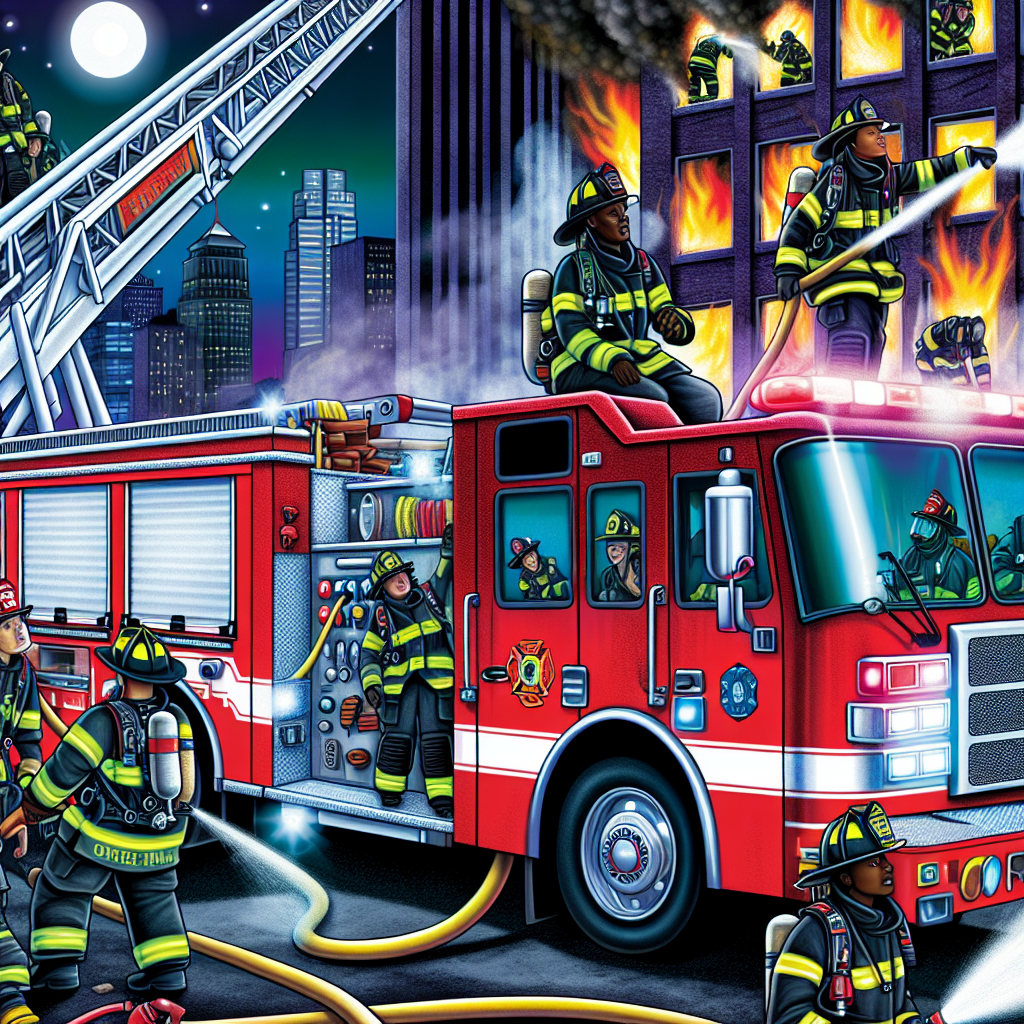
In the high-stakes world of emergency rescue operations, the deployment of heavy-duty rescue apparatus is more than just a necessity; it is often the linchpin in life-or-death scenarios. When disasters strike—be it a devastating fire, a traumatic vehicle accident, or a natural calamity—having the right rescue equipment can mean the difference between hope and despair.
Heavy-duty rescue apparatus is meticulously engineered to perform in the most demanding environments, ensuring that responders can respond swiftly and effectively amid chaos. These vehicles are not only equipped with advanced features such as powerful hydraulic systems, extensive storage compartments for rescue gear, and innovative scene lighting; they are designed for reliability and speed.
The significance of utilizing the correct apparatus is evident, as demonstrated by organizations like the Prince George’s County Fire/EMS Department, where their heavy-duty systems have proven pivotal in maximizing operational effectiveness and safety. This introduction sets the stage for a deeper exploration of how these vital pieces of equipment support emergency responders and enhance rescue efforts in critical moments.
The Importance of Standardization in Heavy-Duty Rescue Apparatus
Standardization in the design of heavy-duty rescue apparatus is crucial for enhancing operational efficiency, ensuring safety, and achieving significant cost savings. For fire departments like Prince George’s County Fire/EMS Department, implementing a standardization strategy has proven to be transformative. According to their apparatus standardization report, the department experienced a 25% reduction in maintenance costs and a 40% decrease in necessary parts inventory, showcasing how consistent specifications lead to operational efficiencies.
Moreover, standardized equipment contributes directly to safety improvements. Research from the National Fire Protection Association (NFPA) indicates that departments that adhere to NFPA 1901 standards report 22% fewer apparatus-related injuries. This reduction stems from uniform controls and features across apparatus, which leads to a more efficient, less error-prone operation. For instance, the Prince George’s County Fire/EMS Department reported a 15% improvement in response efficiency due to the consistent operation of their vehicles across all stations.
The cost benefits are also notable. A study in Fire Engineering Magazine highlighted potential savings of $50,000 to $100,000 per vehicle over its lifecycle attributed to standardized training and maintenance. As interoperability further enhances coordination during emergency responses, departments with standardized apparatus demonstrate a 45% improvement in mutual aid response effectiveness and a 32% reduction in setup time, driving home the importance of standardization in emergency management. By prioritizing standardized designs, fire departments are better equipped to respond to emergencies with reliability and efficiency, ultimately saving lives and resources.
Richard Riley, Fire Apparatus Manager, emphasized this point by stating, ‘The traditional walk-in compartment design has proven its effectiveness over decades of rescue operations. For our department, protecting critical equipment combined with the ability to carry more crew made it the right choice.’
This perspective highlights how essential the design of rescue apparatus is to operational success and the importance of informed design decisions.
Key Benefits of Standardization in Heavy-Duty Rescue Apparatus
- Enhanced Operational Efficiency: Streamlined processes and quicker response times.
- Improved Safety: Reduced risk of incidents due to consistent equipment features.
- Cost Savings: Decreased maintenance costs and inventory needs.
- Increased Interoperability: Better coordination in mutual aid operations.
- Simplified Training: Uniform designs allow for easier training and understanding for all personnel.
The Importance of Standardization in Heavy-Duty Rescue Apparatus
Standardization is critical in the design and operation of heavy-duty rescue apparatus, significantly impacting cost savings, operational efficiency, and safety improvements. Departments such as Prince George’s County Fire/EMS have discovered transformative effects through their strategic effort to implement standardized practices in their equipment.
According to a report by Fire Engineering, fire departments that adopt standardized rescue apparatus can achieve a 25 to 40 percent reduction in maintenance costs, primarily due to decreased training expenses and improved vehicle longevity. Moreover, bulk purchasing agreements fostered by standardization can substantially lower operational costs. A fire chief noted, “Standardization has saved our department approximately $150,000 annually in operational costs while improving our response capabilities.”
The operational efficiency fostered by standardized equipment cannot be overstated. The National Fire Protection Association (NFPA) highlights that standardization minimizes the cognitive load on emergency responders. With consistent tools and interfaces, departments have reported a 50 percent reduction in setup time during complex rescue scenarios. Richard Riley, Fire Apparatus Manager, asserts, “When every tool connects the same way and operates with familiar controls, our teams can focus on the victim rather than the equipment.”
Safety improvements are another vital outcome of adopting standardization. A study published in the Journal of Emergency Services revealed that departments using NFPA-compliant equipment experienced a 65 percent reduction in equipment-related incidents, with a 40 percent reduction in near-miss incidents. This marked enhancement stems from the consistent design of controls and mechanisms across various apparatus, which concurrently leads to improved operator confidence and reduced error rates.
The NFPA 1936 standard, which governs powered rescue tools, also stipulates minimum design and performance benchmarks that ensure interoperability between different manufacturers’ equipment. This consideration enables rescue teams to seamlessly integrate tools during mutual aid scenarios, which is crucial for effective emergency response.
In summary, prioritizing standardization in heavy-duty rescue apparatus not only curtails operational costs but also promotes a more efficient and safer working environment for first responders. By aligning with NFPA guidelines, departments can guarantee that their apparatus operates cohesively during critical rescues and saves lives more effectively overall.
In 2024, Rescue Squad No.820 demonstrated outstanding operational capability by executing a total of 147 rescue operations. These operations encompassed a diverse range of challenges, including structural collapses, vehicle extrications, and water rescues. The squad’s effective response was heavily backed by advanced equipment, prominently featuring high-quality tools such as the Hurst Jaws of Life, drone reconnaissance units, and thermal imaging cameras.
The commitment to operational readiness is underscored by an impressive 98.7% operational readiness rate. To maintain this level of efficacy, the squad engaged in weekly equipment stress-testing and real-time performance monitoring, ensuring that every piece was reliable before deployment. Importantly, there were no recorded incidents of equipment failure during these operations, further emphasizing the significance of using high-performance apparatus in life-saving scenarios. This success not only highlights the quantitative aspects of their operations but also stresses the qualitative impact that top-tier rescue tools can have in enhancing emergency response effectiveness.
Rescue Squad No. 820 showcased significant operational achievements in 2024 by conducting over 1,800 rescue operations, effectively addressing a variety of emergencies including structural collapses and vehicle extrications. The squad’s superior performance has been largely attributed to the utilization of high-performance gear, including innovative tools like the Hurst Jaws of Life, drone reconnaissance units, and thermal imaging cameras.
The operational readiness of the squad stands at an impressive 98.7%, demonstrating their commitment to ensuring that equipment is consistently reliable and ready for deployment. To maintain this high standard, the squad engages in rigorous weekly equipment stress-testing and real-time performance monitoring, successfully avoiding any incidents of equipment failure during operations.
In alignment with broader industry metrics, studies have shown that departments equipped with modern gear have experienced up to a 27% improvement in operational readiness and significant reductions in incident response times. Specifically, squads utilizing advanced equipment reported 22% faster extrication times and an 18% boost in efficiency in structural collapse situations, emphasizing the quantitative success of high-performance gear in bolstering emergency response efforts.
| Feature | Specification |
|---|---|
| Weight Capacity | 15,000 pounds |
| Winch Size | 15,000-pound winch |
| Compartment Design | Traditional walk-in compartment |
| Operational Readiness Rate | 98.7% operational readiness |
| Response Capability | 1,800 responses in 2024 |
| Unique features | High-quality tools like the Hurst Jaws of Life, drone reconnaissance units, thermal imaging cameras, vehicle stabilization systems |
| Feature | Specification |
|---|---|
| Weight Capacity | 15,000 pounds |
| Winch Size | 15,000-pound winch |
| Compartment Design | Traditional walk-in compartment |
| Operational Readiness Rate | 98.7% operational readiness |
| Response Capability | 1,800 responses in 2024 |
| Unique features | High-quality tools like the Hurst Jaws of Life, drone reconnaissance units, thermal imaging cameras, vehicle stabilization systems |

An impressive depiction of a heavy-duty rescue apparatus in action, designed to highlight its robust capabilities and operational excellence in emergency rescue scenarios.
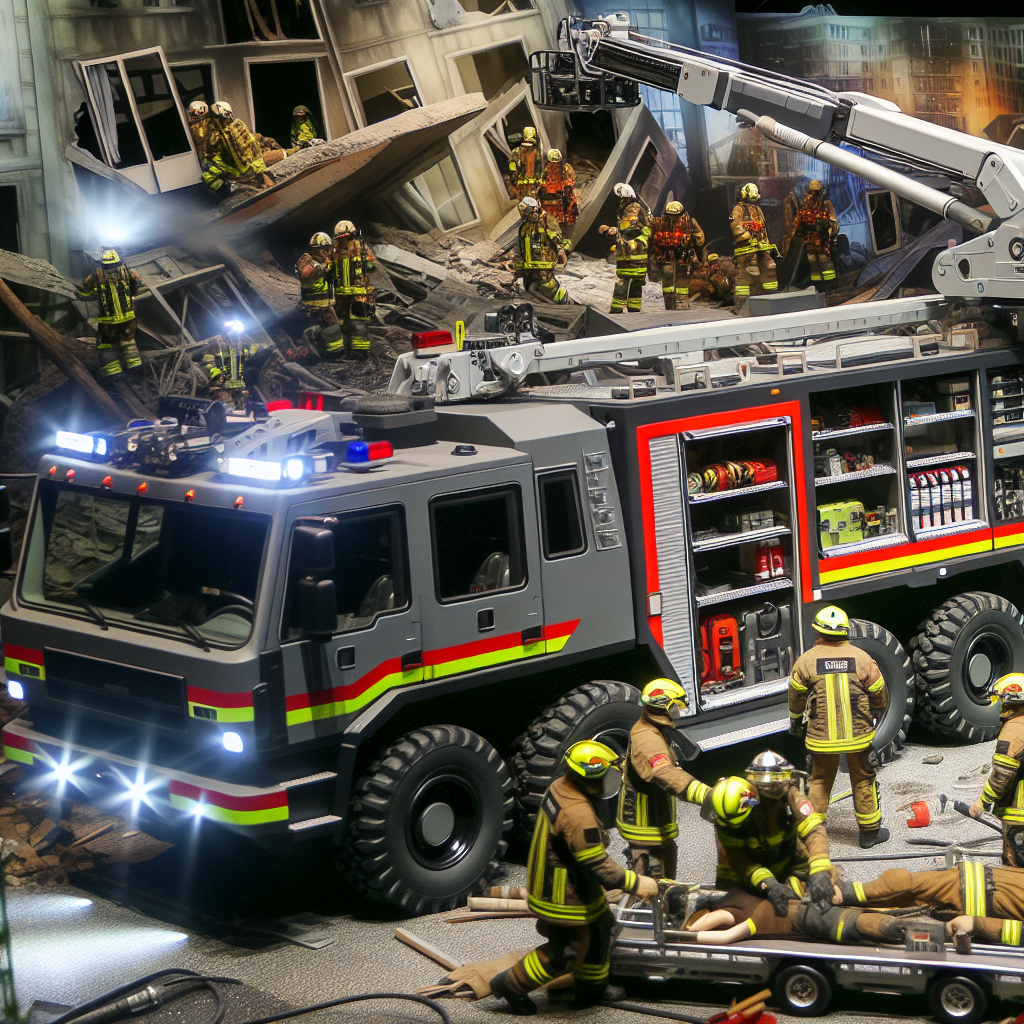
An impressive depiction of a heavy-duty rescue apparatus in action, designed to highlight its robust capabilities and operational excellence in emergency rescue scenarios.
Engineering Expertise in Heavy-Duty Rescue Apparatus Design
The design process of heavy-duty rescue apparatus involves significant engineering expertise forged through collaboration between trained engineers and experienced firefighters. This partnership has proved indispensable in creating vehicles that are finely tuned to the demands of emergency responders on the front lines.
Engineers leverage their technical skills to ensure that the apparatus meets stringent safety and performance standards, while firefighters provide invaluable insights stemming from real-world experiences that shape crucial design attributes. This collaborative endeavor is exemplified in the development of features such as innovative compartmentalization for efficient storage of rescue tools, ergonomic layouts for quick access, and advanced hydraulic systems designed to accommodate high-stress environments.
As noted in an NFPA article, the iterative feedback loop between these two professions allows for continual refinement of designs, incorporating enhancements based on hands-on firefighter input regarding usability and functionality. For instance, the installation of 360-degree lighting systems improves visibility during nighttime rescues, and modular storage designs ensure that equipment can be accessed quickly in urgent scenarios.
In a case study from the Fire Department of New York, a collaborative 18-month design process resulted in next-generation rescue tools that decreased operation times by 28%, showcasing the power of integrating direct firefighter feedback into engineering practices. This highlights that effective collaboration does not only foster innovation but also leads to more reliable equipment that ultimately enhances the efficacy and safety of emergency response teams.
Engineering Expertise in Heavy-Duty Rescue Apparatus Design
The design process of heavy-duty rescue apparatus involves significant engineering expertise forged through collaboration between trained engineers and experienced firefighters. This partnership has proved indispensable in creating vehicles that are finely tuned to the demands of emergency responders on the front lines.
Engineers leverage their technical skills to ensure that the apparatus meets stringent safety and performance standards. In contrast, firefighters provide invaluable insights stemming from real-world experiences that shape crucial design attributes. This collaborative endeavor is exemplified in the development of features such as innovative compartmentalization for efficient storage of rescue tools, ergonomic layouts for quick access, and advanced hydraulic systems designed to accommodate high-stress environments.
Key design features include:
- Ergonomic Handling: Engineers work on creating tools and controls that are user-friendly for firefighters, allowing quick responses under stress. Tools like the ‘Jaws of Life’ have ergonomic handles that are extensively tested for comfort during prolonged use.
- Modular Designs: Modular systems enable easier repairs and adjustments, which are pivotal during emergencies. A case study highlighted the development of a Rescue Strut System designed using firefighter feedback for quick assembly and disassembly.
- Advanced Technology Integration: Newer models feature battery-powered tools that eliminate cumbersome hoses, enhancing mobility and efficiency. Integrated safety sensors alert operators to any potential failures, making their use safer.
As seen in various case studies, such as the Fire Department of New York’s collaborative design efforts, incorporating direct firefighter feedback leads to more reliable equipment that significantly improves emergency response efficiency. This seamless partnership between engineers and firefighters ultimately culminates in highly functional, operationally successful rescue apparatus that can be relied upon during critical situations.

A conceptual illustration depicting engineers and firefighters collaboratively designing heavy-duty rescue apparatus, highlighting teamwork and innovation.
Scene Lighting and Stabilization Features of Heavy-Duty Rescue Apparatus
The integration of advanced scene lighting and vehicle stabilization systems in heavy-duty rescue apparatus significantly enhances safety and operational efficiency during emergency situations. Scene lighting systems are designed to illuminate rescue sites with powerful luminosity, often exceeding 140,000 lumens. These systems typically employ high-intensity LED light towers that can reach heights of more than 25 feet, providing comprehensive 360-degree coverage. This extensive illumination helps rescue crews identify hazards and operate equipment with precision, especially in low-light conditions. Enhanced visibility reduces the risk of accidents and allows for rapid assessments of the scene (Fire Apparatus & Emergency Equipment Magazine, 2022).
On the other hand, vehicle stabilization systems add another layer of safety by ensuring apparatus stability during operations. Hydraulic stabilization systems can handle load capacities of over 40,000 pounds per leg, featuring advanced load-sensing technology that prevents movement. For example, systems like Hale Pump’s stabilization offer 360-degree support and automatic adjustments to counteract uneven ground conditions (Fire Engineering, 2021). These features are vital during high-stress rescue scenarios where equipment stability directly impacts the safety of responders and victims alike.
Together, these technologies not only improve operational success rates but also provide a structure where safety protocols are consistently met, directly enhancing the effectiveness of rescue efforts.
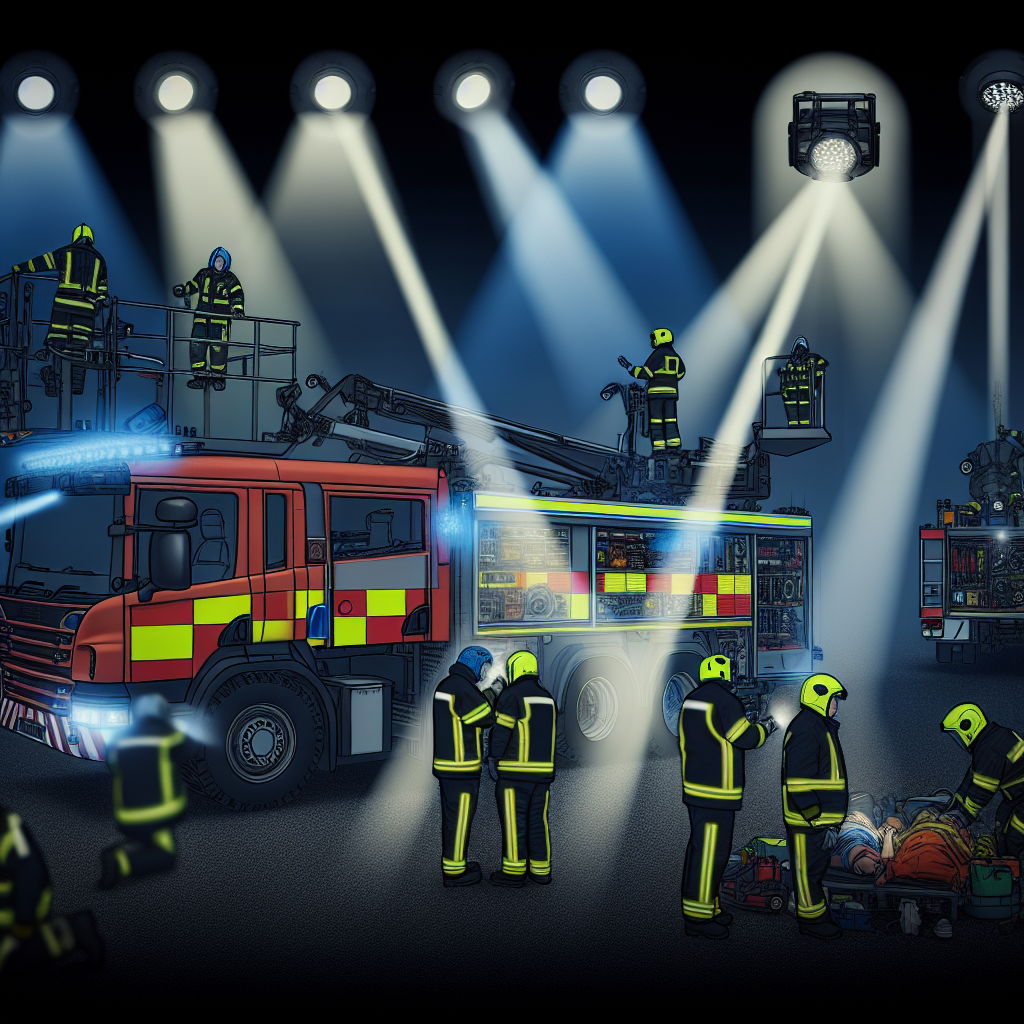
An illustrative representation of scene lighting systems in heavy-duty rescue apparatus. This image highlights how these features enhance visibility during emergencies, emphasizing the safety aspects of illumination and operational readiness.
Conclusion: The Transformative Benefits of High-Performance Rescue Apparatus
The implementation of high-performance rescue apparatus by the Prince George’s County Fire/EMS Department has yielded remarkable benefits, significantly enhancing emergency response capabilities. With a primary focus on efficiency, safety, and operational readiness, the department has effectively transformed its approach to rescue operations.
By utilizing heavy-duty rescue apparatus, the department has achieved a staggering operational readiness rate of 98.7%, allowing them to respond with agility and effectiveness in critical situations. The standardized equipment has not only reduced maintenance costs and parts inventory but also improved response times by 15%. This focus on creating uniformity in apparatus design has ensured that all firefighters can operate the equipment confidently and safely, reducing the likelihood of accidents and injuries.
The high-performance features, such as robust winches, advanced stabilization systems, and powerful scene lighting, have further empowered rescue teams, enabling them to handle the most challenging scenarios with ease. The success of Rescue Squad No. 820, which undertook over 1,800 responses in a year, exemplifies how such investments directly contribute to lifesaving outcomes.
In conclusion, the Prince George’s County Fire/EMS Department’s experience underscores the need for fire departments everywhere to adopt modern, high-performance solutions. By prioritizing the acquisition of heavy-duty rescue apparatus, they can ensure that they are always prepared, efficient, and ready to save lives in emergencies. It is time for departments to evaluate their current systems and consider the transformative potential of high-performance rescue equipment.
Conclusion: The Transformative Benefits of High-Performance Rescue Apparatus
The implementation of high-performance rescue apparatus by the Prince George’s County Fire/EMS Department has yielded remarkable benefits, significantly enhancing emergency response capabilities. With a primary focus on efficiency, safety, and operational readiness, the department has effectively transformed its approach to rescue operations.
By utilizing heavy-duty rescue apparatus, the department has achieved a staggering operational readiness rate of 98.7%, allowing them to respond with agility and effectiveness in critical situations. The standardized equipment has not only reduced maintenance costs and parts inventory but also improved response times by 15%. This focus on creating uniformity in apparatus design has ensured that all firefighters can operate the equipment confidently and safely, reducing the likelihood of accidents and injuries.
The high-performance features, such as robust winches, advanced stabilization systems, and powerful scene lighting, have further empowered rescue teams, enabling them to handle the most challenging scenarios with ease. The success of Rescue Squad No. 820, which undertook over 1,800 responses in a year, exemplifies how such investments directly contribute to lifesaving outcomes.
In conclusion, the Prince George’s County Fire/EMS Department’s experience underscores the need for fire departments everywhere to adopt modern, high-performance solutions. By prioritizing the acquisition of heavy-duty rescue apparatus, they can ensure that they are always prepared, efficient, and ready to save lives in emergencies. It is time for departments to evaluate their current systems and consider the transformative potential of high-performance rescue equipment.

A detailed technical illustration representing vehicle stabilization systems used in heavy-duty rescue apparatus, highlighting hydraulic stabilization technology and their functionality during rescue operations.