
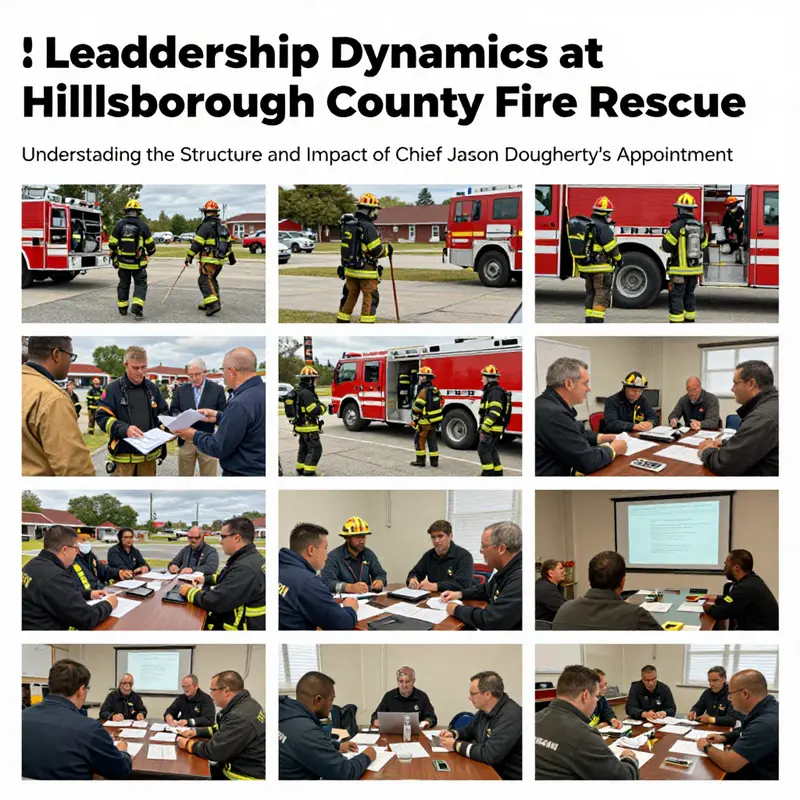
In the realm of fire services, leadership is pivotal, shaping operational effectiveness and community safety. This article delves into the recent leadership change at Hillsborough County Fire Rescue, spotlighting Jason Dougherty’s new role as Fire Chief. By examining the implications of his appointment, the responsibilities inherent in the role, and how effective leadership influences operational outcomes, we connect the dots between governance and service delivery. These insights will enlighten not only individuals and businesses that engage with fire rescue operations but also the community at large.
In the Driver’s Seat: A New Chief, A New Course for Hillsborough County Fire Rescue

A new chapter began for Hillsborough County Fire Rescue when the county announced a formal leadership transition at the start of 2024. On January 3, 2024, the department announced that Jason Dougherty would step into the role of Fire Chief, following his tenure as Deputy Chief of Administration. The announcement marked not just a change at the top, but a moment in the ongoing evolution of a large, diverse public safety agency whose mission extends far beyond suppression to prevention, education, and community resilience. The action signaled a deliberate move by Hillsborough County to align leadership with its broader goals of enhanced operational efficiency and more rigorous service delivery for residents across urban and rural communities alike. As with many modern public safety organizations, the leadership transition was presented as part of a broader strategy to foster a proactive, data-informed approach to emergency response, risk reduction, and organizational culture that can adapt to shifting demands in a rapidly changing county landscape.
Dougherty’s ascent from Deputy Chief of Administration to Fire Chief suggests a continuity that resonates with the department’s emphasis on governance, fiscal stewardship, and the smooth execution of policy. In many fire and rescue agencies, the deputy chief of administration oversees functions such as budgeting, procurement, personnel management, and administrative systems—areas that are essential to sustaining a capable, responsive emergency service. This background can be an important bridge to leading a large, multi-station organization where operational readiness, training standards, and community engagement hinge on rigorous administrative discipline. The public-facing aspect of such a transition often centers on trust and stability: residents want to know that appointments are deliberate, transparent, and designed to maintain high performance even as new leadership bring fresh perspectives.
The January announcement placed Dougherty in the role of chief at a moment when Hillsborough County Fire Rescue, like many departments, faces a spectrum of contemporary challenges. These include maintaining rapid response times across a geographically diverse county, expanding prevention programs in neighborhoods with evolving risk profiles, and integrating technology and data analytics into daily operations. The emphasis on leadership as a driver of efficiency and service delivery reflects that broader professional context. Leaders at the helm of fire rescue agencies carry responsibilities that touch every facet of emergency services—from incident command and rescue tactics to medical response, fire prevention, and public education. In Hillsborough County, the chief’s influence extends into strategic planning, workforce development, and interagency collaboration, all of which contribute to how the county’s residents experience safety and preparedness on a daily basis.
The public record highlights a continuity-driven rationale for Dougherty’s appointment. The county framed the move as part of an ongoing effort to optimize operations and strengthen community service delivery. This framing is not merely about personnel; it signals a philosophy that leadership should align with the county’s ambitions for modernization, accountability, and measurable impact. In conversations about public safety leadership, such positioning matters because it helps the community understand that change is not arbitrary but anchored in performance benchmarks, strategic priorities, and an explicit commitment to better outcomes for all residents.
Beyond the formal accession of a new Fire Chief, Hillsborough County Fire Rescue has recently undergone leadership changes that extend to other key positions within the department. The changes are described as part of a larger initiative to enhance operational efficiency and community service delivery across the county. While the precise backgrounds and roles of each new appointee may be detailed on the department’s official platform, the overarching theme is clear: leadership is being recalibrated to support a more agile, transparent, and collaborative organization. In a department where coordination between suppression, EMS, prevention, and administrative offices is essential, new appointments can ripple through every shift and station, influencing how plans are translated into action on the street.
For readers seeking a fuller picture of the current leadership landscape and the people who have joined Dougherty in steering the department, the Hillsborough County Fire Rescue website offers detailed profiles and updates. The site is a reliable touchstone for understanding how the department structures its leadership, what priorities are highlighted in public communications, and how the agency foregrounds accountability and performance. As with any public safety organization, the leadership narrative is inseparable from the daily realities of training, readiness, and service delivery. The stories behind the appointments—along with the day-to-day work of firefighters and staff—underscore how leadership at the top translates into tangible improvements for communities.
Leadership change in a public safety agency often invites questions about culture, morale, and professional development. The transition to a new Fire Chief can serve as a catalyst for a broader conversation about how the department cultivates its people. In Hillsborough County, the leadership shift invites reflection on how the agency balances tradition with innovation. It asks whether the department will intensify its focus on prevention, enhance its use of predictive analytics to anticipate incidents, and expand opportunities for career growth within a framework of safety, equity, and community trust. The implications reach into the training practices that equip frontline personnel, the administrative structures that support them, and the public-facing programs that educate residents about fire safety and preparedness.
A central thread in this developing narrative is the department’s commitment to professional development and certification as pathways to leadership. Fire service leadership relies on a deep foundation of technical competency, operational judgment, and the soft skills of communication, collaboration, and community engagement. As the department elevates a former deputy chief to the chief role, it highlights the importance of internal succession planning and the idea that leadership is earned through a track record of service, strategic thinking, and the ability to translate policy into practice on the ground. The narrative of Dougherty’s appointment is thus not simply about one person taking the reins; it is about signaling an organizational philosophy that values continuity, accountability, and a forward-looking approach to risk reduction and public safety.
In tandem with leadership changes, the department’s public communications emphasize the ongoing effort to strengthen service delivery in a county with varied needs. Hillsborough County includes densely populated urban areas, fast-growing suburbs, and more rural pockets where response times, resource allocation, and prevention outreach can differ markedly. A leader who has experience in administration, budgeting, and policy implementation can play a critical role in ensuring that resources are aligned with needs, that training pipelines remain robust, and that community engagement remains a priority. Succession planning, after all, is not a generic exercise; it is a strategic approach to ensuring resilience in the face of changing demographics, climate-related risks, and evolving emergency response paradigms.
Within this broader frame, the leadership transition invites attention to how the department governs itself and how it communicates with the public. The public often looks for clarity about who makes decisions, how those decisions are made, and how residents can access information about services, safety programs, and emergency readiness. The appointment of a new Fire Chief can heighten the importance of transparent governance, clear performance metrics, and accessible channels for community feedback. It is a reminder that leadership in public safety is as much about listening as it is about directing. The county’s ongoing effort to enhance efficiency and service delivery signals a commitment to making the department more responsive to the evolving concerns of residents—from wildfire risk in outlying areas to the daily realities of medical emergencies and fire prevention education in schools and neighborhoods.
As readers reflect on this leadership moment, it is useful to consider how the department’s leadership structure contributes to integrated risk reduction. The Chief’s role is to steer a complex organization that must coordinate across operations, training, prevention, EMS, and administrative functions. A cohesive strategy requires not only a clear vision but also the capacity to execute, measure, and adapt. This is where the alignment of leadership with operational practice matters most. The transition from Deputy Chief of Administration to Fire Chief carries implications for how the department prioritizes efficiency, oversight, and the deployment of its most valuable asset: its personnel. The people who wear the badge, who train to high standards, who respond to calls at any hour, are the living embodiment of the department’s mission. A leader’s effectiveness, then, is judged not only by annual reports and response times but by the morale, professional growth, and steadfast commitment of those on the front lines.
In closing the immediate circle of change, the Hillsborough County leadership transition deserves attention not only for its headline value but for what it suggests about the county’s approach to safety as a public good. The shift signals a deliberate intent to blend established strengths with a forward-facing orientation—one that uses data, training, community engagement, and strong administrative backbone to improve outcomes for residents. It is a reminder that leadership in public safety is as much about stewarding trust as it is about directing operations. The road ahead will test how well the department can sustain its momentum, adapt to new threats, and continue to deliver high-quality services across the diverse communities it serves. The captaincy has changed hands, but the voyage continues, with a renewed emphasis on efficiency, accountability, and a shared commitment to protecting life and property throughout Hillsborough County.
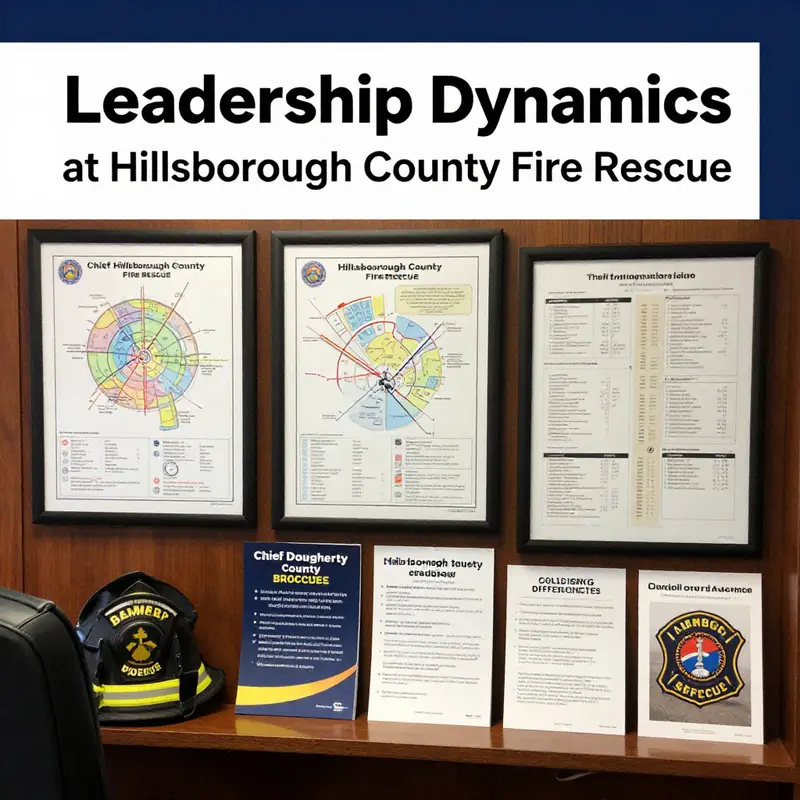
For readers seeking more detailed information about the appointments and the backgrounds of the newly formed leadership cadre, the Hillsborough County Fire Rescue website remains the best reference point. It provides updated bios, organizational charts, and the latest announcements about how the department is progressing toward its stated goals. As the chapter of this agency’s story unfolds, the public can watch how the leadership’s choices translate into concrete improvements—whether that means faster response times, more effective prevention programs, or enhanced training that keeps every firefighter and EMS professional at the cutting edge of the profession. The core idea remains straightforward: leadership at Hillsborough County Fire Rescue is being positioned to deliver measurable value to the community through disciplined administration, thoughtful strategy, and an unwavering focus on public safety.
To understand the broader trend of leadership and career development within the fire service, readers may also explore resources on career progression and safety certifications that illuminate how individuals advance to leadership roles. For readers interested in theリンク between professional development and organizational effectiveness, consider the discussion of how certifications shape pathways to leadership and the impact of training on mission performance. This connection between individual growth and organizational capacity is central to the department’s ongoing effort to cultivate a capable, resilient, and trusted public safety presence throughout the county. The link below opens a page that highlights the importance of certification and training as part of a firefighter’s career journey, underscoring the value of continuous learning in a field where expertise and judgment matter most in life-and-death moments. Unlocking Your Future: The Vital Role of Fire Safety Certificates in Your Career Journey.
As the organization moves forward under its new leadership, the public should expect ongoing communications about progress, milestones, and the factors that influence service delivery. The leadership announcement and related updates, including the appointment of key personnel, reflect a commitment to transparency and accountability. The department’s ability to translate strategic objectives into operational results will be tested in the coming months as new strategies are implemented, training programs are updated, and community partnerships are strengthened. Yet the core purpose remains clear: to safeguard lives and property while supporting the resilience and well-being of Hillsborough County’s diverse communities. The narrative of change is, at its heart, a narrative of service, responsibility, and a shared responsibility to keep the county safe and thriving in the years to come.
External resources provide additional context for readers who want to see how other observers view leadership transitions in public safety and how similar agencies navigate the complexities of large-scale operations. For a direct look at the official leadership announcement and the formal recognition of Dougherty’s appointment, readers can review the Hillsborough County Fire Rescue leadership communications on the county’s or the department’s official channels, including the LinkedIn post that first publicized the change. This external perspective helps frame the local developments within a broader landscape of public safety leadership practices and governance standards that guide agencies across jurisdictions.
External resource: Hillsborough County Fire Rescue Leadership Announcement. https://www.linkedin.com/company/hillsborough-county-fire-rescue/
null
null
Leadership in Action: Shaping Hillsborough County Fire Rescue’s Readiness
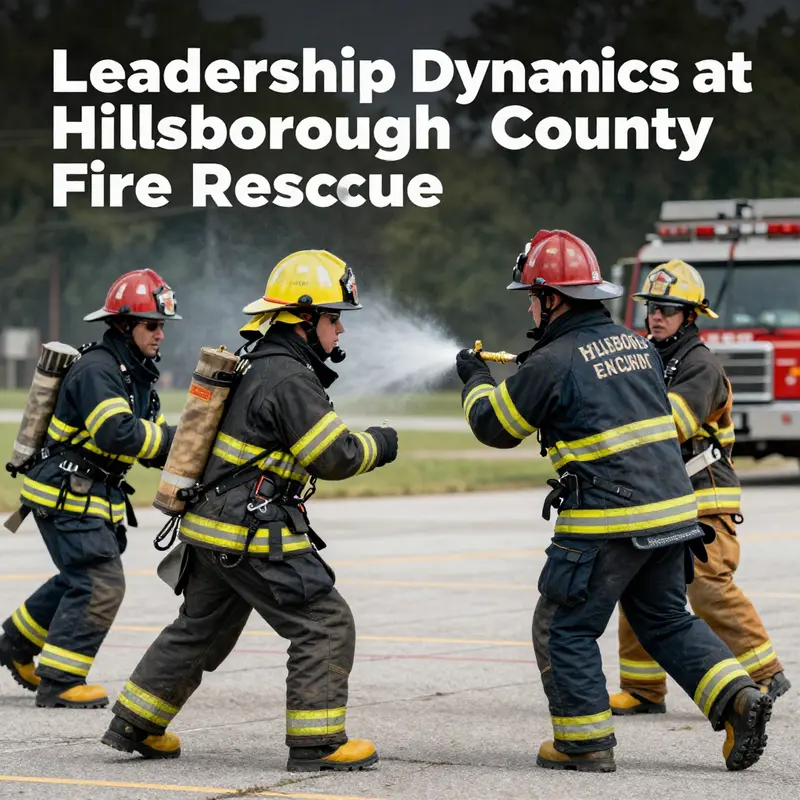
When Hillsborough County Fire Rescue appointed Jason Dougherty as Fire Chief on January 3, 2024, the department began a deliberate shift toward renewed readiness and accountability. Dougherty, formerly Deputy Chief of Administration, brought a perspective that bridged policy, training, and on scene decision making. His leadership emphasizes a clear command structure, rapid decision making, and a culture of continuous improvement, especially in urban search and rescue (USAR) where timing and coordination determine outcomes.\n\nIn this frame, leadership becomes a practical discipline: it aligns reconnaissance, responder safety, victim detection, and mapping of structures into a unified workflow. The National Institute of Standards and Technology’s RoboRescue framework provides a blueprint for integrating robotics and human teams, reminding leaders that technology should extend, not replace, human judgment. Hillsborough County has integrated drone reconnaissance, real-time telemetry, and cross agency drills to sharpen this integration.\n\nA core element of Dougherty’s approach is training and professional development. Structured exercises, after-action reviews, and partnerships with federal programs build resilience into routines, so responders can translate information into safe, decisive action even under pressure.\n\nThe leadership culture also centers on people: staffing strategies, equipment readiness, and safe and effective communication systems. By prioritizing collaboration with surrounding jurisdictions and continuous learning, the department positions itself to anticipate hazards and adapt to evolving risks. The outcome is a more agile department that can sustain long, complex incidents while preserving responder safety and public trust.\n\nThis chapter argues that leadership is a living practice, not a title. It is the daily choices to invest in people, to cultivate cross-discipline teamwork, and to pursue evidence-based improvements. For readers, the core takeaway is that readiness is created through consistent, discipline-driven leadership—one that turns data into action, feedback into change, and courage into dependable service to the community.
Final thoughts
As Hillsborough County Fire Rescue embarks on a new chapter under Chief Jason Dougherty’s leadership, the implications of this appointment are profound. Through an understanding of his roles and the operational responsibilities that accompany them, stakeholders—including individual car buyers, dealerships, and business owners—can recognize the value of effective leadership in enhancing community safety and operational efficiency. An engaged and well-supported fire service not only protects lives but also fosters confidence and security within the community.

