
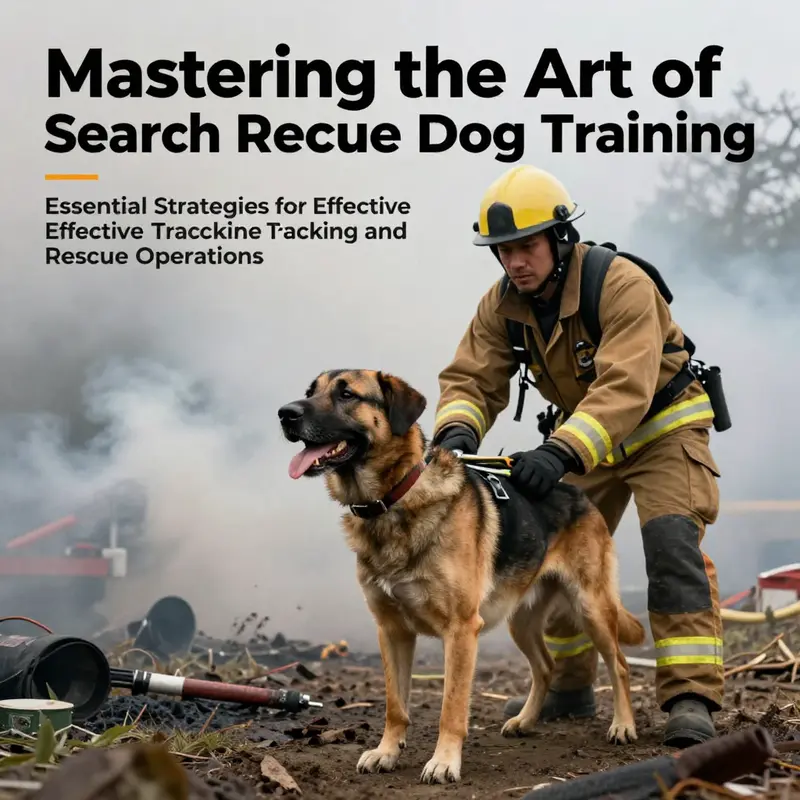
Training dogs for fire search and rescue (SAR) tracking is a meticulous endeavor that not only enhances canine capabilities but also fortifies the bond between handler and dog. Understanding the foundational principles of early selection, building motivation, and mastering search methodologies lays the groundwork for creating reliable partners in critical, life-saving scenarios. This article delves into the essential stages of training, from choosing the right breed to teaching the most effective search techniques, all crucial for ensuring that every search-and-rescue operation is successful.
Foundations in Focus: Early Selection and Core Training for Fire SAR Tracking
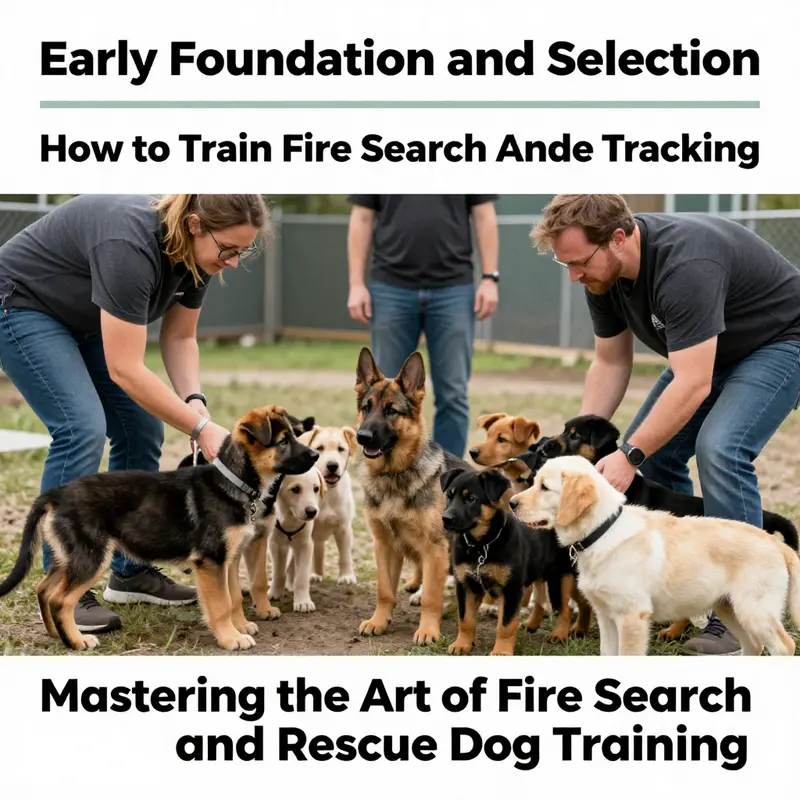
The foundation of effective fire search and rescue tracking rests in a deliberate, patient approach that begins long before a dog steps into a disaster zone. It is a quiet, almost architectural phase where instinct, habit, and trust are laid down with careful precision. In these early moments, the handler and the dog begin to read the same landscape, learning to translate subtle signals from terrain, weather, and human behavior into actionable search strategies. This is the work that creates not just a capable tracker but a dependable partner who can navigate collapsing structures, smoke, heat, and confusion while keeping safety and rescue as the guiding stars. The arc of this foundation runs from selection to early obedience, from socialization to the first steps in scent work, and from simple obstacle exposure to the first careful encounters with more challenging environments. It is, in essence, the process by which a puppy becomes a proficient tracker capable of making life saving decisions under pressure.
Early selection is less about chasing a perfect picture of a dog and more about identifying qualities that will mature under structured training. In many SAR programs, the age at which a dog is evaluated is a practical balance between cognitive readiness and physical capacity. The best candidates tend to show a natural aptitude for observation, an unflinching patience, a steadiness of nerve, and a body capable of enduring long hours of exertion in demanding conditions. The mental resilience to cope with noise, dust, uneven footing, and the unpredictable rhythm of an indoor or outdoor search is as vital as the stamina to carry a victim or to cover miles of rough terrain. While breed can influence working traits, the most successful teams often surface from a blend of temperament, environment, and training history. The selection process looks for a combination of alertness, problem solving, and cooperative disposition—traits that can be nurtured through structured practice rather than expected to emerge fully formed.
Once a dog is chosen, the early years become a period of shaping drive and focus in a way that remains harmonious with canine well being. The concept of search drive is not a single spark but a sustained flame that must be cultivated through consistent, humane reinforcement. Early foundation work centers on building confidence, teaching reliable obedience, and establishing a reliable reward structure that aligns the dog’s natural curiosity with the purposeful acts required in a real operation. The first steps are deceptively simple: basic obedience, socialization to a wide range of environments, and the development of a calm, attentive demeanor in the presence of distraction. The handler and dog learn to read each other’s signals—the way a glance, a tilt of the head, or a subtle change in body tension communicates intent. This is more than training; it is the first articulation of a shared language that will be pressed into service during a critical mission.
Central to this early phase is the controlled introduction to scent work. The scent article, often a piece of clothing previously worn by a person of interest, becomes a focus around which the dog learns to initiate a search on cue. The training approach emphasizes rewarding precise localization while teaching the dog to ignore irrelevant stimuli. The dog learns to distinguish human odor from surrounding smells, a skill that can be astonishingly sensitive. The scent work is not merely a test of nose power; it is a test of cognitive processing as the dog correlates the odor with location, time, and the presence of a potential victim. When the dog signals a find, the handler provides clear, consistent feedback, reinforcing the exact behavior that constitutes success. Over time, this forms the groundwork for a predictable search pattern that can be scaled to larger and more complex environments.
As the foundation solidifies, the dog encounters progressive challenges that mirror the realities of rescue scenes. Obstacle and environmental training becomes a critical thread in the fabric of early development. The dog learns to negotiate rubble piles, traverse uneven ground, and pass through tight spaces with balance and composure. These early sessions are purposeful, building not only physical capability but also spatial awareness. The canine gains an understanding of how to move through debris without causing further harm to itself or potential victims. The handler emphasizes safety protocols, creating a rhythm of movement that minimizes risk while maximizing search efficiency. In these moments, the partnership deepens as both dog and handler experience the thrill of small successes and the sober reminders of danger, cultivating a shared discipline that carries into every operation.
Training for fire scenarios begins as a gradual process of desensitization and focused concentration. Fire and smoke are inherently stressful, and the dog must be prepared to retain attention when heat, noise, and movement are present. The approach is incremental: careful exposure to mild stimulus, followed by longer, more intense experiences, all conducted under controlled conditions and with explicit safety measures. This progressive exposure reduces fear responses and builds the dog’s capacity to maintain a task-directed focus even when the surroundings are alarming. The goal is not to force fearlessness but to cultivate reliability—an ability to perform the required signaling and scent work in the midst of flames, smoke, and shifting currents of air. The result is a partner who can remain calm, execute search patterns, and maintain communication with the handler despite fear-inducing stimuli that would overwhelm an unprepared animal.
The development of search methodology in the early stage is a quiet art of scaffolding. Foundational exercises span simple box search drills, debris and urban search simulations, and elements of wilderness tracking. A box search introduces the dog to a methodical, systematic approach to scent localization. The dog learns to treat each container as a potential source, to move with measured confidence, and to signal in a controlled way that can be unambiguously interpreted by the handler. Debris and urban search simulations push the dog through the kinds of clutter and uncertainty typical of a collapsed structure. The dog follows subtle scent trails, navigates through debris fields, and signals at the precise location where a victim may be found. The wilderness component expands the dog’s repertoire to long-range tracking through variable terrain, requiring stamina, patience, and the ability to adapt to changing wind patterns and terrain features. These exercises are not merely drills; they are a progressive curriculum that layers complexity while preserving the dog’s motivation and emotional balance.
Underpinning this technical growth is the unspoken but essential bond between handler and dog. Bonding is not an optional flourish but the core mechanism by which a team translates training into operational usefulness. The relationship is built through consistent routines, shared goals, and a vocabulary of cues developed over countless hours in which the dog learns to anticipate the handler’s intent and the handler learns to interpret the dog’s signals with nuance. This bond becomes the channel through which discipline, judgment, and resilience flow. It is the quiet sense that, in the moment of a search, the team moves as a single organism rather than two separate participants. The mental synchronization that emerges from hours of practice enables the team to stay focused when fatigue sets in, to adjust tactics in response to evolving conditions, and to maintain a humane, safety-first approach that keeps both the search and the victim at the center of every decision.
Even in the earliest stages, continuous assessment is a guiding principle. Training is not a finite event but a persistent process of refinement, supported by a structured cycle of practice, feedback, and refreshment. The dog’s skills require regular reinforcement to prevent drift in performance. Certification or formal recognition is not an endpoint but a milestone along a longer continuum of readiness. The ongoing assessment framework ensures that the dog maintains the ability to interpret complex scents, adapt to unfamiliar environments, and respond to the evolving demands of real-world operations. These cycles of practice and recertification are opportunities to reintroduce the dog to new environments, broaden exposure to different types of scent, and recalibrate teamwork dynamics as needed. In this way, the foundation remains supple, not rigid, allowing the dog to grow with experience while preserving reliability and safety as primary values.
The typical arc of this foundational work stretches across a substantial period, often extending from the early weeks of training through a substantial portion of the first year and beyond. A conservative view places the foundation at a period spanning months of regular, structured practice, with the full maturation to the level of independent tracking requiring patience and continued engagement. In many programs, the timeline for reaching a level of operational reliability sits in a broader window that reflects the cumulative impact of physical conditioning, mental stimulation, environmental adaptation, and the cultivation of a robust handler-dog partnership. The idea is to move deliberately, allowing the dog to absorb lessons without being overwhelmed, to reward steady progress even when it appears incremental, and to maintain a relentless focus on safety for both dog and human teammates. If the story of a SAR dog is a narrative of commitment, the early chapters are where patience pays off in the form of a resilient, capable, and trusted partner.
For those designing or participating in foundational SAR tracking curricula, the alignment with established standards is essential. Foundational criteria should be clear, measurable, and adaptable to the individual dog’s pace and temperament. The aim is to create a robust baseline from which more specialized skills can grow. To explore a formal framework for foundational training and selection criteria, many programs refer to standardized protocols available from NASAR. This guidance helps ensure that the training approach remains consistent, rigorous, and aligned with professional expectations across agencies and regions. The emphasis is not on a one size fits all solution but on a principled, scalable methodology that preserves the core values of safety, reliability, and compassion for victims.
In practice, the early foundation becomes a tapestry woven from careful selection, patient teaching, scent-based discovery, and controlled exposure to the realities of fire and disaster environments. It is a preparation that honors both canine welfare and human need, recognizing that a well prepared dog is as essential to a rescue mission as any human team member. The chapters of this foundation feed into the larger narrative of training that follows, where the dog and handler advance into more demanding searches, refine signaling under stress, and expand their repertoire to respond to the unpredictability of real fires and collapses. The aim remains steady: to create a team whose competence is matched by its steadiness, whose courage is guided by discipline, and whose bond enables swift, accurate, and safe outcomes when every second counts.
As this foundation solidifies, it is worth noting a practical touchstone for readers and practitioners alike. The early years are the best time to embed a culture of ongoing learning, reflective practice, and open communication between handlers, trainers, and medical and safety officers. This culture supports not only technical growth but also the emotional resilience required when confronted with the aftermath of disasters. In the end, the most effective fire SAR tracking teams are those built on a well designed foundation that respects the animal’s nature, honors the handler’s expertise, and remains steadfast in its commitment to saving lives. The narrative of foundation is not a single stand-alone act but a continuous, evolving practice that informs every subsequent stage of the journey from puppy to proven tracker. For readers seeking a structured, recognized framework, the path is clear: foundational training anchored in careful selection, shaped by patient, humane practice, and reinforced by a consistent standard of excellence that guides every search, every signal, and every mission forward toward safer outcomes for those in peril.
Forging Focus and Drive: Crafting a Fire SAR Tracking Partner Through Integrated Training
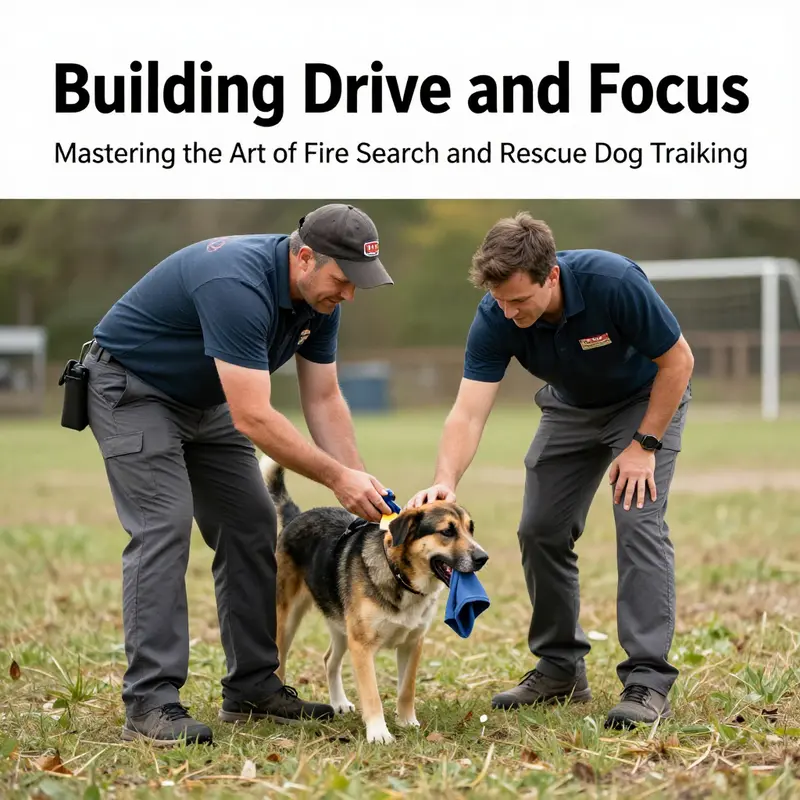
Training a fire search and rescue (SAR) dog is not just about teaching a sequence of behaviors; it is about shaping a reliable partner who can interpret danger, endure stress, and maintain precision when every decision matters. This chapter delves into building drive and focus, two closely linked traits that determine how quickly a dog can pick up a scent, follow a trail through rubble or smoke, and signal a correct locate to the handler. It is a craft built on repetition, realism, and an honest, enduring relationship between handler and dog. The path from a promising puppy to a fully capable SAR teammate unfolds in stages, each designed to cultivate the dog’s innate scenting abilities while training the handler to communicate clearly under pressure. The emphasis is not on flashy tricks but on durable performance in environments that test nerve, concentration, and cooperative problem-solving. In practical terms, the aim is to develop a dog who can ignore distractions, tolerate heat and noise, and stay on scent despite changing wind, terrain, and time since the initial incident. This is the bedrock of effective fire SAR tracking.
Foundations take shape early, with careful selection and initial socialization that sets the tone for the entire training arc. Most trainees come from breeds with proven work ethics, athletic stamina, and a calm, confident temperament. The first months emphasize obedience, socialization, and the formation of a strong, trusting bond with the handler. A young dog learns to respond to a consistent set of signals and cues, where the line between a task and a cue remains clear in the dog’s mind. The training environment is deliberately distraction-free at first to establish reliable scent discrimination and obedience. Even in those calm beginnings, the emphasis is on nose over sight: the dog learns to trust its nose as the primary tool for finding a scent source, a principle that becomes crucial in smoke-filled or low-visibility conditions where the eye cannot see the trail.
One of the most important early exercises is to cultivate the dog’s “search drive,” the intrinsic motivation to seek out hidden sources. This is fostered through controlled games and scent-based challenges that mimic real hunts. A scent article—an item carrying a person’s odor—serves as the anchor for these exercises. The dog learns to detect the odor on the article, then follows a guide or a structured search plan to locate the source. The dynamics of reward and feedback reinforce confidence and precision: praise, gentle corrections, and tangible rewards align the dog’s focus with the handler’s expectations. The goal is not only to locate a scent but to do so with consistency and reliability across contexts. As the dog matures, the drives are directed toward sustained effort, measured decision-making, and clear signaling to alert the handler when the target is found.
With foundation in place, the training progresses to more demanding terrain and longer, more complex tracks. The shift from short tracks of 50 to 100 meters in a controlled setting to longer, more challenging lines signals the movement from simple scent discrimination to sustained tracking under variable conditions. Advanced stages introduce tracks up to 800 meters, with deliberate turns and potential disturbances in scent. This is where the dog learns to manage the natural variability of scent dispersion: how wind direction, microclimates within a disaster zone, and even temperature gradients influence odor plumes. It is a practical exercise in patience. The dog cannot be rushed; instead, the dog learns to follow the fragrance trail that remains even as the scent diffuses, fades, or hides behind debris. The handler, in parallel, learns to interpret subtler cues—the slight shift in stance, a change in breathing rate, a micro-movement of the head—that signal a potential change in the trail. The synergy is reinforced with feedback loops: if a turn leads away from the scent, praise for re-anchoring the search; if a wrong turn is taken, a calm redirection that preserves confidence rather than eroding trust.
Environmental variability becomes a deliberate feature of the curriculum. Real SAR operations rarely occur in pristine conditions. The dog must adapt to a broad spectrum of climates, terrains, and atmospheric dynamics. Training environments evolve to include wind shifts, humidity changes, and temperature swings that alter how scent travels. The dog learns to anticipate and adjust, rather than panic or fixate. This is where realism and repetition converge: repeated exposure to diverse conditions builds mental endurance and reduces the likelihood of reaction in the field. It is not enough for the dog to locate a scent once; the dog must demonstrate repeatability under a spectrum of circumstances. A key strategy is to introduce aged scents—sources that have been in place for several hours—to mimic the delays often encountered in real incidents. Age and intensity challenge the dog to rely on the olfactory memory of the scent trail and to remain motivated even when fresh cues are absent.
Realistic scenario-based training elevates focus through multi-source tracking and complex terrain navigation. In the earliest phases, a dog may track a single subject’s scent to build confidence. Later, the dog is exposed to multi-source settings where different scents compete for attention: a missing person’s odor among decoys, or a scent trail interwoven with structural odors from the environment. This trains discernment—the ability to attach the trail to the correct target and to resist distractions that otherwise would steal the dog’s attention. Training in rubble fields, collapsed structures, and urban debris underscores the importance of safety, balance, and careful movement. The dog learns to move through narrow passages, over unstable surfaces, and around unpredictable obstacles without losing the trail. These sessions reinforce not only physical agility but also the mental discipline necessary to maintain a steady search pattern when risk is high and visibility is poor.
Trust and bonding form the emotional backbone of the SAR partnership. The handler-dog relationship evolves from a supervised routine into a nearly seamless partnership. Consistency, empathy, and clear communication underpin this bond. The dog is responsive not just to explicit commands but to the handler’s tone, posture, and subtle gestures. A glance can signal caution or encouragement; a hand signal can adjust pace or direction with minimal vocalization. This intuitive alignment reduces cognitive load during operations, helping the dog stay mission-focused even when the environment is chaotic. In practice, the best teams often surpass mere competence: they operate with a shared internal map of the search strategy, an almost telepathic sense of when to switch from tracking to signaling, and an ability to interpret the trainer’s expectations without visible prompts. The result is an operational rhythm in which the dog’s signaling becomes a trustworthy, low-noise cue that the handler can rely on in times of extreme stress.
As the dog’s capabilities grow, the training embraces the realities of fire and smoke adaptation. Fire scenarios demand rapid desensitization to heat, flare-ups, and the sensory onslaught that accompanies active fires. The approach is progressive: begin with minimal exposure, gradually increasing intensity while maintaining a focused, composed search. The dog learns to suppress natural fear responses and remain locked onto the scent trail, even as flames or smoke become salient in the periphery. This desensitization is paired with practical safety protocols for the handler and dog, including the ability to retreat to a safe position and resume the search, preserving momentum without compromising safety. It is a delicate balance—the dog must be alert to cues from the environment while staying dedicated to the scent trail and signaling accurately when a locate is achieved. The training sequence also teaches the dog to interpret environmental odors—soot, char, and burnt debris—that might otherwise mislead or overwhelm a weaker animal.
The chapter’s core methodologies—box searches, debris/urban searches, and wilderness tracking—frame the dog’s skillset in concrete terms while maintaining a flexible, adaptable mindset. Box searches lay the groundwork for systematic exploration; the dog learns to check containers, corner spaces, and small volumes, signaling when a scent source is found. Debris and urban search simulate the complexity of collapsed structures, requiring close attention to scent trails that twist, disappear, or reappear through rubble. Wilderness searches extend the discipline to longer distances, uneven terrain, and changing natural conditions. Across these modalities, training emphasizes the primacy of scent over sight, ensuring the dog relies on olfactory cues in smoky or low-visibility environments. The handler’s role remains critical, guiding the search with calm, precise commands and adjusting pace to the dog’s stamina and concentration.
Technology enters the training ecosystem as a force multiplier rather than a replacement for canine work. Drones equipped with thermal imaging and AI-assisted pattern recognition extend situational awareness, enabling handlers to identify likely areas of interest before the dog enters a zone or to obtain real-time feedback on scent dynamics. GPS collars and data-tracking tools provide post-training analytics, showing decision-making patterns, pace, and search coverage. These tools help trainers fine-tune the balance between drive and focus, ensuring the dog remains on track while allowing the handler to interpret performance trends and adjust practice drills. Despite the role of technology, the dog’s nose remains the centerpiece. The most effective SAR teams couple high-skill scent work with disciplined observational skills, so the dog can operate with minimal reliance on external devices during an actual deployment.
The long arc from novice to certified performance is anchored by a simple but powerful framework: repetition, realism, and relationship. Repetition builds neural pathways, reinforcing the dog’s automatic responses to scent cues and signaling. Realism ensures that the training mirrors the urgency, unpredictability, and risk of real events, from urban collapse to wildfire smoke. Relationship translates to trust, mutual understanding, and a shared sense of mission—qualities that turn a capable dog into a dependable life-saving partner. Veteran trainers emphasize a crucial takeaway: the dog does not need to be perfect; it needs to be focused, motivated, and trusted. The handler’s job is to protect that focus, sustain motivation, and nurture the bond that makes the partnership coherent under stress. The chapter’s comprehensive approach recognizes that drive and focus are not isolated traits but integrated capacities that emerge from a well-planned, ethically guided, and continuously evaluated training program. A well-tuned SAR dog can translate the quiet confidence of a patient nose into decisive action when seconds count and debris shifts beneath a rescue candidate.
The path to mastery is measured in time and care. The recommended trajectory from puppy to certified SAR agent commonly spans 1.5 to 3 years, a period during which physical conditioning, cognitive training, environmental adaptation, and emotional bonding mature in step. The pace respects the dog’s physiology and temperament, avoiding rushed milestones that could undermine reliability. Regular re-certification and refresher sessions keep skills sharp, ensuring that a once-certified dog does not drift into complacency. As this chapter has shown, the success of fire SAR tracking rests on a few durable truths: a well-chosen dog with robust drive, a handler who communicates with clarity and empathy, and a training ecosystem that blends controlled learning with demanding, real-world simulations. The result is a resilient SAR partner capable of navigating the most challenging scenes—the rubble, the smoke, the heat—while maintaining a precise scent trail, signaling accurately, and protecting human lives.
The broader takeaway for aspiring handlers and trainers is pragmatic and hopeful. Build early foundations with deliberate socialization and scent discrimination; cultivate drive through rewarding, scent-based challenges; escalate to longer, more complex tracks that test endurance and decision-making; and always couple physical training with the development of trust and communication. Embrace realism that mirrors the chaos of actual deployments, but balance it with safety and thoughtful progression. Incorporate technology as a support system, not a replacement for the dog’s nose or the handler’s judgment. And above all, invest in the relationship—the implicit contract between human and dog that makes every search a coordinated, purposeful act of collaboration. For teams looking to explore additional breadth of practice, a glimpse into related training traditions and environments can be enlightening, such as the broader insights shared in Firefighter Training Tower Dedication, which offers perspectives on dedication, discipline, and multi-disciplinary training values in the field. Firefighter Training Tower Dedication.
External resource: https://www.dhs.gov/caninetraining
Systematic Pursuit: The Search Methodology that Shapes Fire SAR Tracking Training
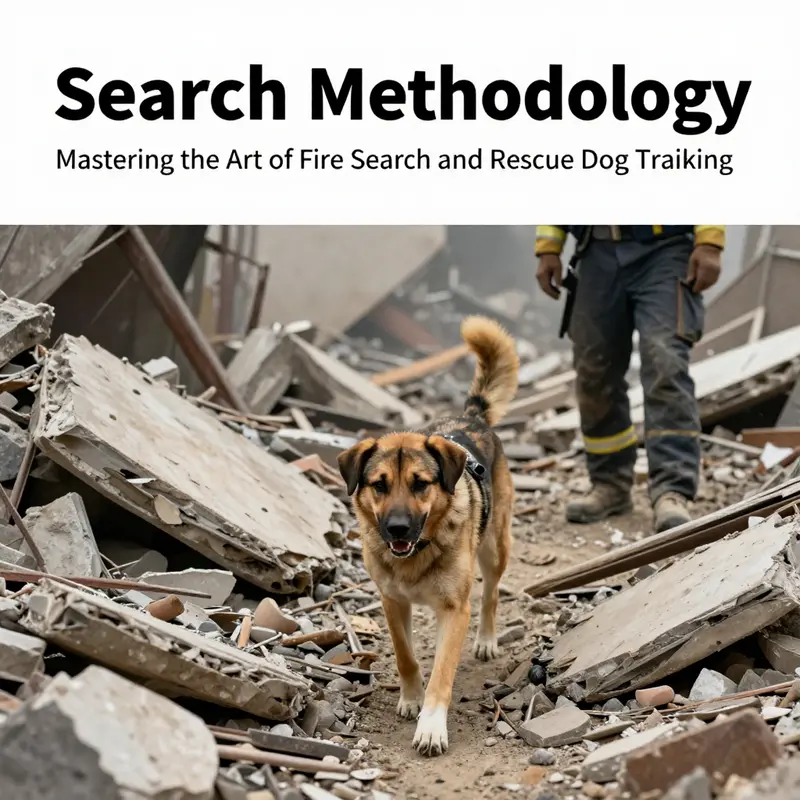
In the high-stakes environment of fire search and rescue, the value of a well-honed search methodology cannot be overstated. Training a canine partner for tracking through smoke, heat, and unstable debris is not merely about teaching a dog to follow a scent. It is about instilling a disciplined, repeatable process that keeps both dog and handler safe while maximizing the chances of locating a missing person or a trapped victim. The methodology is the backbone of every successful operation, a framework that translates instinct into reliable, measured action even when visibility is poor and conditions are changing by the minute. To understand how a trainer builds this capability, it helps to trace the continuum from fundamental fire dynamics to the nuanced instructional steps that turn raw scenting ability into a systematic search plan. The journey begins with an appreciation of how fire behaves and how structures respond under duress, then moves into the choreography of search patterns, the power of simulation, and the essential practice of continual evaluation. Each phase reinforces the others, weaving together theory, physical conditioning, and the intimate bond between handler and dog into a coherent, automatic response in the field.
Fire behavior is the first compass in this training map. A dog’s success depends not only on olfactory acuity but on how well the team anticipates the changing environment. For handlers, understanding heat release rates, flame paths, and the signs of impending structural instability informs how they position themselves and what risks they permit. In real-world theaters, debris shifts, collapsing ceilings, and shifting smoke layers create a dynamic maze. A dog must remain focused and confident as the ground beneath shifts and as echoes of distant sounds—cracking timbers, shifting rubble, or a distant shout—arrive from beyond the next obstacle. This is where the partnership between dog and handler comes into sharpest relief. The handler reads subtle cues—changes in breathing, tension in the leash, or a momentary hesitation—that signal the dog’s attention or a momentary distraction. The dog, in turn, looks to the handler for signals that translate scent into direction and purpose. The methodology thus treats scent as the starting line, but the victory depends on synchronized decision-making under pressure.
Core to this synchronization is the implementation of standardized search patterns. These are not robotic routines; they are disciplined strategies that guarantee coverage, limit backtracking, and preserve a traceable chain of actions. In a controlled urban setting, the Quarter Method divides a room into four sectors, ensuring no corner is left unchecked. In more open or complex environments, the Spiral Search begins at a central point and expands outward, preventing early exits from becoming blind spots. The value of such patterns lies in their predictability. When a dog signals a scent in a given sector, the handler knows exactly where the next area to be searched lies and how to move efficiently through potentially unsafe terrain. This structure reduces cognitive load during a crisis, allowing the dog to devote maximum mental bandwidth to scent discrimination while the handler concentrates on environmental safety, radio communication, and team coordination. The dialogue between desire to move quickly and the requirement to remain thorough is ongoing, but the methodology ensures that speed never compromises coverage.
Communication and marking are critical threads in the fabric of the search methodology. Clear, consistent communication between team members—two, three, or more responders depending on jurisdiction—ensures that everyone shares a common mental map of the search area. Marking tracked areas with visible indicators or GPS-backed notes makes it possible to return to a sector if necessary and to document how the search progressed in real time. The dog’s signaling behavior—whether it is a bark, a sit, or a specific posture—must be interpreted within a consistent framework. The handler trains the dog to signal in a way that is unmistakable and rapid, a signal that can cut through the noise of a chaotic environment. But the dog’s signaling is only half the equation; the handler’s response must be equally decisive. This mutual reliability stems from deliberate practice, scenario-based drills, and a shared language that evolves with experience. The goal is not merely to locate a target but to close the loop between discovery and action with minimal hesitation, ensuring that once a scent is confirmed, the team advances in a controlled, safe manner toward a potential victim.
Simulation technology and live-fire exercises are indispensable when it comes to translating synthetic training into field readiness. Modern training programs increasingly employ mock-up buildings, controlled burn environments, and high-fidelity debris piles to replicate the pressures of an actual mission. These facilities allow handlers and dogs to rehearse the entire sequence—from scent detection to signal, from securing the area to navigating through smoke and heat, and from relaying information to initiating rescue operations. Repetition under stress fosters resilience. It teaches both dog and handler to maintain composure as conditions deteriorate, to pace their movements to the dog’s pace, and to adjust signaling strategies to maintain clarity amid confusion. The psychological and sensory demands on the team are intense, yet the structured drills ensure that decisions remain deliberate rather than impulsive. Such exposure, when paired with progressive desensitization to fire and smoke, reduces fear responses and heightens situational awareness. The dog learns that the smell of a person is a stable, reliable beacon even as the environment around them becomes volatile, and the handler learns to protect the dog without sacrificing the search tempo.
The search methodology also encompasses the broader spectrum of candidate environments—debris and urban search, wilderness search, and the distinct challenges they present. In debris or urban searches, the scent path can be interrupted by collapsed masonry, dust, and confined voids. The dog is trained to follow subtle scent trails through irregular terrain, to detect signals through rubble, and to interpret changes in breath or movement that accompany a breakthrough in a blocked passage. This requires a dog to balance curiosity with caution, to probe rooms and voids without becoming overwhelmed by the magnitude of the scene. In wilderness searches, the scale expands and the terrain becomes unpredictable. The dog learns to track scent trails across uneven ground, through dense brush, and along ridgelines where wind patterns can carry odors unpredictably. The handler’s role becomes that of a navigator and guardian, ensuring that the dog’s path remains safe and that potential scent sources are approached methodically. Across all environments, the search methodology is designed to prevent procedural drift. Each drill ends with a clear debrief: what worked, what did not, and how the next exercise can be tuned to strengthen the team’s coherence.
A recurring theme within this methodology is continuous evaluation and certification. Proficiency decays without ongoing practice, particularly for teams operating under the duress of real incidents. Regular drills, performance assessments, and after-action reviews form the heartbeat of the program. After-action reviews do more than tally misses or near-misses; they illuminate decision points, highlight communications gaps, and reveal how environmental factors influenced outcomes. The feedback loops become catalysts for tactical evolution. As new research and incident data emerge, tactics and training sequences are revised to reflect current best practices. The aim is to keep the team’s approach flexible yet disciplined, capable of shifting from standard procedures to adaptive strategies without losing the thread of a proven search plan. The standard for certification thus becomes not a final destination but a milestone in a continuing journey of improvement. This mindset aligns with the broader ethos of fire service training, where knowledge is continually refined through observation, study, and real-world learning.
In this integrated framework, the dog’s training foundations—early selection, drive-building, environmental exposure, and the cultivation of a variable but trusted signaling language—are harmonized with the search methodology. The dog’s instincts are honed to operate within a structured pattern, and the handler’s leadership is reinforced by a consistent set of cues, checks, and safeguards. The bond between dog and handler is not an abstract rapport but an operational asset that translates scent into movement, signals into actions, and risk into a managed, recoverable pathway toward a victim. The most effective teams treat the search pattern as a compass, the signaling as a chorus, and the environment as a shared challenge to be met with calm, steady, practiced control. While the specifics of fire dynamics, standardized patterns, and simulation capabilities provide the scaffolding, it is the daily discipline of practice, the honest appraisal of performance, and the willingness to adjust a plan in light of new information that truly defines mastery.
This chapter’s synthesis of methodology thus emphasizes three pillars: first, a scientifically informed understanding of fire behavior and structure dynamics that grounds tactical decisions; second, a disciplined, auditable approach to search patterns, communication, and marking that ensures every corner is accounted for; and third, a rigorous culture of simulation, live-fire realism, and iterative evaluation that keeps the team sharp, cohesive, and ready for the unpredictable realities of an actual incident. The training path, long as it may be—from an eight-week foundation to a multi-year integration of scent, pattern, and performance—culminates in a partner who can be trusted to navigate fear, silence a room full of confusion, and guide a rescue to its vital end. The methodology is not just a curriculum; it is a shared language that turns a dog’s remarkable sense of smell into a reliable instrument for saving lives, even when the clock ticks louder than the dog’s own heartbeat.
For readers seeking further practical context on process-oriented safety and training resources, a useful starting point is the broader material on fire safety certification training, which helps handlers anchor their practice in foundational standards and overarching safety principles. This resource complements the field-specific drills described here and reinforces the idea that rigorous certification is part of an ongoing commitment to readiness and responsibility. (fire safety essentials certification training) As teams progress, the embedded mindset of continual improvement—grounded in tested methodology and reflective practice—becomes the true measure of readiness rather than any single drill outcome.
Looking ahead, the chapter to follow will explore how technology and data collection further augment this methodology. It will examine how sensory cues, signal timing, and terrain analysis can be codified into training modules, enabling more precise performance metrics and enabling handlers to tailor drills to the unique hazards of their jurisdictions. The aim remains constant: to translate the art of scent tracking into a dependable, repeatable discipline that keeps people safe inside burning structures and unstable environments. The narrative of effective fire SAR tracking is, at its core, the story of disciplined practice meeting high-stakes responsibility, where each search pattern, each signal, and each rescue plan is a thread in a larger, life-saving fabric.
External resource for broader theory and applied practice in related fire service technologies and decision-making can be consulted for deeper understanding of how tools like thermal imaging integrate into search operations. https://www.nfpa.org/Code-Updates/2024-Fire-Prevention-Week-Resources/Thermal-Imaging-Cameras-in-Fire-Service
Final thoughts
Effectively training a fire search and rescue dog requires a comprehensive approach, integrating early selection, drive-building activities, and refined search tactics. The entire process not only molds the dog’s abilities but enhances the handler-dog bond essential for synchronized rescue operations. With consistent practice and ongoing education, these dogs become indispensable allies in life-saving missions, showcasing the incredible potential within every canine to respond to emergencies.

