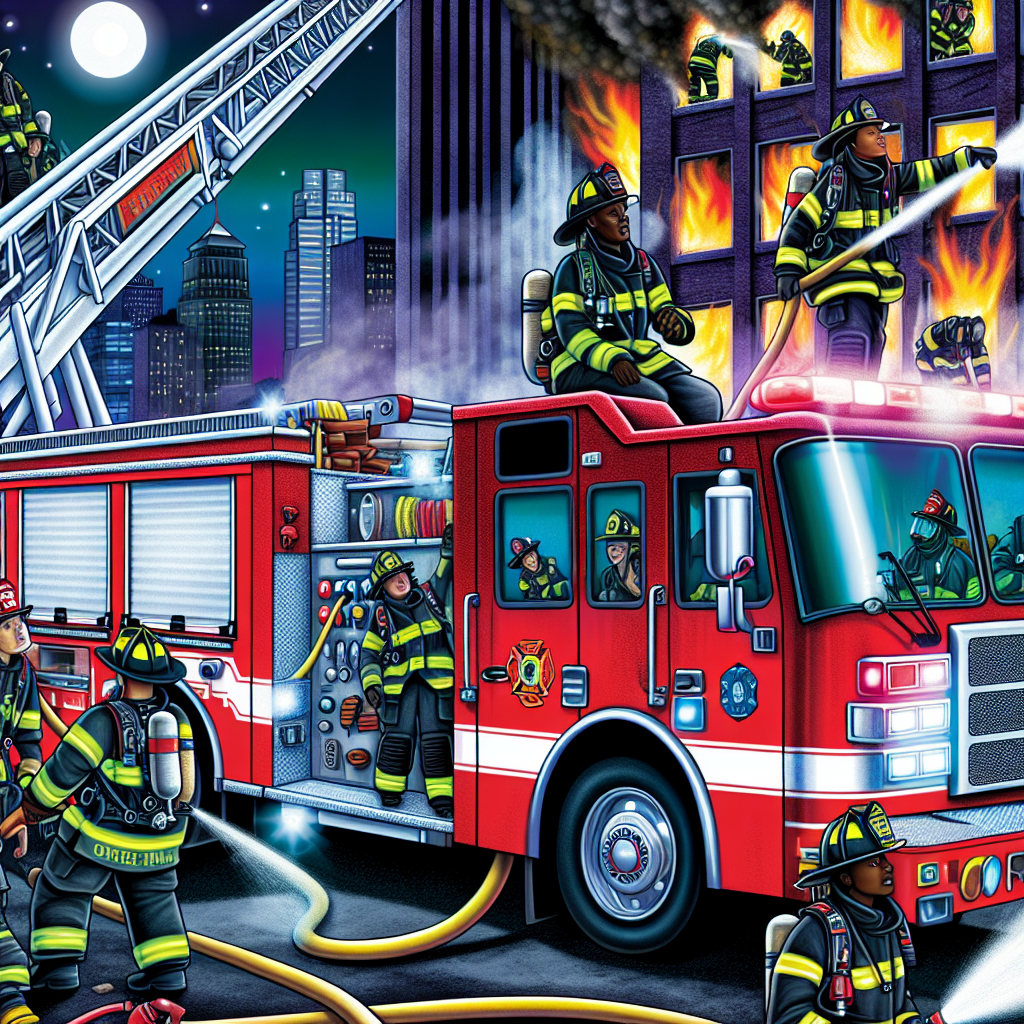
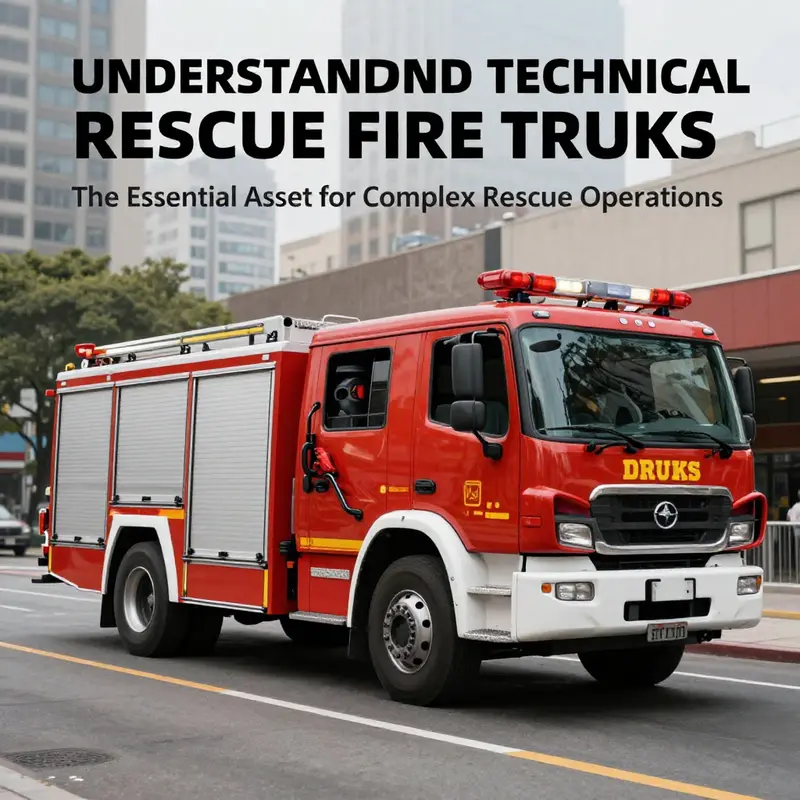
Technical rescue fire trucks play a pivotal role in emergency response, equipped with specialized tools and systems designed for intricate rescue missions. Their capabilities extend far beyond traditional firefighting, making them essential in scenarios involving vehicle extrication, structural collapses, and hazardous materials. As we explore this invaluable asset across three chapters, we will uncover the key features that distinguish these vehicles, delve into their operational capabilities that save lives in critical incidents, and highlight the standards and classifications that define their utility in modern fire departments.
Beyond Firefighting: The Core Features That Make Technical Rescue Trucks Life-Saving Machines
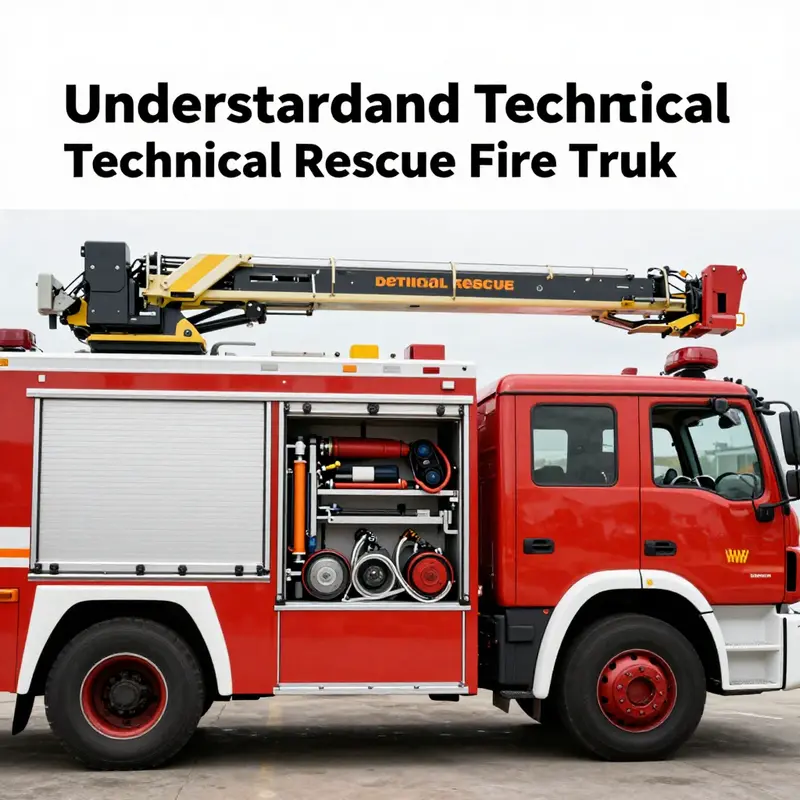
When people think of a fire department, the image that often comes to mind is a bright pumper rushing to a blaze with hoses, water, and a loud siren. Yet the modern landscape of emergency response includes a very different kind of vehicle, a kind that looks less like a firefighting engine and more like a mobile toolbox designed for creaturely, high-stakes problem solving. A technical rescue fire truck is that toolbox on wheels—a purpose-built platform crafted to confront complex, non-standard emergencies where time is measured in lives saved rather than extinguished. This is not a vehicle designed primarily to pour water on flames, though it persists in a fire service OODA loop of readiness. It is a mobile command center and a rolling kit room, stocked with specialized tools, lifting apparatus, lighting systems, and a suite of safety equipment intended to neutralize hazards that defy the conventional firefighting playbook. The aim is singular, but the means are many: to reach victims, stabilize dangerous environments, and enable responders to operate with both precision and speed under conditions that can overwhelm ordinary crews. In that sense, the technical rescue truck becomes a bridge between bravado and science, a testament to how emergency services adapt when faced with unfamiliar terrains and unpredictable threats.
At the heart of this adaptation lies a philosophy that values versatility and preparation over a single, fire-specific skill set. Standards such as the GB 7956.1—2014 frame this idea by defining the vehicle as one whose primary purpose is not to attack a blaze but to support complex rescue operations with specialized tools, lifting capacity, and lighting. This distinction matters because it clarifies why these trucks carry an entirely different inventory from standard pumper apparatus. They must be ready for structural collapse, vehicle extrication, confined space entry, high-angle rope work, and hazardous materials scenarios, all potentially happening in the same incident. The truck becomes a portable engineering workshop on wheels, designed to be deployed rapidly, to interface with on-scene command, and to adapt in real time as the incident evolves. Its design speaks to a broader truth about emergency services: the job is rarely about a single act of courage, but about the orchestration of many acts, each supported by a piece of equipment chosen for its reliability, flexibility, and impact on outcome.
The practical implication of this approach is visible in the truck’s core features, three families of capabilities in particular that together enable responders to address some of the most challenging rescue scenarios imaginable. First, specialized rescue tools provide the physical means to liberate trapped people and reposition heavy debris. Hydraulic rescue tools, commonly known as the jaws of life, are emblematic of this capability. They combine cutting, spreading, and lifting functions in ways that once required several different tools and substantial manual effort. The ability to open a crushed door, pry apart a folded frame, or lift a fallen support beam without compromising the victim’s stability can be the critical difference between a successful extrication and a prolonged entrapment. The second pillar centers on rope and rigging systems. Integrated winches, high-strength lines, pulleys, and anchor points allow responders to perform vertical or horizontal moves with a level of control that manual methods cannot match. In high-angle rescues, rope systems become lifelines for rescuers and patients alike, enabling descent or ascent through constrained spaces, or across the jagged edges of a collapse site where ground access is compromised. Finally, confined space and hazardous environment equipment transform what could be a fatal risk into a controllable operation. On-board ventilation gear, gas detectors, robust lighting, and breathing apparatus provide the atmosphere management and visibility required to work safely inside collapsed structures, flooded shafts, or underground tunnels. These elements work in concert so that responders can create breathable air streams, monitor toxic or explosive atmospheres, and illuminate the work area when outside lighting fails or smoke obscures vision.
Every piece of equipment on a technical rescue truck is chosen with an eye toward reliability under pressure. The tools must perform in cold, heat, rain, dust, and vibration, often with little warning and under time constraints that would cause panic elsewhere. The hydraulic systems powering cutters, spreaders, and rams are designed for quick response, delivering high force through a compact footprint so that responders can work close to the casualty without compromising safety. The winching systems can be hydraulic or electric, but in either case they must deliver the traction to stabilize or reposition heavy loads, whether it is freeing a vehicle from a crash site or stabilizing a precarious structure during a rescue. The crane or rear-mounted boom offers a controlled lifting capacity and reach that can extend into wreckage, enabling responders to remove debris or lift damaged components without endangering the victim or the team. In concert, the lighting towers raise the visibility of the scene, reducing the cognitive load on crews and enabling precise tool placement in low-light or smoke-filled environments. Power generation is another crucial backbone. An independent generator or an axle-driven PTO system ensures that the entire suite of tools can run simultaneously without draining a single vehicle’s main engine, which is especially important when multiple tasks must proceed in parallel at the same incident.
A feature often overlooked in quick summaries is the vehicle’s interior design and storage philosophy. Technical rescue trucks rely on modular compartments that can be configured to match local risk profiles and the common incident types faced by a department. This modularity is not mere convenience. It is a strategic decision that allows a department to tailor its loadout to its geography, industrial landscape, and the types of emergencies most frequently encountered. Whether a region experiences frequent vehicle collisions, a high incidence of utility failures, or a prevalence of confined spaces in industrial complexes, the modular layout can be adapted to place the most-used tools within immediate reach of the crew. The space inside a rescue truck is therefore a map of anticipated operations, with drawers, shelves, and chambers organized like a well-managed workshop. The result is not just faster access but also calmer minds on the scene, because responders can locate, identify, and deploy equipment with minimal disruption to the rescue narrative. For departments considering how to optimize their own kits, the idea of modularity is a compelling invitation to imagine a vehicle that can evolve as risks evolve. See the discussion around adaptable configurations at the resource on customizable firefighting vehicle solutions for developing countries, which outlines how loadouts can be tailored to diverse terrains and budgets while maintaining reliability and efficiency. customizable firefighting vehicle solutions for developing countries.
The importance of mobility and stability cannot be overstated. A rescue truck must negotiate uneven ground, rubble, stairwells, and slippery surfaces without compromising the safety of the occupants or the team. Heavier vehicles may carry more equipment, but their performance on rough terrain depends on a chassis and suspension engineered to absorb shocks, maintain tracking, and prevent rollovers during dynamic rescue maneuvers. This emphasis on stability is about more than passenger safety; it affects the operator’s ability to work accurately under pressure. When a crane has to lift a heavy debris field, when a winch must reposition a trapped vehicle, or when lights must stay aloft under a gusting wind, stability becomes the quiet partner of every dramatic moment. The result is a platform that remains steady enough for precise tool use even as the scene around the responders shifts under the weight of uncertainty. In short, mobility plus stability enables these trucks to do their jobs in a wider range of environments, from urban canyons to rural chokepoints, and from daylight to the darkest hours of the night.
The vehicle’s recognition as a mobile command center follows from its integrated systems. A typical technical rescue truck houses not only tools and machinery but communications gear, mapping abilities, and space for medical personnel to stabilize patients on-site. On-scene command hinges on the flow of information: who is trapped, what hazards are present, what tools have been deployed, and how rescue teams should coordinate to minimize risk. A dedicated power supply keeps radios, lighting, and imaging devices running even when the main power grid is compromised. Thermal imaging cameras, gas detectors, and portable medical kits push the on-scene capacity beyond mere mechanical advantage into the realm of informed, life-saving decision making. This convergence of engineering and strategy is a defining feature of modern technical rescue operations. The vehicle becomes a central node in a network of responders, capable of sharing real-time information, supporting multi-agency coordination, and facilitating rapid decision making that respects both the science of rescue and the urgency of the human lives at stake.
The broader classification of these vehicles sits within the umbrella of specialized duty fire trucks. They are distinguished by their purpose: a shift away from the firehose-first reflex to a broader repertoire capable of handling structural collapses, chemical hazards, or specialized rescue missions. The GB 7956.1—2014 standard illustrates how agencies differentiate their fleets not by branding but by capability, with subdivisions for general-purpose rescue vehicles, chemical rescue units, and earthquake or collapse response configurations. This taxonomy matters, because it frames the investment in equipment and training as a targeted response to risk rather than a general assumption about what a fire service should be prepared to face. Departments that plan for diverse hazards recognize that the same vehicle can be adapted to many incident types through thoughtful loadout decisions and careful maintenance planning. This adaptability is what makes the technical rescue truck a fulcrum of modern emergency response, a platform that can pivot from patient stabilization to complex extrication to high-angle rescue within the span of a single, unfolding event.
As scenarios unfold, the chain of actions performed by the rescue team reflects a blended discipline of craftsmanship and science. A vehicle extrication may begin with scene assessment, then progress to stabilizing the vehicle and creating access paths with hydraulic tools. A structural collapse requires continuous monitoring of debris stability, gas and air quality, and the safe introduction of ventilation to reduce the risk of secondary collapse or asphyxiation. In confined spaces, the crew must manage air supply, heat, and toxic environments while maintaining patient contact and rapid transport readiness. High-angle rope operations demand precise anchoring, controlled descent or ascent, and constant communication between the rescuer at the point of operation and those overseeing the mission from the vehicle. Throughout, the truck’s lighting towers illuminate the work as night becomes day and visibility remains a constant ally in safety and efficiency. This is not a sequence of isolated feats but a choreography where each tool, each system, and each decision complements the others, allowing responders to handle complexity with a calm, disciplined edge.
The human element remains central. A rescue truck amplifies people’s abilities, but it does not replace judgment, training, and teamwork. Crew members must be proficient across a broad toolkit, able to switch from extrication to medical care to incident management with minimal friction. Training programs, including specialized certifications and ongoing practice in realistic environments, build the fluency required to read a scene quickly, select the right tool, and apply it with precision. The vehicle’s existence is a constant reminder that expertise, down to the last bolt and the last seam seal, matters. It embodies a philosophy that every department can be prepared for a wide spectrum of hazards without requiring a different fleet for every conceivable event. In that sense, the technical rescue truck stands as a testament to the collaboration between engineering and human skill—a machine designed to empower people to save lives when the world becomes dangerous and uncertain.
The conversation about technical rescue vehicles would be incomplete without recognizing future directions. Innovation in this field tends to focus on flexibility, interoperability, and resilience. Advances in materials science yield lighter yet stronger chassis components, allowing greater payloads without sacrificing stability. Control systems are becoming more integrated, enabling crews to monitor tool performance, battery status, and system diagnostics at a glance. Digital integration supports more sophisticated incident management, with real-time updates feeding into common operating pictures and decision-support tools. As departments face budgetary realities, the case for modular designs becomes even more persuasive, because loadouts can be tuned to evolving risks without the expense of a whole new vehicle. The result is a fleet that ages more gracefully, adapting to new threats and technologies over time rather than becoming obsolete. In this sense, the technical rescue truck is not a static instrument but a dynamic system that grows alongside the communities it serves.
For readers seeking deeper context on how these vehicles come together in practice, the emphasis on customization and modular configuration is a powerful reminder of local stewardship. The same principle propels discussions about building capable fleets in developing regions, where cost efficiency and reliability must align with terrain diversity and resource availability. The idea is not to imitate a single model everywhere but to cultivate a philosophy of preparedness that can scale to different conditions. The road to that future passes through disciplined maintenance, continuous training, and a shared understanding that these trucks are not weapons against fire alone but instruments of resilience that help save lives under the most trying circumstances. In that spirit, the chapter that follows will connect these technical realities to broader questions about safety culture, professional development, and the way communities design emergency services for maximum impact. For practitioners and policymakers alike, that conversation begins with recognizing what a technical rescue truck is at its core: a highly specialized, mobile host for the tools, techniques, and team dynamics that turn danger into opportunity for rescue. External reference to broaden this perspective can be found here: Rescue Fire Trucks Explained: Composition, Key Characteristics, and Common Industrial Uses.
Operational Capabilities of Technical Rescue Fire Trucks: A Mobile Platform for Life-Saving Rescue
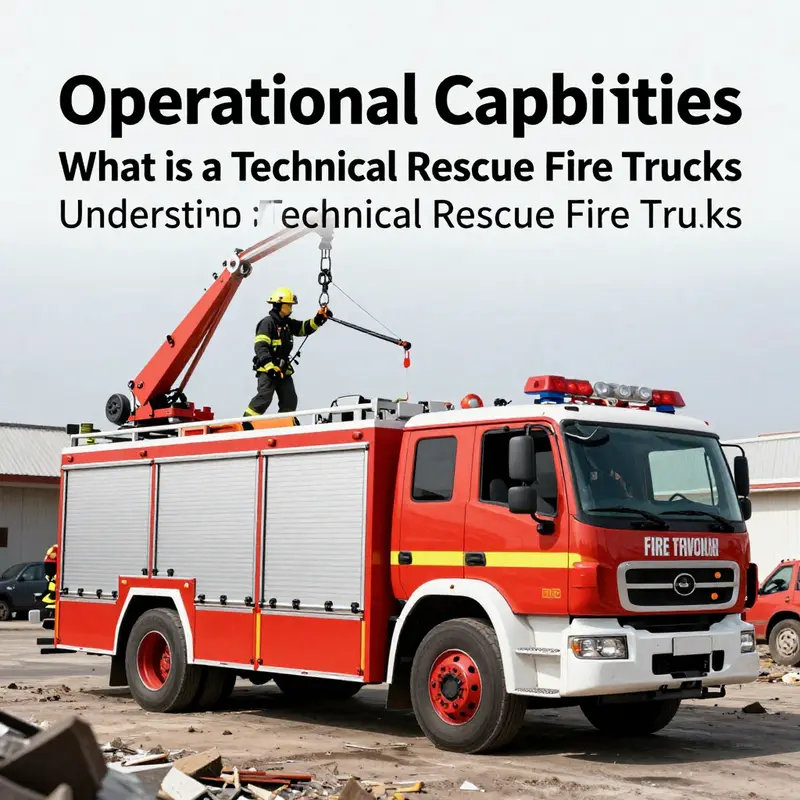
A technical rescue fire truck is a purpose-built, mobile platform whose mission goes beyond extinguishment to enable high-risk extrications, stabilization, and victim care. It combines rapid access to the rescue area, modular tool carriage for hydraulic cutters, spreaders, and rams, robust lifting and shoring systems, and independent power and lighting to operate under adverse conditions. Integrated sensing such as thermal imaging, gas detection, and acoustic or seismic monitoring guides decision making, while onboard medical readiness supports immediate stabilization. The vehicle also serves as an on-scene command hub with communications, data links, and room for trained crews to manage complex operations. Its modular design allows departments to tailor equipment and storage to local risk profiles, so responders can assess, secure, access, expose, and extract in a repeatable, controlled sequence. Maintenance and adherence to standards like GB 7956.1-2014 and NFPA codes ensure compatibility and safety across agencies. In practice, technical rescue trucks enable safe, rapid response to vehicle crashes, collapsed structures, confined spaces, high-angle work, and hazardous environments, acting as a force multiplier that preserves life while protecting rescuers.
Standards as Lifelines: Mapping the Classifications of Technical Rescue Fire Trucks
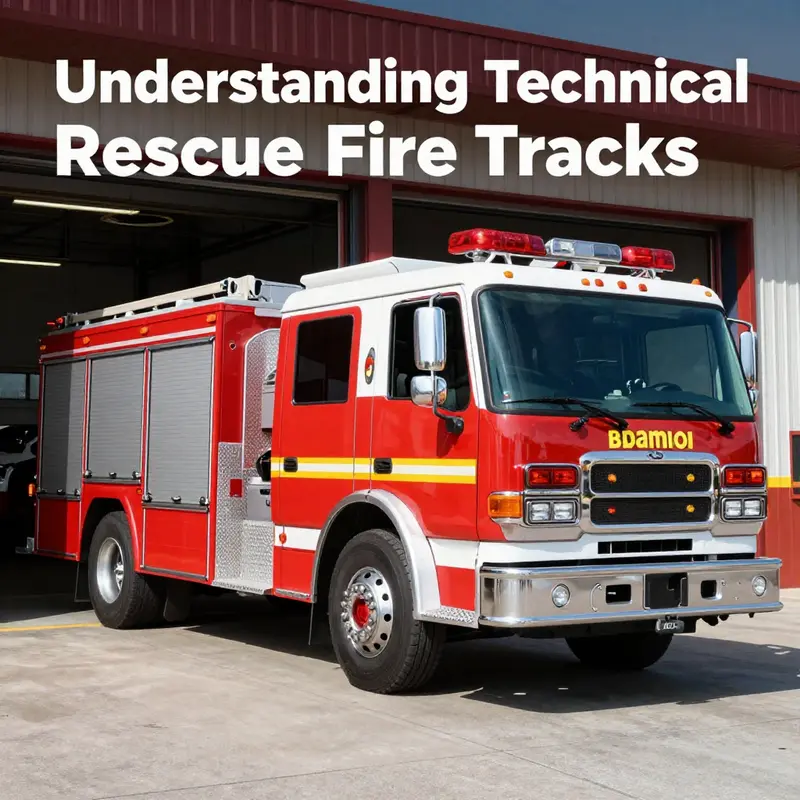
When a fire department heads toward a technical rescue scene, it does so with a vehicle that functions as a mobile toolbox for life-saving interventions. A technical rescue fire truck is designed to access, stabilize, and liberate victims in environments where hazards are layered and time is critical.
Its purpose goes beyond extinguishing flames; it supports the full spectrum of rescue operations, from structural collapse to high-angle rope rescues, confined spaces, or hazardous materials responses. Standards provide a shared language and testable thresholds that guide design, procurement, training, and on-scene decision making. They help ensure interoperability, reliability, and performance across agencies and incident types.
The backbone of this framework is a triad of major bodies: NFPA in the United States, complemented by ISO or international standards, and CE marking for European conformity. NFPA 1917 anchors automotive rescue capabilities, NFPA 1670 focuses on operations and training, and NFPA 1901 addresses vehicle integration and deployment. ISO 18435 introduces international alignment for road vehicles used in firefighting, while CE marks indicate compliance with essential health, safety, and environmental requirements.
Classification by function creates practical archetypes, such as USAR, high-angle rope rescue, confined-space rescue, and HazMat response. Each archetype has core equipment and mission profiles, but modern crews often deploy vehicles that blend capabilities across lines to match local risk landscapes. The modular interior and configurable tool storage underpin rapid on-scene inventory management and regional customization.
Beyond equipment, the standards shape procurement philosophy, maintenance practices, and interagency interoperability. They provide a measurable baseline for performance, enabling responders from different jurisdictions to coordinate with confidence. The result is a resilient, adaptable platform that supports fast, structured, and life-saving responses in challenging environments.
For readers seeking deeper detail, the official NFPA and ISO standards provide the authoritative framework for design, testing, and operation, with the broader ecosystem offering interoperability and cross-border alignment.
Final thoughts
In summary, technical rescue fire trucks represent a critical facet of emergency response, equipped with sophisticated tools and strong operational capabilities tailored for complex rescue scenarios. Understanding their key features and adherence to established standards not only underscores their significance but also enhances the efficacy of rescue missions. These vehicles are not merely firefighting tools; they are vital assets that facilitate life-saving operations across a variety of challenges.