
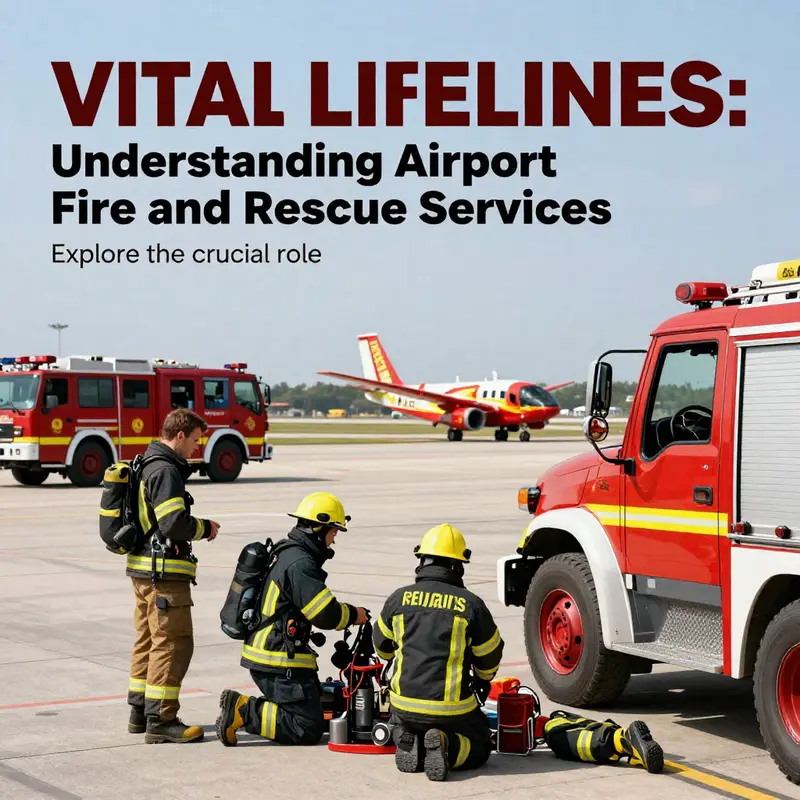
Airport fire and rescue services are integral to aviation safety, providing rapid response to emergencies at airports worldwide. These specialized teams are trained to manage aircraft incidents with precision and efficiency, ensuring the safety of passengers and crew. In the following chapters, we will explore the crucial role these services play in maintaining aviation safety, the rigorous training and advanced equipment that prepare personnel for emergencies, the high operational standards they must adhere to, and the evolving regulatory framework that shapes their operations, particularly in light of recent updates from the Civil Aviation Administration of China.
Front-Line on the Runway: How Airport Fire and Rescue Services Safeguard Global Air Travel
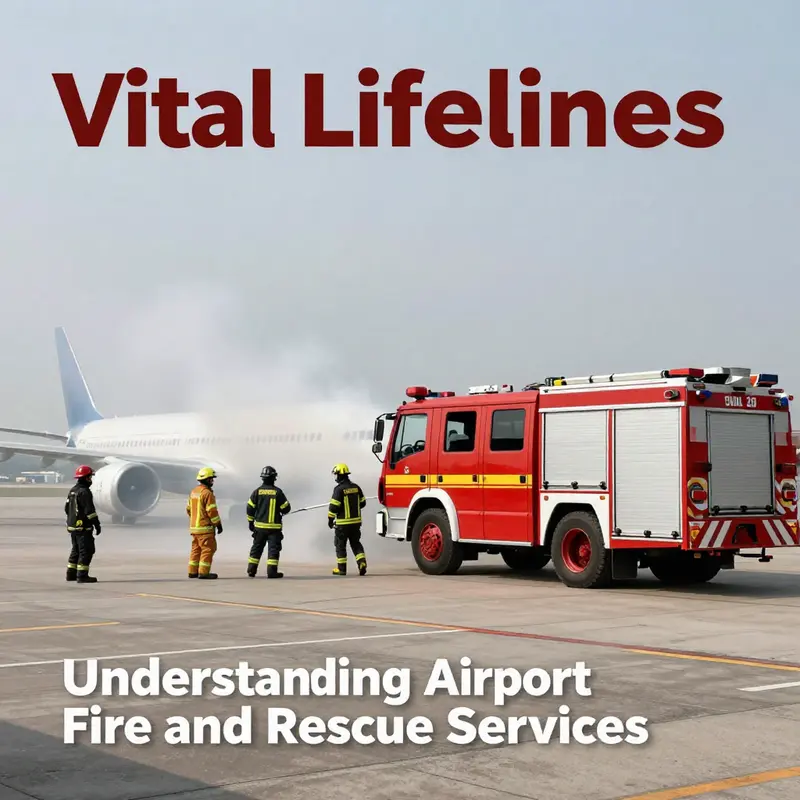
Aircraft operate at the edge of fire risk every day. The fuel carried aboard, the high speeds, and the complexity of modern airframes combine to create scenarios where seconds matter and a calm, coordinated response can determine whether an incident becomes a catastrophe. This is the daily reality for airport fire and rescue services, a specialized branch of emergency response that sits at the nexus of aviation safety, field discipline, and rapid decision-making. Rather than being a single task force deployed only after something goes wrong, these teams are an integrated component of the aviation safety system. Their mission stretches from prevention and preparedness to rapid response, effective rescue, and the swift restoration of normal operations. In practice, this means a constant cycle of readiness, training, and collaboration with every other operational arm of the airport—from air traffic control to ground handling teams, medical services, and facility maintenance. The goal is straightforward in words, but complex in execution: minimize risk, save lives, and return the airfield to service with every possible safety margin intact.
At the core of this mission is speed. International guidelines and national regulations emphasize a demanding standard: firefighters and their vehicles must reach an incident scene within three minutes of receiving an alarm. That three-minute benchmark is anchored in decades of learning about how the first minutes after an crash or emergency shape outcomes. The basic reason is simple and sobering. The moment fuel is exposed to heat, or an aircraft structure is compromised, the likelihood of life loss, entrapment, or cascading damage grows rapidly. For an airport, where runways and taxiways are the arteries of global mobility, any delay can multiply the disruption, compound the risk, and magnify the economic and social impact of an incident. The three-minute rule, then, is not a mere number; it is a formal acknowledgment that time multiplies danger in the unique theatre of airfield incidents.
The architecture of airport fire and rescue services is, in essence, a robust blend of horsepower, hydraulics, protective discipline, and organized command. Airports are classified by size and traffic, and this classification determines how many fire engines, how much firefighting foam or suppressant, and what kinds of rapid-response capabilities must be available. The International Civil Aviation Organization (ICAO) defines nine classes of airports, with escalating requirements for equipment and staffing as traffic and aircraft type scale up. In practice, larger, high-traffic airports—those in Classes 6 through 9—are required to maintain at least two fire engines, sometimes up to three, plus a dedicated rapid-response vehicle. The aim is to ensure that the most capable response forces are immediately available to confront the most demanding scenarios. The mapping of risk to resources is deliberate and transparent, designed so that every airport has a predictable, scalable set of tools to meet its unique operational demands.
Beyond the sheer count of engines and foam volumes, what makes airport fire and rescue services effective is the depth of their training and the breadth of their capabilities. Firefighters in this environment are specialists who combine conventional firefighting with aircraft-specific rescue techniques, medical first aid, and hazard management. They learn the aerodynamics of different aircraft, the layout of cargo holds, and the potential electrical and avionics hazards that accompany in-flight emergencies. They also master the delicate work of evacuations under duress, the stabilization of aircraft structures, and the careful management of hazardous materials that might be involved in an incident. This is not a generic fire response; it is a targeted, aircraft-aware, field-tested skill set.
The training regime mirrors the high-stakes stakes of the work. Consider the practice of live drills at Qingdao Airport, which illustrate how teams maintain peak readiness through repeated simulation of engine fires and cargo hold fires. These scenarios test not just the firefighting technique but the entire chain of response: incident command, communication with flight control, coordination with medical teams, and the rapid deployment of lifting and towing gear to move damaged aircraft off runways. The training cycle described there—training, testing, analyzing, and improving—forms the backbone of operational excellence. It ensures that lessons learned in drills translate into real-time performance under the pressure of actual incidents. The experience accumulates not only in the airport’s own staff but also through joint exercises with municipal fire departments and through advanced programs that expand the pool of skilled responders. For example, intensive courses designed to broaden the number of airport fire specialists strengthen interoperability and confidence across agencies that may converge on an incident from different jurisdictions.
Equipment is the physical guarantee that a plan becomes action when the alarm sounds. Modern airport fire stations are equipped with vehicles capable of delivering large volumes of water and specialized extinguishing agents at high pressure while in motion, a design that enables rapid escalation of containment capabilities as soon as they arrive on scene. Yet the hardware is only as useful as the software that runs it. Automated fire alarm networks, real-time communication links between flight control and the fire command center, and interoperable radios create a unified operating picture that keeps responders informed and aligned. In the chaos that often follows an aircraft emergency, such connectivity prevents miscommunication, streamlines the handoffs between on-scene teams and remote command, and enables a swift, synchronized push toward containment and rescue.
The range of tasks these services perform goes far beyond fighting flames. In many incidents, the firefighters must carry out coordinated evacuations, identify and manage hazardous materials, and use heavy rescue tools to cut through metal and free trapped passengers. They may need to stabilize a damaged aircraft, apply life-saving medical care, and then transport casualties to medical facilities with the same precision they apply to firefighting. The work also includes a critical logistical dimension: clearing a runway, positioning recovery equipment, and facilitating the safe movement of the aircraft so that air traffic can resume. The ambition is not merely to extinguish a fire but to orchestrate a safe and efficient return to normal operations, preserving life and reducing downstream disruption.
To achieve this orchestration, the leadership and organizational structure of airport fire and rescue services are designed for clarity under pressure. The aviation context imposes a clear separation of duties and a fast-decision environment. Command centers, equipped with decision-support tools and pre-programmed incident action plans, guide responders through a sequence of priorities: life safety first, then incident stabilization, then property and environmental protection, followed by rapid continuity of operations. In practice, this means a well-practiced chain of command where the flight control team and the fire department maintain direct, instantaneous communication. The goal is to prevent chaos from taking over at the moment of crisis, ensuring that every action is deliberate, well-timed, and aligned with the airport’s overall safety objectives.
Public policy and regulatory oversight provide the scaffolding that keeps these capabilities current. In many jurisdictions, this oversight is evolving, reflecting new understandings of risk and advances in technology. In China, for instance, the Civil Aviation Administration (CAAC) has issued draft regulations for public comment that address the Management Regulations for Dedicated Airport Fire Brigades and the periodic inspection and retirement management of airport fire trucks. This regulatory activity signals a continuing commitment to raising safety standards and ensuring that equipment and practices stay synchronized with the changing realities of air travel. The public consultation process, with deadlines set for late January and February 2026, invites feedback from stakeholders to refine rules that govern how brigades are organized, how vehicles are maintained, and how personnel are prepared to meet contemporary challenges. While the specifics of the rules evolve, the underlying principle remains constant: safety improvements derive from rigorous standards, transparent review, and the willingness to adapt to new knowledge and technologies. For readers seeking current policy context, the CAAC’s official notices provide the authoritative source of those developments.
The impact of this professional ecosystem extends beyond the airport gates. The airport fire and rescue service exemplifies how specialized public safety functions integrate with broader emergency management and urban resilience. Their readiness shapes the resilience of the entire aviation system, which depends on predictable schedules, reliable infrastructure, and the confidence of passengers and crews that safety is the default and not an afterthought. This is why the capacity to respond within three minutes, to deploy the right mix of equipment, and to coordinate across agencies matters so deeply. It matters not only for preventing loss of life but also for preserving the continuity of air travel that connects families, economies, and communities around the world. The regular drills, the high standards of training, and the continuous regulatory evolution together constitute a living, adaptive safety framework that underpins every flight and every connection made possible by modern aviation.
For those who study or practice in this field, the evidence from these practices is compelling. It shows that a well-trained, well-equipped, and well-integrated airport fire and rescue service can dramatically reduce the severity of incidents and facilitate a quicker return to routine operations. It demonstrates that preparedness is not a static condition but a dynamic process of learning, testing, and refining. It reveals that the most successful responses hinge on the willingness of agencies to work together, to share information, and to hold one another to high standards of performance under stress. It highlights that modern safety is built on a combination of human skill, advanced technology, and sound organizational design, all aligned toward one goal: protecting lives and maintaining the reliability of air travel in a world that remains highly interdependent.
As readers engagement with this topic deepens, it is worth reflecting on a single thread that runs through the entire narrative: the airport fire and rescue service is not simply a reactive force but a proactive, integral part of the aviation safety system. Its existence reflects a recognition that in complex, high-speed systems, safety cannot be left to chance. It requires careful planning, disciplined execution, and relentless improvement. The ongoing regulatory dialogue in major jurisdictions demonstrates a shared commitment to upholding the highest standards while remaining adaptable to new threats, new aircraft types, and new mission demands. In this sense, airport fire and rescue services embody a core principle of modern public safety: readiness forged through continuous learning, collaboration, and accountability.
For readers seeking to connect this broader perspective to practical resources and professional pathways, consider delving into materials on firefighter training facilities and certification. These resources illuminate how individuals prepare to meet the high demands of airport operations and how training infrastructure supports ongoing proficiency. For example, one relevant resource focuses on dedicated training facilities and the ongoing dedication involved in developing expertise in fire safety within challenging environments. This kind of specialization is essential as airports continue to grow, modernize, and embrace new safety technologies. The link below leads to further reading that frames the career and training dimensions of this essential field.
firefighter training tower dedication
In sum, airport fire and rescue services represent a critical, highly specialized front line in aviation safety. They are the embodiment of a proactive safety culture that recognizes the unique hazards of air travel and responds with precision, speed, and coordination. The three-minute rule, the resource planning guided by ICAO classifications, the training that blends high fidelity drills with medical and technical competencies, the sophisticated equipment and communications systems, and the regulatory environment all converge to create a safety architecture that protects lives, preserves property, and keeps the world connected through reliable air transport. As regulatory bodies refine and expand the standards governing these services, the core ethos remains clear: preparedness is not optional, and the runway is anyone’s first line of defense when danger descends from the sky. For those who participate in or study this essential field, the ongoing dialogue between practice, policy, and innovation offers a continuous invitation to raise performance, deepen collaboration, and strengthen the safeguards that make global air travel possible.
External resources for further context include regulatory updates and official notices from aviation authorities, which provide the authoritative grounding for current practices and upcoming changes in the field. See the official aviation authority site for more details: https://www.caac.gov.cn/
null
null
On the Edge of the Runway: The Operational Core of Airport Fire and Rescue Services
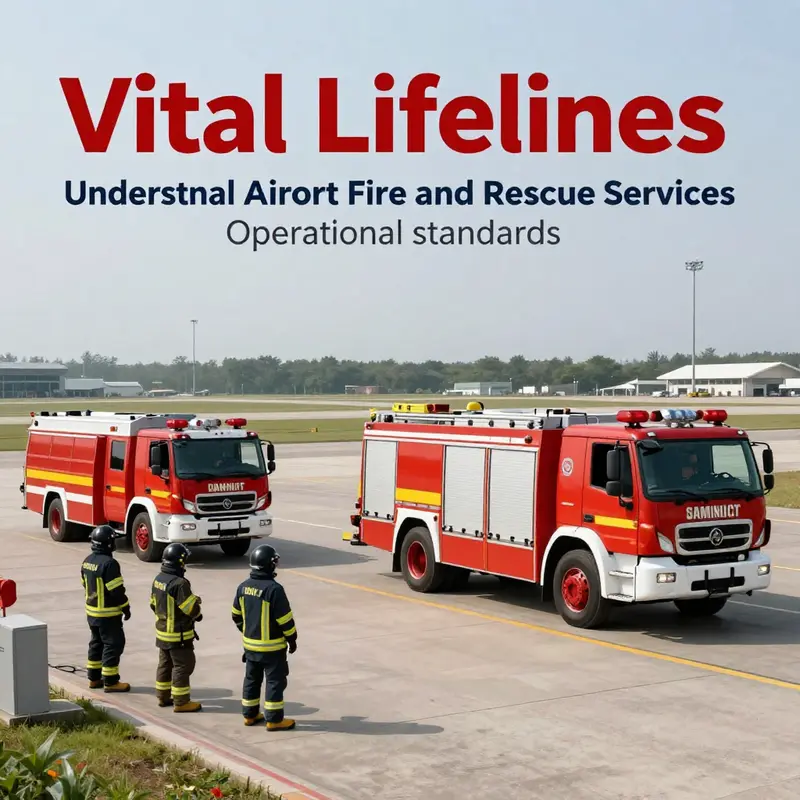
The airport fire and rescue service is a highly organized, continuously ready function that sits at the intersection of safety, logistics, and rapid decision making. At its core, this service protects lives and infrastructure on the airfield, where speed is essential. Airports are busy, complex environments where aircraft operate on tight schedules and the consequences of an incident can cascade across airlines, passengers, and the surrounding community. The mission is to respond instantly to any aircraft incident, stabilize the scene, extinguish fires, and facilitate safe evacuation if needed. This mission rests on authority, training, equipment, and a disciplined command structure that separates a contained incident from a disaster.
The backbone of the system is the airport authority, which organizes staffing and directs firefighting activities on the airfield. The authority sets strategies based on classification, traffic, and layout, and translates them into requirements for response times, equipment inventories, and training. Practically, the goal is to reach any point on the maneuvering area within a defined time window. Global baselines come from regulatory guidance on aerodrome safety, while at the local level fleets of well maintained fire appliances are stationed for rapid deployment whenever aircraft operations are underway.
A central standard is the three minute target to reach the incident and begin firefighting. The first arriving unit must carry sufficient resources to start an attack, with objectives that aim to avoid delays that would allow a fire to grow. European guidelines echo this, specifying an operational objective to be achieved within two minutes. Airports tailor the mix of large water‑based units and rapid response vehicles to maintain readiness across all hours. Equipment needs include water and foam capacity, pumping power, and rescue tools to access and evacuate passengers from damaged aircraft.
Training and certification form the human core. Firefighters in aviation roles receive specialized training on aircraft systems, materials, and hazards, and they practice aircraft rescue and medical response. Regular drills, scenario exercises, and after action reviews reinforce preparedness and ensure crews can operate under pressure. A clear incident command structure provides rapid recognition on the scene and coordinates with air traffic control, airport police, operations, and medical services for a synchronized response. The broader emergency plan integrates weather, traffic patterns, terminal operations, and the surrounding transportation network, with interoperable communications and predefined escalation paths to manage a range of incidents.
Across regions, international standards supply a common baseline while national and local adaptations reflect conditions on the ground. ICAO Annex 14 and regional regulatory frameworks set performance expectations, while airports adapt fleets, training, and procedures to their size and layout. As technology and aircraft design evolve, so too will these standards, with ongoing emphasis on speed, precision, and interagency collaboration to protect life and safeguard aviation operations.
The Regulatory Architecture Behind Airport Fire and Rescue: Standards, Safeguards, and Sky-Ready Response
The aviation system rests on a regulatory architecture that stretches from global standards to local practices. Airport fire and rescue services exist to perform rapid firefighting and rescue operations with a mandate to protect lives, minimize damage to aircraft and facilities, and keep the airfield functional after an incident. In practice, this duty is not improvised. It is sustained by layered rules, ongoing training requirements, and a clear expectation that responders stand by whenever aircraft operations are underway and are ready to reach the scene within minutes.
International standards establish the baseline. The International Civil Aviation Organization (ICAO) issues standards and recommended practices that member states translate into national regulations. Annex 14 to the Convention on International Civil Aviation specifies the fire protection and emergency response capabilities airports must provide. It addresses the layout and capacity of airside firefighting facilities, including the number, configuration, and capability of fire and rescue services, water supply, and access routes, as well as the organization of drills and exercises to test readiness. These standards are not merely advisory; they are binding on states that subscribe to ICAO and form the floor from which more specialized systems arise. The result is a universal reference point that ensures airports around the world can respond to incidents in a manner that is predictable, interoperable, and evidence-based.
Across the European landscape, the regulatory story becomes more detailed and tightly integrated. The European Union’s framework relies heavily on the European Aviation Safety Agency (EASA), which consolidates common requirements for airport fire and rescue services under its Part-ORC (Operations – Rescue and Fire Fighting). This regulation sets out how readiness is organized, how many firefighters are needed for different airport classes, what equipment must be on hand, and how training must be conducted. In practice, EASA Part-ORC serves as the benchmark national authorities use when assessing and certifying airport services. The Austrian authorities, for example, implement these rules at Vienna and ensure the local service aligns with Europe-wide expectations while responding to Vienna’s unique operational realities. Beyond the paperwork, the regulatory framework acts as a driver of continuous improvement, pushing airports to invest in people and technology so that the rescue capability remains fit for purpose amid evolving aircraft designs and new threats.
A vivid illustration of how these rules translate into daily practice can be found in Vienna International Airport’s fire service. The operation there is a case study in how high standards become a living, everyday routine. The fire service must meet the demands of the local airfield while staying aligned with ICAO Annex 14 and EASA Part-ORC. The training regime is central to this alignment. The airport conducts over 20 training sessions each year, delivered by a cadre of 30 instructors. This cadre represents roughly forty percent of the firefighter complement, a deliberate choice that emphasizes depth and breadth in response competencies. The Fire and Rescue Training Academy within Flughafen Wien AG’s Emergency Department oversees these sessions, designing programs that cover a wide spectrum of scenarios—from aircraft crashes on runways to complex rescues in the terminal vicinity. The program has endured for fifteen years, a durable commitment to regulatory compliance and professional development. Through regular drills, tabletop exercises, and live-fire evolutions, Vienna builds muscle memory in teams that may have to operate under extreme pressure. A central feature is the synchronization between training and operational readiness: firefighters know where to respond from, how to coordinate with air traffic control, and how to liaise with the flight deck or the tower during an incident. Standby at designated locations and a target to reach the scene within three minutes of an alarm are non-negotiable elements of the operational model. That time-sensitive demand mirrors the ICAO and regulator-driven expectation that every second matters, and it grounds the tempo of every drill and response plan.
The regulatory conversation extends beyond Europe to other major aviation hubs that must balance national priorities with international norms. In China, for example, the Civil Aviation Administration of China (CAAC) has issued draft regulations for public comment revising the Management Regulations for Dedicated Airport Fire Brigades, and introducing new rules on the periodic inspection and retirement management of dedicated airport fire trucks. The updates underscore a common thread: safety gains are achieved not solely through new equipment but through a disciplined regulatory posture that keeps standards current with fleet ages, technology advances, and evolving risk scenarios. The comment periods—ending in January 2026 for vehicle-related documents and February 2026 for brigade regulations—signal an ongoing process of refinement that mirrors the European and ICAO frameworks. Such developments illustrate a global trend toward stronger oversight and more explicit governance of airside safety, reinforcing the idea that regulatory ecosystems must adapt to shifting realities on and around the airfield, including the need for robust inspection regimes that prevent wear or performance degradation from undermining response effectiveness.
Underpinning all of this is a practical, airport-led architecture. The airport authority typically owns and commands the fire and rescue function on the airfield, integrating it with other safety and security disciplines to align policy, people, and gear so that the response is rapid, coordinated, and capable of addressing multiple injuries, hazardous materials, and vehicle collisions on the airside and in adjacent facilities. Beyond firefighting, crews must demonstrate medical first-aid competencies and the ability to triage and manage victims until advanced care arrives. The structural knowledge of different aircraft families—how their fuselages bend, where fuel lines run, and how electrical systems are laid out—becomes essential, because responders often operate with limited information in chaotic settings. Direct communication between flight control and the fire department emerges as a natural consequence of this need for tight coordination. In an environment where every second counts, the ability of the control tower to relay accurate situational updates and runway status, and the fire service to relay tactical needs and constraints, can determine whether containment and rescue succeed.
As the world’s air traffic network grows more congested and dynamic, regulators face the task of balancing prescriptive standards with the flexibility needed to accommodate diverse airport layouts and traffic patterns. The ICAO framework provides a universal baseline—minimum fire protection, emergency response capabilities, and the infrastructure that supports rapid response. EASA’s more detailed prescriptions shape consistent expectations across European airports and create a framework within which domestic authorities can tailor implementations to local conditions. The interplay between these layers is not a bureaucratic exercise; it is a practical, ongoing project that keeps the safety machinery well oiled. It means that a Vienna, Prague, or Helsinki fire service must maintain a readiness profile that can be adapted quickly if a new aircraft type enters service or if a season raises risk (for example, harsher winter operations that demand more effective de-icing and runway safety measures). It also means airports must invest in training and coaching that build a culture of preparedness. The training academy, the live evolutions, the classroom sessions, and the simulated scenarios all contribute to a shared knowledge base that regulators rely on when they audit, certify, and, when necessary, sanction.
The human element features prominently in regulatory discussions. Firefighting is a high-stakes, team sport requiring precise, protocol-driven action under extreme stress. This is why training standards are not static; they evolve as aircraft designs change, ground support equipment advances, and new hazard profiles—such as chemical, radiological, or mass-casualty incidents—enter the mix. The regulatory framework recognizes this through structured, repeated training cycles and through mechanisms that encourage continuous improvement. In Vienna, the substantial training calendar and the involvement of a large fraction of the firefighter workforce in ongoing education demonstrate how regulation translates into lived practice. The Fire and Rescue Training Academy acts as a talent development hub, ensuring that new recruits are not only physically capable but also familiar with the discipline and etiquette that a regulated system demands. To sustain such capacity, airports typically pursue accreditation or certification that aligns with international norms and national oversight bodies, so that when a fire truck arrives, its crew is prepared to fight fire and operate within a strict safety framework that governs the entire incident management process.
The global regulatory landscape continues to evolve, and the CAAC’s consultative updates along with published guidelines from EASA and the ICAO framework illustrate a world in which airport fire and rescue services are increasingly formalized and governed by explicit governance. In this environment, a well-run service is the product of policy design and reliable practice. It is the result of policy-makers who frame clear expectations, administrators who translate those expectations into daily operations, and firefighters who execute under pressure with discipline, skill, and teamwork. The Vienna example demonstrates how regulation becomes ballast for safety, turning the airfield into a space where rapid, coordinated, and capable response is embedded in the organizational DNA. The Chinese updates remind us that safety improvements are a global, ongoing pursuit, not a single achievement. In that sense, airport fire and rescue is a regulatory project as much as a public service—a sustained commitment to preparedness, coordination, and protection of life on the move.
A concrete note on the experiential side of this regulatory architecture can be found in the practice of hands-on training. Airports continually seek to strengthen the proficiency and resilience of their crews through immersive programs that bridge theory and field performance. A vivid example of the focus on hands-on practice is the firefighter training tower dedication program, which embodies the commitment to immersive, scenario-driven training. Such initiatives ensure that responders are not only technically competent but also adaptable and capable of operating under pressure, with an acute awareness of the regulatory expectations that shape every action on the ramp and in the incident command post.
The chapter ends where it began: at the intersection of law, practice, and life safety. International standards set expectations for what must be in place; regional regulations shape how it is done in concrete settings; and national authorities ensure that those standards are maintained over time. The airport authority remains the central conductor, aligning policy, people, and gear to deliver a rapid, coordinated response that keeps the airspace safe for travel and commerce. The Vienna example offers a vivid snapshot of this alignment in action—consistently tested through training, drills, and real-world operations. The CAAC’s evolving framework signals the continual modernization of safety governance in other major hubs, underscoring that the frontier of safety is dynamic. In sum, airport fire and rescue is sustained by a regulatory architecture that translates lofty principles into real-world readiness, ensuring that when the sirens sound, the reply is deft, decisive, and life-saving.
External resource: https://www.easa.europa.eu/en/operations/rescue-and-fire-fighting
Final thoughts
In summary, airport fire and rescue services are vital to aviation safety, equipped with specialized training, advanced equipment, and a commitment to rapid response. Their role is further emphasized by operational standards and regulatory frameworks that ensure their effectiveness in emergencies. By understanding these components, stakeholders can better appreciate the measures in place that safeguard lives and secure air travel across the globe.