
Mottos serve as vital expressions of the core values within fire and rescue services worldwide, encapsulating a commitment to bravery, integrity, and community service. These guiding phrases not only inspire firefighters but also resonate deeply with the communities they protect. In the United States, mottos reflect the pride and valor of first responders, emphasizing their dedication in perilous situations. Meanwhile, in China, a more preventive philosophy shines through, focusing on hazard avoidance and proactive safety measures. Understanding these mottos provides insight into the ethos of fire and rescue services, illustrating the universal commitment to protecting lives and property while promoting fire safety.
Mottos in the Line of Duty: How American Fire and Rescue Services Define Bravery, Integrity, and Service
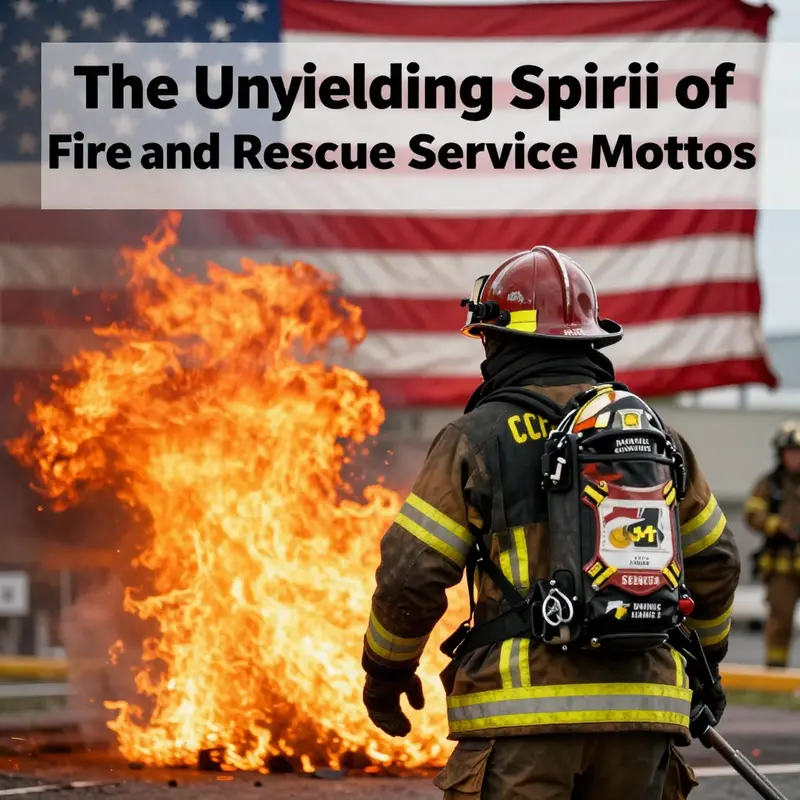
Mottos are more than words etched on a patch or stitched into a jacket. In the United States, the motto of a fire and rescue service functions as a living declaration of purpose. It distills a department’s identity into a compact speech that can be spoken in a station, echoed across social media, and remembered by communities in moments of crisis. Yet the landscape of American fire service mottos is not uniform. No national slogan governs all departments, and the same country that prizes local autonomy also recognizes a set of shared ideals that many departments strive to translate into action every shift. This tension between local variation and shared ethos produces a mosaic of phrases that, taken together, maps the cultural terrain of American firefighting—an institution celebrated not only for its outsize bravery but for its disciplined ethic of service, accountability, and community protection.
In one sense, mottos in the United States function as a shorthand for what firefighters do and who they are. A motto condenses a year’s worth of decisions—how crews prioritize risk, how they communicate under pressure, how they treat the public they serve—into a single frame. It is at once aspirational and practical: it invites recruits to adopt a standard of conduct, and it provides the public with a predictable narrative about safety, courage, and care. This interpretive work matters because fire and rescue work sits at the intersection of danger and trust. When a department’s motto is invoked during a high-stakes incident, it signals to bystanders and to the families who have been affected that the responders are guided by a consistent moral compass as they work toward a resolution.
Among the most widely recognized examples in the United States is a phrase that blends identity with an emblematic epithet: New York City’s Fire Department, commonly referred to by the public as “New York’s Bravest.” This designation has become a cultural shorthand for the city’s firefighters, a label that carries with it a long arc of memory—from landmark rescues to somber memorials. The phrase functions much like a badge of honor, reinforcing the perception of firefighters as front-line protectors who stand between danger and everyday life. It is a label that communities understand, a phrase that can be cited in news coverage, in memorials, and in the daily rituals of the department as a way to anchor the human face of the fire service amid the machinery of emergency response. Yet there is also a murkier edge to how such a phrase is understood and used. In some official contexts, the FDNY has been associated with another formal statement of values—an articulation that emphasizes Courage, Integrity, and Pride in Service. These words aim to codify the ethical posture of the department and to remind personnel that their actions are measured not only by results but by the character with which those results are pursued. Whether treated as an official motto, a motto-like creed, or a widely adopted nickname, the phrase captures the dual essence of the fire service: the awe-inspiring courage to act in extremis and the steadfast commitment to ethical conduct and accountability.
The Los Angeles Fire Department presents a similar case. As a major urban department with a long history of high-profile emergencies, LAFD has often been described in public-facing materials in ways that echo the FDNY’s aura of bravery and service. The resonance of Courage, Integrity, and Pride in Service—whether presented as an explicit motto or as a guiding ethos—appears in training, recruitment, and community outreach. The replication of this triad across two of the nation’s largest cities reflects a broader pattern: large departments tend to anchor their public identity in clear, memorable values that can travel beyond the city limits while maintaining a strong local flavor. The values themselves are timeless in their appeal, yet their interpretation evolves with changes in training methods, technology, and community expectations. In this sense, mottos function less as static slogans and more as living commitments that departments renew with every graduation ceremony, with every initiation into the ranks of a crew, and with every renewed pledge to protect life and property.
Against this backdrop, the question of what a department’s motto communicates becomes both straightforward and nuanced. It communicates mission and priority: when a crew faces a blaze or a complex rescue, the motto serves as a cognitive compass that helps align decisions under stress. It communicates culture: it signals what kind of behavior is rewarded, what kind of teamwork is expected, and how accountability is interpreted within the ranks. It communicates relation to the public: it signals that the department values transparency, service, and partnership with the community. And it communicates continuity: mottos travel through time, surviving changes in leadership, shifting demographics, and evolving risk profiles. A motto can be a stabilizing element during times of change, a reference point when new training regimes or new technologies alter day-to-day practice.
There is also a practical dimension to the way mottos shape training and organizational life. When a department adopts a concise, emotionally resonant phrase, it becomes a recurring touchstone in rehearsals, briefings, and public education programs. In moments of routine operations, crews recall their motto as a reminder of what is at stake beyond the mechanics of firefighting. In moments of crisis, a motto becomes a public-facing narrative that can help communities understand the approach the department is taking—how it weighs risk, how it communicates, and how it honors those who have served before. The rhetorical power of a motto thus extends into the symbolic life of the department, shaping memory and expectation in ways that influence both morale and behavior.
This dynamic is not confined to the largest metropolitan agencies. Across the United States, smaller departments fashion mottos that speak to their own landscapes—rural or urban, aging infrastructure or rapid growth, diverse or homogeneous communities. In every case, the words chosen aim to capture what members of the department believe should be the guiding star in every shift. The process of crafting a motto often involves conversations that cut to the heart of what the department does while also projecting an image that will attract new recruits, reassure the public, and honor the tradition of service. When a department announces a new motto, it is not merely a branding gesture. It is an invitation to the community to witness a shared standard of care and to participate in a mutual commitment to safety.
The interplay between motto and prevention is another revealing thread in the American story of fire and rescue. While fire suppression remains a core function, the culture surrounding mottos increasingly acknowledges prevention as an essential partner in safeguarding life and property. Departments may emphasize prevention as part of their ethos, highlighting proactive safety education, community outreach, and partnership with schools, businesses, and local government. In practice, a prevention-centered ethos may be reflected in a motto that foregrounds responsibility, proactive planning, and the equitable distribution of safety resources. Even when a department’s core function remains rescue-focused, the idea that prevention mitigates the need for crisis response reinforces the moral gravity of the profession: the aim is not only to act bravely in the moment but to prevent danger from arising in the first place. The tension between rescue and prevention, expressed through a department’s motto, mirrors the broader public conversation about the role of firefighters in modern society.
The American mosaic of mottos also raises questions about neutrality and interpretation. If one department’s motto emphasizes courage and sacrifice, another’s may foreground service and community partnership. The same word or phrase can be read differently by different audiences, depending on context, history, and personal experience. Within a department, a motto can become a living standard against which daily conduct is measured. A young firefighter may adopt the motto as an ideal to strive toward, while a veteran may see it as a reminder of a long arc of service and responsibility. In the public sphere, the motto can be a shorthand for trust: a signal that when danger arises, a reliable team will answer the call with disciplined skill, ethical integrity, and a readiness to put others first. The result is a shared linguistic culture that binds firefighters to each other and to the communities they protect, even as each department preserves its own language and cadence.
When we step back from the words themselves and listen to what people say about these mottos in everyday life, a pattern becomes clear. The most enduring mottos are not flashy catchphrases but compact statements that align with the lived experience of firefighters. They reflect the reality that every call could be a test of character, that leadership is exercised from the first minutes of any incident, and that accountability to the public remains constant, even when no one is watching. The best mottos invite reflection, not just approval; they challenge crews to live up to high ideals in the heat of the moment and in the long hours of training, maintenance, and community engagement that keep a department ready to respond.
In this sense, the United States offers a landscape of mottos that mirrors its federal structure and its tradition of local control. Each department writes its own motto, but many share a core sensibility: courage to confront danger must be paired with integrity in the face of uncertainty, and the service provided to a neighbor in need must be worthy of the community’s trust. The result is a vibrant, evolving rhetoric of service that travels through the country not as a single slogan but as a constellation of statements that dialog with one another. Readers encountering this mosaic may come away with a sense that mottos are not mere ornament; they are practical expressions of what it means to be a fire and rescue professional in a country with countless communities, each with its own landscape, its own memories of peril, and its own hopes for safety.
To those poised to join the ranks or to study these institutions from afar, the motto offers a window into the soul of the fire service. It demonstrates that bravery is not a relic of history but a continuous practice grounded in training, teamwork, and everyday ethics. It shows that integrity is tested as much in dispatch decisions as in the quiet hours of a station kitchen when stories are shared and plans are made for the next shift. And it shows that service is more than a one-way act of rescue; it is a reciprocal act of care, a promise that the department will stand with the community in moments of crisis and, equally important, work ahead of time to reduce risk through education and prevention. This is the quiet ambition behind every motto: to translate a noble impulse into reliable action, so that when alarms sound, communities can respond with confidence, knowing that their protection rests on a shared commitment to duty, ethics, and humanity.
For readers who want to explore more about one specific department’s public-facing philosophy, a close look at the broader ecosystem of professional development within the fire service can be enlightening. Not only do mottos guide daily conduct, but they also shape the way departments educate new recruits. Aspiring firefighters are often introduced to values-and-ethics frameworks early in their training journeys, sometimes through formal certification programs, mentorship, and community outreach activities. These elements, bundled with a department’s motto, help transform a candidate’s initial interest into a durable professional identity. In many regions, this progression includes formal courses and hands-on experiences that reinforce how a motto translates into behavior under pressure, how it shapes teamwork during complex rescues, and how it frames the way firefighters communicate honestly with the public and with each other. The interplay of motto, training, and public duty underscores a fundamental truth: the tone set at the station and in the classroom reverberates outward, shaping how communities perceive the fire service and how future generations imagine their own roles within it.
In closing, the United States does not rely on a single national phrase to define its fire and rescue ethos, and that plurality is part of the strength of the system. The country’s mottos operate like a fleet of signals, each one tuned to a particular community’s geography, history, and needs. Yet there is a shared current beneath these distinct voices. Courage anchors action; integrity secures trust; service binds departments to their communities through a continuous consent to protect life and property. Whether a department leans on a battle-tested nickname, a formal triad of virtues, or a cresting blend of both, the core idea remains consistent: the motto is more than decoration. It is a living statement about who firefighters are, what they stand for, and how they will act when the city, the state, and the nation depend on them most.
For further reading on how these principles are articulated in practice and how they link to training and community safety initiatives, you can explore related resources such as Fire Safety Essentials Certification Training, which offers context on the preparation and ethics that accompany a firefighter’s journey. Fire Safety Essentials Certification Training. In addition, readers seeking official context on a well-known example can refer to the FDNY’s public materials and historical identity, which illuminate how a department’s motto or emblematic designation is understood by the broader public. For an official reference, visit the FDNY’s site: https://www.nyc.gov/site/fdny/index.page.
null
null
Firehouse Mottos: Courage, Duty, and Community
Mottos in fire and rescue services function as compact guides for action and accountability. They distill a department’s values into a memorable statement that staff can recall under pressure. In the heat of a call, a motto becomes a steadying influence that directs risk assessment, communication, and teamwork. It ties training to real-world decisions and shapes public trust through consistency of behavior.
Across regions, mottos vary in tone but share a common aim: to articulate the duty to protect life and property, to act with integrity, and to support one another as a disciplined crew. A strong motto is not merely words on a wall; it is a lived standard that informs how responders prepare, how they respond, and how they reflect on performance after an incident.
The best mottos balance tradition with adaptability. They honor courage and sacrifice while inviting ongoing improvement—prevention, coordinated response, and transparent public service. In this way, a motto anchors a culture that sustains resilience, trust, and readiness for whatever the next call may require.
Final thoughts
Fire and rescue service mottos serve not just as inspiring words but as guiding principles that define the dedication of firefighters across different cultures. In the United States, the emphasis on courage, integrity, and pride in service resonates deeply with communities, while China’s focus on prevention is a testament to an evolving approach towards fire safety. Together, these mottos highlight the universal commitment of fire services to protect lives and property while fostering a proactive culture of safety and responsibility. Understanding these slogans allows individuals, including car buyers and fleet companies, to appreciate the values underpinning the services that safeguard their communities.