
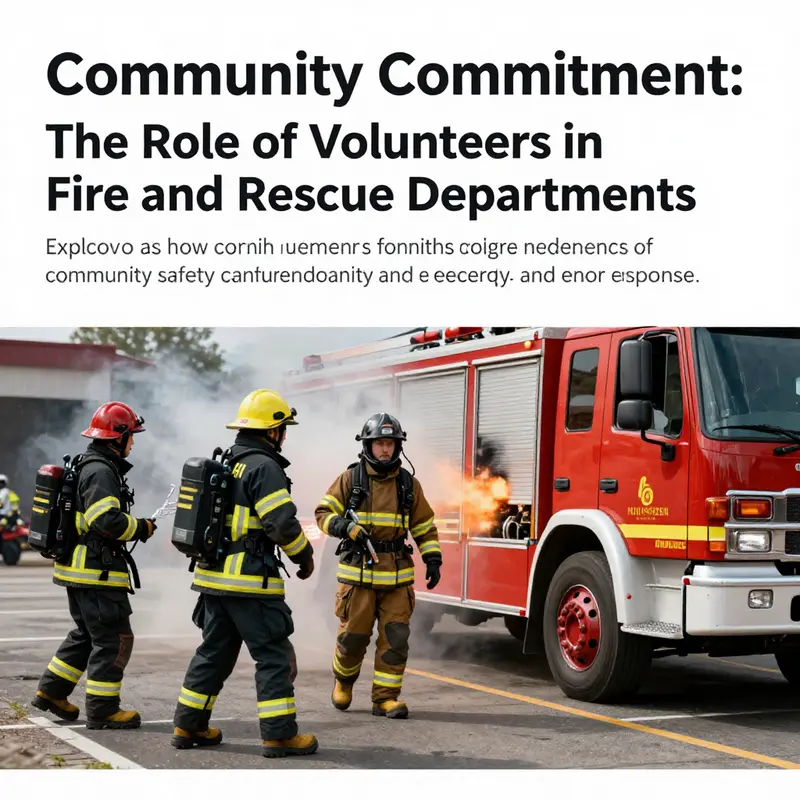
The integration of volunteers within fire and rescue departments plays a vital role in enhancing community safety and response capabilities. These dedicated individuals not only extend valuable support to professional firefighters but also engage in crucial community service activities, fostering a spirit of safety and preparedness. The following chapters delve into various aspects of volunteer engagement in fire and rescue services: from examining roles in community involvement to understanding training and integration methods, assessing their impact on emergency response efficiency, and highlighting the challenges and opportunities they encounter. This comprehensive exploration aims to illuminate the multifaceted contributions of volunteers in emergency services and reinforce their significance in contemporary fire safety management.
Beyond the Badge: The Quiet Power of Volunteer Fire and Rescue in Safeguarding Communities
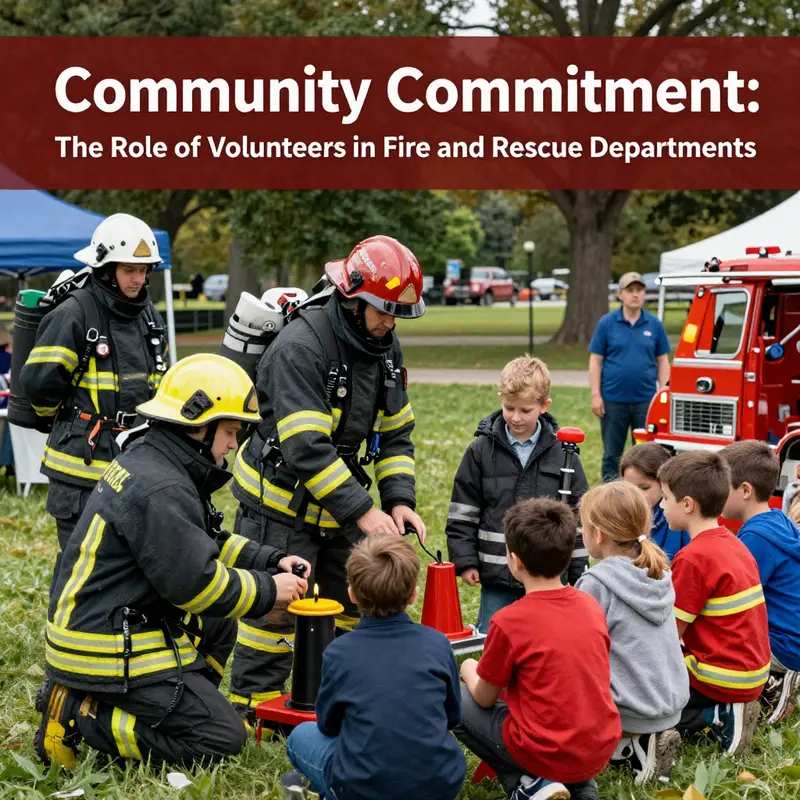
Volunteer firefighters and rescue workers occupy a unique space in the public safety ecosystem. They are not just a support layer; in many places they are a core component of the daily fabric of readiness. Their presence changes how a community prepares for danger, how quickly help arrives, and how resilience is built in the face of disaster. The discussion around whether fire and rescue departments rely on volunteers often centers on two ideas: first, that volunteers extend capacity when demand spikes or when response times stretch across rural and remote landscapes; and second, that volunteerism, when structured and professionalized, can broaden public service beyond the combustible work of containment to the equally important tasks of prevention, education, and community engagement. A striking case from China illustrates this dynamic with tangible outcomes. The Yongzhou Fire Rescue Brigade established an official volunteer team known as the Orange Friends Volunteer Rescue Service Team, a cadre of trained firefighters who take on public-facing duties during major events as well as routine community outreach. During the 2025 Hunan Super League Yongzhou regional matches and the 2026 CMG Mass Football Invitational Tournament, these flame blue volunteers supported crowd control, safety guidance, ticket verification, and even fraud prevention by warning spectators about counterfeit tickets. The result was a near- flawless safety record—zero fire incidents and zero accidents across the events. That is not simply luck; it is a clear demonstration of how professional fire departments can leverage volunteer energy without sacrificing standards, training, or accountability. This model, while rooted in a specific regional context, signals a broader truth about volunteer roles in fire and rescue: volunteers can be integrated into the mission in ways that amplify capability, strengthen community trust, and reinforce a straight line from prevention to protection to recovery. The chapter that follows uses this frame to explore not just what volunteers do, but how they are woven into the very purpose of public safety, how communities recruit and prepare them, and how individuals find purposeful pathways that align with both personal growth and collective security.
Volunteers in fire and rescue departments are often the first to arrive on the scene, especially when professional units are still en route or stretched by multiple incidents. Their scope of involvement extends across a spectrum of emergencies, from structure fires and wildland fires to medical crises and other hazardous situations. In rural or remote areas, where response times can be longer and the geography presents additional challenges, volunteers may be the critical difference between containment and escalation. Yet the role of volunteers is not limited to responding to emergencies. They fill essential functions that keep the department’s wheels turning when danger is not imminent but preparedness is. Administrative tasks, scheduling, and record-keeping are indispensable in any emergency service, and volunteers who contribute in these areas help maintain continuity and efficiency. Logistical support—organizing equipment, coordinating resource distribution, and assisting in incident command logistics—ensures that when a call comes in, responders can move swiftly with the right tools and information. In many organized programs, volunteers also participate in training activities, from mentoring new recruits to facilitating scenario-based drills that expand the department’s training capacity without demanding overtime from full-time staff.
The pathways into volunteering are as important as the tasks volunteers perform. In many regions, structured programs exist that guide curious citizens from initial interest to active service. Recruitment campaigns are typically followed by a period of screening, background checks, and medical clearances, ensuring that volunteers can operate safely in high-stress environments. Once accepted, volunteers progress through training that aligns with official standards for firefighting, emergency medical response, marine rescue, and technical rescue operations. The emphasis on training is not ceremonial; it is foundational. Volunteers must demonstrate competence and maintain it through ongoing drills, refreshers, and certifications. For those charting a career in public safety, the process often resembles a ladder rather than a one-time step. The ladder begins with basic awareness and safety education, advances through basic firefighting or first aid credentials, and can culminate in advanced certifications and leadership roles within the volunteer corps.
The value of volunteers extends beyond the technical. Personal development and community belonging sit at the heart of the experience. Volunteers describe a sense of purpose that comes from serving neighbors, protecting homes, and contributing to a safer environment for children, seniors, and the broader community. The skills they acquire—risk assessment, decision-making under pressure, teamwork, clear communication, and technical proficiency with equipment—are transferable across a range of occupations and civic engagement activities. The social capital built through volunteer work strengthens neighborhood ties and fosters a culture of mutual aid. It is not unusual for volunteers to form lifelong friendships with teammates who share a commitment to service, which in turn reinforces community cohesion during times of stress.
In practice, volunteer energy translates into tangible improvements in readiness and prevention. Volunteers bring public education to schools, senior centers, and fairs, teaching people how to evacuate safely, how to use fire extinguishers, and how to recognize warning signs of an imminent emergency. They help organize home safety audits, distribute fire escape plans, and participate in home visits that lower risk for vulnerable residents. This preventative work has a multiplier effect: when households understand how to reduce hazards and how to respond, the outcome is less demand on emergency services during peak hours and a more resilient community overall. The Yongzhou example also highlights an important dimension of community involvement—the use of volunteer teams during large public events to manage crowds, provide safety guidance, and help with verification tasks that protect the integrity of event operations. In such settings, trained volunteers act as a bridge between professional responders and the public, translating complex safety information into accessible actions.
Training and certification are the lifeblood of a credible volunteer program. A key feature is the integration of volunteers into formal structures that maintain safety, accountability, and operational coherence. This means that volunteers are not peripheral aides but essential contributors who operate under established protocols, wear appropriate identifiers, and participate in joint exercises with career staff. For individuals who wish to pursue volunteering as a path to a broader career in public safety, the available training is not only about learning to respond to fires. It encompasses a spectrum of skills that improve overall emergency readiness: first aid and trauma care, water rescue techniques, search-and-rescue protocols, incident command principles, and risk communication with the public. The practical value of these competencies extends into daily life and community service, empowering volunteers to be confident, capable, and responsible guardians of safety. In this context, the internal resource on Fire Safety Essentials: Certification Training serves as a practical guide for readers who want to explore the certifications that give volunteers and aspiring professionals a solid foundation. It emphasizes not only the technical skills but also the discipline and teamwork that are necessary to function well in high-pressure environments. For readers curious about advancing in this field, the guide underscores how targeted training can sharpen their readiness and widen the scope of service they can provide.
The idea of volunteerism within fire and rescue departments is neither new nor static. It has evolved as communities have recognized the value of local knowledge, proximity, and the mobilizing energy of neighbors who are willing to step forward when a call arrives. The Yongzhou model illustrates how professionalized volunteering can operate within a larger public-safety framework. Volunteers are not merely auxiliaries but integrated participants who bring specialized capabilities to a team with professional standards, accountability, and a shared mission. They expand the department’s reach in prevention, education, and event safety; they also extend its human capacity during emergencies, reducing the likelihood that a single incident will overwhelm available resources. In many ways, volunteers extend the reach of public safety into the daily lives of residents, translating the abstract idea of preparedness into concrete actions that people can understand and participate in.
This broader approach raises important questions about recruitment, retention, and sustainability. Recruiting a diverse pool of volunteers—across ages, backgrounds, and skill sets—broadens perspectives and enhances problem-solving during emergencies. Retention depends on clear pathways for growth, ongoing training opportunities, and visible recognition for the work volunteers perform. Organizations must also manage risk and ensure safety through medical clearances, protective equipment, and protocols that prevent volunteer burnout. The balance is delicate: communities need enough volunteers to be effective, but not at the expense of safety or the well-being of the volunteers themselves. When drawn and developed thoughtfully, volunteer programs can help communities become more self-reliant, more capable, and more connected to the emergency services that serve them.
For readers who want to explore practical entry points, the following considerations can help shape a thoughtful approach to volunteering. First, identify local departments or community fire associations that welcome volunteers and offer structured training tracks. Second, be prepared to commit time for training and drills, and to participate in ongoing learning that keeps skills sharp. Third, recognize that many valuable volunteer roles do not require heavy physical exertion or extensive firefighting drills. Administrative, logistical, and educational responsibilities often provide meaningful avenues for service while enabling a broader set of people to contribute. This inclusive approach strengthens the fabric of public safety and demonstrates that readiness is collective, not solely the province of full-time firefighters. The joy of volunteering often arises not from a heroic moment on a blazing roof but from steady, reliable participation in communities that value safety as a shared responsibility.
In sum, volunteers are an essential, dynamic element of modern fire and rescue services. They complement professional responders by increasing the geographic reach of safety programs, expanding the scope of prevention work, and reinforcing public trust through visible community presence. The Yongzhou experience shows how a well-structured volunteer cadre can operate within a professional framework to deliver high standards of safety during large events while also contributing to everyday preparedness. The chapter that follows will examine how communities can nurture this model, outlining concrete steps for people who want to become part of the fire and rescue family while maintaining the professional rigor that safety requires. For readers seeking further guidance on building a safety culture through training and certification, see the linked resource on Fire Safety Essentials: Certification Training. In addition, those interested in formal pathways to volunteering and the broader landscape of public-safety volunteering can consult regional programs and national frameworks that emphasize accountability, training, and community partnership. And for a broader view of how formal volunteer programs fit into the public-safety ecosystem, consider exploring established online resources and community partnerships that illuminate best practices around recruitment, governance, and sustained engagement.
External resource: For readers seeking structured pathways and official guidance on volunteering, the Western Australian example offers a practical framework and standards that many other regions adapt to their own contexts. See https://www.fireandemergency.wa.gov.au/volunteering for an overview of how volunteer opportunities are coordinated within a professional fire and emergency service system.
Training in Tandem with the Flame: How Volunteers Learn, Integrate, and Elevate Fire and Rescue
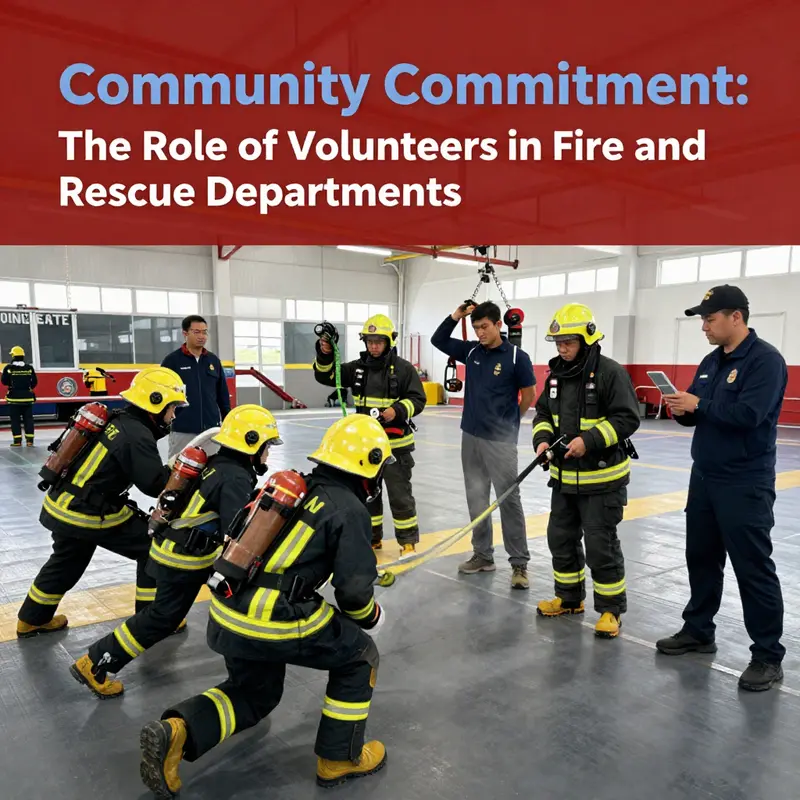
In many communities, volunteers are more than a backup to professional responders. They are an integrated thread in the fabric of public safety, trained and deployed in ways that reflect a deliberate, modernization minded approach to emergency response. The most successful fire and rescue systems shape volunteering not as ad hoc help but as a structured partnership anchored in consistent training, clear roles, and measurable impact. Across diverse regions, the evolution toward professionalizing volunteer forces reveals a shared conviction: when volunteers receive rigorous preparation and are embedded in a transparent governance and data framework, they magnify the reach and reliability of the entire emergency network. This is not mere rhetoric about civic virtue; it is a practical shift toward a safety culture that blends rapid grassroots responsiveness with the judgment and resources of full time professional units. A telling illustration lies in the Yongzhou model in China, where volunteers described as flame blue operate alongside standard responders, taking on tasks that range from crowd management to counterfeit ticket warning during major events. The result is a track record of safety and order that underscores how volunteers can amplify protective outcomes without replacing professional expertise. This kind of integration rests on three interlocking pillars: systematic training before deployment, robust governance that coordinates multiple actors, and the use of data and technology to match volunteers to needs so that every hour of service counts.
First, the core idea of training before deployment is a rule more than a slogan. In Sichuan Province, a 2024 plan to construct a firefighter volunteer service system established a blueprint that other provinces began to mirror. The plan, developed through collaboration among the provincial social work department, the fire rescue corps, and the youth league, identified five core pillars that would shape how volunteers enter and operate within the emergency landscape. The emphasis on training before deployment is explicit and practical. Rather than inviting civilians to assist during a crisis, the framework creates a tiered training ladder that aligns volunteers with their age, occupation, and service interests. It treats training as a continuous learning process that scales from provincial to municipal and then to county levels, ensuring that learning never stops at the moment of entry but continues as volunteers gain experience and take on more responsibilities. The training itself blends theory with hands on practice and assessment, a triad that is common across professional training regimes and that ensures volunteers internalize both the why and the how of their responsibilities. The digital backbone called Volunteer Sichuan supports this structure by handling registration, scheduling, and the crucial metric of service hours. By the end of 2024, the system had mobilized hundreds of thousands of volunteers and facilitated thousands of events, signaling a meaningful shift from casual aid to a reliable, scalable volunteer network.
A parallel but distinct model operates in Shandong, specifically in Weifang City, where the governance of volunteering embraces a principle of shared responsibility. The city’s Red and Blue Protection, Safe Homes project serves as a national exemplar of a co construction, co governance, and shared benefits approach. The governance architecture links city level coordination with district and sectoral cooperation and grassroots implementation. The numbers themselves tell a story: 17 district or county level volunteer teams and 328 industry or town level teams. This breadth allows volunteers to be positioned where risk is greatest or where vulnerable groups reside, such as the elderly or children. The concrete outcomes include regular safety inspections, hazard elimination efforts that identified thousands of issues, and a cadre of volunteers trained across sectors such as sanitation, courier logistics, and property management to act as frontline responders in situations that would otherwise burden professional units. Volunteers, in other words, do not merely observe or assist; they are structured to intervene early, to stabilize situations, and to collect intelligence that informs ongoing prevention work. The Weifang model demonstrates how coordination among government, industry, and communities can create a sustainable volunteer ecosystem that expands capacity without diluting accountability.
Beyond regional governance, practical training developments demonstrate a sharpened focus on life saving skills that translate directly into real world outcomes. In Fuzhou, within the Gaoxin District of Fujian Province, a five day emergency first aid instructor course for Red Cross trained volunteers and professional staff exemplifies a tight loop of education. The course, built on a clear theory practice examination sequence, equips participants with advanced life support techniques, trauma care knowledge, and scene specific response protocols. The goal is not simply to add more responders but to create a cadre of internal trainers who can cascade knowledge throughout the force, thereby multiplying effect and resilience. The emphasis on practice is notable. Participants drill in chest compressions, artificial respiration, and the use of automatic external defibrillators, but they also learn how to teach these skills to others, a multiplier effect essential for sustaining a large and geographically dispersed volunteer base. This approach reflects a broader awareness in which volunteers become not only operators but educators, mentors, and force multipliers who reinforce the capacity of professional units rather than competing with them.
The conceptual underpinnings of these training initiatives align with a growing body of research advocating data driven decision making to optimize volunteer utilization. A 2024 study by M. Yazdani proposed a Decision Support System framework designed to tailor volunteer deployment to skill sets, geographic location, and time availability. In practice, such a framework translates to smarter matching of volunteers to incidents, more precise task assignments, and performance feedback loops that guide ongoing training priorities. The research underscores a truth obvious in day to day operations: the best volunteers are those whose contributions are aligned with real needs, and whose growth is guided by measurable outcomes.
Taken together, these developments illuminate a broader arc in modern public safety. Volunteers are not a petty relief valve for overwhelmed systems. They are a purposeful component of a unified safety network. They must be prepared to handle heightened risks, operate with a clear sense of accountability, and contribute to the same safety culture that professional units champion. This is precisely the orientation behind the Yongzhou example, where an officially sanctioned volunteer unit—the Orange Friends Volunteer Rescue Service Team—operates in tandem with professional fire and rescue personnel. In major events, these flame blue volunteers shoulder crowd control, safety guidance, ticket verification, and even fraud prevention, acting in ways that protect attendees and help organizers maintain orderly, safe environments. The outcome—a record of zero fire incidents and zero accidents—presents a compelling case for professionalized volunteering as a core public service function rather than a stopgap measure. It also highlights a critical lesson: volunteers embedded in a formal framework, with defined roles and continuous training, can be trusted to operate at the speed and scale of large events where the margin for error is narrow.
Currents of training and integration are reinforced by the everyday realities of what volunteers do. The Sichuan experience demonstrates the power of a persistent, scalable plan that acknowledges volunteers require structured progression and a robust digital platform to sustain participation. The Weifang model shows the value of governance structures that bring multiple actors together with a common purpose and shared benefits, enabling a broad network to align with public safety objectives. The Fuzhou program illustrates the transformability of volunteers into educators who extend learning to communities at risk and across emergency scenes. And the Yazdani inspired DSS framework provides a lens for continuously aligning volunteer tasks with evolving needs, ensuring that volunteers are not deployed in ways that distort priorities but rather augment the capabilities of professional responders.
This convergence of policy, practice, and research points to a future in which volunteers are seen less as optional add ons and more as strategic assets within the emergency response architecture. The digital and organizational infrastructure matters as much as the training content. Platforms like Volunteer Sichuan create the scaffolding for consistent recruitment, scheduling, and measurement of impact, while on the ground, coordinated governance and practical training ensure that volunteers arrive on the scene with both competence and confidence. The result is resilience that is distributed across networks of people, organizations, and communities. In the end, the question of whether fire and rescue departments are truly volunteering friendly hinges on whether the system treats volunteers as integral partners worthy of investment, trust, and ongoing development. The evidence from Sichuan and its peers suggests a decisive yes: volunteers, when trained before deployment, integrated through clear governance, and guided by data driven decision making, emerge as essential co responders whose contributions are both meaningful and enduring.
Internal link for further exploration: firefighter-training-tower-dedication.
For readers seeking a formal, policy oriented view of how such integration is framed at the state or provincial level, the Sichuan Provincial Fire Volunteer Service System Construction Plan provides a comprehensive official reference that informs these efforts. See the official framework here: https://www.sc.gov.cn/xxgk/zwgk/zfxxgkml/2024/07/t20240715_2391781.html
Neighbors on the Front Line: Volunteer Firefighters and Emergency Readiness
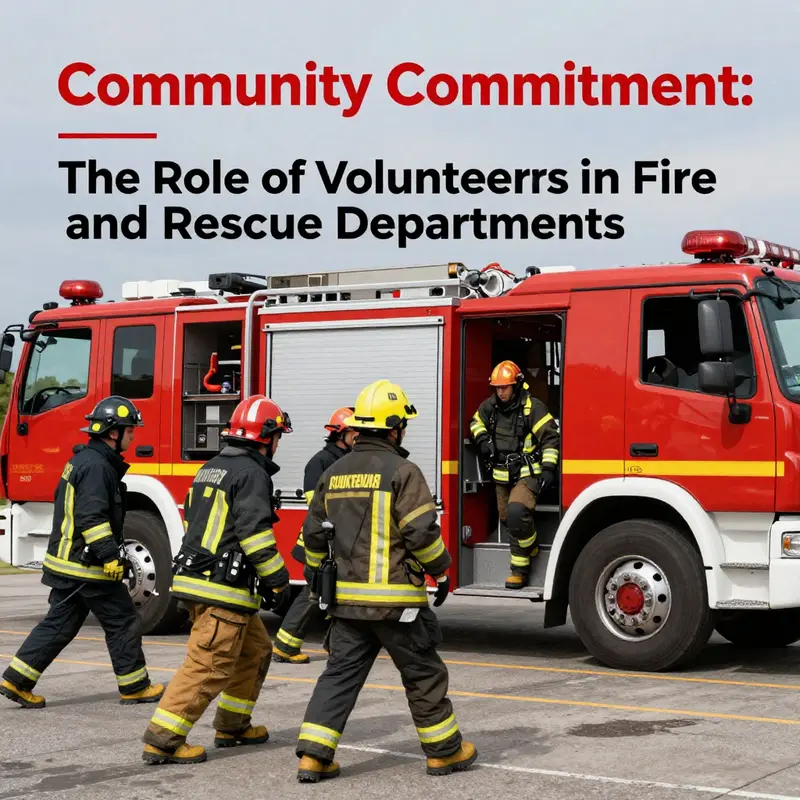
In many cities, volunteer firefighters form a vital layer of safety that complements professional units. They arrive alongside full time teams, expanding coverage, shortening response times, and bringing local knowledge into the incident room. In resource constrained environments they are a bridge between immediate community needs and the formal safety system, helping to maintain readiness when budgets are tight and deployments are unpredictable. When volunteers train and operate with professional responders, the effect is a more resilient public safety network.
A growing body of evidence supports this view. Studies in urban contexts show that well organized volunteer programs can reduce response times during peak demand and provide crucial support during mass gatherings or natural hazards. The practical gain is not only faster arrival but a more flexible allocation of scarce assets, providing redundancy that translates into smoother incident management. The downside requires attention to fatigue, training gaps, and clear lines of authority to ensure volunteers work in concert with professional teams.
The user experience is improved when volunteers communicate clearly and respect the incident command structure. Public confidence rises when communities feel that help is present, competent, and aligned with sanctioned procedures. This alignment requires ongoing coaching, supervision, and a shared culture of safety that values bystander protection and ethical conduct.
To illustrate, consider a metropolitan festival where a trained volunteer team assists with crowd guidance, safety signposting, and nonemergency support. They do not replace professionals but extend reach, reduce confusion, and help maintain calm in crowded environments. The result is measurable improvements in crowd safety, incident containment, and overall public trust in the emergency response system.
Lastly, sustainable volunteer programs require attention to workload, wellness, and professional development. Regular drills, equipment checks, rest periods, and formal feedback loops keep volunteers prepared without burning them out. When designed with clear governance and meaningful recognition, volunteer firefighters become a leveraged asset rather than a burden, enabling a fire and rescue system that is faster, more robust, and more closely connected to the communities it serves.
Sustaining Service: Navigating the Challenges and Harnessing Opportunities of Volunteer Engagement in Fire and Rescue
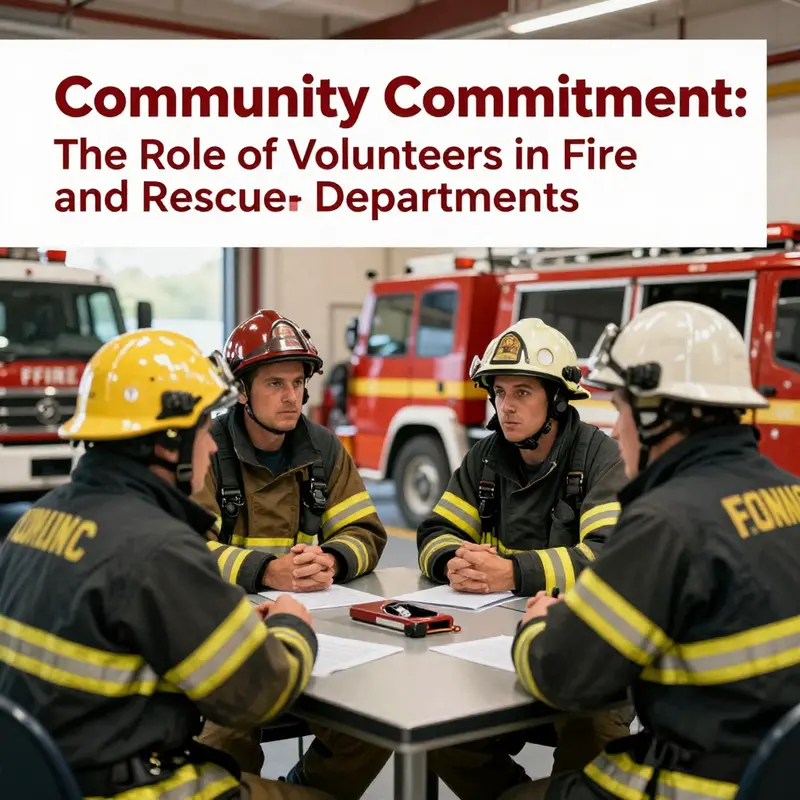
Volunteer engagement in fire and rescue services sits at a crossroads between public expectation and the demanding realities of emergency work. In many communities, volunteers are not a peripheral adjunct but a living extension of the department’s mission. They bring local knowledge, rapid response potential, and a broader reach for public safety education. Yet the very qualities that make volunteers valuable—their flexibility, local ties, and diverse backgrounds—also expose them to vulnerabilities. Time commitments grow with evolving training demands, incident complexity, and the unpredictable rhythms of contemporary life. A volunteer who once could respond after work or on weekends may now find the balance strained by professional responsibilities, caregiving duties, or shifting personal commitments. When every training drill and every call comes with the weight of personal sacrifice, retention becomes a constant question for fire and rescue organizations. The challenge is not merely to recruit but to design a participation model that respects life’s diversity while maintaining operational readiness. In many rural and underserved areas, the solution has to be both practical and humane, offering pathways that acknowledge that volunteers are people first and responders second. In this quiet negotiation between capability and care, technology begins to matter as much as time and stamina. Digital scheduling platforms can ease the administrative burden of coordinating shifts, training, and on-call coverage. Virtual or blended learning can reduce travel demands, allow for more frequent refreshers, and democratize access to essential skills. When a volunteer can complete module work from a kitchen table at 9 p.m. and still be ready for a weekend drill, the barrier to participation falls away, and the volunteer’s life, not just the department’s need, becomes a factor in the equation. Yet technology alone cannot sustain a volunteer force. Community outreach must be more than a publicity exercise; it should be a pipeline for cultivating pride, belonging, and a sense of shared purpose that transcends the occasional obligation. Outreach programs that highlight the tangible impact of volunteer service—how a crowd is kept safe at a regional game, how a school program inspires children to recognize smoke alarms, how a neighborhood learns to respond to a kitchen fire—create a narrative of value. When people feel valued and see the difference their effort makes, their willingness to take on the required time and emotional labor grows. The emotional toll of firefighting, rescue work, or public safety education is not abstract. Volunteers face exposure to hazardous environments, distressing scenes, and the ever-present risk of making a wrong call under pressure. Burnout can erode even the most idealistic volunteers if the emotional supports are missing. Mental health resources, peer support networks, and leadership development are not luxuries; they are essential components of a sustainable volunteer culture. A resilient system invites volunteers to grow in their roles, rather than simply endure the demanding phases of service. It is in this sense that well-being programs become a form of risk management—protecting volunteers today to preserve community protection tomorrow. The aging of the volunteer base presents another urgent challenge. Many departments find themselves relying on a cohort whose members started decades ago and are beginning to step back. The question then shifts from recruitment alone to renewal: how to attract younger residents without erasing the identity or the sense of ownership that long-standing volunteers bring. Younger prospective volunteers often value flexibility, purpose, and tangible skill-building opportunities that align with their life ambitions. A successful volunteer program, therefore, makes room for a spectrum of commitments—from one-off event support to ongoing, skill-based engagement—without compromising the integrity and reliability of the response system. In this context, a more intentional approach to workforce planning becomes critical. Departments can undertake a structured, long-range view of volunteer supply and demand, mapping seasonal peaks, major community events, and potential incident surges. Such planning helps ensure that volunteers are not asked to shoulder excessive burdens while also enabling recruitment campaigns to target specific needs, like public-safety education, logistics at mass gatherings, or non-emergency support services. The idea that volunteers must fit a uniform mold is increasingly obsolete. The modern model recognizes that volunteers may come with a broad range of life experiences—retired professionals seeking meaningful activity, young people building a career in emergency services, or community members who want to give back in small, consistent increments. The key is to design roles that leverage these strengths while providing clear training, strong supervision, and a chain of accountability that aligns with professional standards. A telling example of how this balance can work in practice comes from a regional exemplar in China. In Yongzhou, a formalized volunteer team emerged within the Fire Rescue Service known as the Orange Friends Volunteer Rescue Service Team. This unit blends trained fire and rescue personnel with structured public service duties beyond core firefighting. It is a disciplined, professionalized form of volunteering rather than a separate civilian cohort. During major events—the 2025 Hunan Super League Yongzhou regional matches and the 2026 CMG Mass Football Invitational Tournament—the flame-blue volunteers supported crowd control, safety guidance, ticket verification, and fraud prevention by flagging counterfeit tickets. Their involvement contributed to a record of zero fire incidents and zero accidents across these large gatherings, illustrating how volunteer integration, when well managed, can extend public safety beyond routine duties and into the realm of ceremonial and mass-event stewardship. This case underscores a broader truth: volunteers become most effective when they operate as an embedded extension of the department, sharing in policy, training, and accountability while preserving their unique strengths as community participants. The Yongzhou model also provides a template for balancing professional oversight with voluntary energy. It shows that volunteers do not have to be separate from a department’s mission; they can be visible, trusted, and indispensable components of it. The ethical dimension of such integration should not be overlooked. Volunteers are not merely free labor; they are ambassadors of public safety, and their behavior, both on and off duty, reflects on the entire organization. A framework that emphasizes accountability, continuous learning, and community norms helps ensure that the volunteer experience remains safe, meaningful, and aligned with the highest standards of service. For those considering joining or reforming volunteer programs, several practical lines of action emerge. First, ensure that training pathways are flexible and scalable. A combination of in-person drills and online refreshers can accommodate diverse schedules while preserving competency. Second, cultivate a culture of well-being. Regular debriefings, mental health resources, and peer support networks normalize the emotional aspects of volunteering and reduce stigma around seeking help. Third, develop leadership pathways within the volunteer ranks. Mentors, coordinators, and program leads who understand both public safety and volunteer psychology can bridge gaps between the department and the community. Fourth, invest in a supportive infrastructure. Clear policies that facilitate flexible participation, resource allocation, and community networks minimize administrative friction and maximize safety. Finally, communicate the value proposition clearly to the public. People are more likely to engage when they understand how volunteers extend the department’s reach, protect neighborhoods, and educate families. The narrative should emphasize that volunteers are not a substitute for professional staffing but a strategic complement that, when well aligned, multiplies the department’s effectiveness without compromising safety. In this sense, volunteer engagement becomes a system-level design challenge. It requires thoughtful policy, robust training, and a generous, sustainable approach to human capital. The aim is to create a virtuous circle: engaged volunteers gain meaningful experiences, the community receives broader protection and outreach, and professionals gain additional bandwidth to focus on high-risk incidents and complex operations. The most successful models recognize that the value of volunteers goes beyond the hours they contribute. Their value lies in the trust they build within the community, the local knowledge they bring to incident command and prevention education, and the credibility they lend to public safety campaigns. This broader impact is often hardest to quantify but is nonetheless real and enduring. To keep the momentum, departments can align volunteer goals with broader public safety objectives, ensuring that volunteers participate in activities where their strengths are most effective. For example, volunteers can be assigned to non-emergency roles that still support the core mission—education in schools, outreach at community events, or logistics for large gatherings—while professionals focus on high-risk emergencies that demand specialized equipment and rapid decision-making. Such an allocation respects the limits of volunteer capacity and preserves the integrity of professional response standards. In discussing the future of volunteer engagement, it is essential to acknowledge that models will differ by region, culture, and governance structure. Some places may lean toward tighter integration within the professional branch, creating a seamless chain of command and standardized training. Others may maintain a more arm’s-length relationship, allowing volunteers to operate with substantial autonomy in non-emergency duties yet remain closely aligned with policy and safety protocols. Neither approach is inherently superior; each reflects a thoughtful response to local realities while maintaining the shared objective: to protect lives and property through a well-organized, resilient public safety system. For readers seeking further practical guidance and evidence-based strategies, consider the broader range of resources on volunteer recruitment and retention within the emergency services sector. These materials offer insights into how other departments balance time demands, training, and community expectations while preserving safety and morale. fire-safety essentials training is one such entry point that emphasizes foundational competencies and continuous learning as cornerstones of both professional and volunteer readiness. In the end, the story of volunteer engagement in fire and rescue is a story of service under pressure, a story of communities choosing to extend safety beyond the doors of the station. It is about designing roles that honor volunteers as whole people, not merely as manpower, and about building systems that reward dedication with competency, support, and a sense of belonging. When these elements come together, the volunteer model ceases to be a supplementary tier and becomes an integral mechanism through which communities sustain safety, confidence, and mutual aid for the long term. To paraphrase the field’s enduring lesson: volunteers amplify capacity, but only when they are empowered, protected, and connected to a clear mission. And as communities continue to grapple with evolving risks—from climate-related incidents to crowded public events—the value of a well-conceived volunteer program will be measured not just by response times or incident counts, but by the steadiness of the morale behind those numbers and the steadiness of the public trust that those numbers symbolize. External resources that synthesize these ideas can help guide planning and policy development for departments pursuing more resilient models of engagement. For broader context on how volunteer recruitment and retention are approached at scale, see the National Fire Protection Association’s guidance on recruiting and retaining volunteer firefighters: https://www.nfpa.org/News-and-Research/Data-research-and-statistics/Other-resources/Volunteer-firefighter-recruitment-and-retention.
Final thoughts
The involvement of volunteers in fire and rescue departments is indispensable. Their commitment enriches community engagement, enhances operational effectiveness, and fosters a safer environment for all. By integrating trained volunteers into their ranks, fire and rescue services can operate more efficiently while also promoting safety awareness in the community. Through training and strategic engagement, these volunteers not only support emergency response but also reinforce the vital role of community participation in enhancing public safety. In recognizing the challenges they face and the invaluable contributions they make, it becomes clear that the future of fire and rescue services is indeed brighter with volunteers at the forefront.