
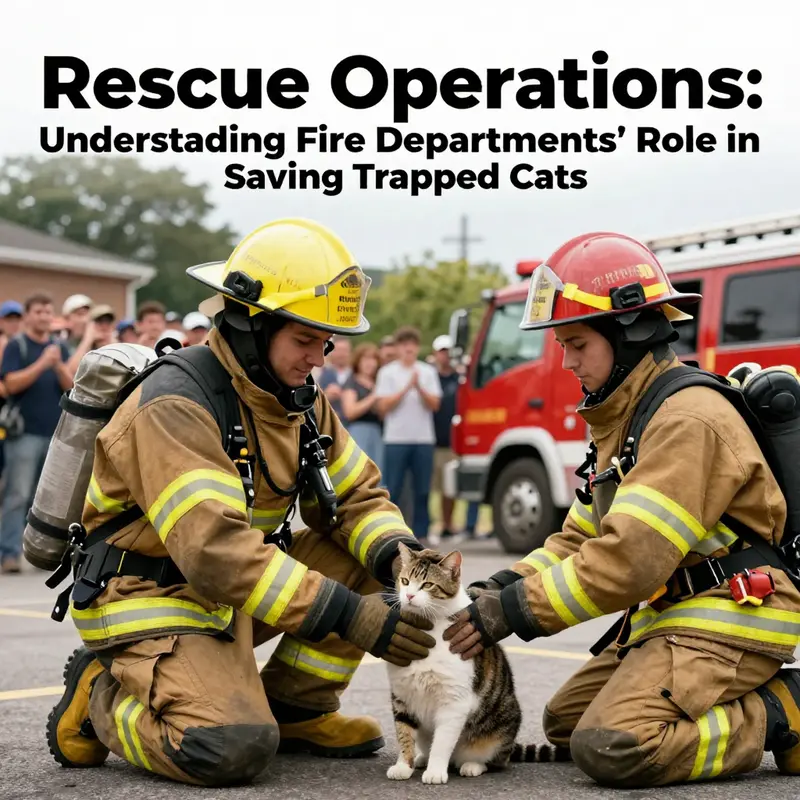
Fire departments play a crucial role in ensuring community safety, not only through fire prevention and rescue but also in animal welfare. A prevalent yet often overlooked duty of firefighters is rescuing trapped cats during emergencies. From the use of specialized tools to detailed protocols, the importance of their training in animal rescue cannot be overstated. This article delves into the various aspects of cat rescues conducted by fire departments, highlighting incidents, the techniques employed, the training firefighters undergo, public perceptions, and established rescue protocols. Each chapter contributes to a holistic understanding of the significant role that firefighters play in these often life-saving missions.
Cat in the Chimney, Call the Crews: How Fire Departments Rescue Trapped Cats and Safeguard Communities
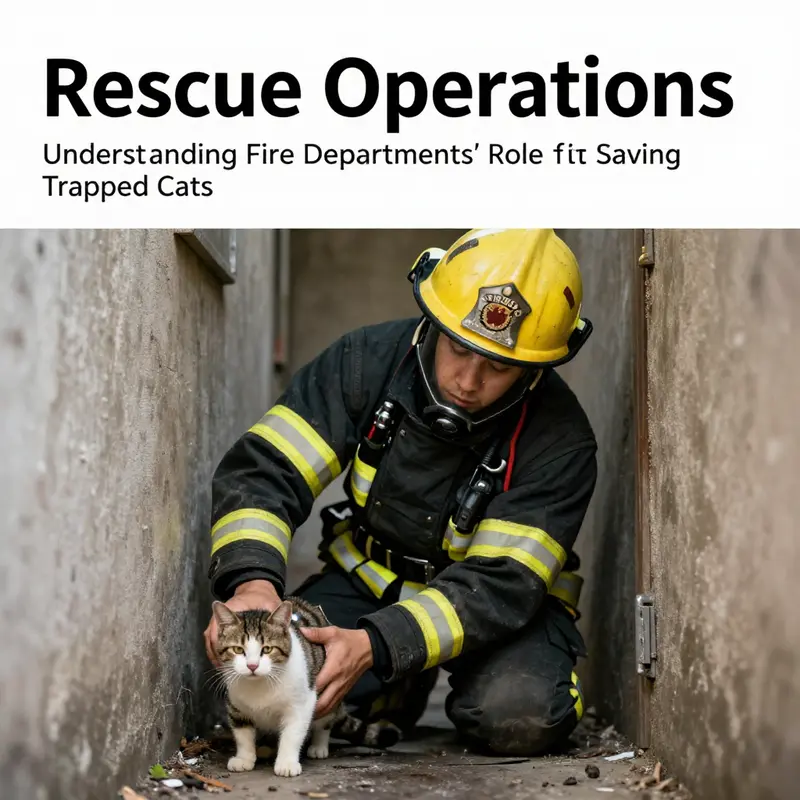
When the alarm sounds for a trapped cat, the scene that unfolds is a blend of duty, care, and careful problem solving. Fire departments are built to respond to life-threatening fires, but their remit extends far beyond flames. In many communities, animal rescues—especially cats stuck in precarious locations—are a familiar part of the daily work. The image of a firefighter reaching into a narrow chimney or a wall cavity to coax a trembling animal to safety has become a powerful symbol of why these teams train, plan, and stay ready. It is tempting to imagine a single, dazzling technique, but the truth is more nuanced: rescuing a trapped cat is a craft grounded in patience, precise assessment, appropriate equipment, and a calm, compassionate approach that keeps both the animal and the responders safe.
The core of these operations rests on training. Firefighters learn to recognize when a situation calls for rapid action and when it requires a measured, step-by-step approach. Animal rescues are not battles won by force; they are demonstrations of finesse and restraint. Before any tool is brought to bear, responders perform a rapid risk assessment. Is the space structurally sound enough to enter? Could moving debris create a hidden hazard? Would a sudden movement put the cat or a bystander at risk? These questions guide decisions about how to proceed and who should lead the effort. Many departments have formal protocols for animal emergencies that spell out roles, permissible tactics, and post-rescue steps. These guidelines are designed not only to save the animal but to protect the human team and to maintain public trust that responders act with skill and care.
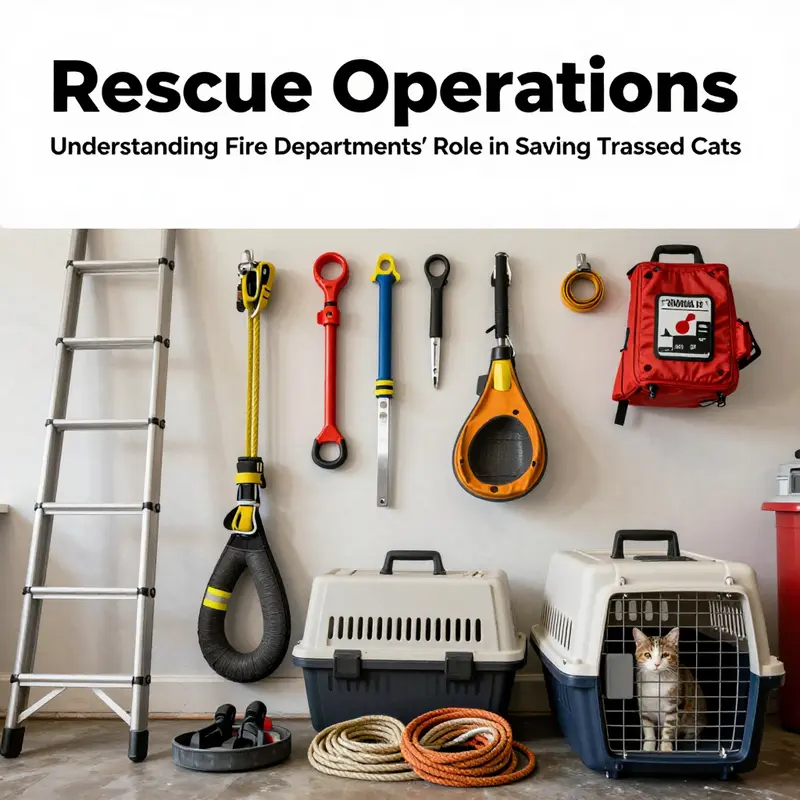
Equipment and technique form the second pillar of success. A rescue in a chimney, wall cavity, attic, or under-structure demands more than courage; it demands the right tools for the right job. The toolkit often includes soft blankets and padded restraints to prevent injury, gentle leashes or carriers to secure the animal once freed, and improvised supports that can help the cat move toward a safe exit without panicking. Assessment devices like a small, flexible camera or borescope allow handlers to visualize the animal and the surrounding debris without invasive probing. Where space is tight, responders might deploy ropes and harnesses, precisely controlled lifts, or low-profile access points that minimize disturbance to the structure while presenting a clear path for extraction. In some cases, a heat-imaging device can reveal the cat’s location by detecting body heat behind a wall or inside a crevice, guiding the team to the most promising route toward safety.
Equally crucial is the ability to communicate with the cat and carry the animal through the rescue without escalating stress. Firefighters speak in calm, steady tones, offering reassurance as they maneuver around the animal’s location. They avoid sudden movements and minimize handling that could provoke a defensive reaction, especially in a creature already frightened by unfamiliar noises, lights, and the close presence of strangers. The human side of the rescue often includes talking with the cat’s owner, explaining the steps being taken, and setting expectations for post-rescue care. The goal is not to pull the animal out in a moment of dramatic heroism but to shepherd it to safety with empathy and skill.
A real-world illustration of these principles occurred in 2023 in Austin, Texas, where a cat became trapped in a narrow chimney blocked by debris. The team approached the problem with restraint and method. They used a flexible inspection camera to map the obstruction and locate the cat, then carefully worked around the debris to reduce the risk of injury. The extraction was performed slowly, with the cat guided toward the opening and then placed into a soft carrier to ease the transition from the confined space to a familiar, calmer environment. The success rested not on a single clever maneuver but on a coordinated, patient sequence that prioritized the animal’s welfare. This incident, like many others, underscores how crucial it is for responders to blend technical proficiency with animal-handling sensitivity. It also highlights the importance of clear public messaging that encourages bystanders to stay safe and let trained personnel manage the rescue.
The broader significance of these rescues extends beyond the moment of freeing the cat. Fire departments operate as community first responders for a spectrum of emergencies, and animal rescues are a natural extension of that role. When a cat is found stranded in a tree, a crawl space, or an attic, the responders’ purpose remains consistent: preserve life, minimize harm, and restore normalcy as quickly as possible. This perspective echoes the public’s evolving expectations of the fire service as a versatile, humane, and trusted public safety partner. It also reinforces the need for preventative education. Communities can reduce the frequency of entrapments by maintaining chimneys, securing attic access points, and addressing potential hazards in homes. Homeowners who perform routine checks and implement straightforward safety measures lessen the chances of a difficult rescue, allowing firefighters to allocate time and resources where they are most needed.
Alongside training and prevention, the collaboration between the fire service and the broader animal-welfare ecosystem matters. After a successful extraction, the animal’s welfare continues under the watch of veterinarians or animal-control professionals who assess stress, check for injuries, and determine whether the owner should take the pet home or seek temporary shelter. The rescue becomes part of a continuum of care that starts with immediate life-saving actions and extends into ongoing treatment, recovery, and, ideally, a safe return to a loving home. In many cases, teams will communicate with local shelters and veterinary partners to coordinate post-rescue care, ensure the cat’s health, and help reunite the pet with its owner when feasible. The process reflects a holistic approach to animal welfare that treats rescues as part of a larger ethical and community framework, rather than as isolated episodes.
Education plays a central role in shaping how communities respond to these incidents. Public awareness campaigns emphasize what to do when you encounter a trapped cat: stay clear of the immediate danger zone, keep the area secure, and contact emergency services rather than attempting to free the animal yourself. The danger in improvising a rescue can be twofold: a frightened cat might injure itself or a rescuer, and a poorly managed extraction could cause structural damage or complicate the operation. By guiding the public toward professional intervention, fire departments reinforce not only safety but also respect for the animal’s well-being. When people understand why responders must sometimes pause or alter tactics to protect everyone involved, they become informed participants in the safety culture that supports effective rescues.
The conversations surrounding these events also open doors to professional development within the fire service. Firefighters routinely engage in scenario-based training that simulates animal entrapments in different environments—chimneys with varying debris loads, narrow wall voids, or attic crawl spaces—all designed to improve decision-making under pressure. The emphasis is on adaptability: the same crew can adjust techniques as the space, the animal’s condition, and the external environment change. Such flexibility is essential given the unpredictability of live rescues. It also reinforces a core tenet of professional rescue work: no single formula fits all situations. Instead, responders rely on a tested repertoire of strategies, refined through practice and real-world experience.
Community resilience also hinges on the accountability and transparency that accompany these rescues. When a cat is saved, the narrative becomes a learning opportunity for residents, property managers, and local governments. Transparent communication about what went right, what could be improved, and how to prevent similar scenarios helps strengthen trust in the fire service and reduces unnecessary risk in future cases. That openness extends to the decision-making process during a rescue. If the situation calls for withdrawing to reassess the risks, responders explain the rationale, reinforcing the perception that professional judgment is a disciplined, humane force for safety rather than a reflexive impulse to chase a dramatic outcome.
To those who want to connect more deeply with the idea of rescues and the skills behind them, there is value in pursuing related safety training that supports such community work. For related training that emphasizes the fundamentals of safety and preparedness, see fire-safety-essentials-certification-training. This internal resource aligns with the broader theme that education—both for responders and for the public—underpins successful animal rescues and safer neighborhoods. It is a reminder that the best rescues often begin long before a call is received, with preparedness, awareness, and a culture that treats every life with care.
Ultimately, the chapter on incidents of fire department rescues of trapped cats teaches a simple, enduring truth: these operations embody a blend of courage, technique, and empathy. They illustrate how a well-trained team translates knowledge into cautious action, how tools can extend human reach without compromising safety, and how communities benefit when professionals respond with composure to animals in distress. The Austin chimney incident, like countless other rescues, becomes more than a single paragraph in a newsroom. It becomes a case study in humane emergency response that honors both the animal and the people who strive to protect it. And it serves as a reminder that the fire service is not merely a line of defense against fire, but a steady, capable advocate for life in many forms, across a wide landscape of emergencies.
External resource: https://www.nfpa.org/News-and-Research/Publications/Code-Update/2023/Animal-rescue-incidents-in-fire-departments
When the Smoke Clears: The Quiet Complexity of Fire Department Cat Rescues
In every town and city, the sound of footsteps and the hiss of a turbocharged hose often steals the spotlight of a fire department’s day. Yet the real breadth of their work stretches beyond flames and alarm bells. A trapped cat, whiskers quivering behind a wall, a frightened feline on a balcony edge, or a curious climber wedged in a chimney—these moments test the same calm, methodical discipline that fuels larger rescues. Does the fire department rescue trapped cats? The answer, supported by common practice, training, and documented incidents, is a confident yes. In many communities, animal rescues are a defined, routine facet of emergency response. When a cat’s safety is at stake and conventional access is blocked or unsafe, firefighters step in with the same care they bring to human emergencies. The goal is not merely to remove the animal from danger but to do so with the least stress and risk to all involved—two charges that shape every decision, from the initial call to the final cradle inside a carrier.
The drama of these rescues often unfolds in a way that highlights the breadth of a firefighter’s training without the thunder of sirens. A cat trapped in a wall void, a tight crawl space under a porch, or an anxious animal perched on a high deck edge requires more than brute force; it requires strategy, patience, and the right tools. Foremost among these is the early, precise location of the animal. Thermal imaging cameras, a staple in many departments, illuminate a cat’s body heat through walls, ceilings, and insulation. This technology turns a potentially open-ended search into a brief, targeted effort. It helps rescuers avoid unnecessary demolition, reduces noise and disruption, and can lower the animal’s fright simply by shortening the duration of confinement. In environments where visibility is compromised by dark corners or cluttered spaces, the heat signature becomes the compass guiding the team toward the animal’s position and away from structural hazards.
But vision alone cannot complete a rescue. Where the cat lies—behind paneling, within an attic, or tucked inside a void along a foundation line—might require a closer inspection with less invasive means. Flexible inspection cameras, or borescopes, extend the rescuers’ reach without the need to dismantle critical parts of a building. These slender probes can thread through narrow gaps, around wiring, and into small cavities, providing real-time visuals that inform the rescuers’ approach. The value is twofold: it minimizes the potential for property damage and reduces the animal’s stress by avoiding intrusive maneuvers when they are not yet necessary.
When a cat’s location is confirmed, the team brings in equipment designed to bridge the gap between danger and safety. Specialized climbing gear and harnesses enable rescuers to work from ledges, balconies, or rooftop lines with the restraint and steadiness required to protect both the animal and the rescuer. In many cases, the cat is guided toward a soft, secure carrier or a purpose-built trap designed to minimize distress. The emphasis on gentleness accompanies every motion, from the soft spoken reassurances offered by a calm firefighter voice to the slow, predictable movements that a frightened cat can tolerate. The goal is not to chase the animal into submission but to invite it toward a predictable, gentle path of escape.
One of the most intimate parts of these rescues comes down to lure techniques. Food, familiar toys, and patient coaxing help coax a frightened animal into safe containment. The 2026 incident of a firefighter guiding a cat from a fifth-floor balcony into a carrier—calm voice, familiar toy, and steady hands—stands as a vivid example of how successful a well-timed, non-coercive approach can be. It is a reminder that the best outcomes often hinge on human presence that communicates safety and trust as clearly as any tool can. The officer who stays with the cat’s rhythm—speaking softly, presenting food at measured intervals, and moving only when the animal demonstrates a willingness to advance—demonstrates the soft side of rescue work that complements the hard edge of equipment and technique.
In scenarios where access is effectively blocked or structurally complicated, planning becomes a crucial, almost architectural exercise. Firefighters begin with a perimeter walk-around, surveying entry points and exit routes, and determining if a temporary opening is feasible or if a slight modification to the environment is safer than forcing a route. This might mean removing a section of siding or skirting to reach a space with a better angle of approach. Each decision is weighed against potential damage to property and the risk of injuring the animal. To minimize risk, teams rely on protective gear and non-invasive tools that keep the animal’s body and the home’s integrity as intact as possible. The careful choreography of these steps—locate, assess, approach, secure—reflects a philosophy that animal welfare can be integrated with structural preservation rather than traded off against it.
The range of techniques used in cat rescues highlights something about the firefighting profession that often remains unseen: a well-rounded, evidence-based practice that borrows from a wide spectrum of rescue disciplines. The same agencies that train for structural collapses and high-rise evacuations also train for animal emergencies. They learn how to interpret the animal’s behavior, how to maintain composure under stress, and how to deploy tools that minimize both fear and risk. Non-invasive equipment, protective gear, and humane capture methods are the baseline. The emphasis on minimizing stress is not an afterthought; it is built into the protocols from the moment a call comes in and a cat’s image or sound is detected on a thermal screen. This is not about turning a cat into a trophy of success; it is about returning a family member to a home, to the normal rhythm of life, with as little trauma as possible.
Documentation and standards, too, frame these rescues. Fire departments often follow established protocols for animal emergencies that are aligned with broader safety and rescue guidelines. These protocols guide the decisions around whether to attempt a rescue at all, how long to pursue a given approach, and what constitutes a successful outcome. The National Fire Protection Association (NFPA), among other bodies, provides guidelines that emphasize the safety of both the public and responders while ensuring that animal welfare remains a legitimate objective in the spectrum of rescue operations. The result is a system that can be trusted to treat animal rescues with seriousness and professionalism, the same seriousness expected in human life-saving missions. For readers seeking a broader, official frame of reference, NFPA’s guidance on fire department rescue operations offers an extensive map of the considerations and standards that underpin these interventions.
The social and emotional dimension of cat rescues often resonates with communities. People who call for help come from many walks of life, and their reactions can range from gratitude to anxiety. Firefighters understand that, at the moment of rescue, a frightened cat is not just an animal but a family member who may be waiting for a return to routine—feeding times, familiar sounds, and a safe lap. The careful handling of the animal—avoiding rapid swipes, muffling the jangling sounds of metal and gear, and using slow, consistent voices—helps transform a potentially chaotic moment into a controlled, humane relief. This approach also has a practical consequence: it increases the likelihood that a cat will be cooperative in evacuation. Coaxing a cat from peril serves the family’s emotional needs and reduces the chance of a prolonged exposure to danger, which can be particularly important in high-traffic or multi-story environments.
Residents can play a constructive role before and after a rescue by supporting safe practices that reduce the frequency and intensity of emergencies. Securing crawl spaces, keeping household chimneys screened, and ensuring attics are ventilated and accessible can help mitigate risk. When a call does come, the knowledge that a trained team is en route and that a cat rescue is on the menu can be comforting, especially if family members understand some basics of how responders operate. For those curious about the training that makes this work possible, there is a wealth of instructional material that outlines the core competencies involved, including the emphasis on calm, measured actions and humane handling. In this sense, the rescue of a trapped cat becomes part of a broader narrative about preparedness, not just a one-off spectacle of quick hands and sharp tools.
Within this framework, the rescue is not merely a win for the cat or a nod to public relations. It is a testament to how emergency services integrate animal welfare into the fabric of public safety. It demonstrates that rescue work can be patient, technically precise, and fundamentally humane. And it reminds us that the success of a rescue is measured not only by the moment the cat enters a carrier but by the quiet relief that follows—a relieved owner, a safe home, and a story that passes from neighbor to neighbor as a quiet reminder of the many forms that courage can take. The practice, rooted in science and shaped by experience, continues to evolve as new tools and techniques emerge, yet the core aim remains unchanged: to bring a frightened, trapped animal back to safety with as little disruption and distress as possible.
For readers who want to connect the practice to a broader culture of safety and learning, a closer look at training resources can be enlightening. There is an ever-present emphasis on fundamentals—calm communication, careful handling, and a steady, patient approach—that transcends the particulars of any one case. The same principles that apply to human rescue apply to animal rescue, albeit with different objectives and sensitivities. The end result is a cohesive, well-practiced response that treats every call with the seriousness it deserves. In that sense, the question of whether fire departments rescue trapped cats is answered not by a single incident but by the consistent application of a professional standard: when lives are at risk, including those of our animal companions, trained teams step in with skill, restraint, and care.
For further reading on how these procedures are framed and standardized, you can explore related training and safety resources at the internal reference linked here: Fire Safety Essentials Certification Training. This material outlines the training pathways that support responders in animal rescue scenarios as part of a comprehensive safety curriculum. And for readers seeking an authoritative, external framework on rescue operations, NFPA’s guidelines provide a broad, detailed context that underpins practice across departments and jurisdictions: https://www.nfpa.org/News-and-Research/Data-research-and-publications/Fire-Department-Rescue-Operations
Rescuing Quiet Lives: The Training Ground Behind Firefighter Cat Rescues
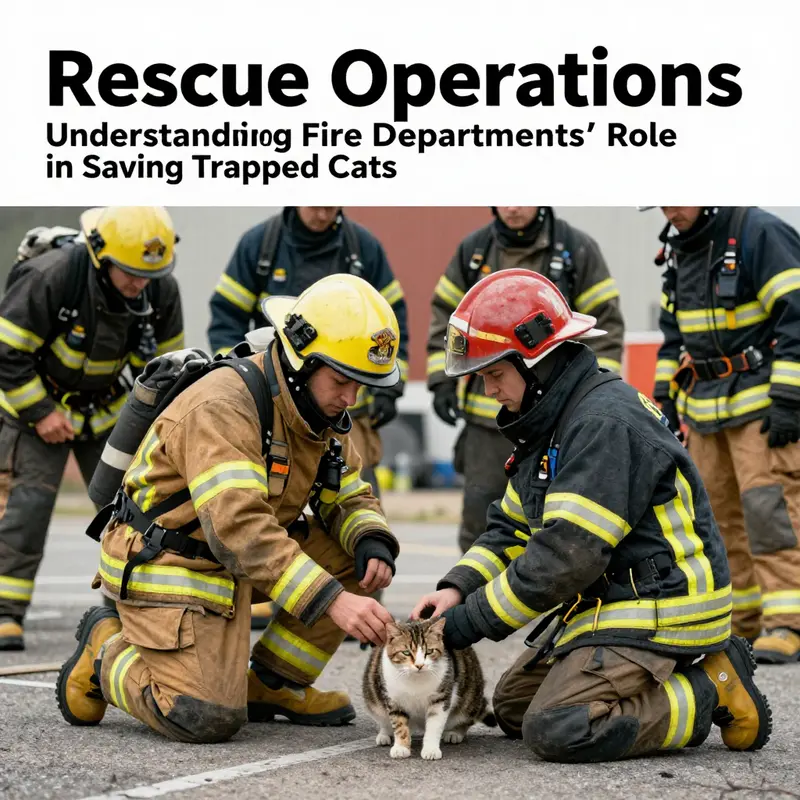
On the surface, a fire department steps into the frame when a home is ablaze or a car accident disrupts a neighborhood. Yet a quieter, equally vital dimension of their work unfolds in the moments when danger comes not from flame but from a small, frightened creature trapped in a wall cavity, a chimney, or under a porch. The question of whether fire departments rescue trapped cats is answered by a broader, more telling inquiry: how do responders prepare to handle animal emergencies with the same calm precision they bring to human rescues? The answer rests on a blend of protocol, specialized training, and an ethic of care that recognizes the value of every life, great or small. When a cat’s safety hangs in the balance, responders must thread a careful path between rapid access and minimizing distress or injury for the animal and the rescuers alike. This path is paved by training that is as physical as it is perceptual, as technical as it is compassionate, and as strategic as it is adaptable to the messy, unpredictable realities of rural and urban environments alike.
In many communities, the cat rescue is not a one-off novelty but a recurring element of the job. Cats can become stuck in chimneys or wall cavities during a curious exploration, wander under houses through crawl spaces, or find themselves wedged in tight gaps between debris or equipment. Each scenario demands a tailored approach. A cat perched in a chimney, for instance, places rescuers on a vertical chessboard of safety risks: the potential collapse of a narrow shaft, exposure to soot and dangerous residues, and the animal’s escalating panic. A creature trapped within a wall cavity or under a foundation may require careful probing, non-destructive access, and the use of specialized tools that minimize the chance of injuring the animal or the bystanders nearby. Even while the operational steps are distinct, the underlying logic remains consistent: stabilize the animal’s condition, assess access routes, minimize handling stress, and extract the animal without creating additional hazards for the team or the environment.
A telling illustration of how contemporary departments approach these challenges comes from Wiltshire, where firefighters have broadened the training grounds beyond standard vehicle extrication and ladder work to embrace animal rescue scenarios represented in a new, highly realistic form. The use of a lifelike artificial horse within training simulations signals more than a novel prop; it embodies a deliberate strategy to confront the kinds of complex, multi-species challenges that rural crews might face in difficult terrain. While the artificial horse simulates large-animal rescues, the practical benefits ripple outward to all animal rescues, including those involving small mammals like cats. In the confined spaces where a cat might be found, the same principles of restraint, patient manipulation, and careful rigging apply. The exercise underscores how rural areas can demand a broader set of competencies, including the ability to improvise with limited space, adapt to uneven ground, and anticipate the emotional responses of frightened animals that cannot speak for themselves.
The Wiltshire training initiative highlights a core truth about modern emergency services: specialized knowledge is necessary to manage integrated risk in ways that are both technically sound and emotionally intelligent. Firefighters must be prepared to switch from aggressive, decisive action to gentler, technique-driven extraction when the situation calls for it. The difference between a successful rescue and a dangerous misstep can hinge on subtle decisions—when to advance a tool, how to position the animal without suffocation or trauma, and how to communicate with bystanders who may be distraught or anxious about the animal’s welfare. This nuance demands more than raw strength or quick reflexes; it requires a cultivated capacity for assessment, patience, and adaptive problem-solving. The training programs that incorporate realistic animal-rescue scenarios are designed to cultivate exactly that blend of physical dexterity and cognitive flexibility.
In practical terms, rescue teams develop a repertoire of techniques that balance speed with care. They learn how to improvise humane handling methods that minimize stress to the animal, such as gentle securing of the animal with soft restraints, the use of small, non-invasive grips, and the orchestration of a calm, reassuring presence that reduces the animal’s fear-driven agitation. They also master the tools and tactics that permit access without escalating risk. This includes understanding how to interpret the geometry of a space—the size and shape of a cavity, the likely path of the animal, and potential routes for extraction that do not compromise the structure of the building or jeopardize the safety of bystanders. In many cases, the plan calls for a staged approach: a careful entry to establish contact, a brief stabilization period, and a measured withdrawal that ensures the animal remains secure throughout the process. The emphasis on staged, controlled action reflects a broader discipline that is at once surgical and patient, designed to avert a panic cycle in which stress compounds risk for both animal and responders.
The ethical core of these operations cannot be overstated. Firefighters often confront the emotional pull of saving an animal that depends on humans to preserve life. The compassion that animates their decisions—comforting a frightened cat, avoiding unnecessary force, and recognizing when to pause for a moment to reassess—forms a throughline that ties together technical prowess and humane judgment. It is precisely this blend that has driven the evolution of training programs toward more nuanced, animal-focused modules. Specialists in animal rescue work with veterinarians, animal control officers, and community volunteers to craft responses that are not only effective but also humane, minimizing the risk of long-term harm to the animal. The result is a more empathetic, capable response team, one that can handle a wide spectrum of calls with confidence and grace.
As rural communities face a growing pressure to maintain timely response times across dispersed geographies, the demand for flexible, scalable training becomes even more critical. A compact urban environment might present a cat in a wall void with limited space and immediate access, while a rural setting could involve cats tucked into underfloor cavities of older homes, in barn lofts, or beneath the foundations of outbuildings. Each context tests different facets of the same skill set: risk assessment, precise handling, and the ability to coordinate within a larger safety framework that protects people and pets alike. Training programs that simulate these diversified scenarios invite responders to practice decision-making under pressure, to rehearse the sequencing of actions with deliberation, and to refine the use of equipment so that it serves the goal of a safe, humane rescue rather than a show of force. The Wiltshire example—where a realistic, large-animal training surrogate helps sculpt the mental models needed for complex rescues—offers an instructive blueprint for how to prepare teams for the broader category of animal calls that are a staple of a busy rural department.
In this light, the question shifts from whether fire departments rescue trapped cats to how they prepare to do so effectively, safely, and compassionately. The answer lies in a culture of continuous learning, a willingness to expand the scope of what “rescue” can entail, and a disciplined commitment to the welfare of animals that are often at the mercy of their environment. The modern responder arrives with a toolbox that is as varied as the spaces in which cats hide: gentle restraint kits, compact cameras to survey a space before entry, night-vision aids for low-light interiors, and a suite of ropes and harnesses that can be deployed with surgical precision. But beyond the tools, there is a shared ethos: respect for life, patience under pressure, and a careful, measured approach to risk that keeps dignity at the center of care. This ethos is not aspirational window-dressing; it translates into measurable outcomes—the successful extraction of an animal without injury to any party, the preservation of property, and the assurance to the animal’s guardian that every possible measure was taken to avoid harm.
For those following the broader arc of firefighter training and animal rescue, the current path is clear. Training continually expands to reflect the realities and complexities of calls, especially as communities become more diverse in their environmental challenges. The emphasis on specialized knowledge—rural terrain navigation, confined-space extraction, and humane animal handling—highlights the professionalization of animal rescue as a distinct, respected competency within fire services. In practical terms, this translates to ongoing certification, scenario-based drills, and interagency collaboration that keeps responders prepared for a wide array of situations. It also signals a shift toward a more holistic view of public safety, one that encompasses animals as legitimate members of the community who rely on trained professionals to respond with competence and compassion.
In this narrative, the cat rescue is not an isolated incident but a point of convergence for training philosophy, technical skill, and ethical care. It demonstrates how a fire department’s missions extend beyond the obvious emergencies and into everyday encounters that require quiet competence, steady hands, and a readiness to adapt. The training that Wiltshire’s teams are pursuing—though symbolized by an artificial horse—speaks to a universal principle: preparedness multiplies outcomes that protect life, reduces risk, and strengthens the trust communities place in their responders. As the field continues to evolve, the balance between speed and gentleness will guide how teams approach future calls, ensuring that each animal rescued is given the best possible chance of returning to a safe, everyday life.
Internal link for further reading on training foundations and ongoing professional development underscores this commitment: Fire Safety Essentials Certification Training. The broader takeaway is that cat rescues, like many animal calls, are most successful when responders view them as opportunities to apply rigorous skill, steady judgment, and heartfelt care in equal measure. When a cat is saved from a tight space or a hidden nook, the outcome reflects not only a technical victory but also a demonstration of the department’s dedication to every life in the community. In the end, the quiet lives saved in these rescues are a testament to the enduring value of training that equips firefighters to respond with both courage and kindness.
For those seeking a concrete example of training in action in a rural context, see BBC News coverage of Wiltshire firefighters using an artificial horse for animal rescue training. https://www.bbc.co.uk/news/uk-england-wiltshire-67931580
Beyond the Flames: How Fire Departments Rescue Trapped Cats and Shape Public Perception
In the public imagination the sight of a firefighter reaching into a narrow space to retrieve a frightened cat has become a symbol of emergency services as a whole. The question of whether a fire department should respond to a trapped cat is not only about animal welfare; it reflects how communities view the role of responders in everyday danger and care. Across towns and cities, people have learned to expect that when an animal is in peril a trained team will respond with risk awareness, patience, and a methodical plan. This expectation helps to humanize firefighters, transforming them from distant symbols of apparatus into trusted guardians who stand ready in moments of quiet crisis as well as dramatic rescues. The public often sees animal rescues as a window into the department’s broader commitments to safety, welfare, and community partnership, reinforcing trust without requiring heroic spectacle. When communities imagine responders handling a trapped cat with calmness and compassion, they infer competence and a social contract that safety is a shared value. Media coverage and social media amplify these impressions, making stories of successful extractions more common and more accessible, which in turn strengthens confidence in public safety institutions. Critics sometimes worry that animal rescues divert scarce resources, yet in many departments these operations are small-scale and carefully integrated into a continuum of safety work, guided by risk assessment and prioritization to avoid delaying higher-priority calls. Training programs increasingly incorporate animal handling, humane restraint, and ethical decision making, ensuring that rescues preserve the animal’s welfare while maintaining crew safety. In practice, this professionalization signals a broader cultural shift: responders are seen as versatile professionals capable of adapting to a range of dangers and life forms. For communities, the result is a stronger sense of partnership with the department, a willingness to engage in prevention and safety education, and greater public support for funding and equipment that keep neighborhoods protected. The conversation around animal rescues thus becomes part of a larger narrative about resilience, preparedness, and trust in public services. For readers seeking practical context, look to case studies and official guidelines that document how departments evaluate animal rescue calls, allocate resources, and communicate with communities about expectations and safety standards.
Between Danger and Dignity: The Diligent Protocols Fire Departments Follow to Rescue Trapped Cats
A siren cuts through the morning hush, and a quiet street becomes a scene of calculated urgency. A cat clings to a precarious ledge, small paws gripping an edge that shivers with every gust of wind. In that suspended moment, the ordinary rhythm of daily life pauses; what follows is a choreography of safety, restraint, and compassion that unfolds long before the animal yields to a safe hand. Fire departments do not merely respond to fires; they respond to calls that test their judgment, steadiness, and skill in the most humane way possible. When the call concerns a trapped cat, the goal is clear from the outset: protect life, minimize stress, and return the animal to its people with as little trauma as possible. The protocols guiding these rescues are not a single universal script but a well-honed, shared discipline that blends risk assessment, technical dexterity, and a profound respect for animal welfare.
The initial act of rescue begins with information. Dispatchers relay what they know—location, height, surrounding hazards, and the cat’s visible condition. A high-rise window, a sunlit balcony, a clawing moment behind a wall cavity—these details shape the approach. The first steps emphasize safety for both the team and the animal. Firefighters don their protective layers, secure the perimeter, and assess structural elements that might crumble under the weight of distracted movements or shifting weather. The risk calculus is unromantic but essential: how steep is the drop? Are there live electrical lines, unstable masonry, or traffic nearby that could complicate extraction? The aim is to create a plan that can be executed without forcing a decision under duress. This early phase mirrors many rescue operations where timing is important, but excruciating haste must never override caution.
From there, the use of specialized equipment becomes the defining feature of a trapped-cat rescue. In scenarios where the animal is perched on a ledge, inside a hollow wall, or within the confines of a chimney, technicians turn to tools that blend precision with gentleness. Harness systems, lightweight ropes, and sometimes aerial platforms enable access to spaces that are narrow and dangerous. Aerial platforms, often resembling slender, articulating arms, grant firefighters the vertical reach needed for high-window rescues or balcony captures. If the cat is in a precarious position near an opening, a protective net or soft restraint device acts as the first line of security, preventing a sudden slip from turning into a dire fall. The objective is not to trap the animal but to cradle it, letting the creature feel the tether of safety rather than the jagged fear of a sudden drop. The balance between speed and sensitivity is delicate; a rushed grab can injure the cat or cause it to bolt, escalating panic into peril.
Non-lethal capture techniques occupy a central place in these protocols. Firefighters employ humane traps, nets, and, when appropriate, familiar cues such as scent or food to entice the animal toward safety. Even in the heat of a tense moment, the emphasis remains on minimizing stress. The field has learned, often through years of experience and training with animal-control partners, that gentleness yields better outcomes than force. When a surrendered approach is feasible, it reduces the risk of bite or scratch injuries to both the animal and the rescuer. In some jurisdictions, trained animal-control officers join the scene to assist with these delicate captures. This collaboration illustrates a broader truth about animal rescues: they are most successful when different skill sets complement each other, each contributing expertise to a shared mission.
The moment of capture is a narrowing of the arc that began with assessment. Once secured, the cat is placed into a secure, padded carrier designed to shield it from jolts and to prevent escape during transport. The interior of the carrier is calm—soft textures and deliberate space to prevent fear from turning into aggression. Transport to a veterinary clinic or animal shelter follows, where a health check, dehydration assessment, and microchipping may occur. This sequence underscores how rescue work extends beyond the moment of extraction. It becomes a continuum of care: safety in the field, medical attention upon arrival, and a plan for return to the owner when possible. Fire departments that routinely confront animal emergencies often maintain formal protocols for handoffs to veterinary staff or animal welfare organizations. The continuity of care is not merely procedural; it’s a sign of the department’s commitment to responsible outcomes.
The narrative of any trapped-cat rescue is punctuated by real-world examples that anchor the theory in lived experience. A notable instance from January 2026 captured public attention: a firefighter in China cradled a cat from a fifth-floor window, the exchange of fear and relief observed in a moment that looked almost cinematic but was grounded in practiced discipline. The image of steady hands, a calm voice, and a patient descent communicates a message every department hopes to embody: even when danger is present, training and teamwork can produce a safe, humane outcome. In such moments, the cat’s safety and the crew’s safety become two sides of the same coin, inseparable in purpose and execution. These incidents, while dramatic, are representative of a broader pattern in which rescuers repeatedly demonstrate the value of preparation, clear communication, and a calm, methodical pace.
Behind the scenes, training is the backbone of these operations. Firefighters study standardized procedures, but they also cultivate an improvisational fluency. They learn to read a scene the way a climber reads a rock face, noting every potential foothold and every micro-motion of wind or vibration that could alter a plan. This fluency is not in opposition to safety—it is a disciplined form of risk management. It enables responders to adapt to unexpected constraints, whether a narrow utility space or a shifting crowd below. Training extends beyond the physical maneuvers. It includes how to talk to frightened pets and how to communicate with worried residents without heightening tensions. The tone set by responders—steady, compassionate, and clear—often mirrors the tone of the environment they enter. A chorus of small actions, from quiet reassurance to the careful placement of a carrier, builds toward a rescue that is efficient yet devoid of unnecessary stress.
The ethical dimension of these rescues cannot be overstated. Fire departments strive to handle animals with respect, recognizing that a trapped cat is not merely a problem to be solved but a living creature with a response system and a capacity for fear. Even when time pressures demand swift action, the protocols guide rescuers to pursue the least invasive path first. If a cat can be coaxed toward a safe zone with a gentle lure rather than a forceful approach, that path is chosen. When capture is unavoidable, restraint is performed with attention to minimizing trauma: soft grips, slow movements, and continuous monitoring of the animal’s breathing and demeanor. These moments reveal a philosophy that binds firefighters to the communities they serve: courage tempered by care, efficiency guided by empathy.
The aftermath of a rescue also carries weight. Post-rescue follow-up is not about closure for the responders but about sustained welfare for the animal and peace of mind for the residents. Fire departments may provide practical advice to households on preventing future incidents, from installing secure window screens to ensuring balconies are kept free of hazards that could lure an animal to a precarious perch. Where feasible, departments coordinate with local veterinary clinics to ensure that rescued animals receive a health check, microchip, and any needed treatment. In this sense, the rescue becomes a hinge in a broader system of animal welfare, linking the bravery of the field with the care that comes after the scene has cleared.
In the evolving landscape of emergency response, these rescues also illuminate the value of ongoing learning and resource sharing. Fire departments frequently update their practices based on case outcomes, new safety research, and partnerships with animal welfare experts. The emphasis on non-lethal capture, humane handling, and minimal stress reflects a consensus that rescue work should honor life in all its forms. For firefighters, this is not only a professional duty but a public trust—a promise that when a citizen reports a trapped animal, the response will be thorough, capable, and compassionate. The communities that benefit from this work, including pet owners who never expect to need such assistance, come to view the fire department not only as an agent of danger containment but as a guardian of everyday life’s fragile, irreplaceable moments.
For readers seeking a practical Lens into the training and mindset that shape these episodes, consider exploring resources that emphasize the integration of safety, skills, and service. Fire safety essentials certification training offers foundational guidance on risk assessment, animal handling, and safe transport, reinforcing how theoretical knowledge informs every high-stakes call. This kind of training helps ensure that when a cat is perched on a ledge or wedged behind a wall, the responders’ actions are as humane as they are effective, and the outcome is a testament to the science of rescue woven together with the art of care.
In sum, the protocols followed by fire departments in trapped-cat rescue situations embody a careful balance between technical proficiency and humane regard. They start with meticulous assessment, proceed through non-lethal capture and gentle handling, and culminate in restorative care that respects both animal and community. The lessons drawn from specific incidents—a cat saved from a fifth-floor window, a calm descent, a smiling moment of relief in the street—are not merely stories. They are demonstrations of a profession trained to face risk without losing sight of the animal at the heart of every call. And they remind us that the bravest acts of rescue are those performed with precision, patience, and a pervasive sense of mercy.
External resource: https://www.youtube.com/watch?v=examplerescuecat
Internal link reference: For further context on how responders prepare for these encounters, see the practical guidance available at fire safety essentials certification training.
Final thoughts
In summary, the integral role of fire departments in rescuing trapped cats combines specialized techniques, rigorous training, and community support. The successful execution of these rescues relies heavily on established protocols and a clear understanding of public expectations. Recognizing the challenges and dynamics involved can enhance public appreciation for the multifaceted duties performed by firefighters daily. As communities continue to benefit from these essential services, it is pivotal to support continued training and resources for fire departments, ensuring their preparedness for the myriad situations they face in serving both people and animals alike.

