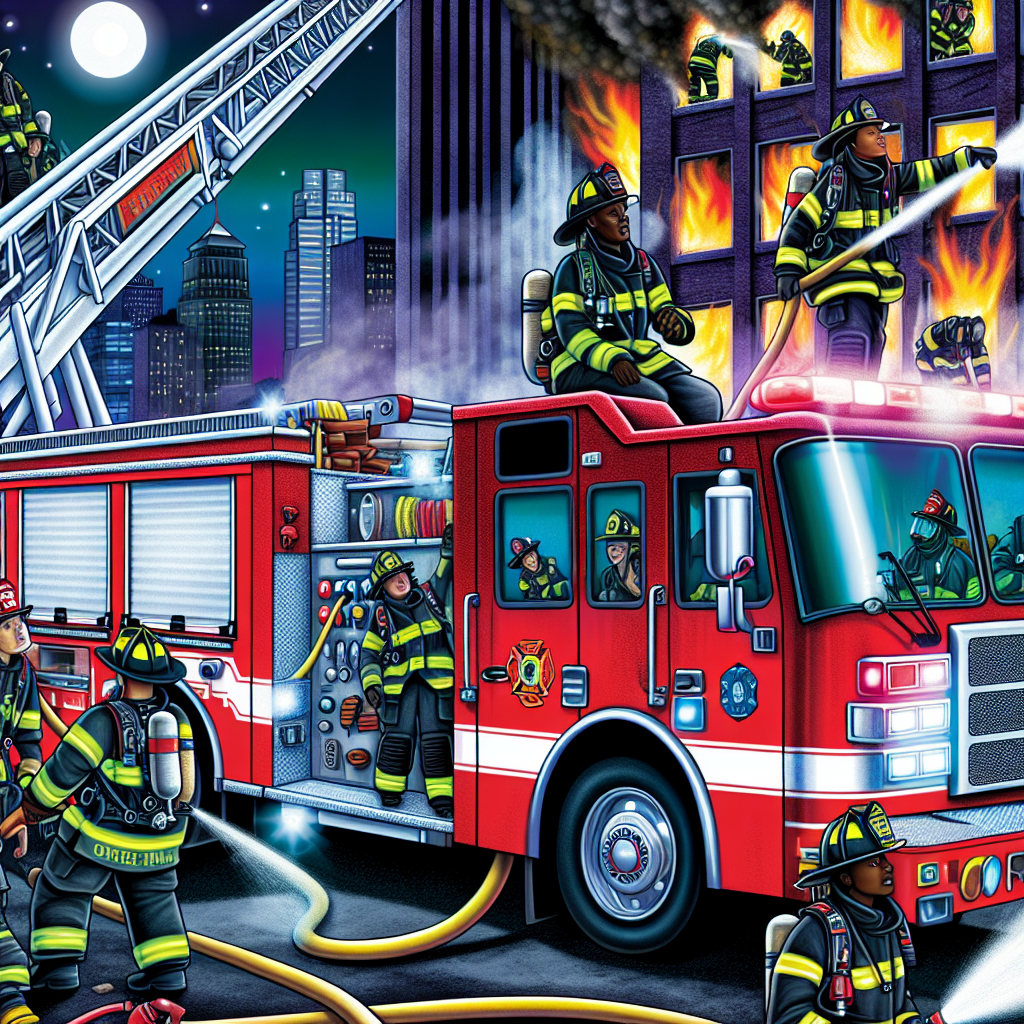
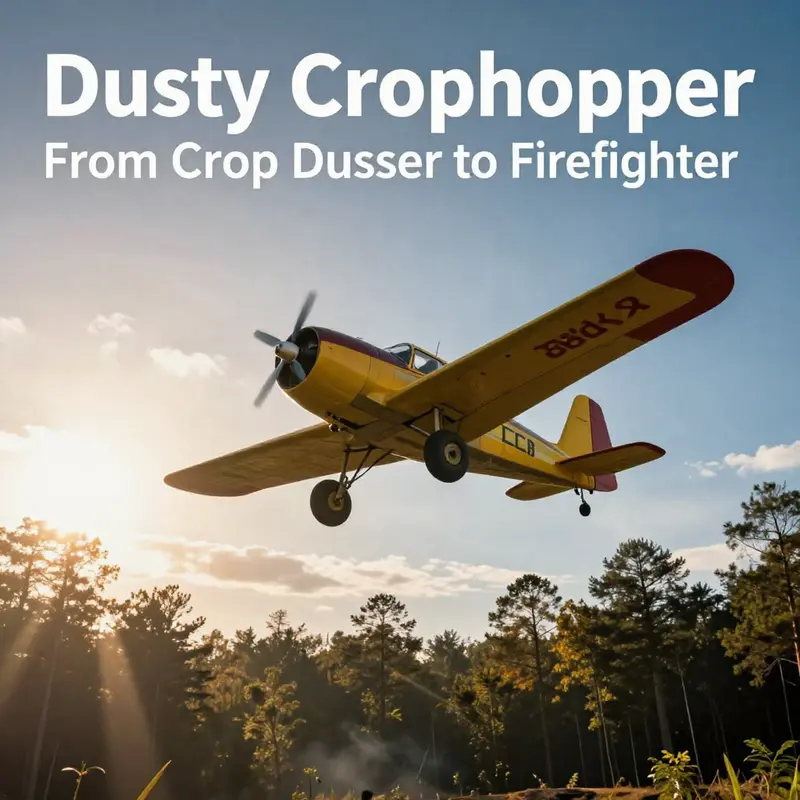
Dusty Crophopper, the beloved character from Disney’s Planes: Fire & Rescue, embodies the remarkable transformation of a crop-dusting plane into a heroic firefighting aircraft. This article delves into the specifics of Dusty’s origins, focusing on his real-world counterpart—the Piper PA-25 Pawnee. Through meticulous examination, we will explore how Dusty’s character symbolizes innovation in aerial firefighting, the significant features and specifications of the Piper PA-25 Pawnee, and his vital role within firefighting operations. We will also reflect on Dusty’s cultural impact in aviation and how it inspires individuals, businesses, and communities alike to engage actively with firefighting efforts.
Dusty Crophopper Reimagined: The Piper PA-25 Pawnee’s Firefighting Legacy in Planes: Fire & Rescue
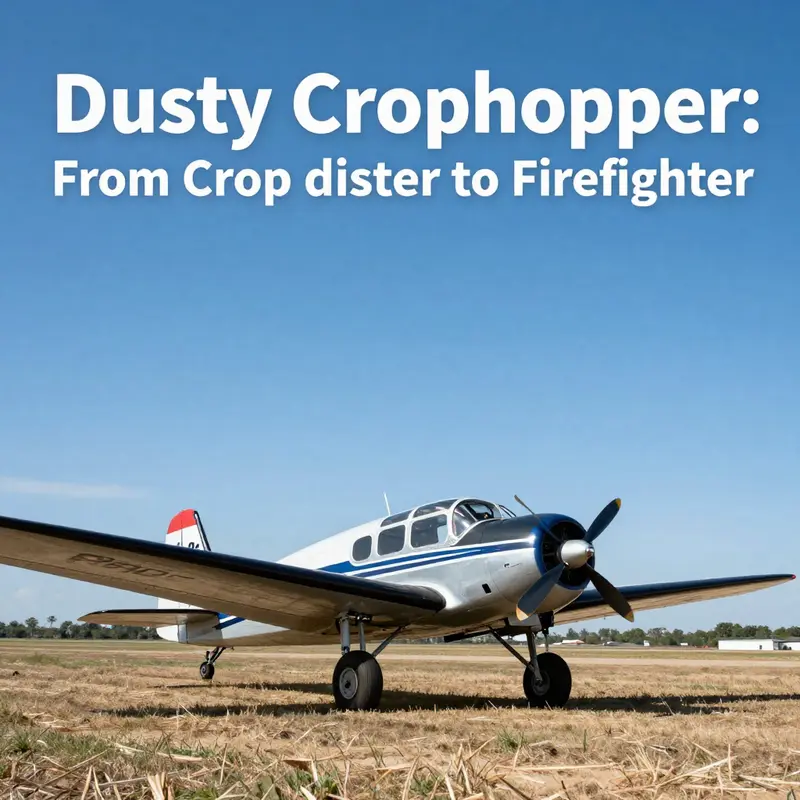
Dusty Crophopper began as a bright spark in the world of Planes, a crop-dusting protagonist whose shape and spirit echoed a real-world workhorse used across vast agricultural fields. In Planes: Fire & Rescue, that same silhouette shifts gears, leaping from the dusty ridges of farmlands to the smoky theaters of wildfires. The film’s Dusty becomes a fire-fighting pumper, a role that preserves the core ethos of his character while retooling his purpose for a new kind of danger and duty. This transformation is not merely cosmetic. It is a deliberate cinematic conversation with the past, a way of saying that the bravery and can-do attitude of the PA-25 Pawnee—the real aircraft that inspired Dusty—translate smoothly into the high-stakes world of firefighting. The result is a character who remains unmistakably Dusty, yet who embodies a broader arc: resilience under pressure, reliability in the face of chaos, and a willingness to take on a mission that serves others above all else. The continuity matters because it anchors the fantasy in real aviation history, giving viewers a sense that this is not a one-off fantasy but a logical extension of flight’s long service to communities and landscapes alike.
Central to that continuity isDusty’s visual lineage. The Pawnee, the real-world predecessor, was designed in the late 1950s as a single-seat agricultural aircraft built to spray fields with pesticides and seed, a task requiring steadiness in rough terrain and an intimate understanding of wind, spray patterns, and ground contours. Its design is instantly recognizable: a high cockpit that invites a clear line of sight for the pilot, wing and fuselage struts that reinforce structural integrity, and a slender set of main landing gear that could shrug off rough field conditions. The Pawnee’s frame was crafted primarily from steel tubing and fabric, a construction approach that prioritized ruggedness and maintainability over flash. This ruggedness then becomes Dusty’s through-line in Fire & Rescue: an aircraft that can be trusted to perform when conditions are less than ideal, when visibility is compromised, and when every droplet or jet of foam must land on its intended target with surgical precision. The film’s designers lean into this DNA, giving Dusty a silhouette that fans of aviation instantly recognize, while adding firefighting apparatus that signals a new, intensified role.
The Piper PA-25 Pawnee’s features translate surprisingly well to a firefighting narrative. The high cockpit is more than a stylish feature; it is the cockpit that keeps pilots focused on the job, resisting the glare of sunlit smoke and the glare of oncoming flames. In Dusty’s Fire & Rescue incarnation, that elevated vantage point remains a strategic advantage. It allows Dusty to track firelines, identify vulnerable pockets, and coordinate with ground teams without losing critical situational awareness. The wing/fuselage struts, once purely a matter of structural discipline, take on a new authenticity as part of a system designed to deliver stability while carrying a demanding payload. A firefighting aircraft must be crisp and predictable, able to perform precise maneuvers under the duress of shifting heat and wind. The Pawnee’s inherent simplicity becomes Dusty’s best asset: a platform that can be trusted to perform repetitive, high-stress tasks with a level of reliability that is essential when seconds count.
The material reality behind the Pawnee—steel tubing and fabric—also informs the film’s portrayal of Dusty’s resilience. In the agricultural life, this construction meant a field-tested strength under gusty conditions and a repair-friendly ethos when parts wear out in the heat of the day. For Dusty in the firefighting role, those traits nod to broader themes of endurance and practicality. The color palette and markings that accompany Dusty’s transformation further blur the line between crop-duster and water- or foam-delivery aircraft. The bright, approachable visual language associated with Dusty remains intact, yet it is tempered by the more somber, mission-focused mood that firefighting imposes. This visual evolution mirrors the real-world history of agricultural aircraft that have been repurposed to combat fires; it is a reminder that skills learned in one domain can be adapted to protect lives and landscapes when emergencies demand it.
The film’s narrative choice to reimagine Dusty as a pumper aircraft also invites viewers to consider the practicalities of firefighting aviation. In the real world, a crop-dusting platform has a practical basis for aerial work: excellent visibility, a robust airframe, and the capacity to carry payloads that must be released with precision. Dusty’s transition to a firefighting role embodies the idea that a well-designed airframe can be reframed for different high-stakes tasks while honoring its original strengths. The ability to drop water or fire retardant with accuracy speaks to a broader principle in aviation: that purpose-driven design can extend a machine’s useful life and widen its impact. In a world where wildfires migrate across landscapes with increasing intensity, the Dusty of Planes: Fire & Rescue serves as a narrative bridge between agricultural heritage and emergency response, a reminder that the tools used to coax crops from soil can, with thoughtful adaptation, help safeguard communities from catastrophe.
Beyond the cinematic frame, Dusty’s Pawnee-inspired design resonates with aviation enthusiasts who trace lineage across generations of aircraft. Real-world tributes—such as model interpretations rendered in modern fabrication technologies—celebrate how the Pawnee’s simple, rugged architecture has endured in memory as well as in practice. A notable example is a 3D-printed Piper PA-25 Pawnee model that embodies both nostalgia and modern capability, a tangible reminder that history and innovation can coexist within a single airframe’s story. In the end, Dusty’s character stands as a symbol of how a single airframe’s identity can carry forward into another demanding role, preserving the core values of bravery, tenacity, and service while expanding its function to protect people and property when danger arrives.
For readers who want to connect on a more practical level with what it takes to pursue similar paths in real life, the broader field of fire safety and aviation training offers a complementary lens. The link between preparedness and performance is not accidental; it is the thread that ties Dusty’s cinematic journey to real-world practice. The emphasis on foundational safety principles, ongoing training, and disciplined teamwork provides a grounded counterpoint to the fantasy of animated flight. To explore these essentials in a practical context, you can delve into resources focused on safety fundamentals and certification training, which emphasize the core competencies most closely associated with any aerial firefighting mission and the broader competencies required to keep communities safe in the face of danger. fire-safety essentials and certification training.
As the layers of Dusty’s story unfold, the connection to the Piper PA-25 Pawnee becomes more than a design note. It becomes a through-line that ties Dusty’s early life as a crop duster to his later life as a guardian in the air. The Pawnee’s legacy—built on simplicity, durability, and a direct line to the farmer’s field—expands in Fire & Rescue to meet the demands of fire suppression, rescue coordination, and rapid response. The result is a character who embodies continuity and transformation: a pilot whose instincts, honed among furrowed fields and windy runways, adapt to the perilous, dynamic challenges of wildfire season. In this light, Dusty is not merely a fantasy figure; he is a narrative testament to a lineage of aviation that has long connected agricultural labor to emergency service, reminding us that the sky can be a shared space for both harvest and hearth, both crop rows and fire lines. The Piper PA-25 Pawnee’s story, carried into Planes: Fire & Rescue through Dusty, thus becomes a small but telling chapter in the larger chronicle of aircraft: tools created to shape the land can also become instruments of protection when the land is under threat.
External resources offer deeper context for those drawn to the historical arc behind Dusty’s fire-fighting metamorphosis. For a scholarly glimpse into the Pawnee’s real history and specifications, the Smithsonian National Air and Space Museum presents a detailed look at the Piper PA-25 Pawnee, illuminating its development, usage, and enduring place in aviation lore: https://airandspace.si.edu/collections/objects/piper-pa-25-pawnee-1957?utmsource=google&utmmedium=cpc&utmcampaign=siairspacegooglesearchbrand2024&utm_term=piper%20pa-25%20pawnee
Dusty Crophopper’s Fireground Awakening: From Crop Duster to Sky Guardian
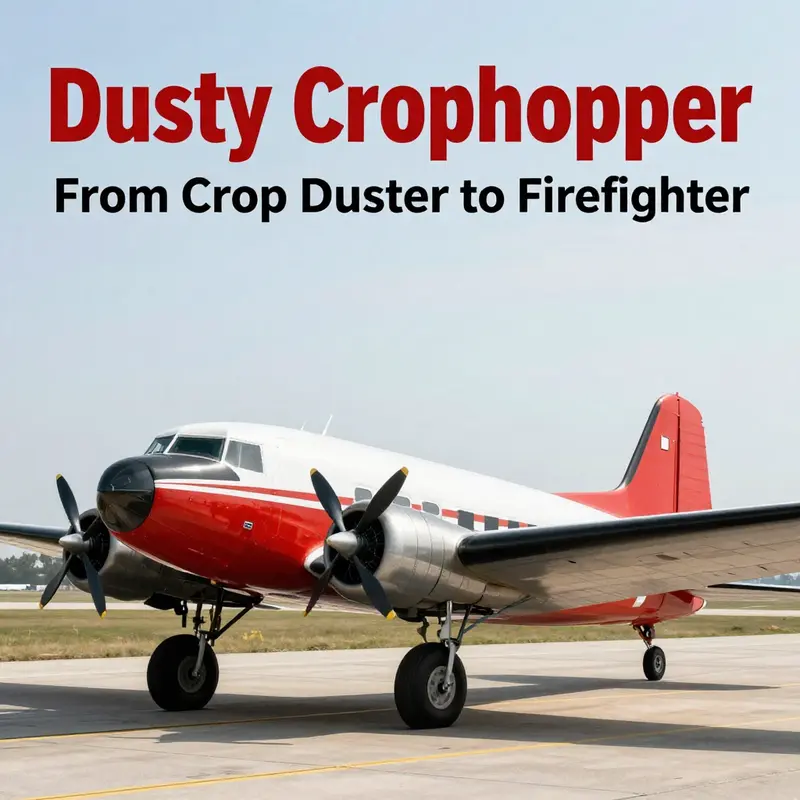
Dusty Crophopper did not become a hero in a single flight but through a shift in purpose. He learns that speed is only meaningful when it serves others, and that courage is a choice repeated under pressure. The transition from crop duster to firefighting pilot begins in a rugged valley where smoke paints the horizon and every decision can save a life. He arrives with his usual optimism but a new humility, ready to learn a different kind of discipline.\n\nHe trains with a veteran crew and a small, dependable teammate known for precise drops and steady hands. The drills emphasize wind reading, coordination with helicopters, and the patient choreography of a mission. Dusty discovers that his instinct for low, sweeping flight translates into careful, controlled passes above trees and water. The learning curve is steep, yet each successful drop builds trust among the crew and a growing sense of belonging.\n\nAs his skills grow, so does his mindset. He moves from chasing quick wins to delivering reliable, repeatable results. The craft gains a water tank and a streamlined scoop, while the engine is tuned for endurance rather than speed. Dusty still loves the sky, but he now loves using it to protect people and land more than to win races. His past as a crop duster becomes a foundation, not a limitation.\n\nThe defining test comes with a major wildfire that pushes the park’s limits. Dusty approaches with measured timing, maximizing efficiency while minimizing risk to firefighters on the ground. His low-altitude accuracy turns into a lifeline, saving seconds that become lives saved and homes spared. The crew’s respect fortifies his resolve; heroism is recast as service, teamwork, and the willingness to learn from every mistake.\n\nIn the end, Dusty stands among his squad not as a conqueror of the sky but as a partner who can be counted on when the world needs him most. The transformation from crop duster to firefighting sky hero is both technical and spiritual: flight is measured by what it protects, not how fast it travels. This journey invites readers to see how a single aircraft and a single pilot can meet broader humanitarian needs through discipline, collaboration, and unwavering optimism.
Dusty Crophopper and the Pawnee: A Real Aircraft in a Firefighting Tale
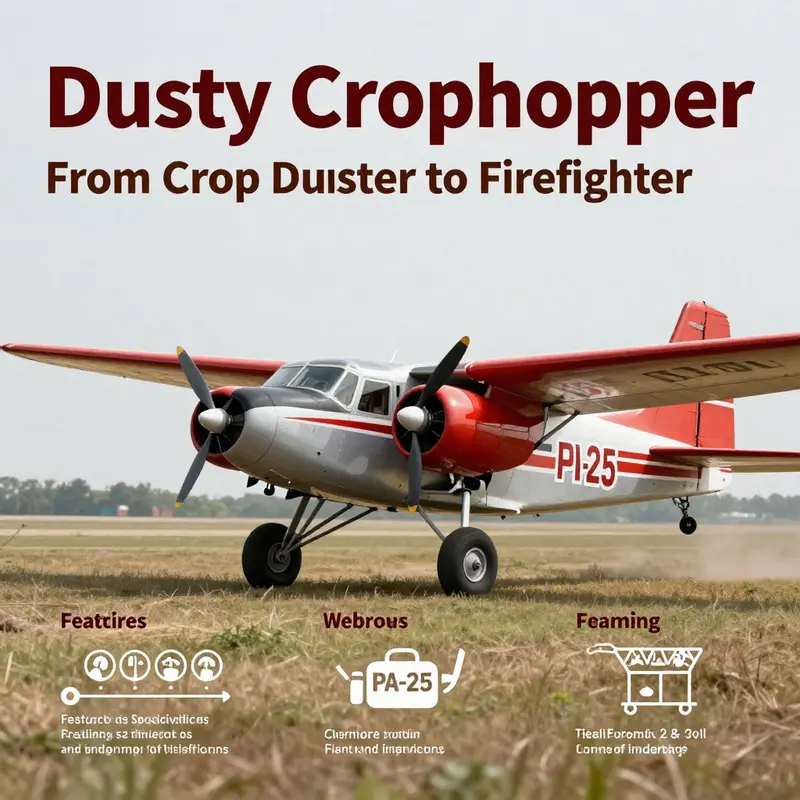
Dusty Crophopper’s journey in the film blends two aviation worlds: the precise art of crop dusting and the high-stakes realm of aerial firefighting. In Planes: Fire & Rescue, Dusty is reimagined as a capable air tanker, drawing on the real capabilities of a small agricultural aircraft repurposed for fire suppression. The core idea—Dusty’s identity remains rooted in responsible aerial application—emerges from the Pawnee’s legacy and its conversion into a firefighting platform. The movie presents a rugged, tank-equipped version of a Piper PA-25 Pawnee, designed to carry water or retardant and deliver it through a controlled spray system, enabling deliberate drops over terrain shaped by smoke, wind, and flame.
To ground the fantasy, we can look to the Pawnee’s real-world lineage. The Piper PA-25 Pawnee was developed in the 1960s as a single-seat agricultural aircraft, optimized for low-altitude work and precise payload delivery. Typical payloads reached eight hundred gallons, and its compact airframe—about 28 feet long with a wingspan just over 36 feet—prioritized maneuverability and steady handling over speed. A Lycoming engine in the 180 horsepower range provided predictable power for close-quarters flight, making the Pawnee a trusted tool for farmers performing precise dispersal over fields. In this light, Dusty’s firefighting incarnation is a cinematic extension of a proven, field-tested platform rather than a dramatic reinvention.
In the film, those practical traits are amplified for the screen. The payload pod becomes a substantial fire-suppressant tank, the crop-dusting spray system is upgraded into a regulated dispersion system, and the airframe is reinforced to withstand repeated missions through smoke and heat. Yet the memory of Dusty’s origins—low, careful passes, steady control, and a willingness to take on difficult jobs—remains at the heart of his character. The result is a narrative that honors a real aircraft’s lineage while telling a story of courage, teamwork, and the vital role of air support in fighting wildfires. This fusion of fact and fiction invites audiences to appreciate how aviation tools born in agriculture can evolve to meet the demands of public safety when imagination and engineering converge.
Dusty Crophopper Unveiled: From Crop Duster to Water-Bomber in Firefighting Operations
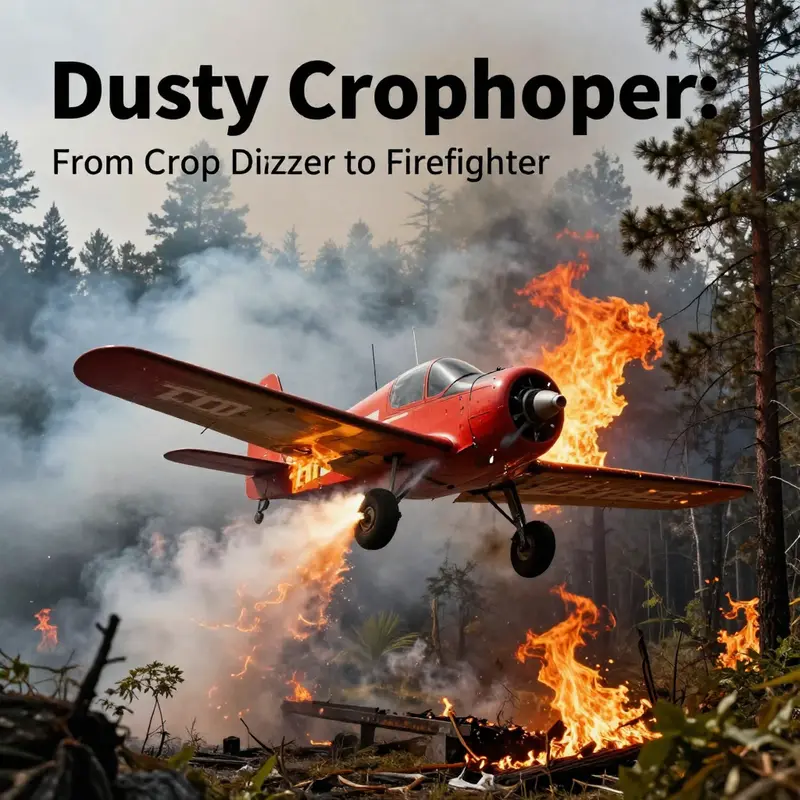
Dusty Crophopper begins this new chapter in his skyward story not as a racer chasing glory, but as a working member of a firefighting aircrew. The shift from the bright, fast lanes of air racing to the smoke-streaked corridors above wildfires is steep, yet it feels almost inevitable once Dusty comes to understand the stakes. In this world, success is measured not by lap times or crowd cheers, but by the precision of a drop, the timing of a maneuver, and the calm with which a pilot can skirt treacherous terrain while a fire roars below. Dusty’s journey mirrors a broader truth about aerial firefighting: the air demands courage, discipline, and a willingness to adapt. He carries with him the core traits that marked his racing days—reflexes, exceptional situational awareness, and an unshakable nerve—and learns to translate them into a new kind of service, one that prioritizes lives and landscapes before personal accolades. The transformation is not merely cosmetic; it is a recalibration of purpose, a redefinition of what it means to fly with responsibility when every gust could become a threat and every second counts. As the team gathers, Dusty steps into a role that blends the speed he mastered with a methodical approach to danger. He becomes part of an airborne alliance whose heartbeat is coordination. In the air, turbulence is a constant companion and visibility can disappear behind smoke. Yet Dusty learns to lean into that pressure, not away from it, trusting the training and the teammates who teach him to read the fire’s signature and anticipate its next move. His growth is less about power and more about precision—about placing a small, deliberate splash of water or retardant in just the right place to slow a flame long enough for ground crews to secure a line. He discovers that in firefighting, the smallest, smartest drop can alter an entire outcome, and this realization anchors his new sense of purpose. Dusty’s background as a crop-duster is more than a backstory; it becomes his cutting edge. The same maneuverability that allowed him to dodge obstacles and weave through tight spaces in agricultural work becomes an asset when approaching a wildfire from the sky. The air is a three-dimensional chessboard, where speed must be balanced with altitude, wind, and the unpredictable choreography of a blaze. Dusty’s capacity to weave through narrow corridors of air and execute dips and pulls with surgical precision proves invaluable when the team faces dense canyons, tree lines, and shifting updrafts that threaten the safety of every flight. The term “dry tank” water bomber enters his vocabulary not as jargon but as a lived reality. In plain terms, Dusty operates as a water and fire retardant delivery aircraft that carries the quick, targeted payloads required to dampen active flames. He learns to make distinct drops—small, accurate packages designed to cool hot spots and slow down advancing edges. This approach contrasts with the larger, heavier efforts of heavier aircraft; it is not about overpowering the fire with volume alone, but about shaping the fire’s behavior and creating opportunities for responders on the ground. In Dusty’s world, every flight requires collaboration. He flies in formation with Windlifter, the heavy-lift helicopter who can ferry enormous tanks of retardant to strategic points, and with Blade Ranger, a seasoned leader whose experience and calm under pressure guide the team through perilous moments. Their teamwork is a study in complementary strengths: the big lifts, the careful planning, and the nimble, precise drops that Dusty makes possible with his quick hands and precise eyes. When the three of them move in concert, the rhythm of attack evolves into a dance of attack and restraint, a choreography that blends power with restraint and demands trust across the cockpit. Dusty’s small size, far from being a limitation, becomes an advantage in the right context. He can access tight pockets and narrow valleys where larger machines would struggle to maneuver, making him a specialist for the delicate moments in a multi-vehicle attack. His speed allows him to respond quickly to changing conditions and to reposition for a new angle of attack as wind shifts or the fire shifts course. Yet the chapter never reduces him to a mere kit of capabilities. Dusty remains a character who embodies growth, humility, and the courage to redefine himself when the stakes are highest. His arc is a reminder that heroism in the air is not confined to the outright bravado of racing, but flourishes in a quieter, steadier form—the discipline to stay the course, the patience to practice the right drop, and the willingness to accept a role that prioritizes protection over personal fame. In this sense, Dusty’s evolution resonates beyond the screen. It echoes the real-world ethos of aerial firefighting, where every mission is shaped by training, teamwork, and a shared sense of duty. The film presents a blueprint for what it means to serve from the sky: to fuse the agility born from competition with the responsibility demanded by catastrophe, to turn a once-celebrated figure into a trusted guardian of communities and ecosystems under threat. The narrative invites viewers to see a familiar face in a new light, to recognize that the skills that once carried Dusty toward triumph can also carry him toward rescue, and that the bravest flights are those made in service of others. For readers who seek a deeper look into the conceptual underpinnings behind Dusty’s design and role, the art and production materials offer a window into how the creators translated a crop-dusting legacy into a firefighting vocation. The practical takeaway is clear: effective aerial firefighting blends character with craft, and transformation becomes a model for resilience. In this light, Dusty’s journey stands as a testament to the power of retraining and reinvention, a narrative arc that mirrors the real-world pathways through which many firefighters and pilots broaden their horizons when called to protect lives, homes, and landscapes. It is a reminder that aviation’s most meaningful stories are often about coming home to purpose after a season of chase and competition, and that the sky’s true test is not speed alone but service, steadiness, and the willingness to rise to whatever challenge the smoke demands. The storytelling aligns with broader themes of safety and preparedness that thread through the broader article, linking Dusty’s fictional feats to real-world ideas about how pilots train, adapt, and operate under pressure. As the chapter closes, the audience is reminded that heroism in the air is a function of preparation, collaboration, and the quiet stubbornness to keep flying even when the smoke thickens. The aircraft that Dusty embodies—once a crop-duster, now a precise, responsive water bomber—serves as a symbol of how talent can be redirected toward safeguarding lives and landscapes, a transformation that resonates with any reader who has faced a moment when capability meets responsibility and then chooses to do the right thing. External resource: The Art of Planes: Fire & Rescue – Disney Press
Dusty Crophopper in Fire & Rescue: The Piper Pawnee’s Second Life and the Cultural Arc of Aviation Heroism
Dusty Crophopper enters Planes: Fire & Rescue not merely as a character stepping into a new role, but as a bridge between two historically distinct forms of aviation. The film reimagines him as a specialized firefighting aircraft that rises from the humble, durable lineage of a crop-dusting airframe. This transformation is not just a visual or narrative flourish; it is a deliberate invitation to audiences to see how a single airframe can embody a spectrum of aviation work, from the fields where crops are nourished to the skies where communities are protected. In this light, Dusty’s journey becomes a quiet manifesto about reinvention in a field that values resilience almost as much as speed. The aircraft he embodies is presented as practical, rugged, and purpose-built for high-stakes work. Its core traits—maneuverability, reliability, and the ability to operate in challenging environments—map onto the kinds of tasks that firefighters perform when they answer the call to protect lives and land from rapidly changing fire behavior. The movie makes this transition without sacrificing Dusty’s identity; his roots as a crop duster remain a central thread in his character, informing his instincts, his willingness to learn, and his capacity to lead under pressure. The result is a character who feels both familiar and transformative, a hero whose skill set mirrors real-world demands in a way that resonates with families and aspiring aviators alike.
The cultural impact of this seamless shift extends beyond the screen. By rooting Dusty’s firefighter persona in a real-world tradition of aviation support for emergency response, the film nudges audiences toward a broader understanding of what air power means in times of crisis. Aerial firefighting is not simply about dramatic water dumps or dramatic drops; it is a disciplined orchestration of multiple roles—pilots who navigate dangerous terrain, crews who plan and coordinate with ground resources, and maintenance teams who keep the fleet ready for the next mission. Dusty’s portrayal emphasizes that these roles require courage, careful judgment, and a collaborative spirit. In this way, the film contributes to a larger conversation about the heroism of specialized aviation crews, especially those who work in remote or wildfire-prone regions where small, steadfast aircraft can make a difference between containment and escalation.
From a storytelling perspective, Dusty’s reinvention is a narrative device that invites viewers to consider how expertise accumulates in a life, not merely how it is earned. The character’s arc—from self-doubt to confident leadership—serves as a microcosm of the professional journey many firefighters experience when they move from training into the realities of responding to emergencies. The lessons are not abstract. They emphasize practical virtues—preparation, teamwork, and the willingness to adapt under pressure. Dusty’s success hinges on a blend of old-fashioned practicality and new-found responsibility. The film invites children and their families to recognize that even a seemingly unlikely candidate can grow into a capable guardian of safety when given the chance to learn and to work with others who bring complementary strengths to the mission.
What makes Dusty matter beyond the spectacle of action sequences is how the story situates him within a larger ecosystem of aviation that serves communities. The film acknowledges a lineage of dedicated work in the skies, a lineage that stretches back to real-world programs dedicated to protecting people, property, and ecological health. In the world of firefighting aviation, aircraft are valued for their ability to operate in tough conditions, to deliver payloads precisely, and to sustain the tempo of operations across long, demanding shifts. Dusty’s character helps translate this reality into a narrative language that is accessible to younger audiences. His courage is not about bravado but about steadiness, about showing up when the situation requires calm, measured decision-making, and about maintaining a sense of humor even when the job tests every nerve. This portrayal helps demystify a field that can seem glamorous from afar but is, in truth, grounded in steady training and a culture of service.
The film’s grounding in authentic firefighting aviation elements—without becoming a documentary—serves a dual purpose. It entertains while educating. The narrative leans on the familiar texture of Dusty’s world—the wind, the open skies, the hum of the engine, the sense of motion—yet it threads in conversations about safety, planning, and the importance of coordinated effort. In doing so, Planes: Fire & Rescue contributes to a broader cultural conversation about the value of agricultural pilots and other specialists who bring unique capabilities to critical missions. Agricultural aviation, often overlooked, is framed here as a family of skilled professionals whose work intersects with public safety in meaningful ways. Dusty’s leap from a crop-dusting featherweight to a fire-fighting asset becomes a symbolic reminder that the same qualities that help crops thrive—precision, reliability, and tenacity—are equally vital when communities face danger from fire.
The film also links this fictional arc to real-world practice by suggesting that the best firefighting programs come from a culture of continuous learning and collaboration. Dusty’s growth is mirrored by his interactions with other pilots, ground crews, and command personnel who teach him to read the terrain, anticipate fire behavior, and adapt tactics to shifting conditions. This collaborative ethos reflects the ethos of actual air attack programs that rely on a blend of experience and mentorship. The cultural resonance is not limited to the screen; it invites audiences to imagine pathways into aviation careers. It suggests that a future in emergency response can begin with curiosity sparked by a beloved character and can be supported by training that emphasizes safety, readiness, and teamwork. In this sense, Dusty acts as a cultural ambassador who makes the idea of specialized aviation approachable for new generations, while also honoring the real people who perform these demanding tasks every day.
For readers seeking a more grounded look at how such typography of training and preparation translates into real life, a practical entry point lies in safety and certification training resources that empower aspiring responders to pursue these essential careers. These pathways emphasize hands-on learning, risk assessment, and disciplined practice—principles that align closely with the values Dusty embodies on screen. The broader message is clear: mastery in aviation, whether in crop-dusting, search and rescue, or wildfire suppression, thrives on a culture of preparedness and shared purpose. The Dusty story, then, is not merely about a character who can fly through action scenes; it is about a character who personifies the interdependence of courage, competence, and community service in the skies.
For further reading that ties into the real-world training and safety culture echoed in Dusty’s journey, see the resource on fire safety essentials certification training, which offers practical pathways for those drawn to emergency aviation roles. fire safety essentials certification training
As audiences walk away, they carry with them a richer understanding of how an agricultural aircraft, reimagined for firefighting, becomes more than a cinematic device. It becomes a catalyst for conversations about the people who keep our skies safe, the logistics that make rapid responses possible, and the shared aspirations of families and communities that look to aviation as a hopeful, capable partner in times of crisis. Dusty’s second life in the firefighting suite thus embodies a broader truth: in aviation, as in life, a well-loved origin can seed a broader, more protective purpose. The film quietly invites us to recognize the everyday courage that fuels such transformations and to imagine a future where wonder and service fly together in the same air. For fans who want to explore these connections further, the official film lore offers a gateway to understand Dusty’s design choices in the context of the story’s larger themes, while a respected external reference grounds the conversation in the film’s place within aviation-inspired storytelling.
External reference for further insight: Planes: Fire & Rescue on the Disney Wiki. Disney Wiki – Planes: Fire & Rescue
Final thoughts
Dusty Crophopper’s journey from a humble agricultural aircraft to a prominent figure in firefighting illustrates not only the versatility of the Piper PA-25 Pawnee but also the advancements in aerial firefighting technology. His story resonates with audiences, showcasing themes of courage, transformation, and community service. As communities increasingly engage with firefighting operations, Dusty stands as a symbol of innovation and heroism in the aviation industry. Understanding Dusty’s character in the context of his aircraft not only enriches our appreciation for aerial firefighting but also highlights the importance of supporting these vital services.