
Understanding whether your fire department charges for rescue services is essential for individuals, auto dealerships, and businesses relying on emergency assistance. In the United States, fire departments generally do not impose fees for direct emergency rescues, as they are funded by taxpayer dollars. However, charges can arise for non-emergency situations, specialized services, or in cases related to negligence. This article unfolds across four chapters, detailing the nature of fire department charges, the specifics surrounding non-emergency fees, billing practices for specialized services, and the role of taxpayer funding, creating a comprehensive guide for anyone needing clarity on this vital topic.
When Help Arrives Free: Understanding Rescue Fees, Public Funding, and the Real Cost of Fire Department Help
Siren cuts through the night, and the scene that follows is less a commercial transaction than a public service in motion. Fire departments and their rescue teams exist because a city, town, or county has chosen to pool resources for collective safety. In this framework, the baseline expectation for most emergency rescues is straightforward: when someone is in a life‑threatening situation, or a structure is in grave danger, response is provided at no direct charge to the person receiving aid. The principle is simple but powerful. The public safety system is funded by taxes and official budgets, not by the person who needs help in the moment. This doesn’t just happen by accident. It reflects a long-standing understanding that emergencies cross social and economic lines and that the burden of danger should not rest on the victim’s wallet at the very hour they need help most. Yet, like many systems designed for broad coverage, the details are nuanced. A one‑size‑fits‑all rule does not exist across the fifty states, counties, and countless municipalities. Local policy governs whether a rescue is billed, how much is charged, and under what circumstances a department may seek compensation. The overall pattern, however, remains clear: for true emergencies, most fire departments do not bill the person who is rescued. The emergency response is funded through property taxes, municipal budgets, general funds, and sometimes dedicated public safety levies that are meant to guarantee rapid mobilization and consistent readiness. In practice, this means a family whose home is on fire, a driver trapped after a collision, or a person stranded by rising floodwaters should expect help without a bill arriving at the kitchen table in the hours after the incident. The social contract here is tangible: communities invest in responders so that anyone, regardless of personal wealth, can receive essential rescue services when danger is imminent. But the landscape is not uniformly homogeneous, and the exceptions illuminate why the topic matters so much to residents who want to understand what they might face in a future incident. There are circumstances—though they remain the exception rather than the rule—where charges may appear. Some rural or volunteer departments, facing tight budgets and inconsistent funding streams, may apply fees to certain non‑emergency services. Think of a scenario where a routine vehicle extrication is requested in a situation that does not meet the department’s strict definition of an emergency. In these cases, the department might pursue cost recovery to offset equipment wear, personnel deployment, and operational costs that otherwise would fall to the broader taxpayer base. The line between emergency and non‑emergency can become thin, and policy leaves room for local interpretation. In other jurisdictions, statutes or administrative rules explicitly allow or require billing for specific services, a reflection of state policy rather than a single national rule. These charges are often linked to the nature of the incident—whether it was truly an emergency or an avoidable situation, or whether negligence played a role in the scenario. For example, if an individual becomes trapped in a car due to a minor mechanical failure and the response is categorized as non‑emergency, some departments may apply a fee. The logic is built on shared costs: the department must recoup some of the expenses for specialized equipment, the use of trained personnel, and the time devoted to a response that did not meet the threshold of a life‑safety emergency. It is important to note that when such charges are assessed, they are typically not billed directly to someone simply because they needed help. Billing practices often hinge on a determination of responsibility or non‑emergency status, and many departments reserve the option to bill only if the incident is found to be avoidable or caused by negligence. The broader aim is not to penalize a person in distress but to manage finite public resources in a way that preserves readiness for future emergencies. The possibility of fees in non‑emergency scenarios underscores the practical reality that emergency services are expensive to operate. They require ongoing investments in aircraft or apparatus, maintenance of protective gear, protective equipment, training, personnel salaries, and the ability to scale responses in rapidly changing conditions. In departments that do charge for non‑emergency or specialized services, the fees are often structured to offset a portion of those costs rather than to fund the entire response. Some specialized services—like high‑angle rope rescues, confined space extractions, or hazardous material responses—may fall outside the routine scope of emergency response and enter the realm of specialized operations. In those cases, a department might assess a fee framed as a recovery of the incremental costs associated with deploying highly trained personnel and specialized equipment beyond standard firefighting duties. When fees are contemplated, the determination typically involves a careful review of the incident’s circumstances. Was it an authentic emergency? Was the person in danger that required immediate action? Was any element of the situation attributable to negligence or avoidable risk? These questions guide whether a fee is appropriate and, if so, what level of reimbursement is warranted. It is worth underscoring that even in places where billing is permissible for certain services, the direct bill is not always sent to the person who received assistance. Sometimes the billing is routed to a property owner, business, or third party who has some degree of responsibility for the incident, or to an insurer if the case qualifies under a policy. Ambulance transport for medical reasons often falls under a separate billing system managed by EMS providers. This is a dimension that can be misunderstood: crews may arrive on the scene and provide immediate rescue assistance, but the medical transport, if used, is typically billed under EMS protocols that are distinct from fire department charges. The distinction matters for families and individuals who may be asked to sort out two streams of billing after an incident—the fire department’s when applicable, and EMS billing for transport to a hospital. The practical effect for most people is quite straightforward: emergencies are paid through public budgets, not through a direct, out‑of‑pocket price tag at the time of service. If a situation is clearly an emergency and the department’s role is to stabilize, extricate, and ensure safety, the public system covers the cost in most communities. The moral and logistical question for residents becomes: how can communities maintain readiness and fairness? The answer rests on transparency and clear communication. Departments increasingly publish fee policies or provide plain language explanations on official websites, detailing what is covered and when fees may apply. The ideal goal is to minimize confusion at the moment of crisis, when stress is high and every decision matters. If you need to verify a local policy, the most reliable path is direct contact with the department or a careful review of the department’s official site. Often, a policy page will describe typical emergency responses, outline exceptions for non‑emergency services, and spell out how any charges are calculated. Because local policies drive most of the variation, a quick call or a brief online check can save confusion after an unfortunate incident. In practice, residents who want a clearer sense of policy should not hesitate to ask questions—before an emergency occurs if possible—and to request an itemized explanation if a bill ever arrives after a response. Public safety is the shared mission here, and open dialogue helps ensure that the system serves everyone fairly. It also helps communities plan and budget with greater realism. If a resident discovers that a department does charge for certain services, understanding the scope and rationale behind that decision can foster better conversations about funding, prevention, and safety investments that benefit the whole town. Policies evolve as communities grow and as the demands on emergency services change. The shift toward greater transparency has real value: when people understand how and why costs arise, they are more equipped to participate in local decisions about safety investments, training, and equipment upgrades. It is also a reminder that safety is not a single act but a continuum—prevention, preparedness, response, and recovery all cost money and effort. For readers exploring the broader arc of fire service funding and policy, a related exploration of safety culture and training can provide useful context. For a related look at frontline readiness and safety culture that underpins why responders act the way they do in emergencies, see fire-safety-essentials-certification-training. Such training underpins the capability to respond quickly, safely, and effectively, which in turn reinforces why many communities view rescue as a public good rather than a taxable service with a direct price tag on the moment of need. The relationship between funding, readiness, and outcomes is not abstract. It translates into real benefits when seconds count: trained personnel, tested procedures, and well‑maintained equipment all contribute to better chances of survival and quicker stabilization. At the same time, the question of charges remains part of the local policy landscape. It highlights the reality that public safety is a shared obligation—one that depends on transparent policy, informed citizens, and consistent investment in prevention and response. During any given incident, the aim is to maximize the public benefit while minimizing the burden on any one person. This balance is delicate and dynamic, shaped by budget constraints, demographic changes, and evolving expectations about what fleets, crews, and rescue teams can deliver. For residents who are moving between jurisdictions or who operate within multiple municipalities, awareness of local rules becomes even more important. A routine call in one town may be treated differently in another, not because the responders are less capable but because the local funding and policy framework differ. The practical takeaway is clear: if you want to understand whether a rescue might carry a direct charge, start with your local fire department’s policy. Ask about what constitutes an emergency, what non‑emergency services exist, and under what circumstances fees may be assessed. Review the official guidance, request an itemized explanation if a bill arrives, and consider the broader context of public safety funding that makes such services available to everyone. In this way, the chapter on charges becomes part of a larger conversation about how communities fund protection, how residents participate in decisions about safety investments, and how the public system sustains a rapid, reliable response when danger appears. For further reading and standards that frame these policies, see the National Fire Protection Association’s resources at https://www.nfpa.org.
Beyond the Siren: Navigating Non-Emergency Rescue Fees and Public Safety
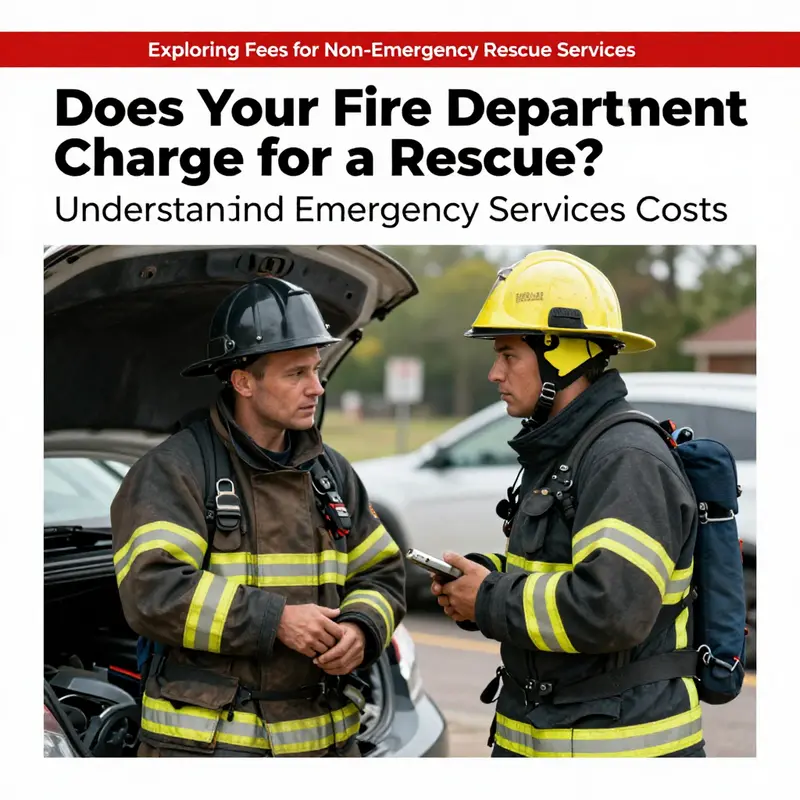
Public safety funding traditionally covers emergency responses at the point of service, with responders arriving to stabilize, rescue, and protect lives without a bill to the person helped. Some departments, however, charge for non-emergency or specialized rescue efforts to recover incremental costs such as extended on-scene time, use of heavy equipment, or added personnel. Fee structures vary by jurisdiction and can be flat-rate, tiered, or hourly. Complex operations like high-angle rescues, confined-space entries, or lengthy disentanglements typically carry higher charges, while routine rescues may be modest or exempt. Critics raise concerns about equity and access, asking whether fees might deter people from calling for help when needed. Proponents argue that transparent, well-communicated pricing supports financial sustainability and maintains readiness for true emergencies. Many departments publish fee schedules and offer waivers or exemptions in certain circumstances. If you encounter a potential non-emergency rescue, check the official policy in advance, ask about exemptions, and document what is billed. The overarching goal is to balance universal access to emergency aid with responsible cost recovery that keeps rescue services available and affordable over time.
Hidden Costs of Help: Understanding Billing Practices for Specialized Rescue Services by Fire Departments
When people discuss the cost of rescue, a common assumption takes shape quickly: help is available when you need it, and the bill is not your concern in the moment of crisis. In many places, emergency response is framed as a public safety function funded by taxes and municipal budgets, a social contract that ensures rapid aid without the friction of price tags. The reality is more nuanced. The core story is that rescue as a public service is generally provided at no direct charge to the person needing assistance, but there are deliberate exceptions in specialized operations that can feel like a hidden cost when a call moves from emergency response into non-emergency or high-cost rescue work. To understand the landscape, it helps to hold three threads together: the default public service model, the circumstances under which charging may occur, and the practical implications for residents, visitors, and local taxpayers alike.
First, the default frame is clear and widely understood. Fire departments respond to emergencies—fires, crashes, water or wilderness hazards, medical crises, and sometimes complex rescues such as technical incidents in confined spaces or hazardous environments. This core mission is funded through a mix of local taxes, property taxes, municipal budgets, and sometimes state or regional grants. The public nature of this funding is designed to keep response immediate and universal, ensuring that fear or confusion about payment does not deter someone in distress from seeking or receiving assistance. The public safety promise rests on shared responsibility: the community pays, responders act, and the person in trouble is protected regardless of their ability to pay at that moment.
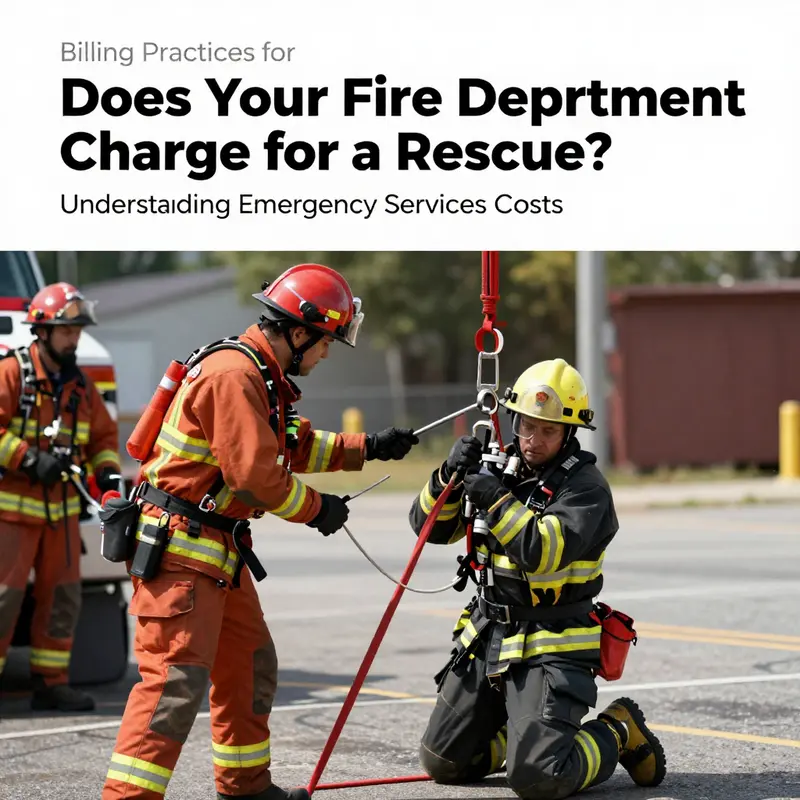
Yet the landscape shifts as rescue work becomes more specialized and resource-intensive. In practice, every fire department operates along a spectrum from standard fire suppression to a broad suite of technical rescue services. Urban swift water rescue, wilderness or alpine rescues, cave or dive operations, vehicle extrication in complex crashes, and hazardous materials responses all test the limits of a department’s capabilities and budgets. Each of these operations can require specialized gear, highly trained personnel, extended incident command, and often prolonged on-scene work that stretches resources beyond a typical emergency response. It is in these high-cost, lower-frequency operations that the conversation about billing becomes more than a theoretical policy debate; it becomes a matter of financial sustainability for departments and, occasionally, a matter of cost allocation for the people involved.
A central point in the discussion is that billing for non-residents and for certain specialized rescue services is not universally fixed and is often a matter of local policy. In some jurisdictions, fire departments may seek reimbursement from non-residents for high-cost or specialized interventions while continuing to provide free or subsidized assistance to local residents. The policy space and legal boundaries vary, and the actual application depends on local governance, statutes, and departmental policies. The practical upshot is that you may encounter different approaches depending on where you are and which department serves your area. It is not a universal rule that one department will bill and another will not; it is a policy choice rooted in local needs and budgets.
The spectrum of charges, when they do apply, is shaped by structure and funding as much as by incident type. In many North American contexts, decisions about billing are made at the municipal or county level. Some departments pursue fee-for-service models for specialized rescues, others absorb costs through general tax revenues or grants, and still others operate hybrid approaches that mix subsidies with targeted charges. The guiding principle in each case is to balance accessibility with financial viability. Responders are obligated to put public safety first, but departments must also cover the costs of training, equipment, personnel, and the long arc of maintaining readiness for high-stakes, low-frequency incidents.
For residents who want clarity on what their city or county considers a chargeable service, the path is straightforward but not always obvious. The public-facing promise is that emergency response remains free at the point of service, but there is a parallel, legitimate conversation about charges that may appear for non-emergency and specialized activities. If the incident is a genuine emergency, and the response is necessary for life safety, the bill, if any, is often related to EMS transport rather than the act of rescue itself. Ambulance transport to a hospital, for example, frequently falls under EMS billing practices and may be billed separately from the fire department’s response. This separation can confuse families and individuals who receive a hospital bill after what began as a rescue, yet it reflects the organization of public services where EMS and fire rescue operate with overlapping but distinct funding streams and accounts.
The nuance becomes particularly palpable in scenarios that push the boundaries of typical rescue work. A swift-water rescue in a fast-moving river, a complex cave rescue, a mountain or cliffside extraction, a dangerous confined-space incident, or a large-scale hazardous materials response all demand a rare convergence of resources. The numbers involved can be substantial: specialized gear, extended personnel on the scene, potentially multiple agencies, and the use of equipment designed for extreme environments. In those moments, the question of who pays can arise, especially if the incident occurred far from the department’s traditional service area or if the rescues involve out-of-area participants or tourists who do not contribute to the local tax base. In such cases, the policy framework and local budgetary realities converge to determine whether any direct charges are levied and who bears them. It is not simply a matter of charging or not charging; it is a matter of policy design aimed at preserving the department’s ability to respond to emergencies that strain its resources.
This nuanced reality does not erase the central obligation to provide aid. The public safety function remains a public good, and the availability of rescue services in critical moments sustains the trust between communities and responders. It should also inform a broader civic conversation about safety, resilience, and the social contract that underpins modern emergency services. For communities, the essential question is not only about whether a bill will arrive after a rescue but about how the local system plans for the costs of high-stakes interventions and how it communicates those plans to residents and visitors alike. Transparent policies, clear fees, and accessible channels for inquiry help demystify the process and reduce the feeling that a rescue may come with an unexpected price tag. In practice, if you want to know the exact policy for a given jurisdiction, your best move is to contact the local fire department or check the department’s official website. The policies vary, and the differences matter when a person faces a non-emergency or specialized call that could trigger a fee.
As a citizen or traveler, you may also consider the educational dimension of preparedness and risk. The most reliable safeguard against misunderstanding is prevention coupled with knowledge. Communities plan budgets with the expectation that emergency responses will be available to all in need, but they also think about how to sustain compliance with high-cost operations. For residents and visitors who want to minimize the risk of surprise charges, a practical approach includes learning about non-emergency services that might carry fees, understanding the distinction between fire department functions and EMS billing, and staying informed about a department’s criteria for charging non-residents or for specialized responses. This is where the broader ecosystem of safety training and risk awareness becomes relevant. If you are curious about building expertise in safety, consider exploring public training programs and official public safety resources for your area.
The topics outlined here do not exist in a vacuum. They intersect with issues of equity, access, and the capacity of communities to sustain high-cost rescues without compromising universal coverage. The tension between safeguarding public safety and ensuring fiscal responsibility is not resolved by a single policy decision. It requires ongoing dialogue among residents, policymakers, and responders about the right balance. Some communities address this tension by offering waivers, sliding scales, or exemptions for residents who cannot afford charges associated with specialized rescues, while ensuring nonprofit and public safety missions are not compromised. Others adopt programmatic approaches that reallocate resources toward prevention, training, and readiness so that costly emergencies do not threaten the availability of essential services when they are needed most.
That is the larger frame in which the specific question remains relevant and timely: does your fire department charge for a rescue? The simple answer is that emergency rescues are typically funded as a public service, with charging practices varying by locality. The more precise answer depends on whether the incident falls into the standard emergency response category or into a specialized rescue operation that carries higher costs, and whether the individual affected is a local resident or a non-resident. The 2013 guidance and subsequent policy developments illustrate that departments have policy space to bill non-residents for EMS and certain specialized rescue services, but the actual application of that policy is deeply local. The result is a patchwork system where a person may receive emergency aid at no direct charge, while a separate bill could arrive later for ambulance transport or for a specialized intervention conducted under a specific billing regime.
In talking about these issues, it remains helpful to keep in mind that the public safety mission and the financial realities of running a department are not enemies in a tug-of-war. They are two sides of the same coin—the means by which communities secure rapid response and maintain the capacity to handle the most demanding rescues. This balance requires careful governance, transparent communication, and ongoing assessment of how costs are distributed across residents and non-residents. As you read through local policy documents or speak with department officials, you will likely encounter terms like EMS billing, non-emergency fees, and specialized rescue charges. Understanding these terms in the context of local practice will help you interpret a bill if it arrives and, equally important, evaluate the public safety value that such charges are intended to support. After all, the ultimate aim is to preserve a system where help is reliable, responders are well-equipped, and communities remain resilient in the face of danger.
For readers seeking a concise policy anchor, consider the external reference that informs much of the contemporary dialogue on EMS billing and rescue charges. It provides a foundational understanding of how billing is treated within the emergency response ecosystem and why local discretion matters. Do not misinterpret the public safety core: emergency response remains accessible and immediate, while the financial mechanisms that support extended rescue operations are built to reflect both fiscal realities and the shared commitment to public safety. For a deeper policy background, see reputable safety organization summaries of EMS billing practices and local government guidance on gear and rescue reimbursement.
Public Safety as a Taxpayer Public Good: Understanding Fire Department Rescue Funding
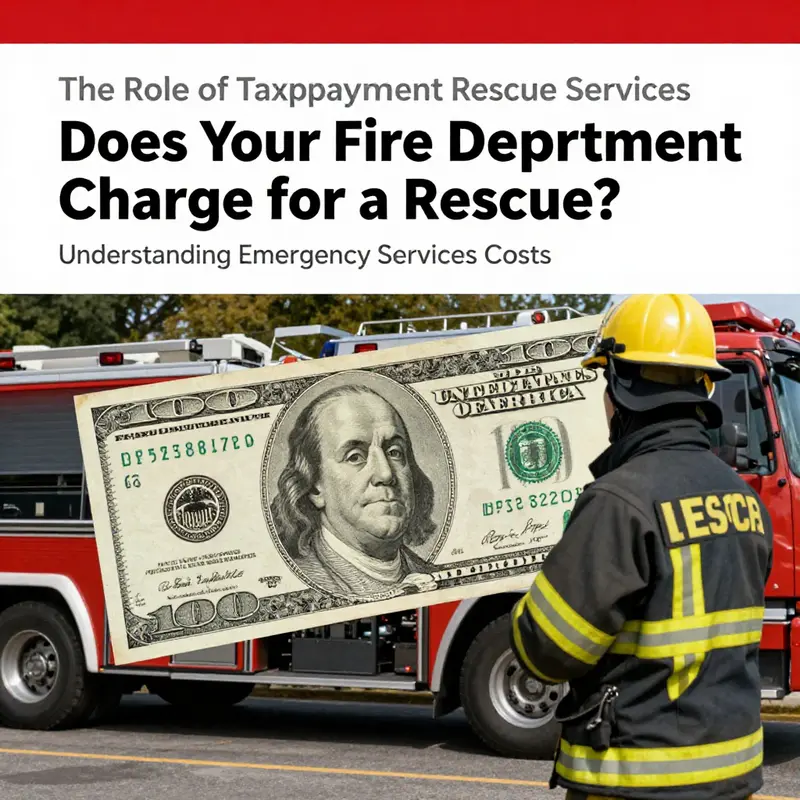
Emergency response is a public service funded by taxpayers, designed to be available to all who need it, without turning a rescue into a bill at the door. In the United States, fire rescue is generally financed through public budgets so that help arrives when seconds count, not when a payment is due. The rescue is funded in the aggregate, not paid for in the moment, and this social contract underpins trust and readiness.
Non emergency requests or specialized services may carry fees in some jurisdictions, especially when the incident results from negligence or when departments apply cost recovery policies. EMS transport can involve separate billing, distinct from the fire department’s core rescue function, reflecting the broader emergency medical services framework.
Policy differences matter because funding structures vary by city, county, and state, and transparent communication about what is covered by public funds helps residents understand bills and maintain confidence in public safety.
Procurement efficiency matters. Standardized gear and bulk purchasing can stretch public funds further, supporting training, equipment, maintenance, and ready response without compromising safety standards.
Ultimately the rescue itself remains a public good funded by taxes; fees may apply in specific non emergency or liability contexts, and clear information helps people navigate bills while keeping the focus on universal access to emergency response.
Continued emphasis on prevention, safety education, and safe building practices reduces the need for expensive interventions and strengthens the resilience of the rescue system over time.
Final thoughts
The charges associated with fire department rescue services reveal a system predominantly funded by the community through taxes. While emergency rescues are generally free, understanding the nuances regarding non-emergency services and specialized responses is crucial for individuals and entities alike. By being informed, auto buyers and small businesses can better navigate expectations should they ever need to rely on emergency services. Understanding these factors fosters better preparation and peace of mind in ensuring safety and responsiveness during emergencies.