The vital role of Emergency Medical Technicians (EMTs) in providing lifesaving care during emergencies cannot be overstated. However, the certification process for EMTs, especially regarding the fire rescue hours needed, is often misunderstood. This guide aims to clarify this essential aspect, focusing on how fire rescue hours are perceived in relation to the AMA and other certification bodies. Each chapter will delve into specific facets: starting with a thorough overview of fire rescue hours in the context of EMT programs, followed by requirements across various programs and states, and finally, we’ll analyze the experience gained from fire rescue and its integration into EMT training. By the end, readers will have a comprehensive understanding of how these hours influence EMT training and certification.
Fire Rescue Hours in EMT Training: Clarifying the Source of Hours
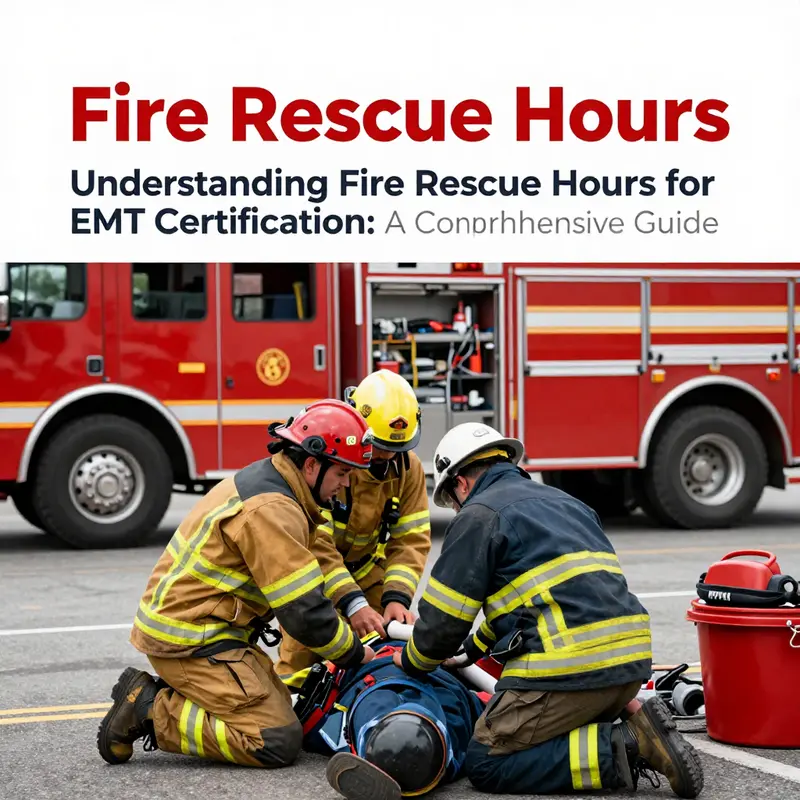
When exploring the path to becoming an Emergency Medical Technician (EMT), a common question is how many fire rescue hours should be included in the program. In practice, the exact tally varies by state, program, and clinical affiliation, not by any single national mandate. The AMA does not prescribe EMT curricula or fire rescue hours; EMT education is primarily governed at the state level, with national benchmarks provided by organizations such as the National Registry of Emergency Medical Technicians (NREMT) and guidelines from federal agencies like the National Highway Traffic Safety Administration (NHTSA). Most EMT programs total roughly 150 to 200 hours of combined classroom instruction, skills labs, and supervised clinical or field experiences, though the distribution among didactic work, practical skills, and field exposure differs.
Within that framework, fire rescue hours are often part of the field or clinical components rather than a separate mandated segment. Some programs partner with fire departments to offer ride-alongs and field rotations; others emphasize hospital-based clinical rotations. The exact composition depends on program affiliations, local EMS structures, and supervision arrangements. The key consideration for students is not simply the total hour count, but how those hours are earned and what competencies they cultivate, especially as outlined by NREMT and state EMS frameworks.
Prospective students should verify in their state: minimum hour requirements, approved clinical sites, and how a program allocates hours across classroom, skill practice, and field experiences. Also assess the quality and diversity of clinical experiences, the level of supervision during field placements, and how well the curriculum aligns with NREMT certification requirements. Programs that clearly document hour distribution, learning objectives, and assessment methods tend to prepare graduates more effectively for certification exams and real-world practice.
For those interested in broader exposure to emergency care, seek programs that offer a balanced mix of field and hospital experiences and explicit descriptions of ride-along opportunities, supervision models, and opportunities to observe critical decision-making in dynamic environments. Finally, cross-check current requirements on official sources such as the NREMT website to verify the most up-to-date standards and how your chosen program aligns with national certification benchmarks.
null
null
null
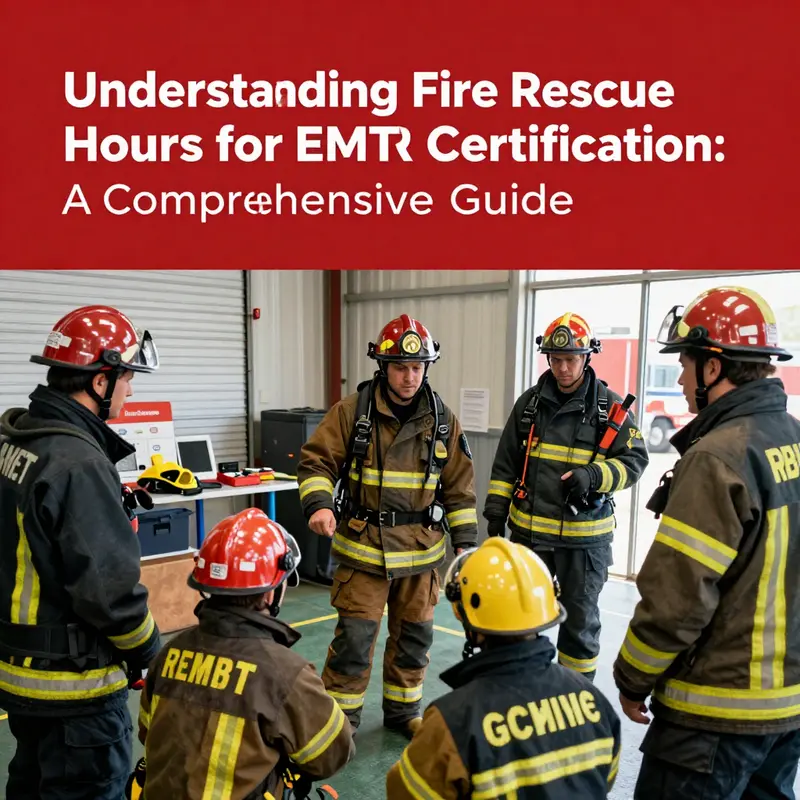
null
Hours in the Fireline: Understanding How Fire Rescue Time Shapes EMT Readiness
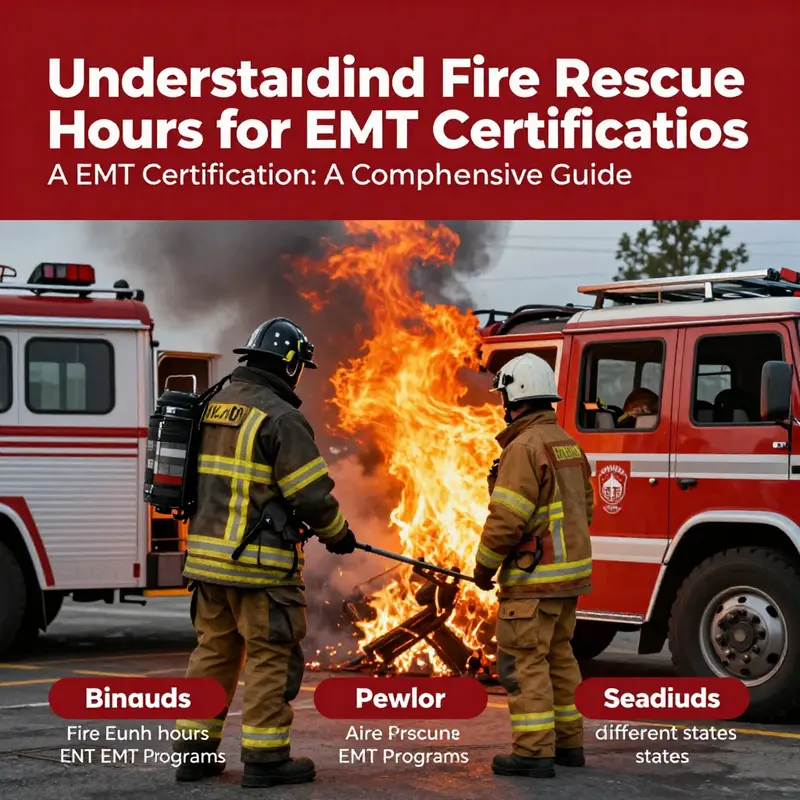
When someone asks how many fire rescue hours are required for an EMT program, the answer reveals as much about the structure of emergency education as it does about the learner. The question itself invites a comparison across states, schools, and partnerships, yet it rests on a foundational clarification: the American Medical Association (AMA) does not offer an EMT program, nor does it set universal fire rescue or clinical hour requirements. EMT training and certification are largely guided by the National Registry of Emergency Medical Technicians (NREMT) and by state-specific regulations that implement the NREMT standards. In practice, aspiring EMTs enroll in programs that blend didactic instruction, hands-on skills labs, and field or clinical experiences designed to produce practitioners who can safely assess and manage patients in the first critical moments of care. The hours attached to that training — including the so-called fire rescue hours — are not a single, fixed number but a composite shaped by policy, program design, and access to partner agencies.
Across the United States, the typical envelope for EMT programs is currently about 150 to 200 hours of total instruction. This range encompasses lectures, skills practice, and supervised patient care. It also includes a substantial portion of field or clinical exposure, where students observe and participate in real emergency responses. The term fire rescue hours, while evocative, can be misleading. Not all EMT students will log time on a fire engine or in a firehouse. Some programs emphasize hospital-based rotations or community EMS settings. Others partner tightly with municipal or rural fire departments, granting students extended opportunities to observe and participate in fire-ground rescues, extrications, and related operations. In every instance, the goal remains consistent: translate classroom knowledge into competent, compassionate, and safe patient care on scene and during transport. The hour count matters, but it is the quality and variety of those hours that most strongly predict readiness for the field and success on the NREMT examination.
State-level differences illuminate how the landscape of fire rescue hours can diverge while still aligning with core competencies. In California and New York, for example, EMT programs frequently require about 150 to 200 hours of clinical and field experience. These programs emphasize direct participation in patient care during calls, under supervision, with an emphasis on foundational skills such as airway management, bleeding control, and vital-sign assessment. The emphasis often includes a broader exposure to diverse injury patterns and medical emergencies, streamed through partnerships with local EMS agencies and hospitals. In contrast, Texas and Florida can present more variability. Some programs there allow approximately 100 to 140 hours of field experience, a figure that can reflect accelerated formats or integration with paramedic tracks. The difference is not inherently a signal of insufficiency; instead, it underscores how program design, partner access, and accreditation nuances shape the final clock. For prospective students, this means that a lower hour count does not automatically equal a weaker program, but it does call for careful scrutiny of the scope and intensity of the field experiences offered.
A pivotal factor in this equation is the presence and depth of fire department partnerships. Regions where fire departments sponsor or co-sponsor EMT training tend to provide broader exposure to fire-rescues, hazardous materials responses, and complex vehicle extrications. Students in these contexts may accumulate more field time or encounter a wider array of scenarios within the same overall hour tally. Conversely, programs that lean heavily on classroom time, hospital rotations, or simulation-based experiences may compensate with higher-quality simulations and structured debriefings, though some students may seek additional field experiences to balance the learning portfolio. The shift toward realistic, scenario-driven training is notable. The National Registry has nudged the system toward recognizing the value of high-fidelity simulations as a complement to field hours. A recommended practice now calls for a minimum of about 30 hours of simulation-based training in addition to field hours. This combination aims to immerse students in realistic decision-making, teamwork, and communication challenges that mirror the pressures of real calls.
High-quality simulations matter because they expand the repertoire of emergency types a student encounters. Emergency medicine involves more than a single medical or trauma pattern; it requires rapid assessment, prioritization, and teamwork under pressure. Simulations enable learners to rehearse mass-casualty scenarios, pediatric encounters, obstetric emergencies, and complex trauma in a controlled environment where mistakes become teachable moments. When field experiences are well-rounded and the simulations are robust, a program can deliver depth without extending the clock indefinitely. For a prospective student, this is a critical consideration. A program that can demonstrate both a diverse range of field experiences and well-structured simulation sessions can often offer a more comprehensive preparation than one that relies primarily on clock time, even if the total hours appear similar.
The practical implications extend beyond the ledger of hours. Students should examine how programs describe their field placements: which EMS agencies participate, what fraction of calls involve fire-rescue activity, and what patient demographics students are likely to encounter. Some programs emphasize triage and medical care on EMS rigs, while others may emphasize hospital-based assessments, transport logistics, or ventilation and airway management in controlled settings. Queries about supervision and progression are equally important: how many shifts are required with mentors, what criteria must be met to advance, and how are competencies assessed on real calls versus simulations? These questions illuminate not just the quantity of time but the quality of learning and the preparedness that follows graduation.
From a learner’s standpoint, the journey through EMT training is a balancing act between clock and competency. The hour count is a useful benchmark, but it should be interpreted alongside the breadth of experiences and the rigor of assessment. A robust program will contractually commit to exposing students to a spectrum of scenarios, including fire-related rescues, while ensuring supervised practice and continuous feedback. The interplay of field time, clinical time, and simulation creates a learning ecosystem that strengthens judgment, manual dexterity, and the ability to work within an EMS team. It also fosters professional identity, an essential underpinning for ethical patient care, effective communication with families, and calm leadership on chaotic scenes.
Those who are planning their EMT path should approach program selection with a clear set of priorities. Ask how many hours will be spent in actual patient contact during emergencies, and what proportion of those hours occur in a fire-rescue context versus hospital-based settings. Inquire about the specific types of calls students will see, the range of patient ages and injuries, and how often students will ride with firefighters, paramedics, or basic EMT teams. Also, seek clarity on simulation hours: what scenarios are included, how realism is ensured, and how debriefings translate into measurable clinical improvements. A well-articulated curriculum will marry the clock with a coherent progression of skills, clinical judgment, and professional behavior that aligns with national standards and state requirements.
A practical takeaway for readers is to view the EMT pathway as a continuum rather than a fixed checkpoint. The number of fire rescue hours matters because it signals exposure to the pace and texture of emergency response. Yet the ultimate measure of readiness is the ability to apply core competencies under pressure, to communicate clearly with patients and teammates, and to perform essential procedures with competence and composure. Programs that foreground these outcomes—through transparent hour reporting, diverse field experiences, and rigorous simulation—are more likely to prepare graduates who pass the national certification and thrive in real-world settings. For learners, talking to program directors about how their field hours are mapped to clinical objectives, and how the experiences will build toward independent practice, is as important as counting the hours themselves.
Consider the larger ecosystem that surrounds EMT education. The NHTSA National Standard Curriculum provides the foundational competencies that guide both academic instruction and field performance. It is the reference point for what EMTs should know and be able to do, and it helps regulators, educators, and employers align expectations nationwide. Programs designed with these competencies in mind, regardless of the exact hour counts, tend to cultivate graduates who meet consistent benchmarks of safety, patient advocacy, and teamwork on the street. For those who want to explore the standards and how they translate into classroom and field experiences, the official framework serves as a reliable compass. See the national standard curriculum for a detailed outline of the competencies that define EMT readiness across the country: https://www.nhtsa.gov/ems/emt-national-standard-curriculum
In the meantime, many readers will benefit from supplementary perspectives and practical resources that illuminate how training translates into profession-wide readiness. For a concise introduction to core safety training that complements EMT preparation, a widely cited resource offers practical guidance and standardized approaches to essential safety concepts: Fire Safety Essentials Certification Training. This resource focuses on foundational safety skills that undergird medical response and rescue operations, reinforcing the connection between personal readiness and patient care. Fire Safety Essentials Certification Training
The landscape of fire rescue hours in EMT programs is not one-size-fits-all, but it is navigable with careful inquiry and a clear understanding of how hours translate into capability. Students should balance a realistic clock with a robust, varied exposure to real calls and high-quality simulations, all guided by national standards that emphasize competency over sheer time. With thoughtful program selection, learners can build not only a credential but a durable foundation for a career dedicated to rapid, compassionate emergency medical care.
State-by-State Clarifications on Fire Rescue Hours in EMT Training: A Practical Guide to Certification Pathways
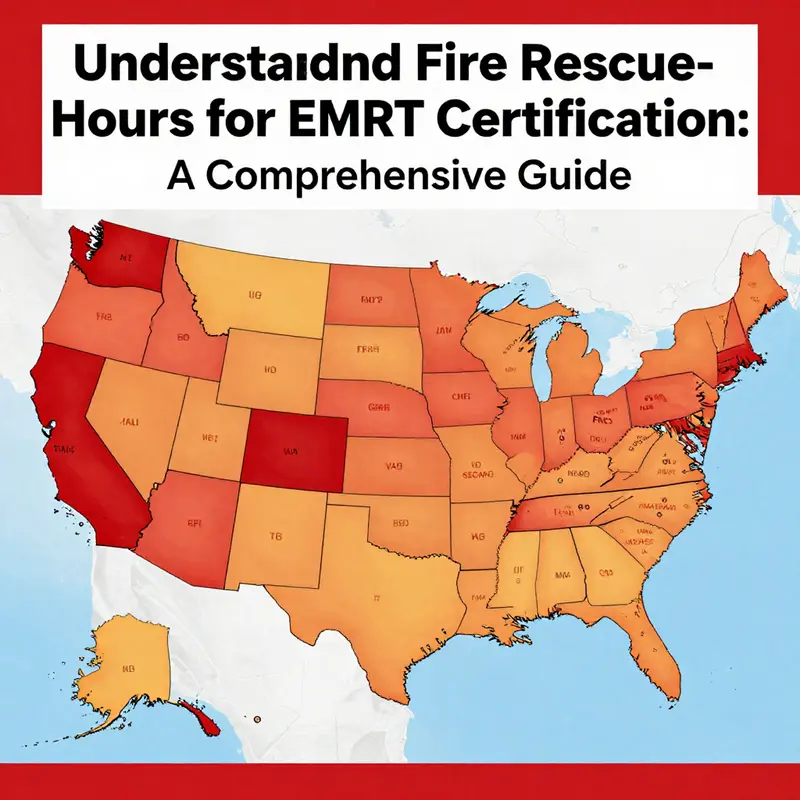
The question of how many fire rescue hours count toward EMT certification often arises for students trying to map a clear path from training to licensure. It is tempting to search for a universal number, but the reality is more nuanced. The AMA does not offer an EMT program, nor does it prescribe the exact hours required for fire rescue or clinical training tied to EMT certification. Instead, the framework that actually shapes EMT readiness rests with two pillars: the National Registry of Emergency Medical Technicians (NREMT) and the state or territory where the certification will be used. This distinction matters because it means the hours you accumulate, and even the way they are counted, can vary depending on where you train and where you intend to work. As you plan your journey, it helps to hold three ideas in mind: hours are a means to competency, not a universal badge; state requirements create the scaffolding that supports the program you choose; and national certification, while standardized in many respects, still depends on state eligibility criteria that can shift with regulatory changes.\n\nIn practical terms, most EMT training programs across the United States require a baseline of classroom and hands-on study that, combined, falls roughly in the 150 to 200 hours range. These hours typically blend didactic instruction with clinical rotations and field experiences. The didactic portion covers core medical knowledge, patient assessment, airway management, trauma care, and pharmacology, while the practical portion provides supervised exposure to real patient care, often through clinical shifts in hospitals and through field rides with EMS providers. It is common for programs to describe this blend as a total hour count that includes both “in-class” learning and “out-in-the-field” experiences. The words used to describe these experiences— clinical hours, field hours, or ride-alongs— can differ from one program to the next, but the underlying aim remains the same: to ensure that a new EMT can translate knowledge into competent action under pressure.\n\nOne reason the hours discussion can feel tangled is the intersection with fire service training. The term fire rescue hours carries weight in fire academies and fire departments, where personnel receive extensive exposure to emergency response scenarios. For EMTs, however, those hours may be counted differently and are often contingent on partnerships between EMS programs and local fire departments. Some programs explicitly integrate fire scene exposure as part of clinical or field training, while others separate fire service competencies from EMS credentialing. The upshot is that a given number of hours may be labeled as “fire rescue” in one program and simply described as clinical or field EMS hours in another. This variance underscores why state-level regulations can exert a powerful influence: they can dictate not just the total hours but the nature of the experiences that count toward certification.\n\nBecause regulation is state-specific, the most reliable guidance for hours comes from two sources. First, the EMS office or department of health in the state where you plan to certify. Each state publishes requirements for EMT programs, including whether particular hours must be performed in designated clinical sites, under specific supervision, or within accredited programs. Second, the official NREMT website remains the central reference for national standards and the process for eligibility to sit for the certification exam. Even though the NREMT provides a nationally recognized benchmark, many states require additional or different hours, or mandate that certain experiences occur in approved settings. The gap between national expectations and state rules is precisely why prospective EMTs should consult both sources early in their planning, to avoid investing time and resources in a program that may not align with local licensure paths.\n\nA telling illustration of the shifting landscape involves online or distance-based training. In recent years, online offerings have emerged as convenient options for part of the didactic content. Yet, as the earlier research overview notes, not all online courses are eligible for NREMT certification, and some programs may have restricted eligibility for licensure. In particular, there are cautions about programs that look promising on the surface but are not recognized for NREMT certification after certain dates. For example, enrollment in some online EMT courses is unlikely to qualify a student for NREMT certification after mid-2025, which underscores the enduring reality: hands-on clinical and field experience—supervised and verified—remains a core requirement for credentialing, and states may insist on setting, approving, or endorsing specific clinical sites and time allocations. For students who must plan around these rules, it is essential to verify that any online component aligns with both state and national requirements and to be aware of impending deadlines that may affect certification eligibility.\n\nThis layered reality has practical implications. If you are considering a program that bundles fire rescue exposure with EMT training, ask precise questions about how those hours will be counted toward NREMT eligibility and state licensure. How many hours are counted as clinical versus field or fire rescue? Are there state-approved sites where field experiences must occur? Are there restrictions on hours earned through mutual aid agreements, volunteer services, or third-party providers? And crucially, will the program be recognized by the NREMT as meeting the national standard for the written and practical exams that define certification? These questions matter because they shape not only your time and finances but also your readiness to demonstrate competence when it matters most.\n\nThe practical path forward is best traced by aligning your plan with reputable local providers and official resources. Start by contacting your state EMS office or health department to obtain the current EMT program requirements, including the minimum total hours and the acceptable distribution between didactic, clinical, and field experiences. Simultaneously, review the NREMT’s eligibility criteria and the certification process to understand what the national standard demands and how state requirements may modify or specify those demands. If you are navigating a program that includes fire-rescue components, inquire how those components are integrated with EMT training, and whether they contribute toward the hours required for certification or are treated as separate training experiences. It is also wise to maintain a direct line with the program’s administrators about any regulatory updates, as state rules can evolve as workforce needs and safety practices change.\n\nWhen you encounter uncertainty about a particular course or pathway, a clarifying step is to contact the relevant bodies. For questions related to NREMT certification, the process often involves direct outreach to official channels, and in some cases, practitioners report that established medical centers or program coordinators can provide guidance. In the previous research context, a specific contact channel, [email protected], was mentioned as a resource for inquiries related to NREMT certification. While this address represents a particular organization’s internal support line, the broader takeaway is that seeking authoritative guidance helps you confirm whether a given program will meet your intended licensure path. Do not rely solely on marketing materials or general statements; verify against the official NREMT and state EMS resources before committing to a program.\n\nFor readers seeking practical anchors and additional perspectives on safety training that complements EMT education, there is value in exploring broader fire-rescue and safety training resources. For example, a dedicated resource such as a blog focused on fire safety and essential training can illuminate how foundational competencies—risk assessment, incident command basics, and patient-care integration in high-stress scenarios—translate into day-to-day practice. You can explore a resource on fire safety and certification training to gain additional context about how these foundational elements support EMT care in the field. See the article here: fire safety and certification training resources (https://firenrescue.net/blog/fire-safety-essentials-certification-training/).\n\nIn the end, the question of “how many hours” does not yield a single universal answer you can apply everywhere. The right number depends on where you plan to certify, which program you enroll in, and how that program structures its clinical and field experiences. The safest approach is to treat the hour count as a variable shaped by state policy and program accreditation, not a fixed quota dictated by a single national body. This means mapping out your preferred state’s requirements early, choosing an EMT program that aligns with those requirements, and verifying that the hours you accumulate will count toward both NREMT eligibility and your state’s licensure criteria. If you keep the questions focused on the specifics—how many hours must be clinical versus field, where the hours must occur, and which sites are approved—you will spend less time reconciling mismatched expectations after you have invested in a training pathway. And if any online component is part of your plan, ensure it is complemented by hands-on experiences that qualify for certification, especially in light of evolving policies about online education’s role in NREMT eligibility.\n\nAs you navigate these decisions, remember that the overarching goal is not just to complete a curriculum, but to emerge as a capable professional who can contribute safely and effectively in emergencies. The landscape may vary across jurisdictions, but the core competencies—patient assessment, rapid decision-making, teamwork, and the ability to perform under pressure—remain constant. Align your training with state requirements, verify with national standards, and pursue opportunities to gain real-world exposure under qualified supervision. In doing so, you will build a foundation that transcends any single numeric threshold and positions you to serve communities with confidence and competence.\n\nExternal resource for further reference: https://www.nremt.org
Final thoughts
In summary, understanding the requirements for fire rescue hours in EMT certification programs is crucial for aspiring EMTs and stakeholders within the emergency medical services field. While the AMA does not govern these hours, the insights presented here paint a clear picture of their importance and variability across different programs and states. By recognizing the value of fire rescue experience, we enhance the training of future EMTs, ultimately contributing to more effective emergency response teams. Those seeking to pursue a career in this field should remain informed about their specific state regulations to ensure they meet all necessary qualifications effectively.

