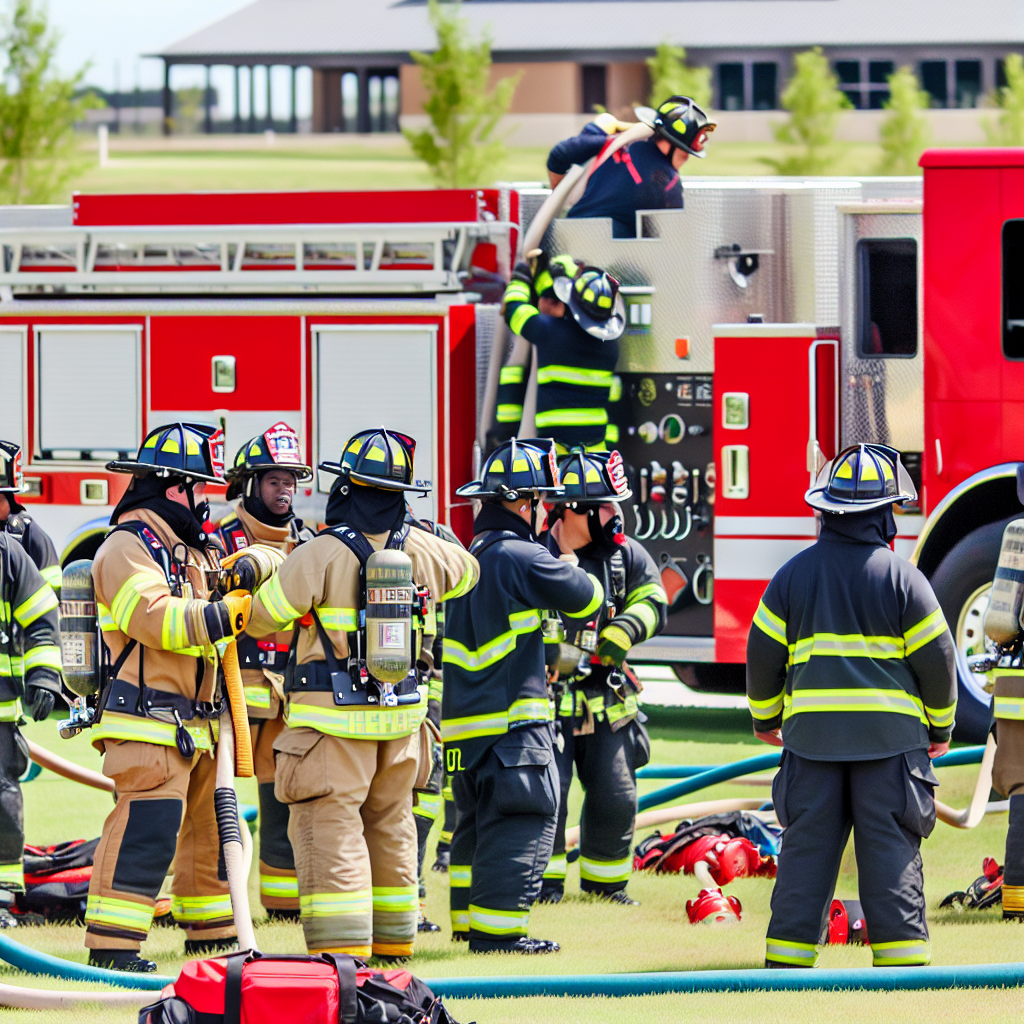
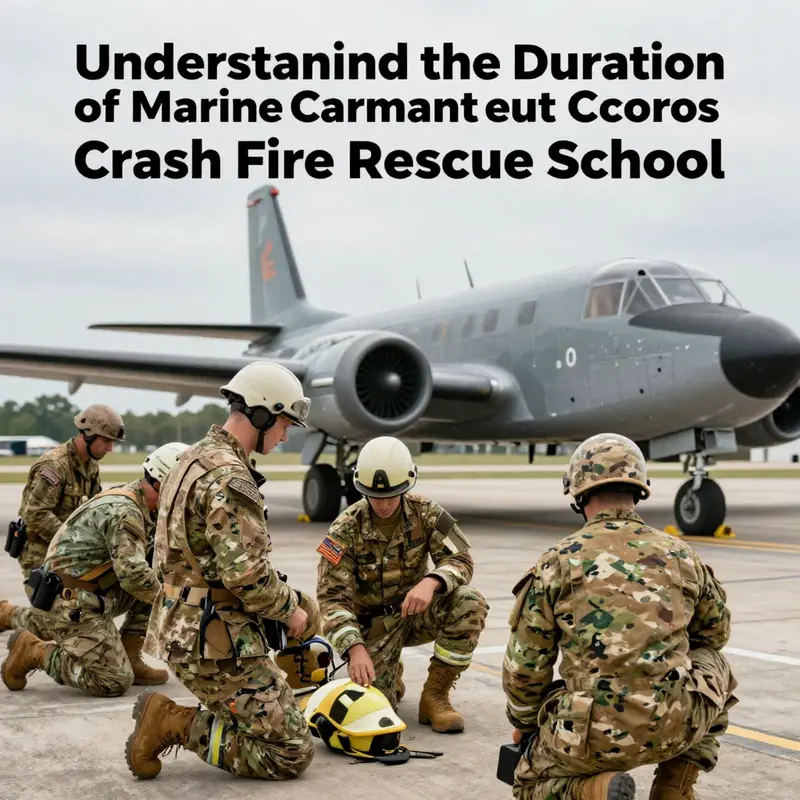
The Marine Corps Crash Fire Rescue School plays a crucial role in preparing Marines for emergency response in aviation contexts. This specialized 4-week course covers essential skills necessary for tackling aircraft-related incidents. Understanding the duration and structure of this training reveals its importance in ensuring both safety and operational efficiency. Each chapter will delve into various aspects of the program, from its comprehensive curriculum and training phases to the career opportunities it opens for graduates, providing a holistic view of its significance in aviation safety and military operations.
Four Weeks to Forward-Deployable Readiness: Inside the Marine Corps Crash Fire Rescue School
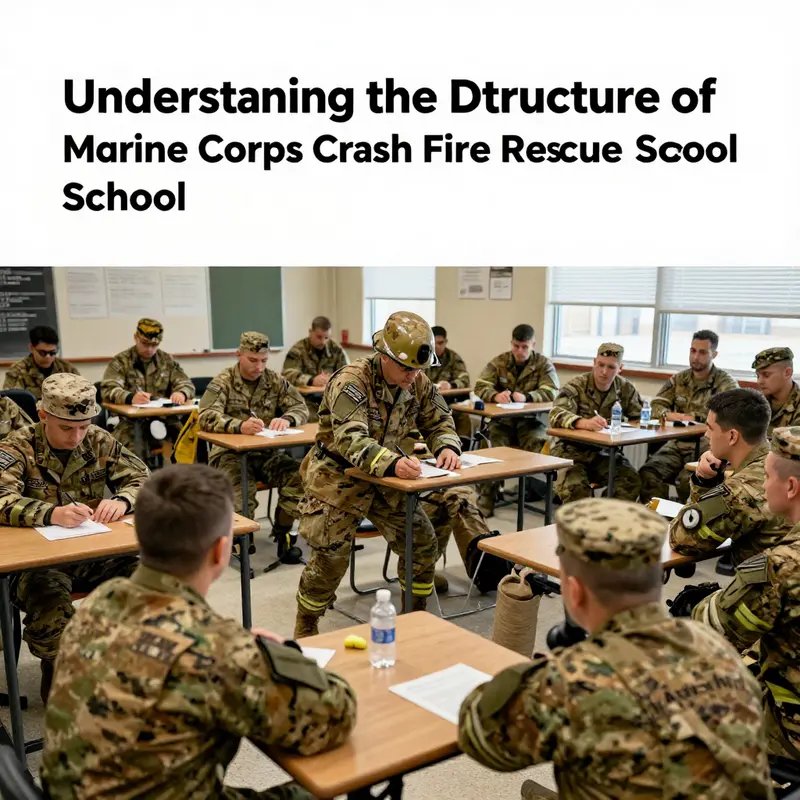
The Marine Corps Crash Fire Rescue School stands as a deliberate crucible where every hour, drill, and decision narrows the gap between danger and safety at expeditionary airfields. Located at MCAS Yuma, Arizona, the program is not a generic curriculum but a purpose-built pathway that bridges the heat of the moment with disciplined procedure. Its four-week rhythm is calibrated to the Marine Corps’ unique operational tempo—fast, austere, and ready for disruption in environments where the margin for error shrinks with every incoming threat. This is training designed for the kind of aviation operations Marines routinely support or command in crisis, where the speed and reliability of response can determine not just the fate of aircraft but the survival and recovery of the people around them. In such a setting, every drill translates into a mental reflex, and every classroom discussion becomes a rehearsed action plan, waiting to be activated under pressure.
From the first day, the school frames its mission in terms of expeditionary airfields and the realities they impose. The curriculum is oriented toward the kinds of aircraft that frequently rely on short or vertical takeoffs and landings, and it emphasizes the constraints that come with deploying rapidly into austere environments. The learners are asked to absorb not only the mechanics of firefighting but also the broader logistics of rescue operations, where timing, coordination, and access to limited resources can determine outcomes. The four-week window is not a soft-well-meaning introduction; it is a structured sprint that moves from foundational safety concepts to hands-on mastery, ensuring that Marines are prepared to act decisively when the unexpected erupts among metal and fuel.
In the classroom, core aviation fire safety principles form the backbone of the program. Here, instructors guide students through a systematic understanding of how different hazards arise in airfield emergencies and how those hazards interact with aircraft design, fuel systems, and on-scene environment. The training emphasizes emergency response protocols that Marines must deploy at the moment of impact or engulfment, including command and control procedures, communication discipline, and the sterile insistence on personal protective equipment and protective boundaries. Students drill on hazard recognition, incident command concepts, and the choreography of rescue operations that must operate while simultaneously mitigating fire spread and protecting responders from secondary hazards. These are the cognitive seeds of action: the recognition that in every crash scenario, the correct sequence of response—size-up, access, rescue, suppression, and medical care—must be crisp, unambiguous, and repeatable under stress.
The instructional arc is completed by meticulous attention to hazardous materials handling. Aircraft systems, hydraulic fluids, lubricants, and battery chemistries introduce a spectrum of risks that are distinct from terrestrial fires or civilian aviation contexts. The four-week program reinforces the crucial distinction between reacting to visible flames and preemptively identifying the hidden pathways that might transform a contained fire into a cascading emergency. Students learn to classify and control hazards, conduct decontamination procedures, and implement protective measures that keep responders safe while enabling effective operations for the aircraft involved. This emphasis on materials science and risk management is not an optional add-on; it is integral to the resilience of forward-deployed teams who must maintain readiness in environments where resources are scarce and the stakes are high.
As the training moves from theory to practice, field training becomes the crucible where knowledge, muscle memory, and teamwork converge. The program’s field components lean heavily on live-fire drills that simulate real-world conditions with a degree of fidelity that forces a rapid transition from classroom theory to on-the-ground decision-making. Marines practice rapid deployment scenarios that replicate the chaos of a crash near an austere runway or in a contested environment, where the clock is a constant antagonist and every second shaved from response time translates into improved odds of survival and mission continuity. Coordination with other emergency response units—medical teams, security detachments, and aviation maintenance personnel—forms a crucial thread through these exercises. Operative plans are exercised in real time, and the participants learn to navigate the friction that arises when multiple agencies converge on a single incident, each with its own protocols, vocabularies, and constraints.
A notable and practical thread running through field training concerns the role and limits of helicopters in off-base crash rescue missions. The course acknowledges the helicopter as a remarkable instrument of mobility and access, especially in difficult terrain or when rapid evacuation is needed. Yet, the realities of major crash fires reveal a sobering truth: helicopters, due to their slower speed relative to fixed-wing or ground-based fire suppression methods and the dynamics of a spreading fire, do not typically deliver life-saving benefits in the most intense phases of a major conflagration. This recognition informs a disciplined approach to rescue operations, guiding the trainees toward prioritizing ground-based techniques and rapid, coordinated suppression strategies that keep the forward arc under control while rescuers access and extract casualties. In practice, this means that while rotary-wing assets may play pivotal roles in certain phases of an operation—transporting personnel, delivering specialized equipment, or providing aerial reconnaissance—their use as active fire suppression tools in a major crash fire is unlikely to be the decisive factor. The training thus reinforces the principle that speed, positioning, and hand-on, ground-based tactics drive the core response, with helicopters occupying a complementary, rather than primary, function in the most dangerous moments of a fire.
The four-week cadence also mirrors the Marine Corps’ broader emphasis on expeditionary readiness, where crews must quickly synthesize cross-disciplinary skills and apply them in unpredictable environments. The curriculum’s balance between classroom instruction and field exercises ensures that learners develop a holistic sense of incident dynamics—how a crash scene evolves, what access routes exist, how to manage heat and smoke, and how to coordinate with medical teams to ensure that those rescued are stabilized and transported effectively. This balance matters because rescue at an expeditionary airfield is rarely a matter of a single firefighting technique or a single tool. It is a layered, adaptive process that requires a deep, practical grasp of various skills and a capacity to improvise within established safety boundaries. The four-week structure makes that adaptability teachable and repeatable, allowing Marines to internalize the steps that lead to a successful outcome while remaining vigilant for novel hazards that may arise in the next scenario.
Admissions and program logistics form the quiet backbone of the school’s rigorous structure. While the specifics of eligibility, prerequisites, and schedules can evolve over time, the program consistently demands a baseline of physical conditioning, aviation familiarity, and demonstrated readiness for the demanding pace of expeditionary training. The four weeks are designed to be intense but manageable, with a deliberate progression that builds confidence and competence without sacrificing safety or precision. The course’s design recognizes that students arrive with varying degrees of prior experience, then press them through a continuum that raises everyone to a common professional standard. The result is a cadre of Marines who emerge with a credible, deployable set of capabilities that can be leveraged immediately within their units. The training also serves a broader cultural purpose: it instills a disciplined approach to risk, a respect for the chain of command, and a shared language of emergency response that helps units operate with cohesion in high-stress, high-consequence situations.
For readers seeking a deeper understanding of the course structure, admission requirements, or current schedules, official channels provide the most up-to-date information. In addition, the emphasis on safety and structured competence connects with the wider landscape of professional development in fire and rescue disciplines. The program’s four-week duration is not just a countdown; it is a framework that shapes practitioners who carry forward a precise, practiced sense of how to balance urgency with care, how to improvise without abandoning procedure, and how to convert training into dependable performance when a crisis demands unwavering focus.
This alignment between rigorous curriculum and real-world demands resonates with broader themes in firefighting and rescue training. The pilot chapters of the course—foundation knowledge, risk recognition, and materials handling—merge into the hands-on experiences of field drills, where the conditions are designed to approximate the constraints of operational theaters. The learning curve is steep, but so is the payoff: a Marine who can stand at the edge of a smoky crash site, read the scene with a professional eye, and call for the right resources at the right moment. The four-week horizon provides enough time to convert apprehension into competence, while preserving the speed and decisiveness that are essential in forward-deployed operations. The culmination is not merely a certificate of completion but a tangible readiness that informs the way Marines respond in the air, on the ground, and across the complex, interwoven network of support that sustains aviation operations under demanding conditions.
As the chapter closes on the practical realities of the Crash Fire Rescue School, it is essential to remember that the four weeks are more than a schedule. They are a deliberate investment in operational resilience, a compact period in which theory becomes reflex, and reflex becomes reliability in the fleeting moments when every decision can reshape outcomes. The school’s result is a generation of responders whose training is not merely procedural but ingrained—a mindset that prioritizes safety, precision, and teamwork in equal measure. This is the heartbeat of forward-deployed readiness: a continuous commitment to turning rapid response into enduring capability, so that Marines can fulfill their mission with confidence even when the airfield is only a strip of concrete fringed with dust, heat, and uncertainty. For those who study the evolution of military training and its impact on mission effectiveness, the four-week cadence of the Crash Fire Rescue School offers a compact, powerful case study in how a limited period of intense instruction can yield outsized gains in capability and safety. The implications extend beyond the bay doors of a training hangar; they ripple through the units that depend on reliable, disciplined, and adaptable responders at the moment when a crisis meets aviation, mobility, and rescue in one potent, high-stakes intersection.
Internal resource consideration: for a broader perspective on safety-focused training pathways, you can explore related discussions at Fire Rescue training resources. (Fire Safety Essentials Certification Training) [https://firenrescue.net/blog/fire-safety-essentials-certification-training/]
External resource: https://www.mcasyma.marines.mil/About-MCASYuma/Emergency-Services/
Four Weeks Under Pressure: How the Marine Corps Crash Fire Rescue School Shapes Readiness for Aircraft Emergencies
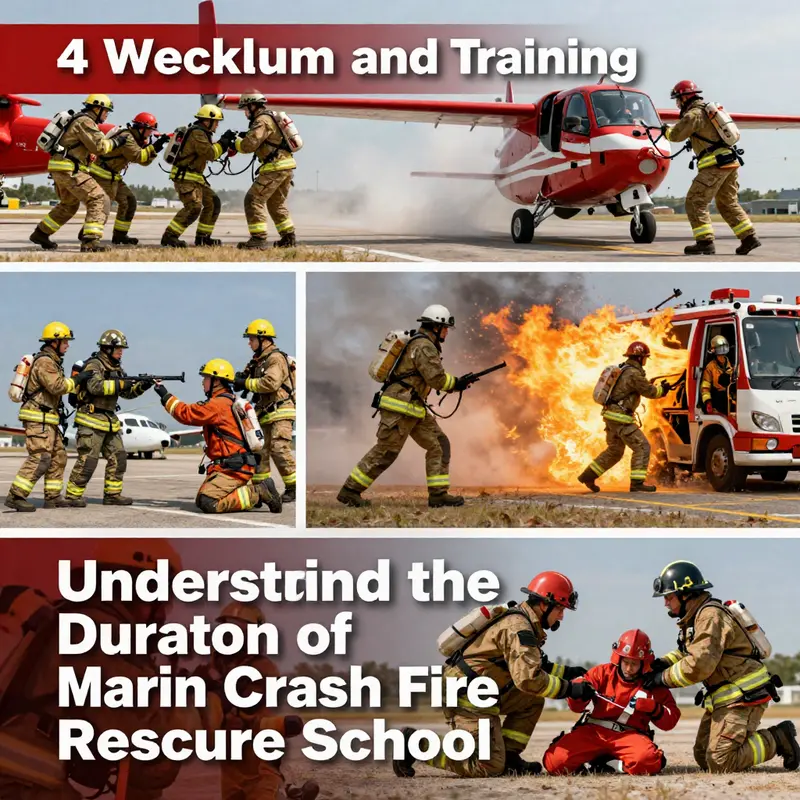
The Marine Corps Crash Fire Rescue School is more than a timed program on a calendar. It is a compact, high-intensity training vessel that steers Marines from uncertainty to confidence in the face of aircraft-related emergencies. The four-week duration is not arbitrary; it is a deliberate cadence that compresses theory, practice, decision making, and teamwork into a single, survivable path from novice to certified specialist. In expeditionary settings, where airfields often operate with limited support and evolving threats, the ability to respond with speed and precision becomes a matter of mission continuity and, sometimes, survival. CFRS thus stands as a critical hinge in the broader toolkit of Marine aviation safety and crisis response, aligning the individual competencies of a responder with the collective power of a well-coordinated team. The course structure mirrors the realities Marines are asked to face: a sequence that begins with fundamentals, builds into operational mastery, escalates through demanding scenarios, and ends with a rigorous test that validates both knowledge and nerve. Each week is a layer in the construct, a layer that, when combined with the others, forms a ready force capable of protecting people and assets when time is suddenly scarce and stakes are exceptionally high.
In the first week, the emphasis is foundational, but it is foundational with consequence. Trainees are immersed in the anatomy of aircraft and the anatomy of risk. They study the structural differences among aircraft types and learn how materials respond under stress, heat, and collision. This is not idle curiosity; it is essential to predict how a fire will behave when it latches onto a wing or a fuselage, how the heat will travel through complex composites, and how fuel from different systems can differentially propagate a blaze. Concurrently, recruits confront the spectrum of fuels they may encounter, from common jet fuels to more specialized aviation fluids, and they learn how those fuels influence fire behavior. The curriculum is explicit about safety as a reflex, not a consideration; PPE becomes an extension of the body, a second skin designed to survive heat, smoke, and the angular hazards of an under-pressurized environment. Physical fitness testing in this phase is not merely about endurance; it is a functional threshold that ensures a team can move, carry, and rescue under load, while maintaining composure and line integrity. The social fabric of safety—team-building, trust, and discipline—gets sewn into everyday drills because, in real incidents, a well-rehearsed team becomes a single organism with eyes on the same goal.
The second week intensifies the action and the responsibility. Trainees transition from understanding the theory of fire and rescue to executing it under conditions that approximate the chaos of a real incident. Live-fire drills become a core component, exposing Marines to the adrenaline and complexity of active conflagrations. The drills are not performances; they are tests of technique under pressure, where the margin between success and failure is measured in seconds and inches. Students learn how to deploy extinguishing agents with speed and control, converting raw extinguishing power into a surgical tool that suppresses flames without creating new hazards. The curriculum emphasizes both foam and water-based strategies, underscoring how different mediums interact with various aircraft fluids and how rapid cooling, vapor suppression, and smothering combine into a layered response. Coordination with emergency personnel is drilled repeatedly, reflecting the reality that crash sites are multi-agency theaters where decisive communication and shared situational awareness keep responders safe and synchronized.
Within Week 2, specialized ARFF equipment comes into sharper focus. Trainees gain hands-on familiarity with crash tenders, portable foam systems, and the array of tools designed to access and control fires at an airfield incident. The instructors weave these devices into broader tactics—where to position a vehicle for protection, how to stage foam for rapid damming of fuels, and how to iteratively reassess conditions as a scene unfolds. Understanding the equipment is inseparable from understanding the incident command structure. Leaders at every level learn to balance speed with precision, to adapt plan A when plan B becomes imperative, and to coordinate their team so that the overall response remains coherent rather than chaotic. This week also reinforces the bridge to civilian emergency response practices, illustrating how Marines must speak the same operational language with local responders, airfield operations personnel, and medical teams—even when the rules of engagement differ across jurisdictions and environments. The result is a cadre of Marines who not only act decisively but also align their actions with a broader safety ecosystem that safeguards lives and preserves capability.
Week 3 shifts the emphasis from routine response to the unpredictability of complex incidents. Here, CFRS graduates confront simulated real-world incidents that draw on the most demanding scenarios aviation safety can present: a staged aircraft crash, fuel spills, and crowded passenger evacuations. These simulations are not rehearsals for theater; they are crucibles that test judgment under pressure, requiring a calm cadence even as the scenario spirals toward urgency. Command and control principles take center stage, guiding leaders through the process of establishing a scalable incident structure, prioritizing life safety, and allocating resources with surgical fairness. The training also foregrounds effective communication as a strategic force multiplier. In the heat of a collapse or a rapid fuel plume, messages must be concise, channels must be open, and responders must anticipate how information travels through a dynamic field of operations. The integration of leadership education across these drills ensures that, even when the stress climbs, the chain of command remains clear and the crew retains a shared mental model of how to protect and rescue.
This week also reaffirms the value of teamwork as a living element of readiness. The most technically skilled firefighters can be outpaced by a poorly synchronized team, just as a perfectly coordinated team can outmaneuver a more capable individual. CFRS thus treats teamwork as a core competency as worthy of cultivation as any pump, nozzle, or extinguisher. The scenarios encourage Marines to assume different roles, to practice decision-making under ambiguous conditions, and to reconcile competing priorities in real time. The leadership education threaded through Week 3 emphasizes situational awareness—the ability to read a changing scene, to anticipate the next turn in an evolving hazard, and to adjust the plan without losing sight of the end goal: to save lives and minimize damage to aircraft and facilities. The graduates emerge with a deeper comprehension of how a small error in the heat of the moment can cascade into a larger emergency, and with the discipline to correct course at the speed the situation demands.
The fourth and final week consolidates the learnings into formal certification and a capstone demonstration that mirrors the full intensity of a live event. Certification exams evaluate both theoretical knowledge and practical skills, ensuring that graduates can articulate why a tactic is chosen and can execute it with the reliability expected of a Marine Corps specialist. The full-scale simulated aircraft crash response stands as the ultimate test of readiness, where students must demonstrate not only technical proficiency but also the leadership, communication, and teamwork that underpin effective incident management. Graduation readiness is as much about psychological stamina as it is about physical or technical capability. Marines must exhibit the confidence to lead under pressure, the humility to seek information when uncertain, and the resilience to maintain performance despite fatigue. The culmination of CFRS is not simply a certificate; it is the creation of a professional identity rooted in mission-critical competencies, continuous self-survival, and the unwavering duty to protect people at the sharp edge of aviation operations.
Across the four weeks, several unspoken truths shape the CFRS experience. Precision matters as much as speed; a measured, deliberate action often prevents the need for a second corrective move. Speed without control can worsen a fire, while control without speed can render a timely response meaningless. The curriculum deliberately interlocks these axes, training Marines to act swiftly yet deliberately, and to press forward only when the scene is safe enough to do so. The training also makes explicit the reality that aviation emergencies rarely exist in isolation. A crash site may involve fuel spills, hazardous materials, medical needs, and potential structural compromises. The students learn to weave incident command principles with field medical response and safe extraction techniques so that they can deliver a comprehensive, life-saving package to the affected individuals. In this light, CFRS does not simply create responders who fight flames. It forges responders who can navigate a complex incident landscape, communicate across roles, and sustain a balanced, effective approach under pressure.
The four-week window is, in effect, a disciplined rehearsal of a Marine’s readiness for forward deployment where airfields are small, resources are finite, and risk is a constant companion. The setting asks for more than raw firefighting technique; it demands the ability to improvise within a tested framework, to adapt to shifting conditions without losing core priorities, and to maintain leadership credibility when every decision carries weight. This is why the CFRS program is integrated into a broader continuum of aviation safety training. It is designed with an eye toward interoperability with other emergency responses, toward the realities of expeditionary operations, and toward the long-term goal of sustaining airfield operations in challenging environments. The result is a cadre of specialists who bring not only technical prowess but also disciplined judgment, a dependable command presence, and the practical wisdom of how to protect life, property, and mission capability when time is in extraordinarily short supply.
For readers seeking to place CFRS within the wider landscape of safety training, the program sits alongside other essential resources that explore the core principles of fire protection and emergency response. In particular, broader guidance on safety certifications and training can illuminate how CFRS fits into a developer’s or trainee’s path toward professional advancement. An accessible resource on that topic can be found in articles focused on safety certifications and their role in shaping a career devoted to prevention and response. This broader context helps explain why four weeks is enough to instill confidence while ensuring that graduates understand their ongoing obligation to learn and practice after graduation. The CFRS experience stands as a compact, intense preparation that begins the journey, not the end of it.
As the narrative of the four weeks concludes in a formal graduation, it is worth recognizing how this duration aligns with the human element of readiness. Marines undergo a phase of intense physical and cognitive demand, followed by a period of reflection and consolidation in which they internalize lessons long after the last drill. The four-week arc thus functions as both a boot camp for specific skills and a safeguard against complacency, reminding every responder that aviation emergencies demand a blend of courage, discipline, and humility. The graduates emerge not merely as technicians but as leaders who can marshal a team under pressure, who can communicate with clarity in the heat of the moment, and who can carry forward the Marine ethos of service with competence and care.
To connect this chapter to the broader ecosystem of training resources, consider how CFRS sits alongside other preparatory programs that emphasize the fundamentals of safety and emergency readiness. For practitioners seeking complementary perspectives on certifying and maintaining readiness, the field offers articles that delve into foundational safety training and its enduring relevance across varied contexts. Fire safety essentials certification training provides a lens into how certification frameworks reinforce the core competencies that CFRS presumes and enhances. These resources support a continuum of learning that helps Marines extend their CFRS gains into ongoing professional development. The four-week CFRS experience, with its layered progression—from foundational principles through live drills, advanced scenarios, and culminating certification—embeds a durable mindset: readiness is not a momentary achievement but an enduring habit forged under stress and sustained through continual practice.
For those seeking official specifications and formal recognition of the CFRS curriculum, the U.S. Marine Corps publishes the details that govern how the program is run, what standards define competency, and how graduates demonstrate proficiency. Official details on the curriculum and training standards can be found on the Marine Corps’ site at https://www.marines.mil/.
Guardians of the Runway: How the Marine Corps Crash Fire Rescue School Fortifies Aviation Safety and Expeditionary Readiness
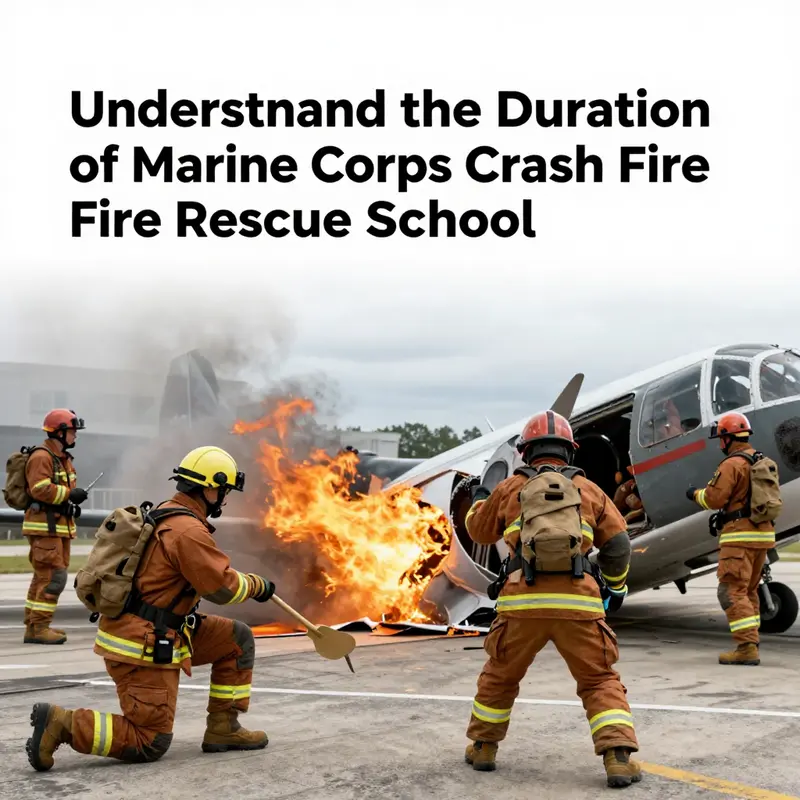
In the silent hours before a flight line wakes to its daily rhythm, a different kind of attention keeps aviation alive: the Marine Corps Crash Fire Rescue School. This four-week program is more than a procedural prerequisite; it is a compact engine that converts risk into resilience, turning Marines into ready-first responders for the unpredictable theater of forward-deployed airfields. The course is designed to compress years of on-the-job learning into a focused interval, where theory and repeated, disciplined practice merge to form reflexive, coordinated action. Its importance grows when the environment shifts from the controlled safety of a garrison to the austere realities of expeditionary operations, where every minute may count and every decision carries weight for mission continuity and personnel safety alike.
The structure of the school reflects the dual priorities of aviation safety and operational tempo. Over four weeks, Marines are immersed in aircraft rescue techniques that span the spectrum of platforms they might encounter on or near the flight line. They study the physics of fires ignited by different aircraft systems, the nuances of firefighting strategies tailored to jet engines, turboprops, rotorcraft, and mixed fleets, and the specialized procedures for handling hazardous materials that accompany airborne and ground support operations. The curriculum also embeds emergency medical response as a core competency, acknowledging that incidents do not stay neatly within the boundaries of a single discipline. In forward areas, the medical team may be the first, and sometimes the only, bridge between a life-threatening injury and a stabilized patient who can be evacuated for more definitive care. This integrated approach—fire suppression, rescue, and medical care—ensures that safety and operational effectiveness are not disparate concerns but synchronized outcomes of a single, practiced sequence.
What makes this four-week window so consequential is not merely the accumulation of skills but the intensity and realism of the training environment. Trainees work through scenarios that mimic the pressures of a real crash: smoke-filled compartments, limited visibility, conflicting priorities, and the need to protect bystanders while prioritizing the safety of aircrew. The emphasis is on rapid assessment, adaptable tactics, and scalable responses. Because forward-deployed airfields face constraints that a home base rarely confronts, the instruction centers on efficiency: how to do more with less, how to deploy essential tools quickly, and how to communicate with precision under the stress of fire. In these settings, the difference between a good response and a delayed one can translate directly into lives saved and aircraft returned to service.
One of the most salient distinctions in the program is its grounding in the realities of expeditionary airfields. These are environments where infrastructure is lean, water and power are scarce, and space is constrained. The training therefore prioritizes ground-based response strategies that can operate effectively without the luxury of a fully equipped large-scale support system. It is here that rapid deployment equipment takes on central importance. The Marines learn to assemble and mobilize specialized tools and systems that can be brought to a site quickly, enabling a prompt, disciplined response even when access routes are compromised or cluttered with debris. In such contexts, the ground team becomes the frontline safeguard for the airfield, capable of halting the spread of a fire and preserving critical access for rescue teams and medical transport.
The curriculum also foregrounds the specificity of aircraft-related risks. Different aircraft types present distinct ignition sources, hazardous materials, and structural vulnerabilities. A crash involving a helicopter, for instance, may demand different tactics than a fixed-wing accident. The school, therefore, trains Marines to recognize and adapt to these differences, selecting appropriate extinguishing agents, coordinating with aircraft-handling personnel, and understanding the fluid dynamics of multi-vehicle incidents on congested aprons. This emphasis on aircraft-specific response is not abstract theory; it translates into situational clarity during an actual incident—where every choice must align with the fastest, safest path to rescue and containment.
Communication threads through every phase of the training. The fastest rescue operation can be stymied by unclear orders, misapplied signals, or a breakdown in radio discipline. The students practice command-and-control techniques that promote situational awareness, silence confusion, and establish a clear chain of action. They rehearse hand signals and verbal cues that cut through the noise of emergency activity, ensuring that rescuers, firefighters, and medical teams move with cohesion. In forward operations, where multiple units may converge on the same area and the margin for error narrows, such disciplined communication can spell the difference between coordinated action and a chaotic scramble that slows progress.
The four weeks culminate in scenarios that test endurance as much as technique. Trainees rotate through roles, sometimes as lead responders, other times as supporting teammates or medical care providers. This rotation is deliberate: it builds a shared mental model across the unit, so that when a real incident arises, the team speaks a common language and can anticipate each other’s needs. The outcome is not merely a set of procedural checklists but a culture of readiness that permeates the unit’s approach to aviation safety. Those who complete the course return to their units with a sharpened instinct for risk assessment, a deeper awareness of how fires behave in different aircraft configurations, and a practiced ability to navigate the evolving demands of an expeditionary airfield.
Crucially, the curriculum acknowledges a pragmatic reality about aviation operations in austere contexts: helicopters, while essential for a range of missions, are not a universal panacea in the early moments of a major crash fire. Their reach and maneuverability are assets, but in a major fire scenario, ground-based response and rapid deployment equipment often deliver the critical initial impact. The Marine Corps Crash Fire Rescue School therefore emphasizes building a robust ground response that can stand up to the most demanding conditions, buying crucial time for aircrew to escape, for the self-protection of responders, and for the orderly execution of rescue and suppression tasks. This strategic focus aligns with a broader doctrine that prioritizes speed, decisiveness, and resourcefulness at the point of impact, recognizing that the tempo of expeditionary aviation demands nothing less.
To understand the broader framework in which this school operates, it helps to reference the parallel concepts articulated in official technical materials on crash rescue concepts for expeditionary airfields. These documents outline the specialized considerations of forward-deployed operations—how to manage limited infrastructure, how to nest rescue and firefighting capabilities within a compact footprint, and how to sustain readiness through repeated, realistic drills. While the Marine Corps program is tailored to Marine aviation and its unique mission set, the underlying principles—rapid assessment, integrated response, aircraft-specific tactics, and disciplined command—resonate across services and contexts. The emphasis on ground-based response in particular reflects a disciplined acknowledgment that speed and efficiency are sometimes most effectively achieved not by a single fast asset, but by a coordinated, multi-layered response that can be mobilized immediately at the scene.
The importance of the Crash Fire Rescue School extends beyond the immediate goal of extinguishing fires. It reinforces a safety culture that permeates every phase of aviation operations. Firefighters who understand the limits of their equipment, the behavior of different fuels, and the structural dynamics of aircraft can anticipate hazards before they escalate. Rescue personnel who know how to access cramped compartments, stabilize a downed airframe, and prioritize life-saving care for survivors reduce the likelihood of secondary injuries and complications. Medical teams integrated into the response bring a triage framework to the scene, ensuring that the most critically injured receive attention while the rest of the crew and bystanders are shielded from the chaos that a major incident can unleash. This holistic approach to safety—covering prevention, suppression, rescue, and medical care—contributes to a climate where missions can proceed with confidence, even under the stress of potential threats.
The value of the four-week training window also illustrates a broader truth about military aviation readiness: complex capabilities require deliberate, repeated practice. In environments where the margin for error is small and the stakes are high, a condensed but intensive program can produce results that longer, less focused training programs cannot. The graduates carry with them not just a set of techniques, but a shared ritual of preparedness. They approach each flight line with the expectation that emergencies could arise at any moment and with the knowledge that they have the training, the teamwork, and the resolve to respond effectively. Their presence at the edge of the airfield becomes a stabilizing factor for pilots, aircrew, ground support, and neighboring units—an assurance that safety protocols are lived, not merely documented.
For readers seeking a broader sense of how these concepts translate into practice at the expeditionary scale, the referenced technical document on crash rescue concepts for expeditionary airfields provides a formal articulation of the conditions, constraints, and tactical choices that shape these programs. It highlights the interplay between doctrine and field realities, and it underscores the ongoing need for adaptable, well-practiced responders who can perform under pressure. This external reference complements theMarine Corps training by offering a wider lens on how crash rescue concepts are tailored to austere environments while maintaining a focus on rapid, effective action that preserves both life and mission capability.
The Marine Corps Crash Fire Rescue School, then, stands as a cornerstone of aviation safety and operational readiness in a force that must operate across the globe’s most demanding landscapes. It is a compact, high-intensity preparation that translates years of experience into weeks of focused, disciplined practice. It builds a shared identity among rescue, firefighting, and medical teams and reinforces the standard that safety is non-negotiable, even when the clock is ticking. The result is a force that can absorb disruption, absorb losses, and still press forward with the confidence that comes from knowing that the first responders at the scene are not merely capable—they are integrated, fluent, and relentless in their commitment to saving lives and sustaining mission success.
For practitioners and policymakers thinking about the investment in such training, the four-week model offers a clear value proposition. It distills the essential competencies into a rigorous, repeatable cycle that can be adapted to evolving threat environments and aircraft configurations. It also provides a framework for evaluating readiness—metrics that matter in the real world include response time, the rate of successful rescues, the reduction in casualties, and the degree to which airfield operations can resume with minimal delay after an incident. These outcomes are not theoretical; they are lived, tested, and documented in drills that mirror the most challenging possibilities. In this sense, the Crash Fire Rescue School is not only about learning to fight fires. It is about cultivating a mindset of proactive protection that supports both safety and sustainment of aviation operations on the most demanding fronts.
For readers who wish to explore related training concepts or to situate this chapter within a broader conversation about professional fire-rescue education, an accessible resource that discusses the value of dedicated safety certifications can be found at Fire Safety Essentials Certification Training. This contextual link provides insight into how structured credentialing complements military training by reinforcing core competencies that translate across varied firefighting environments, from the flight line to the tower, to the classroom, and beyond. Fire Safety Essentials Certification Training.
In closing, the Marine Corps Crash Fire Rescue School embodies a practical, mission-focused philosophy: prepare Marines to respond decisively, protect aircrew and civilians, preserve aircraft and mission integrity, and sustain operations in the most demanding settings. Its four-week arc is not a shortcut but a concentrated rehearsal of every critical action required at the crash scene. In the theater of expeditionary aviation, such readiness is not a luxury; it is the difference between a damaged horizon and a runway back to service. The external technical perspectives on expeditionary crash rescue reinforce that this approach—rooted in speed, precision, and teamwork—maps directly onto the realities of forward airfields. The chapter’s implicit invitation is to recognize how a well-structured, intensely practical training window can elevate safety to a doctrine, ensuring that the next time disaster strikes on the flight line, those on the front lines are as prepared as their hardware and their mission demand.
External reference: https://www.dtic.mil/sti/pdfs/1058249.pdf
Liftoff to Leadership: Career Pathways Forged at Marine Corps Crash Fire Rescue School
The Marine Corps Crash Fire Rescue School stands as a compact crucible where timing, technique, and temperament fuse into a credential that travels far beyond the four walls of the training bay. The course is designed to be intense not merely to test endurance, but to engrave a professional identity that Marines carry into every subsequent assignment. In that sense, the four weeks between arrival and graduation function less like a sprint and more like the opening maneuver of a larger campaign: a focused period in which critical habits are formed, then translated into steady, dependable performance under pressure. The duration matters not just in days counted but in the density of experience absorbed—the way each drill, each scenario, and each decision reinforces a culture of rapid response, disciplined action, and calculated risk management. This is not a curriculum isolated from military operations. It is a frontline multiplier, built to ensure that when aircraft squadrons confront emergencies at forward-deployed airfields, the rescue crew knows exactly what to do, and how to act as a cohesive unit under stress.
Within the four weeks, Marines dive into a spectrum of competencies that are tightly aligned with the realities of aviation operations. They gain proficiency in aircraft rescue techniques, learning how to approach different types of aircraft with respect to fuel systems, airflow, and structural vulnerabilities. They study firefighting strategies that are tailored to the particular demands posed by jets, helicopters, and transport aircraft—a recognition that the physics of a cockpit fire or a fuel-fed blaze changes with the aircraft’s design. The training emphasizes situational awareness, rapid assessment, and the ability to adapt tactics on the fly as conditions evolve, all under the watchful eye of instructors who themselves carry field experience. Equally important are procedures for handling hazardous materials arising from aircraft incidents, including the identification of potential secondary hazards, the use of containment measures, and the coordination required to prevent escalation while preserving life and equipment. The four weeks also embed medical response skills appropriate to the austere environments where forward airfields operate. In these contexts, medical care often precedes transport, and the ability to stabilize a wounded air crew member or responder can determine whether a casualty survives long enough to reach definitive care.
This blend of firefighting craft, rescue technique, and emergency medicine creates a durable toolkit. It equips Marines not simply to extinguish fires, but to orchestrate a rapid, integrated response that minimizes the duration of risk for aircraft, ground crews, and bystanders. The course foregrounds teamwork as a governing principle. Marines learn to synchronize commands, signals, and roles across a spread of responders who may come from different units or specialties. The emphasis on leadership under pressure is not theoretical; it plays out in scenarios where one mistake can compound danger. The very tight timeline reinforces the value of drill-driven familiarity—the sense that certain motions become automatic under the duress of an actual incident. In practical terms, this means that graduates emerge not only with a set of technical competencies but with a mindset calibrated for expeditionary realities, where space is limited, resources are finite, and decisions must be made quickly and responsibly.
The pathway after graduation reflects the way the Marine Corps views this training as a force multiplier. Within the service, graduates often occupy crash fire rescue roles at air stations and forward operating bases, where they are part of a mission-ready team that maintains aviation safety and sustains operational tempo. These assignments are not static posts; they are dynamic roles that demand ongoing readiness, physical fitness, and the ability to respond to evolving threats in volatile environments. In such positions, ARFF personnel must balance the dual imperatives of aggressive fire suppression and careful risk management—protecting aircraft critical to mission continuity while safeguarding the lives of aircrews and civilians who may be present. This dual mandate reinforces the broader ethic of expeditionary service, where every shift is a test of how quickly and effectively a crew can pivot from prevention to response, and from containment to casualty care.
Yet the value of the four-week program extends beyond the perimeter of the Marine Corps. The training is widely recognized for its rigorous standards and practical relevance, features that translate into meaningful civilian opportunities after a service member rotates into the civilian sector or transitions to federal or private roles. The core skill set—aircraft rescue, aircraft-specific firefighting tactics, hazmat operations, and emergency medical readiness—maps cleanly onto civilian aviation emergency response expectations. Many former Marines leverage these competencies to pursue roles as airport firefighters, where they carry with them not only a technical pedigree but a proven track record of operating under pressure, leading teams, and maintaining composure in complex, high-stakes environments. The structured, outcome-driven approach of Marine ARFF training also resonates with private firefighting organizations that work in aviation-heavy contexts or with contracted security and safety firms seeking responders who understand the specifics of aviation risks and forward-area operations.
A central bridge to civilian life is certification recognition. The U.S. Department of Transportation recognizes Marine Corps ARFF training as equivalent to civilian certification standards. This equivalence reduces the friction often associated with credential transfer, signaling to civilian employers that a Marine’s four-week crash fire rescue education meets the demands and benchmarks of civilian practice. It is a practical acknowledgement that the Marine Corps program instills not only the habits of disciplined operation but the technical competence that civilian employers require to deploy personnel with confidence. The result is a smoother transition for those who wish to continue serving the public in a civilian capacity or who seek opportunities in federal agencies that rely on certified responders. In this sense, the four-week window becomes less a race against the clock and more a bridge to a broader career landscape where leadership, reliability, and technical aptitude are priced as highly as physical stamina and field savvy.
The career pathways that flow from Marine ARFF training are varied and coherent, reflecting a spectrum of responsibilities that remain anchored to the same core competencies. Within the Marine Corps, graduates contribute to mission readiness by maintaining an immediate, on-call capability to respond to aviation emergencies at air stations and forward bases. They may rotate through assignments that demand not only firefighting acumen but also the leadership presence necessary to supervise teams during critical incidents. This leadership development—slowly but surely cultivated through hands-on practice and structured mentorship—becomes a transferable asset that Marines carry into civilian life. The discipline, communication, and collaborative problem-solving nurtured during training are the same skills that industry and government organizations prize in high-stakes emergency responses. The translation from military to civilian domains is not a relocation of tasks alone; it is a translation of culture—an ethic of readiness, accountability, and a calm, purposeful approach to danger that is as valuable in a commercial airport as it is in a forward-deployed airfield.
For those who pursue civilian careers, the pathways are robust and accessible. Many graduates find roles with airport fire services, where they apply ARFF principles in a civilian security framework. Federal agencies that oversee aviation safety and security also value the blend of field experience and formal proficiency that Marine graduates bring. Beyond government work, private firefighting companies actively seek responders who can operate in aviation contexts, bring operational discipline, and contribute to safety programs that span multiple client environments. What makes these transitions particularly smooth is the recognition that the Marine ARFF training embodies a practical, standards-based skill set. This is complemented by the persistent emphasis on teamwork, incident command, and service ethos that modern emergency response demands across all settings.
It is not only the technical command that makes this training valuable; it is the structure of the experience itself. The four-week window condenses what might otherwise require longer immersion into a focused, outcomes-oriented program. Graduates have already demonstrated the ability to learn rapidly, execute under pressure, and coordinate with diverse responders. They have practiced the kind of adaptive leadership that keeps teams aligned when costs of failure escalate quickly. In industry terms, they graduate with a compact set of competencies that are high in demand and relatively portable across sectors. The ability to integrate firefighting with rescue, medical response, and hazmat procedures—while maintaining an acute sense of safety—constitutes a professional profile that employers across aviation and emergency services find compelling. This is the value proposition of the program: it not only trains responders to meet current needs but also cultivates a readiness mindset that expands professional opportunities over time.
To illustrate how training intersections cultivate career growth, consider the broader ecosystem of professional development that surrounds ARFF specialists. The familiarity with live-fire scenarios, incident command concepts, and EMS basics helps graduates adapt to roles in emergency management and public safety beyond the fire station. The leadership and teamwork skills imparted in the course translate seamlessly into supervisory or program-management roles in civilian agencies or in industry partnerships that support aviation operations. In other words, the four-week curriculum does more than establish immediacy in response; it seeds long-term career resilience by building a versatile, leadership-ready professional profile.
Those who seek continuous growth often engage with additional professional development opportunities that complement the core ARFF competencies. They pursue advanced safety certifications, participate in interagency drills, and engage with mentors who provide guidance on navigating federal or civilian employment landscapes. This ongoing evolution matters because the aviation safety field itself is dynamic, with evolving standards, equipment, and best practices. The ability to adapt—while remaining grounded in the fundamentals learned during the four-week course—defines long-term success. For those exploring the bridge between military training and civilian vocation, the ARFF credential acts as a reliable anchor, signaling competence and credibility to prospective employers and collaborators. The result is not just a job but a pathway toward broader leadership roles that influence safety culture, incident preparedness, and operational effectiveness across aviation infrastructure.
Within the narrative of career formation, it is useful to reflect on the broader professional culture that this training cultivates. The Marine Corps emphasizes responsibility, discipline, and mission focus as everyday operating norms. These values translate naturally into civilian contexts where reliability, structured decision-making, and clear communication under pressure are prerequisites for success. The four-week experience, while compact, intensifies these virtues by placing Marines in situations that demand rapid assessment, precise action, and accountable teamwork. Graduates carry into their civilian counterparts a lived understanding of how to organize, triage, and execute under the most challenging conditions. This is a core reason why the program’s duration is so meaningful: it compresses a professional identity into a transferable, portable package—the kind of credential that opens doors while also shaping the way a person shows up in any high-stakes setting.
For readers who want to explore the practical implications for ongoing professional development, the narrative of this chapter can connect with broader conversations about certification, training culture, and career mobility. Industry reflections and practitioner voices often emphasize not only the value of hard skills but also the importance of mentorship, networking, and structured career planning. The ARFF profile cultivated by Marine training aligns with those themes, offering a blueprint for turning a four-week boot camp into a durable, adaptable career trajectory. As Marines transition into new assignments or new sectors, they bring a tested repertoire of response, leadership, and collaboration that remains relevant no matter where aviation operations take them. In this way, the duration of the program becomes a gateway to a continuum of professional possibilities rather than a final endpoint.
For those seeking further context on the evolution of training culture and its impact on career outcomes, a look at industry reflections on training and safety certification can provide additional color. See a related discussion here: Firefighter Training Tower Dedication. This resource helps illuminate how hands-on training environments shape confidence, proficiency, and professional identity in ways that persist long after graduation. This continuity between classroom, drill, and career demonstrates why a four-week ARFF course is not simply an obligation but a meaningful investment in future readiness and opportunity. The trajectory—from a rigorous, time-bound program to a spectrum of civilian and federal roles—illustrates how military training can expand a veteran’s career horizon while preserving the core mission of protecting lives and property at the edge of operations.
External resource: https://www.faa.gov/airports/arff/
Final thoughts
The Marine Corps Crash Fire Rescue School epitomizes the essential training required for effective emergency response in aviation contexts. Through its structured 4-week program, Marines acquire critical skills that not only enhance aviation safety but also prepare them for diverse career opportunities in emergency services. Understanding the significance of this school underscores the importance of specialized training in maintaining safety and operational readiness in military aviation.