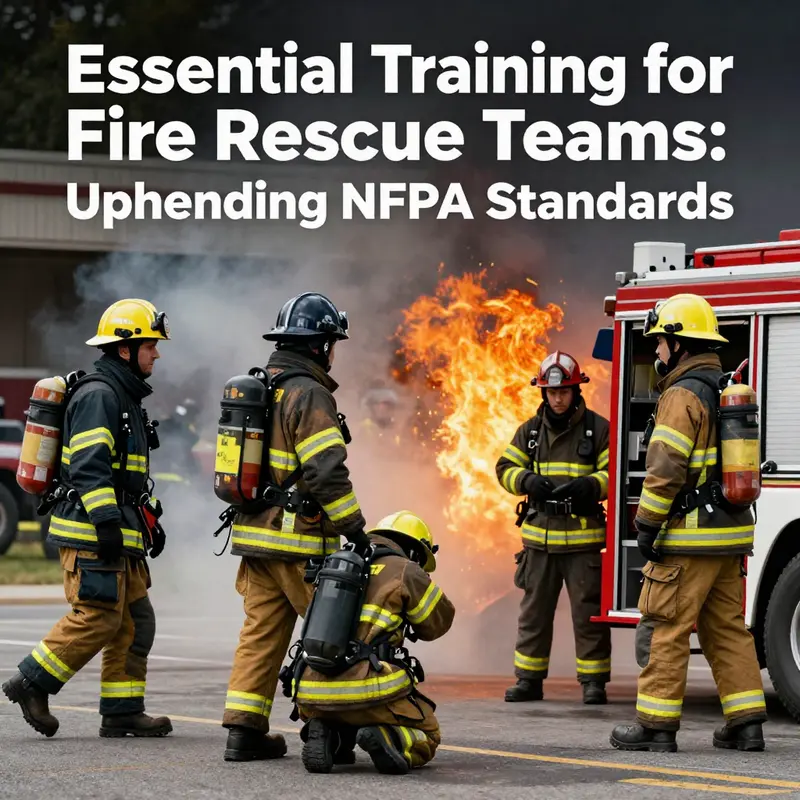
Training is the backbone of any effective fire rescue team, ensuring that firefighters are prepared to handle emergencies skillfully and safely. The National Fire Protection Association (NFPA) sets comprehensive standards that guide fire service training, laying emphasis on foundational knowledge, practical skills, advanced simulations, and teamwork. Each aspect of this training is invaluable, providing firefighters with the necessary tools and techniques to respond effectively in emergencies. The following chapters will explore these training components in detail, offering insights into how they contribute to a fire rescue team’s operational readiness.
Foundations in Fire Rescue Training: The NFPA Blueprint for Safe, Effective Response
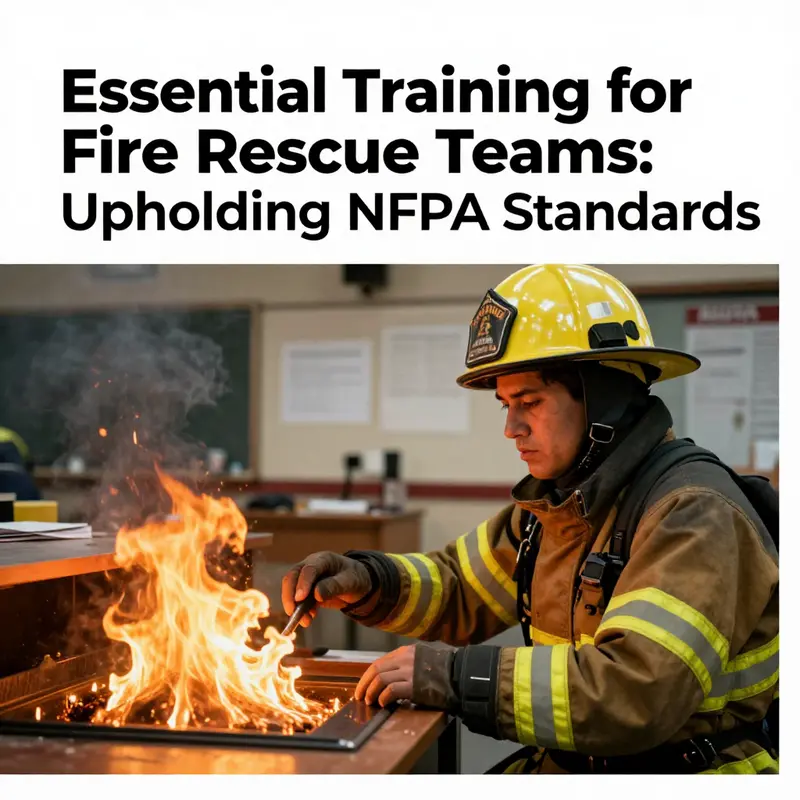
Foundational knowledge and theory are the bedrock of NFPA-aligned training. Trainees study fire behavior and combustion science to forecast fire development, recognize signs of impending flashover or backdraft, and make split-second decisions. Fires are dynamic systems; students learn heat transfer, fuel growth, and the environment around them. They connect smoke color and density to fire stages, interpret flow path indicators, and translate observations into tactical plans. Reading smoke becomes a decision-making tool that reduces risk and accelerates lifesaving actions. When theory meets risk assessment and hazard recognition, it yields a habit of disciplined analysis. Training emphasizes cross-environment flexibility across residential, commercial, industrial, and unusual settings; hazards include building construction types and potential for sudden failure. Structural appreciation, chemistry of combustion, physics of heat transfer, and crew positioning are taught, as well as line management. Risk assessment prioritizes rescuers and occupants with scene safety, casualty rescue, incident stabilization, and property protection; this mirrors NFPA’s rescue hierarchy. Accountability systems such as incident command and PASS devices are taught as habits. Unified command ensures clear information flow and traceable decisions.
This theoretical backbone is complemented by core operational skills: proper PPE use, donning and doffing, SCBA air management, rapid air changes, and maintaining PPE during high-stress tasks. The PPE focus leads into fire suppression basics: hose lines, connections, pressure management while staying aware of surroundings. Water application techniques emphasize straight streams and fog patterns to optimize visibility, heat control, and ventilation coordination. Ventilation is treated as a tactical tool to influence plume and air exchange. TICs aid locating victims and hot spots while preventing disorientation. Coordination with ventilation teams, suppression crews, and search and rescue units reinforces an integrated approach.
Search and rescue rests on deliberate practice of search patterns, victim handling, and safe navigation through hazards. Patterns include grid and hallway/doorway searches and adaptive approaches for limited visibility. Victim handling methods, ladder use, rope systems, and casualty extraction are taught with emphasis on rescuers’ safety. Rescue in obstructed spaces such as collapsed structures requires staying oriented, maintaining teammate contact, and coordinating actions with hoseline and incident command. Ladders and rope systems support entry, exit, and multiple retreat paths.
The progression into advanced training includes true fire and true smoke training to simulate authentic atmospheres, building mental resilience and decision-making under stress. Interior attack and search are practiced as integrated sequences with risk assessment, line integrity, and crew accountability. Emergency evacuation and survival form part of the continuum; trainees learn rapid escape techniques with ladders or hose lines while maintaining team contact and following a guided hose path. Rehabilitation and overhaul are staged after extinguishment, with rest, hydration, medical checks, and re-entry to pursue overhaul and property safety. Cross-training in rehabilitation emphasizes physical recovery and cognitive clarity to sustain readiness.
Leadership, crisis communication, and teamwork are foundational to mission effectiveness. Clear, standardized language reduces miscommunication; officers focus on tactical decision-making and resource management while addressing human factors such as morale and stress. Training aims for a cohesive unit where roles are understood, needs anticipated, and safety and accountability are maintained under pressure. The chapters converge into a disciplined, synchronized team capable of operating safely in chaotic conditions.
Practically, ongoing, layered training translates theory into capability: foundational theory, hands-on operation, and scenario-based mastery. Real-world examples from diverse jurisdictions illustrate how true-fire simulations become standard practice, fostering competence, confidence, and a pervasive safety culture. The NFPA approach seeks consistent standards across departments, enabling teams to respond with poise to evolving hazards.
For readers seeking practical entry points, resources such as Fire Safety Essentials Certification Training provide structured core competencies aligned with NFPA principles, serving as a gateway to more advanced, department-specific modules that include true-fire scenarios and rehabilitation protocols. Departments should routinely assess training against NFPA guidelines, incorporate feedback from drills and simulations, and sustain a culture where learning never ends and safety always comes first. The end goal is a resilient fire rescue team capable of executing complex operations with precision and unwavering commitment to life safety.
From Theory to Ground Action: Core Operational Skills in NFPA-Driven Fire Rescue Training
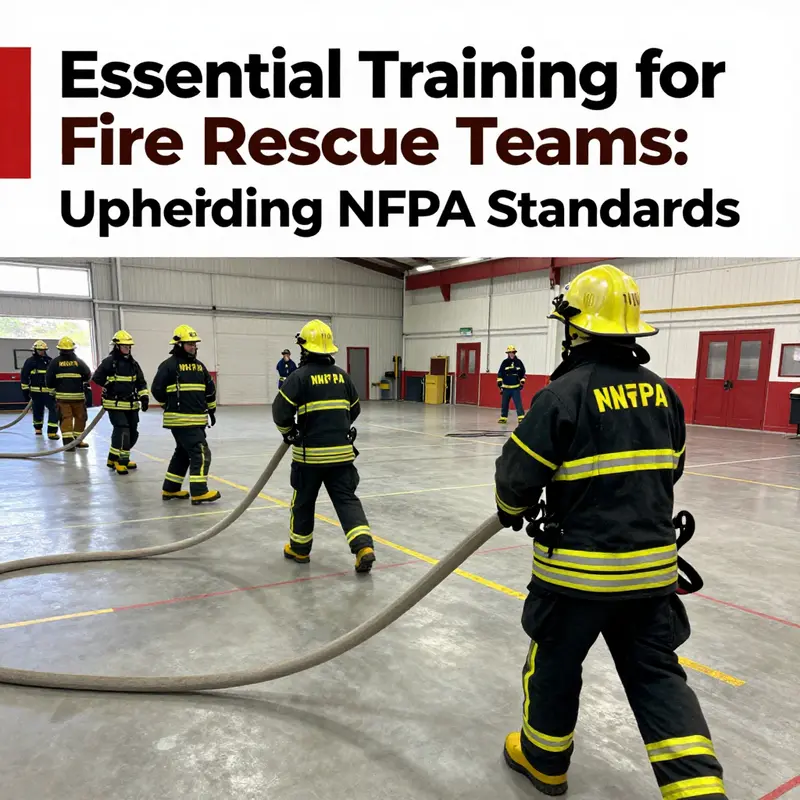
Building a fire rescue team capable of facing today’s dynamic incidents begins with a deliberate translation of NFPA standards into practical, on-the-ground competence. The chapter you are about to read weaves together the essential core operational skills that make the difference between a well-educated firefighter and a mission-ready responder. It traces how foundational knowledge, when paired with disciplined technique and reinforced through realistic practice, becomes a cohesive capability that can be deployed under the unpredictable pressures of an actual fire. The NFPA framework—emphasizing firefighter qualifications, safety systems, and occupational health and safety—provides the backbone. Yet it is the daily, deliberate application of that framework in training that creates responders who can read smoke, manage risk, and execute decisions with speed and precision. The goal is not merely to understand theory but to embody it while maintaining safety, teamwork, and accountability under stress. In this sense, the core operational skills are the bridge that connects classroom concepts to effective action on the fireground, ensuring that every engine company, squad, and unit can perform to NFPA expectations when lives and property hang in the balance.
A central dimension of this bridge is the consolidation of foundational knowledge into actionable judgment. Fire behavior and combustion science, once seen as abstract theory, become practical indicators that guide choices during an encounter with a growing fire. Firefighters learn to anticipate how flames will travel through different building assemblies, how heat migrates, and how air flow from ventilation strategies can alter a room’s temperature and visibility. Hazard recognition and risk assessment extend beyond identifying obvious dangers to understanding structural integrity, whether dealing with residential timber-frame homes or commercial mid-rise occupancies. Reading smoke becomes a language in itself: the color, density, and movement of smoke speak to the fire’s stage, direction, and potential for rapid changes such as backdraft or flashover. This perceptual skill is not mystical; it is cultivated through repeated, guided observation and decision-making drills that tie smoke interpretation to tactical choices—whether to advance, to ventilate, or to retreat. Alongside perceptual acuity sits the safety and accountability systems that govern every operation. The Incident Command System, crew accountability, and personal alert safety devices are not mere formalities; they are the scaffolding that keeps teams coordinated when chaos intensifies. This foundation—NFPA-informed theory, hazard recognition, smoke reading, and rigorous safety processes—frames the subsequent development of operational strength.
The core operational skills section follows this foundation with a seamless, practical arc. Proficiency in Personal Protective Equipment (PPE) and self-contained breathing apparatus (SCBA) use is fundamental to any fire rescue task. The sequence of donning and doffing, the ability to perform essential tasks while encumbered by full gear, and the capacity to manage air supply during extended operations are essential competencies. Training drills that stress rapid SCBA checks, air management, and the capacity to work in a zero-visibility environment help ensure that gear becomes a second skin, not a limiting factor. This proficiency underpins every other skill set and must be practiced under conditions that mimic actual heat, smoke, and pressure. Equally critical are hose line operations and water application techniques. Firefighters must be adept at deploying lines quickly, making connections under challenging conditions, and maintaining appropriate pressures to deliver straight streams or fog patterns as the situation dictates. The capacity to adjust water application in real time—whether to control an incandescent, wind-driven fire or to protect a vulnerable occupant—depends on disciplined technique and a calm, methodical approach to problem-solving.
Ventilation, a sometimes controversial and highly situational tactic, occupies a pivotal role in modern fire suppression. The right ventilation strategy can dramatically alter the fire environment, improve conditions for occupants, and create safer interior conditions for crews. Training emphasizes vertical, horizontal, and positive-pressure ventilation, with attention to coordination with interior teams and accountability to command. The objective is not to ventilate for its own sake but to enhance overall incident outcomes: reduce heat, improve visibility for search, and control the fire’s access to escape routes. Alongside direct suppression and ventilation come search and rescue competencies, which demand familiarity with multiple search patterns and victim-handling techniques. Grid patterns, back-and-forth traverses, and disciplined use of ladders and harnesses facilitate systematic, patient searching in smoke-filled, obstructed environments. Drag methods, whether single- or dual-person, are practiced in combination with the use of hoselines to provide a lifeline to trapped victims while protecting surrounding crews.
These operational skills extend beyond immediate suppression and extraction to the broader process of rescuing and preserving life inside a burning structure. Interior attack and interior search training must reflect the full sequence from reconnaissance to the tactical decision point of an offensive attack, always within strict safety protocols. The unit learns to balance aggression with restraint, to push for progress while preserving team integrity, and to continually reassess conditions as new information emerges. Emergency evacuation and survival training further reinforces this balance by teaching rapid escape techniques, safe descent from elevated positions using ladders or rope systems, and movement through smoke using low-crawled posture, guided by the location of the hoseline and a trusted line of sight to teammates. Instructors emphasize self-rescue and signaling for help, recognizing that a misstep in a smoke-charged environment can quickly escalate into a life-threatening scenario. The practice extends to confined spaces and collapsed areas, where simulated entrapments test a firefighter’s ability to stay oriented, conserve air, and execute timely signaling while coordinating with others. These drills, while physically demanding, cultivate an instinctive calm that translates into steadier decision-making during an actual incident.
Overhaul and rehabilitation mark the post-fire dimension of the core skill set. Overhaul requires patient, meticulous searching for hidden fires, heat sources, and potential rekindles that could reignite in a protected structure. Rehabilitation focuses on the physiological stress of firefighting—from heat exposure to dehydration and fatigue—and ensures that personnel receive timely cooling, hydration, medical checks, and mental recovery support. These phases are essential not only for the health of responders but also for maintaining readiness across the team, as fatigue and heat stress can impair judgment and safety. Through integrated overhaul and rehabilitation training, teams learn to recognize incipient hazards in the wake of a fire and to return promptly to duty with countermeasures in place to mitigate cumulative strain. The emphasis here aligns with NFPA 1500’s clear expectations for health, safety, and wellness as ongoing parts of incident response.
Behind these technical competencies lies the indispensable triad of teamwork, communication, and leadership. Crisis communication becomes a discipline, not a casual habit, when fear and pressure mount. Clear, concise radio discipline, proper handoffs, and adaptable command structures enable a cohesive response even when the incident escalates beyond initial expectations. Leadership development, particularly for officers and incident commanders, focuses on tactical decision-making under uncertainty, resource allocation, and the ability to prioritize actions when every second carries consequence. The most effective teams are those that operate with trust, rehearsed coordination, and the shared language that NFPA standards help shape. This alignment between individual skill and collective action is what transforms trained individuals into a capable, synchronized unit.
To sustain and grow these capabilities, training design must be deliberately adaptive and continuously refreshed. Realistic simulations, including true fire and true smoke environments, provide the most credible test of a team’s readiness. Such simulations push firefighters to operate under conditions that reproduce the heat, noise, limited visibility, and psychological stress of actual incidents. The value of these experiences lies not only in technical proficiency but also in the formation of a resilient mindset and a culture of safety that permeates the entire organization. Contemporary training environments increasingly leverage sophisticated simulation facilities and scalable systems that can support a wide range of scenarios—from high-rise emergency responses to complex urban or rural incidents. One practical outcome of this approach is the ability to rehearse interior attack, navigation through smoke, and victim rescue repeatedly, enabling crews to refine timing, communication, and teamwork until each action becomes near automatic.
The narrative above is not merely a catalog of skills; it is a seamless, applied philosophy of training that champions continuous improvement within NFPA-aligned guidelines. Departments that embrace this philosophy understand that technology, building dynamics, and community risk profiles are not static. Training must evolve in concert with changes in construction practices, urban density, and the mix of hazards that responders confront. This is why the integration of true smoke and true fire simulations is not a novelty but a necessity. It ensures that the competence gained in controlled settings translates into safe, decisive, and effective action on the fireground. In practice, this means aligning drills with local risk assessments, integrating scenario-based exercises that reflect the community’s unique challenges, and maintaining a cadence of proficiency checks that verify both knowledge and execution. It also means recognizing the value of interagency cooperation, where multi-unit drills illuminate the realities of coordinated responses across jurisdictions, reinforcing the accountability and communication standards that NFPA promotes.
This chapter, while focused on the practicalities of core operational skills, also foregrounds a broader principle: training must be both rigorous and relevant. The most valuable programs couple theoretical underpinning with hands-on practice and then push them through realism-enhancing simulations that test decision-making under pressure. The importance of tailoring training to the operational realities of the department—whether in a compact urban setting, a sprawling rural area, or a rapidly developing city—cannot be overstated. Continuous evaluation, after-action reviews, and feedback loops help ensure that the core skills remain aligned with evolving NFPA standards and best practices. In this way, the fire rescue team’s training becomes a living system, capable of absorbing new knowledge, refining procedures, and delivering safer outcomes for both responders and the communities they serve. That is the essence of translating NFPA requirements into ground-action capabilities: a disciplined progression from theoretical insight to confident, coordinated performance when every second counts.
For readers seeking a concrete pathway to the foundational and advanced components described here, consider exploring how certification and safety-focused training curricula are framed in practice. Fire safety essentials certification training offers a practical blueprint for aligning classroom learning with field readiness, illustrating how NFPA standards are operationalized through structured programs. As you move through the rest of this chapter, keep in mind that the real power of NFPA-based training lies in its ability to cultivate a shared, adaptive discipline across teams, empowering them to act decisively and safely when every moment matters. This is the hallmark of true operational proficiency, a competence that progresses with each drill, each evaluation, and each encounter with the unpredictable nature of fire and rescue work.
The journey toward mastery is ongoing, and it extends beyond any single training facility or device. Modern departments increasingly rely on scalable, flexible systems to support a broad spectrum of scenarios, ensuring that crews can rehearse interior attacks, search patterns, and hazard mitigation with fidelity and repeatability. By embracing realistic simulations, emphasizing the critical importance of PPE and SCBA management, fortifying communication and leadership, and maintaining a vigilant focus on rehabilitation and ongoing wellness, fire rescue teams can sustain a high level of readiness. In that readiness lies the confidence that every member brings to the first moment of a fire—when lives are at stake and the difference between stopping a tragedy and watching it unfold hinges on the readiness of the team to act as one.
External reference for further context on realistic training environments can be explored at this external resource: https://www.draeger.com/en/fire-safety-training
Reality Under Fire: Realistic Simulations as the NFPA Training Cornerstone for Fire Rescue Teams
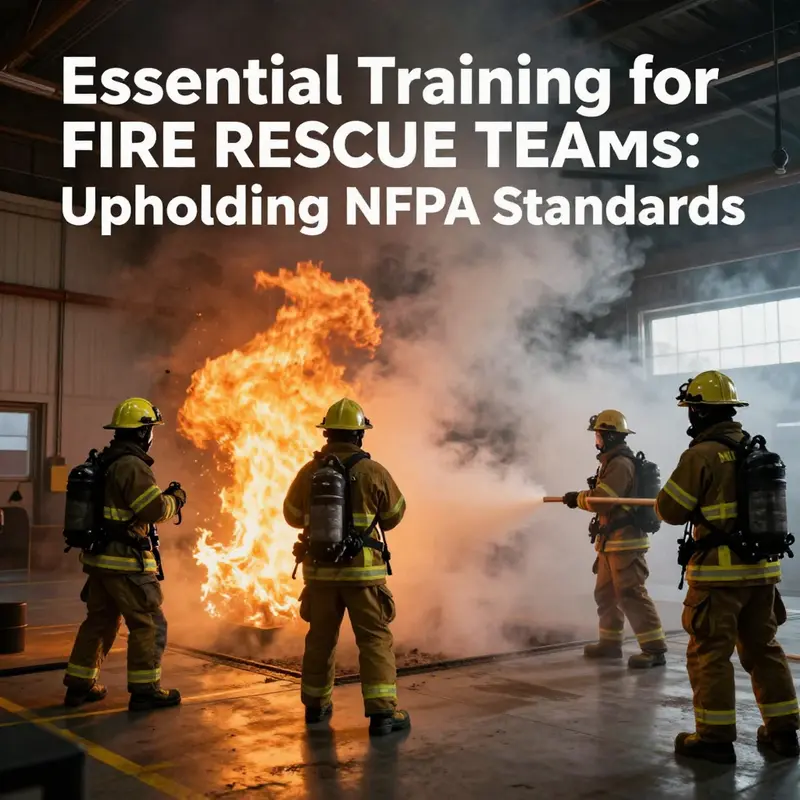
Realistic simulations are not a luxury in modern fire rescue training; they are the essential bridge between foundational knowledge and the split-second decisions demanded by real emergencies. When we consider what training a fire rescue team needs under NFPA standards, the trajectory moves beyond rote drills and into a layered ecosystem of practice that mirrors the unpredictability, intensity, and psychological pressure of actual incidents. The arc from theory to execution is made coherent and durable through scenarios that replicate heat, smoke, structural constraints, and time pressure with careful attention to safety, assessment, and leadership. In this light, advanced and specialized training becomes the core engine that turns knowledgeable crews into responsive, resilient responders capable of protecting lives and property while keeping themselves safe. The modern approach begins with tools that generate authentic combustion environments and gradually builds toward immersive, repeatable experiences that NFPA standards increasingly encourage as part of a comprehensive training plan.
Among the most impactful instruments in this progression are portable fire training simulators. These systems use controlled propane gas to generate real flames whose intensity, direction, and duration can be tuned to match the evolving demands of a given scenario. The heat output, the observable flame behavior, and the accompanying thermal stress provide an immediate, visceral cue that flat drills cannot convey. Trainees learn to manage their body heat, regulate breathing, and maintain focus even as the environment becomes dangerously unforgiving. The value lies not merely in surviving the heat but in developing the habit of situational discipline—knowing when to advance, when to retreat, and how to coordinate with teammates while wearing full protective gear. Importantly, these simulators offer rapid ignition and shutdown, enabling repeated iterations within a single training window and a controlled safety envelope that supports stress inoculation without compromising safety protocols. This alignment with NFPA expectations around safe, repeatable practice is central to building the confidence required for decisive action during a real event.
Yet simulators in propane-fueled form are only part of the landscape. Solid fuel simulators complement them by delivering a different texture of realism. They typically employ more modest heat but produce authentic smoke and embers, which teach trainees to read smoke and to operate within reduced visibility conditions. The trade-off between precise flame control and accessible, low-cost setup means that more teams can implement high-fidelity practice in diverse settings, from large regional training centers to smaller departments with limited budgets. The social and organizational payoff is substantial: crews gain hands-on familiarity with the choreography of entry, search, and suppression in environments where the air is thick and the path to a victim is obscured by smoke. This kind of training also fosters a shared mental model across the team, reinforcing communication rhythms, buddy system discipline, and the critical habit of cross-checking each other’s actions in the face of confusion—precisely the kinds of habits NFPA standards aim to embed in everyday practice.
Technology, however, has opened an even broader horizon with immersive virtual reality platforms. VR-based training blurs the page and the physical scene by rendering complex, dynamic environments that can be replayed, debriefed, and adjusted on the fly. A well-designed VR program integrates three-dimensional environments with real-time feedback—position, timing, line management, and communication performance—so crews repeatedly rehearse the same decision points under varying conditions. The benefits are twofold. First, VR provides exposure to rare but high-stakes events, such as unusual fire growth patterns, heavy smoke-driven hazards, or multi-structure occupancies, without incurring the exposure risk inherent to live-fire drills. Second, it enables the acceleration of learning curves by offering immediate, data-rich debriefs that highlight both strengths and gaps. The literature surrounding VR in fire training highlights consistent gains in perceptual-cognitive skills, decision accuracy, and team coordination, with researchers noting the approach’s scalability and cost-effectiveness when compared to the logistical and safety complexities of live burns. In practice, VR is most powerful when integrated with physical simulation and on-the-ground drills, creating a continuum of experience from virtual rehearsal to floor-level execution. This integrated approach is particularly effective for preparing crews for aircraft incidents, automobile fire scenarios, and confined-space emergencies where mental imagery and spatial orientation are as crucial as physical dexterity.
Even as simulations push the envelope of realism, attention to the infrastructure of training remains essential. Fire suppression system training ensures that personnel understand both manual and automated suppression networks, control panels, and the integration of detection and alarms with water-based protection schemes. The training emphasizes the orchestration of a multi-layered response: recognizing a sprinkler network’s status, coordinating with building automation in a high-stress environment, and aligning suppression tactics with ventilation and search operations. This system-oriented perspective reinforces the NFPA emphasis on coordinated action, situational awareness, and the safe use of hose lines, all of which depend on a clear mental map of how the building’s protective systems behave in a crisis. Likewise, fire extinguisher use training remains foundational, especially for non-firefighting personnel who may encounter a developing incident before responders arrive. The emphasis shifts, however, from basic operation to integrated, scenario-based practice that aligns extinguisher deployment with team communication, hazard assessment, and the evolving tactical picture. The classic PASS technique—pull, aim, squeeze, sweep—still informs fundamental readiness, but the real value emerges when this knowledge is embedded in a live, evolving scene where multiple lines, doors, and victims demand coordinated action.
A truly robust advanced training program does not stop at equipment handling or technique; it places leadership, teamwork, and crisis communication at the center of the learning process. Crisis communication involves clear, concise, and timely updates between crews and command, especially when visibility is poor and decisions must be made under pressure. Leadership and decision-making training targets officers and incident commanders who must allocate resources, manage risk, and steer teams through dynamic incidents. The objective is to cultivate a culture where every member understands the command structure, communicates through standardized channels, and maintains accountability for actions on the fire floor and beyond. Team coordination is the daily discipline that translates fragmented actions into a unified, efficient response. Exercises designed to reinforce synchronized movement, mutual trust, and shared mental models help prevent the disintegration of roles when fatigue sets in or conditions deteriorate rapidly. In these moments, the line between individual proficiency and collective performance becomes the decisive factor in whether lives are saved and injuries are minimized.
To translate advanced training into durable real-world capability, assessment and debriefing are indispensable. Objective performance metrics, validated checklists, and structured after-action reviews ensure that learning is concrete and cumulative. Simulations are evaluated for critical elements such as scene assessment accuracy, line control, ventilation effectiveness, tilt toward safety, and the quality of victim searches under smoke. The feedback cycle should be rapid, specific, and actionable so that teams can translate observations into improved actions in the very next drill. Rehabilitation and safety considerations sit alongside performance metrics. Firefighters emerge from intense simulations with physiological strain that must be monitored and managed through hydration, cooling, rest, and medical checks. This recovery phase, often overlooked in fire service discourse, is an essential element of maintaining long-term readiness and preventing burnout or injury. NFPA standards increasingly recognize these health and safety dimensions as integral to responsible training programs, underscoring that readiness is not merely about capability but also about sustainability and welfare.
A practical question emerges for every department contemplating how to structure such a program within real-world constraints. Realism must be balanced with safety, cost, and available space. Portable and solid fuel simulators offer scalable, modular options that can fit into once-weekly training schedules or weekend intensives, while VR platforms can provide high-value learning in off-site locations, reducing the need for continuous, elaborate live-fire rehearsals. The most effective programs adopt a blended approach, selecting the right mix of simulators, live-fire opportunities when appropriate, and digital rehearsal to build a continuum of experiences. In planning, agencies should map the training to NFPA standards and to their community risk profile, ensuring that simulations emphasize the hazards most likely to be encountered in their jurisdiction. The goal is not only technical competence but also a shared sense of safety culture and a disciplined command presence across the team.
As the practice matures, the question becomes how to embed these advanced experiences into the standard operating rhythms of a department. Scheduling becomes a multidisciplinary task, coordinating with shift patterns, maintenance cycles for equipment, and ongoing competency verification. In this light, the learning ecosystem extends beyond the training facility to in-service drills, cross-training with partners, and response rehearsals that incorporate the same realism and decision-making pressure observed in the specialized programs. The aim is to cultivate a durable, transferable readiness that remains aligned with NFPA principles and evolves alongside innovations in training technology. The experience base gathered through realistic simulations informs policy development, equipment procurement strategies, and the broader safety culture that defines a modern fire service.
For practitioners seeking practical guidance on ongoing professional development in fire safety, see the fire safety essentials certification training. This internal resource serves as a doorway to practical pathways for building a lifelong learning habit that complements the high-fidelity, scenario-based work described here. The chapter of training that begins with portable burners and synthetic smoke then climbs to immersive digital environments and integrated system understanding points toward a single objective: to ensure that every member of the team is ready to perform their duties safely and effectively when the time comes. In this sense, realistic simulations function as a crucible where knowledge is tested, leadership is practiced, and the culture of safety is reinforced through repeated, meaningful experiences.
The NFPA blueprint for modern fire rescue training embraces this holistic, realism-forward approach. It recognizes that the demands of today require more than memorization; they require a cadence of practice that mirrors the uncertainty, tempo, and psychological load of real events. The most successful programs do not treat simulations as add-ons but as a core instrument for building competence, confidence, and cohesion. They integrate physical and digital modalities, pair technical drills with decision-making and leadership development, and maintain a relentless focus on safety for both the occupants served and the firefighters who serve them. The result is a cadre of trained professionals who do not merely respond to fires but anticipate, adapt, and lead under pressure—precisely the kind of capability NFPA standards strive to foster across the fire rescue landscape.
External resource for NFPA standards and related guidelines can be found at https://www.nfpa.org/.
Teamwork on the Line: NFPA-Aligned Leadership, Communication, and Cohesion for Fire-Rescue Teams
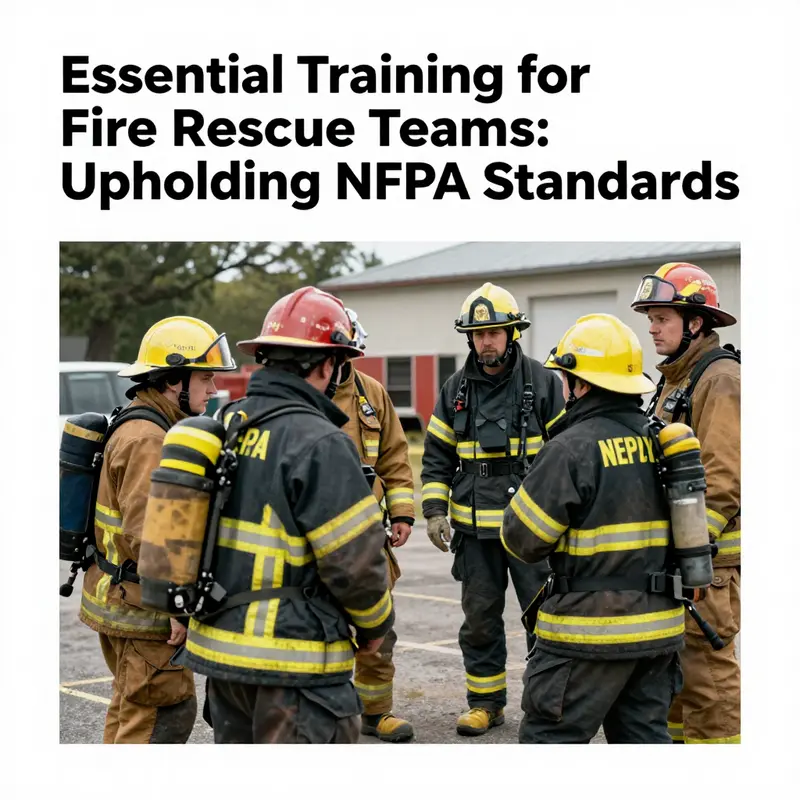
In fire-rescue work, the line between a successful operation and a tragic outcome rests on teamwork that is practiced, precise, and safety-driven. NFPA-aligned training treats leadership, communication, and cohesion as core competencies. With NFPA 1500 and NFPA 1001 guiding the standard, personnel are trained not only to perform individual skills but to integrate them into a unified operational picture. Training foregrounds how teams communicate under pressure, how decision making scales from a firefighter on the line to a commander at the incident command post, and how accountability systems hold a unit together when conditions shift. Reading smoke, recognizing hazards, and anticipating a structure’s reaction are enhanced when crews share a common language, mental model, and command structure.
Leadership in NFPA-aligned programs is distributed across the team. Every member learns to observe, assess risk, and step into leadership when the situation demands it. These drills emphasize coordinating with other units, adhering to the chain of command, and adapting as the incident evolves. Practically, a captain may reinterpret the plan mid-incident, or a crew member may assume leadership during a transition such as changing ventilation strategy. The aim is a resilient command culture practiced across shifts and drills.
A central pillar is the integration of Incident Command System into daily operations and exercises. ICS provides a scalable framework for organizing people and resources, with clear roles, span of control, and unified communications. Training emphasizes listening, confirming orders, and verifying actions align with incident objectives. In high stress environments, structured communication and standardized hand signals reduce miscommunication and ensure actions remain aligned with objectives.
The human element remains at the core. NFPA-aligned training recognizes teamwork, communication, and leadership as social practices built on trust and shared experiences. A culture of mentorship and peer coaching supports junior firefighters and reinforces safety, accountability, and continuous improvement. When teams train together, they learn to anticipate needs, compensate for weaknesses, and maintain a calm tempo under heat and pressure.
To implement this approach, departments design scenario-based drills that weave structural fires, hazardous environments, and multi-agency coordination. They emphasize communication protocols, mutual aid concepts, and rapid decisions under uncertainty, with after-action reviews and performance metrics ensuring lessons translate into growth. The practical takeaway is simple: embed teamwork, communication, and leadership into every training cycle, align with NFPA guidance, and sustain a culture of evaluation.
Final thoughts
Training for fire rescue teams, as outlined by the NFPA, encompasses vital components that ensure firefighters are not only knowledgeable but also equipped to handle various challenges they face. By focusing on foundational knowledge, practical skills, advanced simulations, and fostering teamwork, fire rescue teams can enhance their effectiveness and safety during emergency responses. Adherence to these rigorous standards ultimately aids in protecting lives and property, confirming the essential role of comprehensive training in the fire rescue profession.

