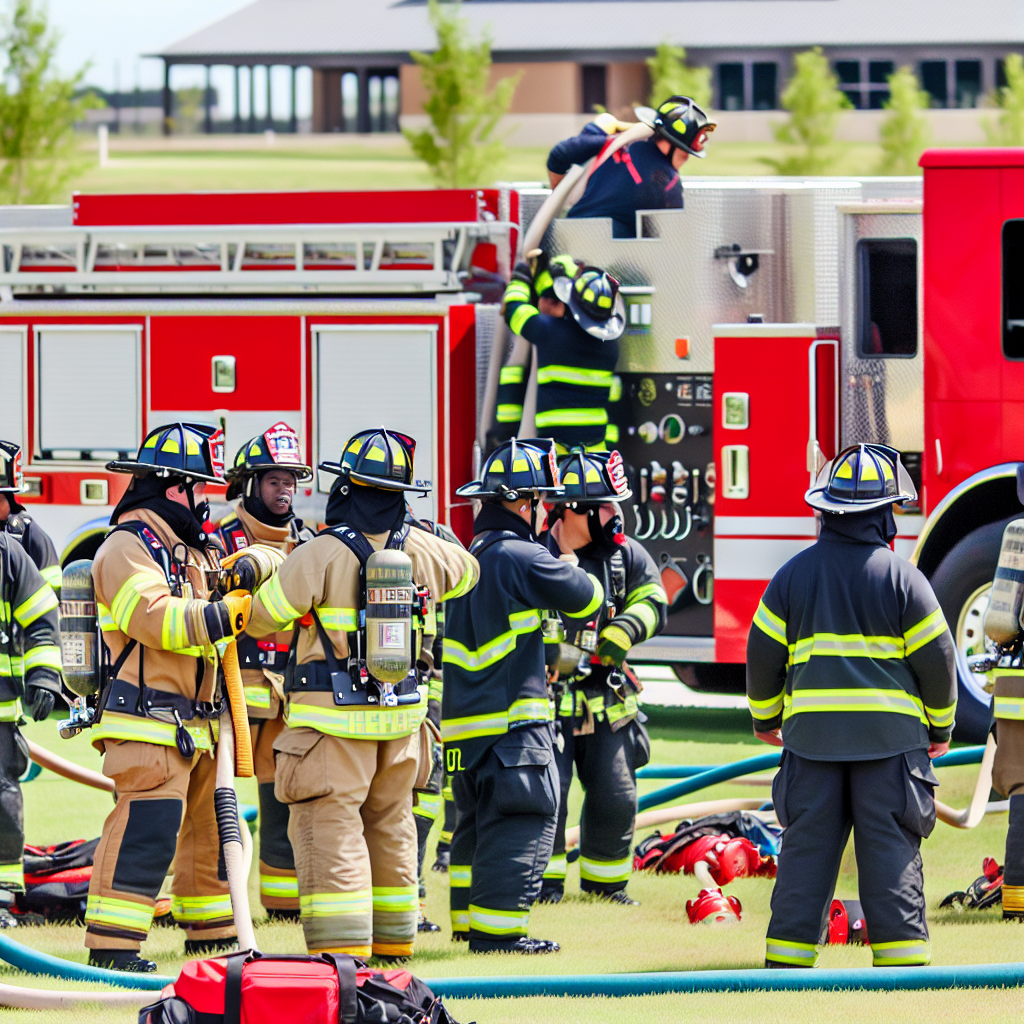
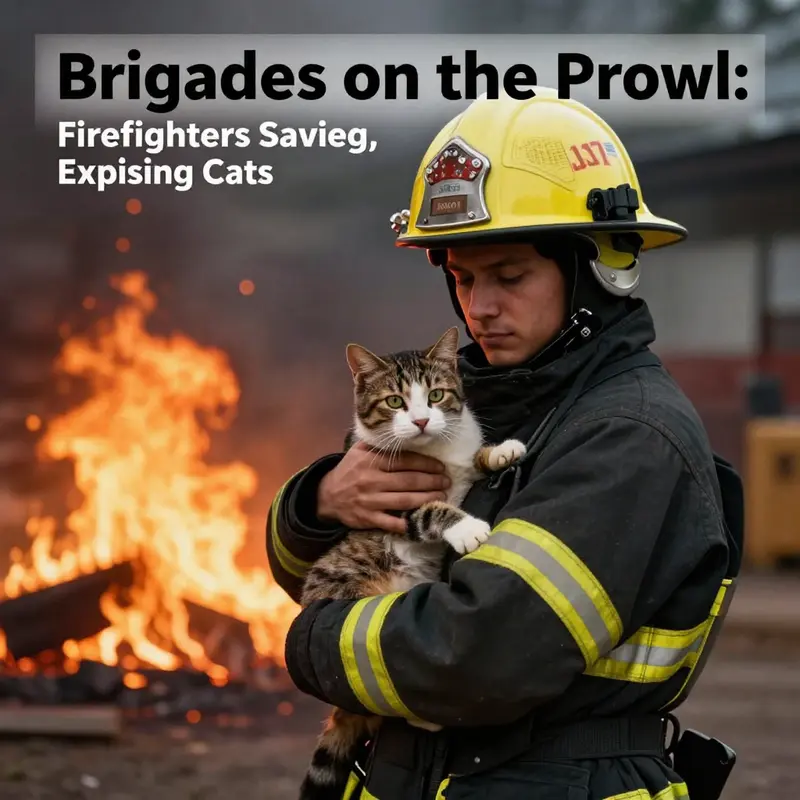
In times of crisis, whether it be raging wildfires or blazes engulfing buildings, the immediate thought often turns to human safety. However, alongside saving lives, fire brigades have expanded their missions to include the rescue of our feline friends. This article delves into the indispensable work of fire brigades in rescuing cats during emergencies. We will first explore how these operations unfold during critical situations, then highlight the significant role fire brigades take on in the realm of animal welfare. Following that, we will examine the technological innovations that support these missions, culminating in a discussion on collaborative efforts between fire brigades and animal welfare organizations to enhance rescue operations. Together, these chapters will illuminate the essential task of safeguarding not only human lives but also the fragile lives of our beloved pets.
Whiskers at the Edge: Inside Fire Brigade Rescue Operations for Cats in Emergencies
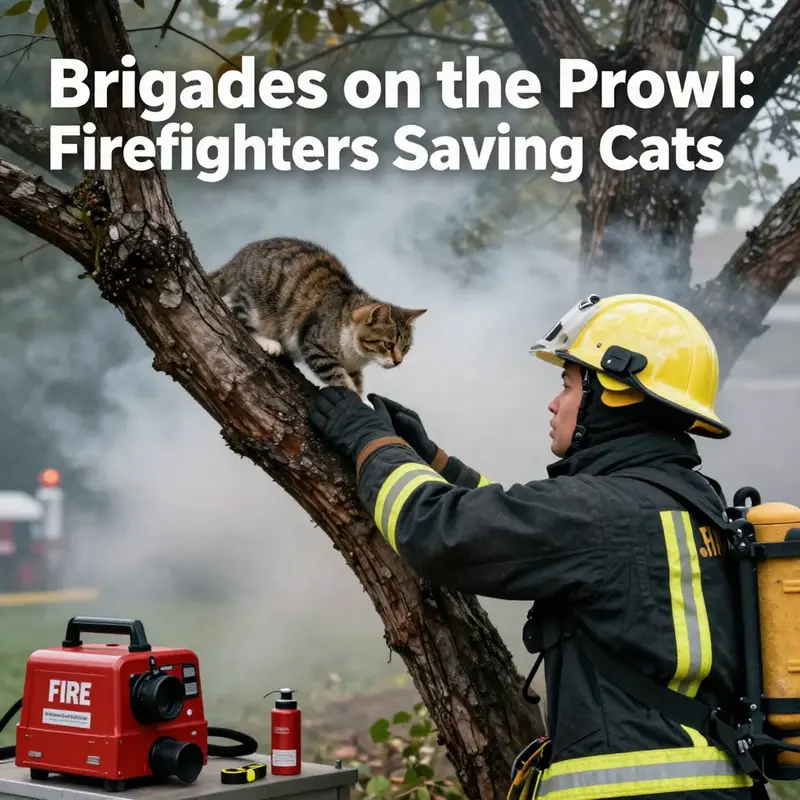
Smoke etched the air like a cruel hand sweeping across a city; heat pressed against skin, and the sound of alarms stitched together with siren wusions cut through the chaos. In Shenzhen on a May evening in 2025, a cat clung to the iron railing of a fifth-floor window, its paws gripping a fragile perch as the room filled with smoke and shuddering heat. Firefighters moved with practiced calm, moving into the toxic haze under the thick swirl of acrid air. They didn’t pause to debate which life mattered most—humans first, then animals where the risk to humans was absent or minimal. They worked with precision, easing a frightened feline from its perch, the cat’s fur burned and soot-streaked, yet alive and steady enough to be carried away toward safety. That scene, captured in images that circulated instantly on social feeds, wasn’t just a moment of rescue. It was a quiet manifesto about how modern fire services view the creatures that share our homes and hearts. The cat’s survival was not an outlier. It was a reflection of a growing ethos in which the bonds between people and their pets are recognized in the training rooms, on the fire engines, and in the triage tents set up after the smoke clears.
Across the world, fire brigades are expanding their remit, embracing the rescue of cats and other companion animals as integral to their mission. The public has come to expect, and in many places now demands, that trained crews respond not only to life-threatening human emergencies but also to the pets who are often family members, beloved companions who comfort during fear and pain. The Shenzhen incident is now read alongside other rescues as a chorus of examples that show the value of animal lives in emergencies. In Hong Kong, for instance, a large-scale residential fire ended with nine cats and a single dog safely accounted for, a moment captured in a firefighter’s arms that became an emblem of dignity under duress: a testament to the restraint, care, and skill that animal welfare volunteers and fire teams bring to the scene. The image of a firefighter cradling frightened kittens, drenched in sweat and soot yet protectively shielding them from harm, reminds onlookers that every breath of a frightened animal matters. In Moscow, a cat saved from a 12th-floor balcony situation required climbers to nose between balconies and use rope and ladder systems to descend with the animal intact, the ash on the fur a small price for life won back from the edge. In England, a cat on a snowy rooftop required an 18-hour vigil, the rescue relying on a makeshift bridge of two ladders built to span the gap. And in Nanjing, a kitten recovered from a wall cavity demonstrated the patience and dexterity of firefighters who widened debris with careful tools, turning a potential trap into a corridor of escape. Each scenario is stitched into a broader picture: pets belong in the household’s safety net, and emergency services have a responsibility to consider them as part of the community of lives in peril during fires and other disasters.
The practical dimensions of these rescues often blend skill with empathy. Firefighters train to manage the dual challenges of saving a life and preserving the responder’s own safety, a balance that becomes more complex when animals are involved. The heat may be intense, and the smoke can mask danger, but the operational mindset remains clear: assess, triage, and act in a way that minimizes risk to all involved. In the most straightforward animal rescues, crews rely on ladders, ropes, and careful handling to lift the animal from danger without deploying techniques that could worsen injuries. In more delicate circumstances, such as when a cat is wedged inside a wall or trapped on a ledge, teams rely on careful extraction methods that protect both human responders and the animal. The Shenzhen case, where the cat’s survival was confirmed after a swift, precise operation, underscores the effectiveness of a well-coordinated response, where urgency is matched by careful, practiced execution. It is worth noting that such rescues don’t occur in isolation; they are often supported by mobile veterinary units that stand ready to stabilize injuries and provide immediate medical care, including IV fluids and wound treatment, once the animal is in a secure location away from the inferno’s reach. The Chilean and broader Latin American experiences with wildfire response point to an evolving collaboration: fire brigades, animal welfare organizations, and veterinary teams moving in tandem to ensure that every rescued animal has a chance at recovery and continued life after trauma. In London, the adoption of specialized animal oxygen masks on fire engines marks a clear shift in the equipment and protocols of fire services, acknowledging that inhalation injuries contribute to mortality in pets and requiring early intervention to improve outcomes for rescued cats and other small animals. This institutional shift toward treating animal welfare with seriousness and immediacy demonstrates how far the practice has come and how quickly it is evolving.
This evolution sits at the intersection of culture and policy. Society’s growing recognition of pets as members of the family translates into environmental changes, urban planning adjustments, and a new pressure on emergency services to adapt. Fire brigades today are not just about extinguishing flames; they are about preserving communities, including the animals that inhabit them. This shift is visible in the training curricula that incorporate animal behavior awareness, safe handling practices, and basic veterinary support. It is visible in the language of the responders themselves, who talk about ‘no life left behind’ in the field and who view rescue operations as a continuum—from the moment a call comes in, through the hazard assessment, to the moment an animal sits in a stable, calm examination room where medical staff can evaluate and treat.
The Shenzhen rescue is also a reminder of the practical limits and ethical boundaries that guide these operations. The public is urged to use emergency numbers judiciously; 119 or local equivalents should only be used when the cat is in immediate danger—such as being trapped in active flames, at risk of a fall, or located in hazardous materials exposure. For situations that lack immediate danger—such as a cat perched on a balcony or stuck in a tree—animal welfare organizations or professional rescuers with specialized equipment should be contacted. Fire services emphasize that firefighting resources are finite and that prioritizing human life remains the foremost duty. Yet when a safe window exists, rescuers will extend their mission to pull a cat back from the brink of death and deliver it into the care of veterinary professionals who can decide on further treatment.
The broader practice is not merely about the mechanics of rescue; it is about the narrative of care. The public’s fascination with images of rescuers cradling frightened animals is more than sentiment. It is a signal of trust in the people who respond when danger threatens animals we love. It also speaks to a growing professional norm: fire services are increasingly expected to be stewards of animal welfare as a matter of routine, not just in extraordinary or well-publicized incidents. In the United Kingdom, for example, pilots of animal oxygen mask programs show how quickly innovations can be folded into public service. The equipment, designed for cats and other small animals, is carried on fire engines in several areas, indicating a readiness to respond to smoke inhalation early in the rescue process. It is a simple yet powerful idea: save the life you can, in the moment when the opportunity presents itself, and carry that commitment through to the veterinary table where life-saving care continues.
These stories and advances do not erase the dangers firefighters face. They do not erase the heartbreak of rescues that end tragically, or the difficult choices made in the field when the safety of responders and people takes precedence. But they do map a future in which rescue work—often performed under extreme physical and psychological strain—acknowledges the value of every life it touches, whether two-legged or four. The precision of the Shenzhen operation, the tenderness seen in Hong Kong’s iconic images, and the stubborn resolve in Moscow’s high-rise rescues all contribute to a shared vocabulary of hope: that courage and expertise can mingle with compassion to pull creatures back from peril. In this sense, the work is not simply about moving bodies from danger to safety but about preserving the trust that communities place in their protectors when the night is thick with smoke and fear.
The conversation extends beyond the scene of the rescue itself. It touches on responsible public engagement, the role of trained professionals, and the pathways to support animals who survive their ordeals. Public education programs increasingly stress that help is available through trained responders, and that a careful chain of care—from the fire engine to the veterinary clinic—can ensure that an animal’s surprise encounter with disaster does not spell the end of its story. For those who want to deepen their understanding or prepare for a future career that blends rescue work with animal welfare, there are courses and certifications designed to build the confidence and competence needed to face such scenes with composure and care. Readers can explore a resource dedicated to fire safety essentials and certification training to learn about the broader educational ecosystem that supports these critical missions. The emphasis on professional development reinforces the fact that the capacity to save lives—human and animal alike—rests not merely in instinct but in rigorous training, disciplined teamwork, and disciplined attention to the delicate balance between risk and compassion. In this light, the acts of courage that appear in dramatic clips are the culmination of years of preparation, drills that simulate smoke-filled rooms, rescues from precarious ledges, and the careful handling of frightened pets who must trust those who approach under their protective gear.
The Shenzhen case also invites reflection on the ethical dimensions of animal welfare in emergencies. While the primary duty is to people, the policy and practice now recognize that rescue opportunities for animals exist frequently enough to justify specialized protocols. This recognition does not trivialize risk; it reframes it. Animal handling requires gentleness, clear communication with distressed pets, and an understanding of how fear manifests in animals. Just as clinicians in human medicine practice triage under pressure, responders must triage emotional and physical risk in animals. A calm demeanor, patience, and a plan for rapid handoffs to veterinary teams can transform what could be a chaotic extraction into a life-affirming sequence. In many ways, this is a matured relationship between communities and their rescuers—a relationship built on mutual respect, shared risk, and a common commitment to saving every life possible when the environment permits.
If readers wish to understand how these ideas translate into everyday practice, they can explore a body of knowledge that ties prevention, preparedness, and response together. The training that underpins successful animal rescues includes basic first aid for pets, safe restraint techniques to minimize stress and injury, and a basic understanding of how smoke and heat affect animal physiology. The human factors—the teamwork, leadership, and mental readiness to stay calm under pressure—are equally crucial. Crews practice communication styles that help minimize fear in an animal’s eyes, using soft voices and gentle, deliberate movements to convey safety. They also train to read the animal’s body language quickly, recognizing signs of panic that could endanger both the animal and the rescuers. In this context, every rescued cat becomes a demonstration of the chain’s strength: the owner, the animal, the emergency responders, the veterinarians, and the volunteers who support aftercare. Each link matters, and every rescue strengthens the public’s confidence that their protectors value life above all else.
The practical changes in the field extend beyond the rescue itself. Fire brigades increasingly coordinate with animal welfare groups to ensure that aftercare is comprehensive and that the animals are not just saved but given a fair chance at recovery. Mobile veterinary clinics and rapid on-scene triage teams exemplify this collaboration, allowing rescued animals to be stabilized quickly and then transferred to facilities equipped to handle wounds, dehydration, smoke inhalation, and trauma. The emphasis on rapid stabilization can make the difference between a full recovery and lasting complications, a truth that underscores why such integrated approaches matter. In regions affected by wildfires, where entire towns can be displaced and domestic animals forced to shelter in makeshift spaces, the ability to provide immediate medical support on the ground becomes essential. In Chile and other fire-prone regions, this approach has become part of the standard operating picture, and it demonstrates how the professional ethos of the rescue services has expanded to meet evolving needs.
For those who want to connect the narrative to practical resources, it is worth noting the availability of targeted educational opportunities for rescue professionals and community members alike. The linked resource below provides a structured path toward understanding essential fire safety concepts and certification that can prepare individuals to participate meaningfully in emergencies. This kind of professional development helps build the broad ecosystem that supports animal rescues alongside human lifesaving efforts. In short, these stories are not only about dramatic feats of courage; they reflect a comprehensive, modern approach to emergency response that treats every life with respect and care, from the most vulnerable pets to the humans who rely on responders in their darkest hours. They remind us that rescue is a humane act as much as a technical one, and that the best outcomes emerge when training, policy, and compassion converge on the same street: the street where flames lick at the night and a family’s beloved cat clings to a window frame, waiting to be found.
Internal link for further reading: fire safety essentials certification training.
External resource for deeper case study: https://www.southchinamorning.com/news/2025/05/09/1136487.html
Beyond Sparks and Sirens: Fire Brigades and Cat Rescues
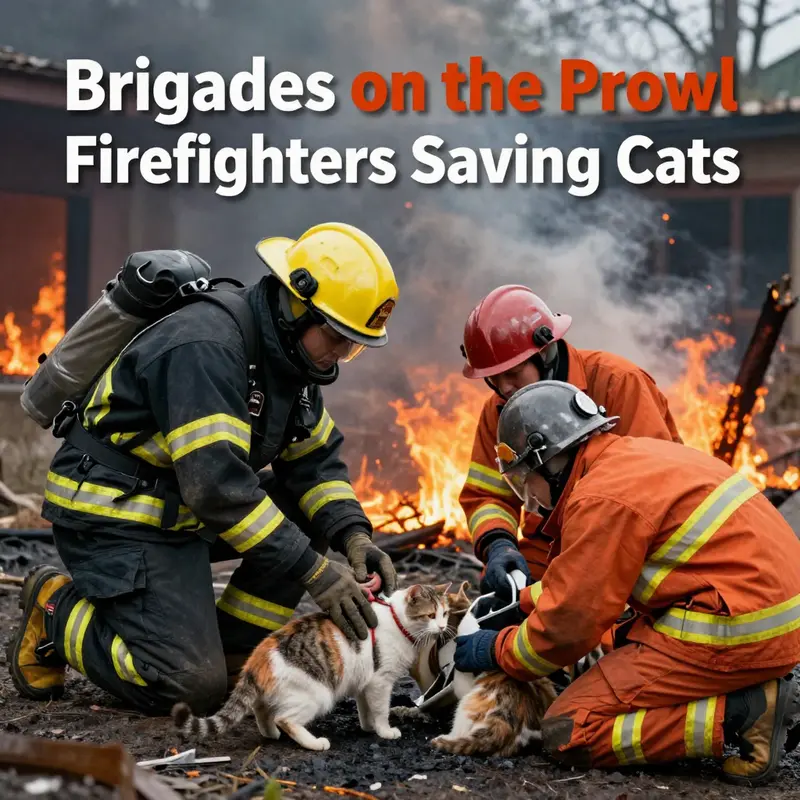
When a fire breaks out, the immediate instinct is to protect human life and extinguish flames. Yet alongside the blaze another mission unfolds: rescuing animals, especially cats, who hide behind furniture or in vents, frightened by smoke and heat. Fire brigades have begun to treat animal welfare as integral to public safety, turning rescue into a continuum of care that begins at the scene and continues after the flames are out.
Every cat rescue involves risk assessment: is it safe to approach, are there hot spots or collapsing structures, and could the smoke cause further harm to responders? Firefighters are trained to read animal distress signals, handle frightened creatures, and use equipment designed to minimize stress for the animal as well as the team. The goal is swift, calm rescue, with veterinary follow up when needed.
In urban practice, stories like the London incident illustrate the shift. A cat was rescued and fitted with an animal oxygen mask to deliver breathable air after exposure to smoke. On scene stabilization and rapid transport to veterinary care can improve recovery and reduce complications. This practice marks a move toward on site medical collaboration between fire services and animal welfare partners.
Modern fire services now carry small oxygen delivery systems for animals, and mobile veterinary clinics are deployed in disasters. The chain of care from doorstep to clinic emphasizes the welfare of every life at risk and helps calm worried owners and communities. Staff training emphasizes gentle handling, species-specific protocols, and clear communication with the public about what to expect after a rescue.
The human and emotional dimension is real. Rescuers are not just technicians; they are neighbors and guardians. A cat’s recovery depends as much on the post rescue care, warmth, monitoring for burns, and timely veterinary attention as on how swiftly it was carried to safety. Communities that support animal rescue reinforce trust in emergency services and resilience in the face of disaster.
For readers who want to help, local fire departments often welcome input on animal rescue capabilities, joint trainings with veterinarians, and public education about evacuating pets. Planning home safety for pets, keeping carriers ready, and ensuring microchip records survive a crisis are practical steps that strengthen the chain of care.
In the Heat of Rescue: How Fire Brigades Use Technology to Save Cats
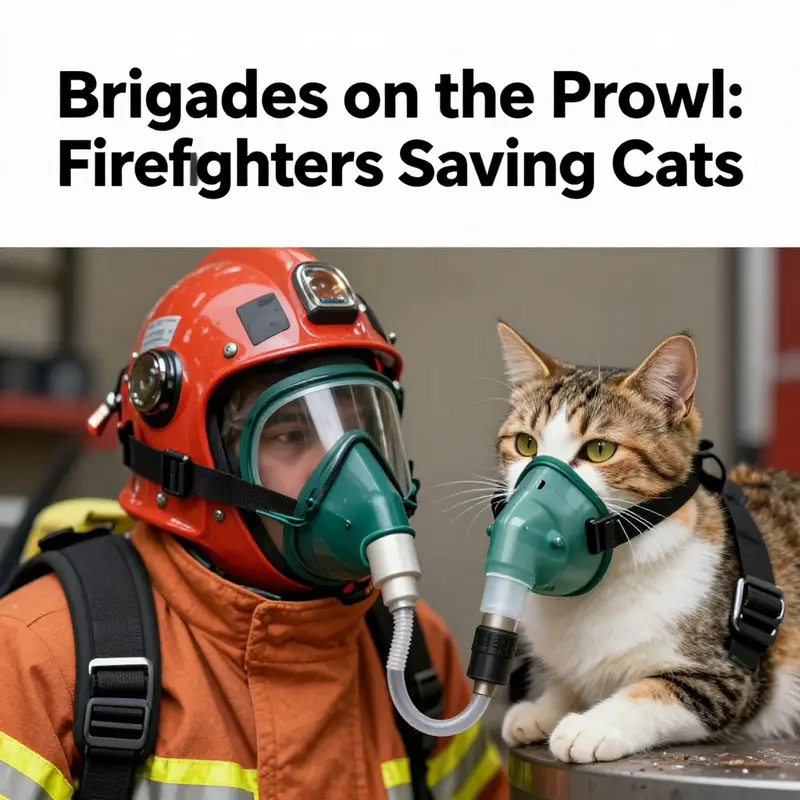
In the heat and silence that follows a blaze, cats become both witnesses and casualties to the crisis unfolding around them. Fire brigades, with decades of experience pulling people from burning spaces, have learned to expand their mission to include animals, especially felines who often explore the hidden nooks of homes and trees with a fearless curiosity that can turn dangerous in an instant. The broader narrative emerging from recent events—ranging from sweeping wildfires that devastate towns to rooftop fires that threaten apartment blocks—shows that rescue is not just about human life. It is about recognizing that animals share people’s daily lives and risks, and that their survival matters to communities that rally around a common purpose: to protect every living being within reach of danger. In places like Chile, where entire towns have burned and mobile veterinary teams have met rescuers at the edge of ash, the process has become a coordinated dance of urgency and care. Rescued pets and other animals often find themselves guided toward medical attention, sometimes immediately on the scene, sometimes in a mobile clinic that arrives with blankets, IV fluids, and the medical staff needed to stabilize them before they can be rehomed or reunited with families. The image of a cat scooped from a smoky ruin and carried toward a waiting veterinarian embodies more than a successful extraction; it represents a bridge between emergency response and ongoing welfare. It is a bridge built of trust, expertise, and the recognition that animal life is an essential part of a community’s resilience, especially in the face of catastrophes that challenge both people and institutions.
Technology has arrived as a reliable co-pilot in this mission. Firefighters are increasingly asked to bring tools into the field that help them discern what they cannot see through smoke and heat. Thermal imaging cameras, for instance, have moved from speculative gadgets to standard equipment in many brigades. They translate heat into pictures, revealing not only the hottest points that push a fire forward but also the cooler paths through which a frightened cat might be trying to retreat. The utility is not simply in locating hot spots; it lies in tracing the invisible lifelines of animals behind walls, inside attic spaces, or within the labyrinth of a collapsed ceiling. A heat signature can become a precise breadcrumb trail, guiding a team toward a hiding cat without tearing apart walls or creating new hazards. This dual utility—finding both flame sources and vulnerable animals—makes thermal imaging a cornerstone of modern, humane rescue work. As a result, the initial instinct to leap into danger is tempered by a methodical approach that respects the animal’s need for quiet and safety, while also protecting the responders from unnecessary risk. The camera becomes a gentler, more informed map, an extension of a rescuer’s senses when the environment has otherwise muffled them.
Beyond the ground-based advantage of thermal imaging, drones equipped with heat sensors widen the field of view for search and rescue operations. A drone can rise above a building’s skyline or skim over forested terrain, a capability that is especially valuable when a cat is missing in a large property or a remote hillside. When these small aircraft are paired with thermal imaging, they offer a fast, non-intrusive method to identify potential animal presences in areas where a ground team might struggle to reach safely. In urban settings with high-rise structures, a drone can map stairwells and elevator shafts, while firefighters below coordinate a careful entry that minimizes the disturbance to the structure and the animal inside. In wilderness settings, the same drone can sweep alongside smoke plumes, tracking movement and narrowing down a likely location where a cat has sought shelter. The synergy of drone technology and in-person rescue work introduces a layered approach that respects both speed and the sensitivity required to handle a frightened animal. It reduces the guesswork and helps prevent hot-foot hikes into hazardous zones, replacing them with a sequence of measured steps that culminate in a calm, controlled extraction.
The practical deployment of these tools unfolds within a framework of training and collaboration that elevates the rescue from a singular act of bravery to a coordinated, capable system. Training cannot be treated as an afterthought when the stakes include a creature that may be frightened into aggression or into a stubborn clinging that complicates rescue. Firefighters must learn how to interpret thermal images in real time, how to fly and operate a drone under stressful conditions, and how to read animal behavior to avoid triggering a reflexive escape response. They also learn how to communicate with pet owners, whom they may find waiting at the perimeter, anxious but hopeful for a successful outcome. In addition to the high-tech components, a humane rescue relies on the wisdom of veterinarians and animal welfare workers who can apply triage principles in the field. A cat might arrive dehydrated, with minor or no obvious injuries, or with signs of smoke inhalation that require careful handling and medical care. The response requires balance: speed to prevent deterioration, yet patience to minimize further distress. This balance is a recurrent theme in successful rescues and represents a practical convergence of science, empathy, and skill.
To emphasize the human-centered dimension of these operations, it is worth noting how training is framed within a broader curriculum of safety and care. The use of field medical kits, the improvised yet precise administration of fluids, and the careful stabilization of injuries all happen in a space where stress management is as necessary as any physical tool. The firefighters’ own well-being matters, too. Debriefings, peer support, and ongoing training in animal handling are essential for maintaining a resilient team that can respond to repeated emergencies with consistency. The ethos here is not simply about adding more gear to a truck; it is about cultivating a culture that treats animal welfare as an integral component of public safety. This cultural shift, in turn, fosters public trust because communities observe that responders approach animal life with the same seriousness and professionalism as human life. That trust is not born of rhetoric alone; it is produced by consistent practice, visible competence, and endings that involve a living creature being returned to the daylight with dignity.
The UK’s experience with animal welfare equipment provides a vivid illustration of this evolving culture. In a pilot program, fire engines began carrying animal oxygen masks designed for pets after smoke exposure. The concept is not merely about rescuing a cat from a fire; it is about recognizing that inhalation injuries can be as dangerous or more dangerous than visible burns. The masks, intended for small animals, reflect a tailored approach to post-rescue care that keeps the animal breathing while the team coordinates a handoff to veterinary professionals. The adoption of this equipment across multiple areas signals a broader shift in emergency response philosophy: public safety extends beyond the borders of human life to the welfare of animals who share households, neighborhoods, and the landscapes that fire services protect. It is a practical embodiment of a more holistic view of safety—one that accepts the moral weight of saving nonhuman life alongside human life—and it invites communities to see their responders as guardians of all who inhabit the space.
These developments also tie into broader anecdotal and documented narratives about animal companions who accompany humans through danger. The comic yet poignant account of a rescue dog named Luke guiding responders to an injured firefighter during a forest blaze reminds us that animals often occupy a central role in the emotional fabric of a disaster. While Luke’s story centers on a different species, its resonance helps to frame the cat-rescue mission as part of a shared ecosystem of courage, loyalty, and teamwork. When a cat is found and brought to safety, the emotional impact extends to families clutching a furred friend, to neighbors who await news, and to shelters that prepare for the influx of rescued animals. This web of relationships strengthens the case for continued investment in animal-focused rescue capabilities, because the benefit is measured not only in the minutes saved during an extraction but in the longer arc of rehabilitation, rehoming, and community well-being.
Crucially, the cat rescue narrative demonstrates how technology and compassion are not competing forces but complementary ones. The gadgets—thermal imaging cameras and aerial drones—offer precise data that shape decisions in the most pressurized moments. Yet the humans who interpret that data—firefighters who read a heat plume, identify a hidden cavity, and decide where to place a ladder or a canine-free path—remain indispensable. These professionals bring judgment, steadiness, and a feeling for the animal that cannot be replicated by machines. They recognize that a cat’s fear is not a binary state but a spectrum that includes freezing, retreating, hunkering down, or emitting a soft vocalization that might mislead a novice observer. The art of rescue lies in translating those signals into real, ethical action: a careful approach, a quiet hold, a careful approach again, and a plan that respects the animal’s physiological anxiety while ensuring no one is put at risk.
Training and technology both demand resources and ongoing refinement. The practical result is a system that becomes more reliable with each incident. Fire brigades learn from each fix, adjusting their field protocols to reduce stress to the animal and to the responders. They refine their communication with animal welfare organizations so that a rescued cat’s transition to care—whether to a shelter, a foster home, or a forever home—occurs without unnecessary delay. The equipment does not replace empathy; it channels it. The equipment does not replace training; it amplifies it. And the equipment does not guarantee success; it raises the odds, providing responders with a clearer view, more precise control, and a more humane framework within which to operate. In this evolving landscape, a single rescue becomes a case study from which others learn, cascading improvements across departments and regions as evidence compounds and shared guidelines emerge.
Alongside the technical and operational advances, there remains a perceptive reminder about boundaries and ethics. Not every rescue will end in a perfect outcome, and animals occasionally face injuries or stress that are too severe to overcome in the field. A responsible approach acknowledges these limits while actively seeking to maximize positive outcomes. That means maintaining transparent protocols about when to attempt a rescue and when to focus on stabilizing the situation for the safety of both animal and human on the scene. It means sharing data and experiences with other agencies so that even if a local brigade does not have every tool in its kit, the broader community can benefit from best practices that are tested and validated elsewhere. It also implies a careful consideration of post-rescue care: ensuring that the journey from the scene to a veterinary clinic is smooth, that animals are treated with gentle handling, and that owners receive guidance about how to recover their pets or how to connect with shelters that can provide a home in the longer term.
The arc of this chapter thus returns to a simple, powerful point: do fire brigades rescue cats? The answer is yes, and their rescue work today is increasingly enabled by a blend of sophisticated instruments and sensitive judgment. The combination of thermal imaging, drone-assisted searches, and veterinary partnerships forms a practical triad that expands the possibilities for successful outcomes without compromising safety or ethics. The UK program with animal oxygen masks, the Chilean example of mobile veterinary support, the documented use of heat-sensing technology to locate cats behind walls, and the stories of canine partners all point in the same direction. Fire services are broadening their remit in responsible, structured ways that honor animal life alongside human life. This evolution is not about replacing human compassion with devices; it is about amplifying human compassion with better information, better reach, and better coordination.
To continue evolving this field, fire brigades and their partners must keep a steady eye on both innovation and welfare. The pace of technological improvement will likely accelerate, bringing faster processors, longer-lasting power sources, and smarter algorithms that can distinguish between a human, a pet, or a stray animal in a smoke-filled environment. But the human dimension will remain central: mentors who teach new recruits the basics of animal behavior, teams that learn to communicate with frightened pets, and communities that support the welfare of rescued animals through shelter networks and adoption programs. The rescue of a cat is a reminder that the fire service, though often summoned by the threat of heat and danger, also embodies care, connection, and resilience. And as this narrative continues to unfold, it will be essential to preserve the delicate balance between speed and sensitivity, between technological edge and compassionate action, so that every cat found in a blaze can emerge into daylight with a chance at a safer, healthier life.
Internal linking note: training is a core component of this approach, and resources outlining essential training for safety and animal welfare are available through dedicated programs and curricula. For further reading on the training that underpins these capabilities, see fire-safety-essentials-certification-training.
External resource: https://www.bbc.com/news/uk-england-59103278
When Cats Are in the Flame: Weaving Fire Teams, Vets, and Community Partners into a Rescue Network
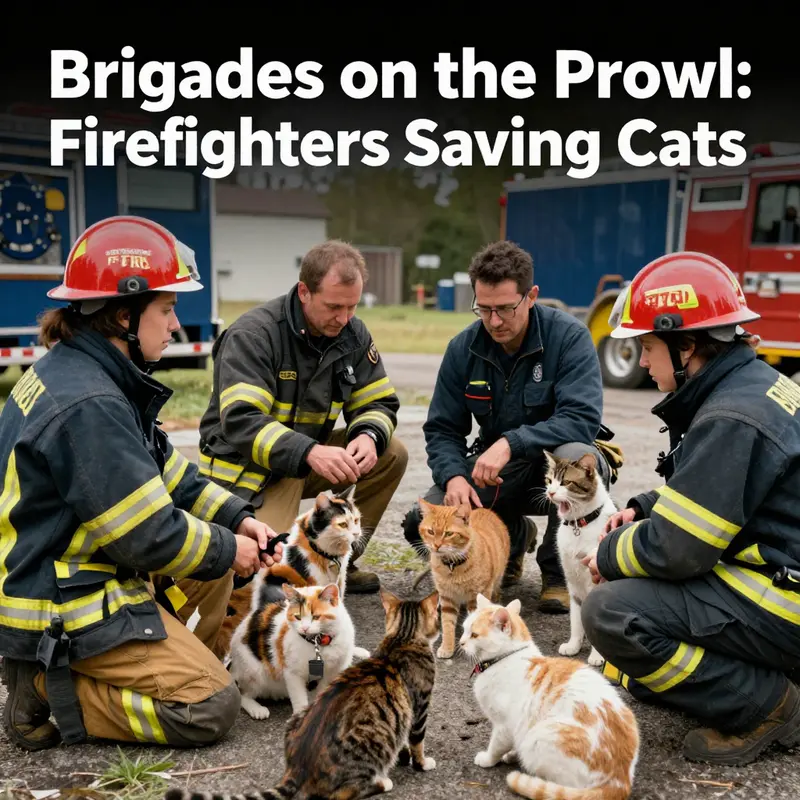
The sight of a cat ducking under a collapsed countertop, or perched on a ledge where smoke turns the air heavy and thick, can feel like a small, stubborn test of courage in the middle of chaos. Yet across many cities and regions, fire brigades are not simply engine crews rushing toward flames; they are nodes in a broader rescue ecosystem that includes animal welfare groups, veterinarians, shelters, and trained volunteers. The core idea remains simple and powerful: during a disaster, every life counts, including the whiskered and four-legged ones that share our homes and streets. In practice, this belief translates into a disciplined set of actions that begins the moment an alarm sounds and continues long after the flames are stamped out. The result is a narrative where humans and animals move as a coordinated team, each instrument of intervention amplifying the others’ effectiveness, and where the image of a firefighter performing a cat rescue sits alongside triage protocols, mobile clinics, and the quiet diligence of veterinary teams tending to smoke-inhalation injuries in the rubble’s ash-dusted shadows.
Across the globe, these collaborations are no longer mere sentiment. They are structured, funded in part by partnerships with animal welfare organizations, and supported by evolving equipment and protocols designed to improve survival for felines who emerge from danger already stretched to their limits. In a sense, the rescue of a cat becomes a measure of a city’s readiness to recognize vulnerability beyond the human frame and to mobilize specialized knowledge in service of all vulnerable creatures—pets and wildlife alike. A rescue scene might begin with the bravado of a crew arriving on scene, but it is completed in the quiet, careful hum of a portable medical kit, the soft, reassuring voice of a medic explaining to a frightened cat that no one intends to hurt it, and the swift hand of a veterinarian counting breaths and heartbeats in real time. This is the throughline that threads through the Chilean mountains after a wildfire and threads through the London boroughs where a different kind of collaboration is taking shape.
The Chilean case study that follows—though rooted in a specific disaster—exemplifies the broader pattern at the heart of modern animal rescue in fire events. In towns scarred by a recent blaze, teams led by dedicated veterinary professionals coordinate with local fire crews to reach animals hiding in small, overlooked corners: beneath collapsed beams, inside stacks of debris, or in the hollow spaces between bricks where a cat might have crouched to weather the heat. Mobile veterinary clinics become the frontline in this scenario. A veterinarian like Dr. Juan Vivanco, who oversees a team trained to spot subtle signs of distress, travels with a sense of urgency that matches the fire’s residual threat. These clinics bring not only a clinical eye but also the logistics of rapid triage: prioritizing dehydration, smoke inhalation, and wounds, and determining which animals require immediate hospital transfer.
What makes the Chilean response so instructive is the way it treats the aftermath as a period of ongoing risk, not a neat, singular event. The initial rescue is followed by careful monitoring, and the post-fire environment—ash-scented air, lingering heat in debris piles, and unstable structures—means that victims may still deteriorate after their first contact with care. In the reports from Lirqun and surrounding communities, cats emerge from hiding with eyes bright but smoky breath, their bodies dehydrated and their lungs irritated by soot. They require IV fluids, gentle respiratory support, and wound care to prevent secondary infections. The most fragile—those who cannot yet stand or keep their temperature stable—disappear back toward veterinary hospitals where more sophisticated imaging and therapies await. Every life saved feels like a quiet triumph, and every life lost emphasizes the opposite: the clock is always ticking for a creature whose odds fall with every additional hour spent in danger. These realities press home the necessity of rapid deployment, efficient interagency workflow, and continuous care that begins on the frontline and extends into the days that follow.
The Chilean experience also illuminates a practical philosophy, one that has begun to take root in fire services elsewhere: animal welfare cannot be treated as a separate concern but as an integral part of emergency response planning. It requires equipment that can withstand harsh environments and that is appropriately scaled for small patients as well as larger ones. It demands personnel who can think in two languages—fireground safety and veterinary medicine—and it calls for a network that can move pets from the scene to care without delay. The mobile clinics, the triage protocols, and the swift transfer to veterinary facilities all operate within a larger framework of interagency collaboration. The debris removal and the post-fire odor of ash are not merely background details; they are the daily realities that shape decisions about when to pull a cat from a pile, how to stabilize its breathing, and which hospital bed will become its next line of defense. In regions where wildfires can erase entire towns in hours, this network becomes a lifeline, a testament to how far emergency services have evolved from the days when animal rescue was a secondary afterthought.
In parallel to these field operations, another strand of development has begun to influence how fire services approach animal rescue: the integration of specialized respiratory support for pets rescued from smoke. In parts of the United Kingdom, for instance, a pilot approach has introduced animal-specific oxygen therapy masks on fire engines. The adoption of such equipment, designed in sizes for cats, small dogs, and other small mammals, signals a shift in practice: responders can provide immediate respiratory aid, reducing the impact of smoke inhalation while the animal is still on the move to safety. The scars of smoke inhalation can be invisible at the moment of rescue, yet their consequences unfold quickly. A few breaths of clean air through a properly fitted mask can alter the trajectory of an animal’s recovery, giving the team a more stable platform on which to base subsequent medical decisions. The first documented success stories in the early stages of this initiative—where a cat rescued from a house fire in Paddington was stabilized and kept alive—are more than anecdotal milestones. They are proof of concept: when the right tools are in the hands of capable technicians, outcomes for animals can improve in meaningful, measurable ways.
This kind of equipment, while modest in appearance, carries symbolic weight as well. It embodies the idea that the public’s trust in rescue services depends on visible, tangible commitments to animal welfare. Pet owners are more likely to contact emergency services and to accept guidance during a crisis if they know that responders are prepared to treat their companions with the same seriousness afforded to people. The broader takeaway is clear: by investing in animal-focused equipment and training, fire services broaden their mission without diluting safety, building a model that respects human and animal lives with equal seriousness.
The human dimension of these rescues should not be overlooked. Firefighters, veterinarians, and volunteers often form a tightly knit unit that moves through the disaster with a shared sense of responsibility. The bond between rescuers and the animals they save can be transformative; it becomes a force multiplier, enhancing morale and sustaining commitment on long, arduous missions. There are stories within stories—the dog that guides rescuers to an injured colleague in a forest fire; the cat that, in its quiet way, becomes a symbol of hope for a family awaiting news in a temporary shelter. These anecdotes are not mere sentiments; they are reminders of why the professional call to duty must be paired with compassion and an open mind to the possibilities that collaboration unlocks.
As conversations about best practices expand, so too does the practical blueprint for implementing them in different jurisdictions. In places where disaster risk is high but resources are more constrained, the Chilean model offers a template of sorts: a mobile veterinary unit that can be deployed quickly, a triage system that can be taught to firefighters as part of their standard operating procedure, and a network of partnerships with veterinary hospitals and shelters that ensures continuity of care for animals rescued from danger. In cities where the fire service operates alongside a robust animal welfare landscape, there is a natural appetite to formalize protocols, supply lines, and equipment inventories so that the response is not ad hoc but reliable, repeatable, and scalable. The key is to strike a balance between speed and safety on the one hand, and the nuanced needs of animals on the other. The cat who emerges from a damaged home is not simply a statistic; it is a patient who must be assessed for airway compromise, hydration status, thermal injury, and the risk of infection—all within a framework that keeps human responders safe and the public informed.
Within this evolving landscape, the role of training cannot be overstated. There is a growing emphasis on cross-disciplinary education that equips firefighters with basic veterinary literacy, while veterinarians gain insight into the realities of fireground operations. The result is a team that can make rapid, informed decisions about when to extract, stabilize, and transport. It is not enough to know how to carry a cat; one must know how to monitor its breathing, how to gauge stress, and how to manage a scene in which debris, heat, and uncertain structural integrity create additional hazards. In this sense, every rescue becomes a learning opportunity, a chance to refine protocols, to tighten communication lines between on-scene personnel and the medical teams waiting at the hospital doors, and to ensure that each action taken on the ground contributes to a safer, more humane outcome for the animal and the people who care for it.
The implications extend beyond the immediate event. When a city demonstrates that animal lives will be prioritized alongside human safety, it signals a shift in public expectations and in how resources are allocated. It invites partnerships with local shelters, veterinary schools, and public health agencies, and it creates a platform for ongoing research into best practices for pet rescue under smoky, unstable conditions. The broader community benefits too: individuals who might otherwise hesitate to call for help in an emergency do so because they trust the responders’ commitment to all vulnerable beings. In this sense, the rescue of cats becomes a catalyst for a more integrated approach to disaster response, a model that other jurisdictions can observe and, where feasible, adapt.
This chapter would be incomplete without acknowledging the enduring value of storytelling in shaping policy and practice. Real-world cases—whether of a Chilean hillside community or a London borough street—provide the narrative force needed to secure funding, train personnel, and win public confidence. They remind us that a rescue operation is not a single act but a continuum: the moment a cat is carried from a dangerous space, the hours spent in stabilization, the days of recovery, and the possibility of return to a loving home. They also emphasize that the welfare of animals is not a peripheral concern but a core element of resilient emergency response. The image of an emergency team turning a page from fire suppression to animal care is a powerful reminder that preparedness is measured not just by the flames we quell, but by the lives we protect in the process.
For readers who want to explore practical resources that support responders in this broader mission, there are guidelines and training opportunities that connect with the on-the-ground realities described here. For instance, responders and planners can benefit from exploring training materials and standards documented by peer organizations and academic partners. In addition, those seeking to strengthen their own programs might consider engaging with community organizations that specialize in animal welfare and veterinary care, building a network that can be activated rapidly when disaster strikes. A starting point for deeper learning is the concept of combining field readiness with formal education in animal care—an approach that aligns with the evolving expectations of the public and the durable needs of the animals we aim to protect.
As the narrative of fire rescue continues to unfold, two strands will likely define its next chapters. One is the ongoing refinement of respiratory support for animals saved from smoke, including the expansion of scale, durability, and accessibility of animal-specific equipment on fire engines. The other is the deepening of interagency collaboration, where veterinarians and fire fighters train together, share data, and establish joint protocols that make the cascade from rescue to recovery smoother and faster. In the end, the question is not only whether fire brigades rescue cats, but how effectively they do so in a way that honors the bond between people and their animals, reinforces community trust, and elevates the standard of care across emergencies large and small. It is a story of resilience, ingenuity, and care that keeps reappearing whenever flames rise and families cling to the hope that their companions will be found safe and sound.
To readers seeking further practical guidance on responder training and safety considerations, you can explore related resources that emphasize essential preparedness and certifications for fire and rescue work, including materials focused on animal-related aspects of emergency response. For a concise overview of these training essentials, see the guide on fire safety essentials certification training. fire safety essentials certification training.
External resource: For a broader сurrent overview of pet-focused emergency response initiatives and their impact, see this report from a major news outlet detailing the development and early outcomes of animal respiratory support on fire engines. https://www.bbc.com/news/uk-england-london-62514308
Final thoughts
The compassionate and courageous efforts of fire brigades in rescuing cats during emergencies highlight a profound commitment to animal welfare. Their work mirrors the ethos of providing safety and care to all creatures during perilous times. From innovative equipment and specialized techniques to collaborative partnerships, fire brigades are not just saving lives; they are ensuring that feline companions are also given a second chance. As communities innovate and adjust to emergencies, the integration of animal rescue protocols into fire brigade operations signifies a holistic approach towards safety and welfare, illustrating the unique bond between humans and animals in times of crisis.