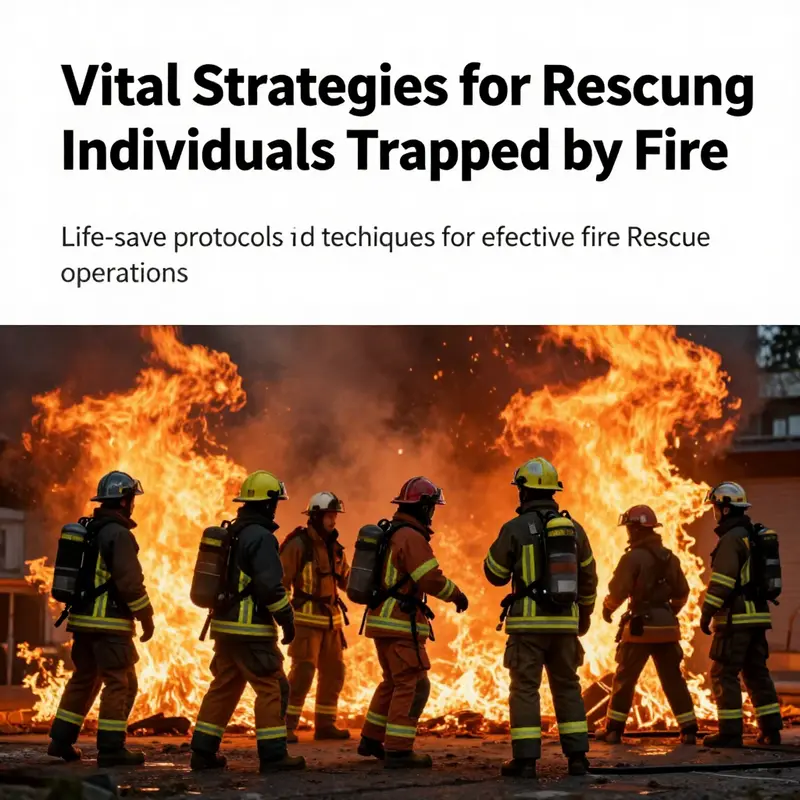
Fire incidents pose an imminent threat to life, demanding swift and decisive action to rescue those trapped. Whether as individuals or representatives of dealerships providing safety solutions, understanding key fire rescue procedures is indispensable. Each chapter of this article delves into critical aspects of effective fire rescue operations—prioritizing life safety, assessing situations with precision, applying appropriate rescue techniques, and coordinating with firefighting efforts. Together, these components form a comprehensive approach to ensuring safety and efficiency when lives are at stake.
Saving Breath, Saving Lives: A Life-First Path Through Fire-Rescue Challenges
When a fire steals the calm from a building, the order of action matters more than the flash of courage. The core discipline in any rescue is simple and unforgiving: life safety comes first. This is not a slogan but a working doctrine that shapes every decision, from the first alarm to the moment a victim hands over to medical professionals. In real incidents, responders have learned to balance urgency with judgment, because rushing without a clear plan can convert a survivable scenario into a tragedy. The equation is straightforward: preserve air, protect heartbeats, and create a path for others to follow. The moment you accept that rescue is a race against time, you also acknowledge that the most fragile link in the chain is the rescuer themselves. Calibrated courage, not reckless bravado, ensures that the people who still breathe have a chance to escape, even when the flames roar and smoke blurs the corridor ahead. The idea underpins every tactic, whether a drill or a live operation, and it threads through all stages of response—from scene assessment to post-rescue care and beyond.\n\nTo translate that principle into action, responders must first assess the scene with precision and restraint. A rapid, but disciplined, evaluation helps prevent doorways from becoming traps and keeps exit routes clear for those who still move under their own power. The initial glance asks not just where the fire is, but where people are most likely to be trapped and how conditions could deteriorate in seconds. Experts emphasize a key judgment: identify the ‘most savable’ occupants—the person who, given the right rescue timing and conditions, has a real chance of survival. When a room is almost entirely engulfed, survival windows narrow to almost nothing; when smoke fills a space but flames are not yet overwhelming, a life can still be saved if action is swift and methodical. This discernment—situational awareness that prioritizes human life while recognizing risks to rescuers—remains the backbone of every safe rescue.\n\nThe second pillar is equipment and protective discipline. Before touching a single doorknob, rescuers confirm they have the necessary PPE and respiratory protection. Self-contained breathing apparatus and thermal imaging gear are not luxuries; they are the essential tools that define whether a rescue path remains open or closes in on a teammate. Technology plays a growing role in this domain. Drones and thermal cameras, once novelties, have become standard aids that help locate people through smoke and heat signatures, reducing guesswork and exposure. A well-coordinated team moves as a unit, each member aware of a precise duty—signal, locate, shield, guide, and carry. In places where stairwells become choked or where a corridor narrows into heat, calm, measured steps prevent a cascade of errors. The Liuzhou operation in 2025, where the primary objective was civilian rescue even as flames advanced, remains a case study in prioritizing people over property and demonstrates how modern tools can shorten the time between discovery and exit. As responders work, a simple rule helps them stay aligned: never compromise your own air or stability for a potential shortcut. If your protection is compromised, you must pause and reassess, because a compromised rescuer cannot protect a second life.\n\nFor those who can move, a focused but steady approach guides the escape. The guidance offered to conscious, mobile victims mirrors a broader principle: keep fear from becoming action. A calm, direct voice helps people orient themselves to the safest routes. In smoke, the air is heavy and the path may be dim, but a combination of staying low and moving slowly reduces exposure to heat and toxic gases. The damp cloth over the nose and mouth, also kept in mind during training, helps filter irritants long enough to reach an exit. The aim is to avoid frantic bursts that throw people off their feet and push them toward dangerous zones. When a path must be chosen, the unit’s plan becomes the evacuee’s map. The emphasis on avoiding running is not about slowing people down; it is about preserving their breathing, reducing the likelihood of panic, and ensuring they can follow a steady rhythm to safety. In practice, this makes the difference between a successful walk-out and a chaotic scramble that could trap non-ambulatory occupants who rely on others to reach them.\n\nThe moment those who cannot walk are identified, another set of careful techniques takes precedence. Carrying an injured or unconscious person is not a crude heave over the shoulder; it is a calculated transfer that respects both the victim’s vulnerabilities and the rescuers’ capacity. Different methods—back carries, cradle carries, or improvised stretchers—are chosen based on the situation, the victim’s condition, and the space available. A damp blanket or clothing acts as a shield against heat as the team negotiates smoky hallways or stairwells. Elevators are universally avoided in fires because their failure during smoke conditions is a frequent hazard. The most important factor, again, is safety for both the rescuer and the person being moved. Even with a willing, able-bodied subject, if the route is risky, the team will pivot to a slower, safer carry that preserves life rather than a faster descent that could lead to fall or collapse.\n\nCoordination with the firefighting operation is not a supplementary activity; it is core to the rescue’s success. Fire streams—whether directed from outside or advanced carefully along the path ahead of rescue teams—cool the environment, suppress heat, and reduce smoke density to make the interior safer. A well-placed water shield can buy seconds, enough for a breath, a pause, and a clear, safe path to a waiting partner at the exit or at a stairwell landing. In multi-story structures, aerial platforms and cloud ladders extend that safe reach to floors that would otherwise be inaccessible. The best outcomes emerge when rescue and suppression activities are synchronized, preventing the rookie mistake of ignoring fire growth while attempting a rescue. The Nanning incident of 2026, where upper-floor occupants were saved after a ground-floor restaurant ignition, underscores the value of elevated access and methodical teamwork in complex environments. It is a reminder that the rescue is a shared mission, a choreography between life and flame, where timing and placement determine who steps into daylight first.\n\nBeyond the act of extraction, the chapter of rescue continues with the tools that support safe egress. Rescue air cushions, escape ropes, fire escape slides, and window ladders, when present and properly deployed, become lifelines in the most difficult buildings. Their use is not a sign of improvisation but of preparedness. In rural or self-built settings, where conventional exits may be limited, extension ladders and improvised platforms allow for a second egress, offering a deliberate option rather than a last-ditch sprint through heat. Each device expands the set of choices the rescuers can deploy to safeguard the vulnerable. The overarching thread through all these aids remains the same: with every added option, the rescue team reduces the chance that a survivor must face the worst of a fire’s effects. The principle is straightforward, even when the details are complex: equip early, move deliberately, and always maintain a clear line of communication among team members so that decisions remain coordinated under pressure.\n\nWhat not to do, while never overshadowing the core imperative, provides a practical counterweight to bravado. Do not attempt a rescue without the proper training and equipment. Elevators should never be used in a fire scenario. Do not delay rescue to save belongings, and do not permit panicked individuals to rush through smoke. These cautions are not mere cautions; they reflect the hard lesson that the difference between a successful exit and a preventable tragedy often rests on disciplined restraint. When the priorities are clear, the chain of action is tighter, and the room for error narrows. This restraint does not imply passivity; it is an active choice to secure every available second for the person who still draws breath. A rescue narrative becomes a series of deliberately chosen steps, each one oriented toward maximizing the probability that every trapped person reaches safety with minimal harm.\n\nEven the best-trained responders can face moments when the trapped situation changes rapidly. If you are caught yourself in a building blaze, the same emphasis on life safety applies to your actions. Stay calm and seal doors or windows with damp towels to slow heat and smoke. Signal for help from a position that maximizes visibility, such as a balcony or a window facing away from the fire, and remember the simplest fire-safety rule: drop, roll, and cover if clothing ignites. If all escape routes are blocked, returning indoors to signal for help can be the prudent choice rather than a futile sprint through danger. These contingency steps do not replace the need for professional intervention; they describe a practical, humane response when options narrow and every moment counts. The only absolute principle remains constant: while a rescue may draw on tools and techniques, it lives or dies by the extent to which life is saved first, and the rest can follow as circumstances permit.\n\nTo support the practical path described here, training that emphasizes core life-safety practices remains vital. Programs built around the fundamentals of rescue—orientation, communication, carrying techniques, and situational awareness—provide a foundation that translates into real-world outcomes. For those seeking to deepen their preparedness, consider training resources such as fire safety essentials certification training. These kinds of learning opportunities connect theory with hands-on drills, helping ordinary people transform fear into capable action. In parallel with practical drills, the wider community benefits from publicly accessible guidelines and a culture that prioritizes escape plans and safe behavior rather than sensational rescue stories. The practical, life-first mindset is the throughline that makes every other detail meaningful and effective. Real-world validation of these approaches comes from documented rescue operations, where teams have demonstrated how well-coordinated movement, proper protection, and timely medical handoff converge to save lives. \n\nAs a closing reflection on the path through the inferno, the imperative remains constant: save lives first, and then deal with the rest. This is not about minimizing danger but about understanding its boundaries and respecting them. The best rescues occur when all participants—victims, bystanders, and responders—work within a shared framework that always places human life above property. When this framework guides every action, the sequence of events unfolds with a clarity that can only come from disciplined training and profoundly humane leadership. The chapter of a fire rescue, at its core, is a narrative of breath preserved, hearts kept beating, and a doorway opened into daylight for those who trusted their lives to others under pressure. To readers seeking a concrete commitment to readiness, the chapter is also a prompt to engage with training, drills, and community safety planning that keep life safety at the center of every response.\n\nExternal resource: For a detailed, real-world case study of a rapid, life-first rescue operation, see the official report from a recent fire incident: https://www.gx119.gov.cn/News/Detail/20251218/34567.html
Assessing the Scene: The Critical First Step in Saving Someone Trapped by Fire
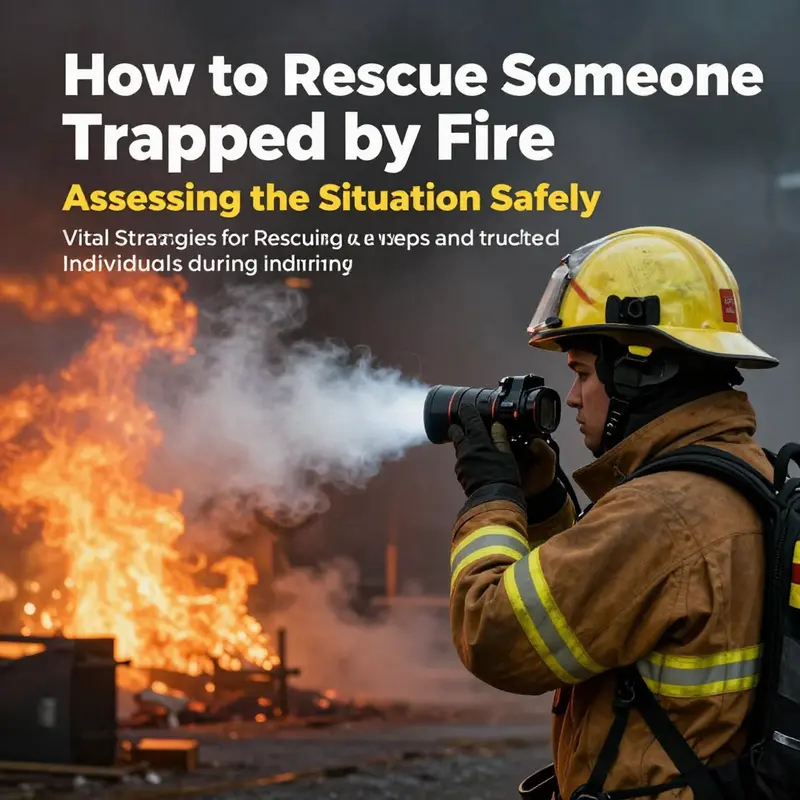
In every fire rescue, the clock starts when the scene is spotted, but success begins with a disciplined assessment of the environment. This is not a luxury but a shield that protects lives and rescuers. The rescuer’s first duty is safety—your own, then the victim’s. Life safety is the absolute priority, and every move depends on a solid risk-aware read of the environment. The scene reading rests on three strands: personal safety, environmental reading, and victim localization. You begin with your safety, confirm equipment works, and determine where flames are likely to travel and where you can observe without becoming part of the danger. From a safe position, perform a rapid visual scan: fire size and spread, smoke characteristics, density and movement, flame height and direction, and signs of structural weakness. Structural instability can turn a routine rescue into a collapse, so recognize cues early.
Next, diagnose hazards and potential victim locations. Explosions, electrical hazards, backdraft or flashover are real risks as you approach interior spaces. Listen for cries and taps, observe movement in windows or doors, and use tools like thermal imaging or drones to map safer approach corridors. If available, use data to validate instinct rather than rely on guesswork.
Weigh your capabilities against what you see. Decide whether to attempt a direct rescue or to retreat and call for more resources, or to provide shielding and guidance to the victim. The aim is to keep doors open for a safe exit, not to force a dangerous entry. If conditions permit a controlled entry with a clear exit, proceed with a rehearsed plan and a prepared team.
Assess the victim’s condition and location. A mobile person can walk with instructions to stay low and move toward safety. For non-mobile victims, use carrying methods and protective measures. Avoid elevators; stairs remain the reliable route in most fires.
Coordinate with responders and plan movements. Water suppression must be timed to create a safe corridor and protect rescuers. In higher buildings, rely on ladders or platforms to reach upper floors. The goal is integrated tactics, not heroics, with training and drills guiding decision-making.
If escape routes are blocked, evacuation aids such as ladders or ropes provide alternative routes. Practice with these tools reduces hesitation at the moment of need. Never let panic override measured actions that preserve life.
When the person is brought to safety, immediate care follows if trained to provide it, then hand off to medical teams. The life-safety priority remains through handoff.
For those trapped, stay calm, seal doors with damp towels if possible, and signal for help from a balcony or window. If clothing catches fire, drop, roll, and cover to extinguish flames while protecting the airway. In some cases, returning indoors to signal for help is the best option until rescuers arrive.
Rescuing Through the Inferno: A Life-First, Methodical Path to Fire Rescue
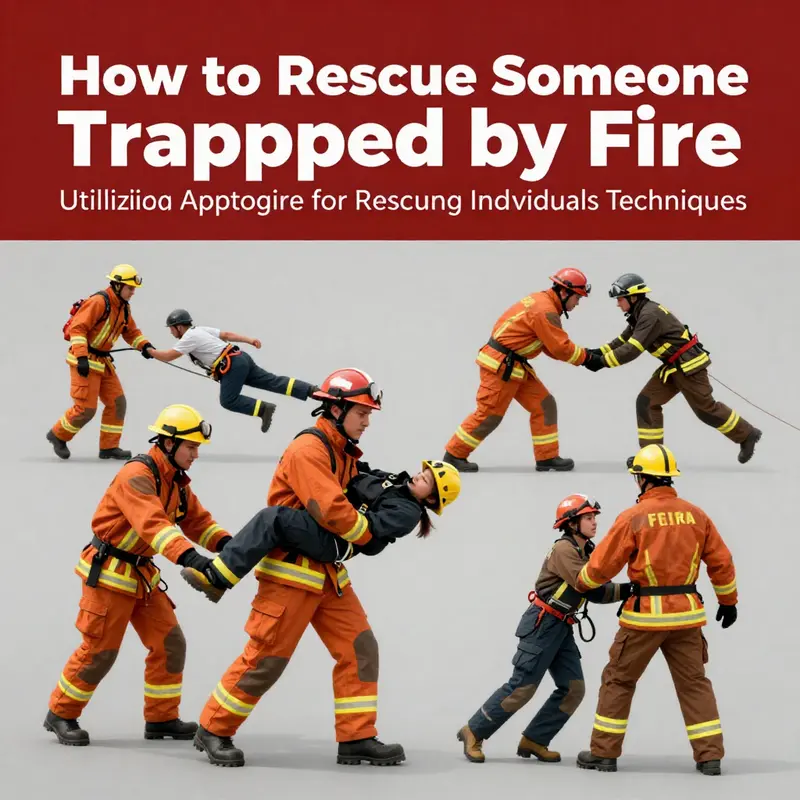
When a fire pushes warmth into a corridor and smoke turns daylight to haze, the moment demands a single, steady discipline: save lives first. The impulse to rush in is strong, yet effective rescue rests on a calm assessment of risk, a clear plan, and the steady rhythm of teamwork. In real incidents, the priority is unambiguous: people over property, life over ego, and every decision weighed against the safety of the rescuers themselves. This orientation—save lives first—underpins every practiced procedure and every drill that reads like a clockwork sequence. Even in the heat of an expanding blaze, the objective remains simple: identify trapped individuals, reach them with the least possible peril to all involved, and transfer them to medical care as swiftly as conditions permit. The narrative of a successful rescue is not a flourish of bravery alone but a choreography of timing, technique, and trust between responders who know what must be done the moment the alarm sounds. To understand how to rescue someone trapped by fire, one must see the operation as a continuum where safety, technique, and coordination fuse into a single purpose: to bring someone out alive and intact.
The foundational premise is straightforward yet surprisingly nuanced. Life safety drives every decision, but it cannot be pursued in isolation from the evolving fire environment. When a building is engulfed, heat and smoke change the geometry of space with alarming speed. Escape routes narrow or collapse, visibility drops, and the risk of flashover looms as a constant possibility. The most effective rescuers treat this as a dynamic problem rather than a static obstacle. They read the indicators of danger—smoke color and density, heat buildup, wind shifts, sounds of collapsing structures—and they translate those readings into actions that preserve life while protecting their own teams.
To do this well, responders rely on a blend of training, tools, and situational awareness. The most credible modern practice insists on a safe entry that is informed by precise situational assessment. Before stepping into the unknown, rescuers scan for the location of the fire, the likely paths of travel, and the locations of civilians who may be unable to move without assistance. Equipment plays a critical role here: thermal imaging cameras reveal hidden pockets of heat, while drones can map the traverse and help identify safe corridors from a vantage point outside the most dangerous zones. Personal protective equipment, especially self-contained breathing apparatus, remains non-negotiable; without it, the human engine cannot endure the smoke and heat long enough to perform a life-saving maneuver. These elements of safety are not ornaments of procedure; they are the trenches of rescue work, the guardrails that keep life from becoming another statistic in a fire event.
The decision tree that guides entry hinges on two central questions: Can the victim move, and how does the fire present itself at the point of contact? If a person can walk, guided evacuation becomes the primary method. Calming the individual, issuing simple, repetitive directions, and directing them to the safest exit path minimizes the time spent in danger. The emphasis is on controlled movement—no frantic running, no sudden changes in direction that could trigger panic or dislodge debris. Clear instructions such as “stay low,” “move toward the stairs,” and “keep behind me” create a predictable flow and lower inhalation risk. It is a practice grounded in patient leadership: the rescuer becomes a guide, not a drill sergeant, and the person on the ground becomes a partner in a coordinated exit.
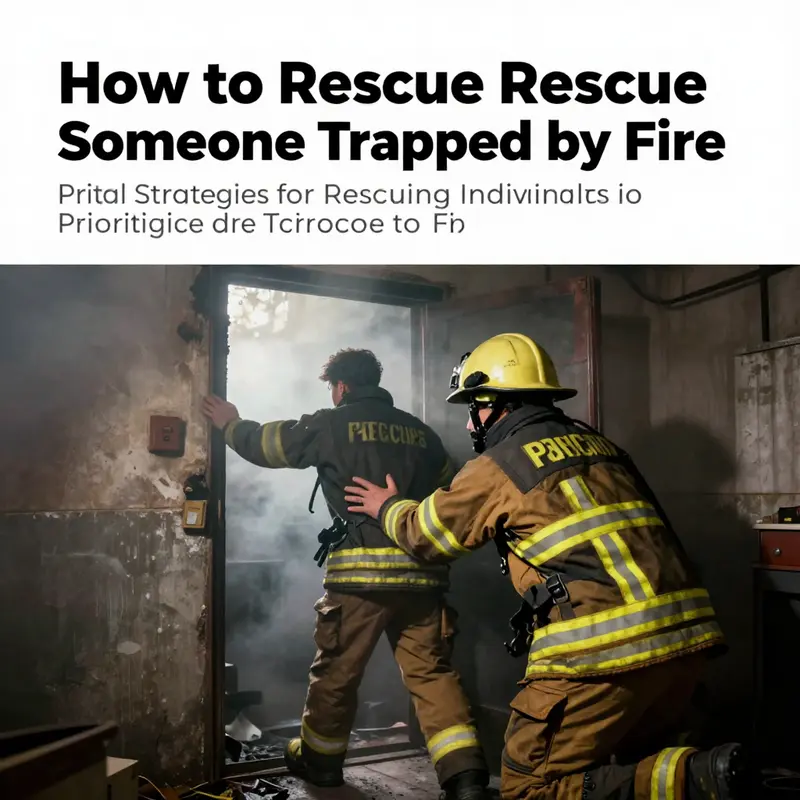
For those who cannot walk—elderly people, children, or injured victims—the approach shifts to carrying methods and protection against heat. The simplest form, a back carry or cradle hold, is not a badge of pride but a tool chosen for speed and stability. When smoke is dense, a damp cloth or blanket wrapped around the victim can reduce heat transfer and help maintain airway integrity during the transfer. The choice of equipment matters here: a stretcher or rescue litter can stabilize a casualty and spread the load across responders, reducing fatigue and allowing longer travel through hazardous spaces. In multi-story buildings, where elevators are not reliable or permitted, stairs become the sole arteries of escape. The mechanics of lifting—hand grips, body positioning, and synchronized steps—are as much a discipline as any other firefighting skill, honed in training and tested under pressure in real scenarios.
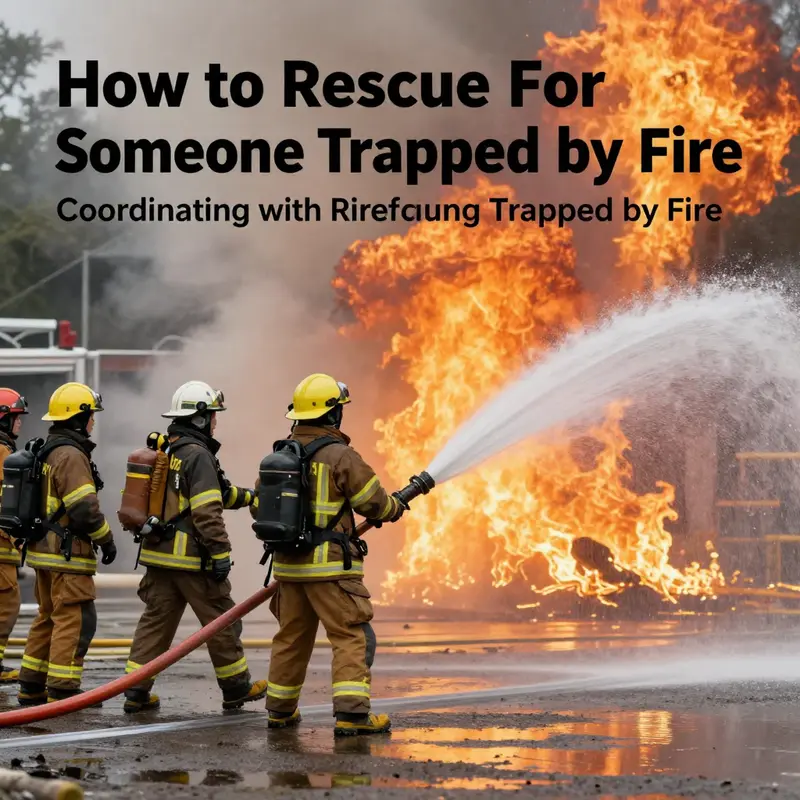
Even as rescue is conducted, the firefighting operation must continue to pursue suppression and containment. Water streams do not simply extinguish flames; they shape the rescue environment. By reducing flame intensity and cooling surfaces, water application creates safer corridors and protects the rescuers as they advance. Firefighters often establish external water gun positions to blunt the spread and to create a defensible zone that frees up room to maneuver. In higher structures, aerial ladders and platforms extend the reach to upper floors, translating vertical distance into a survivable channel for extraction. A vivid example of this synergy appeared in a recent urban incident where ladder apparatus enabled rapid access to upper floors after a ground-floor fire compromised stairwells. Such coordination epitomizes the principle that rescue is not a solitary act but a continuum of interlocking duties: suppression, rescue, and medical handoff moving in concert, each reinforcing the other.
Within this framework, the decision to enter a burning space is never a matter of bravado. It rests on an explicit risk assessment and a clearly defined exit path. The rescuer must verify that the path to the victim remains viable and that a safe egress route exists. If the environment deteriorates, the plan must pivot toward containment and standby, preserving life by removing civilians from danger while signaling for additional resources. This is where training, discipline, and teamwork converge. Rescue teams operate with a built-in safety net: a buddy system, a designated team leader, and rehearsed backup plans. The principle of never entering alone is not merely a precaution but a procedural imperative. Team members monitor each other for signs of fatigue or disorientation, and they maintain communication so that if a single line of sight is lost, the group can adapt and preserve the mission’s objective.
In practice, this integrated approach also emphasizes the distinct needs of victims who cannot self-evacuate. A common, practical technique is the careful use of protective wrap during transfer through heat and smoke. A wet blanket or damp clothing reduces thermal stress and helps prevent secondary injuries during movement. The physical act of lifting and carrying is choreographed to minimize jarring motions that could cause further harm. The transfer to a medical team marks the turning point from safety to care, a junction where what began as a life-saving maneuver ends with medical evaluation and treatment. The transition underscores a crucial truth: rescue is not complete until the casualty receives professional medical attention. This sequence—from quick extraction to medical evaluation—frames the entire rescue as a continuum—an uninterrupted chain of actions aimed at preserving life.
Beyond the technical cadence lies an ethical cadence: the importance of prioritizing vulnerable individuals. The most at-risk are those located directly above the fire, where the chimney effect concentrates heat and smoke, and those near the source of the blaze. Children, the elderly, and people with disabilities require particular attention for timely extraction. The goal is to extend both reach and resilience to those who may otherwise be overwhelmed by the fire’s dynamics. When such individuals are identified, every available resource is mobilized to bring them to safety without compromising the rescue of others. The critical balance—delivering aid quickly while not compromising the team’s safety—defines the art and science of effective rescue.
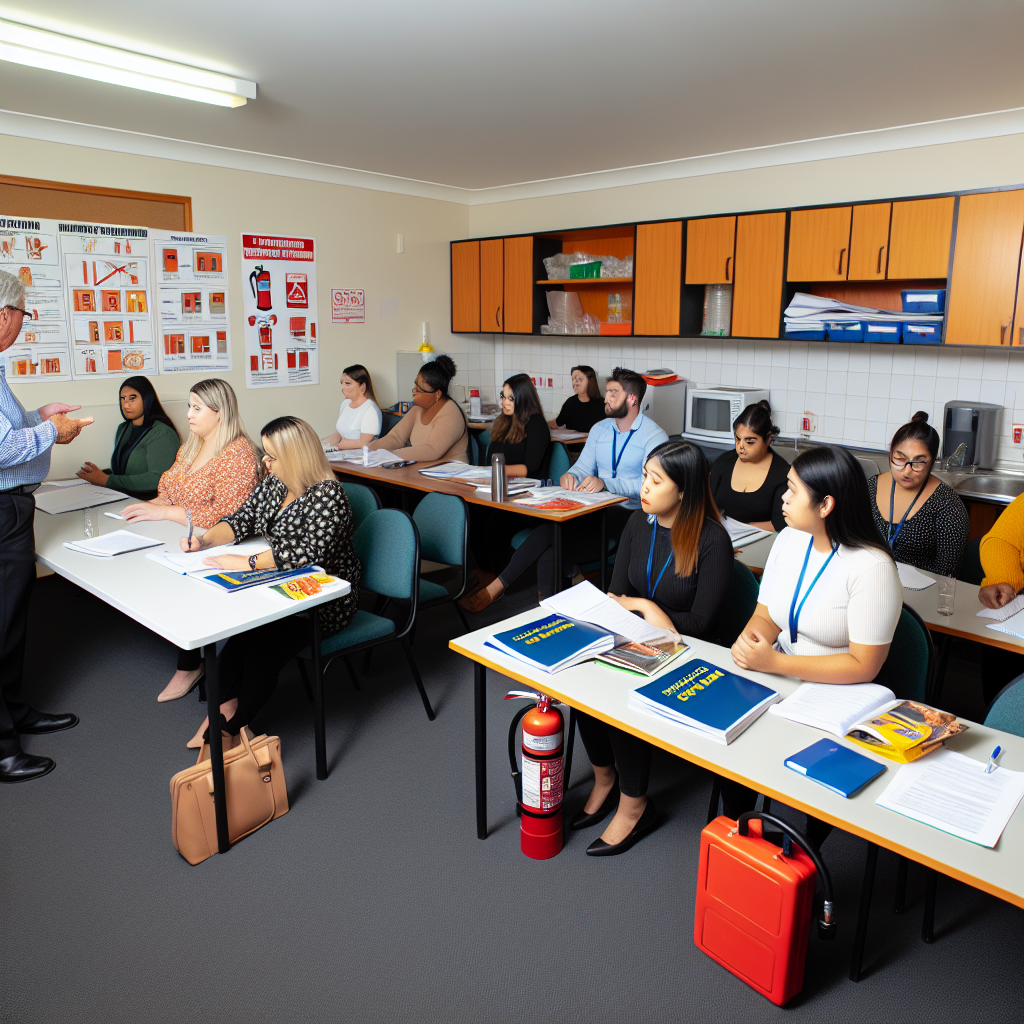
As rescuers reflect on the sequence that preserves life, the value of ongoing training becomes evident. Real-world drills increasingly incorporate technology that augments human judgment. Thermal imaging, drone reconnaissance, and simulated high-rise extractions have become standard features of modern preparedness. The ethos of training is to normalize safe decision-making under pressure, so that when a call comes in, responses are not improvised improvisations but practiced routines that translate knowledge into action in under minutes. Such training is emphasized in professional programs and can be reinforced by accessible certifications that focus on safety, rapid assessment, and humane handling of victims. For readers seeking to stay connected with practical, field-tested insights, consider exploring resources that emphasize practical, hands-on safety knowledge and certification. fire-safety-essentials-certification-training This kind of grounding keeps the response humane and effective, ensuring that the impulse to save does not outrun the discipline required to save in the first place.
The importance of learning from real events cannot be overstated. Case studies from recent years reveal consistent threads: rapid recognition of trapped individuals, swift escalation to coordinated action, and a methodical use of tools to protect both victims and rescuers. When these elements align, minutes—the most precious currency in a fire—fold into a sequence that culminates in successful extraction and swift medical care. The Liuzhou operation, for example, demonstrated a tightly choreographed sequence in which rescue operations were synchronized with suppression efforts, enabling civilians to be retrieved within a remarkably short time frame. It is not a single moment of heroism but a pattern of decisions executed under distress, supported by training, equipment, and teamwork. These narratives serve as a compass for both professionals and lay responders who may find themselves confronted with a dangerous indoor environment.
For those who find themselves outside the professional arena, there remains a practical, compassionate path. If you are within a building and an escape is not possible, seal doors and vents to slow smoke penetration, call for help, and seek a location where you can signal responders while maintaining visibility. The simplest acts—shutting a door, staying low, and signaling with light or sound—can buy time for assistance to arrive. The broader takeaway is that rescuers are not gambling with fate; they are applying tested principles that convert fear into a structured, effective response. The balance of risk and necessity is the guiding thread, a reminder that every rescuer must be ready to act with precision when moments hang in the balance.
As this chapter unfolds, the reader should keep in view the connective thread with broader safety practice. The same reasoning that governs a successful indoor rescue also informs other emergency responses: planning, practice, and a respect for the limits of one’s training. The aim is not to overwhelm with technique but to illuminate a path through which a layperson can understand the core concepts without losing sight of the dangers. The core messages echo across chapters: prioritize life, assess wisely, tailor methods to victim condition, protect yourself with proper equipment, coordinate with firefighting operations, and secure medical care as soon as possible. The result is a coherent, humane approach to a perilous situation that demands both courage and restraint. Real-world drills and documented operations reinforce this approach and remind us that the best rescue is the one that minimizes risk while maximizing the chance of survival for every trapped person.
External resource: https://www.gx119.gov.cn/News/Detail/20251218/34567.html
null
null
Final thoughts
Rescuing individuals trapped by fire demands not only immediate action but also a clear understanding of essential procedures. By prioritizing life safety, accurately assessing situations, employing effective rescue techniques, and coordinating seamlessly with firefighting operations, responders can maximize their effectiveness and ensure successful outcomes. Whether you are a first responder or part of a larger community effort, these protocols can assist in saving lives and preventing tragedy.