
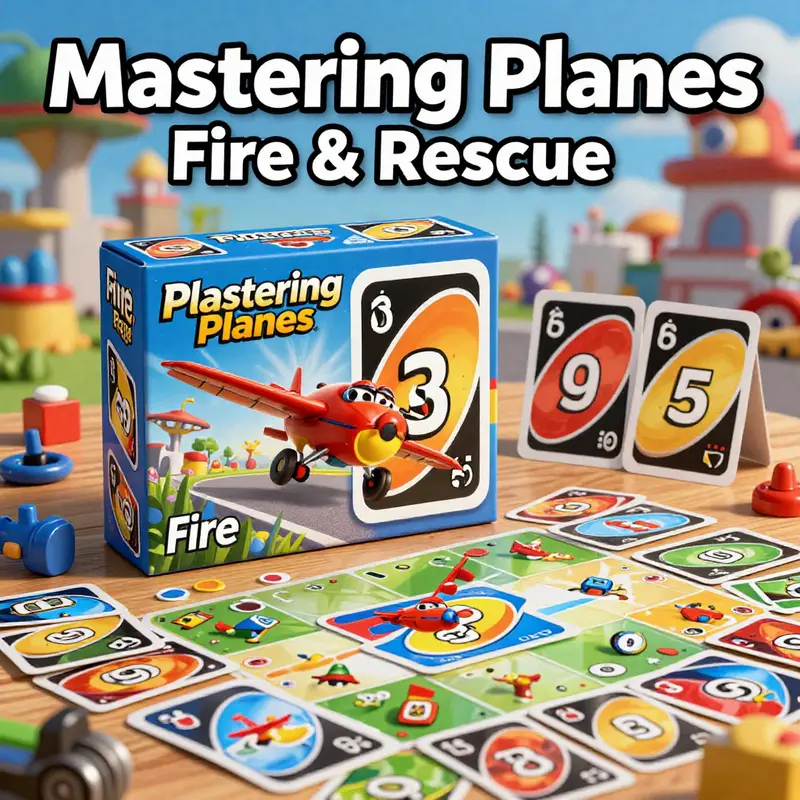
Planes: Fire & Rescue Uno combines the classic Uno gameplay with enchanting themes from Disney’s iconic film. This game is not only entertaining but also serves as a fun family activity that engages players of all ages. Understanding the game’s setup, objectives, mechanics, special cards, and strategic approaches will enhance your playing experience. Each chapter of this guide meticulously breaks down these elements, ensuring you’re fully equipped to enjoy this vibrant card game. Gear up to dive into the world of aviation fun and card strategy!
Setting the Stage: The Setup Process for the Disney-Style UNO-Inspired Plane Rescue Game
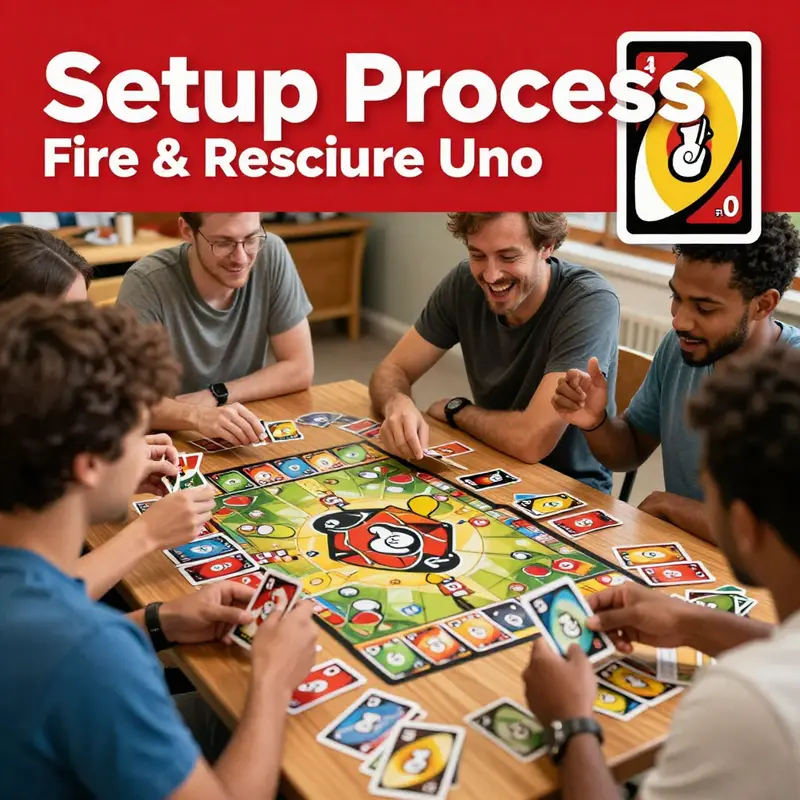
Setting up the Disney-themed UNO-inspired plane rescue game is intentionally straightforward, but the moment you lay out the components and flip the opening card, the joy of quick rounds and clear strategy rises to the surface. The core setup mirrors the familiar rhythm many players already know from classic UNO: a deck of color-coded cards, numbers from zero to nine, and a handful of action cards that introduce speed, reversal, and a touch of chaos. What changes in this themed edition is the art and the small, practical touches that remind players they are racing to save the skies. You’ll find that the ritual of setup—shuffling, dealing, and establishing the draw and discard piles—becomes a quick, almost musical routine once you’ve done it a few times. With room for 2 to 10 players, the game scales up or down, and the energy of the table shifts with the number around it. The underlying rule framework stays welcoming for younger players while offering sharp, digestible tactics for older participants. In short, a clean setup lays the track for a smooth, immersive session where everyone can focus on play rather than on deciphering the rules.
Begin with the essentials: gather your players, arrange seating so everyone has a clear view of the center piles, and choose a flat surface where the draw pile won’t get bumped. Once the group is ready, shuffle the entire deck thoroughly. A good, thorough shuffle isn’t just a formality; it ensures colors, numbers, and symbols appear in fresh sequences, which preserves fairness and keeps the excitement high. Deal seven cards to each participant, rotating clockwise. If you’re playing with younger gamers, you can shorten the initial hand to five cards to speed things up; the standard seven remains the sweet spot for a balanced mix of strategy and luck. The remaining cards form the draw pile and sit face down in the center. Finally, flip the top card of the draw pile to begin the discard pile. If that starter card is an action card, apply its effect immediately, which can set the pace for the opening stretch. The themed artwork on these action cards provides quick visual cues, helping players anticipate the kinds of moves that could come next, even before they read the text. If the top card happens to be a color-only or number card, the round starts with a more conventional rhythm, and players begin to weigh their options from the very first turn.
Understanding the objective helps everyone aim for a clean finish. The goal is clear: be the first player to shed all of your cards. The rules you’ll lean on in the opening rounds are concise and approachable. On your turn, play a card that matches the top discard by color, by number, or by symbol. If you possess a card that shares color but not number, or shares number but not color, you can still play it as long as the matching criterion is satisfied. When you cannot play a card, you must draw one from the draw pile. If the drawn card can be played immediately, you may do so on the same turn, but this is permitted only once per turn. This small nuance helps keep the action moving and prevents stalling while players weigh distant possibilities. As you progress, you’ll encounter the classic action cards: Skip makes the next player lose a turn; Reverse switches the direction of play; Draw Two compels the next player to draw two cards and skip their turn. Wild cards grant the power to change the current color, while Wild Draw Four both changes the color and forces the next player to draw four—an impactful move that should be reserved for moments when no other viable play exists. In this themed edition, those cards often feature silhouettes or scenes from the flight-and-rescue motif, providing a playful visual layer that helps players recall the function of each card at a glance. If the starter card is an action card, expect a brisk opening sequence as players adapt to the initial disruption or advantage that card creates. And if a Wild or Wild Draw Four appears at the start, many groups either re-shuffle or agree on a local convention—typically, color is chosen by the first player and play continues with the new color in effect—so everyone can jump in without delay.
The moment a player’s hand dwindles to one card, the race tightens around Uno’s signature moment. Declaring Uno signals the need for careful timing and attention to rule-following. If another player catches you before the next turn begins, you face a two-card penalty, a small consequence that can dramatically alter the final stretch. The round ends when a player has successfully played all of their cards, leaving them victorious. The satisfaction comes not just from winning, but from having navigated the setup with clarity: you’ve created a fair playing field where color, number, and symbol recognition determine the pace, and the action cards inject a dynamic that keeps everyone engaged and on their toes. The artwork, in addition to the mechanics, plays a practical role here. The visuals act as memory anchors—quick reminders of what a card does and how it might interact with the current color in play. As players grow more familiar with the deck, those images become second nature, speeding the flow from setup to showdown.
If you’re introducing this edition to a mixed-age group, you’ll likely want to emphasize the shared rhythms of setup: confirm the number of players, ensure the draw area remains accessible, and remind everyone to count cards with care during the initial deals. A light, practical tip for families and classrooms is to standardize the starting hand size to seven, but remain flexible if a shorter session is preferred. The setup also invites a gentle conversation about strategy and collaboration. Even though Uno is a competitive game, the moment you establish the draw and discard piles with consistent rules, players can focus on reading the table: patterns in color distribution, the timing of wild plays, and the way that a well-placed Draw Two can nudge a match into a more strategic late phase. A well-executed setup becomes the quiet backbone of a successful session, enabling quicker rounds and more meaningful decisions as players refine their approach to color control, resource management, and tricky timing.
For readers who are thinking about linking play with broader learning or safety concepts, a related resource offers a complement to the hands-on activity of setup. You can explore Fire Safety Essentials Certification Training, which provides a structured foundation for safety awareness and disciplined practice. This connection underlines a broader philosophy that guides both game nights and real-world readiness: preparation matters. By modeling thoughtful preparation at the table—checking piles, confirming the turn order, and agreeing on the unpacked card mechanics—families and teammates practice the same habits that support confident decision-making in daily life. This seamless tie between preparation in play and preparation in practice helps anchor the experience in a larger, skill-building context. The principle is simple: clear setup invites clear play, and clear play invites clearer thinking.
As the session unfolds, you’ll find that the setup process is less about rigid steps and more about establishing a shared framework. The components—the deck, the piles, and the first move—become a canvas for interaction, a stage where colors, numbers, and symbols guide decisions and the thematic artwork adds a playful layer of narrative depth. When new players join, the setup remains a unifying ritual: everyone learns the objects in the center, the flow of turns, and the implications of the action cards. The ritual is quick, the rules easy to grasp, and the payoff immediate: a fast, lively game that keeps everyone engaged without getting bogged down in lengthy explanations. If you’re aiming for a repeatable, reliable setup, keep a small checklist near your play area: confirm the correct number of players, verify seven cards per player, ensure the draw pile is complete and intact, flip the initial card, and review how the action cards function. With those steps in place, you’re ready to move from setup to the excitement of the first turn, where color, strategy, and a hint of luck determine the early arc of the night’s games. For further reading and practical safety insights that align with the collaborative spirit of family play, consider the linked resource above.
External resource: https://www.ebay.com/itm/393658248477
Mission Objectives: Goals, Strategy, and Thematic Play in Planes Fire and Rescue Uno
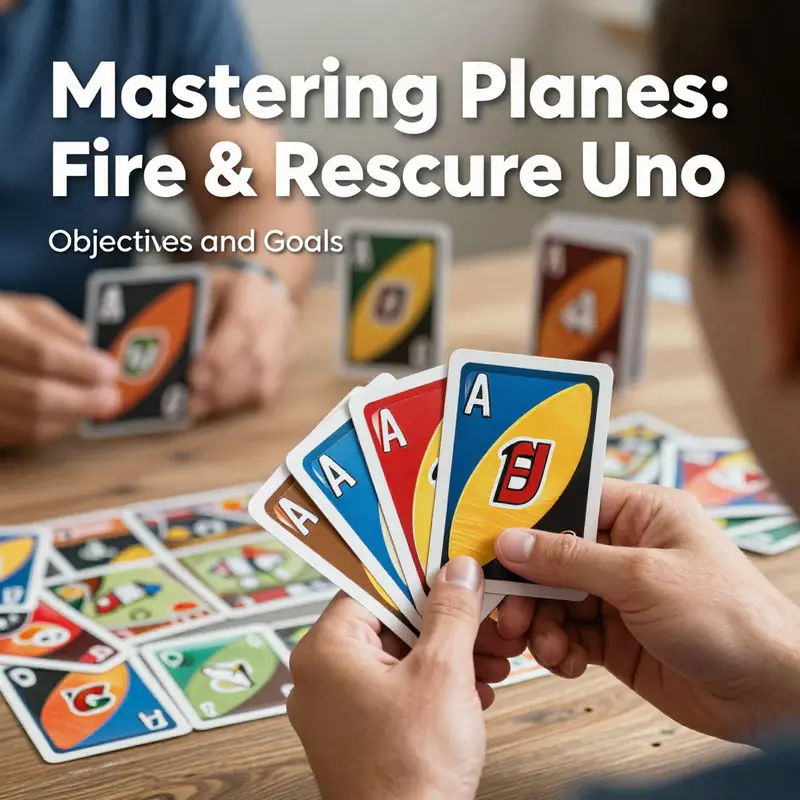
The core objective of Planes: Fire & Rescue Uno is simple: be the first player to shed every card from your hand. Yet the way you pursue that objective matters as much as the ending. The game invites you into a cockpit of quick decisions, where color, number, and symbol align in a dance that requires both speed and foresight. Each hand you play becomes a small mission briefing, and every turn is a chance to move the squad toward victory. The top card on the discard pile acts as your compass, and you must match it by color, by number, or by symbol. Thematically the cards carry the spirit of Planes: Fire & Rescue, where Dusty Crophopper and other aircraft navigate a sequence of challenges to save the day. The theme is more than ornament; it shapes how you consider risk, timing, and collaboration in a game that thrives on rapid, collective problem solving rather than solitary brilliance.
The primary aim is supported by sub goals that keep the game engaging and fair for players of all ages. First you must manage your hand, balancing the cards you hold with the likelihood of being able to play them in the next few turns. A well timed Wild or Wild Draw Four can alter the course of a round, but it also carries responsibility: use such power when it genuinely changes your position or disrupts a dominant opponent. In the themed version, some cards may feature motifs like a Water Drop or a Rescue symbol, reinforcing the firefighting story. These symbols become not just mechanics but visual cues reminding you of the stakes faced by operators when they race toward a crisis.
Strategic play centers on tempo and control. Tempo is the pace of pushing to finish your hand, recognizing when to accelerate by playing cards that loosen your grip and when to slow down to preserve options. Control means steering the color flow and pressuring opponents. In a typical round you might hold back a Wild to pivot the color when your hand is heavy in a single hue, or deploy a color dominating set to slow others down. It is a balancing act that rewards memory and anticipation as much as luck. The Water Drop card can cancel an opponent fire card, turning a setback into a brief pause to exploit. The Rescue card provides a small buffer by granting the player who draws it an immediate advantage that can stabilize a shifting hand or set up a stronger next turn.
Beyond the mechanics the game carries a strong sense of teamwork and shared purpose. This is not a solitary sprint; it mirrors teamwork found in real emergency response work. Your decisions ripple through the table: a well timed play can shift the outlook for several players, while a misread can cascade into a chaotic sequence of draws and skips. Thematically it mirrors the urgency and focus of firefighting, where every moment matters and people rely on each other to keep critical operations moving. When you are waiting for your chance to act, you plan not only for your own victory but also for how to keep the pace up, protect a teammate who is close to finishing, and sustain a rhythm that others can ride along with.
The experience of a Planes: Fire & Rescue Uno round can feel like navigating a controlled burn: you want momentum without letting the flames get out of hand. Your strategy evolves as the discard pile changes, and the skill lies in translating a handful of cards into a sequence of plays that reduces your risk while applying pressure on others. Thematic strength shines here: even in a light card game there is a sense of mission, calibration of moves to safeguard the team and achieve the objective efficiently. Preparation matters, and players learn to read the table as an ecosystem with its own rules and rhythms. You notice patterns like when someone tends to hold back Wilds or when a player is likely to run out of a color, and you adapt accordingly. The result is less about mindless card tossing and more about reading the room, timing your exposures, and choosing moments to push for victory when the odds are in your favor.
The Uno tradition of shouting Uno at the critical moment remains a simple, tactile reminder of precision under pressure. In Planes: Fire & Rescue Uno, this moment crystallizes a player readiness to close the mission. It signals to others that the finish line is near and that every card counts. The risk of getting caught with one card when attention wavers is real, and the penalty of drawing extra cards adds a tangible cost to mistakes. This mechanic reinforces discipline and focus—qualities that are valuable in real world safety training and teamwork. The exhilaration of finishing the hand is reinforced by the narrative alignment with rescue operations: the mission feels complete even if the scale is smaller and the stakes are fictional.
From a practical standpoint, the game rests on clear rules and accessible strategy. The design invites players to notice patterns quickly, adjust plans on the fly, and lean into thematic cues that transform a simple card game into a small airfield adventure. As rounds hinge on color choices, card matching, and the careful use of special actions, players build a mental library of tactics that transfer across games. The sense of mastery grows as you learn not only which cards you prefer to keep but also when to give up a small advantage now to secure a larger payoff later. In this sense Planes: Fire & Rescue Uno becomes a miniature school of situational awareness, risk assessment, and collaborative problem solving that aligns with safety training and teamwork values.
For readers who want to deepen their understanding beyond familiar rules, the method of learning through play is itself a valuable objective. The game offers a playful sandbox in which you test ideas about card distribution, probability, and what it means to control a round. It invites you to refine your instincts about when to prioritize reducing your hand quickly and when to delay to limit an opponent’s opportunities. The interplay between theme and mechanics makes the learning process intuitive: you internalize a story informed approach to decision making that resonates with the duty and efficiency at the heart of Planes: Fire & Rescue.
In time you will notice that the best players approach each round with a flexible plan. They anticipate color shifts, map out possible sequences a few moves ahead, and keep an eye on who is closing in on Uno with stealthy speed. The objective remains the same, but the path to it becomes a personal craft that blends the bright energy of a firefighting crew with the friendly challenge of a family card game. The result is a pastime that can be shared across generations while still offering depth and replayability for seasoned players. If you want to connect this practice with broader safety and teamwork topics, you can explore resources that emphasize discipline and preparedness in everyday settings.
Engineered for Rescue and Razzle-Dazzle: Unpacking the Gameplay Mechanics of a Firefighting-Themed Card Edition
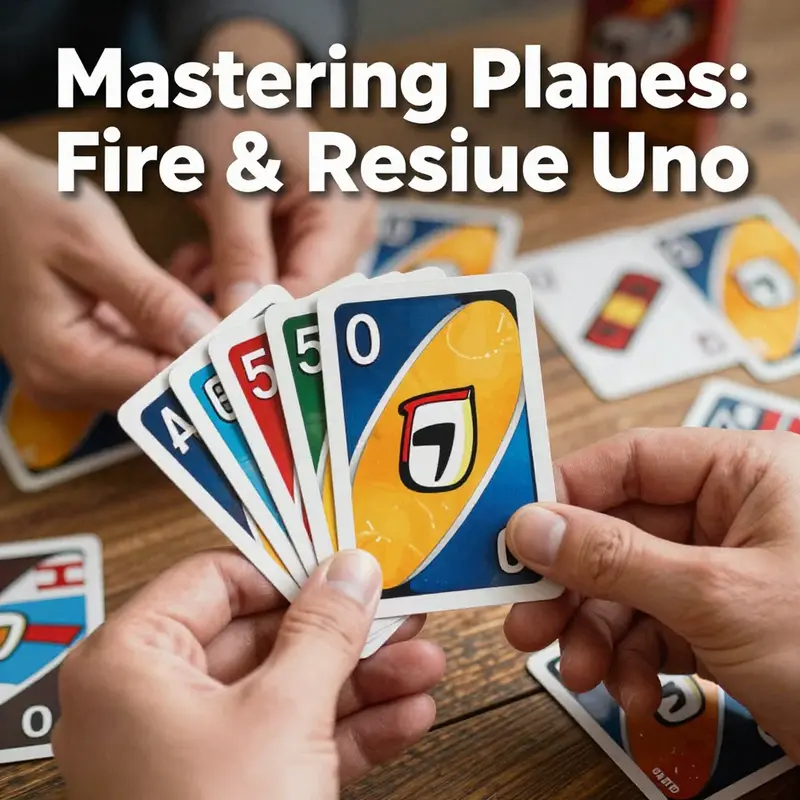
The thrill of a color-matching card game takes on a new heartbeat when it wears a firefighting theme. In the firefighting edition of a familiar family game, the quick pace and simple rules invite players into a story where every move could douse a spark of trouble or fan the flames of a daring comeback. You begin with a shuffled deck, seven cards in each hand, and a draw pile waiting to replenish your options as the discard pile marches toward an edge where someone will shed their last card and claim a moment of triumph. The core idea remains recognizable: you want to shed all your cards before your opponents do. Yet the edition’s unique touches—the water-themed tools, the extra cards, and a rule that nudges the gameplay into new strategic territory—give the familiar dance of color, number, and symbol a fresh sense of purpose. The edible rhythm of the river of cards becomes a narrative, a little engine of decision-making that mirrors the ebb and flow of a rescue mission. As you play, you aren’t just counting cards; you’re calibrating tempo, predicting an opponent’s next move, and trying to keep a step ahead in a moment where one misread could waste a turn or force you to draw and redraw.
At its heart, the game rewards quick recognition and careful sequencing. On a turn, you must place a card that matches the top card of the discard pile by color, by number, or by symbol. It’s a familiar mechanic that teaches players to read the flow of the game—the color currently in play, the numbers that are still dangerous to chase, and the symbols that might signal impending shifts in direction or opportunity. The top card becomes a beacon, guiding your options and pressuring you to balance aggression with restraint. This balance is where the firefighting theme begins to breathe. Just as a crew gauges the intensity of a blaze and deploys the right tool at the right time, you weigh whether to press your luck with a risky play or hold back to keep control when the color changes or the next player pivots the pace.
The standard set of action cards in a color-macentric, high-speed game provides a familiar scaffold: a card that makes the next player lose a turn, a card that reverses the order of play, and a card that compels the next player to draw two cards. There are wild cards that allow you to shift the color at will, and a wild draw-four that can tilt the table by forcing a larger payload of cards onto the next player—an echo of dispatches that come with a high-stakes operation. What distinguishes this edition is how it wraps those familiar cards in a firefighting narrative and introduces new mechanics that deepen strategy without overwhelming younger players. The lore doesn’t just decorate the cards; it animates your decisions. When a player lures the discard pile into a new color, the group feels the pressure of changing conditions, as if a sudden wind could shift the smoke and alter the line of attack. The thematic artwork—depicting water jets, rescue helicopters, and alert badges—enhances the readability of the cards and helps players quickly identify what is in play. This synergy between artwork and mechanics speeds comprehension while inviting players to weave the theme into every strategic choice.
One singular mechanic stands out as the game’s signature twist: a Water Drop card. This card embodies the core firefighting metaphor—using water to quell a blaze. When played, it gives the player the remarkable ability to discard all blue cards from their hand. It’s a dramatic moment, both visually and tactically, because blue cards often represent one of the more stubborn suits late in the game. By clearing those cards, a player can dramatically alter the endgame landscape, slipping into a position where fewer options remain for adversaries and where the path to victory becomes clearer. The Water Drop action invites players to think in broader strokes: which cards are you willing to sacrifice to set up a smoother finish, and when is the right moment to unleash a cascade that reshapes everyone’s plans? The Water Drop is not merely a powerful tool; it also reinforces the thematic coherence of the firefighting experience. It’s a playful, tactile tribute to water’s essential role in extinguishing fires, turning a simple mechanic into a storytelling moment that players remember long after the last card is played.
In addition to the Water Drop, the edition includes four extra cards and a special rule that injects fresh opportunities and risk into every round. The extra cards are designed to create moments of surprise and to reward players who stay attentive to the changing currents of play. The exact effects vary, but the spirit is consistent: these cards can alter the cadence of turns, shift who holds the advantage, or disrupt a would-be finish just when a player is about to seal the game. The presence of these four additional cards contributes to a sense of evolving strategy. What you plan on the first few moves might look very different by the middle of the round, and the endgame often depends on recognizing when a single extra card can turn the tide. The special rule associated with these additions nudges play into a more dynamic rhythm, ensuring that a board that seemed predictable can suddenly pivot in a way that forces everyone to reassess their approach. TheExtra-cards and rule invite players to rethink standard sequencing: conservation of resources becomes as important as project execution, and the need to adapt on the fly mirrors the real-world improvisation that happens during rescue operations.
A further layer of tactical depth comes from the color-selection mechanic. After certain plays, the active player gains the opportunity to determine the next color of play. This seemingly small power—choosing the color that will govern the next round of moves—has outsized consequences. It lets a seasoned player steer the group toward a color in which they hold several cards, or away from a color that would pad opponents’ hands with options, or toward a color that forces an opponent into a tricky position where they cannot easily respond without resorting to a Wild. In practice, this mechanic rewards attentiveness to card distribution, quick math about remaining cards, and careful observation of opponents’ likely holdings. The thrill is in the misdirection and control: by selecting a color that aligns with the cards you’ve kept, you can orchestrate a finale where your hand’s contour becomes a tight and efficient path to victory while your rivals scramble for an opening.
The game’s social texture—the pace, the temptations to push for a fast finish, the moments when someone shouts a cue that signals a one-card left threat—builds a shared tension. The moment you hold only a single card is the heartbeat of the round. Even here, the edition keeps the tension manageable for younger players by separating the moment of “one card left” from the consequence of being caught with a misstep. If a misstep occurs, the penalty is simple enough to deter reckless misplays without crushing the fun: the penalized player draws extra cards, and play resumes with renewed sharpness and a fresh sense of who’s in the lead. The emotional arc of a round—anticipation, near-miss, a clever reversal, a water-fueled breakthrough—mirrors the highs and lows of real-world teamwork, where timing, communication, and a little luck combine to bring a mission to a successful close.
Across rounds, players build a quiet fluency with the game’s cadence. They learn to anticipate when to unleash the Water Drop, when to hoard a Wild-type option for a late-stage color shift, and when to press the pace to force a rapid end before an opponent rallies. This is where the edition’s embedded theme truly shines: the interplay between planning and improvisation mirrors the real discipline of firefighting training and readiness. As players grow more familiar with the Water Drop’s dramatic impact and with the way color selection can pivot a round, they naturally start weaving together practical strategic habits with the story the cards tell. The experience thus moves beyond mere play and into a useful exercise in reading a dynamic environment and adjusting tactics in real time—skills that echo across many serious, safety-oriented contexts. If you want to connect the playful mechanics to broader safety and readiness ideas, consider the broader conversations around professional preparedness that emphasize flexibility, resource awareness, and situational judgment. For an accessible look at how ongoing training reinforces readiness in real life, see the resource on fire safety essentials certification training.
Internal link: fire safety essentials certification training. This reference helps frame how a playful card game can model, in a lighthearted way, the same kinds of adaptive thinking and sequence planning that professionals practice in training and certification programs. The connection isn’t about copying real-world procedures; it’s about recognizing shared cognitive rhythms: assessing a situation, choosing the right tool for the moment, and coordinating with others to reach a common objective.
As you move from table to table with this firefighting-flavored edition, you’ll notice that the rules themselves are deliberately approachable yet pliable enough to invite experimentation. The four additional cards and the special rule create a scaffold that keeps experienced players engaged while still presenting a gentle learning curve for newcomers. The Water Drop injects a thematic, splashy moment that resonates with the story the cards tell and reinforces the sense of water as a life-sustaining, problem-solving element. The color-selection mechanic reminds everyone that control and timing are powerful allies. Together, these features form a cohesive gameplay experience that is as much about strategic thinking as it is about shared storytelling. When the last card finally drops and a player’s hand empties, the sense of relief and accomplishment is tangible. Yet what lingers is not only the victory but the sequence of decisions—where you read the pile, where you timed a color change, and how you navigated the four additional cards that forced you to reframe your approach mid-round.
For readers who want a broader sense of how such themed editions anchor their design in real-world contexts, the page linked above provides a useful gateway into thinking about how safety and readiness training translates into a mindset that thrives under dynamic pressure. In the end, the game’s mechanics mirror a simple, powerful truth: clear objectives, flexible strategy, and timely adaptation are the bedrock of both successful play and effective emergency response. If you’re curious about the tangible ways these ideas translate into everyday readiness and education, exploring related safety resources can be a helpful next step. And if you’re seeking a window into how a real-world edition looks and feels as a product—along with the practical details of packaging, playtime, and component quality—you can consult the official product listing for a concrete reference to how a branded version presents these ideas in a home game setting.
External resource: https://www.walmart.com/ip/V-I-P-UNO-Disney-Planes-Fire-and-Rescue/57786347
Strategic Sparks: The Role of Special Cards in Planes Fire and Rescue Uno
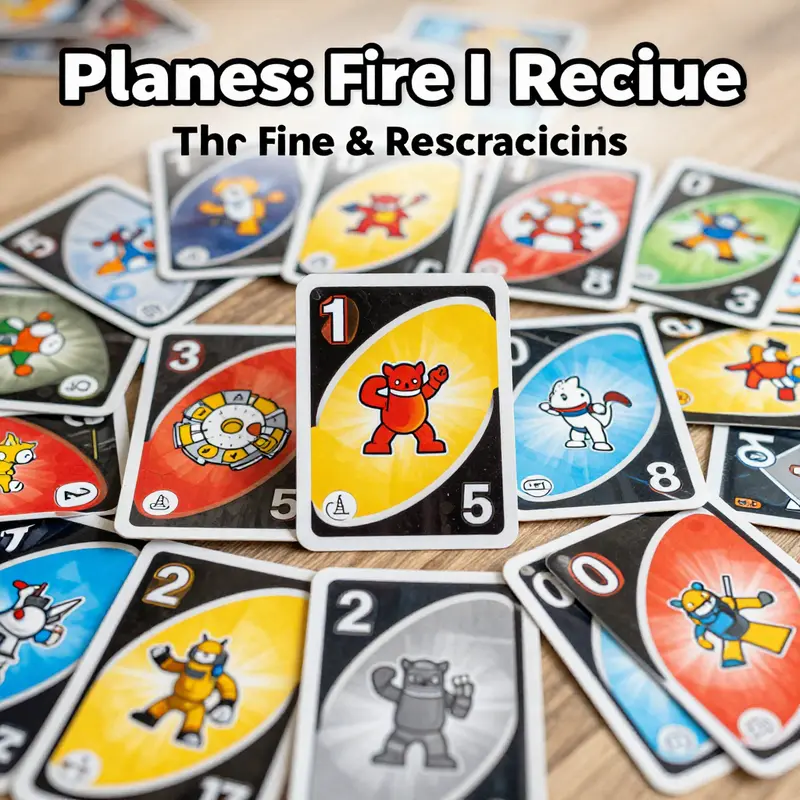
In Uno variants, the deck is a toolkit that players wield under pressure, turning a simple matching game into a contest of timing and nerve. The Planes Fire and Rescue edition weaves firefighting imagery into every draw and call. At the heart are the special cards—the sparks that can ignite momentum, shift the balance, or defuse a tense run. Understanding their role is less about memorizing steps and more about reading the table like a fireline: where the flames are highest, where wind may shift, and when a single move can change the outcome for everyone at the table. The Water Drop, the Wild, and the standard action cards shape not only the next player’s fate but the way players think, anticipate, and respond under pressure.
Take the Water Drop card: it counteracts a preceding Fire or flame-themed effect, dousing a surge of pressure that might force extra draws. It acts as a shield at the moment a change in tempo is looming. If you hold it, you become a counterweight to aggressive sequences. When paired with careful counting and reading the table, the Water Drop becomes a deliberate instrument of control. It invites players to consider not just this turn, but the next few turns for everyone at the table. The Water Drop also embodies a subtle moral: sometimes the best defense is a well-timed retreat from a high-stakes confrontation, protecting you from a cascade of penalties while others scramble.
The Wild card, depicted as a firefighter’s badge, keeps the core mechanic: you can change the color of play. The badge adds a narrative layer that reinforces foresight. Changing color is a calculated choice about where the game should go next. It lets you steer toward a favorable endgame, align with the suits that keep you in the race, and complicate an opponent’s planning by introducing a new color flow. The Wild signals nerve and foresight, and when used wisely, can reset a momentum swing.
The standard action cards—Skip, Reverse, and Draw Two—carry a firefighting twist. Skip robs the next player of a turn, potentially breaking rhythm. Reverse flips the direction, demanding spatial awareness and adaptability. Draw Two delivers a quick surge of cards, reminding players that even solid strategy can be derailed by a sudden influx. The timing of these cards matters as much as their effects.
Together these mechanics encourage risk management: patience, tempo control, and bold, well-timed pivots. A player who holds a Water Drop until the moment a big swing is about to take hold demonstrates situational awareness that resonates with real-world safety training. For readers, the link between play and real-world thinking is not merely metaphorical; it is a reminder that learning to read a situation, choose the moment to act, and balance aggression with preservation is a transferable skill. Thematic cards interlock with standard Uno rules to create a learning microcosm: timing, prediction, and adaptability tested under time pressure, with narrative flair that makes the actions feel meaningful.
Themed variants also foster community: visual cues support memory and quick recognition, while the rhythm of a live game reinforces social cues and negotiation. Families and groups can use the game to build communication and strategic thinking in a playful setting, turning a simple card activity into a tool for sharpening focus, teamwork, and calm decision making under pressure. The experience reminds us that play can echo real-world training paths used by professionals preparing to respond to emergencies.
Strategies and Tips for Success in How to Play Planes Fire and Rescue Uno
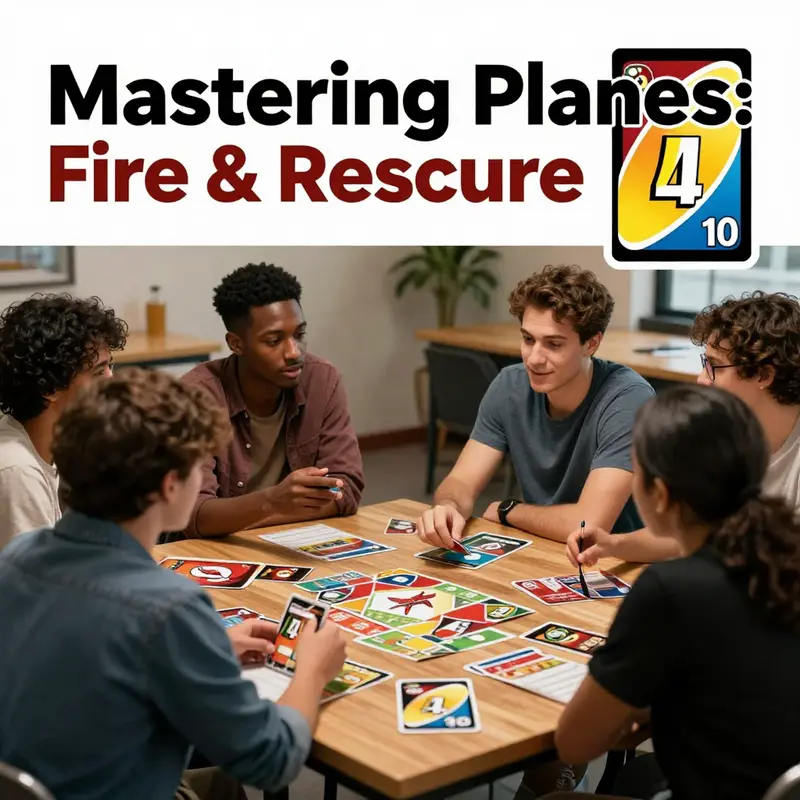
Playing Planes Fire and Rescue Uno is less about luck and more about reading the room, tracking what remains in the draw pile, and using the unique action cards with a light touch. Even players who know Uno inside out quickly sense that the Disney-themed twist adds a layer of narrative immersion—pictures of firefighting aircraft flash across the cards, and the regular rhythm of color and number gets interlaced with dramatic gambits. The goal remains universal: shed all your cards first. But the path there is shaped by how you manage your hand, how you time your specials, and how you steer the game’s tempo to align with your neighbors’ misdirections and mistakes. The experience becomes a test of patience as well as pace, and success rests on staying a step ahead without tipping your hand too soon.
First, the special action cards stand out as the fulcrums of momentum. In this edition, a quartet of unique actions is woven into the fabric of every round. Memorizing their triggers matters more than memorizing every face on the deck. One card can skip the next player, a second reverses the flow of play, a third forces the next player to draw two, and a fourth reshapes the color while exposing the next player to a punishing draw. Even if you do not grasp their exact wording at the outset, you will learn to sense when a wild gesture can tilt the balance. The beauty lies in saving them for moments when a cascade of cards would otherwise bury you. The moment you glimpse a window where a single well-timed skip or a precise color change would spare you a turn or two, you seize it. In practice, that means not wasting a potent card on a routine matchup; it means weighing the current tempo against the potential pain your opponents may endure in the next round.
Hand management becomes the second pillar of strategy. A player’s deck is a map of options, and the goal is to avoid getting trapped in a single color pile that can be eradicated by a well-timed color-change or a compensatory draw. A useful guideline is to spread your color strengths across the frame of the hand rather than stacking all your reds or blues in one corner. This dispersion gives you smoother exits when color control shifts. At the same time, you should not neglect the value of delay. Keeping a powerful wild card or two in reserve acts like a safety tether, allowing you to pivot when your color runs dry or when a throwaway card would otherwise reveal your last-ditch plan. If you can hold onto a flexible tool for the late game, you buy yourself precious breaths between rounds of rapid play.
A related strategic strand centers on the distribution of numbers. When possible, balance the numeric spread so you can respond to a top card with a matching number later in the same color or with a neutral wild. The objective is to keep options open, not to exhaust a particular sequence too early. For instance, if you notice an opponent leaning on a single color, you can aim to disrupt their rhythm by forcing a color change that redirects the table’s attention toward a different suit. This subtle management of color and number is where the game’s cognitive complexity reveals itself: you are not merely playing cards; you are forecasting how others will respond to each card you play and how their remainder will influence the next few turns.
Incorporating the thematic elements is more than decoration; it lends a running narrative that can shape decisions. The cards depict rescue aircraft and heroes in action, and the imagery invites players to adopt a role or tempo in their play. Some characters seem to lend themselves to a steadier, more defensive cadence, while others encourage a punchier, more aggressive pace. Choosing a persona that fits your style can help you stay calm under pressure and keep a clear sense of when to press an advantage and when to pull back. This is not a game of pure speed; it is a game of story-informed strategy, where a moment of restraint can be as impactful as a bold gambit.
As knowledge piles up, the psyche of the table becomes a resource in its own right. The best players treat each card played as a cue about what remains in the opponents’ hands. When a likely suspect tends to flick through large numbers first, observing this pattern allows you to anticipate a possible chain of draws or a sudden forced color shift. The art of bluffing, too, threads through Planes Fire and Rescue Uno in subtle ways. It is not about deceiving with obvious tells; it is about leveraging apparent small mistakes—the way someone hesitates before slamming down a card, or how quickly a certain color disappears from their hand. When you hold two cards with matching numbers, you can bait the table into playing into a trap by leading with one of them, prompting another player to respond with a card that betrays their plans. This deliberate pacing makes you less a passenger in the round and more a conductor guiding the tempo.
A practical tip that threads through all these ideas is to stay mindful of Uno’s Uno rule without letting it turn into obsession. Shouting Uno at the right moment is crucial, but the moment you forget to call it can derail your chance of victory. The pressure of that moment—knowing one careful slip could give an opponent a window to flip the board—adds a spark of adrenaline to the game. The best players treat that moment as a hinge: a small action with a big consequence. If you sense the table is on the cusp of a finish, you might deploy a wildcard or a color-change card not merely to keep play flowing but to force a strategic misalignment that helps you secure the final sack of your cards before your enemies can respond. It is a blend of reflex and foresight, a mental quickstep built from practice and focus.
The social texture of the table also colors strategy. In the shared space of a family room or a game night, the choices you make ripple through the group’s experience. A well-timed wild draw four can be as much a social nudge as a tactical weapon, swaying the mood and the pace, while a gentle skip can restore balance after a run of relentless play. The best players use these tools with restraint, keeping the game enjoyable for everyone while still preserving their chance to win. The art lies in reading the room—recognizing when a player is near the end and adjusting your aggression to either hasten their downfall or protect your own position.
The rhythm of play also shifts with the number of players. In games with more participants, every decision carries greater weight because the draw pile depletes more slowly and the opportunities for cascades multiply. A larger table rewards patience and the art of timing; it rewards players who can hold on to a few crucial moves for the moment when the table is most vulnerable. Conversely, with just two or three players, each card has a louder echo. The same rules apply, but the dynamics become more intimate and the need for precise card management grows sharper. Across both scales, the core principle remains the same: keep options alive, preserve your wilds for decisive moments, and read the group to anticipate the shift in momentum before it happens.
To deepen the experience beyond pure tactics, consider the small rituals that can enrich your enjoyment and performance. Themed play nights benefit from a shared narrative cue—players can choose a temporary persona, adopting a style that mirrors a firefighter or rescue pilot. This role-play does not replace strategy; it enhances it by encouraging players to stay calm, think clearly, and communicate nonverbally through their choices. The emotional lift that comes from engaging with a story helps young players stay focused on the mechanics, while adults learn to balance competitive drive with the convivial spirit of the occasion. In this way, Planes Fire and Rescue Uno becomes more than a card game; it becomes a mini-simulator of teamwork and quick thinking under pressure.
If you want to connect the practice of strategic play to a broader set of skills, consider linking the experience to real-world competencies like situational awareness, flexible problem-solving, and collaborative decision-making. The mental muscles you exercise while managing colors, numbers, and special cards mirror the kinds of cognitive tasks professionals perform in dynamic environments. In short, the game offers a playful sandbox in which you can refine focus, adaptability, and social intelligence. And as you develop these habits at the table, you may notice how your approach to other games and even everyday decisions gains a touch more deliberate precision. For readers who wish to explore the broader context of how skilled play translates into practical capabilities, a related resource on safety-focused training and teamwork can be found here: fire-safety-essentials-certification-training.
For those curious about the original product lineage and to cross-check any details about rules or card variations, a reliable reference can be consulted through the community marketplace hosting the official listing. This outside resource provides context on the edition and collects anecdotes from players who have tested the game in dozens of households. The link is a useful reminder that even a lightweight family game contains a wealth of shared experience and subtle, emergent strategy that evolves with every new play group. If you want to explore further, you can consult the external listing to see how others recount the rules, how they store the deck, and how they adapt the play to their own households. The listing can be found here: https://www.ebay.com/itm/393658248477.
Ultimately, your path to mastery in this themed Uno variant circles back to one simple truth: practice compounds quickly into confident play. Your best rounds come when you blend calm observation with timely boldness, when you honor the fundamental Uno rules while also leveraging the four special actions to shift the table’s energy at precisely the right moment. The planes-and-rescue motif adds color and character, but the core challenge remains the same—reduce your hand efficiently, outpace your opponents, and keep your wits about you as the cards cascade. With restraint, thoughtful planning, and a little storytelling, you become not just a winner of a round but a player who understands how to read a table, how to pace a game, and how to turn a single, well-placed move into a winning streak that lasts beyond a single night of play.
Final thoughts
Understanding how to play Planes: Fire & Rescue Uno involves grasping the setup, objectives, gameplay mechanics, the influence of special cards, and effective strategies. This comprehensive guide serves as an invaluable resource for players looking to enhance their skill level and enjoy the game to its fullest. As you gather your friends and family for a fun-filled evening of competitive gameplay, remember the insights shared in each chapter to maximize your chances of victory. Play, engage, and let the excitement of Planes: Fire & Rescue Uno take flight!