
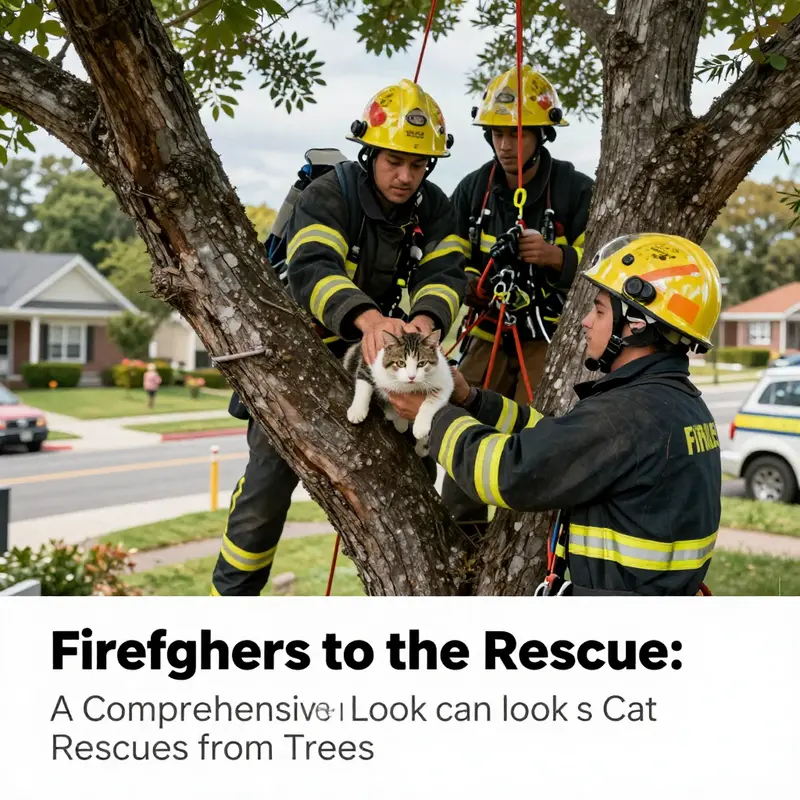
The involvement of fire departments in rescuing cats from trees is a familiar, albeit playful, aspect of their broader service. While many may view it as a lighthearted joke, this responsibility underscores the commitment of firefighters to community welfare and animal safety. Fire departments worldwide actively respond to calls for assistance, employing various methods and specialized equipment to rescue frightened felines. It’s essential to understand the global practices that frame these rescues, the techniques and equipment utilized, and the public perception regarding the importance of such endeavors. Each chapter delves deeper into these facets, painting a holistic picture of why and how firefighters engage in these often amusing yet serious rescues.
Across Branches and Borders: How Fire Departments Safely Rescue Cats from Trees Around the World
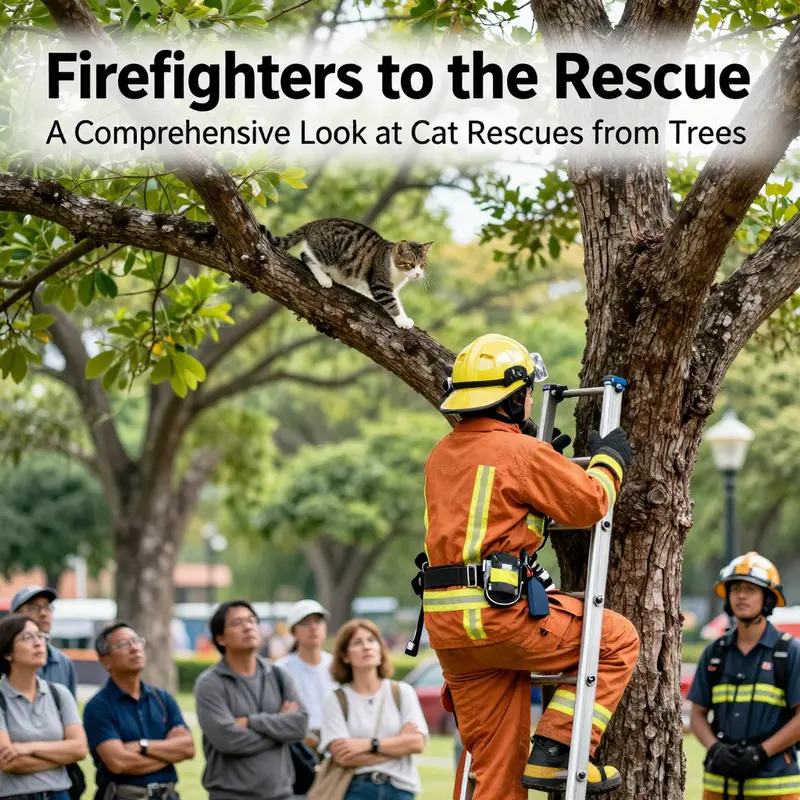
Across Branches and Borders traces a quiet thread through urban life: when a cat climbs a tree and would rather stay put than descend, fire departments answer with method, patience, and care that has evolved into a global practice. The calls arrive with a familiar rhythm, not as one-off feats of stunt work, but as routine emergencies that test a department’s ability to balance animal welfare with firefighter safety, reflecting a shared set of techniques that adapt to local terrain, climate, and cultural expectations. The cat in the tree becomes a small but meaningful lens on how public services integrate veterinary science, animal welfare ethics, and practical rescue craft, with the goal of a safe, calm return of the animal to its home or to a care system that can protect it in the days that follow.
The core methods span a spectrum from straightforward to technically intricate, and they are chosen with two guiding priorities: maximizing the cat’s safety and minimizing risk to the crew. At the simplest end of the spectrum, ladders remain a staple, deployed with careful positioning to approach without alarming the animal. When space is constrained or the cat is high, ropes, harnesses, descenders, and mechanical ascenders transform a potentially kinetic chase into a controlled descent, emphasizing a breathable, calm path downward rather than forceful restraint.
Animal handling training sits alongside these physical techniques as a core competency. Firefighters learn to read the animal’s behavior in real time, speak softly, avoid sudden movements, and coordinate with owners and veterinarians to reduce stress. The artistry of restraint comes with risk, so teams assess shelter, wind, and retreat routes to minimize danger, sometimes employing gentle nets or soft capture devices deployed from above to ease the transition from perch to ground.
Technology has entered the domain in subtle but transformative ways. Drones scout the tree, locate the cat, and report on body posture and movement, sometimes facilitating food dispensation or signals that coax the animal toward a safer exit without requiring close contact. A drone-assisted operation can reduce risk to rescuers while preserving the animal’s welfare, a shift illustrated by 2026 coverage showing how technology braids with tradition to strengthen a rescue team’s capability.
Across China, Europe, and North America, reports show how local realities shape tools and techniques while preserving shared principles: safety, patience, and compassion. In Lijiang, crews reportedly used a temporary safety bed of blankets and a rope system to create an assisted descent corridor; in Xiangcheng, a 15-meter ladder enabled a precise approach; in Miyun District, a firefighter climbed the tree to coax the cat into a waiting jacket. These vignettes demonstrate how humane rescue protocols adapt without losing core values.
Beyond technique, the practice helps build public trust and educate communities about animal welfare and emergency readiness, with aftercare and open communication with pet owners forming part of the essential workflow. The broader narrative emphasizes de-escalation, steady hands, and a calm tempo that yields safer outcomes for both animal and human.
Stories of drone-assisted rescues and careful, calm descents illustrate how technology and humane practice can coexist, reminding us that good public safety honors life in all its forms and that compassionate, resilient emergency response crosses borders.
Bringing Cats Down: Techniques, Tools, and Tactics Fire Departments Use to Rescue Felines From Trees
When a cat finds itself perched high in a tree, the scenario is rarely about speed alone. It is a test of balance, patience, and the ability to read a living creature that is simultaneously curious, frightened, and wired to cling to the safety of a familiar branch. Fire departments around the world encounter these moments with a calm approach that prioritizes the animal’s welfare while protecting the rescuers. The repertoire of techniques and the spectrum of equipment used in these rescues reflect a deliberate balance between restraint and ascent, between human skill and animal behavior, and between the realities of urban terrain and rural trees. The result is a sequence of actions that may unfold quickly or slowly, but always with the shared aim of coaxing the cat to descend without a scramble that could cause injury to the animal or to the team. In these rescues, success is less about dramatic drama and more about the quiet, methodical application of knowledge gleaned from countless calls, drills, and real-world experiences.
Indirect induction forms the backbone of most cat rescues. It is the first line of approach that keeps noise and haste to a minimum while leveraging the animal’s instincts. A cat stranded in a tree is not just physically stuck; it is emotionally heightened. The most common technique is to re-create the environment the cat knows on the ground. Firefighters often prepare a base or a small platform near the tree trunk and place a plate of familiar food there—fish or wet cat food—that can tempt the cat to descend. Soft tones, deliberate breaths, and a steady, reassuring voice help reduce the creature’s fear as it weighs the option of stepping down another inch, then another, until the distance becomes manageable again. The result is a controlled, gradual movement rather than a forced descent that could trigger a panicked leap or a slip.
The height and geometry of the tree matter greatly. For lower canopies, the standard extension ladder serves as a versatile ally. A six-meter ladder may be sufficient to reach a cat that has settled on a lower limb or a thicker branch, and it is typically secured firmly against the trunk to prevent any sway. In many calls, a firefighter or an accompanying team member ascends to a position where they can cradle the cat in a calm embrace or guide it toward a waiting person on the ground who can receive it safely. There are documented cases where a slightly longer ladder becomes necessary. A notable example from Xiangcheng in December 2023 illustrates just how quickly the situation can evolve: what began with a standard climb to reach the cat progressed to a request for a 15-meter ladder when the animal retreated farther into the branches after an initial attempt. The lesson is straightforward—preparedness for a range of heights and the willingness to adapt the equipment to the tree’s shape and the cat’s response are essential. The ladder becomes not a weapon but a bridge, a conduit for easing the animal’s descent rather than forcing it down.
When ladders reach their practical limit, tree climbing emerges as a last, carefully chosen resort. This is not a routine, glamorous ascent; it is a controlled operation that demands a sky-lighting respect for both the tree’s integrity and the climber’s safety. Climbing the tree requires full safety harnesses, secure anchor points, and a rope system that allows the climber to move deliberately while maintaining three points of contact. The climber’s view becomes the bird’s-eye sense of the situation: how the branch bends under weight, whether the trunk remains sound, where the cat’s line of sight ends behind a leaf curtain, and whether any branch movement could spur a sudden reaction from the animal. The Beijing incident in 2024 offers a precise microcosm of this approach: a firefighter personally ascended the trunk, using the harness to stabilize, and then gently shook a nearby branch. The cat, startled but uninjured, chose to drop toward a waiting jacket held by teammates on the ground. The jacket’s purpose is straightforward but vital: a soft landing, not merely a catch, can prevent scratches or more serious injury while preserving the animal’s trust in humans for future encounters.
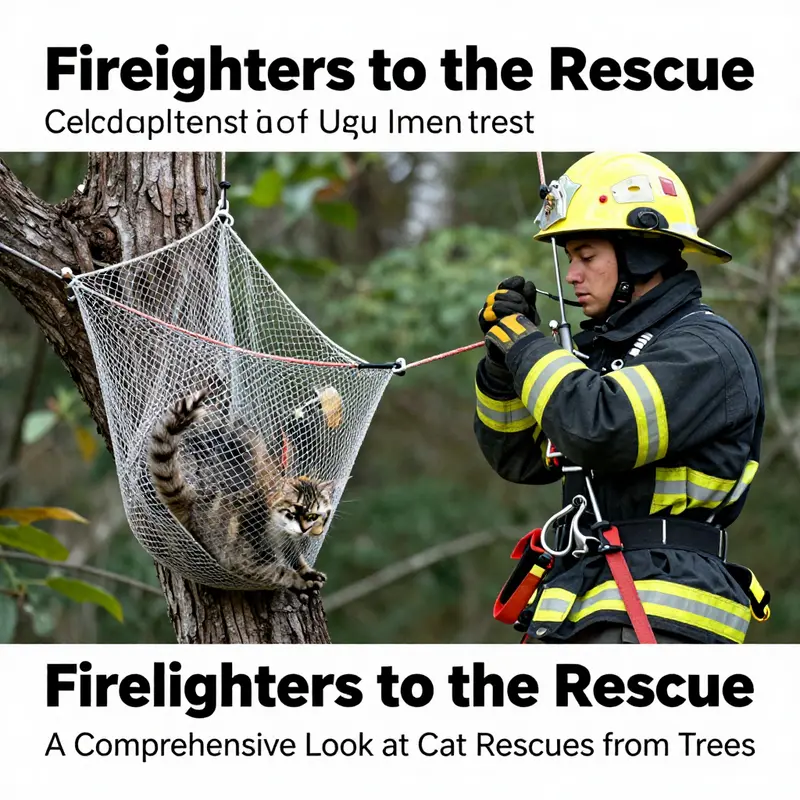
Even when ladders and lines are in place, the work relies on a suite of tools designed to ease the cat’s movement and maintain the animal’s comfort. A long pole or a purpose-built cat hook can deliver tiny nudges or gentle guidance to nudge the cat toward mobility without contacting the animal in a way that could provoke sudden fear. In some situations, a net or trap is deployed, but the use of such devices is deliberately limited. Nets can frighten a cat if they feel it closing in, and their use demands precise timing and careful handling to avoid constriction or distress. More often, a clean, simple approach wins out: coaxing with calm words, a familiar scent, and a clear path to a safe return. The equipment must be chosen with the cat’s temperament in mind. Some felines approach negotiation with stoic patience; others recoil and climb higher when startled. The rescuers’ job is to recognize those differences and adjust the plan in real time.
In these operations, the equipment list reads as a practical catalog assembled from years of field experience. Extension ladders—those standard tools that become the workhorses of the operation—are deployed in configurations that fit the specific canopy structure. Safety harnesses and ropes are not optional add-ons but central components of any climb. They provide redundancy, preserve life, and permit precise positioning in a way that raw speed never could. Portable platforms may be set on larger branches to provide a stable staging area for the team, allowing a calmer descent path and minimizing the risk of a misstep that might injure the animal. Communication devices—radios or other quiet signaling methods—are essential to coordinate the person on the ladder, the climber, and the ground crew who will receive and cradle the cat once it is down. The goal is to maintain quiet, avoid crowds, and reduce ambient stress in the immediate rescue zone. The more the public remains calm and still, the more the cat’s chances improve, because the absence of loud noise and sudden movement reduces the likelihood of a panicked retreat higher into the canopy.
Throughout these rescues, safety and welfare dominate every decision. The public’s role is to create the least amount of disruption possible. A quiet, clear space lets the rescuers work with fewer variables, making it easier to anticipate the cat’s responses. This principle—minimizing stress and maximizing the animal’s trust in the rescuers—shapes choices about when to climb, when to remain on the ground, and whether to introduce a fetched treat at a lower point or on a platform near the trunk. Fire departments emphasize that these rescues are less about bravado and more about the patient, methodical pursuit of a problem with a precise set of tools and a disciplined plan. The result is a sequence that remains consistently patient, even when time feels compressed by a cat’s unpredictable motion.
The narratives of specific rescues reinforce this philosophy. In Xiangcheng, the two-ladder approach demonstrated the value of flexibility: one ladder to access a lower vantage and another to extend reach when the cat moved higher in the canopy. In Beijing’s Miyun District, the outcome hinged on a combination of a direct ascent and a controlled catch by a ground crew using a jacket as a safe landing signal. The cat’s emotional state—its fear, its curiosity, and its sudden shifts in direction—dictated how and when to proceed. In practice, the technique is a careful choreography: announce, observe, adjust, and execute. Each step reduces the chance that a misstep will escalate the animal’s fear or put the team at risk. The result is not only a successful descent but also a transfer of care to a calm, appreciative caretaker who can foster a sense of safety for the cat in the immediate aftermath.
These approaches also reflect a broader professional culture that values ongoing training and adaptation. The specialized equipment is complemented by continuous learning about animal behavior, tree biology, and the practical realities of urban rescue environments. Firefighters routinely refine their routines by reviewing case studies, practicing precision in harness work, and rehearsing the careful coordination between multiple responders. They understand that a well-executed cat rescue is a microcosm of the larger mission: to protect life, to preserve calm, and to maintain the trust between communities and the emergency services that respond to their calls. The emphasis on calm, measured progress rather than dramatic but risky maneuvers is not merely a precaution; it is a core ethical stance that acknowledges the vulnerability of a small creature and the responsibility of the responders to do no harm.
The procedural emphasis on safety also extends to how rescuers interact with bystanders. A hasty crowd, even well-meaning supporters, can inadvertently push the cat higher or trigger a panic response. Thus, public education becomes part of the rescue operation’s value proposition. So too does the awareness that every rescue is a potential moment of learning—about equipment reliability, about how different tree structures respond to certain forces, and about how a cat’s temperament can vary from one incident to another. By maintaining a firm but gentle posture, keeping the area quiet, and relying on a practiced set of tools and techniques, the team not only brings down the cat but also preserves its future willingness to engage with humans in a non-threatening way. This broader perspective frames each rescue as a small but meaningful contribution to urban animal welfare, and to the social trust that communities place in those who respond when furry friends get caught in trees.
The detailed operational reports behind these cases often emphasize the practical realities of the job: the height and shape of the tree, the cat’s current position, the weather on the day, and the available manpower. Yet those variables never eclipse the core methodology: start with indirect induction, use ladders where practical, consider tree climbing as a last resort, and employ tools that minimize force and maximize gentleness. The success stories belong to teams that assess, adapt, and execute with a steady tempo, and who acknowledge the limits of any given tool in service of the animal’s safety. In this sense, cat rescues are a proving ground for the marriage of equipment design and human skill, a quiet testimony to how technology and empathy can converge under duress to deliver a humane outcome.
For readers interested in the practical philosophy behind these operations, the subject of training is never far away. There is a continuous thread linking field practice to the educational resources that shape how crews prepare for such calls. The emphasis on careful handling, calm communication, and a broad readiness to adjust tactics in response to the animal’s behavior mirrors the values found in reputable training programs across fire services. Fire departments that invest in regular, scenario-based practice improve not only their efficiency but also their ability to protect vulnerable animals and the people involved in the rescue. The real-world signal this sends is a reaffirmation that even in high-stakes moments, preparation and patience can achieve outcomes that are safer for all parties—humans and animals alike. Acknowledging this interdependence invites a broader reflection on how communities can support such work, from providing quiet areas around potential rescue sites to ensuring that responders have access to well-maintained equipment and ongoing training that keeps pace with evolving techniques.
As these chapters weave together, the thread tying them to the broader article about whether fire departments rescue cats from trees becomes clear. The answer is a resounding yes, but with a distinctive caveat: every rescue is a testament to method, care, and the prioritization of welfare over spectacle. The techniques and equipment discussed here are not abstract concepts but practical tools that enable life-saving outcomes in the most challenging moments. They illustrate how a modern fire department approaches a seemingly simple animal in distress with the same seriousness and preparation it brings to larger emergencies. The result is a narrative that highlights not only the act of bringing a cat down but also the ongoing commitment to animal welfare, community safety, and professional excellence that underpins these modest, often quiet, exploits. The next time a cat is found in a tree, the story that unfolds will likely be less about the height at which the animal sits and more about the careful balance of strategy, gear, and gentleness that makes the descent possible.
For readers who wish to explore practical examples and related resources beyond this chapter, consider the broader body of work that describes how these rescues are conducted in different contexts. The real-world mechanics of ladder placement, rappel systems, and controlled descents are discussed in various field reports and training narratives, which provide a more granular look at the feet-on-the-ground realities behind the general principles outlined here. In particular, the Xiangcheng December 2023 case, which involved coordinating a six-meter ladder with a fifteen-meter extension to reach a frightened cat, offers a vivid example of how plans adapt to the cat’s behavior and the tree’s structure. This case, along with others, demonstrates that successful outcomes arise from disciplined, patient execution rather than dramatic last-second gambits. For more on these operational dynamics, the following external resource offers a detailed account of the Xiangcheng rescue and its lessons: https://www.yangtse.com/news/2023-12-12/78292.html. Meanwhile, readers who want to connect with practical, ongoing training and professional development related to fire safety and rescue operations can explore curated discussions and resources at the internal hub provided by the fire-rescue community, including materials on training and certification that reinforce the core messages of calm, careful rescue work. For instance, one relevant internal reference that aligns with the emphasis on hands-on training and the discipline of technical rescue is firefighter-training-tower-dedication. This resource, among others, helps practitioners reinforce the skills that make these cat rescues less about luck and more about skill, preparation, and a compassionate approach to animal welfare.
When Firefighters Climb for Cats: Community Perception and the Real Value of Animal Rescues
Public Perception and the Real Value of Animal Rescues
Across neighborhoods and small towns, a familiar call can set a particular kind of response in motion: a pet owner anxiously reporting a cat stuck high in a tree. Those calls reveal more than a simple rescue request. They reflect community values, trust in local services, and expectations about who cares for vulnerable lives. For many people, watching a firefighter climb a ladder to save a cat is profoundly moving. It reinforces the idea that emergency services are for everyone and everything in danger. That perception matters because it shapes how communities interact with their fire departments, how resources are allocated, and how safety messages stick.
Fire departments take animal rescues seriously because the work aligns with their core mission. At the most basic level, firefighters are trained to assess risk and remove hazards. A cat stranded on a high limb triggers two immediate concerns: the animal’s welfare and the safety of any human attempting a solo rescue. Pet owners often feel compelled to improvise, sometimes climbing after the animal themselves. Firefighters stepping in prevents those risky attempts and reduces injuries to humans. Over time, the public has come to see these rescues as a natural extension of emergency services. Viral videos and local news stories shape this image too, showing firefighters methodically and gently coaxing a frightened animal down.
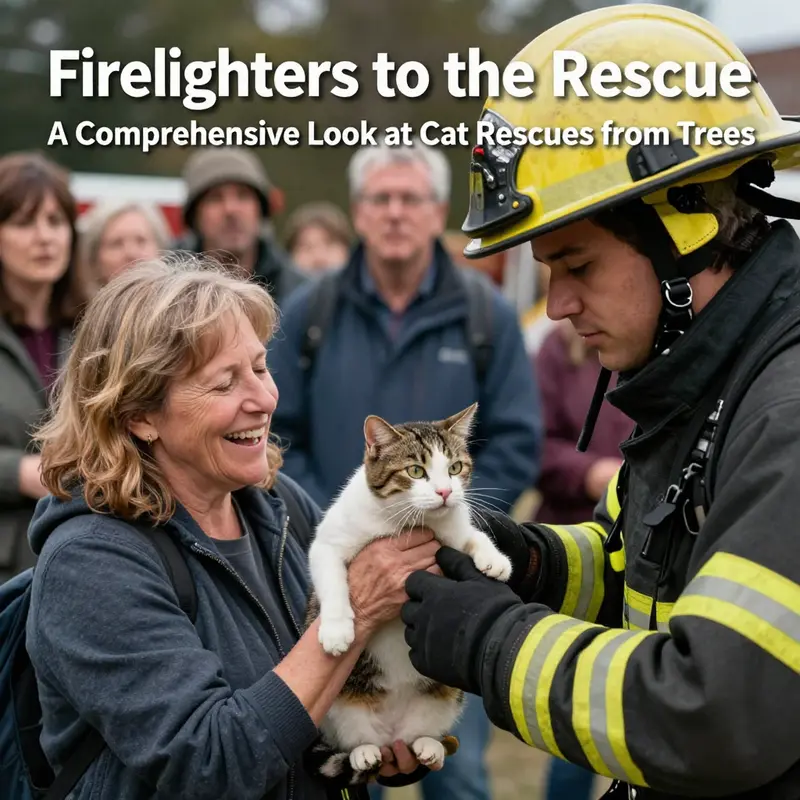
That positive perception is not merely sentimental. When communities witness firefighters performing compassionate actions, trust grows. Trust influences cooperation in more serious situations. Neighbors are likelier to follow evacuation orders, to volunteer in community programs, and to donate to local safety initiatives. A single, well-handled animal rescue can produce ripple effects that strengthen community ties. It also humanizes emergency responders. People often hear sirens or see engines and think of danger. They may not immediately recognize the training, patience, and tactical thinking involved in rescuing an animal. When a firefighter returns with a trembling cat wrapped in a jacket, residents see a caregiver rather than just a responder. That shift matters to morale, funding, and community engagement.
Public gratitude, however, can mask tensions around resource use. Fire departments must balance calls for pets against more urgent human emergencies. That balance plays out differently across jurisdictions. In some areas, animal rescues are routine and integrated into daily operations. In others, departments have formal policies limiting responses to situations where human safety is at risk. These policies exist for good reasons. Firefighters respond to building fires, medical emergencies, hazardous materials incidents, and technical rescues. Each call can demand the same personnel and apparatus. When communities understand the constraints—staffing crews, equipment readiness, and budget limits—they are better prepared to support sensible policies.
Training and equipment are central to safely rescuing animals. Simple ladders and rope systems work in many situations. Sometimes firefighters use improvised padding, like bundled blankets, to create a safe landing zone. In complex cases, they deploy aerial platforms or rope rescue techniques. These methods require skill. Climbing a tree for a frightened animal is not the same as climbing a structure. Branches can be brittle, angles can be awkward, and the animal can behave unpredictably. Fire departments invest in training so rescues proceed without injury to crew or animal. This investment also reduces liability and repetitive call costs. When residents recognize the professionalism behind the rescue, they appreciate that the service is neither trivial nor frivolous.
Public education becomes a powerful tool in this context. Fire departments frequently use animal rescues as teaching moments. They discuss why cats climb and why descent becomes difficult. They provide simple prevention tips: secure window screens, supervise outdoor time, and microchip pets. These conversations lower future call volumes and keep animals safer. Departments often collaborate with animal shelters and veterinarians to widen the reach of these messages. Local partnerships can also ensure rescued animals receive prompt medical checks, vaccinations, or rehoming opportunities if owners cannot be found. When the community sees coordinated care, it builds confidence in local systems.
The media plays a major role in shaping perceptions. Social media platforms amplify images of rescues, often reducing a complex mission to a short, emotional clip. Those clips capture hearts and spark praise. But they can also create unrealistic expectations. People may assume every department will respond in the same way, at any time. They may underestimate the risks involved. Departments that proactively share behind-the-scenes context help temper expectations while preserving goodwill. Videos that include brief safety commentary, or posts that explain why certain rescues required specialized tools, inform the public without diminishing the emotional impact.
Public perception also intersects with policy and finance. Cities and counties allocate budgets based on public priorities and political realities. When communities value and visibly support services, policymakers take notice. Conversely, when calls for non-human rescues are frequent and costly, some jurisdictions consider cost-recovery models or partnerships to defray expenses. These discussions can be delicate. Charging for rescues risks alienating residents and undermining trust. A more constructive route is prevention and partnership. Grants, volunteer networks, and animal welfare groups can share costs. Community education campaigns can reduce avoidable calls. Departments that demonstrate fiscal prudence while maintaining public service tend to retain trust and support.
There is also an ethical dimension. Many firefighters view animal rescues as moral work. The impulse to help a suffering being resonates with the values of the profession. This moral stance can strengthen team cohesion and boost morale. However, agencies must ensure that moral convictions do not override safety protocols. Leaders must set clear standards about when to respond and how to do so safely. That balance keeps crews ready for emergencies and protects the public.
The frequency of cat rescues varies. In urban areas, tall trees and dense human populations mean more opportunities for cats to climb. In rural areas, different hazards appear, such as barns or steep terrain. Some departments log dozens of animal-related calls each year; others see only a handful. The key is that departments adapt to local needs. A small volunteer station might rely on simple ladder rescues and neighborly assistance. A metropolitan department might incorporate animal rescue into broader technical rescue capabilities. Regardless of scale, successful programs prioritize training, safety, and public communication.
Fire departments also use animal rescues to strengthen recruitment and retention. Younger recruits often cite community service as a reason they joined. Stories of compassionate rescues showcase the rewarding nature of the job. Fire departments that highlight these missions attract candidates who value empathy alongside technical skill. That attraction matters. Modern firefighting demands both physical ability and emotional intelligence. Departments that promote a culture of care tend to perform better in public-facing roles.
Finally, the presence of animal rescues opens up broader conversations about mutual aid and regional cooperation. Many incidents occur near jurisdictional boundaries. Fire departments often assist one another, sharing equipment and expertise. For example, aerial platforms or specialized rescue rigs may be based in one city but serve neighboring towns during joint operations. These cooperative arrangements maximize resources while maintaining service levels. They also demonstrate the underlying principle: public safety is a communal endeavor. When neighbors help neighbors, everyone benefits.
Practical guidance emerges from these observations. Residents can reduce risky calls by microchipping pets and keeping outdoor access supervised. If a cat is high in a tree, owners should avoid climbing after it. Instead, contacting trained professionals is safer. Fire departments can preemptively communicate their policies, explain the risks, and provide prevention tips. When departments share their training stories, they educate and build trust. Partnerships with shelters and veterinarians multiply impact and improve outcomes for animals.
All of this reinforces a simple truth: animal rescues do more than save a single creature. They strengthen community bonds, reinforce trust in emergency services, and provide teaching moments about safety and responsibility. When firefighters climb for cats, they do so with careful planning and a sense of duty. The public reaction—gratitude, wonder, sometimes debate—reflects how much communities value both life and the people who protect it.
For readers interested in how departments develop their rescue skills, official reporting offers deeper context. The National Fire Protection Association collects data and guidance on fire department animal rescues, which helps shape training and policy nationwide. For more on how fire departments manage animal rescues and engage the public, see the NFPA resource linked below.
For an example of how training investments pay off at the local level, the firefighter training tower dedication highlights how departments build skills and readiness. See the firefighter training tower dedication for more on that local commitment.
External resource: https://www.nfpa.org/News-and-Research/News/2023/Fire-Department-Animal-Rescues
Final thoughts
The role of fire departments in rescuing cats from trees exemplifies their commitment to the community and animal welfare. Through dedicated efforts, specialized techniques, and an understanding of public sentiment, these rescue missions reinforce not only the bravery of firefighters but also the importance of community support. With a history rich in service, these lighthearted calls for help remind us that the mission of firefighters extends far beyond conventional boundaries. Embracing this multifaceted approach allows us to appreciate the subtleties of their duties and the profound impact they have on society.