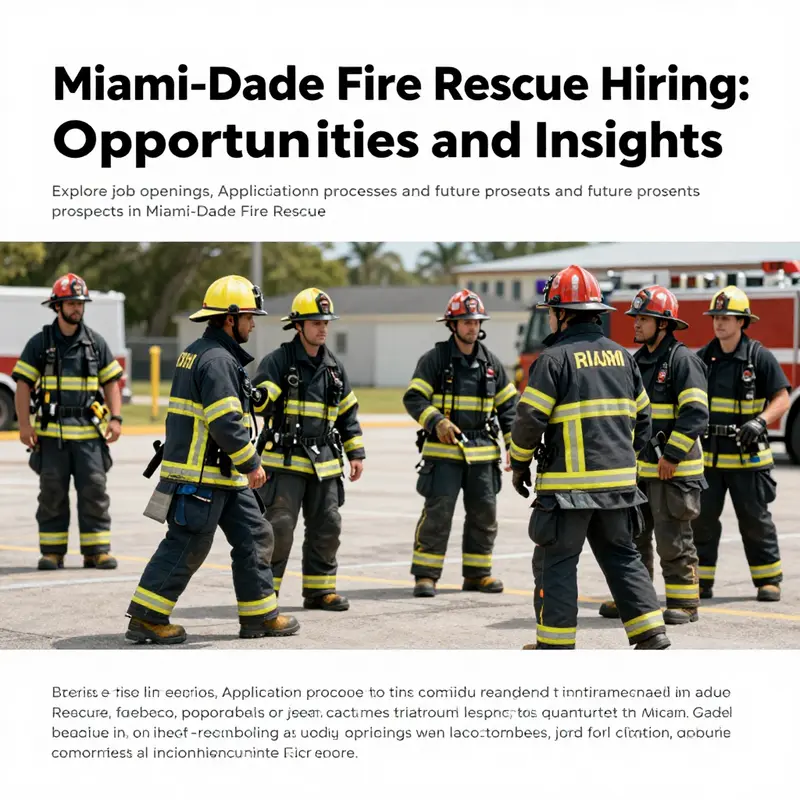
Understanding the hiring landscape of Miami-Dade Fire Rescue is crucial for potential candidates interested in emergency services. This article will explore current job openings, the application process, eligibility requirements, the benefits of working in fire rescue, and future projections in hiring. Each chapter aims to provide comprehensive insights for anyone looking to pursue a career with Miami-Dade Fire Rescue, ensuring that our community is served by well-prepared and dedicated professionals.
Inside Miami‑Dade Fire Rescue Hiring: Current Openings, Paths, and How to Apply
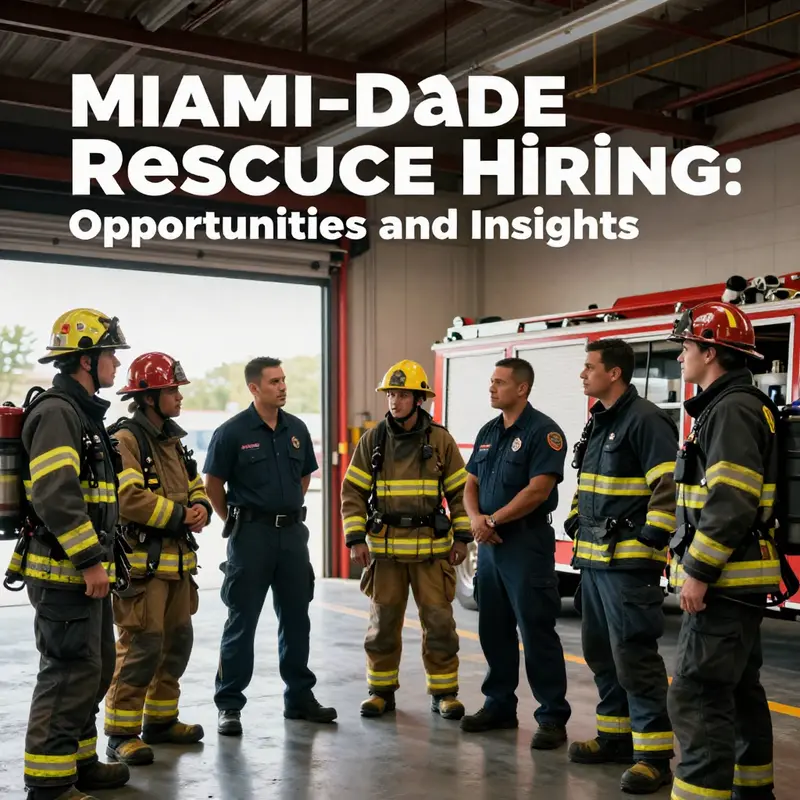
A clear view of today’s opportunities within Miami‑Dade Fire Rescue helps applicants plan and act with confidence. The department regularly lists openings that span emergency response, medical services, fire prevention, technical support, and administrative work. That variety creates multiple entry points for people with different skills, backgrounds, and career goals. Some roles require hands‑on emergency training and certifications; others focus on administrative, technical, or community outreach duties. Together they form a network of positions that keep emergency services responsive and resilient.
Positions advertised most often include firefighter, paramedic, emergency medical technician (EMT), fire prevention officer, and a range of support roles. Firefighter roles demand physical fitness, successful completion of written and practical exams, and proof of required certifications. Paramedic and EMT roles prioritize current licensure and clinical experience. Fire prevention officers often need inspection experience, plan review skills, and knowledge of codes and ordinances. Administrative positions seek candidates with strong organizational, communication, and records management skills. Technical roles can range from fleet maintenance to communications systems, and sometimes require specialized certifications or trade experience.
The hiring process is ongoing rather than confined to irregular or rare posting cycles. New openings appear frequently on the official careers page, and some recruitments remain open for extended periods to build candidate pools. That continuous cadence benefits applicants in two ways: it increases the chance of finding a role that matches one’s qualifications, and it allows time to prepare for required assessments. Treat the careers page as the authoritative source for current vacancies, qualifications, salary bands, and application instructions. Use it to confirm minimum requirements like age, residency, education, physical standards, and licensure, since these can vary by position.
Preparation matters. For emergency response roles, meeting baseline medical and fitness standards is only the start. Applicants should gather and verify documentation early: certifications, transcripts, licenses, and any veteran or bilingual verification that may affect preference points. Practice tests and study guides for written exams reduce anxiety and raise performance. Practical skills drills—lifts, carries, timed obstacle tasks—help candidates meet physical entry standards. For clinical roles, ensure your paramedic or EMT license is active and in good standing, and that continuing education records are accessible. Administrative and technical applicants should assemble work samples, references, and a clear account of relevant systems or tools they know.
Understanding the timeline and stages of hiring helps candidates avoid surprises. Typical steps include online application, screening for minimum qualifications, written examinations, practical or skills tests, interviews, background checks, psychological evaluations, medical exams, and a final eligibility list. Some positions add a probationary period after hire. Not every posting follows the exact sequence; check each vacancy for specific steps. Background investigations can be detailed and time‑consuming, so disclose past issues upfront if they might come up. Transparency during the process builds credibility and shortens delays.
Competition can be stiff. Many roles in Miami‑Dade Fire Rescue attract local applicants and those from neighboring counties, as well as experienced professionals seeking career advancement. Stand out by tailoring your application materials to the job description, highlighting relevant certifications and experience, and providing clear, concise examples of performance under pressure. Volunteer firefighting or emergency medical service experience is valuable; if you lack that background, other public safety, health care, or community service roles can be framed to emphasize transferable skills—teamwork, problem solving, communication, and reliability.
Leverage training and certification strategically. Formal credentials often determine eligibility. If you are preparing to enter the field, prioritize certifications that align with your target role. For practical guidance on acquiring foundational credentials, consider resources that explain certification pathways and their career impact. A concise primer on certification and training can clarify which courses and certificates accelerate entry into fire rescue work; one useful internal resource explains the essentials of fire safety certification training and how those credentials support career progression. Review such materials to map a realistic timeline for course completion and licensure maintenance.
Networking and mentorship accelerate progress. Connect with current employees at community events, training sessions, or volunteer opportunities. When possible, speak with hiring managers or recruiters at career fairs to get direct feedback on common pitfalls. Mentors can recommend training providers, advise on exam preparation, and help interpret job announcements. These contacts can also clarify day‑to‑day expectations in different units—engine companies, rescue squads, prevention bureaus, and administrative sections—making it easier to target roles that fit your strengths.
Keep documentation and readiness active. Many certifications expire and require continuing education. Licenses should be renewed well before application deadlines. Maintain up‑to‑date immunizations and physicals where required. If background checks require fingerprints, initiate that process early. These administrative details often determine whether an otherwise strong candidate moves forward.
Finally, track postings proactively. The careers page is the single most reliable source for listings and instructions. Set alerts if the site offers them, check listings regularly, and prepare applications in draft so you can submit quickly when a suitable posting opens. For broader career context—training tips, industry updates, and practical advice on certification—refer to a short guide on fire safety certification training available through an internal resource. When you are ready to apply or to verify current vacancies, consult the official Miami‑Dade County Fire Rescue careers page for the most accurate, up‑to‑date information: https://www.miamidade.gov/firerescue/careers
The mix of steady hiring, varied roles, and clear procedural steps makes Miami‑Dade Fire Rescue accessible to many candidates. With focused preparation, current documentation, intentional networking, and attention to posted requirements, applicants can move from interest to eligibility and, ultimately, to service. This chapter outlines the landscape of current opportunities and practical steps to engage with them confidently, so readers can plan a realistic course toward a role within Miami‑Dade Fire Rescue.
Charting the Path to a Fire-Rescue Career: Navigating Miami-Dade’s Hiring Timeline and Application Process
When a city as sprawling and dynamic as Miami meets the call of emergency response, the heartbeat of the department is not just its engines and equipment but the people who apply to wear the badge and serve. Miami-Dade Fire Rescue regularly posts openings for firefighter, paramedic, EMT, and administrative roles, and the hiring window is often open in a rolling, ongoing fashion rather than a single, rigid season. For anyone drawn to the challenge of protecting lives in a densely populated, heat-streaked environment, knowing when and how to apply is as important as the skills the department seeks. The official Miami-Dade County Fire Rescue Careers page is the gateway to current vacancies, deadlines, and the exact requirements you must meet before you even reach the testing stage. In this landscape, every posted position is a doorway, and every doorway requires preparation, patience, and persistence.
The path into MDFR starts with clarity about eligibility and a willingness to endure a thorough, multi-step screening. The department looks for candidates who are at least 18 years old, hold a valid Florida driver’s license, and have either a high school diploma or a GED. Beyond the baseline, applicants must demonstrate physical readiness through a Physical Ability Test (PAT) and prove cognitive and situational readiness via a written examination. A comprehensive background investigation follows, as does a medical evaluation, culminating in a panel interview. Each of these steps is designed not only to assess aptitude but to ensure that the right person can stand up under pressure, work as part of a team, and remain calm and decisive when seconds count. Taken together, these requirements form a robust filter designed to identify recruits who can endure long training cycles, handle demanding shifts, and carry the trust of the community through countless emergencies.
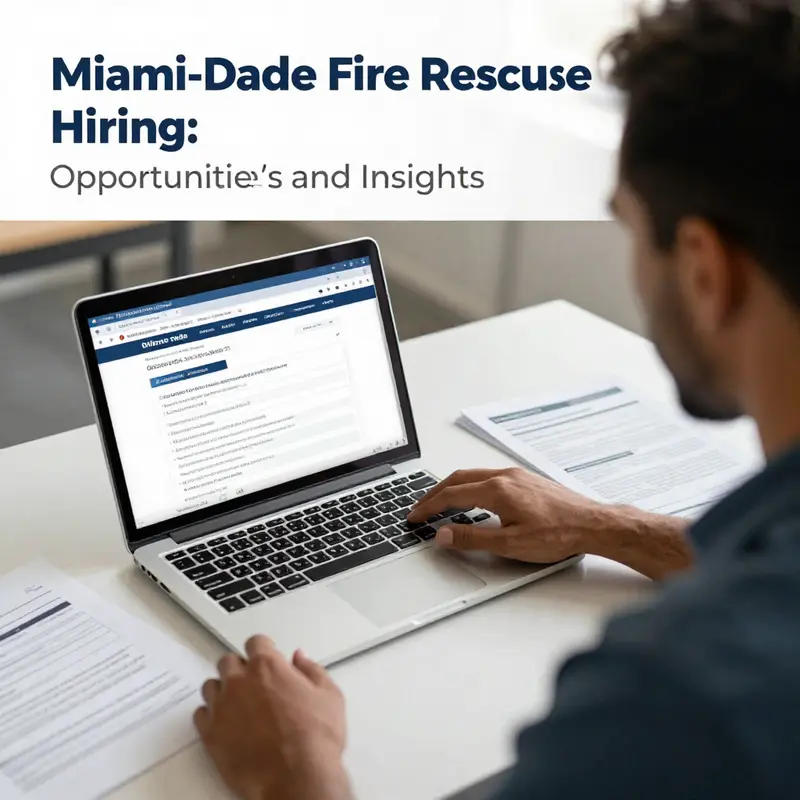
The application process itself is straightforward in its digital structure but demanding in its execution. Prospects begin by visiting the official careers portal, where openings are listed by division under Fire Rescue. Once a suitable opportunity is found, the next move is to create a profile on the site and complete the online application. The digital flow mirrors the department’s commitment to fairness and transparency: you submit information once, and the system guides you through the steps needed to verify your eligibility, upload required documents, and schedule assessments. This online-centric approach also makes it possible to track your progress, receive updates, and respond quickly if a vacancy moves forward to the next phase.
A critical aspect of this journey is the pace. The hiring process can stretch over several months, even for strong candidates. The volume of applications, the thoroughness of screening, and the need to coordinate multiple testing events and interviews all contribute to the extended timeline. For anyone contemplating this path, patience is not passive; it is an active component of preparation. While you await notification for PAT, written exams, or interviews, there is value in sharpening the very skills MDFR will assess. This means maintaining physical fitness, staying informed about local procedures and safety standards, and reviewing the kind of scenarios you may face in both the written and practical components of the process.
Several elements of MDFR’s screening deserve particular attention. The Physical Ability Test evaluates cardiovascular endurance, strength, agility, and mobility—traits essential to ladder climbs, hose handling, and victim-rescue simulations. The written examination tends to measure reading comprehension, numerical proficiency, and the ability to apply critical thinking under time constraints. The background investigation digs into personal history, references, and past conduct, seeking alignment with the department’s values and the trust required by public safety work. A medical evaluation ensures there are no health issues that could compromise performance or safety, while the panel interview assesses communication, judgment, and teamwork. The sequence is designed to be rigorous but fair, giving each candidate the opportunity to demonstrate readiness across physical, cognitive, and interpersonal dimensions.
Preparation, therefore, becomes a continuous thread from the moment you decide to pursue a position with MDFR. Beyond ensuring you meet the basic eligibility requirements, you should build familiarity with the specific duties attached to the role you seek. If you’re aiming for firefighter or paramedic positions, for example, you should engage in regular aerobic training, functional strength routines, and activities that mimic the kinds of tasks you’ll perform on the job. Many candidates find it beneficial to participate in study groups or training programs that focus on the PAT’s structure and the written exam’s content, as the predictable formats help you allocate study time efficiently. It’s also wise to cultivate a clear, concise way of communicating experiences in your application and during interviews. The panel interview, in particular, rewards applicants who can articulate decision-making processes, a teamwork mindset, and a demonstrated commitment to public service.
An often overlooked but crucial part of the journey is the broader context of professional development. While MDFR’s immediate needs drive hiring cycles, the department also values certifications and credentials that strengthen a candidate’s foundation. In this light, pursuing relevant safety and firefighting certifications can be a meaningful part of preparation, not only to meet qualifications but to signal readiness to the hiring panel. For those who want to explore the role of certifications in a firefighter career, resources exist that highlight how these credentials contribute to long-term success and mobility within the field. Unlocking Your Future: The Vital Role of Fire Safety Certificates in Your Career Journey offers perspectives on how structured credentialing can complement the MDFR pathway. It is not a substitute for MDFR’s direct requirements, but it can help shape a candidate who arrives at the process with an expanded toolkit and a clearer sense of professional trajectory.
For anyone navigating this process, the practical takeaway is simple: stay informed, stay prepared, and approach each stage with deliberate focus. Regularly checking the MDFR Careers page ensures you’re aware of current vacancies and any changes to deadlines or prerequisites. When a posting aligns with your qualifications and career goals, you should seize the moment: register a profile, assemble your documentation, and submit your online application promptly. Then you wait, study, train, and prepare to demonstrate your readiness in the PAT, the written test, the background review, the medical evaluation, and the panel interview. The experience is designed to be sequential, but the underlying goal is consistent—identifying individuals who can perform under pressure, collaborate with a team, and uphold the highest standards of public safety.
The road to a career with Miami-Dade Fire Rescue is not about a single test or a single moment of triumph. It is a sustained commitment to readiness and service. The department’s multi-stage evaluation reflects the complexity of the work and the diverse demands of the community it serves. As candidates progress, they gain a sense of the department’s culture, the teamwork required during emergencies, and the discipline necessary to maintain safety for both responders and the public.
To keep your momentum, treat each phase as an opportunity to refine your strengths and fill gaps. Use the official site as your compass, but also seek knowledge from credible resources that contextualize the experiences you’ll encounter. The combination of practical preparation, thoughtful self-presentation, and a steady pace through the process increases your chances of advancing through PAT, written exams, and interviews. In the end, the goal is clear: joining a team that responds with speed, skill, and steadiness when a call goes out and a life hangs in the balance. The journey may be long, but the payoff is meaningful service and a career dedicated to protecting the people and places that define South Florida’s vibrant communities.
External resource: https://www.miamidade.gov/firerescue/careers
From Eligibility to Appointment: Navigating the Hiring Rhythm of Miami-Dade Fire Rescue
For anyone drawn to the call of the fire service in Miami-Dade County, the path to donning the department’s uniform begins not with the first shift but with clarity about eligibility and the cadence of openings. Miami-Dade Fire Rescue regularly posts job openings for firefighter, paramedic, EMT, and administrative roles, and the hiring process runs continually, with fresh opportunities added to the official careers page as needs arise. To stay current, every prospective applicant should bookmark and regularly check that page, because deadlines shift and vacancies turn over in response to staffing needs, retirements, and program changes. This chapter unpacks what it takes to even be considered and how the recruitment rhythm typically unfolds, so readers can plan their preparation and time their application with confidence. Although the timing of openings may vary, the principle remains the same: eligibility comes first, followed by a structured, competitive assessment that measures both the skill set and the mindset required for the high-stakes work of emergency response. The journey begins with eight core prerequisites: age, a valid driver’s license, education, physical readiness, and a slate of verifications and evaluations. At minimum, candidates must be at least 18 years old and must possess a valid Florida driver’s license. A high school diploma or a GED is required, signaling the foundational education that supports the rapid decision-making and complex teamwork at the fire scene. The department also requires applicants to demonstrate physical fitness, through a series of tests designed to gauge endurance, strength, and stamina. Beyond the body, there is a medical and a mental gate to pass: medical evaluations ensure a candidate’s health can sustain the demanding shifts, while psychological assessments seek to ensure the resilience and stability needed to operate under pressure. A thorough background check is standard, reflecting the trust placed in public safety professionals and the responsibility to the community they serve. Taken together, these elements form a durable baseline that ensures recruits can show up ready to perform at the highest level. Yet eligibility is only the entry ticket. The hiring process itself is highly competitive and is designed to identify individuals with the right combination of judgment, temperament, and technical capacity to handle the responsibilities of emergency response duties. Most cycles include a written examination that tests foundational knowledge and problem-solving ability, followed by an oral interview that offers a window into communication skills, situational awareness, and the ability to stay calm under pressure. A comprehensive evaluation then considers overall suitability for emergency duties, weighing factors such as teamwork, reliability, and ethical judgment. It is this layered approach that distinguishes merely qualified candidates from those who truly belong in a fire rescue role. For people who are already deciding to pursue this path, the practical next steps are just as important as the criteria themselves. Before applying, take stock of your documentation and ensure you will meet the minimum requirements on or before the posted deadline. Gather your certifications, educational records, and any professional licenses that support your candidacy, and verify that your contact information is current so you do not miss notices about test dates or interviews. Scheduling time to prepare for the written exam and to practice interview scenarios can materially improve performance, especially for candidates juggling work or family commitments. The good news is that thoughtful preparation can be augmented by formal resources that align with the department’s emphasis on safety, teamwork, and disciplined practice. For practical preparation, consider resources such as the Fire Safety Essentials Certification Training, which provides foundational insights and competencies that can give candidates a meaningful head start. You can explore this resource at Fire Safety Essentials Certification Training. As you build readiness, keep in mind that the department’s process is not only about test scores but also about fit for the demanding mission of protecting lives and property. The department itself emphasizes that the process yields a cohort of individuals who not only meet technical standards but also demonstrate the temperament and judgment necessary for rapid, coordinated action on scene. With that in view, it pays to maintain a steady pace: stay physically conditioned, continue learning about emergency response concepts, and practice scenario-based thinking that mirrors the kinds of questions that may appear on a written exam or in an oral interview. The reality of Miami-Dade Fire Rescue hiring is that openings breathe with the community’s needs, and as those needs evolve, so too may the eligibility criteria or additional criteria that the department requires. Always refer to the official Miami-Dade County Fire Rescue Careers page for the most accurate, up-to-date information on current postings, application deadlines, and requirements. This source is the definitive guide for candidates, and it will reflect any changes—whether they relate to new credential requirements, updated medical standards, or adjustments to the testing process. In case readers want a broader governance view or to verify procedures, the county’s Fire Rescue site also hosts official guidelines and contact information, ensuring transparency about how the hiring process is administered. Remember that the path from applicant to firefighter or paramedic is a progression through clearly defined steps, each building on the last to form a ready and capable public safety professional. For ongoing accuracy and the latest postings, consult the official page and stay engaged with the recruitment timeline. External resource: https://www.miamidade.gov/fire-rescue
Why Miami‑Dade Fire Rescue Benefits Make It Worth Applying Now
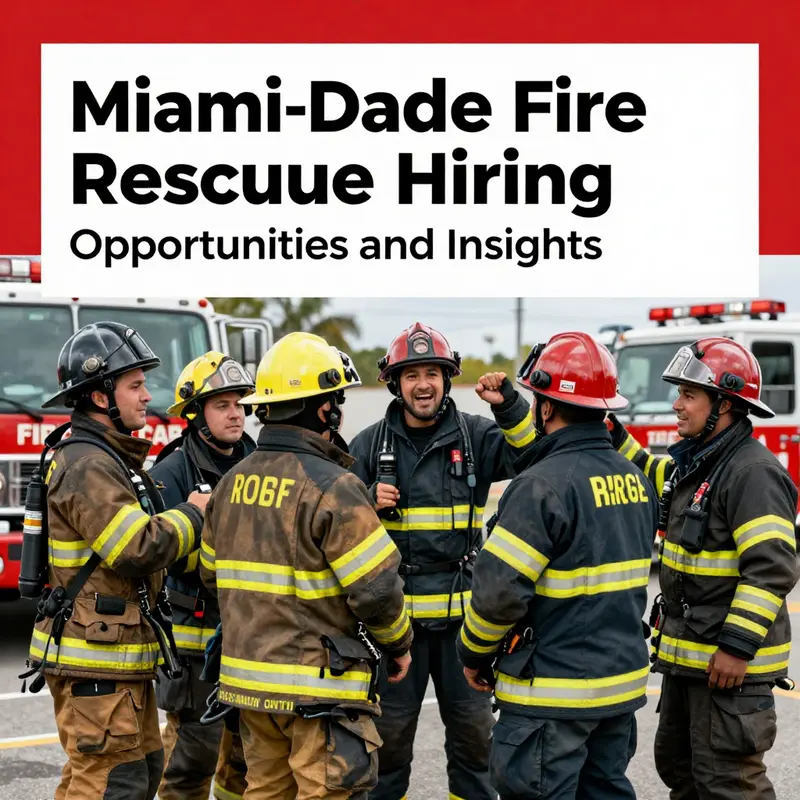
Working for Miami‑Dade Fire Rescue is more than a job; it’s a long-term investment in your career and wellbeing. The department’s benefits package is built to support employees across stages of life and professional development. For anyone watching hiring announcements, understanding the total rewards that accompany a position is essential. These benefits influence when to apply, how to plan a career path, and what to expect from life as a public safety professional in Miami‑Dade County.
From day one, compensation is both competitive and structured to reflect public safety responsibilities. Pay scales are designed to reward the skills and risks inherent to firefighting, emergency medical response, and related roles. Beyond base pay, there are incentives, differential pay, and overtime structures that increase earning potential. For recruits, this means financial stability early in a career. For experienced hires, it creates predictable progression tied to rank and certification.
Retirement security is a central pillar of the package. Participation in the Florida Retirement System provides a defined framework for long-term planning. This is critical for people who view public service as a career rather than a stopgap. A solid retirement plan offers peace of mind, allowing employees to focus on demanding work without constant concern about the future. For many, the retirement benefits make a career in fire rescue a clear alternative to less predictable private-sector roles.
Health coverage is comprehensive and family-oriented. Medical, dental, and vision plans protect employees and their dependents. Access to high-quality care reduces the stress that often accompanies irregular schedules and physical demands. Preventive care, specialist access, and routine coverage all contribute to an environment where workers are supported physically and mentally. This level of insurance promotes retention and reduces turnover, which in turn stabilizes teams and improves community outcomes.
Generous paid time off supports recovery and family life. Vacation time, sick leave, and holiday pay allow workers to manage personal obligations and recuperate after intense shifts. For emergency responders, rest and time away are not luxuries; they are essential for safe performance. Paid leave policies make it feasible to maintain a life outside of work, to pursue rest, and to attend to family needs without sacrificing income.
Employee assistance programs and wellness initiatives work together to keep the workforce resilient. Access to counseling, stress management resources, and targeted support helps employees navigate challenges both personal and professional. Wellness programs encourage fitness and preventive health measures tailored to the realities of emergency response work. These initiatives reduce burnout and support long-term service, which employers and communities both value.
Education and career growth are actively encouraged through tuition reimbursement and development pathways. The department offers financial support for employees seeking higher education or certifications relevant to their roles. This makes a tangible difference for those who aim to move into advanced medical roles, leadership positions, or specialized technical assignments. Tuition reimbursement lowers the barrier to advancement and signals that the organization invests in its people.
Career development programs provide formal and informal pathways to promotion. Training, mentorship, and clear criteria for advancement help staff plan their trajectory. For applicants, this clarity matters: it tells you not only how to get hired, but how to grow once inside. Promotion systems based on certification and experience reward continuous learning and practical competence, creating a culture of professional excellence.
Job security in public safety offers stability many private-sector careers cannot match. Demand for emergency services remains consistent, and municipal funding priorities often protect these roles. This stability supports long-term financial planning, home ownership, and family security. For those juggling multiple responsibilities, the certainty that comes with a stable employer is a compelling reason to apply when openings appear.
Beyond tangible benefits, there are quality-of-life elements that matter. Working in Miami‑Dade places you in a culturally rich, diverse region. Cohesive teams, shared purpose, and community respect are intangible rewards. Colleagues often cite camaraderie and a strong sense of mission as among their primary reasons for staying. These cultural benefits compound with formal benefits to create a fulfilling career environment.
Understanding the benefits package can also shape when and how you apply. Recruitment cycles may be continuous, but certain positions are advertised more frequently. If you are weighing a move, consider timing applications when classes or hiring batches are announced. Use available tuition reimbursement and training programs to plan immediate next steps after hiring. If you seek rapid advancement, target roles that align with departments that offer specialized training or clear promotion pathways.
Health and wellness offerings also influence timing. If you are managing a chronic condition or family health needs, secure coverage before making a transition. Understand the waiting periods and enrollment windows for insurance. Similarly, if you plan to use tuition reimbursement, confirm eligibility timelines so your educational plans align with your hire date.
Finally, remember that benefits are living instruments. Policies evolve with budgets, legislation, and department priorities. Staying informed matters. The county careers site lists current vacancies and application instructions. You can also learn from employee reviews to get a clearer picture of real-world experiences with pay and benefits. These firsthand perspectives help set expectations and guide decisions about when to make a move.
If you want to learn more about training and certification options that tie directly into career advancement, explore resources on fire safety education and credentialing in the department’s network, such as Fire Safety Essentials Certification & Training. For additional details on pay structures and employee feedback, refer to official and verified reviews at the end of this chapter.
External resource: For detailed, employee-verified information on pay and benefits, see the Miami‑Dade Fire Rescue Department pay and benefits reviews: https://www.glassdoor.com/Salaries/miami-dade-fire-rescue-department-salary-SR_KS0,12683.htm
Hiring Ahead: How Miami‑Dade Fire Rescue’s Trades Focus Shapes Future Recruitment
Miami‑Dade Fire Rescue’s current hiring emphasis on trades and manual labor positions signals more than a short‑term staffing need. With applications for these roles open through January 28, 2026, the department is clearly investing in the backbone of its operations: the people who maintain stations, repair and service equipment, and keep infrastructure reliable. That focus offers an early look at future hiring priorities and the kinds of candidates who will be in demand as the county continues to grow.
The practical reality behind this recruitment push is simple. Fire rescue work depends on a wide range of skilled trades beyond first responders: mechanics who maintain apparatus, electricians who keep station systems online, technicians who service life‑saving equipment, and general maintenance workers who ensure facilities remain safe and functional. Prioritizing these roles now reduces downtime, extends equipment life, and improves operational readiness. In consequence, hiring for trades is not peripheral. It directly supports response capability and public safety.
Looking forward, several factors will shape how hiring evolves. First, demographic shifts and retirements will create turnover across job categories. Experienced tradespeople and firefighters will eventually depart, and the department must maintain a pipeline of trained replacements. Second, infrastructure age and expansion projects will affect demand. New stations, renovated facilities, and updated apparatus require more technicians during installation and for ongoing upkeep. Third, budgetary cycles influence when positions are posted. Capital investments and operating budgets determine how many roles the department can fund at any moment.
Because these variables interact, future hiring will likely be rhythmic rather than one‑time. Expect recurring job postings tied to budget approvals, project timelines, and attrition. Vacancy patterns may cluster around the start of fiscal years, after large maintenance projects, or when new equipment is fielded. For candidates, that means a steady need to monitor postings and apply when roles match their skills.
Technology also matters. Modern fire departments adopt electronic maintenance systems, advanced diagnostics, and more specialized equipment. Trades applicants with electrical, HVAC, or vehicle diagnostics experience will be more competitive. Likewise, certifications and continuing education make candidates more attractive. For applicants without formal credentials, short technical courses or on‑the‑job training programs can bridge the gap quickly. The department’s emphasis on trades suggests they value practical, demonstrable skills and the ability to adapt to new systems.
Another important dynamic is workforce flexibility. Cross‑training staff to handle multiple responsibilities increases resilience. A mechanic who understands pump testing or an electrician familiar with alarm systems can reduce the need for external contractors. Future hiring trends may therefore favor multi‑skilled applicants. This trend opens opportunities for candidates willing to learn broadly and demonstrate diverse capabilities.
Community and economic growth in Miami‑Dade County will also feed demand. New developments raise the need for fire prevention inspections, upgraded response infrastructure, and more vehicles. Growth places sustained pressure on support roles as much as on front‑line staffing. When the county expands, so does the workload for tradespeople who keep response systems operational. Hiring plans will reflect that steady, long‑term pressure.
Budget constraints will remain the central limiter. Even with clear operational need, funding determines how many positions can be authorized. Advocacy for staffing and equipment at the county level affects recruitment cycles. Applicants should recognize that sometimes roles are delayed or combined to meet fiscal requirements. Monitoring budget announcements and local government session outcomes helps anticipate peaks and lulls in hiring.
For individuals planning to apply, practical preparation pays off. Update résumés to highlight relevant certifications, technical courses, and hands‑on experience. Emphasize equipment maintenance, safety compliance, and any emergency services familiarity. Short, targeted certifications in areas like vehicle maintenance, electrical systems, or HVAC systems can significantly boost candidacy. Applicants should also demonstrate soft skills—problem solving, communication, and teamwork—which are crucial in high‑pressure maintenance scenarios.
Networking matters too. Connect with current or former department employees, attend community career events, and participate in technical workshops. Visibility and relationships often help candidates learn about upcoming openings before public postings appear. Local training programs and community colleges are good places to start building skills and relationships.
From a departmental planning perspective, continuing to post trades openings shows a strategic focus on sustaining operations. This approach reduces reliance on outside vendors and builds institutional knowledge. Over time, an in‑house capability for repairs and maintenance can lower costs and shorten downtime. For the public, the upshot is more reliable emergency services.
Prospective applicants should also consider the role of training facilities. The department’s investment in practical training infrastructure affects recruitment and retention. Practical experience gained at dedicated training sites improves job readiness. For context on how training spaces contribute to workforce preparedness, see the department’s recent coverage of training infrastructure in the article “Firefighter training tower dedication.” This resource highlights how hands‑on facilities shape skills and readiness.
Finally, stay agile. Hiring needs will change with the economy, county priorities, and technology. Regularly checking the official jobs portal is the single best habit applicants can adopt. New opportunities appear as budgets are finalized and projects begin. Being ready with an updated résumé and applicable certifications lets strong candidates move quickly when roles are posted.
The current trades recruitment push is a clear signal: Miami‑Dade Fire Rescue values the skilled hands that keep the system running. For job seekers, that creates immediate openings and longer‑term career pathways. For the community, it promises a more resilient emergency response network. To remain informed about openings and deadlines, consult the Miami‑Dade County jobs page and set alerts when possible: https://www.miamidade.gov/jobs
Final thoughts
In conclusion, the Miami-Dade Fire Rescue hiring landscape presents numerous opportunities for individuals eager to join the ranks of emergency responders. With a clear understanding of the application process, eligibility requirements, and the benefits of a career in fire rescue, prospective candidates are better equipped to navigate this rewarding pathway. As hiring continues to evolve within Miami-Dade Fire Rescue, staying informed will empower you to seek your place in this vital profession that serves and protects the community.

