

Firefighters face life-and-death situations where quick decisions can mean the difference between life and death. Their primary mission is to protect human life in emergencies, often placing rescues before extinguishing flames. This approach prioritizes human safety over property, emphasizing the immediate risks to trapped individuals. By employing specialized tools and techniques, firefighters effectively perform life-saving operations, significantly impacting community safety. The following chapters delve into the reasoning, techniques, and outcomes of maintaining this unwavering focus on rescuing individuals in peril.
Breathing Life First: Why Firefighters Rescue Before They Fight
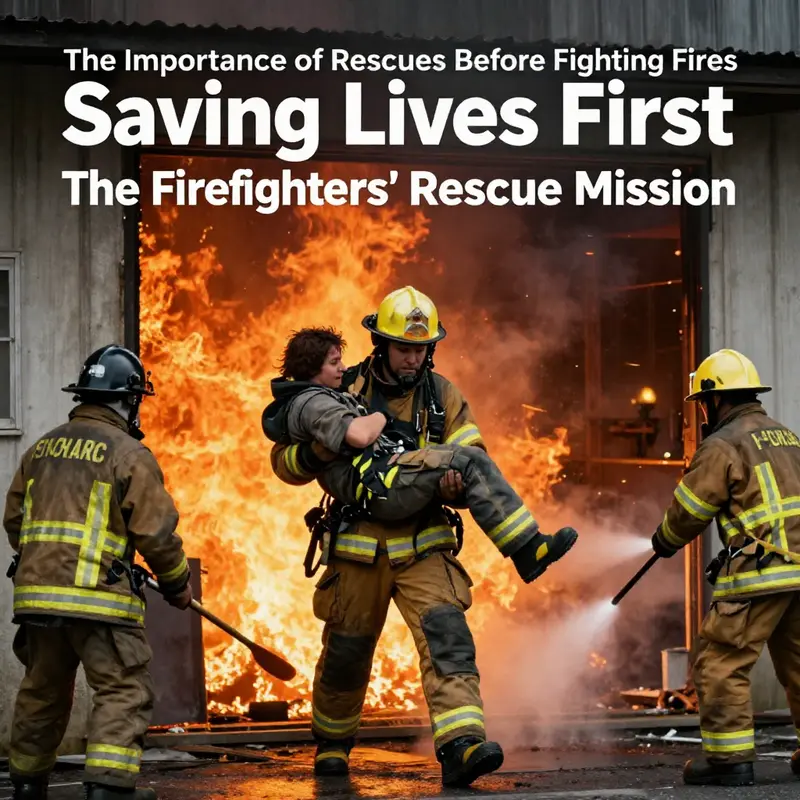
Breathing Life First is more than a motto; it is a practiced discipline that shapes every move a firefighter makes when the siren cuts through the morning air and danger becomes personal. When alarms flare and smoke rolls across a skyline, the instinct to save lives rather than to win a battle against flames drives the choreography of the incident. The chapter examines why rescuing people trapped inside burning buildings, in vehicles, or in other compromised spaces takes precedence, how crews balance speed and safety, and what this priority reveals about the profession itself. It is a narrative built on training, protocols, and the everyday decisions that keep people alive when seconds truly matter. The idea that life safety comes first is not a rejection of fire suppression; it is a recognition that without rescuing those in peril, the subsequent efforts to control the flames may be too late to matter.
From the moment a call arrives, the central objective is to locate and remove occupants in danger. Fire scenes are dynamic and chaotic theaters where conditions can change in an instant. Dense smoke, low visibility, collapsing structures, and the potential for hazardous atmospheres create ethical and practical constraints. Responders must rapidly assess who is inside, where they are located, and what stands between them and safety. The priority is not to prove bravery or to demonstrate flawless technique; it is to ensure that no life remains at risk once those inside have been located. This approach—often described in formal terms as life safety first—aligns with public safety principles and the guidelines that govern firefighting practice across many regions.
The practice rests on a long tradition of prioritizing human life. Firefighters train to move with purpose through smoke and heat, to navigate structural hazards, and to communicate with precision when voices may barely cut through the siren. In the field, rescue decisions are made in real time, informed by training, experience, and risk assessment. A crew may arrive to find occupants trapped in a room, behind a door that seals shut under pressure, or pinned by debris in a vehicle. The immediate response is to locate, extricate, and medically stabilize—often with improvised tools and strategies that become standardized over years of practice. Technical tools support rescue operations, including thermal imaging cameras that peer through smoke and help locate bodies or victims hidden from sight, and hydraulic rescue tools that can pry open doors or cut through metal to create an escape route.
Yet technology alone does not define the sequence of actions. The discipline rests on training, policy, and professional judgment. In many departments, life safety first is codified in incident command doctrine and reflected in how resources are allocated during an emergency. Fire suppression is not neglected but staged to follow a successful rescue operation. The rationale is straightforward: a rescued person has a chance to survive that may vanish if flames or smoke claim their next breath. When suppression proceeds, it is with the informed awareness of the vulnerabilities revealed by the rescue and the confidence that those vulnerabilities have been reduced to the lowest possible level.
The sequence is adaptable to different contexts. In a high-rise, the priority might be to evacuate occupants from floors where distress signals are detected or where time is running out due to rapid smoke spread. In vehicle extrication, the rescue may begin with rapid access while protecting occupants and reducing fire exposure. At times, responders may delay aggressive suppression to search for potential victims in hidden spaces, weighing the probability of life against the hazards created by the evolving fire. This balancing act underpins a broader philosophy: the best outcome arises when rescuers secure occupants and establish safe paths for both victims and responders to reach safety and to address the fire with a clear plan.
The human element animates this approach. Firefighters recognize that every person they rescue has a story and a future that depends on timely action. The professional identity of a firefighter is not defined by how many flames are pushed back at a given moment, but by how many lives are brought home in the wake of the call. This is reinforced by countless calls, simulations, and after-action reviews. When teams review a deployment, they examine not only the efficiency of water application or the speed of the initial attack, but also the thoroughness of the search, the effectiveness of the rescue, and the degree to which occupants were protected from hazards.
The tools of rescue—whether high-tech or human-scale—complement a well-honed mindset. Thermal imaging cameras illuminate heat signatures and reveal paths to egress that may be obscured by darkness. Hydraulic tools pry open doors or stabilize a vehicle to enable safe extraction. Medical interventions can begin on the move as firefighters render life-saving care while evacuating a victim. The blend of rescue and medical care on the move illustrates the integrated, mission-critical philosophy that has grown up around modern firefighting.
These capabilities are the product of deliberate training, supervised practice, and a culture that embraces ongoing learning. Many departments emphasize scenario-based training that bridges theory and action. Training environments such as dedicated towers or simulated structures illustrate how crews rehearse search patterns, victim tagging, back-up plans, and rapid reassessment under pressure. The aim is not spectacle but preparedness: rescuing people safely depends on knowing how to move quickly when the path is uncertain and when structure integrity may be compromised. The emphasis is on minimal delay but maximal safety, a paradox solved by rigorous training and disciplined teamwork.
The principle extends beyond urban fires to wildland and industrial environments, where risk calculations change but the core objective remains the same: life safety first. The Maui wildfires of 2023 illustrate this: responders prioritized evacuation before launching comprehensive suppression. It was not a rejection of firefighting; it was an acknowledgment that saving lives in the present moment shapes the incident’s future. In industrial facilities, where hazards can be severe, rescue operations may demand specialized teams and tailored procedures. Yet the core driver remains: occupants come first, and actions should preserve the chance for those occupants to leave the danger zone.
What does this mean for how communities experience fire response? It means that when you call on firefighters, you are calling on teams who internalize a sequence that places human life at the heart of every decision. They begin with search and rescue, then proceed to suppression, ventilation, and overhaul only after the immediate threats to life are addressed. They do not abandon the fire; they reframe it as a secondary problem whose urgency depends on the success of the life-saving mission. They do not treat the flames as the sole adversary but as one variable in a larger equation that includes smoke, heat, building integrity, and the presence or absence of vulnerable people. And they do all of this with equipment, training, and a communication discipline that few nonfirefighting professions can match.
The narrative of life safety first is also a story about trust. It is the trust communities place in their firefighters to act decisively under risk, to use calm planning, and to protect bystanders and responders from chaotic scenes. It is the trust families place in firefighters who answer the call, knowing that the responders will do everything possible to extract a loved one from danger before addressing the flames. It is the trust embedded in policies, standard operating procedures, and daily rehearsals that shape a department’s approach to any incident. In short, rescue before suppression is not a disregard for fire; it is a disciplined acknowledgment that the most important victory at any blaze is saving lives and preserving the possibility of a future for those who survive.
For readers seeking deeper appreciation of how training reinforces this approach, consider the practical investments fire departments make in developing their people. Interactive drills in which teams practice rapid extraction, victim care on the move, and coordinated entry control highlight how rescue work is a full-spectrum operation rather than a single act of bravery. The continuity between rescue and suppression becomes a core capability, as crews learn to switch gears with minimal momentum loss, to prioritize safety for both victims and responders, and to maintain situational awareness under pressure. In this way, rescuing before fighting is not a static rule but a dynamic discipline that evolves with the science of firefighting and the realities of the communities served. The aim remains clear: bring people home safe, every time.
External resource: https://www.nfpa.org/News-and-Research/Fire-statistics-and-reports/Incident-Reports
When Seconds Count: The Lifesaving Logic Behind Rescues Before Fire Suppression
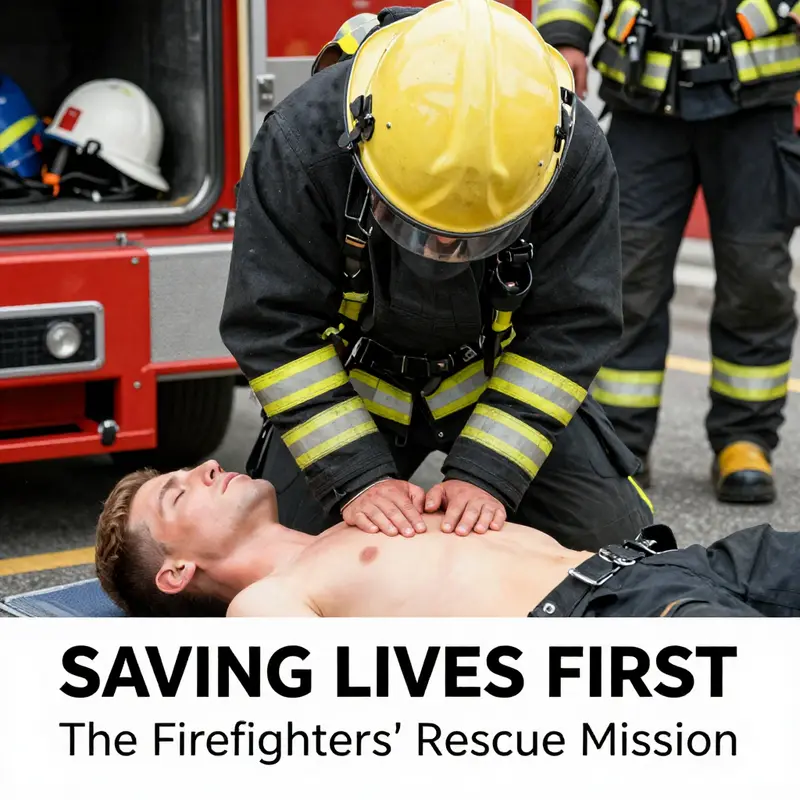
On the front lines of every blaze or crash, seconds crystallize into outcomes that can be counted in lives saved or lost. Firefighters operate with a discipline that places human safety at the center of every decision. Their defining habit is to enter a scene with a laser focus on rescue, then to shift toward extinguishment only after the path to safety has been secured. This ordering is not a whim but a deliberate, scientifically grounded approach to emergency response, one that preserves life while gradually reducing the hazards that threaten it. When a building burns, every breath can carry toxic smoke; every corridor may harbor the potential for collapse. Yet the people inside may have no way to escape without help. The first question a crew asks upon arrival is not why the fire started or how to rid the space of smoke. It is: Are there people who need us now? Are there dangers that will prevent us from reaching them safely if we linger? The answer to that question governs every move that follows and shapes the entire choreography of the rescue and the fire scene that follows.
This life-first approach rests on three interlocking ideas. The first is a simple, stubborn truth: the value of a human life surpasses the valued possessions around it. The second is the reality that the fire scene is a dynamic, dangerous theatre where conditions can deteriorate in moments. The third is a professional ethic that binds responders to a standard of care, not a notion of heroism alone. Taken together, these ideas explain why, even when a structure is rapidly turning into a furnace, responders prioritize extraction and medical interventions for the trapped before they concentrate on the flames themselves. The principle is echoed across fire service culture and training: life over property, safety over speed, and rescue over routine suppression—until rescue is no longer feasible or the scene is secure enough to proceed.
The operational logic behind this approach unfolds through careful scene assessment. Arriving units perform a rapid but thorough hazard survey before anyone advances toward potential victims. They read smoke, heat, and visibility as language in themselves, translating temperature readings, airflow patterns, and structural cues into a plan. If there is a risk that the building could collapse, if the smoke contains toxic gases, or if a flashover could trap occupants in a matter of seconds, teams hold back from aggressive interior work until those hazards are mitigated or controlled. The risk assessment is not a pause for vanity or rhetoric; it is the essential condition that makes rescue possible and sustainable. Without a safe environment, a rescue attempt can become a new casualty, or it can foreclose the possibility of any rescue at all. The aim is to create a window of opportunity in which lives can be saved without accepting unacceptable risk for the rescuers themselves.
This is where the science of tactics meets the art of teamwork. The rescue operation is not a single action but a sequence of coordinated moves that blend entry tactics, search patterns, and rapid medical care. Search and rescue protocols guide crews through building layouts, stairwells, and confined spaces, while medical teams inside the structure provide early life support to victims who may be unconscious or severely injured. In many cases, firefighters arrive to find victims in the most precarious situations—trapped behind doors, pinned in wreckage, or exposed to dangerous heat—yet the immediate need remains straightforward: reach, stabilize, and extract. When extraction is achieved swiftly, the probability of survival rises significantly. The hands that deliver a breath, a circulation, or a stabilization hold the line between a life saved and a life lost. This is why responders routinely perform life-saving interventions, such as CPR or trauma care, even before the arrival of medical units that may be several minutes away. The goal is not to supplant EMS but to bridge the gap with critical, time-sensitive care.
To enable these lifesaving acts, firefighters carry and deploy an array of tools designed to pry open pathways, lift debris, and create breathable spaces for both victims and rescuers. Hydraulic cutters, spreaders, and rams—tools colloquially but accurately known as part of the rescue arsenal—are used to liberate people trapped in wreckage or to gain access to spaces where victims are immobile. The image of a firefighter wrenching open a car door while smoke swirls around is not a cinematic trope but a practical reality in which speed and precision can determine whether someone survives the crush of metal and the heat of a fire. Yet even with these tools at the ready, the rescue must remain bounded by the same risk calculus that governs all actions on the scene. A window of opportunity exists only if it can be protected by safety measures that prevent secondary collapses, protect ladder teams from fallen debris, and preserve the crew’s ability to continue the rescue without becoming another casualty.
The ethical frame of this work is inseparable from its legal and professional foundations. Fire departments train to a clearly articulated hierarchy of priorities: rescue lives first, then control the fire, then extinguish the flames, and finally protect property. While this sequence can sometimes sound counterintuitive to those who equate success with a rapid burst of water on flames, it reflects a rational calculus about risk and reward. Saving lives takes precedence over property because lives are irreplaceable and property is, in a sense, recoverable. Ethical standards demand that rescuers do not sacrifice their own safety for the sake of retrieved belongings or a quick extinguishment that would endanger people still inside. In practice, this means disciplined adherence to protocols that require self-protection first, followed by a targeted, purposeful attempt to reach and evacuate occupants, provided the environment permits it. If the scene demands it, crews will withdraw, reassess, and re-enter at a moment when it is safe to proceed. This disciplined approach is reinforced by training, legal guidelines, and a culture that prizes the sanctity of life above all else.
The impact of this rescue-first posture on outcomes is measurable in more than anecdotes. Modern firefighting doctrine links rapid, coordinated rescue with improved survival rates, particularly in scenarios involving building fires and vehicle crashes where victims can be incapacitated by smoke inhalation, burns, or trauma. The National Fire Protection Association, among others, emphasizes that the primary mission of firefighters is to save lives while still protecting property and delivering emergency medical services. They also note that rapid deployment—ideally within a few minutes—significantly improves survival odds, though even the best response cannot rescue victims if the structure has become unsafe. The point is not to romanticize heroism but to recognize that life-saving work is a measurable, repeatable process that depends on disciplined training, precise judgment, and a shared ethic across agencies. The practice hinges on the understanding that a safe rescue enables effective suppression later, turning a potential inferno into a controllable hazard with fewer casualties and less structural compromise.
In practice, the rescue-first principle also shapes how responders manage human resources and equipment. Teams include specialists trained in rapid extraction, medical care, and scene protection, all of whom must work in synchrony to preserve the safety of victims and responders alike. The equipment brought to the scene is chosen not only for its ability to knock down a fire but for its capacity to reach people who cannot self-evacuate. In addition to hydraulic tools, responders rely on breathing apparatus to protect themselves from toxic smoke, thermal imaging devices to locate heat sources and victims through obscured environments, and lighting that can illuminate complex interiors where visibility is poor. The choreography of entry, search, rescue, and extraction is delicate; it requires a balance between assertive action and cautious prudence. Each movement is calculated to minimize risk while maximizing the chance of a successful rescue. The result is a response that looks at once aggressive and methodical, dynamic yet steady, urgent yet controlled.
This approach is not limited to urban towers or enclosed spaces. It translates into how fire departments train for varied environments and resource constraints. In rural settings, for instance, the same rescue-first logic applies, though the tools and methods may be adapted to longer response times and different fire loads. Vehicle extrication demonstrates the adaptability of the principle: drivers caught in wreckage may be stabilized and prepared for movement while crews use spreaders and cutters to free them, all while the fire scene is brought under control. The overarching objective remains consistent: preserve life and reduce the risk of additional harm. Training programs emphasize not just technique but also decision-making under pressure, ensuring that responders can discern when interior operations are feasible and when it is safer to focus on stabilization and evacuation. The emphasis on life safety is thus a throughline that informs equipment choices, personnel assignments, and the cadence of each call.
For those seeking to deepen their understanding of the practical dimension of fire safety and rescue, ongoing professional development is vital. Rigorous, structured training helps responders translate the abstract ethics of life over property into concrete actions on the ground. Programs that emphasize the essentials of safety, rescue operations, and patient care build a shared language among responders and EMS partners, fostering coordination that can be the difference between a successful rescue and a missed chance. This kind of training also shapes public perception, reinforcing the idea that fire services are not merely about putting out flames but about safeguarding the vulnerable and guiding communities through hazards with competence and compassion. To readers who aspire to engage more deeply with fire safety and rescue, ongoing education—such as specialized courses and certification pathways—serves as the bridge between awareness and capability. For instance, accessible training resources are available that underscore the importance of life-saving skills and the disciplined practice necessary to apply them under pressure. Learnings from these programs translate directly into more reliable responses when minutes matter and the stakes are human lives.
The practical takeaway from this living discipline is clear: rescue is not a single act but a series of linked decisions anchored in the value of every human life. The rescue-first model shapes who goes where, what tools they carry, how they communicate, and when they choose to advance or retreat. It influences the design of vehicles and stations, the distribution of roles on the apparatus floor, and the cadence of drills that keep teams battle-ready. It also guides the interaction with bystanders and with other emergency services, ensuring a unified approach to a chaotic moment. When a scene is chaotic, the rescue mission can be the calm center around which everything else orbits. This is where the science of hazard management meets the practical art of care, and where the ethical obligation to protect life becomes visible in every careful step, every breath drawn in a smoke-filled environment, and every victim we are able to carry toward safety.
For readers curious about the human-centric focus of firefighter training and certification, practical pathways exist to cultivate the skills that support rescue-first responses. A robust program in fire safety essentials and certification training helps responders internalize the principles described here and practice them in realistic scenarios. This commitment to continual learning ensures that responders arrive ready to assess hazards, identify trapped occupants, and execute safe extrications while maintaining the capacity to switch to suppression when the environment is under control. By continually sharpening both the technical and the ethical aspects of the role, fire services reinforce the idea that the core mission remains constant: to save lives first, then to secure the setting so that property loss becomes a secondary concern compared with the value of every life saved. For readers who want to explore these ideas further, you can delve into practical training resources that emphasize fire safety essentials and certification—a cornerstone of building responders who can perform life-saving work under pressure: fire safety essentials certification training.
In summation, the rationale behind rescuing before fighting is not an argument against fire suppression but a disciplined strategy that recognizes the fragility of life and the limits of dangerous interior work. It is a framework built on lived experience, rigorous training, and an unwavering commitment to ethical practice. When flames rise and smoke chokes the air, the most important figure in the room is the person who can be saved. The firefighter’s job, in that moment, is to protect that life with everything the team has—skills, tools, and fortitude—then to finish the job with a controlled and deliberate extinguishment. The outcome is a safer scene, a clearer path to recovery, and a demonstration that public safety is achieved not by tearing down buildings first, but by building a bridge to safety for every person inside.
External reference: https://www.nfpa.org/News-and-Research/Data-research-and-statistics/Fire-Statistics
Before the Flame: The Lifesaving Logic Behind Rescue-First Firefighting, Tools, and Techniques
When an alarm cuts through the night and smoke fills a corridor, the scene that unfolds for firefighters is not a single, simple battle but a choreography of priorities guided by one principle: life safety comes first. The choice to rescue before fully suppressing a fire is not a sign of hesitation or indecision; it is a disciplined strategy born from years of training, field experience, and a clear understanding that heat, fumes, and collapsing structures present immediate, life-threatening dangers to people inside burning or compromised spaces. In emergencies ranging from residential fires to automobile wrecks and complex structural collapses, the primary mission remains the same: extract those in peril, preserve as much of the surrounding environment as possible, and then, once the immediate threat to life is mitigated, address the flames with a focused suppression effort. This is a chapter that traces the logic behind that approach, but it also steps onto the ground where technique, teamwork, and tools turn intent into action, often within seconds that determine whether someone lives or dies.
The rescue-first mindset rests on a careful, ongoing assessment of risk and a relentless focus on human life. On arrival, a fire company undertakes a rapid size-up that blends observation with assumption. What is the location of occupants? Are doors locked or trapped? Is the structural framework compromised enough to threaten collapse? Is there hazardous material involvement? Each question narrows the field of action and informs the plan that will unfold in real time. If there is a reasonable chance to reach victims without exposing rescuers to untenable risk, the crew will initiate entry, coordinate with a partner team, and translate intention into movement. If the scene is too dangerous to enter safely at that moment, the priority shifts toward protective actions—getting people to safety from windows, securing egress routes, or first aid with improvised or formal medical support—while fire suppression teams reassess. This balance between life safety and scene safety is the through line of every rescue operation.
The resuscitation of a trapped person, often the defining moment of a call, is built on a precise sequence of actions that combine mobility, reach, and stability. The best rescuers move with a calm urgency, maintaining control of the scene even as heat intensifies and visibility diminishes. A blanket drag, for example, is a deceptively simple maneuver that can mean the difference between a victim being carried through hot debris or dragging become a struggle that exposes both sufferer and rescuer to further harm. In practice, a blanket drag involves sliding a fire-resistant covering under a victim and then using firm, coordinated pulls to move the person to a safer location. The blanket acts as a shield against hot surfaces and sharp edges, reducing friction and dispersing weight in a way that minimizes the chance of secondary injuries. It is a technique that stems from a fundamental understanding: bulk movement and frictionless transfer are dangerous when performed without a plan, but when executed with a single rescuer in control and a safe path ahead, the patient is shielded from additional trauma.
Another cornerstone is the firefighter’s carry, a method designed for speed and protection in environments where space is tight or stairs pose a barrier. In this approach, an unconscious or severely injured person is secured across the rescuer’s shoulders, allowing continued movement through doorways and down stairwells while hands remain free to stabilize other tasks. The carry is not a display of brute strength; it is a calibrated technique that preserves spine alignment and distributes weight to maximize balance. In many scenes, it enables rapid evacuation from environments where refuge is no longer possible and where delay would cost precious minutes. The decision to employ a particular technique—blanket drag, firefighter’s carry, or a combination—rests on a quick geometry of the space, the victim’s condition, and the overall risk profile of the scene. It is a reminder that rescue is not monolithic; it is a family of methods selected for the specific contours of each emergency.
In the water, rescue operations assume a different set of physics and demands. Firefighters train for water rescues that require buoyancy, calm decision-making, and an ability to operate in low-visibility environments. The training includes underwater procedures that prepare responders to locate, approach, and extricate individuals who may be disoriented, drifting, or entangled. What looks like swimming in ordinary clothes becomes a disciplined exercise in breath control, stroke technique, and the use of protective equipment to maintain ballast and warmth. Emerging from the depths, rescue crews re-emerge with victims prepared for medical assessment, their arrival signaling a pivot from rescue to stabilization and, when possible, transport to care facilities. These underwater competencies are not throwaway drills; they are essential skills that acknowledge the unpredictable conditions of certain rescue landscapes—flooded basements, circumvented drains, or sunk vehicles where life can quickly transition from safe to perilous if the wrong step is taken.
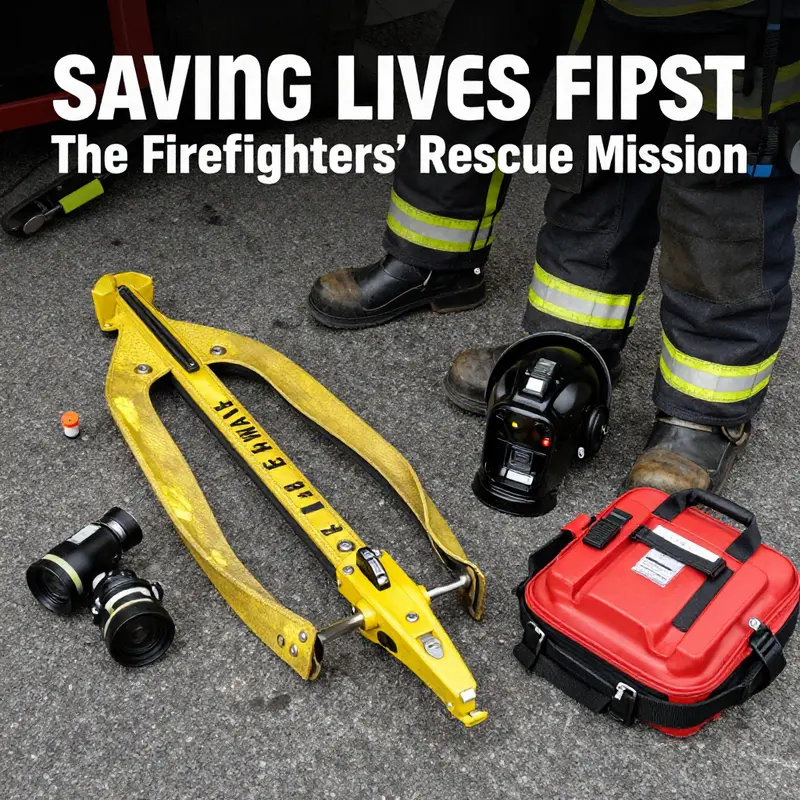
The tools that enable these techniques are as crucial as the techniques themselves, yet their identity is often a matter of professional discipline and training rather than branding. A versatile prying tool—designed to pry open doors, pull apart twisted metal, or create entry points through obstructions—serves as a first line in breaking through barriers that block escape or access. Its shape and resilience are engineered for leverage, enabling a single rescuer to gain a toehold in a jammed doorway or a compromised wall. In tandem with this is an expansive family of hydraulic rescue devices whose purpose is to extricate people trapped in wrecked vehicles or blocked by collapsed components. These hydraulic systems convert a small force applied by a rescuer into a powerful, controlled separation of metal, providing a means to pry, spread, and lift with surgical precision. The emphasis on hydraulics reflects a core philosophy: power should be harnessed in a way that minimizes further harm, allowing rescuers to control the sequence of exposure to heat and smoke while preventing additional trauma to the victim.
Cutting tools, too, play a guarded role in the rescue landscape. Torches or cutting devices are deployed with a strict regard for safety and timing. They are not used to demolish indiscriminately; rather, they are employed to sever supports, clear obstructions, or disconnect compromised components that trap victims or seal off egress routes. The choreography of fire approach and vehicle extrication often hinges on precise cuts that release a trapped person without creating additional force or sudden movement. Ventilation fans, meanwhile, are deployed to manage visibility and air quality, a priority that underscored the notion that rescue thrives in a breathable, predictable environment. Clearing smoke and heat not only makes the scene safer for victims and rescuers but also improves the odds of successful medical intervention once the person is relocated to a safer zone. Each tool—whether used to pry, cut, lift, or ventilate—fits into a broader aim: to stabilize the victim’s situation while maintaining a structure for the firefighting operation to proceed without escalating risk.
These techniques and tools do not exist in isolation. They rely on rigorous training, repeated drills, and the kind of adaptability that only large-scale, real-world experience affords. A well-coordinated rescue operation is a product of teamwork, clear communication, and a shared mental model across different roles on scene. The incident commander sets the plan, but the execution depends on the precise, synchronized actions of every member present. Each rescuer understands that their moment to act is inseparable from the next, and that the safety of others hinges not on bravado but on disciplined, measured performance. In practice, this means that two or more responders may work in lockstep within compromised space, each aware of the potential for sudden hazards. The rhythm is not one of improvisation but of practiced, rehearsed decisions that translate into real-time movement when it matters most.
The public-facing purpose behind all this is straightforward, but the reality is nuanced. Saving lives does not happen in a vacuum; it happens on streets, in homes, and inside vehicles where the threat is both immediate and evolving. When a call comes in, a cascade of decisions unfolds in the space of moments. The rescue-first approach is a disciplined response designed to maximize the chance that a person can be removed from danger before the fire advances. It does not imply a neglect of suppression or a disregard for the structural realities of a building; rather, it embodies a philosophy that prevents death or grave injury by targeting the most vulnerable first. Firefighters must always weigh the likelihood of a successful rescue against the risk to their own lives and the potential for collateral harm. The line that separates valor from recklessness is drawn by assessment, experience, and the coherent application of technique and tools that make every action purposeful rather than merely urgent. In the end, the chain of decisions that leads from arrival to evacuation to medical care is an embodied expression of a professional ethic—one that places people above flames and prioritizes rescue as a moment where intervention can change the course of a life.
The chapters that follow place this ethos into a broader context, connecting the practice of rescue-first firefighting with training regimes, standards, and public safety culture. A practical thread runs through the narrative: the way this approach is taught, rehearsed, and codified matters as much as the moments it governs on scene. For readers seeking a pathway to translate these principles into real-world readiness, there is a proven route through comprehensive training programs that emphasize core concepts like basic life support, rapid extrication techniques, and the safe application of rescue tools in high-risk environments. To learn more about these foundational trainings and how they contribute to a firefighter’s ability to perform rescue operations with confidence, consider exploring resources that outline essential safety and certification pathways. Fire Safety Essentials Certification Training offers a grounded look at how departments prepare personnel to face such demanding calls.
This chapter also speaks to the broader framework that supports rescue-first practice: standards and guidance that help firefighters translate instinct into standardized, repeatable actions. The National Fire Protection Association (NFPA) provides widely referenced standards and guidelines that shape how departments prepare for and execute rescue operations. While the specific details of standards evolve with new discoveries and technologies, the core objective remains unchanged: to maximize life safety while maintaining scene integrity and responder safety. The NFPA resources, available at https://www.nfpa.org/, offer a global lens on best practices, training expectations, and ethical considerations that inform how rescue-first missions are organized and evaluated across communities. In this sense, the approach is not only a tactical choice but a commitment to continuous improvement, shared language, and accountability for outcomes on scenes of crisis.
Ultimately, the rescue-first approach reflects a mature, dynamic balance between courage and caution. It acknowledges that every second counts and that the presence of life in danger can, in itself, reframe risk as a rational, actionable force. It recognizes that the tools in the firefighter’s belt are not merely gadgets but extensions of a disciplined mindset—the mind that asks, at each moment, where is the person who needs help, and what precise action will bring them to safety with the least possible harm to all involved? It is a narrative that honors the complexity of emergencies while keeping the focus on what matters most: saving lives, protecting communities, and returning home safely at the end of the shift.
In this light, the question of why firemen perform rescues before fighting fires is not simply a matter of order. It is about a sustained commitment to life, a training-informed set of responses that translate into real-world outcomes, and a culture that treats every rescued person as a critical win in the ongoing battle against danger. The sequence—rescue first, then suppression—emerges from a pragmatic assessment of what rescue can achieve, how well it can be accomplished with the tools and techniques available, and how it aligns with a broader duty to public safety. The result is not a clash of priorities but a harmonized practice in which life-saving action and fire-control efforts converge to shape the most favorable possible outcomes for those who find themselves at the mercy of a rapidly unfolding emergency.
External resources and continued learning remain a vital part of sustaining this capability. For professionals and scholars alike, engaging with standards and best practices helps ensure that rescue operations stay effective as conditions evolve and as our understanding of hazards deepens. The arc of rescue-first firefighting is ongoing, shaped by new training, new tactics, and new challenges brought by changing urban landscapes, climate-related incidents, and the evolving roles of fire responders in public safety. The path forward is grounded in the same fidelity to life that defines every rescue—a fidelity reinforced by training, by collaboration, and by a steadfast commitment to the communities that depend on these responders every day.
Rescue First, Fight Later: The Power of Timely Extractions in Firefighting
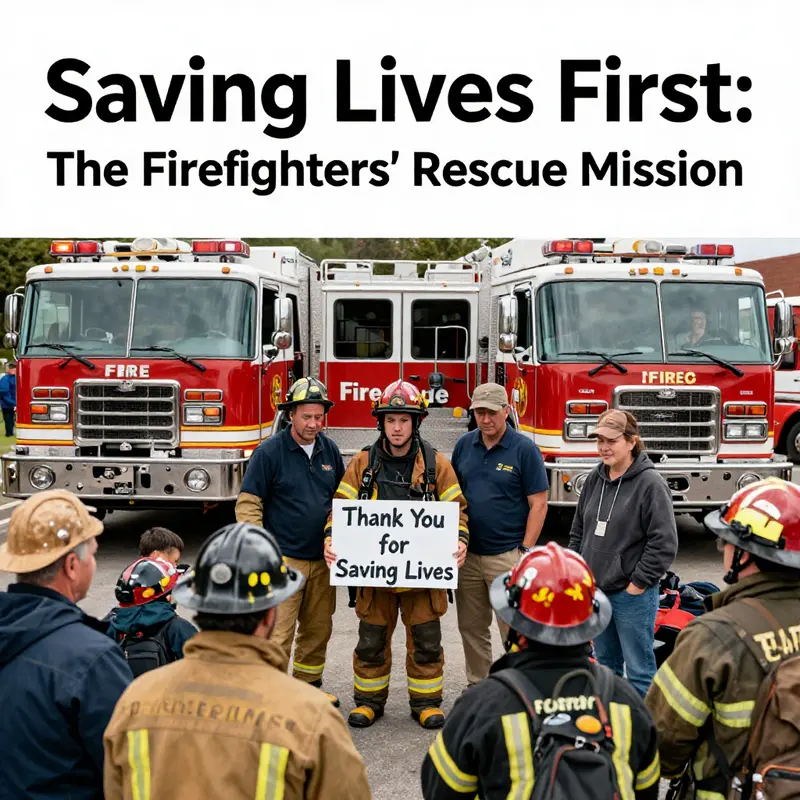
Rescue first, fight later. It is a practiced, evidence-based approach guiding firefighters in the opening minutes of a crisis. When the alarm sounds and smoke fills the corridor, the initial objective is not always to blanket the flames with water. It is to locate, reach, and remove those in immediate peril. This sequence, rescue before suppression, reflects a core mission: to save lives while balancing the risks of interior entry.
The central premise is stark: lives are at stake in the earliest moments of a fire or collapse. Occupants may be trapped behind doors, beneath debris, or within smoke-filled rooms. The window of opportunity to extract them is narrow and unforgiving. Firefighters arrive not just to fight flames but to scan for human life, determine who is in peril, where they are, and how best to reach them without adding danger. This does not mean suppression is set aside; it means life safety takes precedence in the opening phase, because removing the most vulnerable from harm reduces overall risk to everyone on the scene.
The logic behind this prioritization rests on plainly observable outcomes. First, rapid rescue of trapped individuals dramatically increases the chances of survival. The NFPA emphasizes that response time is a key determinant of survival in structure fires. In practice, this translates to every second counting as firefighters mobilize to locate, access, and lift victims from danger. The emphasis on speed is not reckless improvisation; it is a disciplined sequence that relies on pre-incident planning, clear scene size-up, and rapid communication. As crews move with purpose, they simultaneously protect bystanders and create conditions for safer suppression later in the incident. When a victim is freed from entrapment, the risk of fatal smoke inhalation, burns, or crush injuries declines, and the subsequent steps become more effective. The ripple effects are measurable not only in survival rates but in the overall health outcomes of the community.
The rescue-first doctrine also carries physical and psychological benefits for victims. Survivors who receive timely extraction and immediate life-saving interventions experience markedly better outcomes. Early CPR or trauma care cannot be overstated. In many emergencies, responders arrive on scene ahead of ambulances and assume the role of frontline life-savers. This transitional care stabilizes victims, buys critical minutes, and preserves organ function and neurological integrity. The psychological impact of a rescue is equally significant. People quickly sense that help has arrived, that they are seen, and that a pathway to safety exists. This reassurance itself can reduce panic and confusion, contributing to more orderly behavior that aids the entire operation. In the long view, communities benefit from diminished secondary injuries and a more organized, less chaotic response.
The rescue-first approach also has a clear impact on how fire operations unfold technically. When rescuers can extract victims quickly, they can shift their focus to containment and extinguishment with less urgency and fewer high-risk, time-pressured decisions. The pressure to perform complex rescues under extreme conditions often drives improvisation and risk-taking, which in turn increases the chance of structural collapse or firefighter injury. If initial rescues are accomplished with a high degree of certainty and safety, teams can transition to suppression with a more controlled, methodical rhythm. This sequencing reduces the likelihood of backdrafts or flashovers being precipitated by hasty entry during peak heat. In short, a successful rescue creates a safer environment for the subsequent suppression work and for any survivors who remain inside.
The narrative of rescue-first would be incomplete without acknowledging the role of modern response systems that enable rapid action. Communities with robust alarms, dispatch, and pre-planned evacuation routes are better positioned to implement crucial time-saving measures. A well-coordinated system shortens the interval between the alarm and the first aggressive, life-saving maneuver. It also supports the decision-making process on the fire ground. With better information, responders can prioritize entrances and egress routes, anticipate hazardous zones, and synchronize with medical teams. The efficiency gained in these early moments compounds as the incident evolves, shortening overall incident duration and reducing exposure of civilians and responders to heat, smoke, and structural instability. The NFPA emphasizes response time as a determinant of survival: the faster the response, the greater the likelihood that lives are saved and that the fire’s destructive arc is interrupted before it inflicts irreparable damage on the building and its occupants. This is not a blind chase for speed; it is a calculated, life-centered discipline that blends human judgment with technology and procedure.
The practicalities of rescue work also demand specialized skills and equipment, used in a way that minimizes injury to victims and responders. Firefighters are trained to perform swift extrications from burning structures and to extract people from vehicles or confined spaces. The use of hydraulic tools to pry, cut, and spread metal debris is a core capability in many rescue scenarios. The ability to free a trapped person without waiting for heavy suppression or structural stabilization reflects a deliberate risk calculus: if the person is alive and in immediate danger, time becomes the most persuasive argument for intervention. Of course, such actions are not taken lightly. They require meticulous training, scene assessment, and the continual refinement of tactics through practice and real-world feedback. The idea is not to rush blindly into danger but to execute a controlled, time-aware rescue that preserves life while limiting additional risk to those already vulnerable and to the responders themselves. The emphasis on ongoing training is why many departments highlight the importance of regular drills, scenario-based exercises, and the cultivation of a shared language among diverse responders. When teams train together, their movements on the fire ground become more predictable, their decisions more synchronized, and the chances of successful, safe extrication higher.
This focus on training and preparedness is visible in the broader professional landscape. Resources and programs dedicated to firefighter development provide the backbone for rescue-first work. One such resource offers practical guidance about training environments that reinforce the critical balance between life safety and practical fire suppression. The linked training material underscores how simulation-based practice, tower exercises, and field drills translate into real-world decision-making under pressure. The aim is to produce firefighters who can improvise only within a disciplined framework, who can identify traps and hazards quickly, and who can execute multi-step rescues while keeping a clear line of sight to the goal: safe extraction and minimal harm. This is not merely an academic exercise, but a living, evolving practice that continues to shape how departments train, deploy, and coordinate during complex emergencies. For readers who want a closer look at how these training principles are translated into everyday readiness, there is a dedicated resource that elaborates on tower-based training and its role in developing confident, precise, and resilient responders: Firefighter Training Tower Dedication.
The community dimension of rescue-first tactics deserves emphasis. When people know doors will be opened, windows breached, and stairwells cleared promptly, a neighborhood sense of safety grows even before a fire is extinguished. This confidence translates into stronger compliance with evacuation orders, better cooperation with bystanders, and a faster return to normal life after the incident. The economic implications are meaningful as well. Quicker rescues reduce the time a property remains unsafe or out of operation, limiting business interruption and accelerating recovery for local economies. In addition, rapid, life-centered responses set a standard for public trust. Communities understand that responders will prioritize human life and act decisively under pressure, even when the fire itself is not yet fully controlled. That trust is a non-material but invaluable asset, sustaining public morale and willingness to cooperate in future emergencies.
Yet it would be incomplete not to acknowledge the delicate balance that rescue-first work demands. Fire suppression remains essential. The moment the safety of victims is secured, crews must pivot to contain and extinguish the fire to prevent further harm and to preserve as much structure as possible for future use. The sequence is not a simple relay race of who gets to do what first; it is a dynamic, on-the-ground decision process that weighs the risks of interior entry against the anticipated benefits of rescue. This balancing act is informed by factors like building layout, fire behavior, occupancy, and available resources. The most effective fire departments cultivate a shared culture that respects both the urgency of life safety and the realities of structural risk. They invest in robust command presence, clear communications, and adaptive strategies that can pivot as conditions change. The result is a firefighting response that feels simultaneous and coherent: rescuers move with purpose, while suppression teams prepare to support and cooperate in a unified effort.
The broader significance of timely rescues extends beyond the scene itself. When communities consistently experience rapid, life-saving actions, public safety norms shift in subtle but meaningful ways. People become more aware of fire prevention, more prepared to react if danger arises, and more engaged with safety education programs. This cyclical improvement—better prevention, faster response, stronger recovery—contributes to healthier, more resilient communities. In this sense, the rescue-first approach is not just a tactic but a pathway to sustained public safety culture. It reinforces the idea that preparedness, speed, and teamwork can transform a crisis into a sequence of recoverable events rather than an irreversible tragedy.
The research literature that anchors these observations is clear and compelling. The NFPA’s ongoing work highlights time as a dominant factor in outcomes, reminding us that the difference between minutes and seconds can determine whether a life is saved or lost. While this chapter has focused on practical, human-centered dimensions—survival chances, reduced injuries, and community recovery—the implications reach into policy, training, and urban design. Modern response systems, for instance, benefit from smart coordination, interoperable communications, and the seamless integration of medical and firefighting efforts. As towns and cities expand and as the hazards associated with everyday life grow more complex, the rescue-first philosophy provides a steady compass for decision-makers, responders, and residents alike. It is a reminder that firefighting is as much about protecting people as it is about fighting flames, and that the most effective resilience emerges when rescue and suppression are not competing priorities but a carefully choreographed sequence that places human life at the center of every action.
For readers seeking a deeper, data-driven understanding of these dynamics, the NFPA offers a comprehensive resource on fire analysis and statistics. It presents a rigorous view of how response times influence outcomes across a range of scenarios and settings. This external reference complements the narrative above by grounding it in systematic analysis and national benchmarks. Access to the NFPA materials provides a foundation for policymakers, educators, and practitioners who aim to refine training, improve dispatch, and design safer built environments. The link is provided here for convenience and further exploration: https://www.nfpa.org/Research-and-statistics/Fire-Analysis-and-Statistics. The chapter’s argument remains anchored in the simple, powerful idea that rescuing people quickly is not only the humane choice but also a strategic choice that enhances every subsequent step of the fire service mission.
In sum, the rescue-first approach embodies a practical ethics of emergency response. It recognizes that in the worst hours of a crisis, time becomes the most actionable resource. By prioritizing rapid extraction, firefighters reduce the immediate threat to life, facilitate safer and more efficient suppression, and lay the groundwork for faster community recovery. The chapter’s synthesis of training, tactics, and outcome data points toward a clear conclusion: when fire services organize around timely rescues, they maximize lives saved, minimize harm, and strengthen the social fabric that depends on their readiness. This is not about choosing between rescue and extinguishment; it is about orchestrating a sequence where the most critical early step saving lives precipitates better, safer, and more effective firefighting as the incident unfolds. The result is a community that not only endures a blaze but emerges with greater confidence, stronger safety norms, and a deeper shared commitment to preparedness and resilience.
Final thoughts
The mission of firefighters extends beyond merely extinguishing flames; it embodies the essence of saving lives in critical situations. Prioritizing rescues establishes the framework for effective emergency response, ensuring that human safety is always the immediate concern. By understanding the techniques, tools, and rationale behind these actions, we can appreciate the invaluable contributions firefighters make within our communities. Their unwavering commitment to rescuing individuals in distress not only saves lives but also fosters community trust and resilience in the face of emergencies.