
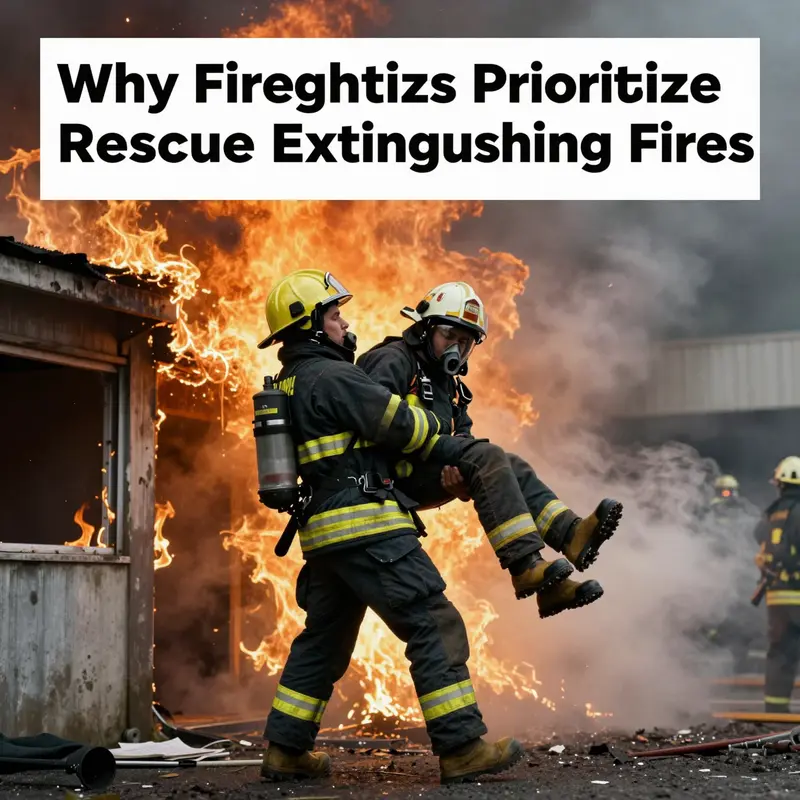
Firefighting is often viewed through the lens of extinguishing flames, but the core mission prioritizes saving lives above all else. This article delves into the critical reasons firefighters focus on rescue operations before tackling fire control, exploring human life’s paramount importance, the operational safety that stems from this approach, and the ethical implications that guide these first responders. Each chapter will build a comprehensive understanding of why the decision to rescue comes first and how it aligns with their overall mission in emergency response.
Lifesaving First: Why Firefighters Put Rescue Ahead of the Fire
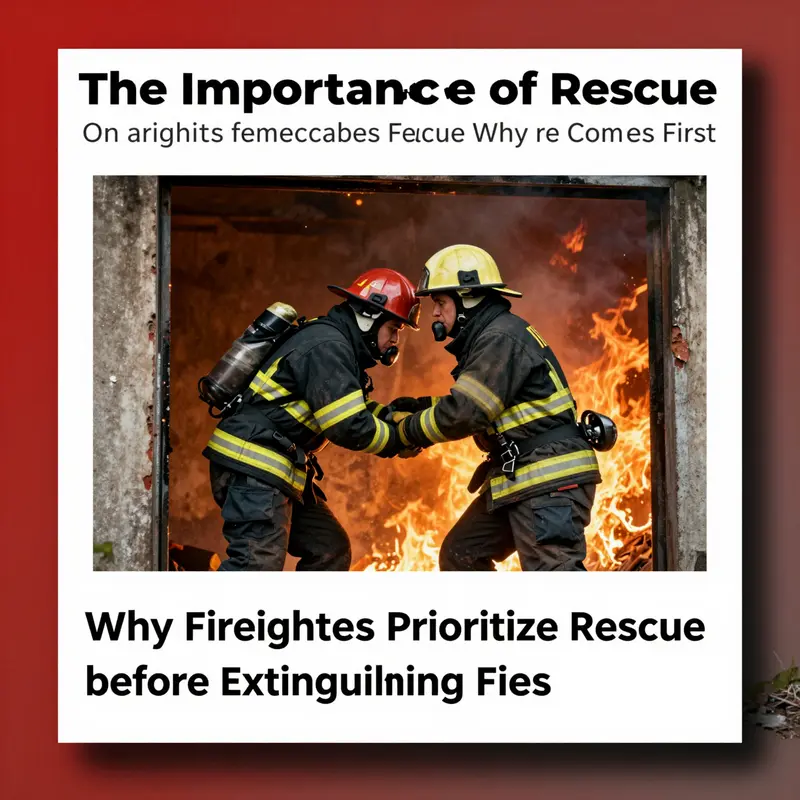
When the alarm bell rings and smoke starts to curl from a doorway, the instinct of a well-trained firefighter is not simply to rush the nozzle toward the flames. It is to search for life, to reach any trapped occupant, and only then, if conditions allow, to advance the fire line. This is not a casual preference but a core principle that governs every stage of an incident, from the moment the first units arrive to the moment the last victim is accounted for. The ethic at the heart of firefighting—save lives first—has shaped training, tactics, and command decisions for decades. It rests on a practical calculation as much as a moral vow: the most vulnerable human beings are inside burning or smoke-filled structures, and those minutes matter more than any measure of property protected. The phrase “rescue first” is more than a slogan; it is the thread that ties ethics to effectiveness in a profession built to confront danger with prudence, speed, and clarity.
Biology makes this imperative stark. Oxygen deprivation and extreme heat operate in concert to shrink the window of opportunity for a survivor. Medical science has long shown that brain damage can begin within minutes of oxygen loss, and the margin between life and death narrows rapidly as a structure fills with toxic smoke and heat. In policy terms, the National Fire Protection Association and national emergency frameworks emphasize that the immediate, on-scene priority must be locating and extracting people who are trapped. The practical upshot is that, even when fire suppression is underway, crews often allocate scarce resources toward search and rescue (SAR) rather than an all-out interior attack. The logic is not that firefighting is unimportant; it is that rescue—timely, direct, life-preserving rescue—drives the sequence, the tempo, and the safety calculations that define the scene.
This approach is visible in the way teams are organized and in the way they narrate a complicated incident to themselves as they move. The rescue-first doctrine does not imply a reckless initial shove of water into a structure. On the contrary, it demands a careful balance: crews must search for victims while managing the fire environment so that the search remains possible. Aggressive suppression, if deployed in a way that blinds or traps occupants, becomes part of the problem rather than the solution. High-pressure streams, for example, can generate steam and smoke that reduce visibility and complicate the search, sometimes creating dangerous conditions like flashover or structural instability. The most capable incidents reflect a deliberate choreography: search-and-rescue actions are prioritized and timed with suppression efforts, rather than executed in a sequence that leaves people inside to face the worst of the environment alone.
A critical facet of this choreography is the integration of what experts call “scientific rescue.” Fire commanders continuously reassess the scene with a disciplined situational awareness: are there viable paths to victims? Is the structure stable enough to support a vertical or interior search? Are there hazardous materials or other risks that could escalate quickly? The balance is dynamic; decisions are made on the fly, with the aim of preserving life while protecting responders. For instance, in the 2019 Liangbaosi coal mine fire in Shandong Province, responders used advanced firefighting robots and high-expansion foam to condition the environment and create safe pathways. Those technologies did not replace human life; they shaped the environment so rescuers could reach survivors more safely and more efficiently. The example is telling: science and engineering extend the reach of human life-saving capability, but the ultimate objective remains human life at risk inside the inhospitable space of a burning structure.
The principle of rescue first also travels beyond the walls of a single structure. Firefighters are often the first responders to earthquakes, after-blasts, and other large-scale emergencies where time is measured in minutes and the aftershocks of danger continue to threaten those trapped or endangered. In these contexts, rescuers become urban lifesavers whose responsibilities stretch across rubble, water, and dust. The mission broadens, but the core value does not. Even when the environment presents chemical hazards, radiological concerns, or uncertain stability, the priority remains the extraction of those in danger. This is why, in many jurisdictions, the incident command system is built to preserve pathways for life-saving actions even as other priorities, such as perimeter control or resource management, are handled. The aim is never to turn away from risk, but to manage risk through a framework that keeps life at the center of every tactical decision.
That life-centered framework begins with training and doctrine. A firefighter’s reactions are shaped long before any siren, in a classroom and on a training tower, where the questions of rescue timing and risk are hammered into muscle memory. The training emphasizes reconnaissance, rapid assessment, and the ability to read a building’s signs—smoke color, heat patterns, a doorway’s warmth, a stairwell’s usability. It teaches the distinction between a direct interior attack and a defensive exterior posture: when conditions allow for safe entry, crews advance; when the fire’s heat and structural strain threaten collapse or when occupants cannot be reached without exposing rescuers to intolerable danger, the same command will shift to containment and evacuation of bystanders, while still seeking any possible life inside. This careful thinking is the reason why basic principles like time, access, and visibility are prioritized in drills and certifications. The consistent emphasis across training programs is not merely to curb risk but to optimize life-saving potential. It helps explain why many responders emphasize that no amount of property loss justifies a failure to save a human life. The safety of the public and the responders themselves sits at the center of every policy and every tactic.
Within training and practice, another layer emerges: the ethical calculus goes hand in hand with resource constraints. In the early moments of an incident, the first arriving units may face a decision matrix defined by who is inside, where they are likely located, and how many personnel can be mobilized. If a building is compromised beyond immediate rescue due to collapse risks or hazardous materials, commanders may pivot to a defensive strategy that minimizes exposure to both victims and rescuers while continuing attempts to locate anyone who might still be reachable. The principle holds even in complex, multi-structure incidents where resources are finite. In such cases, rescuers marshal their efforts to establish a safe path for extraction, keep the exit routes clear, and use the tools at hand to improve survivability for those still inside. In all of this, the patient, the person in danger, remains the focal point.
The life-first philosophy also helps explain the evolution of the tools and strategies that firefighters use. The rescue-first approach does not rely on a single tactic; it relies on a toolkit that blends search tactics with suppression and stabilization. This includes careful ventilation strategies that support tenable conditions for search without forcing victims toward more dangerous spaces, alongside controlled water application to limit the spread of heat and smoke. The command’s decisions about whether to push a line deeper into a structure or to secure a doorway depend on a continuous hazard assessment that includes the fire’s growth potential, the likelihood of entrapment, and the integrity of the building’s structure. In practice, this results in a layered, flexible approach: rescue operations may begin with a rapid sweep by teammates using compact, well-ventilated paths, while a second team prepares to apply suppression where it will not undercut the chance to locate and extract a victim who is still alive. The balance is delicate, and the stakes are measured not merely in extinguished flames but in the breath of life.
Even as the rescue-first principle remains steady, the doctrine acknowledges complexity. The modern fire scene is rarely a simple contest between flame and firefighter; it is a dynamic environment where the risk to the public and to responders must be weighed against the potential for saving life. At times, this means prioritizing a rescue that may be performed in stages, prioritizing the most accessible path to an occupant or the path that minimizes the time to extraction, and at other times, it means creating safe conditions for a rapid interior search through stabilization and controlled cooling. Commanders speak in terms of tactical priorities, but the underlying motive is universal: any life at risk deserves an immediate, concerted effort to preserve it, and every decision should keep that life at the center of the scene’s drama. This principle also informs the broader ethos of the fire service, where the mission remains consistent across different kinds of emergencies—public safety, risk reduction, and rapid life preservation—each feeding into a larger synthesis of practice where rescue remains the guiding star.
In this light, the idea of “rescue first” is not an injunction against fighting the fire; it is a strategy that recognizes fighting flames effectively depends on enabling the possibility of rescue. If rescue is pursued without regard to the surrounding fire behavior, the risk to victims and rescuers can surge beyond what even the bravest intervention can tolerate. If rescue is pursued in a vacuum, devoid of suppression when it is safe to do so, flames can close off exits and trap people who might have survived with timely help. The truth is more nuanced than a simple order of operations; it is a continuous, real-time negotiation of danger, opportunity, and moral obligation. This is why the rescue-first principle endures across cultures, across incident types, and across the spectrum of emergency response. It is why, in policy and practice, no fire is worth more than a single life, and every minute saved in the search for a victim translates to a higher likelihood of rescue.
To connect these ideas to the daily work of responders, consider the training that keeps such a principle actionable. Firefighting education emphasizes not only the mechanics of control and attack but the psychology of decision-making under pressure. It teaches crews to maintain a clear mental model of the scene, to keep their focus on identified priorities, and to communicate with precision about what is known, what is suspected, and what remains to be discovered about the victim locations. It also highlights the ethic that guides every move: when there is a living person inside, every action is a step toward that person’s exit, even if it requires temporary concession to the flames to maintain that path. This is the disciplined art of “safe entry, rapid exit” within a life-critical context. The same ethic motivates the push to develop more sophisticated search tools, better protective gear, and smarter atmospheric analysis so that the line between life and peril can shift in favor of those trapped inside.
The principle also provides a unifying thread across different departments and regions. In countries with distinct dispatch philosophies, the core belief remains universal: life comes first. The tenets of this belief echo in the Five Firsts concept cited in some national response frameworks—prioritizing timely mobilization, rapid on-scene arrival, and immediate initiation of rescue actions. It is a reminder that the entry point to a successful outcome is not merely the final extinguishment of flames but the earliest, clearest act of life preservation. When a structure fire is underway, every decision about how to deploy personnel, what kinds of tools to bring, and where to position units is measured against one practical question: does this choice improve the chance that someone inside will be rescued?
That question, in turn, shapes the public’s understanding of what firefighters do. The image of firefighters as primarily extinguishers obscures a more accurate portrait: they are trained risk managers who operate in a moral and technical boundary where the goal is to maximize lives saved while minimizing the risk of additional injuries. The rescue-first ethos helps explain why responders often make difficult choices, such as temporarily slowing suppression to establish a safe corridor or making a cautious interior entry when the presence of heavy smoke would otherwise overwhelm a victim’s chance of survival. It is a disciplined paradox: to save lives, firefighters sometimes hold back, delay, or reframe the intensity of the fire response, not out of fear, but because the odds of successfully extracting a person depend on doing so under safer, more controlled conditions.
For readers seeking a deeper link between theory and practice, consider the role of formal education and ongoing professional development in reinforcing these principles. Fire service training that focuses on rescue, search techniques, and hazard recognition builds a shared language and a reliable skill set that translates across incidents. It creates a platform where teams can synchronize their actions in a dangerous environment, knowing that the ethical imperative and the practical tactic are aligned. The emphasis on certification and continuous learning is not just about adding to a resume; it is about ensuring that every responder has the mental models and the technical capabilities to act quickly and safely when a life is at stake. This compatibility between doctrine, training, and on-scene execution is what makes the rescue-first approach robust and adaptable across diverse settings, from tightly spaced urban structures to sprawling, hazardous industrial sites.
In closing, the rescue-first principle is less a single command and more a philosophy of action. It integrates biology, ethics, engineering, and tactical judgment into a coherent framework that guides firefighters through some of the most perilous situations imaginable. It clarifies why a fire can be fought aggressively in one part of a building while another part remains a site for critical extraction. It explains why modern responders develop and deploy tools that extend life-preserving capabilities while recognizing that technology is not a substitute for human judgment. And it anchors the entire operation in a straightforward moral claim: life takes precedence over property, time, and even the flames themselves. This chapter does not stand as a conclusion but as a waypoint, linking to the next exploration of how rescue operations are coordinated in real time, how communities can support responders through training and preparedness, and how the cycle of life-saving practice continues to evolve in an ever-changing landscape of risk. For a broader view of professional safety training that underpins this life-centered approach, see Fire Safety Essentials Certification Training.
External resource: https://www.nfpa.org
Rescue Comes First: The Operational Logic Behind Firefighting’s Life-Safety Priority
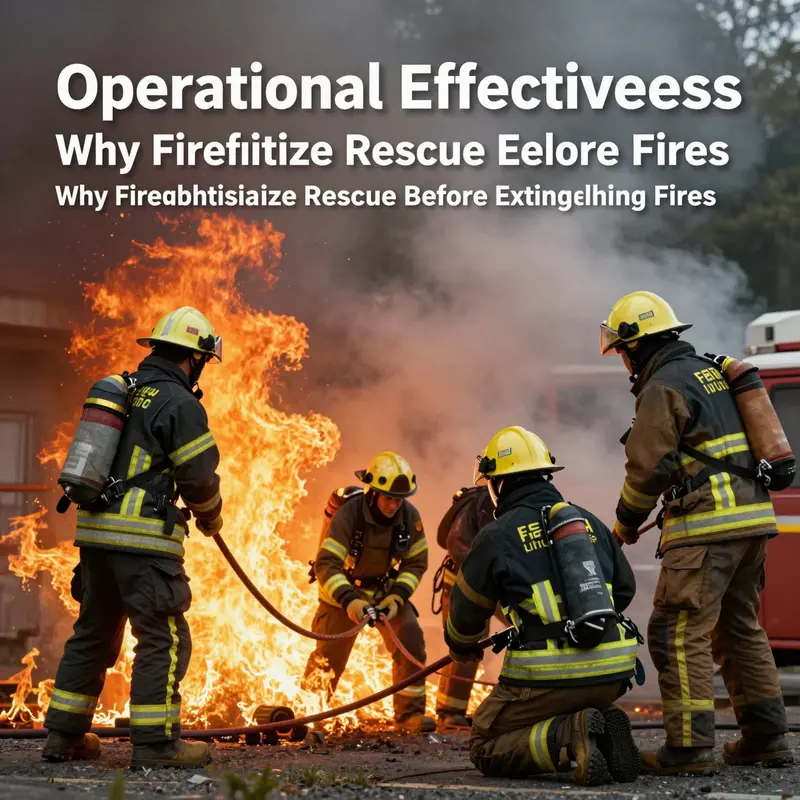
Life safety sits at the center of every fire service decision the moment a call begins. The chapter of an incident that unfolds in real time is less about heroic slogans and more about a sequence of calculated actions whose objective is unmistakable: locate and remove people from danger before chasing the flames themselves. This discipline—life safety first—rests on a century of professional ethics and a practical understanding of how fires threaten the vulnerable with alarming speed. In the language of the field, that imperative is not negotiable; it is the lens through which every tactic, every tool, and every shift in strategy is measured. When a first arriving unit steps onto a threshold that may become a tomb within minutes, the instinct is to secure the path to exit, to confirm who is inside, and to establish a plan that keeps both victims and responders safe while the structure begins to behave in unpredictable, volatile ways. The moral gravity behind this approach is reinforced by a framework of standards that translate the abstract idea of saving lives into concrete, repeatable actions on the ground. The National Fire Protection Association (NFPA) frames the core objective of fire response as the protection of life, property, and the environment, but with life safety taking precedence above all else. In this hierarchy, the immediate and nonnegotiable task is to ensure that occupants who may be trapped can be found and extracted as swiftly as possible. The authority for this practice is not merely stated as a policy it is operationalized through guidelines that direct responders to begin rescue operations immediately upon arrival, especially where reports of occupants are present or suspected. This is not a philosophical stance; it is a pragmatic recognition that seconds matter when smoke fills stairwells and heat climbs toward the ceiling. The U.S. Fire Administration (USFA), FEMA’s educational arm for the field, reinforces the same principle in training materials, underscoring that the first priority at any incident is life safety—rescuing people from danger, not simply extinguishing the fire. Crew members learn early that a blaze may be amenable to cooling techniques and containment strategies only after the threat to human life has been mitigated or firmly assessed. Within many departments, standard operating procedures codify this into a rhythm: search and rescue are conducted in tandem with suppression efforts, yet the collective mission remains anchored in saving lives before declaring the fire controlled. This framework gains traction the moment the captain makes the critical appraisal of conditions: how far has the fire spread, where are the likely pockets of occupants, what is the stability of the structure, and how many responders are available to perform searches while maintaining personal safety. If the fire is intense or the building is structurally compromised, command may decide that an interior attack aimed at saving lives is not feasible at that moment. In such cases, a defensive posture protects adjacent exposures, holds the line, and preserves the possibility of rescue if victims remain reachable. It is not a retreat from action; it is a recalibration of risk to maximize the odds that someone inside can be found and rescued if circumstances permit. The seamless integration of rescue with fire control is a hallmark of modern practice. Firefighters routinely perform search-and-rescue tasks while deploying water streams to limit the growth of the fire and reduce the heat and smoke that obstruct visibility. Yet there is a careful calculus at work: the team weighs how aggressive suppression might create steam and smoke conditions that blind searchers or push the fire into more dangerous configurations. The aim is not to choose one over the other in a binary sense; it is to choreograph parallel efforts in a way that clears paths for victims and creates safer environments for responders to operate. In many scenes, this means that a crew will advance with shields of cool water to establish a contrast between hot, untenable zones and breathable corridors, all while officers coordinate a coordinated search path that prioritizes rooms with the highest likelihood of occupant presence. The practical reality fuels this logic: a structure is a dynamic system, and a plan that prioritizes rescue first can prevent a tragedy that would be irreversible in the minutes it takes to reach occupants later. The decision to pursue rescue early is not a reckless gamble but rather an informed judgment that balances immediacy with capability. The risk to firefighters is real, and that is precisely why command decisions are anchored in a safety-first paradigm. Structural integrity, ventilation dynamics, and the possibility of backdraft or flashover are not abstract concepts but immediate threats that obligate the team to plan for maximum safety while attempting to extract individuals. When firefighters think about rescue, they are also thinking about the environment that makes rescue possible: the creation of safe entry routes, the preservation of airway corridors, and the identification of spaces where occupants might be found even as the fire conditions evolve. The emphasis on life safety also shapes training and professional development. Across the United States and around the world, fire services embed this principle into curricula, drills, and real-world operations. The goal is to cultivate a sense of urgency that remains disciplined, not panicked; to teach responders how to act decisively in chaos without sacrificing the assessment that undergirds safety. Training materials and incident simulations emphasize that rescue operations can be initiated immediately upon arrival and can be conducted concurrently with fire-control actions. The practical upshot is that rescuers learn to balance speed with systematic search, to coordinate with incident commanders who manage the larger risk picture, and to adapt to changing conditions without abandoning the imperative to locate and remove trapped individuals. The ethical dimension—the belief that no property loss justifies failing to save a life—is the moral soil from which every other tactical decision grows. It is this conviction that keeps rescue at the forefront even as crews learn, month after month, year after year, how to apply water with surgical precision, how to ventilate a space without feeding backdraft risks, and how to maintain communication amid the crackle of evolving scenes. The same principle informs the way departments approach resource allocation at the outset of an incident. Early on, responders must deploy the right mix of personnel and tools to support rescue while still addressing the fire itself. When a structure houses confirmed or suspected victims, resources are prioritized to sustain and accelerate search-and-rescue operations, even as firefighting elements begin to take shape. The tactical picture is rarely static, and commanders must adjust as information flows in from crews on the ground, from building plans, from bystander insights, and from the evolving indicators of where victims might be located. The overarching directive is clear: the greatest possible return on human life must be achieved with the resources at hand. The operational reality is complemented by a strategic approach that considers the limits of manpower and the constraints of time. In the earliest moments of an incident, the number of firefighters present may be insufficient to pursue a full interior attack while simultaneously conducting comprehensive searches. The instinct to rescue must be preserved, but it must be framed by a sober assessment of risk. This is where the command structure becomes critical. Incident commanders integrate information about fire location, ventilation possibilities, occupancy type, building construction, and the health and wellbeing of trapped occupants to chart a course that prioritizes rescue without exposing crews to unnecessary danger. If the situation grows too perilous, the command may pivot toward a defensive posture that protects life outside the structure, safeguards adjacent structures, and preserves the chance for rescue of anyone who might still be reachable. The balance is delicate and must be informed by decades of incident data that show the consequences of delaying rescue. As the data accumulates, the lesson becomes consistently clear: when life safety is delayed, the odds of successful extraction decline, and mortality can rise. This empirical backbone underpins the NFPA guidance and USFA training materials, which collectively create a culture of practice where life safety takes precedence. Yet the emphasis is not static. It evolves with advances in protective gear, training methodologies, and incident command strategies, all of which reinforce the capability to conduct rescue operations more quickly, more safely, and more effectively. The culture of rescue-first is also reinforced by the way departments frame public expectations. The public understands that a fire scene is as much about people as it is about flames; the visuals of brave responders crawling through smoke to reach a child trapped in a hallway are not just dramatic images but demonstrations of the life-centered logic that governs firefighting operations. This is why the internal culture of firefighting places a premium on training, readiness, and evidence-based practice. In practical terms, this means that responders continually drill for scenarios where a balance must be struck between advancing toward victims and maintaining a defensive posture when conditions demand it. It means that search tactics are refined to minimize time to locate occupants, while suppression tactics are guided by the need to preserve survivable compartments and avoid creating new risks. It means that responders are taught to interpret the scene not only as a burning hazard but also as a complex puzzle where the best path to safety for civilians must be found even as the fire grows harder to manage. The result is an operational ethos that looks beyond the immediate sensation of flame and heat to the enduring objective of human life preservation. For practitioners, this ethos is reinforced by practical steps that can be observed on most firegrounds: rapid scene assessment, immediate entry for search, simultaneous suppression, continuous monitoring of structural stability, and an evolving plan that prioritizes the most urgent needs first. It is this integrated approach that allows crews to keep faith with the creed that life safety remains the guiding star guiding every action. When a new firefighter takes to the line, they are not asked to choose between rescue and suppression; they are trained to orchestrate both in a way that the rescue remains achievable and the fire remains controllable. This is why the chapter on operational effectiveness begins with the proposition that rescue is the primary action, not because extinguishment is unimportant, but because the need to save life is the most time-sensitive, ethically charged, and practically consequential priority in any structure fire. The emphasis on rescuing people is thus not a mere procedural detail but the anchor of a dynamic, high-stakes discipline that requires constant judgment, disciplined risk assessment, and an unwavering commitment to the vulnerable who may be inside walls that are cracking under heat. For readers who want to explore how this emphasis translates into everyday practice, consider engaging with foundational training resources such as Fire Safety Essentials Certification Training, which encapsulates the core competencies that underlie life-safety-first firefighting. This chapter, while focused on the rationale behind rescue-first tactics, serves as a bridge to how equipment, codes, and evolving fire-ground strategies converge in service of protecting life as fires begin and life hangs in the balance. The next sections will continue to illuminate how this philosophy shapes the day-to-day decisions, the long-term development of the fire service, and the ongoing dialogue between safety science and field experience. To ground the discussion in current standards and to support readers who seek further technical detail, see the NFPA guidance referenced in contemporary updates on life safety as the top priority in all emergency responses. For authoritative guidance, you can review the NFPA 1 update and related materials here: https://www.nfpa.org/News-and-Research/Publications/Code-Update/2024/What-You-Need-to-Know-about-the-2024-NFPA-1
This emphasis on life safety, as reinforced through formal training and organizational culture, is a living principle that continues to inform how departments invest in training, how they structure incident command, and how they measure success on the fireground. It is a standard that remains constant even as tactics evolve, because it answers the most fundamental question of any fire incident: was life saved? And if not, what did we learn to do better next time? The continuity of this answer is what sustains public trust and ensures that the work of firefighters remains anchored in the most urgent and universal obligation—protecting human life above all else.
For more authoritative guidance, see the NFPA 1 update and related materials here: https://www.nfpa.org/News-and-Research/Publications/Code-Update/2024/What-You-Need-to-Know-about-the-2024-NFPA-1
Rescue Before Extinguish: The Moral Compass of Firefighting
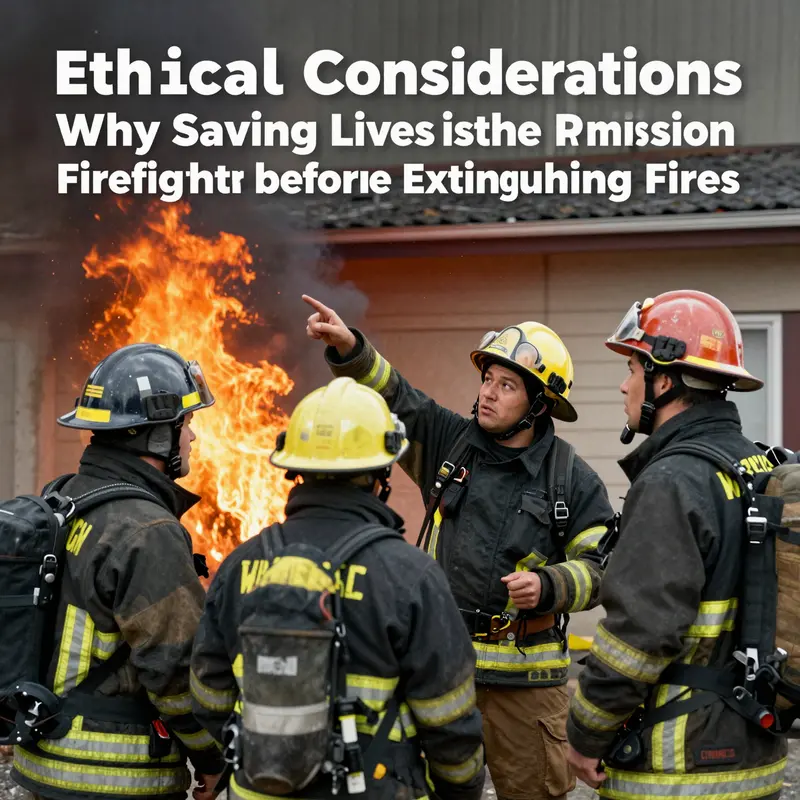
Firefighting begins with a clear mission: protect life above all else. The rescue-first philosophy guides every choice on the fireground, shaping how crews assess risk, prioritize actions, and balance speed with safety. It recognizes that every moment counts for someone inside a burning building, where oxygen dwindles and cognitive function declines rapidly. Because time is a lethal variable, teams prioritize locating and removing occupants before or in tandem with suppressing the fire, using search, ventilation, and rapid egress to create safe paths. This approach does not reject firefighting; it integrates life safety as the core objective from arrival to accountability. Training, standards, and real world experience reinforce that saving lives justifies risk and informs incident command, resource allocation, and interagency coordination. The NFPA standards provide a framework for practice, ethics, and crew safety that keeps the focus on people, not property alone. In practice, rescue-first translates into structured search, coordinated water application, and decisive action to preserve human dignity and keep responders safe. Through simulations and drills, crews learn to balance urgency with prudence, maintain line of duty safety, communicate clearly, and work as a unified team. When victims are found, survival depends on immediate, well controlled interventions that remove them from danger and connect them with ongoing care. The result is a profession that emerges from every incident with the same core conviction: life comes first, property can be protected in time, and the mission is complete only when everyone is accounted for and safe.
Final thoughts
In firefighting, the choice to prioritize rescue operations stems from a deep commitment to preserving human life. This foundational principle guides firefighters as they navigate perilous situations, balancing operational effectiveness with their moral duty. Understanding the urgency of rescue over fire control not only sheds light on the complexities of firefighting tactics but also emphasizes the overarching goal of first responders: to save lives. By recognizing this priority, we can appreciate the sacrifices made by firefighters and the critical nature of their work in the heat of emergencies.