
In emergencies, quick decisions can save lives. This is especially true when a fire occurs. The protocol dictates that the utmost priority should be the activation of the fire alarm system before any rescue attempts are made. This article delves into various aspects of this essential safety procedure. Through five comprehensive chapters, we will examine the lifesaving importance of activating fire alarms, adhere to emergency response guidelines, understand the role of alarm systems, review pertinent statistics, and explore the legal and ethical considerations surrounding rescue efforts. Each chapter aims to reinforce the critical narrative: activating the fire alarm should always precede any rescue action to ensure the safety of both victims and responders.
Sound First, Save More: The Lifesaving Principle of Activating the Fire Alarm Before Rescue
In the split second when smoke threads its way through a hallway and a flicker of flame draws attention, a powerful instinct rises: to move toward those who might be trapped and to reach them before the danger closes in. That impulse is deeply human, but in the calculus of life safety, it is not the most reliable action. The first, most consequential move in a fire is not a physical rescue or an attempt to fight the flames. It is to activate the fire alarm. Sounding the alarm immediately creates a cascade—a rapid mass warning, a trigger for safety systems, and a clear signal that evacuation must begin. This is not merely cautionary advice; it is a foundational protocol designed to preserve lives in moments of chaos. When a fire is detected, the primary objective is alert, not rescue, because alerting the entire building multiplies the chances that everyone can find a safe exit while professional responders are en route.
Sound Before Save: Navigating When to Trigger Alarms and Rescue in Real-Time Fires
When a fire erupts, the clock starts ticking in two intertwined ways: the clock that measures people’s safety and the clock that measures the spread of heat and smoke. The central question—should you activate the fire alarm before rescuing—cuts straight to the heart of emergency response: in the heat of the moment, what action should come first, and who gets to decide? The practical answer sits at the intersection of training, risk assessment, and the architecture of the building you’re in. It is not a single prescription that fits every scenario, but a framework that honors both the essential purpose of warning occupants and the imperative to protect life by rescuing those in immediate danger. In this frame, the alarm is not a luxury or a ritual; it is a tool that, if used wisely, can multiply the chances of survival without compromising the intentions of rescue.
To begin with, the default principle in most established guidelines is straightforward and stark: do not delay rescuing someone who is in imminent danger. Smoke inhalation can shorten a life in minutes, and flames can outrun a person who is trapped or disoriented. In the first, most critical seconds of an unfolding fire, a rescuer’s primary responsibility is to bring people out, reassess risks, and guide others toward safe egress. The National Fire Protection Association (NFPA) and other authoritative bodies emphasize that the act of saving lives must not be postponed to activate alarms. The core directive is a triage of sorts for the sentry in a crisis: protect yourself, extract the threatened person, and then, if possible and safe, alert others and call for help. This sequence is not meant to minimize alarms; it is meant to prevent alarms from becoming a barrier to movement when every breath counts. The principle is simple in intent and demanding in execution: if you can pull a lever, shout a warning, and evacuate in a way that does not impede the rescue, you may do so. But if your immediate actions would delay reaching a person or escaping yourself, safety and survival take precedence.
That said, the alarm’s value remains undeniable. Early warning can transform a chaotic stairwell into a measured, orderly evacuation path. It buys time for vulnerable occupants—elderly residents, children, individuals with mobility challenges, and anyone who might be slowed by confusion—to move toward exits rather than toward the fire. The moment a smoke plume or fire is detected, the alarm system’s reach intensifies the collective response and mobilizes firefighters more rapidly. The nuance lies in performing this warning without becoming a bottleneck to the actual rescue. If you are positioned to activate the alarm without sacrificing speed or exposing yourself to greater danger, pulling the alarm—perhaps via a manual pull station—can be a prudent part of your overall strategy. But such an action should be seen as a complement to rescue, not a replacement for it.
In practice, this translates into a disciplined, almost instinctive rhythm. A responder who discovers a fire must quickly gauge whether the path to safety and to the person in danger is clear and whether an alarm pull would delay either. If a clear, direct route exists to evacuate the occupant or to remove them from danger without compromising personal safety, then executing a rescue comes first. If the path to rescue is blocked or unclear, but there is a momentary window to activate an alarm without hindering movement, an alarm pull may be appropriate. And if there is a moment when alarm activation can be accomplished while simultaneously pursuing a rescue—without crossing into reckless behavior—then that synchronization should be pursued. The guiding principle is that escalation in order to warn should never undermine the probability of saving a life right in front of you.
This balancing act is not abstract. It has real consequences and, when done well, can reduce harm while enhancing the effectiveness of emergency services. Training plays a central role here. Individuals who have practiced high-stakes decision-making under realistic conditions tend to navigate these split-second choices with greater clarity. A body of guidance suggests that while you should not delay rescue to pull an alarm, you should not ignore the potential benefits of warning when safety allows. The mental model is not an either/or dichotomy but a continuous evaluation: is there a safe, unobstructed opportunity to alert others and call for professional help without derailing the rescue? If yes, take it; if not, prioritize saving the person in danger and getting yourself to safety.
Beyond the immediate moments, the culture of safety in a building matters. Regular instruction and deliberate drills help occupants internalize the sequence of actions and reduce hesitation when time is tight. In this light, a person who has trained in fire safety essentials certification training may feel more confident in executing a mixed sequence—warning when possible, rescuing when necessary, and communicating clearly with others and with responders. This is where the value of formal preparation contributes to practical courage: a trained individual can assess risk rapidly, articulate needs, and adapt to evolving conditions on the ground. It is not enough to know a policy; one must also internalize a dynamic response that respects both the duty to warn and the duty to save.
In the larger frame of emergency response, the NFPA 101 Life Safety Code provides a comprehensive picture of how these priorities fit into building design, occupant behavior, and command structures during a fire. The code builds a logic of life safety that supports rapid evacuation while preserving access for responders. It recognizes that alarms contribute to life safety, but it does so in a way that integrates with the flow of evacuation and rescue rather than obstructing it. For anyone who wants to deepen their understanding beyond warm words and quick rules of thumb, consulting the detailed standards as codified in NFPA 101 offers a rigorous, scenario-tested lens on how these decisions should be made in real facilities. For those seeking practical, actionable guidance that aligns with formal standards, the Life Safety Code is the reference point that connects the instincts of frontline responders with the expectations of building systems and authorities having jurisdiction.
The discussion here does not aim to position alarms as an afterthought. It aims to position them as a critical, calibrated element of a rescue plan. A well-informed responder does not treat alarms as a stray tool; rather, they weave the alarm into the safety fabric of the incident, using it to amplify life-saving actions rather than to replace them. The best outcomes arise when responders act with precision, speed, and awareness: breaking through smoke with the least possible delay to reach the victim; signaling others to evacuate; and calling for professional help as soon as it is safe to do so. In a sense, the alarm becomes a chorus in the rescue performance—its echoes extend the reach of those who are already moving toward safety and toward the unknowns that the fire presents.
For readers who want to bolster their readiness, consider the integrated approach that combines practical know-how with formal training and a clear understanding of code-backed expectations. Engage with resources that emphasize both action and warning in a balanced way. Consider the value of hands-on drills, clear communication protocols, and the discipline to constantly reevaluate a changing scene. And when you have the chance to learn from others’ experiences—through training programs, case studies, and guided simulations—let those lessons inform your instinct in the moment. The aim is not to crystallize a single rule but to cultivate a flexible, principled response that protects life with both speed and foresight.
Internal linking: for deeper professional development, explore resources that equip you with the fundamentals and practicalities of fire safety practice, such as the training titled fire safety essentials certification training.
External resource: For a more detailed governance framework, consult the NFPA 101 Life Safety Code at https://www.nfpa.org/Code-Updates/NFPA-101-Life-Safety-Code
Alarm First, Rescue Second: The Lifesaving Logic of Triggering Alerts Before Attempting Firefighting
When a fire erupts, time becomes the most unforgiving dimension of the danger. A spark that might seem trivial to a distracted observer becomes a rapidly expanding threat in minutes, seconds even. In the heat of the moment, choosing the right sequence of actions can spell the difference between a safe evacuation and a tragedy. The core premise guiding every trained responder and every responsible building occupant is simple and powerful: activate the fire alarm before attempting any rescue or firefighting. This remains the one constant that aligns human judgment with the mechanics of the built environment and the orchestrated response of a whole safety ecosystem. The alarm is not an obstruction to rescue; it is the indispensable catalyst that makes rescue possible for everyone who follows safe, orderly procedures.
Fire alarm systems are designed to do more than wake sleepers or announce a fire to nearby rooms. They are the early warning arteries of a larger life-safety network. When smoke, heat, or flame first register through detectors—be they smoke sensors, heat sensors, or more advanced devices—the system triggers audible alarms, visual signals, and interlinked safety measures. The audible sirens and flashing indicators are not just dramatic cues; they are precise, real-time alerts that mobilize the building’s occupants to evacuate along pre-planned routes, away from the area of danger, and toward safe egress points. Integrations matter here: alarm activation can automatically engage emergency lighting, activate smoke control systems to slow the spread of smoke, and initiate suppression mechanisms where appropriate. In a modern building, one alarm onset can synchronize a cascade of protective actions that would take a person many moments to coordinate manually, often under overwhelming stress. In this sense, the alarm system acts as the first responder on the scene, creating a safer environment in which human responders and ordinary occupants can operate with greater effectiveness.
A growing body of practice emphasizes that the value of early alert is measured not only in minutes saved but in the quality of decisions those minutes enable. When a potential fire is detected, the alarm’s job is to buy time—time for people to evacuate, for doors to close to contain smoke, and for firefighters to arrive with a clearer picture of the situation. Timely warning reduces chaos and exposure to hazardous conditions, enabling rescue attempts to be more strategic and less impulsive. The logic is straightforward: you should not reach for a fire extinguisher or attempt to extract others from a burning area while the air is filled with smoke, or while the flames are spreading beyond your line of sight. The risk of tunnel vision, disorientation, and deteriorating visibility escalates when a person attempts to intervene too early without the benefit of the alarm’s alert and the controlled environment that follows. This is precisely why emergency response guidelines emphasize that alerting others comes first, and physical intervention—whether rescue or suppression—should be a considered step only after alarms are sounding and evacuation is underway.
To understand how this operates in practice, consider a typical scenario in a multi-story building. A resident notices a wisp of smoke near a stairwell and, instinctively, their mind flickers toward putting out the fire. Yet the moment they trigger the alarm, doors at the bottom and top of the stairs swing into line with safety logic: occupants begin moving away from the hazard, emergency lighting activates, and the stairwells become safer transit corridors rather than smoke-choked traps. Simultaneously, the building’s fire services receive a live alert with location data, allowing responders to pre-position equipment and deploy in the direction of the fastest, safest entry. In this coordinated chain, the initial act of alarm activation directly influences the quality and speed of every subsequent action. It is not that rescuers delay; it is that they operate within a system that has already reduced risk and clarified intent for all involved.
The evolution of fire alarm systems—especially in public infrastructure and high-risk environments—reflects a deliberate move toward integration and reliability. Modern systems often connect with other life-safety mechanisms and even remote monitoring networks, sometimes using wireless technologies or internet-enabled platforms. Real-time data can flow to monitoring centers or local authorities, providing responders with urgent situational awareness before they arrive on the scene. For families and communities, networked standalone detectors can synchronize alerts, sending notifications to caregivers and neighbors when vulnerable occupants, such as the elderly, are involved. The net effect is a sharper, faster response, where the first action—alarm activation—becomes the common language through which all participants, from residents to emergency responders, coordinate under pressure.
This emphasis on alerting also carries important implications for training and knowledge in the broader safety culture. Fire alarms are not a substitute for human action; they are the enabler of better action. The authority of the alarm is grounded in standards that demand reliability, self-diagnostic capabilities, and robust power supplies to keep the system operational for extended periods during an outage. In some regions, standards push for backups that guarantee at least three hours of dependable operation, ensuring that the alarm can sustain the evacuation and response timeline even if the power grid is compromised. Beyond hardware, intelligent technologies such as AI and edge computing are being adopted to reduce false alarms and improve detection accuracy. This is essential in sensitive environments like hospitals, data centers, or industrial facilities where false alarms can erode trust in the system and lead to dangerous complacency.
The overarching message, then, is grounded in a simple, practically actionable ethic: do the thing that helps everyone move safely first. When you discover a fire, your default response should be to trigger the alarm immediately. If the fire is clearly small and contained, and you have been trained to handle such a situation, you may consider an extinguishing attempt only after the alarm has been sounded and you have assessed your own safety and the safety of others. But even in those moments of potential intervention, the alarm remains the anchor that ensures others are warned and protected, that emergency services are alerted with the right urgency, and that a chaotic situation is converted into a coordinated operation. In other words, the act of alerting shifts the entire field of play from personal risk to collective protection.
An important thread in this argument is the human factor—the judgment call about whether it is safe to attempt rescue before all occupants have exited. This is a decision that hinges on two pillars: situational awareness and system reliability. A bystander must observe whether smoke is spreading rapidly, whether visibility is maintaining a usable corridor, and whether the structural integrity of the area is sound enough to permit a rescue without exposing others to immediate danger. Here, the alarm buys crucial seconds to gauge the environment, gaining a window in which occupants can relocate and firefighters can prepare. The alarm’s effectiveness is amplified when people know what to do when it sounds. Regular training and drills—such as those outlined in fire safety certifications—are the bridge between theory and confident action. Engaging with resources like fire safety essentials certification training can help individuals internalize the sequence: alert, evacuate, assist only when safe, and await professional help. fire safety essentials certification training.
The literature and field practice also underscore a shared responsibility across building design, maintenance, and occupant behavior. Engineers design systems to be self-d diagnosing and resilient, with redundant power supplies and fail-safes to ensure that alarms do not fail when smoke obscures vision or when there is a sudden power interruption. Maintenance programs, routine testing, and clear signage for manual pull stations ensure that when seconds count, the option to raise the alarm is obvious and accessible. Residents, employees, and visitors benefit from clear, rehearsed routines that make the alarm a familiar signal rather than a frightening anomaly. And responders depend on the alarm as a map of where to expect people and what to anticipate in terms of smoke conditions and movement through the building. Together, these factors form a safety ecosystem in which the alarm’s primary function is to make rescue possible by creating order out of potential chaos.
The case for alarms as the first step is not a critique of bravery or a downplaying of courage. It is a call to align action with the physics of a fire-impacted environment. Fire spreads along paths that are predictable only when information arrives quickly and clearly. An alarm is the fastest, most reliable conduit for that information. It converts a potentially dangerous guess into a deliberate plan, sent to everyone who must act. Such a shift in thinking—from improvisation to coordinated response—has tangible outcomes: fewer injured occupants, shorter exposure times for both civilians and responders, and more efficient mobilization of fire services. The evidence from recent practice, including reports from regional fire authorities and the growing integration of smart safety networks, supports the central claim: you should trigger the fire alarm before attempting to rescue or suppress the blaze. Only after the alarm is sounded and evacuation is underway should a careful, considered intervention be attempted, if at all, and only when it can be done without compromising the safety of others.
The chain that begins with the alarm also carries a broader educational purpose. It invites people to visualize a fire not as a solitary event but as a system-wide disruption in which every action—from a resident in a corridor to a professional crew arriving on the scene—depends on timely, reliable information. The alarm creates a shared reality, a common starting point from which the group can move toward safety with clarity. This is the core reason the fire alarm is described as a first line of defense within safety protocols. It does not diminish the need for courage and skill in rescue; it elevates those acts by ensuring they occur within a context where danger is mitigated, communication is possible, and time—an inherently finite resource—has been maximized.
In synthesis, the practice of activating the fire alarm before any rescue or firefighting action is not merely a rule. It is a disciplined, evidence-based approach to saving lives and reducing harm. It recognizes the alarm as the critical catalyst that unlocks safe egress, informs responders, and enables coordinated hazard control. It acknowledges that while human intervention remains essential, it must be grounded in a framework that prioritizes warning and orderly movement over impulsive, unassessed intervention. As fire safety standards evolve and technologies advance, the core principle endures: trigger first, evacuate with confidence, and then engage in rescue or suppression only when conditions are clearly favorable and within the scope of trained, deliberate action. This is the practical ethos that threads through every well-designed building, every effective drill, and every informed bystander who chooses to act with foresight rather than impulse. The result is a society better prepared to withstand fire’s sudden threat and to protect its most vulnerable members with a measured, effective response.
External resource for further reading: https://www.cfpa.org.cn/standards/2026-01-13.html
Alarm First, Rescue Second: The Statistics that Make Early Fire Alarms the Critical First Step
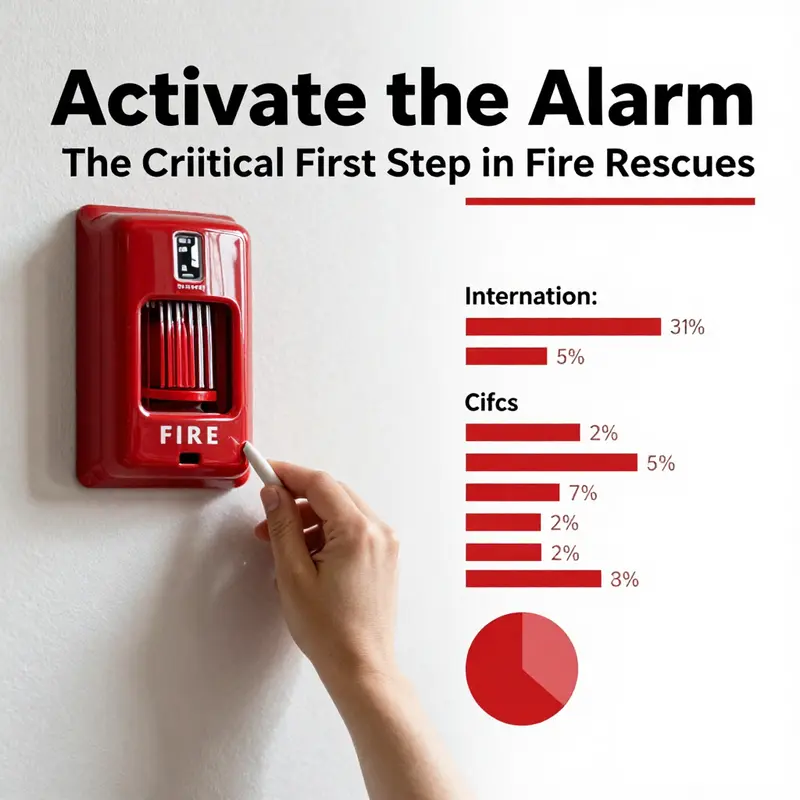
When a fire erupts, the line between survival and tragedy often hinges on the speed of a warning rather than the immediacy of a first touch with flames. The question, should you activate the fire alarm before attempting a rescue, is not simply a rule to memorize but a principle grounded in decades of safety data and real-world experience. The answer, consistently echoed by fire safety professionals, is clear: trigger the alarm first. Only after that urgent signal has sounded should you consider any rescue action or fire suppression, and even then only if it can be done without placing yourself or others in greater peril. This isn’t about surrendering to fear; it’s about leveraging the most efficient path to safety: rapid awareness and rapid evacuation, enabled by a system designed to reach everyone in the building, from the sleeping child in a back bedroom to the elderly resident in a second-story apartment, all at once.
The logic is straightforward, yet its impact is measurable and profound. The National Fire Protection Association (NFPA) aggregates data that makes this principle hard to ignore. In homes where smoke alarms are present and functioning, the risk of dying in a fire drops by about 30 percent. That statistic translates into lives saved simply by ensuring the first critical moment—the moment of detection—produces an alert that is loud, unmistakable, and immediate. Alarm systems are not accessories; they are multipliers. They convert a localized flash of flame into a regional alarm that wakes people, summons help, and buys precious seconds for everyone to move toward safety. In practice, this means a family in a two-story dwelling hears the alarm and begins to move while others in the home begin to evacuate via the safest routes. The alarm’s reach extends beyond the room of origin; it travels through hallways, into sleeping areas, and, in many modern homes, to neighbors and bystanders who may be able to help either by alerting others or by contacting emergency services.
Time plays a decisive role in fire outcomes, and much of the danger rises when people are asleep. Many fatal fires occur at night when occupants are unaware of the smoky atmosphere until it is too late to react effectively. A working smoke alarm can deliver the crucial first warning, providing the window for the residents to escape before dense smoke displaces oxygen and stings the lungs. The margin between a quick exit and a disorienting scramble is often a few critical seconds saved by the alarm. Delaying alarm activation—even momentarily to assist someone else or to attempt to contain the fire—can erase that window and give the fire more fuel to expand. The alarm does not eliminate risk on the furrowed edge of danger, but it shifts the balance decisively toward safety by accelerating the evacuation process and aligning the actions of everyone present toward a common goal: get out, stay out, call for help.
In multi-story homes and apartment setups, the alarm’s role becomes even more essential. A loud, instantaneous signal does more than wake an individual; it alerts neighbors who might be within earshot, and it provides firefighters with crucial information about the scope of the incident. When neighbors hear the alarm, they can begin to evacuate, gather essential items, and make room for responders who arrive to find a situation that has already begun moving toward a safer outcome. The volumes of a building’s stairwells, corridors, and entryways become easier to navigate when people are alerted early. The NFPA emphasizes that alarms are as much about community response as they are about individual action. A well-placed alarm system that functions reliably cuts through the fog of confusion and enables a faster, more organized, and more effective response from bystanders and emergency services alike. The result is a higher probability that lives are saved and injuries minimized.
Understanding the sequence of events helps clarify why activation should come before any rescue attempt. The most effective response pattern in a home fire is simple: the moment you detect fire or smoke, you activate the alarm, then you evacuate or assist others if it is safe to do so. The logic is not about passive compliance; it is about maximized safety through rapid, coordinated action. When people hear the alarm and begin to move, they confer time to others to wake, orient, and leave. This shared tempo reduces crowding at exits, lowers the chances of panic, and allows pets and vulnerable individuals to be guided toward exits in a controlled fashion. It also prevents duplicative, potentially dangerous attempts to fight the fire before a clear, safe path to escape has been established. The risk of exposing yourself to radiant heat, smoke inhalation, or flashover increases when you stay in a room to try to manage the flames, especially if the fire is not yet small enough to be controlled without professional equipment and training.
The emphasis on alarm-first action is reinforced by practical realities of hazard management. Early warning makes a building-wide response possible, turning a single room into a collective evacuation rather than a scattered, improvised escape. It is why emergency planners and responders highlight alarm use as a foundational habit for households—an organizational feature of the home that echoes the same discipline found in professional settings. When a fire alarm sounds, it does not merely signify danger; it signals a coordinated shift in behavior—silencing the impulse to freeze and instead prompting movement toward safety. This behavioral shift, amplified by a reliable alarm, is the hinge on which successful outcomes pivot. The alarm’s reach extends beyond the immediate occupants; it can mobilize the entire block, ensuring that neighbors, building managers, and responders are alerted to a developing emergency well before flames reach their peak.
A household that treats alarm activation as the first, indispensable step also recognizes the value of preparedness. Training and regular practice transform abstract guidelines into confident, intuitive action. Those who pursue formal education on fire safety often begin with the fundamentals of detection and alerting, understanding that the alarm is an enabler of faster, safer decision-making. For readers seeking to deepen this readiness, engaging with structured learning can fortify the instinct to act decisively when danger is near. For instance, many learners start with programs like Fire Safety Essentials Certification Training, which emphasizes core competencies around alarms, evacuation, and coordination with emergency services. This kind of training helps people internalize the rhythm of the response: verify a potential hazard, activate alarms, evacuate, and then assist only if it is safe to do so. Fire Safety Essentials Certification Training can serve as a practical bridge between understanding statistics and applying them under the stress of an actual incident.
The central takeaway from the statistics and real-world experience is not a denial of rescue efforts but a reframing of priority. The alarm is the fastest, most reliable means of creating a safe operating space for any subsequent action. By waking sleepers, mobilizing neighbors, and inviting a prompt response from firefighters, the alarm lowers the odds that a person will be overtaken by smoke before escape becomes possible. In this light, the question shifts from whether to rescue before alarm to how to maximize the effectiveness of the alarm so that rescue, if it becomes necessary, is built on a foundation of rapid, clear communication and organized movement. The data support this approach: a 30 percent reduction in fatalities in homes with functioning alarms is not a minor benefit but a crucial difference in outcomes that can be the deciding factor on a night when every second matters.
Experts also remind us that alarms are most effective when they are part of a broader safety culture. Regular maintenance—testing detectors, replacing batteries, and ensuring alarms are audible in all living spaces—ensures that the initial alert travels unimpeded. People living in multi-story dwellings should assess whether their systems reach bedrooms and bathrooms, where the quietest corners of a home can sometimes obscure the warning signal. The practical reality is that even a powerful alarm is only as good as its ability to be heard and understood by those it is meant to protect. For families with vulnerable members—young children, older adults, or individuals with disabilities—part of preparation involves rehearsing a simple, clear exit plan and identifying a safe place to regroup once outside. Drilling this plan in a calm, non-emergency setting reduces hesitation during a real event and helps maintain the discipline of alarm-first action.
Ultimately, the cost of delaying alarm activation is measured in lives and limbs. The NFPA’s statistics are not abstract numbers but a reminder of what happens when warning becomes a household habit. The immediate act of triggering an alarm is a public-health measure as essential as any first aid technique or fire extinguisher placement. It creates the conditions under which rescue, if needed, can occur in the safest possible way. The conversation about whether to act before rescuing is, at its core, a conversation about prioritizing warning to preserve life. Training, practice, and a well-maintained alarm system work together to ensure that when danger arises, the response is swift, coherent, and protective of everyone under one roof. For those who want to explore official data and statistics beyond personal experience, the broader fire statistics resource provides a comprehensive backdrop to these insights: https://www.nfpa.org/News-and-Research/Data-research-and-statistics/Fire-statistics
When the Bell Rings First: Navigating the Legal and Ethical Line Between Triggering the Fire Alarm and Making a Rescue
The moment a faint wisp of smoke or a sudden flare of heat is detected in a building, a chain reaction begins that tests judgment, courage, and the very limits of our obligations to others. In many emergencies, the reflex should be to raise the alarm before reaching for a fire extinguisher or attempting to pull someone out of harm’s way. This chapter examines the legal and ethical terrain that shapes that reflex, explaining why activating the fire alarm before rescuing is not merely a prudent safety measure but a decision embedded in law, policy, and moral responsibility. It is a topic that calls for careful balancing: the duty to warn and evacuate versus the duty to assist those who are trapped, all while navigating the risk of false alarms and the unintended consequences that can follow an alarm being raised. The guiding principle across most jurisdictions and safety cultures is clear: the alarm should be activated promptly to give occupants time to evacuate, then, if it is safe to do so, responders and trained personnel can intervene further. This sequence is not a rigid formula but a pragmatic framework designed to maximize life safety while minimizing harm or panic. It respects the reality that modern alarm systems are designed to trigger a rapid, organized response from professional firefighters and emergency medical services, whose arrival times and on-scene actions can determine whether a life is saved or lost. As such, activating the alarm first becomes the cornerstone of a broader life-safety strategy rather than a single step in a long, risky sequence of actions. The ethical justification rests on a simple, powerful premise: early warning saves lives. When a fire breaks out, time is a precious commodity. A properly sounded alarm mobilizes evacuation, assists mobility-impaired occupants, alerts nearby bystanders who can warn others, and summons trained responders who bring specialized equipment and coordinated procedures. In this sense, the alarm functions as a public act of care—an outward, proactive gesture that acknowledges the interconnectedness of all building users. It is not merely about self-preservation; it is about the community’s safety net. Yet the decision to activate the alarm first is not without controversy. It sits at the intersection of beneficence and non-maleficence, invoking a duty to do good while avoiding actions that could cause unnecessary harm. The potential harms are real: widespread panic, disruptions to critical operations, and the misallocation of emergency resources if an alarm turns out to be false. The ethical calculus thus rests on the premise that, in genuine emergencies, the benefits of rapid warning overwhelmingly outweigh the risks. This is not a blanket endorsement of alarm activation in every conceivable scenario; rather, it is a recognition that alarm systems are designed to be triggered when danger is real and not when someone suspects danger alone. The practical question becomes: how do we maintain that ethical backbone while acknowledging that not every fire will behave predictably and not every alarm will be perfectly interpreted in the moment? The answer lies in training, clear protocols, and a culture that prioritizes life over drama, while still striving to minimize false alarms and the collateral impact of alarm activation. Legal frameworks reinforce this emphasis by providing protections for those who act in good faith during a real emergency. In many places, triggering a fire alarm in a bona fide crisis falls under emergency response laws and public duty doctrines. These legal theories acknowledge that preserving human life can require actions that, in other contexts, might be viewed as improper. The key distinction is intent and reasonableness: good-faith action taken to safeguard lives and expedite professional help tends to receive protection, whereas deliberate false alarms are punished. Consider, for instance, typical consequences when the alarm is misused. A false alarm can result in fines, civil liability for damages or injuries, and, in some jurisdictions, criminal charges for knowingly causing unnecessary panic or distraction. By contrast, when someone activates the alarm because they believe lives are at risk, most legal systems recognize the urgency and protect the actor’s intent. These protections do not immunize reckless behavior; rather, they acknowledge that life-saving actions can involve rapid decision-making under pressure where perfect information is rare. The ethical landscape echoes this legal nuance. Beneficence—the obligation to act for the benefit of others—supports prioritizing alarm activation as a means to maximize survival odds. Non-maleficence asks us to avoid causing harm, which includes avoiding unwarranted panic or injury that could arise from unnecessary disruption. The practical implication is that the alarm should come first, but the subsequent rescue should be guided by an assessment of risk. If a blaze is visible and manageable, and there is a safe path to assist someone without compromising others’ evacuation, a responder may attempt to help after the alarm is sounding. In most training programs, the recommended sequence remains clear: trigger the nearest alarm to initiate emergency response, then evacuate or assist as conditions permit. This sequence aligns with the broader life-safety code that emphasizes prompt alerting and orderly egress before any active rescue beyond what is safe to perform. The National Fire Protection Association (NFPA) offers practical guidance that reinforces this approach. The guidance is not about constraining heroic impulse but about ensuring that the first action reliably mobilizes everyone who needs to act. It is about creating a shared, predictable response that reduces confusion and speeds professional intervention. The ethical and legal verdict, therefore, is not a blunt prescription to stand aside and watch. Rather, it is a call to act in a manner that respects the community’s safety architecture: alert others, begin evacuation, and then, if circumstances allow, assist those in immediate danger without becoming another casualty. Training plays a pivotal role in translating this verdict into real-world behavior. People who are uncertain often hesitate at crucial moments, and hesitation can cost lives. Comprehensive training builds reflexes that prioritize alarm activation while cultivating situational awareness about when and how to assist others safely. The more learners practice recognizing early warning signs, the more consistently they will apply the correct sequence. For those who want to deepen their understanding and strengthen their practical readiness, engaging with structured instruction such as Fire Safety Essentials Certification Training can be a valuable step. It provides a framework for thinking through emergency actions and reinforces the habit of notifying others before attempting to rescue, even when fear or confusion is present. Fire Safety Essentials Certification Training. Beyond individual training, institutions should ensure that their building systems and procedures reflect the ethics and legality of early alarm activation. Clear posted procedures, routine drills, and appropriate signage help residents and workers internalize that the alarm is not an obstacle to rescue but the first line of defense that makes rescue possible. The practical effect is to reduce the ambiguity that often accompanies emergencies. When a fire alarm is triggered, a building’s occupants are transformed from individuals acting in isolation to participants in a coordinated response. Evacuation routes become predictable, assembly points become known, and the arrival of emergency personnel becomes a shared moment of rescue rather than a chaotic scramble. The Dehong Fire Department’s 2026 report, cited in contemporary practice discussions, illustrates this dynamic in a real-world setting. Neighbors who noticed smoke evacuated quickly and called the emergency number, enabling faster notification and allowing firefighters to arrive promptly with the preparedness that a properly activated alarm system affords. The outcome—a reduced risk to bystanders and occupants—underscores the lived truth that timely warning can determine whether a fire remains a threat or becomes a contained incident. It is precisely this practical demonstration that legal scholars, ethicists, and safety professionals invoke when they argue for a default emphasis on alarm activation as the first response. However, humility remains essential. No system is perfect, and no rule covers every possible scenario. A smart, resilient safety culture acknowledges that a misstep may occur and is built to learn from it. When alarms misfire, quick verification, effective communication, and a calm, orderly response help mitigate fear and prevent a cascade of counterproductive actions. That is why authorities emphasize verification protocols in modern training and why modern fire codes stress that occupants should not delay evacuation while investigating alarms. The ethical logic is clear and the legal systems reflect it: act to protect life, inform others, and rely on trained responders to handle the complexities that lie beyond any layperson’s reach. This approach also keeps the door open for responsible rescue when it is safe to do so. The challenge is to resist the instinct to treat rescue as the first impulse in every moment of danger. Instead, we should treat alarm activation as the universal first step, a step that invites others to move toward safety and makes rescue both possible and professional. For readers seeking to connect this chapter to broader learning and practice, consider the practical resources that help translate theory into action, including the widely recognized standards and training programs referenced in official guidance. For authoritative guidance on this matter, refer to the NFPA standards: NFPA 101: Life Safety Code and related fire-safety resources. External reference: https://www.nfpa.org/Get-Involved/Public-Education/Fire-Safety-Tips. The overarching lesson remains consistent: always activate the fire alarm first—this is the action that maximizes the chance that everyone, including any potential rescuers, can survive a dangerous fire. Only after the alarm is sounding should you consider rescue attempts if the conditions are safe and the hazard is small enough to control. When communities adopt this disciplined approach, they translate ethical intention into practical protection, turning a moment of peril into a coordinated, life-affirming response that honors both legality and humanity.
Final thoughts
The activation of fire alarms before initiating rescue efforts is not merely a suggested step; it is a necessity grounded in safety protocols. The chapters laid out the significance of this practice, examining how it enhances safety, aids rescue operations, and fulfills legal obligations. By prioritizing alarm activation, we ensure the swift evacuation of all occupants, ultimately preserving life and minimizing property damage. The integrations of effective communication and adherence to established guidelines illuminate a clear path forward in emergency management. Each individual, whether a homeowner or a business owner, must embrace these principles as part of their fire safety strategy.