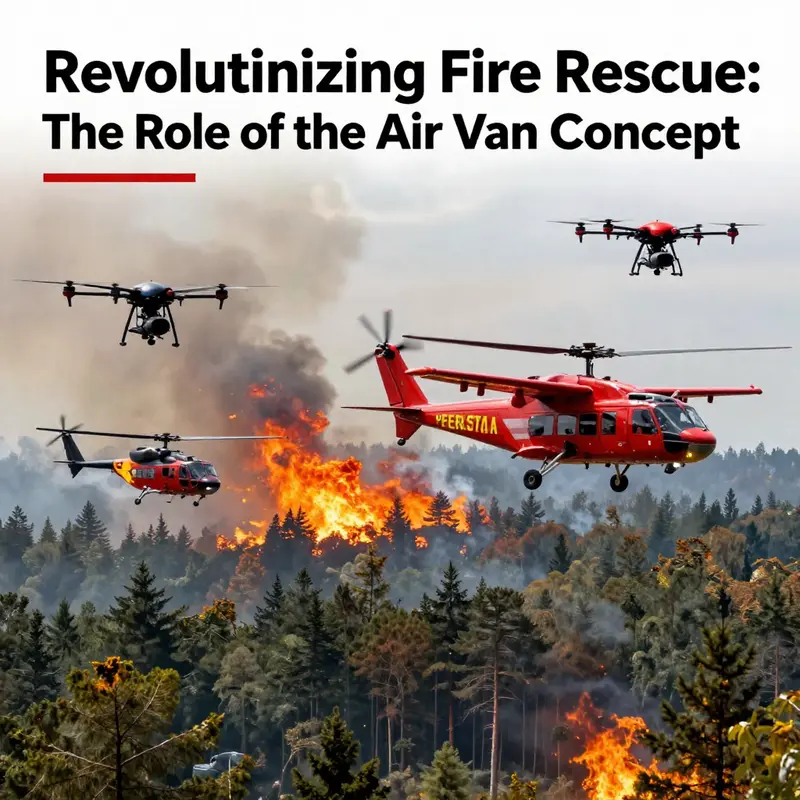
As wildfires and urban emergencies escalate, innovative methods to combat fire disasters become essential. The concept of an ‘air van’ for fire rescue encapsulates the ongoing evolution of firefighting technologies, particularly through firefighting drones and aircraft. This article delves into the pivotal role of these aerial technologies in modern fire rescue operations. Chapter 1 examines how firefighting drones provide real-time reconnaissance and targeted interventions. Chapter 2 discusses the significance of aircraft in aerial firefighting efforts. Chapter 3 focuses on technological innovations forged to enhance rescue techniques. Finally, Chapter 4 envisions the future of aerial support in emergency fire response, highlighting the promise of these advancements to save lives and protect property.
Chapter 1: Aerial Allies in Fire Rescue — Reimagining the Air Van Through Drones and Large-Scale Air Support
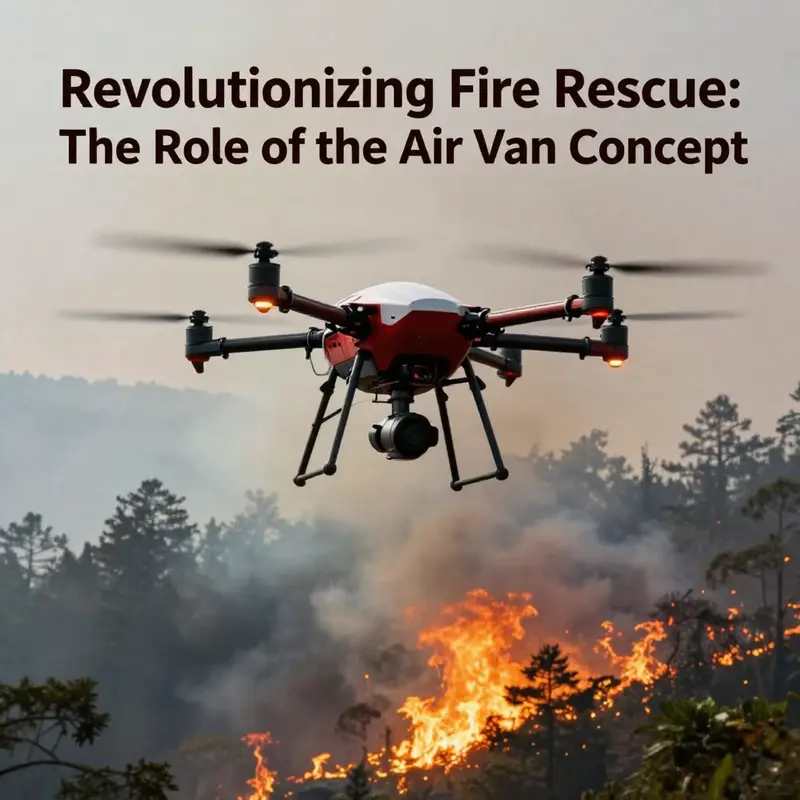
The city skyline glowed orange as embers drifted like impatient fireflies through the smoke. In such moments, the idea of an air van—a mobile airborne platform that could deliver eyes, sensors, and suppression tools without risking human lives—reads as both science fiction and practical necessity. This chapter traces how aerial allies in fire rescue have evolved from static sheriffs of the sky to agile, intelligent guardians that extend the reach of ground crews. It is not a simple tale of gadgets; it is a narrative about how drones and larger aerial assets reframe what is possible in the most dangerous moments of a fire season. The core shift is less about replacing firefighters than about augmenting their decision-making with real-time, three-dimensional awareness and targeted interventions that respect the limits of human labor and the hazards of collapse-prone structures.
At the heart of modern aerial firefighting lies the drone—the unmanned aerial vehicle that can venture where people cannot, yet collaborate with people in a seamless loop. These devices arrive with a suite of sensors that transform smoke and heat into readable evidence: thermal imaging cameras that detect hidden hotspots behind walls, high-resolution visual cameras that reveal structural deformations, and multi-spectral sensors that map heat signatures across broad landscapes. In dense urban fires, where the integrity of floors and ceilings teeters on a knife edge, a drone can hover above the hazard, transmitting live video feeds straight to incident command. The benefit is immediate: commanders gain a continuously updated picture of which rooms blaze most intensely, which stairwells remain passable, and where fuel sources like kitchens or electrical rooms might ignite anew. In wildland contexts, the same sensors stitch a map of fire perimeters, wind shifts, and the junctions where a creeping flame could jump a line or reassert at a heat-intensive ember site. The result is a data-rich layer that sits above maps and sketches, turning uncertainty into a series of explicit probabilities that responders can act upon with confidence.
The practical utility of firefighting drones goes beyond observation. They can deliver targeted interventions without exposing crews to immediate danger. In controlled deployments, drones can carry extinguishing payloads designed for rapid, precise suppression of hotspots. Rather than blanket-spraying a large area, which can waste water and create collateral damage in urban environments, drone-tethered systems aim at the flame pockets or vent gaps where heat concentrates. They can also deploy dry powder or inert extinguishing agents to choke the most stubborn pockets while heavier aircraft adjust the broader strategy from altitude. This kind of pinpoint intervention matters in high-rise fires or industrial incidents where access to the fuel source is blocked by smoke and debris. The drone acts as a surgical tool in the toolkit, complementing ground crews who use hoselines and pumps. The synergy is not about one method replacing another but about a coordinated choreography where airborne reconnaissance, targeted suppression, and on-the-ground tactics align toward a common objective: arrest the flame, preserve life, and minimize property damage.
Even more consequential is the drone’s role in search and rescue, especially in environments where the first seconds decide life or death. Drones are compact, fast, and capable of reconfiguring quickly to different missions. They bring loudspeakers to guide evacuees along safe routes, deliver lighting to illuminate darkened stairwells, and ferry essential supplies to people trapped in collapsed sections of a building or in remote locations within a forest. Their thermal cameras can identify bodies or heat signatures of individuals hidden behind debris or beneath fallen timber, sometimes locating someone who might otherwise be missed in a chaotic scene. The portable nature of many of these aerial systems means they can be deployed at the outset and then repositioned as conditions evolve, a flexibility that can reduce the time to locate and extract vulnerable persons.
A critical aspect of aerial rescue operations is resilience in the face of disrupted communications. In many emergencies, power lines fail, cell networks crumble, and transportation grids buckle. Drones—aerial node in a fragile communications web—can restore a line of sight to the command center when everything else seems to fail. They become roaming information hubs that relay situational data, deliver real-time updates on wind shifts, and serve as broadcast points in the fog of war. In complex terrains—urban canyons, mountain passes, or dense forests—these devices can maintain a continuous link between field teams and decision-makers, preserving coordination even when ground teams are scattered or isolated. In effect, drones turn a single squad of responders into a mobile, information-rich corridor that connects the scene to strategic planning, resource allocation, and emergency medical interventions.
Beyond immediate tactics, drones contribute to the long arc of incident planning and post-event learning. The ability to generate rapid three-dimensional reconstructions of a disaster zone yields a disciplined record that informs future prevention and response. Incident commanders can study how fire progressed through a building, how access routes affected containment, and how water sources, hydrants, and roads shaped the strategy. Such data-driven insights support more effective resource allocation, safer work plans for crews, and clearer communication with the public during recovery. When integrated with other data streams—topography, building inventory, and weather—the drone-enabled view becomes a central pillar of an evidence-based approach to firefighting and rescue.
The narrative of aerial fire response is not a triumph of tech novelty but a maturation of practice. Across regions, forward-looking agencies have built integrated drone teams consisting of reconnaissance units, multi-purpose carriers, and heavy-lift platforms that can carry larger payloads when needed. The operational picture now includes the drone’s unique vantage point, the crewmates on the ground, and the larger, manned aircraft assets that can deliver sustained suppression over large landscapes. While these manned assets remain indispensable in many scenarios—particularly when rapid, full-coverage aerial drops of water or foam are required—their roles are increasingly complemented by the nimble, flexible, and sensor-rich drone fleet. The idea of a purely aerial “air van” carrying a suite of sensors and small, precise intervention tools is no longer a fantasy but a practical component of an integrated response system. The drone’s footprint extends from initial reconnaissance to post-fire assessment, and its presence shifts the matter from reactive firefighting to proactive, anticipatory management of risk.
This evolution does not happen in isolation. It depends on training, data governance, and a shared language that connects pilots, firefighters, and incident commanders. Training towers, drills, and certification programs help ensure that drone operators understand how to translate sensor readouts into actionable field commands. The connective tissue is a culture of safety and collaboration that recognizes that air assets are not a substitute for human skill but an extension of it. As the human team gains experience with the drone’s cadence and limitations, the line between “pilot” and “presenter of evidence” begins to blur. The operator’s job becomes one of curating a stream of accurate, timely information and guiding teams through a decision-making process that now includes probabilistic reasoning about where a fire may spread next, based on wind, terrain, and fuel sources.
The literature and field reports that illuminate these shifts emphasize both the promise and the challenges. Key constraints—such as limited flight times due to battery life, payload restrictions, and the high upfront costs of advanced platforms—are balanced by ongoing technological advances. Improvements in battery chemistry, autonomous navigation, and AI-powered analytics promise longer endurance, more robust object recognition, and smarter path planning that reduces the cognitive load on operators. Moreover, as drones become more integrated into the firefighting ecosystem, they increasingly rely on standardized data formats and interoperable software tools. This interoperability is essential for ensuring that the aerial view can be quickly layered with map data, hydrant locations, and building schematics, producing a coherent, holistic picture that informs every tactical choice.
A broader perspective reveals a spectrum of aerial support that functions like an extended “air van” in practice, even if the term itself is not in common use. Large, crewed aircraft remain critical for certain phases of a large-scale incident—especially where rapid, wide-area suppression and rapid transport of equipment or personnel are necessary. In regions with forested landscapes or remote communities, aerial rescue teams can pre-position assets, respond to sudden changes in conditions, and shuttle specialized crews to places where road access is compromised. This network of air-based capabilities—ranging from small reconnaissance drones to larger, crewed responders—creates a resilient, multi-layered response architecture. The net effect is a firefighting enterprise that can adapt its aerial leverage to the demands of a given crisis, from a contained urban fire to a sprawling wildfire threatening homes, infrastructure, and natural habitats.
In contemplating the future, one can imagine a more integrated operational doctrine in which drones and air assets operate in a tightly coupled grid. Real-time sensory data, predictive modeling of fire spread, and automated decision support would empower incident command to allocate resources with even greater precision. Drones would not simply scout or drop a stream of water; they would steer ground crews toward the right rooms, track the progress of suppression lines, and act as mobile messaging hubs for evacuees. The old rhetoric of aerial support as a single “air van” concept—the idea of a one-size-fits-all airborne tool—gives way to a more nuanced understanding: air support as a spectrum of platforms, each with a distinct role, all working in concert to maximize safety and outcomes.
The engagement with this evolving field is not theoretical. It is grounded in practical practice—the everyday lessons of incident commanders who learn to read a drone feed the same way they read a map, and pilots who refine flight plans based on the real-time rhythm of a building’s collapse risk or a wildfire’s erratic gusts. It is also shaped by the continuing push for accessible training and certification that democratizes these capabilities for departments of varying sizes. As the training infrastructure expands, so too does the potential for communities to benefit from a more robust, resilient, and responsive air-based component in fire and rescue. The trajectory is clear: better sensors, smarter autonomy, and a more cohesive integration of aerial assets into the fabric of fire rescue practice will turn the air—from a place of danger to a domain of informed action—into a dependable ally rather than a distant backdrop.
As we look ahead, several threads stand out. First, sensor fusion will allow drones to deliver more accurate, multi-modal insights with less operator fatigue. Second, autonomy will reduce the cognitive load on operators, enabling them to focus on strategy and coordination while the drone handles routine tasks. Third, the ethical and regulatory frameworks governing aerial operations will continue to mature, ensuring that the benefits of these systems are realized without compromising safety, privacy, or public trust. Finally, the educational ecosystem—training towers, simulation environments, certifications—will become more accessible and standardized, translating the promise of aerial fire rescue into a durable capability for communities around the world. These developments will further deepen the alignment between the evolving concept of an air van and the practical realities of modern fire rescue, where aerial assets are not mere adjuncts but essential threads in a resilient safety fabric.
For readers who want a deeper understanding of the practical, field-tested roles of firefighting drones and the best-practice approaches shaping their use, a broader industry overview provides a thorough synthesis of capabilities, limitations, and deployment strategies. This external resource offers a structured look at the typologies of drone systems, their operation in varied heat and smoke conditions, and the evolving standards that govern their integration into incident command workflows. It is a useful companion piece to the narrative above, grounding the discussion in a broader, globally relevant context. Firefighter Training Tower Dedication Additionally, the ongoing work of training and real-world drills continues to nurture the competencies that make aerial firefighting safe and effective in diverse environments.
External resource: https://www.dronelife.com/2025/12/27/detailed-overview-firefighter-drones-types-grades-best-practices-industry/
From the Air Van to Skyward Response: Reimagining Fire Rescue with Drones and Aerial Platforms
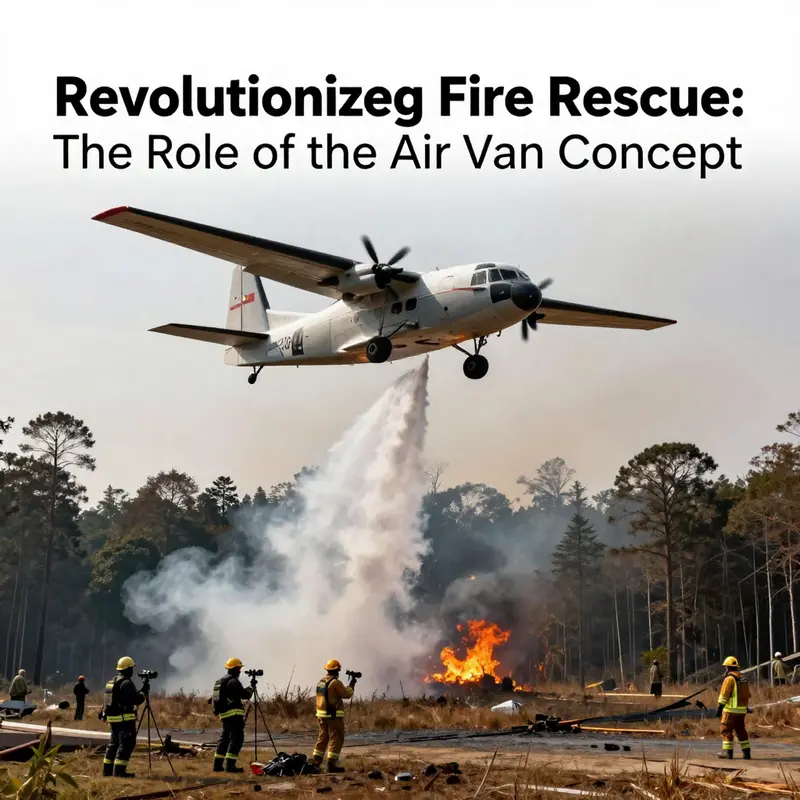
When people imagine an air van for fire rescue, they often picture a single, standardized vehicle lifting into the sky to dump water or foam on a blaze. In practice, modern aerial fire response has already moved beyond that simplified image. It rests on a spectrum of airborne platforms—each with its own strengths, limitations, and roles within a single, integrated system. This chapter threads those strands together, showing how drones, fixed-wing platforms, and rotorcraft collaborate to extend human reach, reduce risk, and accelerate decisive action in wildfires and other disasters. The point of view is not a kit of tools but a coordinated theater in the air, where every platform acts in concert with ground resources, command centers, and the people who make split-second decisions under pressure. In this broader sense, the so‑called air van is less a single machine and more a moving, layered capability that can be tailored to the contours of a crisis, from dense urban corridors to rugged, inaccessible terrain.
At the heart of this shift is a growing recognition that speed and persistence in fire suppression are as critical as the raw volume of extinguishing agents. Fixed-wing firefighting aircraft have long delivered large amounts of retardant or water over expansive fronts, creating a line of defense that buys time for ground crews and structural firefighting efforts. Yet the very act of delivering that payload changes how an aircraft flies. The weight of the drop, the distribution of that weight, and the resulting change in wing loading influence flight dynamics in ways that matter for safety and mission success. After a release, the aircraft becomes lighter, its wing loading decreases, and its response to gusts and turbulence shifts. These are not merely academic observations; they translate into concrete design and operational standards. Pilots and planners must account for the altered load conditions across the mission phases—before, during, and after the drop—to ensure stability, precise aiming, and predictable handling in unpredictable weather. That need drives ongoing attention to maneuver loads, gust criteria, and the broader regulatory framework that governs how airframes are certified for use in high-stakes environments.
Even as fixed-wing platforms provide reach and endurance, the ecosystem for aerial fire response increasingly prizes agility and situational awareness. Drones, or unmanned aerial vehicles, have become indispensable in their own right. They can venture into heat, smoke, and constricted airspaces that would be dangerous or impractical for piloted aircraft. Real-time reconnaissance is their core strength: streaming live video, infrared imagery, and sensor data back to a command center so responders know where the fire is advancing, where hot spots remain, and which routes offer the safest access for ground teams. The value of that information cannot be overstated; it shapes strategic decisions, from where to stage resources to how to coordinate interior attacks or defensive actions on exposed structures.
Beyond observation, drones bring targeted intervention capabilities that complement larger, higher‑capacity aircraft. They can carry lightweight tools and devices designed for specialized tasks—such as compact extinguishing devices or tools to breach barriers and open access points in high-rise or obstructed environments. In such missions, speed is a virtue, but precision is essential. A drone can position itself to deliver an agent to a precise location, confirm a fire’s status from multiple angles, or activate a barrier in a way that minimizes collateral damage and preserves as much life and property as possible. The same platform can be deployed to perform a delicate operation like shattering a window to vent smoke before a crew advances, reducing heat and improving visibility for interior teams. The versatility of unmanned systems makes them an invaluable complement to larger, crewed aircraft and to ground-based suppression efforts.
The architectural elegance of this airborne system is its capacity to pre-position and train for a range of scenarios. In the field, regional emergency air-rescue teams deploy a mix of aircraft types to cover diverse environments—forests, savannahs, urban-wildland interfaces, and disaster zones where accessibility is constrained. A fleet designed with scale and modularity in mind can quickly transition from rapid reconnaissance to heavy‑duty suppression, to search and rescue, to rapid medical evacuation, as the situation dictates. The idea of a centralized “air van” as a multipurpose hub becomes a practical reality when such platforms are integrated with a robust command-and-control backbone, standardized procedures, and a trained cadre of pilots and operators who are prepared to switch roles as the threat evolves. Even in regions where fixed-wing engagement is still maturing, the value of a layered airborne capability is evident: it reduces response times, broadens the reach of protection, and increases the probability that lives and assets are safeguarded before flames arrive at the doorstep.
Training is the quiet engine behind this capability. Simulation technology for aerial firefighting has matured to a level where multi-crew operations can be rehearsed in highly realistic environments. Modern training software, used by federal and state agencies and mirrored by professional responders around the world, enables crews to practice complex sequences without exposing themselves to danger. A typical program supports multiple aviators in a networked environment, simulating the cadence of a real mission—from initial reconnaissance through to suppression and post‑incident assessment. The ability to suffer “what-if” scenarios, test crew coordination, and refine decision making at scale translates directly into fewer incidents of miscommunication and misjudgment in the air. Pilots and mission coordinators repeatedly report that such training increases confidence, reduces risk, and enhances overall mission effectiveness when real fires demand rapid adaptation. This emphasis on preparation is as essential as any single device or platform and underpins the integration of drones and fixed-wing systems into a coherent aerial strategy.
Another thread in the tapestry is the ongoing expansion of regional air-rescue capabilities within national emergency systems. The development of dedicated firefighting aviation programs, incorporating small, medium, and large airborne platforms, represents a strategic investment in resilience. These programs are not static in their configuration; they evolve with advances in propulsion, payload delivery methods, and autonomous operations. The forward momentum rests on three pillars: capability, readiness, and interoperability. Capability means the fleet can address a broad spectrum of incidents, from fast-moving wildfires to complex urban fires and difficult terrain. Readiness ensures that pilots, technicians, and aircrews are prepared to deploy at a moment’s notice, with well-maintained aircraft and validated procedures. Interoperability guarantees that aerial assets can coordinate with land-based fire suppression teams, law enforcement, medical responders, and local authorities. When these elements align, the air component becomes not a standalone tool but a vital part of a larger system that prioritizes speed, safety, and effectiveness.
Of course, the regulatory and technical environments that govern these platforms matter as well. Airworthiness standards, flight-load criteria, and certification processes constrain what can be flown and how it can be operated in the field. The aviation community continually translates lessons from practice into refined standards, ensuring that the aircraft and crews meet rigorous safety benchmarks even as new technologies push the envelope. The result is a disciplined balance: embracing innovation while maintaining a rigorous framework that protects both responders and the public. The balance is not easy, but it is essential for ensuring that aerial firefighting remains a reliable and trusted option across a wide range of emergencies. In the end, the aim is not to chase bravado in the sky but to extend the steady, predictable rhythm of coordinated action that saves lives when every second counts.
There is also a practical psychological dimension to this evolution. The knowledge that a capable, multi‑platform aerial system can illuminate a crisis, neutralize threats, and guide ground teams toward safe entry points provides a kind of operational calm that cascades through the incident command structure. Decision makers can allocate scarce resources more efficiently when they can visualize the threat in three dimensions, forecast its trajectory, and anticipate how changes in weather or terrain will influence fire behavior. Teams on the ground benefit from this clarity, moving with purpose rather than hesitating at a critical moment. When the air and ground teams work in concert, suppression becomes a shared mission instead of a sequence of isolated tasks. This unity is the true value of the air-van concept translated into practice: a portable, airborne ecosystem that aligns perception, planning, and action in real time.
The narrative of air-based firefighting cannot ignore the human element that threads through every decision. The best aerial systems in the world do little good if the crews operating them are poorly trained, poorly rested, or lacking in cohesive communication. Therefore, investments in equipment are inseparable from investments in people. The training programs referenced earlier are evidence of a broader commitment to professional development, certification, and continuous learning. The same applies to the broader community of responders who interact with aerial assets—incident commanders, dispatchers, medical teams, and local authorities all benefit from a shared vocabulary and a shared understanding of what each platform can contribute to a given scenario. This shared language reduces friction when a crisis unfolds and increases the likelihood that a well-coordinated plan will succeed under pressure.
In sum, the concept of an air van for fire rescue—if we use that term to describe a flexible, multi-platform airborne capability—captures the essence of contemporary practice. It is not a single vehicle but a layered collection of tools, each chosen for its strengths and deployed in concert with others to shape an effective response. Drones provide eyes and precision at the edge of danger; fixed-wing and rotorcraft platforms extend reach, endurance, and payload delivery; training and standards ensure the system operates safely and predictably. The result is a resilient, adaptable approach to fire rescue that keeps pace with a world where fires can occur anywhere, at any hour, and in ever more complex environments. As regions enlarge their emergency-recovery arsenals and communities invest in stronger safety cultures, the air‑based component of rescue will continue to evolve—refining the metaphor of the air van into a practical, mission-critical reality that protects lives and livelihoods when time is of the essence.
For readers curious about the regulatory guardrails that shape these capabilities, official airworthiness standards and related guidance provide a rigorous backdrop to the practice described here. These standards—developed by national aviation authorities—underline the necessity of reliable flight performance, validated maneuver loads, and robust gust criteria as foundational to safe operations in high-risk environments. They anchor innovation in a framework that rewards accuracy, discipline, and continuous improvement. As the field advances, new tools will emerge and older ones will be refined, but the guiding principle will remain constant: aerial fire response is most effective when it is deliberate, collaborative, and anchored in a shared commitment to safety and service. The chapter that follows builds on this foundation by examining case studies and pilot perspectives that illuminate how the theory translates into real-world outcomes.
External reference for further context on airworthiness and flight loads: https://www.faa.gov/aircraft/aircraftcertification/airworthinessstandards/
Internal resource for ongoing professional development: fire-safety essentials certification training
From Air Vans to Aerial Arsenal: Rethinking Fire Rescue Through Technological Innovation
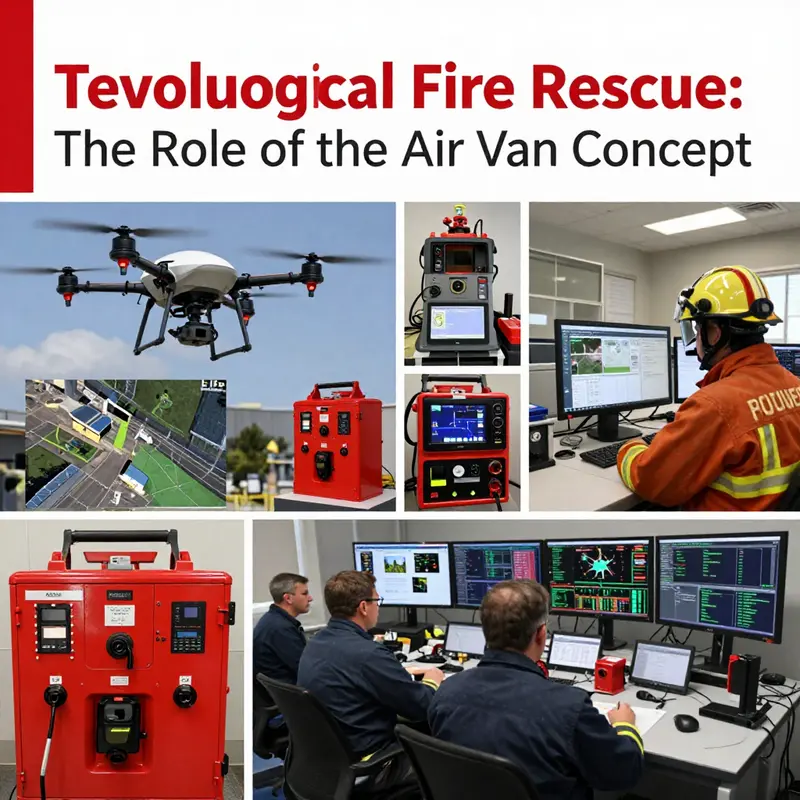
The field of fire rescue is undergoing a quiet revolution, shifting from sole ground response toward a networked mix of airborne capabilities. The idea of an air van becomes a practical mental model for a platform that can arrive quickly, deliver targeted intervention, and expand the situational picture for ground crews.
In this landscape, drones have moved beyond simple video feeds to real time reconnaissance, 3D mapping, and hotspot identification. They can see through smoke, assess structural integrity, and help planners choose where to deploy crews and equipment. The result is a layered approach that improves speed while reducing risk to firefighters.
Equipment carried by aerial platforms can augment suppression efforts with precision. From water and foam to dry chemical payloads, air assets can apply agents where needed while keeping crews out of harms way. In some cases they can breach barriers or stabilize zones to accelerate interior operations.
Beyond drones, regional aerial units and specialized aircraft pre positioned near fire-prone regions extend reach and endurance. Their role is to compress response times and to position resources where they are most likely to be needed, creating a more anticipatory posture rather than mere reaction.
The data backbone supporting this shift includes sensors in buildings, wearable safety tech, and networked command systems. Real time data sharing, AI driven analytics, and digital training environments converge to sharpen decision making, plan allocation, and training design. Wearables provide location and biometric data that help commanders understand crew health and risk in dynamic environments.
Effective governance and interoperability are essential. Standards for data formats and communication ensure that different agencies can collaborate without confusion, while training programs emphasize how to interpret data, coordinate air and ground assets, and maintain safety and accountability under pressure.
In summary, the future of fire rescue rests on a layered, interoperable ecosystem in which air assets act as force multipliers. The air van concept captures this vision as a deployable, adaptable element within a comprehensive response architecture that extends the reach of ground teams, supports safer decision making, and helps protect communities when every second counts.
Wings of Vigilance: Charting the New Era of Aerial Fire Rescue
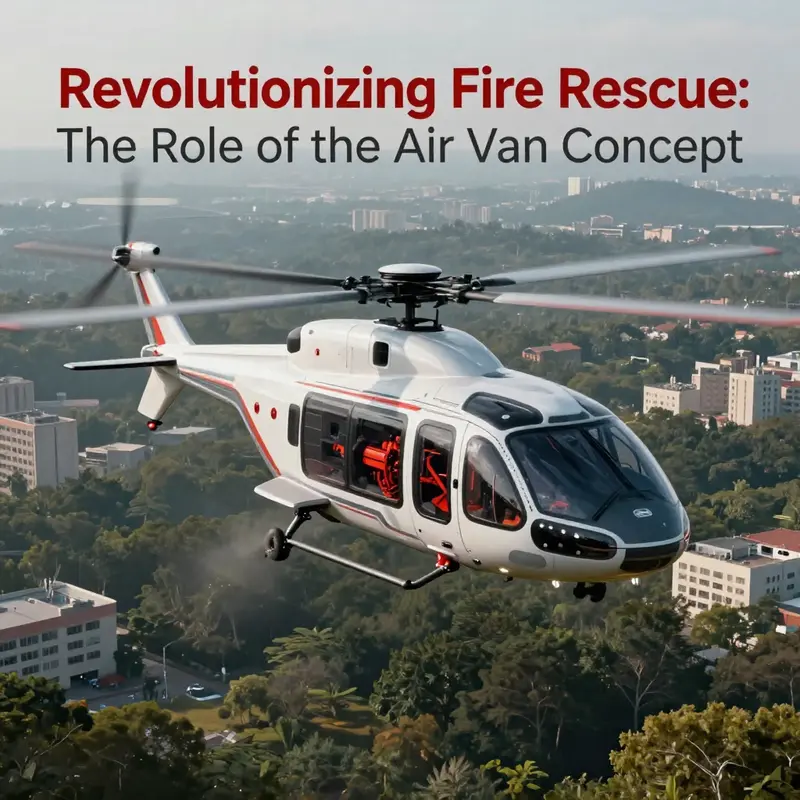
Fire rescue has always relied on the air—not merely as a dramatic backdrop but as a strategic theater where seconds can decide outcomes. Today, the idea of an “air van” feels outdated as a label, yet the essence of that concept persists: airborne assets that bring eyes, reach, and force to the scene faster than ground crews alone ever could. In this chapter, we explore how modern aerial support is reshaping active fire suppression, how drone swarms and adaptable airframes function together, and why the future of firefighting hinges on a careful blend of unmanned and manned capabilities. The discussion avoids the lure of a single, named device and instead maps the evolving architecture of air-based rescue, grounded in real-world capabilities that already exist and are scaling rapidly under changing climates and expanding wildland-urban interfaces.
On the front lines, the most immediate evolution is the rise of firefighting drones. These are not simple cameras in the sky but purpose-built systems designed to endure heat, smoke, and gusting winds. Their real strength lies in reconnection—reconnaissance in environments too dangerous for people and traditional aircraft. They provide live video feeds, thermal maps, and data streams that feed a command center’s decision loop, enabling supervisors to see the fire’s edge, rate of spread, and the protective barriers that must be created to safeguard communities and critical infrastructure. This real-time situational awareness is not a luxury; it is a force multiplier. It allows command teams to choreograph a more precise initial attack, directing resources where they are most effective and retracting from zones where the risk is too high.
Beyond observation, interception becomes possible through specialized payloads designed for harsh environments. Drones can carry water or dry chemical releases and, in some configurations, even devices that temporarily alter the interior microclimate of a structure—shaping flow paths or cooling critical pockets of the fire. In a more strategic sense, certain payloads are designed to breach or access barriers that would otherwise slow a response. For example, tools that can breach windows or create access points on the fire’s periphery can dramatically reduce the time for interior operations after an exterior attack has been stifled. The capability is not about replacing ground crews but about extending the reach of suppression tactics while keeping human teams out of the most dangerous zones until it is safer to advance. This integrated approach—seeing, approaching, and engaging—embodies a modern doctrine in which air-based systems and ground operations operate as a single, synchronized force.
Thermal imaging and multispectral sensing give drones a second, equally vital function: early detection. In many landscapes, the earliest signals of a developing fire are invisible to the naked eye, masked by smoke or terrain. A high-contrast thermal map can reveal a nascent ignition, long before flames become visible, allowing responders to act at a point when suppression costs and risks are lowest. The data fusion that threads drone feeds with ground-based observations, weather data, and terrain models creates a richer, more actionable picture than any single sensor could produce. Fire behavior models, when updated in near real time with current conditions, become predictive tools that help incident commanders allocate resources before a fire overcomes natural or built barriers.
The future promise of aerial support also hinges on the way drones and other air assets cooperate with larger, manned aircraft. In regions facing persistent severe fire seasons, larger airframes equipped with modular firefighting systems can perform rapid initial attack and deterrence, especially in the critical first hours of a wildfire. These platforms, while not as nimble as small drones, bring substantial payload capacity and endurance that can sustain a sustained assault when ground availability is limited. The operational concept depends on robust coordination across agencies, with clear lines of authority, shared communication protocols, and interoperable command-and-control technologies. That coordination ensures that air assets are not duplicative but complementary—each asset playing to its strengths at the right moment to reduce overall risk to human life and property.
This integrative approach is already reflected in how agencies think about resource deployment during peak fire periods. The global market for firefighting drones has grown from hundreds of millions to a forecast that surpasses a billion dollars within the next decade, driven by demand for faster detection, safer surveillance, and more effective suppression in challenging environments. The trend signals a shift away from a single-use mindset toward a modular, scalable aerial ecosystem. A drone can be deployed for a morning reconnaissance over a state forest, then shifted to an urban interface incident in the afternoon, followed by a nighttime aerial survey to track smoldering embers. The same platform, with different payloads and sensing configurations, becomes a multipurpose tool—an adaptable asset that evolves with the incident rather than forcing responders to switch to an entirely different system.
A central thread throughout this evolution is training. The most sophisticated hardware cannot substitute for well-prepared people who understand the drone’s capabilities and its limits. Training must emphasize safe operations in extreme heat, accurate interpretation of sensor data, and effective integration with ground and aerial teams. It must also address the realities of shelter-in-place decisions, evacuation planning, and firefighting in high-wind conditions where staying aligned with compass directions and wind shifts is critical. Practical exercises should mirror the complexity of real incidents, balancing speed with accuracy so that crews do not become overconfident in automated systems. The value of training extends beyond technical proficiency; it fosters the judgment and discipline needed to make life-saving choices when every second counts. For readers exploring the human dimensions of aerial readiness, the following resource offers a compelling perspective on the role of hands-on training and leadership in high-stakes operations: firefighter training tower dedication. The linked material emphasizes how dedicated facilities, realistic scenarios, and disciplined practice form the backbone of effective air-ground coordination. firefighter training tower dedication.
Policy and governance frameworks are catching up with technological capability. The question is not whether we can deploy a drone to drop water or deliver a breaching tool, but how to regulate the use of airspace, ensure interoperability, and protect communities’ privacy while maximizing public safety. A sustainable approach requires multi-agency collaboration that aligns budgetary authority, legal authority, and operational doctrine. In practice, this means shared data standards, standardized incident command structures, and clear lines of responsibility when technology operates at the periphery of traditional firefighting. It also means a commitment to continuous evaluation—collecting performance data, reflecting on lessons learned, and adjusting procedures to incorporate new sensors, new algorithms, and new airframes as they prove themselves on the fireline. Such governance is not a fixed roadmap; it is a living protocol that grows with the weather of climate change, urban growth, and evolving risk landscapes.
The broader strategic context is critical to understanding the trajectory of aerial fire rescue. Climate change has intensified fire seasons, increased the frequency and severity of wildfires, and expanded the wildland-urban interface in many regions. As a result, the air component of firefighting must scale in tandem with these pressures. Drones bring rapid reconnaissance, precise targeting, and the ability to monitor hot spots long after a visible flame has been suppressed. Manned aerial platforms, meanwhile, deliver bulk suppression power, transport critical equipment quickly to remote locations, and provide persistent surveillance from above the evolving smoke plume. The synergy between these elements—eyes in the air, hands of fire suppression, and brains of decision-makers—constitutes a new paradigm for protecting lives and livelihoods.
Market and policy analyses reinforce this shift. The anticipated growth in the firefighting drones sector is not merely about gadgetry; it reflects a systemic shift toward faster decision cycles, safer operations, and more cost-effective use of scarce resources. As aerial capabilities expand, agencies are rethinking procurement strategies to favor modular, interoperable systems rather than single-purpose devices. This mindset supports rapid reconfiguration of fleets to meet regional risk profiles, whether in drought-stricken Western landscapes or coastal urban-rural margins where weather patterns can change with explosive speed. In practice, that means a future in which a single incident may see a mosaic of air assets—small drones for rapid initial reconnaissance, mid-sized platforms for targeted suppression, and larger airframes for sustained attack—working in concert under a unified command structure.
The ethical and social dimensions of expanding air-based firefighting also demand thoughtful attention. Communities have legitimate concerns about the presence of aircraft in airspace that previously held only civilian traffic or traditional emergency services. Balancing public safety with civil liberties requires transparent governance, clear privacy protections for drone use over neighborhoods, and ongoing public engagement to build trust. In parallel, the safety record of aerial operations must be maintained through meticulous maintenance regimes, redundant communications, and fail-safe procedures. The goal is not to overwhelm the scene with technology but to weave it into a human-centered practice that respects communities while giving responders a much-needed edge when fires threaten homes and habitats.
As this chapter closes, the concept of an air van—if interpreted as a flexible constellation of airborne resources rather than a single vehicle—emerges as a fitting metaphor for what is becoming possible. The modern fire service does not rely on one piece of gear to win a fight against nature; it relies on an integrated air-ground system that can adjust its composition in real time. Drones provide intelligence and micro-interventions; manned airframes offer bulk capability and endurance; and data-driven decision-making links it all together. The multiplier effect comes from the way these elements learn from each incident, adapt to different terrains, and scale to protect communities of every size.
For readers who want a broader policy perspective on how national resources can be mobilized to support civilian fire suppression, a detailed analysis is available in industry and policy circles. It describes sustainable, whole-of-government approaches that leverage existing military assets in a civilian emergency role, coordinated under clear legal authority. The core argument is that a well-integrated air strategy can reduce the need for expensive ad hoc deployments and improve early response, ultimately saving more lives and reducing the cost of disasters. To explore this further, see the external resource linked below.
External resource for policy context: https://www.csbaonline.org/reports/air-national-guard-wildfire-response
Final thoughts
The synergy between aerial technologies and firefighting techniques shapes an increasingly effective approach to fire rescue operations. Firefighting drones and specialized aircraft play an indispensable role in providing timely reconnaissance, precise aerial support, and innovative firefighting methods. As we continue to unveil the potential of advanced technologies and embrace the air van concept, the future of fire rescue operations looks promising. It heralds a new era where we not only respond to fires but aim to preempt and mitigate their catastrophic impacts.