
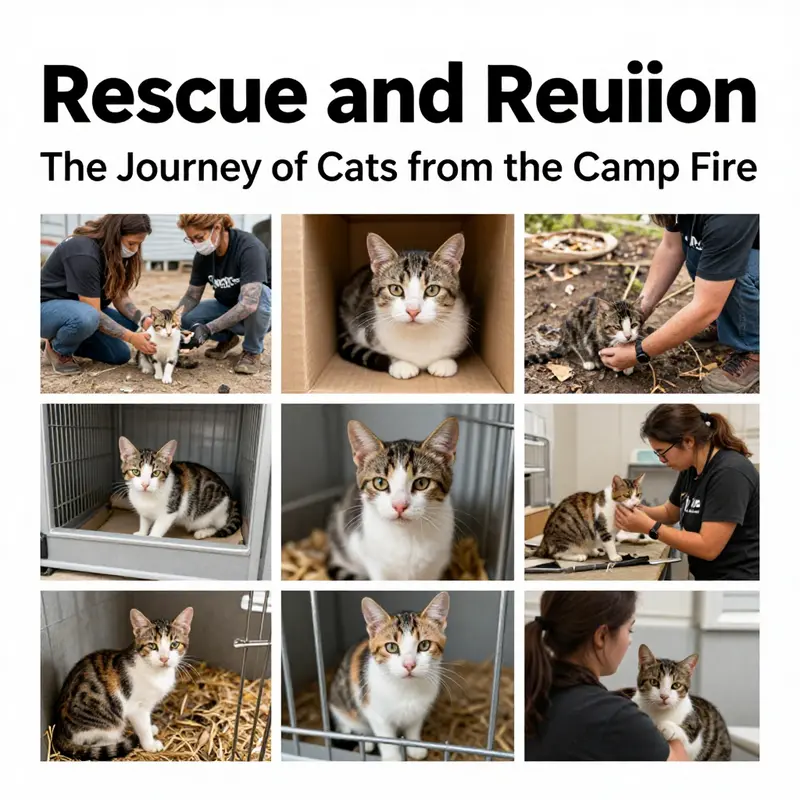
The Camp Fire brought immense devastation to communities and their beloved pets in Northern California. Amidst the chaos, dedicated rescue operations emerged to save the lives of countless animals, particularly cats. These efforts involved the establishment of temporary shelters that not only provided safety but also facilitated emotional reunions between lost pets and their owners. In the chapters that follow, we will explore the intricate rescue operations that took place, the temporary shelters that housed these cats, and the heartfelt stories of reunion that highlight the resilience of both animals and their humans in the face of disaster.
Whiskers in the Ember Sky: How Cats Survived and Were Reunited After the Camp Fire
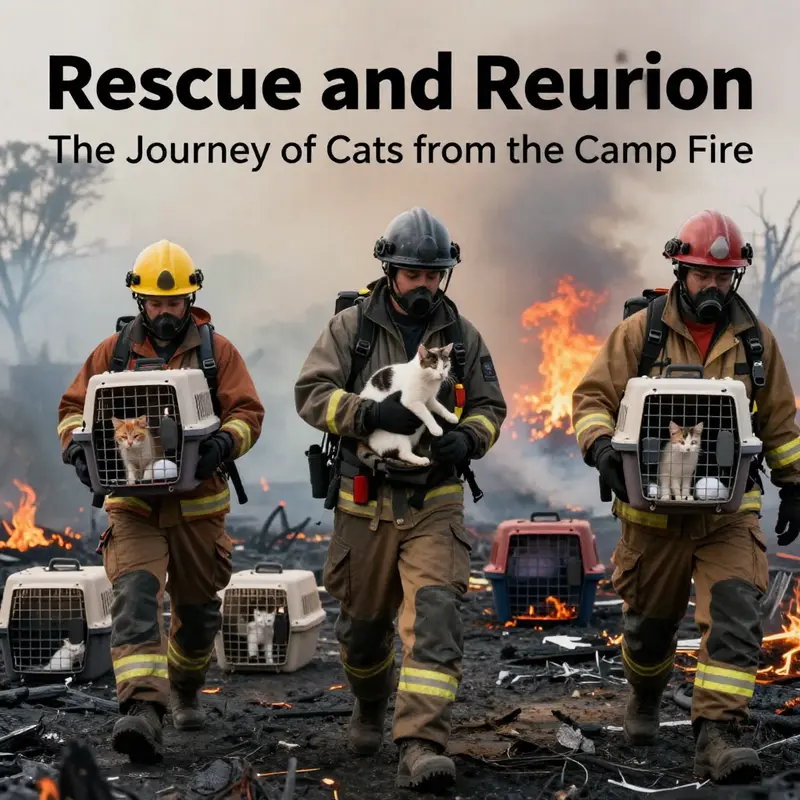
The Camp Fire opened a chapter in Northern California history that remains etched in memory for its speed, its scale, and the quiet courage of those who worked to save lives beyond human ones. Fire swept through a landscape already crowded with memories and assets, leaving behind a map of devastation that spoke in ash and silence. Yet in the midst of that silence, the story of the rescued cats began to unfold with its own stubborn rhythm of hope. The questions were stark and urgent: where did the cats go once the flames licked at the edges of neighborhoods, and how did they survive long enough to be found, fed, and eventually reunited with the people who loved them? The resounding answer came not in dramatic television moments alone but in the careful, patient work of shelters, rescuers, and volunteers who accepted the almost impossible task of caring for hundreds of displaced pets in the aftermath of a disaster that tore lives apart and reassembled them, sometimes, in the most unexpected ways.
The scale of the disaster amplified every challenge that comes with animal rescue in a wildfire. The fire burned through thousands of structures, displaced countless families, and rewrote the maps of community life in minutes. Cats, with their intimate ties to familiar scents and corners of a house, faced a different form of peril than their human counterparts. They found themselves separated from familiar doors, windows, and feeding bowls, often behind closed doors that no longer opened to their humans. Some escaped into the night with a hiss and a dash, others sheltered in crawl spaces, attics, or the interiors of burned-out cars and garages where heat, smoke, and fear could be endured long enough to savor a fragile chance at survival. The rescues were as much about listening for faint meows as about the physical act of lifting a body away from dangerous debris.
In those early days, as firefighters and volunteers searched through rubble, the cats who had managed to endure the conflagration became a kind of microcosm of resilience. They were found in the most unlikely places—beneath fallen staircases, inside hollow walls, or tucked away in the crevices of burned-out sheds. They hunted for remaining oxygen, a little water, a patch of shade, and a human hand that would not abandon them. The process of rescue often began with the simplest tools and the most patient hands: a carrier, a familiar voice, a soft voice that could coax a wary cat to trust once more. There was a rhythm to these rescues that mirrored the pace at which the community began to mend: slow, careful, and underscored by the knowledge that every successful capture was a doorway back to a life that might still be salvageable.
One recurring image in the stories that emerged from the shelters was the way cats clung to life at the edge of fragility. The animal welfare teams—comprising national organizations, regional groups, and a network of local shelters—implemented a disciplined approach to maximize the cats’ chances of survival and eventual reunion with their families. Microchip scanners and central databases became essential tools in this effort. The belief that a simple number could unlock a lifetime of shared memories drove volunteers to scan every animal that crossed a shelter threshold, then to trace those numbers to owners who, in many cases, had no idea where to look or how to begin again after losing their homes to the fire. The shelters in places like Chico rose quickly as critical hubs where displaced pets could be accounted for, cared for, and, when the right match existed, returned to their rightful owners or placed with new trusted families while owners navigated the new reality of their losses.
The emotional core of these rescues often centered on the moment when a cat reached out, in some visible way, to someone who could help. The shelter environment—designed as a sanctuary to ease the stress of displacement—became a bridge between disappearance and reunion. The case of a cat who managed to respond to a long-standing search by a woman at the Chico shelter illustrates this bridge. The stories were not merely about the animals’ survival; they were about the rethreading of family ties that disasters attempt to sever with one careless moment of misfortune. Shelter staff and volunteers often watched people approach cages with cautious steps, their voices soft and uncertain, then heard the telltale purr that confirmed a living bond still intact. In a place where even the most ordinary routine—feeding, cleaning, and monitoring—took on added urgency, the reunion of a pet with its human became a kind of communal relief, a reminder of what communities owe to the animal companions who stand with them through fear, loss, and recovery.
To manage the overwhelming number of animals displaced by the Camp Fire, shelters adopted a system that blended urgency with organization, a paradox that was itself a testament to resilience. Makeshift recovery centers were established, where staff used microchip scanners to identify owners, paired with databases that could rapidly connect a chip’s number to the cat’s human. This was not merely a matter of matching IDs; it was about restoring a line of communication that had been severed when fire consumed the ordinary means by which families kept in touch. In the chaos that followed a disaster of this magnitude, keeping contact information up to date requires deliberate, ongoing effort. Volunteers spread the word through every available avenue—local radio, community boards, and, increasingly, through social media—because every share, post, or retweet could be the difference between a successful reunion and a lifetime of searching alone. The shelters became living archives of this work, recording every sighting, every fostering arrangement, and every potential reunion, even as they faced the practical demands of feeding, housing, and caring for animals that arrived in various states of distress.
The narrative of the Camp Fire’s cat rescues is deeply grounded in the realities of the people who did the work. It is a story of firefighters who paused their efforts to coax a frightened cat from a heap of rubble, of trained volunteers who learned quickly how to adapt shelter practices to the needs of felines who had survived heat and smoke, and of families who waited with a hopeful fear for news about their pets. The emotional toll on those caring for the animals was real, as was the joy when a cat, skittish though it might be after months of trauma, finally allowed a touch or a quiet word that signaled trust had not been extinguished. The Chico shelter example underscores this. It was a focal point in the broader recovery operation, a place where displaced pets could be scanned, recorded, fed, and given shelter. The shelter’s role extended beyond mere physical care; it was a center of memory, a site where the stories of homes lost and found could converge into something that felt almost like normal life again, even as the landscape around them remained altered.
With the human dimension in mind, the process of reunification emerged as a defining feature of the post-fire period. Families whose homes had vanished could not always retrieve their pets, and in other cases, the pets themselves helped to guide their owners back to safety. The social networks that grew around the shelters were instrumental in this regard. When a cat appeared at a shelter or was found roaming near a burnt shell of a house, volunteers would broadcast the incident through informal channels and official channels alike, signaling to other rescue teams and to the owners that the search for a specific animal remained active. In a time when communication infrastructure was compromised, these networks became lifelines that united the practical and the emotional: the practical necessity of reuniting with a beloved animal and the emotional imperative to restore a sense of normalcy to families who were reparametrizing their lives after loss. The shelters, for their part, functioned as nerve centers where such networks pulsed with information—where the presence of a microchip or a distinctive facial marking could become a doorway to a story of a dog or a cat who had wandered through smoke and debris and now stood at the threshold of a new, uncertain future.
A deeper look at the rescue operations reveals a blend of improvisation and adherence to best practices that characterized the fieldwork during the Camp Fire. Rescuers were often working within unstable environments, and safety remained a paramount concern not just for humans but for animals as well. Cats, in particular, presented unique challenges. They are often wary after experiences of danger and confinement, and their stress levels can spike in unfamiliar surroundings. This meant rescue teams had to balance the urgency of extraction with the need to minimize additional trauma. The shelters responded by creating calm zones, offering gentle handling, and establishing routines that could help cats regain trust. Quiet spaces, familiar scents, and environmental enrichment were not merely comforts; they were essential components of the healing process. The effect of these measures extended beyond the cats themselves. They helped to stabilize the morale of the people who worked alongside them, reinforcing the sense that even in the shadow of disaster, systems, routines, and kindness could be reestablished.
The broader lesson embedded in these rescue efforts concerns preparedness. The Camp Fire underscored how quickly a disaster can rupture the everyday lives of families and their animal companions, and it highlighted the importance of pet-inclusive emergency planning. Evacuation plans that account for cats and other companion animals—plans that encourage pre-emptive microchip updates, pet carriers that are readily accessible, and shelters equipped to receive felines with appropriate facilities—are not luxuries. They are essential elements of community resilience. The experience also spotlighted the role of education, both for pet owners and for rescuers. For owners, it was a reminder to keep microchip information current and to maintain an up-to-date list of pet care essentials that can be easily transported in an emergency. For rescuers and shelter staff, it was a call to remain adaptable, to cultivate calm and patient handling techniques, and to maintain the networks that keep information moving—networks that proved, time and again, to be the difference between separation and reunion when time was a luxury that nobody could afford.
So the question of where the cats were taken emerges not as a single answer but as a constellation of responses, each shaped by the needs of the moment and the resources available. The Chico shelter, along with other temporary facilities, functioned as a waystation where rescued cats could receive medical attention, hydration, and shelter while their owners began the long, often painful, process of recovery. The shelter system acted as a bridge, pulling together the fragments of people’s lives by reuniting them with the cats that carried memories of better days. In some cases, the reunion happened quickly, aided by the shelter’s organized databases and the speed of social media. In others, it took longer, and the waiting became a communal experience, shared by volunteers who kept the lights on, the animals fed, and the search alive for as long as it took.
Amid the stories of rescue, there is a cautionary note about the limits of triumph. The true number of cats lost in the Camp Fire remains unknown, a reflection of the chaos that followed in the fire’s wake and of the fact that many pets were not microchipped or registered in a way that would make their return to owners straightforward. This reality strengthens the argument for comprehensive disaster preparedness that includes pets as integral members of households and communities. It also invites ongoing reflection on how to allocate resources during rehabilitation phases so that animal welfare is not overshadowed by the immediate needs of human survivors. The emotional resonance of these rescues—the small purrs in a quiet room, the relieved smiles of people who believed they might never again see their cats—remains a powerful reminder of why communities rally around the most vulnerable among them, including the animals who share their homes and their grief.
For anyone seeking to explore how frontline responders coordinate these complex operations, one could begin by consulting broader resources on fire rescue and shelter management. A concise overview of such practices can be found at the dedicated online hub for fire rescue professionals, which offers a window into the kind of training, coordination, and field-tested protocols that underlie these seemingly miraculous reunions. This resource, while not naming specific brands or products, provides context for the kind of interagency collaboration that made possible the Chico shelter’s pivotal role during the Camp Fire aftermath. It helps explain why the work on the ground—scanning microchips, maintaining shelter rosters, and enabling rapid reunifications—requires both discipline and empathy, a combination that has the potential to shape how communities respond to future disasters.
The remarkable endurance of the people who carried the weight of rescue work is thus inseparable from the stories of the cats they saved. Each rescued animal carried with it a history of a home, a daily routine, and a bond that had endured through fear and uncertainty. The cats who survived the Camp Fire carried more than their bodies through the aftermath; they carried the possibility of recovery for their families, a tangible reminder that home is a fragile thing, yet not beyond repair. The shelters, the volunteers, the rescuers, and the families who waited in the wings of the recovery operation contributed to a collective memory that honors the lives affected by the disaster while affirming the resilience that makes recovery possible. In the months and years that followed, the community’s ongoing effort to improve pet safety, sheltering, and reunification would continue to echo the lessons learned in those early days when the ember sky gave way to careful, hopeful steps back toward normalcy.
As this chapter of the story closes and the larger arc of the article advances, it remains essential to remember that every rescue operation is a mosaic of human compassion and practical action. The Cat Rescue Operations during the Camp Fire did not unfold in a vacuum; they occurred in a landscape of shared risk and shared responsibility. The characters in this narrative—the shelter workers who organized rosters, the volunteers who ferried cats from trucks to cages with gentleness, the families who waited, sometimes for weeks, for a sign of their pets, and the cats themselves, whose instincts to seek safety, companionship, and a familiar voice defied the destruction around them—together formed a testament to what communities can achieve when they marshal resources, listen for the quietest of sounds—purring in an empty room perhaps—and hold fast to the conviction that life, with all its fragility, still deserves a chance.
For readers who want to examine the mechanics behind these stories, including the networks that connect shelters, rescuers, and owners, a broader narrative can be found in the linked online resources that document the campaigns and discoveries of the Camp Fire period. The experiences recounted here are not just episodes of dramatic rescue; they are demonstrations of how preparation, collaboration, and care can convert catastrophe into a pathway toward restoration. In the end, the cats rescued from the Camp Fire did not simply survive a disaster; they contributed to the resilience of their communities by becoming living reminders that home can be rebuilt, one rescued life at a time. And in the quiet rooms of shelters, with each purr and gentle nuzzle, they whispered back to the people who waited for them: you did not lose me; we found a way back to each other.
External source: For official details on the Camp Fire, consult the incident report and related materials available through the state fire agency’s archives at https://www.fire.ca.gov/incidents/2018/2734-camp-fire/.
Shelters of Hope: Reunions and Recovery After the Camp Fire
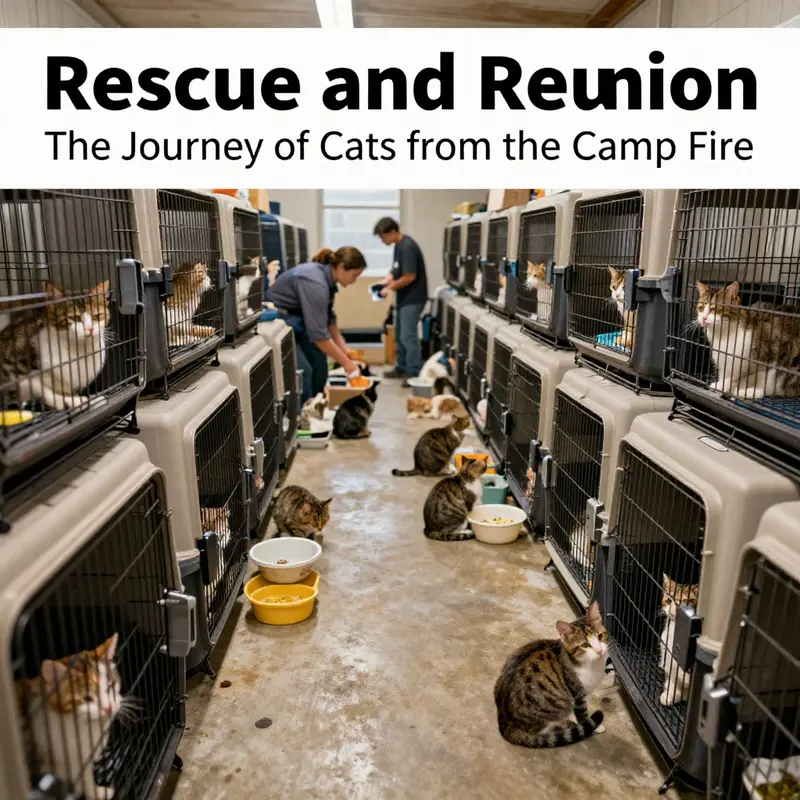
Following the Camp Fire, temporary shelters became lifelines for displaced cats and the families seeking them. At facilities near strategic hubs like Chico, intake was streamlined to balance urgency with care: quick medical checks, quiet spaces, fresh water, and predictable routines that reduced stress for traumatized animals. Posters of missing and found pets lined hallways, guiding owners toward hopeful reunions as microchips connected families with their cats. The shelters also served as community touchpoints, where volunteers, local businesses, and faith groups donated supplies and offered foster spaces that stabilized animals while families rebuilt. Over weeks, the focus shifted from rapid intake to longer-term wellbeing: gradual exposure to new sounds, quiet rooms to recover from fear, and careful socialization that prepared cats for adoption or return to loving homes. In stories of reunion, a reserved uncertainty gave way to relief as a cat walked into a waiting embrace, often after days of anxious searching. Beyond the emotional impact, the shelters demonstrated resilient design: humane housing layouts, consistent routines, and open channels for public communication that kept the community informed and involved. The Chico example, among others, offered a blueprint for disaster response that centers animals and families alike, turning chaos into a deliberate, compassionate plan for recovery.
From Ember to Embrace: The Untold Reunions of Camp Fire Cats
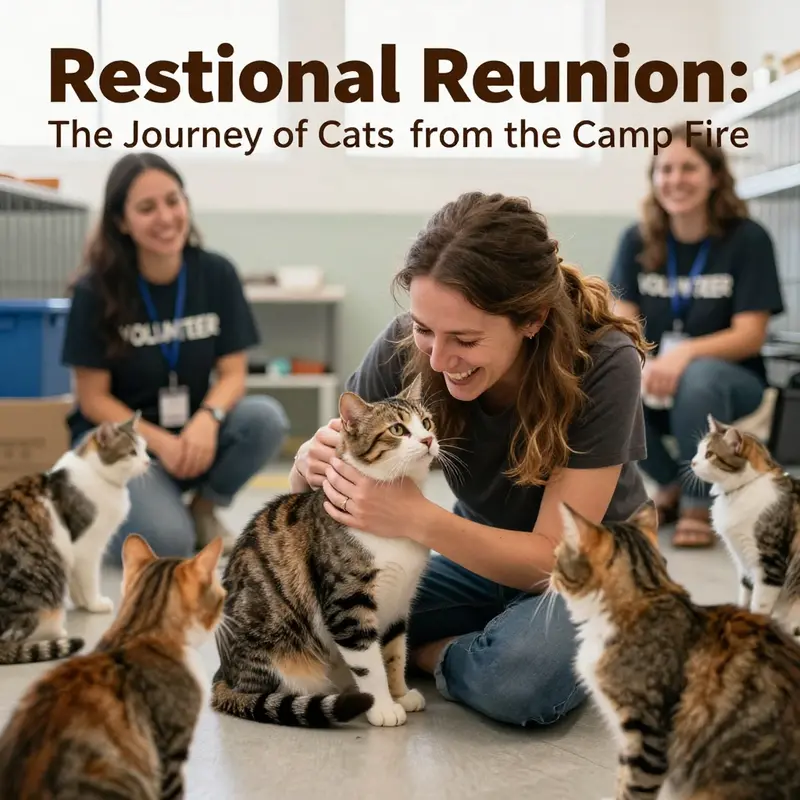
The Camp Fire left more than scorched timbers and ash keeping company with the wind. It left a silence that felt almost sacred, a stillness where loss could be weighed and measured in pawprints and meows. In the days that followed, as embers cooled and the ground turned from orange to gray, a different kind of labor began. It was the work of rescuers, volunteers, veterinarians, and shelter coordinators who turned chaos into a circuit of care. They built temporary sanctuaries where displaced cats could rest, receive medical attention, and—one hopeful day after another—be found, identified, and possibly reunited with the people who loved them most. The shelters, including a key site in Chico, became safe havens where the grief of separation softened under the gentleness of exams, meals, and the soft clink of water bowls. In that rhythm of care, the human and animal stories braided together, creating a counter-narrative to devastation: resilience through connection.
The process began with intake—a careful, almost ceremonial moment where a cat crossed from danger into shelter, where a tag was read, a microchip scanned, and a medical screen opened like a small door to a longer life. For many families, the first spark of hope came with a routine that sounds simple but holds enormous consequence: a scanned microchip turned a wandering cat from a statistic into a name. The shelters were filled with these moments, ordinary in procedure yet extraordinary in meaning. A head tilt, a cautious sniff of a unfamiliar room, a tail swish that tested the air for safety—these were the signals that the animals were beginning to trust again. The Chico shelter, known to many as a lifeline in a landscape of fear, became a crossroads where people and pets met again, where the impossible became possible through persistence, patience, and a vast network of helpers.
Within those walls, the care was not only medical but deeply relational. Volunteers logged every sighting, every clue, every call that someone had heard a cat was still alive somewhere in the smoke-drowned hills. The emotional labor of rescue is easy to underestimate. It rests as much in the quiet, late-night checks and the gentle word-smoothening of anxious felines as in the dramatic glimpses of a caregiver finally spotting a familiar ear or whisker. The reunions themselves—the ones that occurred in the days, weeks, and months after the first shelter doors opened—were not simply endings. They were re-beginnings of trust, a re-anchoring of what families thought they had lost. And they carried a message that felt crucial to the whole community: love survives disaster when people rally around the most vulnerable, including the small, quiet beings who carry a world of memory on their backs.
A landmark moment in the broader narrative came when Dexter, a cat long presumed lost, reappeared after 103 days. Dexter’s story did not unfold in a single evening; rather, it stretched across weeks of search parties, veterinary checks, and the slow spread of hope through social networks and local media. The Ritchie family—like many others—had endured the kind of uncertainty that gnaws at the edges of daily life. They woke every morning with a small ritual: check the shelter lists, listen for the faintest meow, and keep the faith that somewhere out there their cat was alive. When Dexter finally came home, the scene carried the weight of a community’s belief made real. The moment was not merely a reunion; it was a declaration that endurance, love, and shared labor matter deeply when fear and loss loom large. Dexter’s survival and return became a touchstone that many who had weathered the Camp Fire still carried in their hearts as a proof of what can be recovered through sustained effort and collective care.
The specifics of how such reunions happen are worth tracing, not to reduce them to a formula, but to illuminate the layers of effort quietly required behind every embrace. Shelter staff pursue a steady routine that blends urgency and gentleness: triage and medical assessment, nutrition and hydration, flea care and vaccinations when possible, and the careful documentation of each animal’s story. A cat’s coat may hide hidden injuries; a quiet purr can mask fear; and a scar on the ear can hold a clue about its past journey. In these moments, staff and volunteers become both healers and historians, recording the cat’s journey with the same care a family would document a child’s first steps. The shelter environment, with its mixture of sterile exam rooms and the soft rustle of blankets, becomes a classroom in which cats relearn how to be pets. It is a place where the scent of familiar food, the warmth of a sunlit perch, and the steady presence of a human hand can begin to reconstruct a sense of home.
Reuniting a cat with its owner is never guaranteed, and the uncertainty is a brushfire that never fully extinguishes. Yet the stories that do come to fruition ripple outward, offering reassurance to others who wait and watch. When a family appears at a shelter, with a photo, a description, a hopeful tremor in their voice, the moment can feel almost cinematic. But the truth remains that reunions are the product of ongoing, practical work: the adoption of a policy of contingency plans for pet owners displaced by disasters; the willingness of volunteers to coordinate long hours; the generosity of donors who fund medical care and shelter operations; and the quiet, repetitive acts of recognition—recognizing a collar tag, recognizing a familiar tail, recognizing a voice in a crowded room. It is in these fabrics—the routine and the rare—that the memory of the Camp Fire becomes not only a memory of loss but also a map of resilience.
The broader social fabric that supported these rescues was woven from stories shared on the front lines and magnified by the power of community networks. The shelter in Chico, along with other facilities, served as hubs where the threads of personal history could be tugged gently into the light. The reunions highlighted a phenomenon that researchers and practitioners in disaster animal welfare observe again and again: the power of public spaces—libraries, schools, shelters—as centers of recovery and social glue after catastrophe. These spaces, activated by volunteers and professionals, transform fear into a cooperative project. A child’s story about finding a lost pet becomes a community’s story about being present for one another in a moment of collective vulnerability. The shelters do not erase the devastation; they translate it into steps forward, however tentative those steps may feel at first.
The emotional arc of these events is closely tied to the practical realities of shelter life. Food and water are not glamorous but essential; medical care is not a dramatic flourish but a constant necessity. The social worker’s role in a shelter is often to bridge two kinds of knowledge: the clinical language of a veterinary staff and the human language of the families who hope to reclaim their companions. The shelter becomes a negotiation space where fear, memory, and longing meet the realities of distance, bureaucracy, and time. In that space, the human and animal stories do not compete for attention; they reinforce one another. A cat’s recovery can become a symbol of a family’s recovery; a family’s perseverance can inspire a new wave of volunteers to join the effort. It is in these reciprocal effects that the chapters of a disaster begin to close—only to open again with each new day, each new intake, each new name whispered in a quiet corner of a busy room.
The anecdotal layer—the individual, intimate moments—often carries the most weight in public memory. The Chihuahua who learns to trust again after a shelter bed becomes the example that a frightened feline can also become a curious companion; the old tabby who survives a shelter’s rough sounds becomes a reminder that resilience is not exclusive to the young or the bold. Dexter’s 103-day journey is a beacon for families who must live through the ache of separation while clinging to the thread of possibility. It is a reminder that the bond between humans and cats is not fragile in the face of disaster; it is tested, stretched, and ultimately affirmed by the stubborn, stubborn endurance of both species and the people who care for them. The rescue network—spanning shelters, rescue groups, veterinary clinics, and individual volunteers—operates like a living organism, adapting to the terrain of loss, growth, and recovery. And as the shelters in Chico and other locations continued to function, they did more than house cats; they monitored, nurtured, and wove back together the lives of families who believed they might never again see their pets.
Reading the broader arc of these events, a pattern emerges that deserves explicit attention. Disasters temporarily erase the boundaries between strangers who now share a common task: saving lives, both human and animal. The Camp Fire revealed that a city’s care for its most vulnerable creatures rests not only on the strength of its institutions but on the reach of its volunteers. It depended on people who carried flashlights into smoky backyards, who opened cages with steady hands, who stood with families in the long hours between dawn and dusk, who posted found notices, who drove across county lines to check remote sightings, and who slept in chairs under the hum of a generator so a hurt cat could get a calm night’s rest. The moral of these stories is not simply that luck can bring a cat home. It is that organized compassion, sustained over time, can turn an unspeakable loss into a series of recoveries that rekindle trust in communities, the very essence of what keeps neighborhoods from unraveling in the face of catastrophe.
As readers move through the pages of this narrative, they may find themselves returning to the moment of Dexter’s reunion, revisiting the shelter aisles where a scratch behind the ear released a grateful purr, or hearing the soft clatter of a metal bowl that signaled a meal was waiting for a frightened traveler who found shelter after a terrifying journey. These memories are not solitary. They belong to a larger inventory of acts—the checklists filled out by volunteers, the phone calls made to track sightings, the hashtags that circulated on social media, the quiet prayers whispered by families who believed their cats might still be alive somewhere in the landscape of smoke and ash. They belong to a culture of care that refuses to surrender to despair and that believes a home can be rebuilt, even if it now looks and smells different than before.
The Camp Fire period also raised important questions about how communities prepare for future incidents and how shelters can be equipped to respond more efficiently. Discussions about disaster preparedness, pet evacuation plans, and post-disaster reunification protocols have grown louder in the years since. The lessons drawn from the Chico shelter and its counterparts emphasize the necessity of cross-agency coordination, steady funding, and ongoing training for frontline workers. They remind policymakers and volunteers alike that the well-being of animal companions often reflects the resilience of the families who own them. Keeping a log of microchip registrations, updating contact information, and maintaining an up-to-date plan for evacuating pets within a household are simple steps that yield significant dividends when crisis strikes. The stories from these shelters do not exist in isolation; they feed into a larger conversation about what it takes to safeguard life after disaster, and how communities can cultivate a momentum that translates fear into preparedness and care.
For readers who wish to explore more about these rescue efforts and the practical aspects of being ready for a companion animal in a fire or other emergency, practical resources are available that connect to broader training and safety principles. Fire Safety Essentials Certification Training serves as a reminder that protecting a home and loved ones includes the smallest, most overlooked steps: having a plan, keeping a current identification system for pets, and understanding how to coordinate with local shelters during a crisis. While the path from ember to embrace is marked by countless individual acts, this training underscores the organized approach that makes such pathways possible. Public attention to these stories, amplified by reports from outlets like The Sacramento Bee and CBS News, helps keep the focus on the ongoing needs of animal welfare in disaster zones. The full arc of Dexter’s journey, for instance, is a narrative that continues to inform best practices: the importance of shelters as anchors in a community’s recovery, the critical role of identification and medical care, and the enduring power of hope when a family discovers a familiar face after months of fear. External coverage such as CBS News’ account of Dexter’s reunion ensures that readers outside the immediate rescue circles can witness the breadth of impact, encouraging broader engagement and support for rescue operations in the aftermath of catastrophe. In a Final sense, these interwoven stories are about belonging—about a house becoming a home again, about a yard and a window that look less like ruins and more like possibilities. And they remind us that the line between loss and recovery is often drawn by the small, continuous acts of kindness that only reveal their full strength when tested by fire.
To close the loop, the enduring image remains this: a cat, eyes bright with cautious curiosity, stepping toward a familiar voice, a familiar say of name spoken in relief, and a family stepping forward with arms open. The shelter in Chico, the other temporary havens, the volunteers who kept watch through long nights, and the media that carried these stories far and wide—all of these elements contributed to a chorus of resilience that continues to guide contemporary practice in disaster animal welfare. The Camp Fire taught communities to hold on to small hopes, to protect the bonds between pets and people, and to remember that a home is more than a structure. It is a living, breathing space created by care, memory, and the freedom to return to one another when the smoke clears. In that shared memory lives a truth that can never be extinguished: even after the fiercest flames, life can be restored, and with it, the profound, healing power of a cat’s purr at the end of a long, uncertain journey.
Externally verified accounts of Dexter’s story and related reunions continue to reinforce this message. For readers seeking a fuller picture of the rescue efforts and the emotional outcomes that followed, the CBS News coverage of Dexter’s reunion offers a compelling narrative of perseverance that resonates beyond the immediate disaster. It stands as a reminder that the most meaningful chapters in disaster recovery are not solely about surviving loss, but about rebuilding bonds that give meaning to life after loss. As communities reflect on these episodes, they can carry forward the lessons learned—about preparedness, about care, and about the unbroken thread of connection that binds pets to people, even when the world seems to have burned away in an instant.
Final thoughts
The rescue of cats from the Camp Fire showcased not only the dedication of individuals working tirelessly to save lives but also the powerful emotional bonds that exist between pets and their owners. The temporary shelters acted as crucial lifelines, allowing for safe haven and compassionate care during a time of crisis. Many heartwarming stories of reunion emerged, reminding us all of the importance of community and compassion during tragic circumstances. The legacy of these efforts extends beyond the immediate impact, serving to inspire future rescue initiatives and fostering a culture of awareness and readiness in the face of potential disasters.