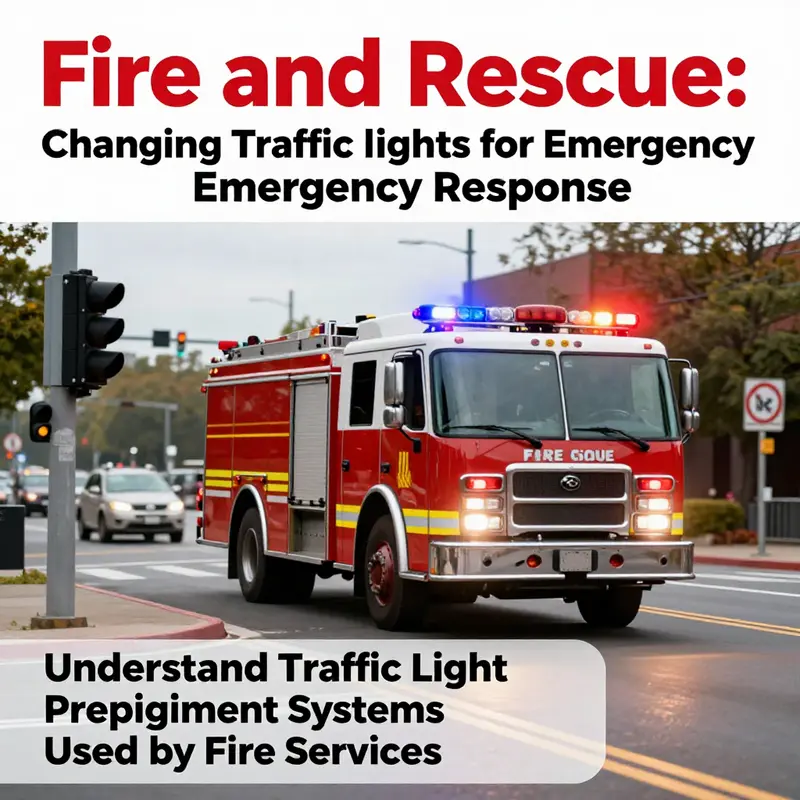
Traffic lights play a crucial role in managing vehicular flow, particularly in bustling urban settings. However, during emergencies, every second counts, and that’s where fire and rescue services aim to optimize their response times. By utilizing traffic light preemption systems, emergency vehicles can communicate with traffic signals to facilitate quicker passage through intersections. This article delves into the mechanics, economic implications, and geopolitical considerations of these systems to provide a comprehensive understanding of how they improve emergency response efficiency.
Siren, Signal, and Speed: The Real Mechanics Behind Traffic Light Preemption and Emergency Response
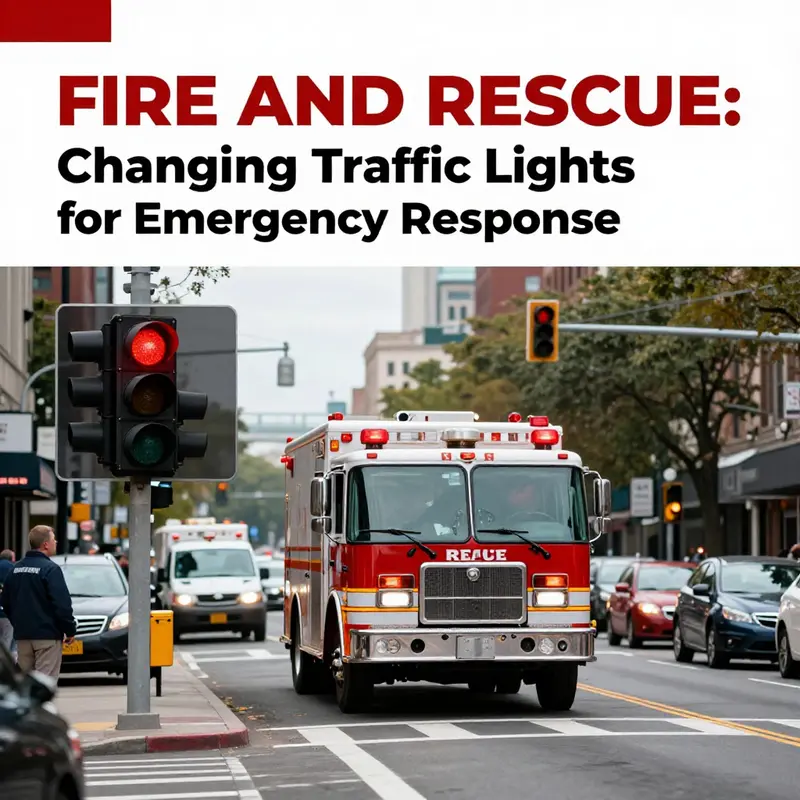
City streets pulse with the ordinary cadence of daily life, but when minutes matter most, those rhythms can shift in an instant. The public image of an emergency vehicle blazing through a red light is built on vivid moments in film and drama. In reality, the mechanism is far more measured and technical. Fire and rescue services do not simply override a traffic light with a flip of a switch. Instead, they rely on a networked system that coordinates with signals to create a green window for the approaching vehicle. This approach, known in transportation circles as traffic light preemption, is a carefully engineered aid designed to improve both speed and safety for responders and the general public. The chapter that follows explores how this technology works in practice, why it matters for urban life, and what it implies for the future of city traffic management and emergency response.
A preemption system begins with a simple premise: a approaching emergency vehicle should not have to fight its way through an intersection while the opposing lanes carry red. Instead, the system communicates a request to the traffic controller to adjust the timing in favor of the responder. Crucially, this is not a hard override. The light remains part of a wider traffic program that must still respect safety rules for pedestrians and cross-traffic. The controller weighs the incoming signal, considers the current phase of the cycle, the presence of pedestrians, and the needs of other traffic movements. If the situation warrants, the controller shifts the timing so that the vehicle on the approach gets a green signal sooner, or extends the current green phase, thereby clearing the intersection ahead of arrival. This nuanced behavior reduces the risk of collision and minimizes the time spent idling at a red light, which can be a critical factor in outcomes where every minute counts.
The technology at the heart of preemption is built to be robust, reliable, and interoperable across a city’s network. Fire engines, ambulances, and other emergency vehicles can be equipped with a transmitter or sensor package that emits a signal when the vehicle is within a certain distance of an intersection. Traffic signals, or the centralized control systems that manage multiple intersections, are equipped to detect these signals and respond in real time. The signal pathway—from vehicle to intersection to the broader traffic management framework—depends on multiple communication modalities. Some systems use radio frequency (RF) signals that travel between a device mounted on the vehicle and a receiver at the signal controller. Others rely on infrared (IR) beams or sensors that detect the presence and approach of an emergency vehicle. In some configurations, GPS data can contribute location information to help predict the vehicle’s trajectory and coordinate with lights further along its route.
This mosaic of methods—RF, IR, and GPS-based elements—reflects a practical truth: no single technology dominates everywhere. Different cities deploy different configurations based on their budgets, existing infrastructure, and safety priorities. A city with a long history of urban traffic management might integrate preemption directly into its centralized signal network, allowing a dispatcher to coordinate several intersecting corridors as a single, optimized route for an emergency unit. In other places, a more limited system may exist only at major arterials or at key junctions where the risk of gridlock is greatest. The result is a spectrum of capabilities, from sparse preemption at a handful of intersections to a citywide, highly synchronized set of signals that can adapt to multiple emergency vehicles concurrently.
The practical effect of this technology is sometimes easiest to grasp through the lens of experience on the ground. When a fire apparatus approaches an intersection, a transmitter or sensor on the vehicle sends a cue to the signal controller. The controller, in turn, may switch the approaching corridor to green, often by turning the approaching direction green and the perpendicular traffic red, thereby creating a cleared path that allows the vehicle to proceed without the delay of a red light. In many cases, if a green phase is already in progress on the approach, the system can extend that phase slightly, ensuring the vehicle can pass through before the signal reverts. The aim is not to produce a “green wave” for every vehicle, but to reduce the chance that a critical delay will occur at a pivotal moment—the moment when early minutes can determine survival or success.
A central theme in understanding preemption is recognizing the role of control—the degree to which a central system can harmonize multiple signals, rather than a purely local, one-light-at-a-time adjustment. Centralized control allows for a more holistic approach to emergency routing. If a fire unit needs to traverse a corridor with several intersections, the control system can align the sequence of green phases to minimize congestion across the network. It can also factor in other live data streams, such as traffic density, pedestrian demand at nearby crossings, and the anticipated approach of other emergency units. This integrated perspective, increasingly common in modern traffic management, helps prevent bottlenecks that could otherwise slow down several responding units on the same route.
Yet public perceptions sometimes outpace reality. The image of a fire truck simply “forcing” a green light is appealing but not accurate. The devices and procedures are designed to maintain safety for everyone sharing the road. The lights will not suddenly ignore pedestrians or vehicles that have legally entered an intersection during a phase change. Drivers still must yield to emergency vehicles, and crosswalks remain active zones of caution for pedestrians. The distinction between a direct override and a coordinated preemption is not a mere technicality; it speaks to how trust is built in urban systems. If people believe that a green signal can be misused or that a red light can be bypassed at will, the system risks losing legitimacy and, with it, compliance and safety.
The existence of preemption mechanisms also has implications for how cities plan their road networks and allocate resources. In cities with high responder demand, the adoption of preemption is part of a broader strategy to reduce response times and to improve outcomes in time-sensitive incidents. Some large urban centers have integrated preemption into the same digital backbone that manages traffic signal timing across districts, allowing for rapid re-optimization of routes as dispatch centers gain a clearer view of where units are and what the traffic conditions on the ground look like in real time. In those contexts, advancements in signal timing do not just help responders reach crises more quickly; they also help manage the safety of other road users by reducing the likelihood that responders will be forced into congested, high-risk maneuvers.
The technical evolution of preemption is not happening in a vacuum. In the United States, guidelines and standards governing the safety, reliability, and interoperability of emergency vehicle preemption systems have been published by federal agencies. The intent behind these standards is to ensure that preemption acts as a reliable facilitator of emergency response, while maintaining the highest safety margins for all road users. The standards address how the communication should occur, how controllers should interpret signals, how to handle potential conflicts between multiple emergency vehicles, and how to maintain safe operations during adverse conditions such as weather-related visibility challenges or faulty equipment. These guidelines provide essential guardrails that prevent the system from becoming a source of new hazards even as it supports faster response times.
All this technical layering is grounded in real-world practice and regional variation. Not every intersection has a preemption-capable controller, and not every emergency vehicle carries the same equipment. Some departments upgrade progressively, deploying additional transceivers or sensors as part of a broader modernization effort. Maintenance becomes a crucial part of the system’s reliability. Worn sensors, degraded signal receivers, or software updates that fail to deploy can erode the benefits of preemption or, worse, create unsafe situations. Training for responders, dispatchers, and signal technicians—along with a clear set of standard operating procedures—helps ensure that the system works as intended when it is needed most. Those who operate in or around these systems benefit from formal education that covers both the technical underpinnings and the practical realities of yielding to responders. For instance, professionals who pursue fire safety certifications often engage with training materials and exercises that reinforce the dynamics of traffic signals, safe roadway operations, and how to communicate with nearby drivers and pedestrians while under time pressure. The training content underscores that safety always remains the core objective, even as speed and efficiency become critical advantages in emergencies. You can explore related insights into training and safety through resources such as fire safety essentials certification training, which offers foundational perspectives that intersect with the operational realities of preemption systems. fire safety essentials certification training.
A more nuanced aspect of preemption involves the public’s understanding of how it affects traffic flow in mixed-use environments. Pedestrians, cyclists, and motorists share roads that are sensitive to sudden changes in signal timing. An aggressive preemption pattern can improve an emergency vehicle’s speed but may temporarily heighten risk for others if drivers react abruptly or if pedestrians misjudge their crossover opportunities. This is why signal timing remains conservative enough to preserve a wider safety envelope, even as authorities pursue faster routes for responders. The overarching principle is clear: preemption is a safety tool, not a free pass for reckless movement. It operates within a framework designed to minimize disruption for non-emergency travelers while prioritizing life-saving outcomes during critical incidents. In this sense, preemption is best understood as a collaborative function—between vehicles and signals, between dispatch and street-level practice, and between city planners and residents who expect a dependable and predictable traffic environment.
The science and policy behind preemption are evolving in ways that reflect broader trends in smart city design. Modern traffic networks increasingly emphasize data-driven decision-making and adaptive control. When a corridor carries multiple emergency vehicles or experiences unexpected congestion, adaptive algorithms can re-prioritize signal timing in near real time, balancing the needs of responders with the safety of the traveling public. This broader capability points toward a future in which cities can orchestrate more complex responses to incidents, potentially across neighborhoods or districts, while maintaining a high standard of safety and predictability for all users.
In sum, fire and rescue services do influence traffic lights through preemption, but their power is bounded by safety, maintenance, and the integrity of the broader traffic system. The effect is to provide emergency responders with a buffer—a green light at the right moment or a slightly extended green phase—so they can reach scenes faster and with fewer hazards. This balance between speed and safety is the essence of modern preemption systems. It is a balance that requires ongoing collaboration among fire departments, traffic engineers, city planners, and everyday road users. It also requires ongoing education and awareness so that the public understands what is happening when a siren approaches and why the signal changes may be more than a mere convenience. For those who want a deeper grasp of the formal standards that govern these systems, official resources outlining how emergency vehicle preemption works and how it should be implemented offer a reliable reference point and practical guidance for practitioners and policymakers alike. The Department of Transportation provides comprehensive guidance that informs the field, helping ensure that preemption supports safe, efficient, and equitable transportation for all city dwellers. https://www.transportation.gov/traffic-safety/emergency-vehicle-preemption
How Fire and Rescue Systems Remodel Signals: The Technical Path to Clearing Intersections
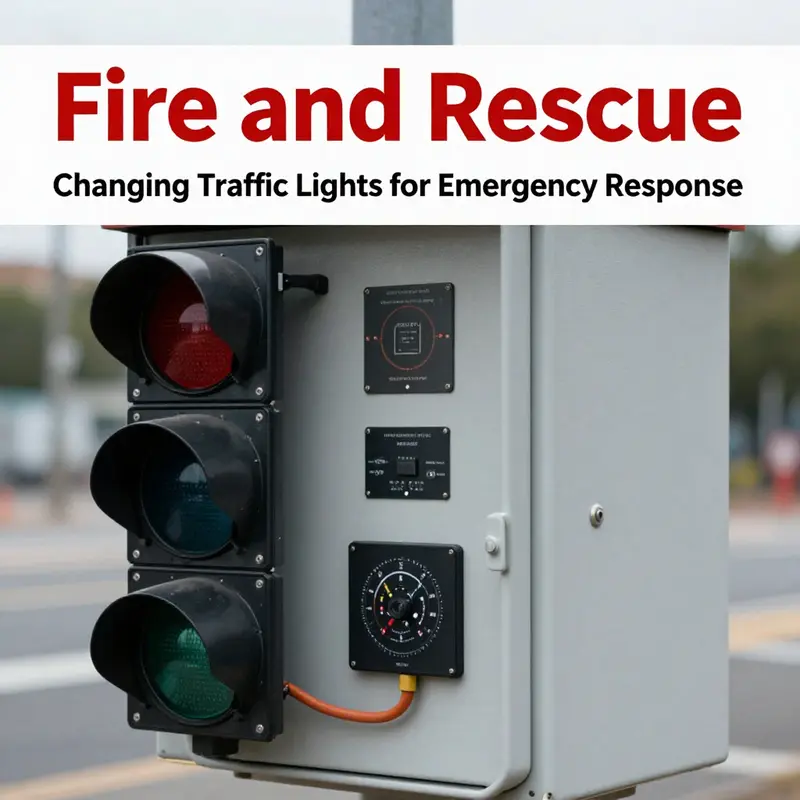
Emergency responders rarely “flip a switch” at an intersection. Instead, a layered, automated architecture works behind the scenes to give fire and rescue vehicles priority while keeping other road users safe. This chapter traces that architecture from the simplest sensor to the full traffic-management response, showing how systems detect danger, communicate intent, and reshape signal timing to create safe corridors for responding units.
At the foundation are sensors tuned to detect the conditions that demand immediate response. In road tunnels and other enclosed spaces, point-type temperature sensors are common. They monitor ambient air continuously and translate rising temperatures into electrical signals when thresholds are crossed. A modest temperature rise may simply start a logging event. A pronounced, rapid increase can trigger an alarm state that changes how the broader system behaves. Temperature sensors are only one piece of the puzzle; smoke detectors, video analytics, and other environmental monitors feed corroborating evidence into the control layer. This redundancy reduces false activations and ensures that signal changes respond to real incidents rather than noise.
Those signals feed into a central control system that serves as the decision hub. The control system runs predefined logic: it weighs sensor inputs, applies safety checks, and selects appropriate responses. One crucial response is the dynamic modification of traffic signal sequences. The central controller does not physically turn lights on or off at the curb; rather, it adjusts the timing plans that govern signal phases. In practice this achieves the same outcome—clearing conflicting movements and establishing an uninterrupted route for emergency vehicles—while preserving safe operation across the network.
Communication between vehicles, sensors, and controllers relies on established protocols and preemption technologies. Emergency vehicles are often equipped with preemption transmitters that send a coded request as they approach an intersection. These requests may use infrared beams, radio frequency bursts, or networked messages over cellular or dedicated short-range communications. Intersection controllers listen for these signals and, when authenticated, change the signal state according to the preemption policy. In tunnel environments the control system may bypass per-intersection preemption and instead trigger a synchronized state across multiple signals to produce a controlled green corridor.
The implementation of a green corridor involves precise timing and synchronization. When a fire is detected deep inside a tunnel, the central controller calculates the best approach for responders based on their entry point, the incident location, and traffic conditions. It then sequences upstream signals to create a walking band of green—the so-called “green wave”—that keeps the firefighter unit in continuous movement. At the same time, downstream signals are held red where necessary to block opposing traffic and prevent hazardous conflicts. The orchestration requires predicting vehicle speeds and distances, and adjusting phase lengths so that a moving emergency vehicle encounters green lights rather than stopping at each intersection.
Real-time data integration makes this orchestration responsive and reliable. Video feeds can confirm detector alarms and provide situational awareness. Automated vehicle detection or loop sensors report traffic density and speed, allowing the controller to modify the green wave dynamically. For example, if congestion upstream would otherwise delay the responder, the system can lengthen green phases or clear specific lanes to create a free path. Directional guidance signs and lane control signals can be used in tandem to steer non-emergency traffic away from the corridor and toward safe egress routes. This keeps the route clear while also supporting evacuation or rerouting of civilian vehicles.
Safety logic is woven through every decision. Preemption systems must avoid creating new hazards while trying to eliminate existing ones. That means the controller enforces minimum green times, ensures opposing movements are safely terminated before allowing a crossing movement, and checks for pedestrian phases to prevent exposing pedestrians to risk. In tunnels, ventilation and fire suppression systems may be coordinated with traffic signals to route responders and to protect trapped motorists. The system can, for instance, hold a lane closed ahead of an incident so responders can access the scene without encountering vehicles or smoke-laden air. These integrations extend the role of traffic control from simple vehicle movement to coordinated incident management.
Infrastructure matters. Not all cities have preemption equipment, and versions vary in sophistication. Some intersections accept basic preemption requests that simply extend green for a short window. Others are part of Intelligent Transportation Systems (ITS) capable of networked, multi-intersection responses and real-time analytics. When preemption is absent, drivers must yield without system assistance, which increases response time and risk. Where ITS is present, its middleware and software define policies for prioritizing different kinds of responders and for resolving competing requests when multiple emergency vehicles approach from different directions.
Security and reliability are critical constraints in system design. Authentication prevents unauthorized devices from requesting signal changes, while fail-safe defaults ensure intersections revert to normal timing if communication fails. Standards and guidelines exist to shape these features and make them interoperable across vendors and jurisdictions. These specifications include tests for electromagnetic compatibility, latency bounds for signal processing, and recommendations about how to degrade gracefully if components fail. Properly implemented, these systems reduce the chance of accidental signal manipulation while allowing rapid, controlled intervention when real emergencies occur.
Human procedures complement technical systems. Dispatch centers often supervise automated responses. When sensors detect a fire, dispatch can verify the alert before authorizing broad signal changes, or can trigger an urgent override when confirmation is immediate and critical. Fire crews receive training on how preemption behaves and on how to signal non-technical responders to coordinate movements at complex intersections. This human-in-the-loop aspect ensures that automation supports operational judgment rather than replacing it.
The value of these systems is measurable. Faster, safer access to incidents reduces response time and can decrease property loss and casualties. In some urban areas the integration of traffic preemption with emergency operations has become routine, dramatically improving outcomes at tunnel fires and roadway incidents. Yet the benefits are uneven because deployment depends on funding, local policy, and available communications infrastructure. Retrofitting older signal networks can be costly, and agencies must weigh investments in preemption against other safety priorities.
Ongoing developments continue to refine capability. Advances in sensor technology, such as more sensitive smoke detectors and robust thermal cameras, give earlier and more reliable detection. Machine learning applied to video analytics helps filter false positives and detect complex scenes like stalled vehicles or people on the road. Network advances increase the reliability and speed of preemption messages, enabling more sophisticated multi-jurisdiction coordination. All of these trends point toward systems that are both more proactive and more precise in how they alter traffic behavior for emergency response.
Effective systems require local tailoring. A tunnel’s geometry, available escape routes, and ventilation profile shape how traffic signals should respond to a fire. Urban grid networks demand different strategies than linear tunnel corridors. System designers must therefore create policies that reflect the operational realities of the jurisdiction, and they must engage with fire services, traffic engineers, and the public to define acceptable behaviors under emergency conditions.
For those who manage or plan these systems, authoritative guidance helps translate concepts into practice. Standards and technical documents provide the procedures and tests necessary to ensure safety and interoperability. For deeper technical detail and evidence-based discussion of emergency traffic management implementations, see the referenced ScienceDirect article on emergency traffic management, which reviews how integrated systems have been applied in complex environments and the outcomes observed in trials and deployments: https://www.sciencedirect.com/science/article/pii/S235248472100098X
To learn more about how fire and rescue organizations think about tools, training, and the operational context in which these signal interventions occur, see the fire and rescue blog for broader perspective and resources: https://firenrescue.net/blog/
Taken together, sensors, robust communications, centralized decision logic, synchronization techniques, and human oversight create a resilient means of reshaping traffic signals in support of fire and rescue. The system is less a switch and more an ecosystem—one that trades manual theatrics for precise, safety-oriented control that can shave critical minutes from response times while protecting the public and responders alike.
Counting Seconds and Savings: The Economic Case for Traffic Signal Preemption in Emergency Response
Counting Seconds and Savings: The Economic Case for Traffic Signal Preemption in Emergency Response
When emergency crews race toward a call, every second matters. The practice of giving priority to emergency vehicles at intersections is technically complex and often misunderstood, but its economic implications are clear and measurable. Systems that allow fire and rescue vehicles to alter traffic signal behavior—more properly described as preemption or priority systems—do not magically flip lights at will. They communicate with traffic infrastructure to request green time or extend an existing phase. That subtle distinction matters because it frames how municipalities invest in, deploy, and maintain these systems. The result, however, is tangible: faster response times, lower operational costs, and downstream reductions in healthcare and societal expenses.
Traffic signal preemption works by shortening delays at intersections for authorized vehicles. Signals equipped with roadside units and connected to central control systems interpret a signal from an approaching vehicle and adjust phase timing. Implementations vary: some systems use infrared strobe transmitters on vehicles, others use radio-based communication or cellular networking, and advanced setups integrate vehicle-to-infrastructure protocols with real-time sensing. Where deployed broadly, these technologies reshape the microeconomics of emergency response by cutting travel time and reducing uncertainty in routing decisions.
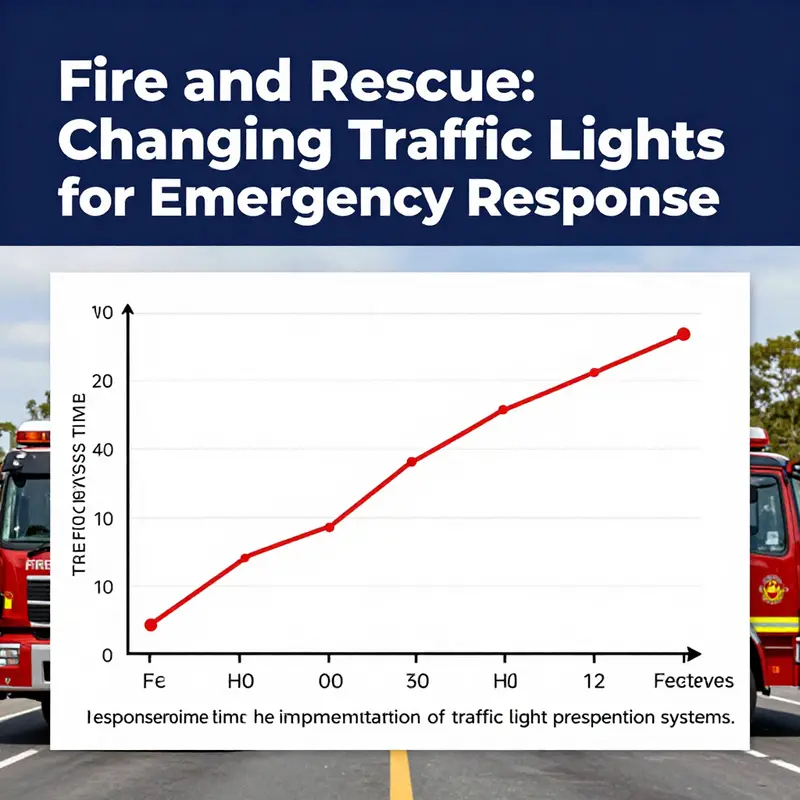
Travel-time reduction is the most immediate economic benefit. A single avoided intersection stop can shave tens of seconds from a trip. Those seconds multiply across hundreds or thousands of calls per year. For a mid-sized city, reducing the average intersection delay by even 20 seconds per call produces substantial annual time savings when aggregated across the entire fleet. Time saved translates directly into lower fuel use and less engine idling, which reduces maintenance needs and prolongs vehicle life. Those lower operational costs are quantifiable on budget sheets: fewer fuel purchases, extended intervals between major overhauls, and reduced tire and brake wear.
There is also a labor-value argument. Firefighters, paramedics, and drivers are paid for their time. Shorter response times mean crews spend less time traveling and more time available for other calls or readiness activities. This increased availability can reduce the number of units required to cover the same call volume, or it can improve service levels without additional staffing. Either outcome yields economic value: agencies may defer hiring, allocate personnel to preventive work, or reduce overtime. In regions with tight budgets, modest efficiency gains can free resources for training, equipment upgrades, or community risk reduction programs.
Beyond direct operational savings, faster responses improve clinical outcomes. For medical emergencies such as cardiac arrest, stroke, or major trauma, minutes saved can mean the difference between full recovery and long-term disability or death. From an economic perspective, better outcomes reduce hospital stays, lower rehabilitation costs, and diminish long-term healthcare spending. They also preserve workforce productivity by returning people to work sooner or preventing lifetime dependency on social services. Though these savings occur outside the fire service budget, they represent societal returns on investment for public safety infrastructure.
Smart signal systems that prioritize emergency vehicles can also improve traffic flow for the general public. By integrating data from cameras and vehicle detectors, systems can make dynamic adjustments that prioritize an emergency vehicle while minimizing delays for others. This reduces the risk of secondary incidents—traffic queues and sudden stops that can lead to collisions. Fewer collisions mean lower emergency medical and property-damage costs, less congestion, and reduced economic friction on commuting and freight routes. In short, when preemption is done intelligently, it creates net societal gains rather than simply shifting delay from some drivers to others.
Capital costs are a natural counterpoint. Installing preemption-capable controllers, roadside communication units, and vehicle-mounted transmitters requires upfront investment. Municipal budgets must weigh these capital expenses against anticipated savings. Cost-benefit studies generally show that where call volumes are high and intersection delays are significant, payback occurs in a practical timeframe. The math improves further when agencies consider long-term operational savings and the avoided costs of poor medical outcomes. Additionally, modern deployments can leverage incremental upgrades: retrofitting a subset of high-priority corridors first, then expanding coverage as benefits materialize.
Maintenance and reliability are critical for realizing economic returns. A preemption system that fails during peak demand or offers intermittent performance becomes a sunk cost. That is why design standards, interoperability, and rigorous testing matter. Agencies that follow established guidelines reduce the risk of system downtime and ensure predictable benefits. Investments in staff training and vendor support contracts also protect the initial expenditure. Viewed through an economic lens, reliable systems reduce hidden costs associated with troubleshooting, emergency workarounds, and inefficiency when the system is unavailable.
There are also equity and planning considerations that affect economic calculations. Prioritizing certain routes for preemption can alter traffic patterns across neighborhoods. Planners must avoid transferring disproportionate delay or safety risk to areas with less investment. Thoughtful deployment—guided by call density, response time data, and community impact assessments—optimizes both economic and social outcomes. In many jurisdictions, decision-makers use scenario modeling to identify corridors where preemption yields the highest return on investment without unduly harming other road users.
Integration with broader intelligent transportation systems magnifies value. When preemption is part of an adaptive signal network, data collected during emergencies can inform long-term traffic modeling and infrastructure planning. For example, repeated emergency patterns might indicate systemic risks or public-safety hotspots requiring preventative measures. Combining emergency priority with congestion management systems also helps maintain throughput during peak hours, preserving economic productivity across the urban area.
Procurement strategies influence cost-effectiveness as well. Open, standards-based solutions reduce vendor lock-in and allow agencies to adopt evolving technologies without wholesale replacement. This flexibility lowers lifecycle costs and enhances compatibility with future upgrades. Municipalities that pool procurement across departments or neighboring jurisdictions can negotiate better pricing and simplify maintenance logistics. Likewise, grants and state or federal funding streams often offset initial outlays, shrinking the effective payback period and improving the long-term fiscal picture.
Finally, we must account for intangible but real benefits. Community confidence in emergency services grows when response times improve. That trust translates into stronger public support for investment in safety infrastructure and can affect broader civic outcomes, such as property values and local business activity. While harder to quantify, these effects contribute to the total economic case and reinforce the argument for investing in signal preemption where it makes operational sense.
Taken together, the evidence favors a strategic approach: prioritize intersections and corridors with high call volumes and chronic delays, adopt interoperable, standards-based technology, and monitor outcomes closely to refine deployment. This approach balances fiscal responsibility with the imperative to save lives and protect property. For departments exploring these options, practical case studies show scalable benefits: targeted investments yield measurable time savings, lower operational costs, and meaningful societal returns through improved health outcomes and less traffic disruption. Municipal leaders who view traffic-signal preemption as infrastructure—not merely specialized equipment—can unlock both immediate and long-term economic advantages while strengthening public safety.
For further reading on how smart traffic signals improve emergency response times and the engineering behind these systems, see this external resource: https://spectrum.ieee.org/smart-traffic-lights-emergency-response. To explore complementary investments that increase operational efficiency in fire and rescue fleets, consider learning more about customizable, cost-effective vehicle solutions tailored to the needs of developing regions: https://firenrescue.net/blog/customizable-firefighting-vehicles-tailored-for-developing-countries-efficient-cost-effective-and-reliable-solutions-for-diverse-terrain-and-budgets/.
Borders, Protocols, and Green Lights: The Geopolitics of Emergency Vehicle Preemption
Traffic signal preemption is often framed as a technical breakthrough that gives emergency vehicles a faster lane through crowded intersections. Yet the full story runs much deeper. The push to deploy preemption systems for fire services sits at the intersection of engineering, policy, and geopolitics. It demands not only reliable hardware and robust software but also shared rules, trusted data flows, and mutual political will across jurisdictions that may be divided by borders, budgets, and legal regimes. In this sense, the green light at a crossroads becomes a symbol of cooperative sovereignty as much as it is a safety feature. The practical promise is clear: fewer delays, quicker life-saving responses, and the ability to coordinate multiple agencies during complex incidents. The geopolitical challenges, however, are equally real. When fire departments operate across jurisdictions or borders, or when national aims shape local procurement, the path from concept to citywide reality runs through governance as much as through circuitry. The international conversations surrounding intelligent transportation systems (ITS) illuminate how these tensions play out, offering a framework for aligning policies without compromising public safety. They remind us that preemption is not a universal, one-size-fits-all solution. It is a negotiated capability whose effectiveness hinges on shared standards, trust, and the political backbone that holds multi-authority efforts together over time.
At its core, preemption works by signaling the traffic control system to adjust its timing so that approaching emergency vehicles encounter a favorable green phase. This requires a set of communication protocols, timing logic, and fail-safes that are compatible across the urban fabric. In practice, many major metropolitan areas in North America have integrated such systems into their emergency operations. Yet even here the picture is layered. The system’s success depends on the reliability of sensors, the resilience of communication networks, and the integrity of command centers that receive the vehicle’s location and intent. It also depends on public policy choices—how funding is allocated, which agencies share data, and what privacy and cybersecurity protections are in place. Those choices, in turn, reflect broader geopolitical dynamics. When a city’s preemption capability relies on servers or cloud-based components managed by a regional or national entity, questions of data sovereignty naturally arise. Who owns the data? Who can access it, and under what circumstances? These concerns are not abstractions. They shape procurement, interoperability, and even the willingness of neighboring jurisdictions to participate in a shared system.
Border regions highlight these tensions with particular clarity. Where fire services cross administrative boundaries to respond to incidents, harmonized protocols are essential for seamless preemption. The challenges intensify in areas where authorities operate under different legal frameworks or funding models. A cross-border corridor requires agreements on emergency response priorities, data-sharing rules, and the technical standards that govern how signals are sent and acknowledged. Without a common language for electronic communications between vehicles, traffic signals, and dispatch centers, the promise of a quicker, safer response can be undermined by fragmentation at the boundary line. In the European context, for instance, observers have noted gaps in commonly agreed standards for emergency communications networks, which can hinder cross-border coordination even when the public safety benefits are evident. This is not merely a technical hurdle; it is a diplomatic one, rooted in questions of sovereignty, jurisdiction, and mutual trust among neighboring governments. The International Transport Forum (ITF) has underscored that the adoption of ITS technologies, including emergency vehicle preemption, is deeply influenced by policy design, governance arrangements, and international collaboration. The ITF scene emphasizes that effective ITS deployment requires more than clever hardware—it requires institutions capable of negotiating across boundaries, aligning incentives, and sustaining investment over the long arc of system modernization.
Beyond sovereignty and cross-border coordination, data governance emerges as a central geopolitical concern. Preemption systems often rely on real-time data about vehicle locations, traffic conditions, and intersection statuses. Centralized servers can streamline control and analytics, but they also raise concerns about who can access data, under what legal frameworks, and how data may be used beyond immediate public safety purposes. Different countries have different legal regimes governing data retention, cross-border data transfers, and sensitive information about critical infrastructure. Governments may resist sharing live location data with entities outside their jurisdiction, even when the information would improve efficiency and safety. This dynamic can slow or even halt the deployment of unified, cross-border preemption solutions, especially in regions learning to balance national security concerns with regional safety benefits. A thoughtful approach to data governance—combining encryption, access controls, anonymization where appropriate, and clear purpose limitations—becomes as essential as the radio frequencies and sensor networks that keep the system humming.
Funding and governance structures also shape the geopolitics of preemption. Multijurisdictional urban environments present a mosaic of counties, states, or regions that may have divergent budget cycles, procurement regulations, and project timelines. Political calculus—prioritizing road safety, emergency response performance, or economic development—will influence whether a city advances preemption in the near term or defer it to a later program. The political economy of public safety technology matters as much as the technology itself. Interagency coordination is often the hinge on which a project turns. When fire departments interact with transportation authorities, police agencies, utility operators, and regional logistic partners, the decision to adopt preemption becomes a negotiation among multiple stakeholders with different priorities and risk tolerances. The payoff, though, can be substantial: a more predictable response, improved safety metrics at critical intersections, and a foundation for broader ITS integration that could support incident management, hazard detection, and evacuation coordination. The ITF notes that a successful ITS program rests on institutional alignment as much as on technical capability. Drafting shared governance charters, aligning data-sharing policies, and building trust through transparency are the prerequisites for scalable, cross-jurisdictional preemption.
A practical way to think about these geopolitics is to view preemption as a capability that travels as a policy instrument as much as a signal that travels through wires. It travels across boundaries when different jurisdictions agree to common standards for signaling, timing, and verification. It travels across legal regimes when there is a treaty-like understanding that emergency response data will be used solely for life-saving purposes and protected from commercial or political exploitation. It travels across organizational cultures when operators in the dispatch center, traffic management center, and field units share a common operating picture and mutual trust in the information being exchanged. The challenge is to translate this shared operating picture into routine, reliable performance in the congestion of a dense urban core or along a cross-border corridor where every delay compounds risk. To move from promise to practice, the governance architecture must specify who pays for what, who maintains which components, and how quickly failures are addressed when incidents occur. It must also anticipate political shifts—changes in administration, budget priorities, or regulatory frameworks—that can derail long-term projects unless there is a durable governance cushion.
In pursuit of harmonized implementation, international forums and standards bodies offer a space where policymakers and technologists can converge on shared principles. The OECD’s International Transport Forum, for example, has highlighted how intelligent transportation systems depend on more than the devices at an intersection. ITS success requires consistent policy signals, interoperable interfaces, and resilient cybersecurity protocols that can withstand cross-border scrutiny and incident response pressures. These insights are especially relevant for regions contemplating cross-border preemption arrangements alongside other ITS initiatives, such as coordinated signal timing for congestion relief or region-wide emergency management dashboards. The practical upshot is simple and powerful: structural policy choices matter as much as the sensors and actuators that make preemption possible. A future-proof framework will likely favor modular, standards-based interfaces, clear data governance rules, and financing mechanisms that encourage collaboration among neighboring jurisdictions rather than competition.
In the broader narrative of emergency response—and in the longer arc of safety technology—this geopolitics lens invites a more nuanced appraisal of what it takes to realize the public benefits of preemption. It invites us to acknowledge that the road to faster green lights is as much about negotiation and trust as it is about relay logic and priority codes. Where national sovereignty or regional autonomy is strong, thoughtful agreements, transparent governance, and well-designed data protections can unlock cross-border operation and shared benefits. Where jurisdictions are tightly coupled by traffic, population flows, and emergency service networks, institutional alignment and joint funding become the engines that keep the system advancing. In both cases, the objective remains clear: save lives by reducing response times while upholding the values and rights that citizens expect from government systems.
For readers who want to dig deeper into the policy and governance dimensions of ITS and emergency response systems, the International Transport Forum offers a broad, policy-oriented vantage point that complements technical studies. It provides a constructive frame for comparing approaches, testing assumptions about cross-border cooperation, and imagining how future expansions—such as enhanced vehicle-to-infrastructure communication and networked incident management—might unfold across different political landscapes. To stay connected with ongoing conversations and case studies, consider exploring the ITF’s resources on intelligent transportation systems and the governance architectures that support them. And for practical reading on how fire services intersect with safety standards and professional training—topics that often accompany discussions of preemption and traffic signal interactions—the dedicated blog and training resources from fire and rescue communities can be informative anchors. For instance, you can learn more at the Firenrescue network, which offers essential perspectives on safety culture, certification pathways, and field readiness that underpin any technology-driven safety program. Firenrescue.net blog.
Ultimately, the geopolitics of preemption is about building a scalable, trustworthy framework that treats traffic lights as a shared infrastructure rather than a municipal asset. The engineering challenge remains substantial: to design robust, interoperable, and secure systems that operate reliably across diverse jurisdictions and evolving configurations. The policy challenge is no less demanding: to craft governance agreements that endure political cycles, bridge differences in law and funding, and preserve the essential public objective of faster, safer emergency responses. When these forces align, the green phase at a critical intersection becomes not only a tactical advantage for a fire crew on the move but a signal of collaborative governance in service of the public good. It is a reminder that in our increasingly interconnected urban regions, speed and safety are, in meaningful ways, a joint achievement of engineers, policymakers, and communities.
External resource: International Transport Forum – Intelligent Transportation Systems. https://www.itf-oecd.org/en/intelligent-transport-systems
Final thoughts
Traffic light preemption systems represent a critical component of modern emergency response. Their ability to significantly reduce response times showcases the intersection of technology and public safety, ultimately saving lives. As cities continue to evolve, understanding the implications—technical, economic, and geopolitical—of these systems will be essential for both emergency services and the communities they serve.