
Fire departments have long been seen as the heroes of our communities, rushing to the aid of people in peril. Yet, their public services extend to rescuing animals in distress, including cats stuck in trees. This unique facet of their work often raises questions about resource allocation, training protocols, and how these rescues affect community relations. Each chapter in this exploration delves into different aspects of this phenomenon, from the fire department’s integral role in animal rescues to public perceptions and resource considerations. By examining these interconnected themes, we aim to provide a comprehensive look at why and how fire departments engage in cat rescues, as well as the broader implications for community awareness and relations.
Above the Ground, Beneath the Badge: Fire Departments Rescuing Cats from Trees
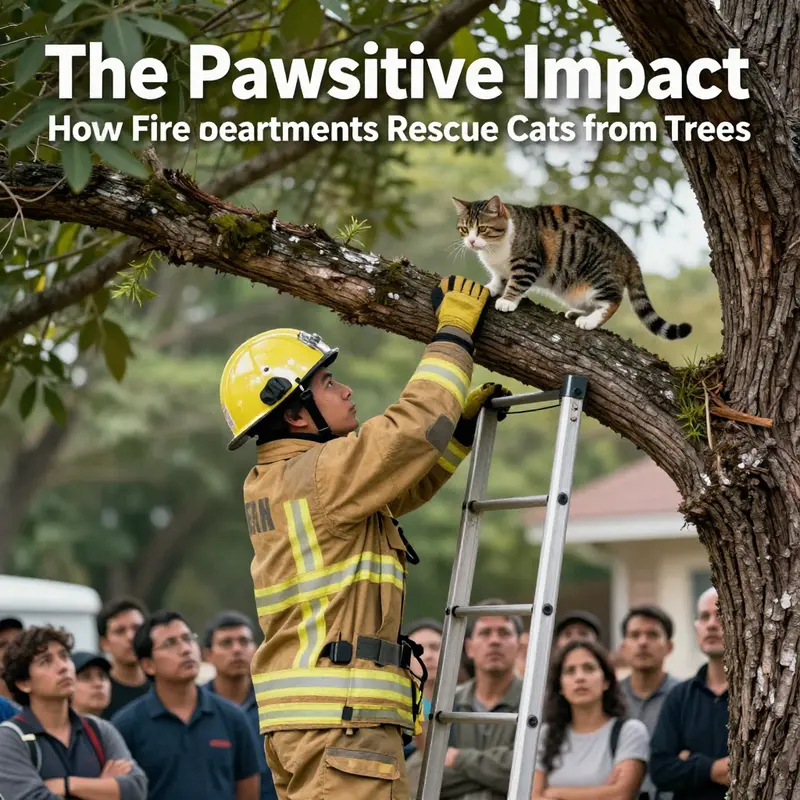
On a sun-warmed afternoon, a cat perches high in a maple, eyes a distant ground it cannot reach. The branch sways with a breeze, and the animal’s mew is a mixture of curiosity and fear. In many communities, this scene sparks a familiar response: a 911 call that lands not with sirens blaring for a blaze but with the steady, practiced calm of firefighters who know how to reach what is out of reach. The question of whether fire departments should rescue cats from trees is rarely black and white. It sits at the nexus of public safety, resource stewardship, and the everyday acts of care that knit a city’s sense of place together. The public often frames these moments as heartfelt, even humorous, yet behind the humor lies a careful calculus about risk, time, and the value of life at different scales. A case from San Francisco in 2019 illustrates this mix vividly. Firefighters arrived to find a cat perched precariously on a telephone pole. They set up a ladder, coaxed the animal with quiet patience, and watched as the cat briefly moved onto the ladder before retreating higher up the pole, ultimately making a safe return to the ground with the incident ending in a wry, almost affectionate farewell. The episode underscored two truths that recur in many departments’ chronicles: volunteers and professionals alike are drawn to rescue work because it represents an immediate, tangible form of public service, and the outcomes are often unpredictable, even when the response is well executed.
The decision to intervene when a cat is stuck in a tree rests on more than sentiment. Fire departments train for vertical access as a core skill, not as a novelty or an occasional favor. The tools are familiar to anyone who has watched a ladder truck ascend into the air: sturdy ropes and harnesses, well-maintained climbing gear, and a ladder that becomes a temporary bridge between ground and grip. The aim is simple in principle but precise in practice: reach the animal without causing harm to it, to the tree, or to the responders themselves. Most rescues unfold with a rhythm that blends technical precision and animal psychology. The responders approach slowly, speak softly to the cat, and avoid quick movements that might startle and spur a dangerous scramble. The cat, once in contact with trained hands, is guided down in a controlled descent that minimizes stress. In some rescues, handlers keep the animal in a protective carrier at the ground level, offering water and warmth, while the surrounding scene returns to ordinary life as if a small drama had not just unfolded above the street.
This is not merely a stunt driven by novelty or a photographer’s quick moment. It is a demonstration of how a fire department can function as a versatile emergency service—capable of wrists and boots on the ground, but equally adept at reading the air, understanding the animal’s signals, and adjusting tactics to prevent harm. The procedures reflect the department’s broader duty to protect life wherever it is found, a principle as relevant to a cat as to a child or an elder citizen. Firefighters bring to the tree the same ethos they bring to a kitchen fire: a disciplined assessment of risk, a careful allocation of resources, and a steadfast commitment to doing what is necessary, no more and no less, to preserve life and safety. It is this discipline that helps explain why rescuing a cat can be a meaningful extension of the job rather than a diversion from it. The cat’s owner, often anxious and grateful, is reassured not only by the animal’s safe return but by the visible competence of professionals who can transform a moment of fear into a grounded, humane outcome.
Of course, the practical questions loom. How often do these rescues occur, and what do they cost the public in terms of time and equipment? Official tallies on animal rescues are not centrally compiled by all national firefighting agencies, and local departments may track such incidents differently. What remains consistent across communities is anecdotal evidence and a shared understanding that these calls are part of the fabric of public service, especially during the warmer months when trees are in full leaf and pets are more inclined to explore higher perches. The frequency is not the same everywhere, yet the underlying pattern is recognizable: a higher likelihood of calls when pets are curious enough to climb, and a brighter opportunity for firefighters to translate their specialized vertical skills into a humane rescue.
Beyond the immediate moment of retrieval, many fire departments engage in community outreach that reframes animal rescues as prevention. Public education efforts often emphasize keeping cats indoors or providing secure outdoor enclosures, particularly for households in which cats roam. In some communities, departments distribute tips, safety checklists, and even low-cost carriers to help owners handle future predicaments without emergency intervention. This preventive stance aligns with a broader strategy to reduce non-emergency calls and to reinforce the department’s role as a trustworthy, accessible resource for life safety. The thread that runs through these messages is continuity: a chain that connects preparedness at home with preparedness on the street, so that useful interventions are available when truly needed and unnecessary calls are minimized. In that light, the cat-in-tree rescue becomes not only a response to a single animal’s distress but a touchpoint for a broader conversation about pet welfare, urban wildlife, and how a city can support the health and happiness of all its residents.
The ethical frame of these rescues also deserves attention. Fire departments operate under a hierarchy of duties that prioritize human safety first while recognizing that animals, too, deserve protection when they are vulnerable. The immediate danger—the risk of a fall, exposure to cold, or injury from a slick bark—trumps the temptation to treat a cat rescue as purely optional. Yet there is a parallel obligation to avoid escalating risk through hasty actions or theatrical bravado. The careful, measured approach embodies a philosophy that virtues of service’re not merely about heroics but about responsibility and restraint. The public often perceives these rescues as emblematic of a compassionate community, and the departments themselves understand that trust grows when responders show patience, proficiency, and respect for living beings with different needs and languages of fear. The cat’s demeanor—whether it remains calm or becomes frantic—becomes part of the data that guides the rescue, shaping how much time is taken, how many resources are deployed, and how the animal will be treated after it reaches the ground.
In reflecting on these events, one sees a quiet pedagogy at work. The rescue teaches children and adults alike about the limits of danger and the power of cooperative problem solving. It demonstrates that professional training is not only about extinguishing flames or stabilizing hazards but also about reading scenarios, communicating with nonverbal participants, and staging a rescue with dignity. The public learns that fire departments are not just about immediate crisis response; they are guardians of everyday life, guardians who answer calls that might be labeled minor in the moment but are meaningful in their contribution to a sense of security and belonging. It is this layered function—the blend of technical skill, public education, and compassionate response—that contributes to the department’s legitimacy as a cornerstone of community welfare.
For readers seeking a practical lens into this work, consider how such rescues intersect with ongoing professional development. The same emphasis on safety, structure, and careful practice that governs a cat rescue can be traced in a broader continuum of training and readiness. Firefighters continually refine their mastery of height work, patient coordination, and risk assessment through drills and certifications that prepare them for countless contingencies. The value of this training becomes especially clear when a seemingly small call reveals the larger truth: the city’s safety net depends on a culture of preparedness that treats every life with the same seriousness, whether the life is human or animal. When communities support their responders with robust training, clear guidelines, and a stock of appropriate equipment, they invest in a system capable of responding to both fires and felines with competence and care. The connective tissue between a cat trapped in a tree and a family relieved to see a beloved pet return home is the shared commitment to safety, knowledge, and service.
As a final reflection, the cat in the tree remains a simple, telling symbol. It speaks to a city’s willingness to extend care beyond the obvious emergencies, to invest in prevention and education, and to honor life in all its forms. In many places, these rescues are integrated into a wider civic conversation about how best to live together with animals and the urban landscape. They remind us that a fire department is not only a response unit but a community institution that helps people feel seen, protected, and valued when anxiety rises and the world seems just a bit less navigable. The next time a tree becomes a stage for a small drama between gravity and gravity’s witness—the cat—the question is not whether the fire department should climb. It is what that climb says about the city’s heart: that care, competence, and courage can ascend together, reaching down from on high to bring a life back to the ground where it can be cared for and loved once more.
For readers who want to explore how such care translates into broader learning and practice, see Fire Safety Essentials Certification Training. And for further formal perspectives on animal rescues and public safety guidelines, professional readers may consult the National Fire Protection Association’s official resources, which offer foundational standards and insights for non-fire emergency interventions like animal rescues: NFPA.
Climbing for Compassion: The Public Perception and Civic Impact of Fire Department Cat Rescues
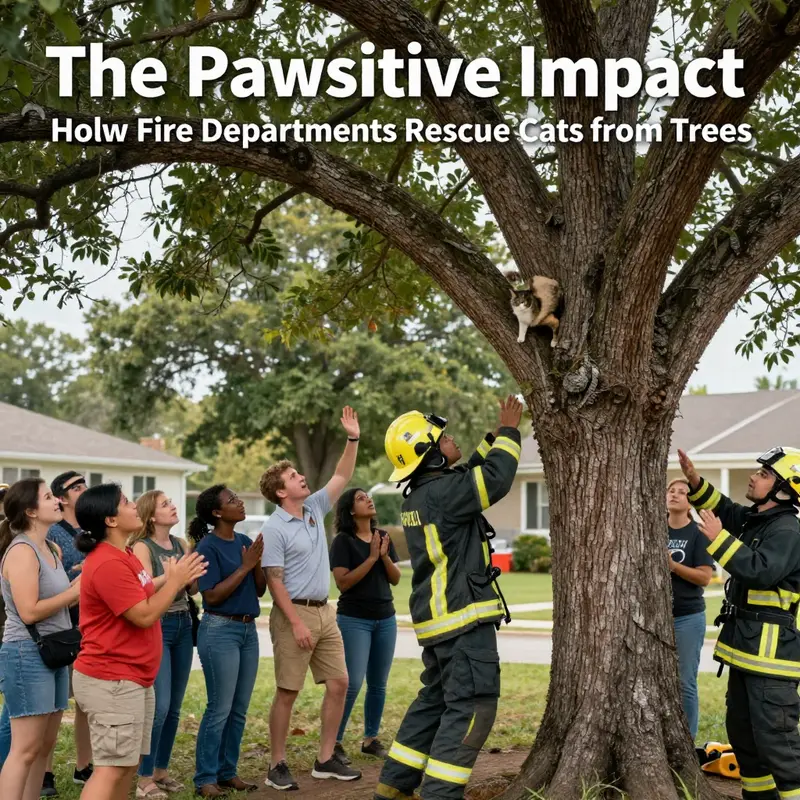
A cat stuck high above the ground, clinging to a branch or the edge of a pole, has a way of becoming a small theater for a community’s values. In those moments, the ordinary rhythms of neighborhood life pause as eyes turn upward. What many observers discover is that a rescue is more than a moment of technical skill or canine-like bravery; it is a social exchange. It is a demonstration, in real time, of a public institution choosing to respond to distress that is not human yet remains emotionally significant to the people watching. In this sense, the image of firefighters climbing a ladder toward a whiskered, terrified creature becomes a window into how communities understand safety, care, and the responsibilities of institutional service. Across towns and cities, these rescues are rarely just about saving a life. They are about reinforcing a relationship—the promise that when help is needed, responders will wade into danger to restore calm, dignity, and a sense of belonging to a shared space where people and animals coexist under the protection of public servants.
Public sentiment surrounding these rescues tends to lean toward warmth and appreciation, a pattern that emerges clearly when looking at how communities talk about incidents that might otherwise be dismissed as trivial or humorous. The humor is undeniable; viral videos of ladders, harnesses, and a tail flick or a relieved purr circulate with a lightness that humanizes both the cat and the responders. Yet the humor sits alongside a sincere respect for the individuals who perform these tasks. Citizens recognize that the same team capable of handling a high-rise emergency can also lift a frightened animal from peril without turning the moment into a spectacle. The duality—serious competence paired with compassionate restraint—helps convert a routine animal rescue into a touchstone for trust in the broader emergency services system. It is not an accident that many people describe these rescues as emblematic of the character of the department: a blend of professionalism, patience, and a willingness to engage with the community on a non-crisis basis.
A central driver of this positive perception is the growing understanding that safeguarding life extends beyond the human. When a dog or cat is in danger, the instinct to intervene is paired with a broader ethical frame: if a public resource is available and a delay could increase suffering, action is warranted. The National Fire Protection Association’s 2023 survey illustrates this shift in public opinion with striking clarity. More than seven in ten respondents indicated that fire departments should assist with cat rescues even if the situation is not a life-threatening emergency. The numbers reflect a public appetite for a service ethos that transcends immediate danger while acknowledging that animal welfare matters within the fabric of community safety. What might have once been viewed as a low-priority or even optional task has become part of a modern understanding of public service. The rescue is not a distraction from core duties but a visible extension of them—an active statement that public safety includes the wellbeing of pets and, by extension, the emotional life of households.
The daily work of fire departments must balance many demands: human safety takes precedence, emergencies are prioritized by severity, and resources are finite. Yet, when a cat is perched in a precarious spot with the risk of a fall or injury, the calculus often shifts toward a careful, measured intervention. This is where training and protocol matter most. The public rarely sees the months of practice that go into a single successful retrieval—the rehearsed steps, the communication among crew members, the safety checks, and the way a team negotiates tension with calm and clear instructions. The professional narrative behind a successful rescue is as instructive as the public story of the cat and the ladder. It reassures observers that responders are prepared to act not out of vanity or spectacle but from a disciplined understanding of risk, animal welfare, and the value of human-animal relationships in the neighborhoods they serve.
Another facet of the public perception concerns the broader social role these rescues play. They become touchpoints for community engagement, offering a non-crisis setting in which residents can interact with firefighters in a low-stakes context. In many communities, these events become occasions for outreach that includes reminders about microchips, vaccination, and safe home practices for pets. Some departments weave these moments into a larger educational strategy, using the public-facing aspect of a rescue to reinforce responsible ownership and preparedness. The sense of accessibility that emerges from these encounters strengthens trust. When residents see a team they recognize actively helping a beloved pet, the relationship between citizen and responder is reinforced in a way that can translate into openness about other safety concerns, like fire prevention or disaster planning. The social capital generated by these events often outlives the actual rescue, seeding a durable goodwill that can support future collaborations with animal welfare groups, shelters, and neighborhood associations.
The media’s role in shaping perception cannot be overstated. Coverage oscillates between reverence and humor, between a somber acknowledgment of risk and the viral joy of a happy ending. The reach of digital platforms means regional rescues can become national stories, and a single successful retrieval can ripple outward as a symbol of the department’s humanity. This visibility matters. It creates a recognizable, relatable identity for emergency services in the public imagination. As viewers construct their own stories around the image of a ladder and a whiskered rescuee, they are also forming expectations about the kinds of service they should be able to rely on in real life. When the image is framed as a compassionate act rather than an indulgence of public funds, the act of rescue becomes a viable argument for continued investment in training, equipment, and personnel who are capable of handling both human emergencies and animal distress with equal seriousness.
The public perception narrative also intersects with debates about resource allocation. Critics may argue that high-profile rescues are misaligned with urgent human needs or that they drain resources from more critical responses. Supporters counter that these rescues yield soft but valuable returns: improved community relations, clearer lines of communication between residents and responders, and a sense of safety that goes beyond the absence of danger. In places where animal rescue is integrated into the department’s culture, stakeholders describe a feedback loop in which positive public perception translates into policy support, funding, and partnerships with shelters and animal control. The outcome is not simply the successful retrieval of a cat from a tree; it is a reinforced social contract that the fire service stands ready to address distress in a broad, inclusive sense of community welfare.
In terms of practical impact, the public narrative around cat rescues can influence how departments approach training and equipment for non-crisis scenarios. Small, deliberate rescues require careful risk assessment, precise communication, and coordination with other services when necessary. The people on the ground learn to read a tree branch as a potential hazard, to weigh the cat’s temperament against the risk of intervention, and to adapt techniques that minimize stress for the animal while ensuring human safety. This kind of work often benefits from a cross-pollination of ideas across departments and jurisdictions. While each city’s protocols may differ, the shared emphasis remains on compassion paired with competence. The public, watching from the sidewalk or from a streaming video, witnesses that balance in action.
For readers who want to follow these themes beyond the snapshot of a single rescue, the ongoing conversation about public perception is really a conversation about trust. It asks: Do citizens feel that their emergency services are listening to them, valuing life in all its forms, and communicating clearly about risks and decisions? The NFPA data suggests that many people do, and that their trust is reinforced when responders demonstrate patience, care, and technical skill in tandem. The chapter that follows will continue to explore how this trust translates into practice, how it shapes policy, and how communities can sustain a culture in which rescue mechanisms serve both humans and animals with equal seriousness.
To learn more about how departments frame these moments and translate them into broader outreach, many readers turn to the Fire Rescue Blog, which offers accessible reflections on field experiences and community engagement. For more on related topics, visit the internal resource at firenrescue.net/blog/.
External resource: For deeper context on the public attitudes toward cat rescues and the role of fire departments in animal welfare, see the NFPA’s Fire Department Cat Rescue Report. https://www.nfpa.org/News-and-Research/Publications/Reports/Fire-Department-Cat-Rescue-Report
Beyond the Ladder: Resource Allocation and the Real-World Calculus of Cat Rescues by Fire Departments
Fire departments exist to save lives, control danger, and reassure communities. The sight of a firefighter pausing on a street corner to coax a cat from a tree has long inhabited public imagination as a symbol of compassionate service. Yet behind that image lies a practical question: how do departments allocate scarce resources when a cat is stranded, often high above the ground, in the shadows of a busy urban landscape or a remote stretch of woodland? The tension between empathy and efficiency is not merely a public relations story. It sits at the core of daily decision making, shaping emergency response times, equipment deployment, and the training that keeps responders and animals alike safe. The conversation about cat rescues, in other words, is really a conversation about how fire services balance competing demands while staying faithful to their mission of protecting life in all its forms.
The public narrative around cat rescues can blur the lines between emergency and courtesy, necessity and optics. A cat stuck in a tree is, by most standards, a nonhuman distress signal, not a direct human danger. Some residents argue that a rescue is a small price to pay for the community’s sense of care, while others warn that deploying ladders, engines, and personnel to elective or low-risk calls drains resources from true emergencies. This debate is not new. It has echoed in cities large and small, where the same engines that respond to structure fires and medical calls are sometimes dispatched to a whiskered occupant perched on a branch. The San Francisco incident cited in contemporary accounts—where firefighters arrived to a cat perched on a telephone pole, attempted a cautious descent, and ultimately watched the animal slip away back to the ground—illustrates two realities at once. The episode is part humor, part cautionary tale, and part data point in a broader discussion about how communities value animal welfare within the framework of public safety responsibilities. It shows the unpredictability of animal behavior and the sometimes fragile calculus of resource use in unpredictable, real-time scenarios.
To understand resource allocation in this context, it is essential to start with the basic constraint: a fire department cannot, and should not, treat every distress call as if it were a life-or-death emergency demanding maximum mobilization. Time, personnel, apparatus, and even the opportunity costs of responses must be weighed with every call. Urban departments operate at the nexus of volume and velocity. They juggle a steady stream of incidents—medical emergencies, fires, vehicle crashes, and a spectrum of special rescues—each with its own risk profile and required capacity. When a cat rescue is added to the queue, the decision hinges on more than whether a cat is up a tree. It hinges on whether the cat’s situation poses an immediate threat to life or limb, whether a delay would meaningfully increase risk, and whether there are safer, less resource-intensive ways to achieve a humane outcome.
This calculus cannot be separated from the condition of the responder. Apparatus type and availability matter as much as urgency. A full aerial ladder platform offers capability for high, exposed rescues, but it also consumes significant equipment time and manpower. A smaller ladder or a rope-rescue kit might suffice in many urban trees but would be insufficient in others. The question becomes one of matching tools to hazard, with an eye to the broader mission—protecting the public, maintaining readiness, and ensuring responders return safely. The dynamic nature of street operations often requires flexibility. Mutual aid arrangements, mutual response protocols, and the possibility of calling animal control or animal welfare partners can influence whether a first-arriving unit opts for a quick, in-situ attempt or a staged, multi-unit operation. In some departments, the default is to treat a cat rescue as a potentially high-risk scenario that warrants a measured, deliberate approach rather than a rapid, instinctual response. In others, the emphasis is on rapid containment and the prospect of a quick solution if a cat is within reach. These variations reflect not only different budgets and apparatus inventories but different local risk tolerances and community expectations.
Integral to this framework is training, which anchors decisions in standardized procedures and safety protocols. When responders are equipped with the right knowledge and skills, they can make nuanced calls about whether a rescue is a low-risk moment that can be resolved with minimal disruption, or a scenario that requires mobilizing additional resources. Training also shapes how teams communicate with residents and caretakers, which in turn influences how a community perceives the fairness of resource use. For those seeking to connect training with practical resilience on the street, consider the value of core courses that emphasize safety, situational awareness, and humane handling of animals. The content and emphasis of such training are not incidental. They determine how confidently crews manage risk, how they coordinate with other agencies, and how they document outcomes for future review. And because training is a feedback loop, it naturally informs policy over time, guiding when to escalate and when to stand down.
Equally central is the question of procedural policy. In many departments, guidelines articulate clear criteria for initiating a cat-rescue response. These criteria consider factors like the height of the animal, the likelihood of injury from a fall, the presence of people at risk, and the possibility that the cat may descend on its own if left undisturbed. They also define when to seek alternative solutions, such as shelter or veterinary teams, or when to deploy less resource-intensive means—portable ladders, ground-level stabilization, or tranquilization in extreme cases. The idea is not to thwart compassion, but to ensure that compassion does not become a costly default. By codifying when and how rescues are conducted, cities create a predictable, repeatable framework that helps the public understand why certain calls are prioritized over others and why, sometimes, a rescue is best left to the animal’s own agency or to partners who specialize in animal welfare.
Within this framework, the opportunistic charm of a cat rescue can also yield constructive benefits beyond the immediate animal. The process of engaging with the community around a rescue call strengthens public trust, demonstrates accountability, and often reveals opportunities for preventive education. In some jurisdictions, incidents become catalysts for broader outreach about tree safety, pet microchipping, and humane handling of distressed animals. This is where the value proposition becomes more nuanced than a simple headline about a cat in peril. The same resources that enable a dramatic ladder ascent can also support lower-cost, high-impact communication and preventive work—activities that can gently shift demand toward safer practices and better preparedness for both people and pets.
A practical way to think about resource allocation is to view each call as part of a portfolio of risk and value. The most urgent, life-critical incidents demand full readiness and rapid action. Cat rescues, while emotionally compelling, typically fall along a spectrum of risk that must be calibrated against the department’s current load and available units. In this light, the presence of a humane objective does not automatically justify the mobilization of the strongest tools on every cat-in-tree case. Instead, responders rely on a combination of situational assessment, training, policy guidance, and collaboration with partner agencies. The result is a system that can adapt to a wide range of circumstances—sometimes delivering a swift, low-cost resolution; other times, employing a more deliberate, multi-resource approach when a cat’s position or behavior presents elevated risk.
This discussion would be incomplete without acknowledging the role of community involvement and expectations. People care deeply about animal welfare, and many residents bring a powerful sense of moral obligation to these situations. Fire departments are often thrust into a role that sits at the intersection of public safety and social services. The public may interpret a rapid response to a cat in distress as a reflection of a department’s heart, even when rational analysis would call for restraint. In policy terms, this means agencies must be transparent about how decisions are made and how resources are prioritized. Transparent communication helps closely align public expectations with operational realities, reducing frustration when a rescue is scaled back or deferred. It also helps communities understand the broader context in which every call is answered: time-critical responses to human danger are the foremost priority, while animal rescues are evaluated through a lens of risk, resource availability, and the welfare of responders as well as the animal.
To connect this discussion to concrete practice, it is useful to reflect on a few enduring themes that shape how agencies approach cat rescues. First is the recognition that training and certification underpin safe operations. Well-trained crews are better positioned to assess risk quickly, communicate with civilians, and execute humane outcomes with minimal disruption to other operations. Training also supports consistency; when every unit follows the same procedure, the public sees a coherent system rather than ad hoc responses that vary by crew or locality. For readers seeking to invest in this kind of professional readiness, consider the value of continuing education that emphasizes safety, incident command principles, and the humane treatment of animals. Even in the narrow spectrum of cat rescues, such training translates into broadly applicable competencies—from fast risk assessment to precise equipment handling. For more on training and its practical implications, see fire safety essentials certification training.
Second is the importance of interagency cooperation. Cat rescues can often be completed with minimal risk through collaboration with animal-control professionals or animal welfare volunteers who bring specialized knowledge and tools. In some regions, a lightweight response from a single engine may suffice, while in others, a small team equipped with rope systems and stabilization gear can address more precarious climbs. Mutual aid agreements extend the reach of a department when demand spikes or when a single incident coincides with other emergencies. The ethos here is stewardship: using the right resource at the right time, guided by a formal framework rather than improvisation.
Third is the enduring question of public accountability. When an incident is widely reported, the department’s decisions become subject to scrutiny by residents, elected officials, and the media. Clear, evidence-based policies that describe thresholds for escalation help communities understand how resources are allocated. Even if a cat rescue does not compel a heavy response, the process itself can illuminate how a department plans for contingencies, manages risk, and maintains readiness for higher-stakes incidents. The San Francisco pole episode, with its blend of resource-intensive setup and the cat’s escape, becomes a teachable moment about the limits of prediction and the value of flexible, well-communicated procedures.
In telling this story, it is important to hold the human element in balance with the animal element. Cats, like people, require careful handling and a steady hand. The same equipment that saves a life in a crisis can be misapplied in a precautionary context, underscoring why decision makers must be precise about eligibility for a rescue operation. The most enduring lesson is not simply that cats are rescued by ladders and platforms, but that every rescue requires design thinking: a plan that accounts for risk, resource constraints, training, and community expectations, all working together to produce a humane, safe, and efficient outcome.
As communities evolve and the demand for public safety services grows, the question of resource allocation for cat rescues will continue to provoke dialogue about how best to marshal talent, tools, and time. The best answers will come from a combination of disciplined training, transparent policy, and pragmatic cooperation with animal welfare partners. They will reflect a shared understanding that compassion for animals is part of the broader obligation to protect life, while also respecting the finite resources that enable responders to safeguard human communities every day. The chapter of public safety that begins with a cat in a tree can thus end with a broader vision: that humane instinct, well-practiced and well-governed, strengthens not just rescue outcomes, but the resilience and trust that define a safe, prepared city. For those who want to extend their understanding of how safety training translates into real-world practice, consider exploring the training resources linked above.
External resource for broader context: https://abcnews.go.com
Between Ladders and Purrs: How Fire Departments Chart Humane Rescues of Cats from Trees
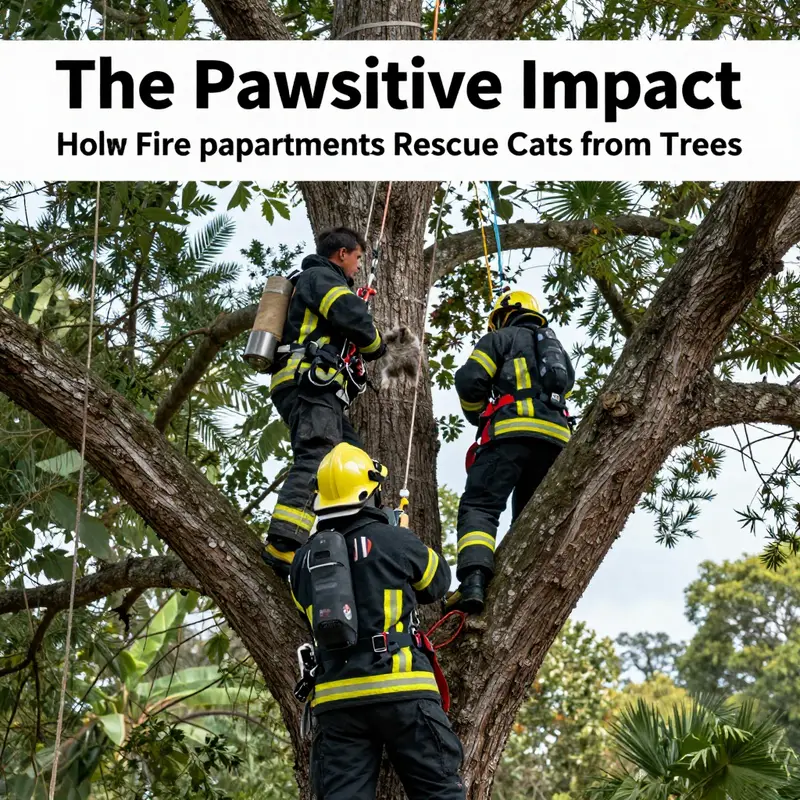
Across many communities, the sight of a cat perched high in a tree triggers a familiar response from local fire departments: calm assessment, careful planning, and a readiness to intervene if a life is at stake. The scene blends public service with a touch of unpredictability, since felines do not always behave in predictable ways when faced with height, wind, or unfamiliar human movements. Yet behind the familiar image of a fire truck ladder rising toward a frightened cat lies a disciplined framework. Firefighters approach these calls with a careful blend of compassion and caution, guided by protocols designed to protect both the animal and the human rescuers. The goal is not spectacle but safety, not showmanship but a measured response that upholds the department’s duty to protect life in all its forms. When a resident reports a cat stranded among branches or clinging to a lofty limb, the responders begin with a quiet, structured sequence. They assess potential hazards—unstable branches that might break under weight, nearby power lines that could electrify a fall, or rugged terrain that complicates access. This initial reckoning matters as much as any tool the crew may deploy. It reframes the incident from a simple animal rescue to a small, high-stakes operation in which timing, positioning, and restraint determine outcomes more than bravado ever could. The emphasis is on reducing stress for the animal and minimizing risk for people, a balance that becomes increasingly clear as the scene unfolds.
The most common method remains the ladder truck, a familiar silhouette that signals a straightforward ascent. Yet even this approach is layered with nuance. Firefighters evaluate the cat’s exact location, the height, and the tree’s structure before extending the ladder. They move with deliberate precision, knowing that a misstep could frighten the cat into a tighter, higher hold or, worse, prompt a fall. When the platform nears the animal, crews often switch from a mechanical posture to a softer, more patient one. They speak in soothing tones, monitor the cat’s breathing and body language, and avoid sudden moves that could escalate the animal’s fear. This is where experience matters most. A calm voice, a gentle approach, and an understanding of natural feline behavior can turn a difficult capture into a cooperative descent. The cat’s choice to step onto a branch or a perch is seldom a purely rational decision; it is influenced by the animal’s perception of safety, the presence of strange humans, and the scent of potential threats. Firefighters are trained to respond to these cues, to anticipate where the cat might retreat, and to slow the process enough to preserve both agency and safety. There are cases where the ladder reach proves insufficient. In taller trees or in stubborn refusals, teams may employ a tree-climbing technique that uses harnesses, ropes, and anchor points. This method, while more technically demanding, enables rescuers to position themselves in a way that does not require forcing the cat to travel long distances or overexpose itself to the elements. The decision to switch from ladder to rope system is never made lightly. It rests on a careful risk assessment that weighs the tree’s stability, the cat’s temperament, and the crew’s own limits in a given environment. When movement is kept to a minimum, the chances of a successful return to the ground increase, and the animal’s stress is mitigated. In some calls, a different strategy comes into play—luring the cat down rather than directly confronting it. A bowl of canned food or a favorite toy can become a tool for negotiation, inviting the animal to choose a gentler path to safety. The technique rests on simple truths about cats: many will respond to familiar stimuli and basic rewards more reliably than to intrusive force. Yet even with such tactics, patience remains essential. Rushing a frightened cat can produce a panicked scramble that jeopardizes both the animal and the rescuers. The professionals understand this nuance and allow time for the cat to descend at its own pace whenever the situation allows.
These operational realities sit within a broader framework of cooperation with local animal services. Departments increasingly work hand in hand with animal control, humane societies, or rescue groups to ensure that rescued felines receive proper medical evaluation and secure placement with their owners when possible. The collaboration helps complete the rescue in a humane, comprehensive way, extending care beyond the initial moment of release. A cat rescued from a tree is rarely an “ending” in itself; it is a transition that may involve veterinary checkups, observation for injuries, and careful reintroduction to home life. The partnership also serves as a bridge to responsible afterward-care, ensuring that the rescue contributes to long-term welfare rather than merely addressing an immediate crisis. In practice, this means that the coordination between fire crews and animal welfare organizations becomes a part of the response plan, and not an afterthought. The emphasis on welfare is echoed in the training that firefighters receive long before they face a cat in a tree. Training programs frequently incorporate modules on animal behavior to illuminate why a cat might freeze, bolt, or freeze mid-descent. Understanding the feline psyche helps responders craft a plan that honors the animal’s needs while aligning with safety protocols. Stress reduction techniques for the rescuers themselves are also part of the curriculum, recognizing that a calm and focused crew is less likely to misjudge the animal’s signals or misread a dangerous branch as a safe anchor.
The knowledge base that informs these rescues is not built in isolation. Many departments anchor their practices to established standards and resources, with references to national guidelines that address emergent animal rescues. The National Fire Protection Association (NFPA) remains a key resource for departments seeking to align their procedures with broadly recognized benchmarks. While NFPA guidance is not a single, prescriptive manual for every scenario, it offers a framework that supports emergency responders in designing safe, humane approaches to animal rescues. The result is a practice that blends field judgment with evidence-informed steps, a combination that helps ensure that the rescue is as nonintrusive as possible while preserving the safety of all involved. The chamber of experience that forms around these operations is enriched by case studies, community feedback, and ongoing training. For many crews, a successful rescue is as much about the narrative that follows—the way a cat is returned to its owner, the way neighbors react to the quiet competence of responders, and the way a community perceives its public safety professionals as guardians of life, both human and animal.
In thinking about these rescues, it is important to separate the act of rescuing a cat from a tree from the broader debates about resource use. Critics have argued that dedicating fire resources to non-emergency animal calls can divert attention from human emergencies. Advocates, however, emphasize that animal distress is a legitimate welfare concern and a reportable compassionate service. The two perspectives often coexist in a nuanced public conversation about the scope of public safety work. What remains clear is that when a resident asks for help because a cat is perched out of reach, the responders arrive with a disciplined toolkit: a plan, a team, and a restraint that prioritizes the animal’s welfare alongside the safety of the public and the responders themselves. The practice is rooted in a longer tradition of public service, one that recognizes the power of humane action to reduce suffering and strengthen community trust in emergency services.
Beyond the mechanics of the rescue, the training philosophy behind these calls deserves closer attention. Firefighters frequently engage in training modules that cover animal behavior, stress reduction, and safe handling. The aim is not to turn them into animal behavior specialists but to equip them with enough insight to read a situation accurately and respond without escalating tension. Such capabilities become particularly salient when a cat is young or anxious, a scenario in which a calm, patient approach can be decisive. In practice, instructors emphasize the value of quiet, deliberate actions—soft hand movements, measured discussions with the animal, and the use of non-threatening positions that present the cat with a clear path to the ground. When the ladder finally lowers the animal to the ground, the scene often concludes with a quick veterinary check, especially if there are signs of distress or injury. The transitional moment—handing the cat to a caregiver, or to the owner if present—marks the culmination of a chain of precautions that began long before the cat’s call for help echoed into the station.
The seriousness of these operations should not be confused with the occasional levity that follows a dramatic rescue. The San Francisco incident of 2019, in which a cat briefly made its way onto a ladder and then escaped, serves as a reminder of both the limits of human control and the unpredictable nature of animal behavior. News coverage highlighted the earnest intent of responders while also capturing a moment of levity, a small human note in a complicated call. Such episodes contribute to a broader public understanding that, while rescue work can be dramatic, it remains embedded in a framework of safety, care, and professional restraint. They also illustrate the enduring challenge of balancing urgent needs with practical constraints. The public tends to remember the dramatic image—the ladder against a sunlit sky—but the real story centers on the layered protocols that make these moments possible without compromising the safety of anyone involved.
For readers seeking more on the practicalities and training resources behind these rescues, there is a growing repository of information aimed at improving both response and welfare. Fire departments increasingly share their experiences and best practices through professional blogs and training portals. In particular, accessible resources on fire safety essentials certification and training offer a window into the kind of grounding that supports responders when animals appear in distress. These materials reinforce the idea that humane rescue, when done correctly, is a disciplined, technical, and profoundly human form of public service. It is not merely about climbing a tree; it is about reading a scene, applying the right technique, and bringing a frightened animal back to safety with as little harm as possible. The narrative of these rescues is thus a convergence of science, compassion, and community accountability, a triad that continues to shape how fire departments respond to the unexpected calls that remind us why public safety exists in the first place.
When the tail of a rescue finally settles and the cat—whether shy and bashful or curious and relieved—walks away from the tree into the arms of a caretaker, the event becomes part of a larger story about the role of fire departments in everyday life. It demonstrates a willingness to engage with nonhuman life in meaningful ways, and it showcases the careful calibration of risk, skill, and empathy that defines modern emergency response. The practice is not about spectacle; it is about the quiet competence that allows a ladder to disappear from view, a cat to be returned to the ground, and a community to feel a little safer knowing that public safety officers are prepared to act with both courage and restraint when a fourth-floor feline cry for help resonates through the neighborhood. For the public, these rescues become touchpoints—moments that reveal how a city’s emergency services translate training into tangible acts of care. For the responders, they are ongoing demonstrations of the core belief that life in any form holds dignity and deserves protection, even when the most dramatic steps happen high above the ground.
External resource: For broader standards and guidelines on emergency animal rescues, see NFPA resources at https://www.nfpa.org. Internal reference: for ongoing professional development related to rescue work and training, see the engaging materials available on fire safety essentials certification and training.
Paws on the Ground: How Cat Rescues Shape Trust Between Fire Departments and the Communities They Serve
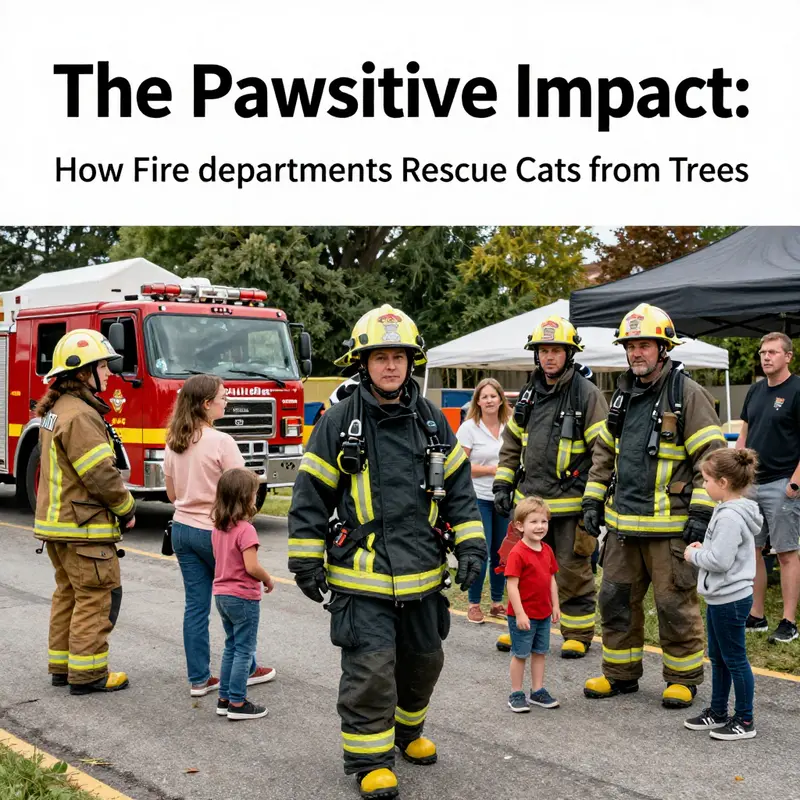
Ladders, hoses, and the careful choreography of a quiet rescue. When a cat perches high in a tree, on a pole, or in a creaking ceiling space, the spectacle can illuminate the broader purpose of fire departments beyond the predictable emergencies that occupy most of the day. It is a moment that asks not only if the animal is saved, but also how a city’s first responders are perceived as neighbors, guardians, and approachable members of the community. In many places, such rescues are debated; they tug at resource allocation, risk, and priority. Yet the narrative that unfolds across cities and countries is increasingly about more than the rescue itself. It is about how such rescues can become a catalyst for trust, cooperation, and shared responsibility between residents and the institutions sworn to protect them.
A case from Beijing offers a compelling example of calm, minimally invasive rescue. Firefighters locate the cats with sound, patience, and precise timing, carefully removing obstacles to create just enough space for safe extraction. The aftercare reinforces the feeling that the department is a partner in daily life, not merely a crisis instrument. Plans for building safety education and community outreach emerge from the event, turning a single rescue into long term civic benefit.
Across other cities, stories of compassionate, measured intervention reinforce a public safety culture rooted in empathy and restraint. When residents see responders act with care for animals and structures alike, trust deepens and communities become more engaged in prevention and safety.
The overarching lesson is practical as well as moral: communicate openly, train to minimize harm, and involve communities in safety planning. Animal rescues, handled well, become gateways to broader resilience, stronger relationships, and a shared sense that life in all its forms is worth protecting. For readers seeking deeper context, public outlets and blogs that chronicle these events illuminate how rescue work can harmonize with ongoing community development and safety education. For more context, see FIRE Rescue blog at https://firenrescue.net/blog/ and Beijing News coverage at https://www.bjnews.com.cn/detail/158766947454577.html.
Final thoughts
Rescues performed by fire departments not only serve as a vital service for animals in distress but also significantly impact community relations. The compassion exhibited through these efforts fosters goodwill, strengthens community bonds, and encourages public engagement. As discussions about resource allocation continue and training protocols are refined, the importance of these rescues remains undeniable. They symbolize an overarching commitment to safeguarding all lives, human and animal alike. Understanding the nuances of such initiatives sheds light on the thoughtful measures taken by fire departments in their service to the community. The next time you see a firefighter rescuing a cat, remember that this act represents far more than just a rescue; it embodies a community’s heart.

