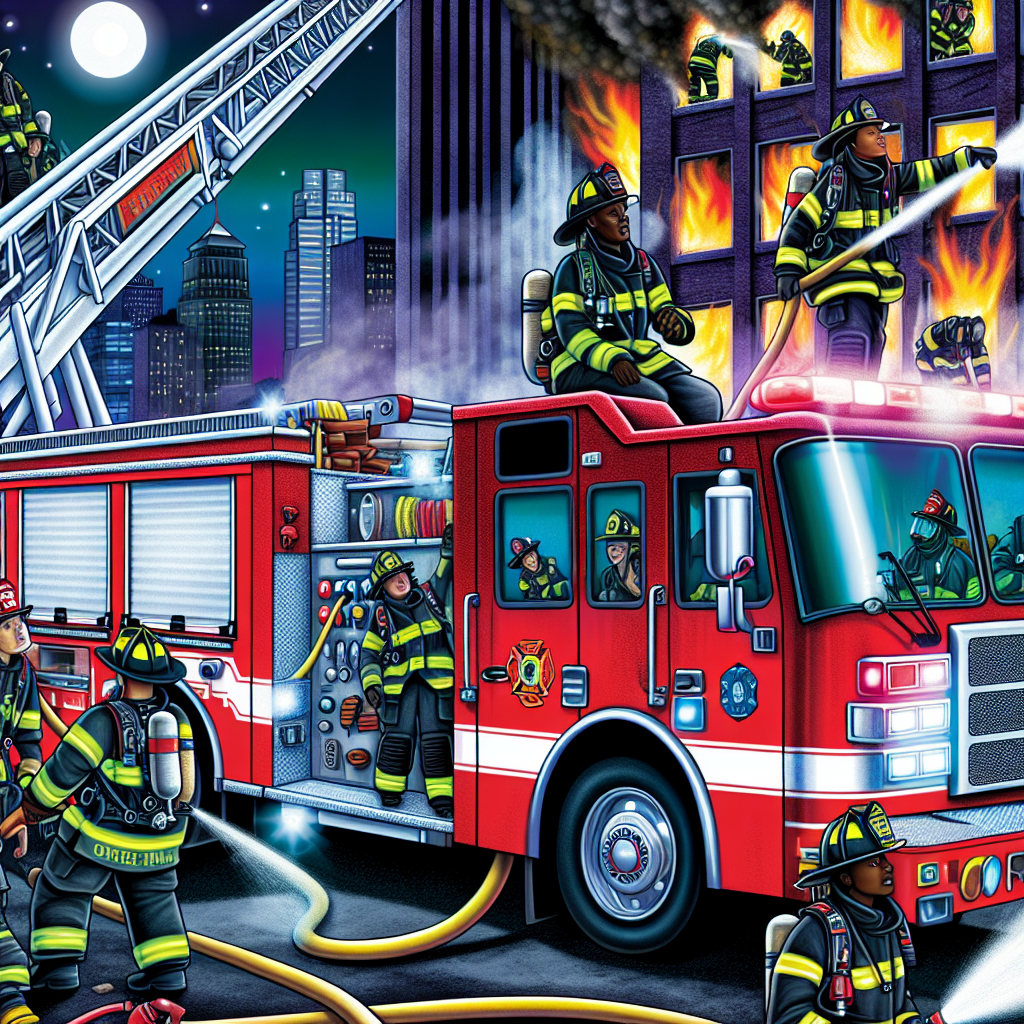
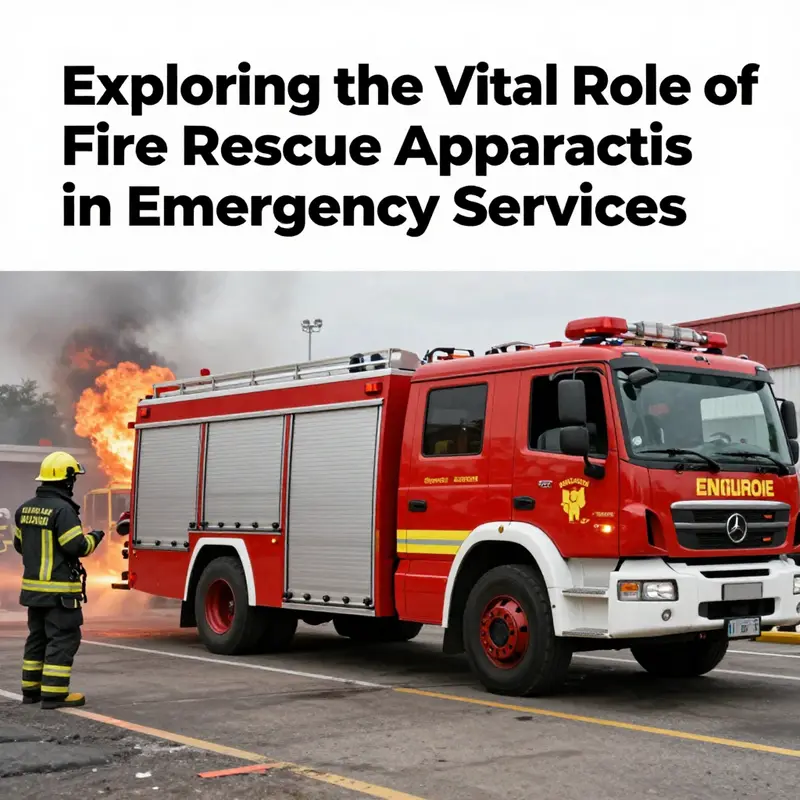
Fire rescue apparatuses are pivotal in firefighting and emergency response, combining technology and engineering to equip crews with necessary tools. In mobile firefighting units, strategic designs facilitate both rapid deployment and effective rescue operations. The forthcoming chapters will dissect the integral components of these apparatuses, delve into the latest technological advances that enhance their capabilities, explore their critical role during emergencies, and forecast the future of design and implementation in this life-saving arena.
Beyond the Siren: Inside the Components That Make a Fire Rescue Apparatus a Lifeline on Scene
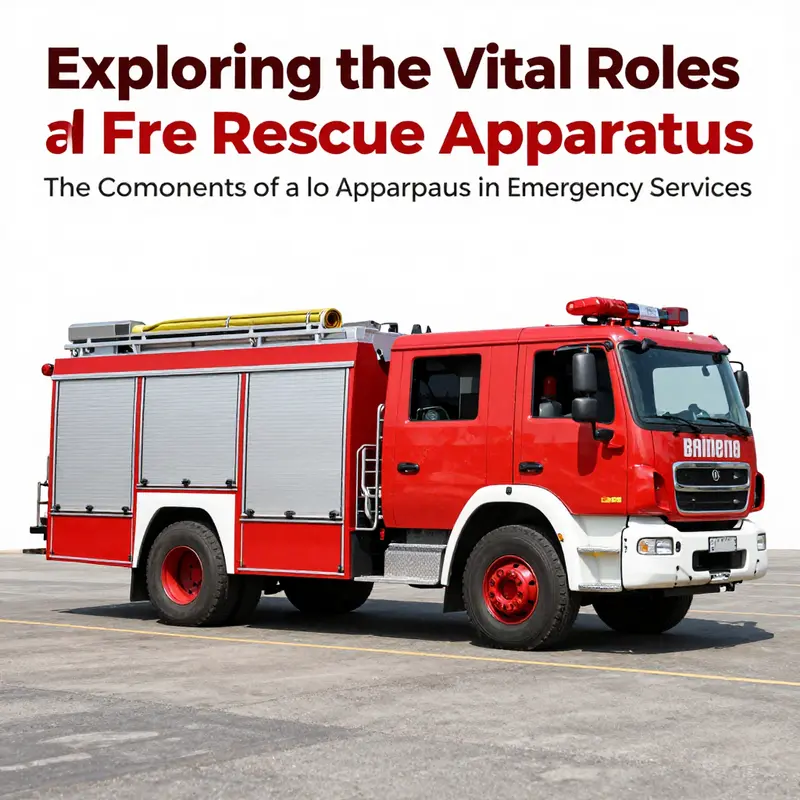
A fire rescue apparatus is more than a glossy exterior and a chorus of sirens. It is a carefully engineered platform that translates training, teamwork, and courage into tangible capability at the moment a call comes in. When a dispatcher broadcasts a scene, the apparatus begins its transformation from everyday vehicle to a mobile operation center, carrying the instruments and the people who will determine whether a situation ends in danger or relief. To understand what a fire rescue apparatus is, one must follow how its components interlock and support one another, creating a cohesive system that expands a firefighter’s reach from a fire line into a corridor of decision, access, and care. The profile of this vehicle is not a simple sum of parts; it is the result of deliberate design choices that balance weight, strength, accessibility, and adaptability across countless environments. In urban cores with high-rise canyons, in suburban neighborhoods with extensive hydrant networks, or in remote terrains where water sources are scarce, the apparatus must perform consistently. It must be ready to deliver large volumes of water with precision, to reach windows and stairwells, to support victims in need of rapid extrication, and to sustain responders with a degree of safety that keeps fatigue from eroding judgment. These demands shape the architecture of the machine and, more importantly, the choreography of the crew that works inside it. The components that define a fire rescue apparatus fall into a rhythm that mirrors the sequence of an incident: water first, access second, rescue third, care fourth, and the ongoing mission to keep everyone safe and informed throughout the operation. This rhythm is not accidental; it is reinforced by decades of testing, training, and evolving standards that recognize how every tool can influence outcomes on a changing landscape of threats and hazards. Consider the fire suppression system as the first word in that narrative. It is the heart of the apparatus’s ability to alter the dynamics of a scene. A large-capacity water reservoir, paired with a high-flow pump and an extended network of hoses and nozzles, allows firefighters to project streams of water, foam, or other fire suppressants toward the blaze with a speed and volume that can control the forward motion of the fire. The system is designed to pull in water from multiple sources: it can draw from hydrants on the street, siphon from natural bodies of water when needed, or feed directly from the onboard tank to sustain operations if external supplies are temporarily unavailable. The robustness of this system is a measure of a crew’s confidence under pressure. In many nights of duty, when the city lights flicker against smoke and heat, the pump’s reliability becomes less a technical flourish than a lifeline. The hose deployment is a study in logistics and ergonomics. Firefighters must manage lengths of hose that can stretch through hallways, around corners, and up stairwells, while still keeping the crew balanced and mobile. The nozzles, chosen for their spray patterns and reach, are tuned to adapt to the geometry of a structure, the heat of the flame, and the presence of obstacles. The suppression system does not operate in isolation. It speaks to the crew through a subtle, continuous feedback loop: the pump’s pressure, the hose’s tension, and the water’s reach all inform how a line is advanced or adjusted. When supply lines are strained by heavy usage, or when a sudden corner or door requires another tactic, the crew can switch strategies with practiced fluency, shifting to foam if fuel loads demand it or adjusting foam proportioning to optimize penetration and cooling. The apparatus’s capacity to stage and sustain suppression is inseparable from the rescue tools that sit nearby, because extinguishing a fire often creates access opportunities that did not exist before. The rescue equipment carried by a modern fire rescue apparatus speaks to the unpredictable geometry of real-world emergencies. Extrication tools—hydraulic cutters, spreaders, and rams—are designed to pry open doors, release trapped passengers, and clear pathways for movement without compromising the stability of the vehicle or the structure around it. The tools must be operable with one hand while a partner maintains water control with the other; they must be responsive to the weight and angle of a slice or a lift, and they must be reliable even when hydraulic pressure fluctuates in a loud, smoky environment. These tools are often complemented by airbags and cribbing materials that distribute weight away from fragile components, stabilize an unstable vehicle, or elevate a collapse-prone beam just enough to create a corridor for rescue. The language of rescue is a language of coordination. It requires a cadence in which hydrant access, tool deployment, and patient extraction are harmonized with communications and situational awareness. That is where the apparatus’s communication systems and warning devices assume a central role. Radios, intercoms, sirens, and flashing lights are not mere alert mechanisms; they are channels of clarity that shape the decision-making process on the ground. Real-time data systems and GPS tracking turn a moving fleet into a linked orchestra, where the incident commander can monitor the location and status of each unit, anticipate resource gaps, and deploy additional teams before the situation becomes critical. In the heat of action, the ability to communicate crisp, reliable information under noisy conditions can determine whether a crew gains safe access or faces a delay that could cost precious minutes. The EMS dimension embedded in the apparatus reflects a commitment to patient care at the earliest possible moment. Beyond basic first aid, many firefighters carry equipment that enables them to perform life support functions, assess injuries, and stabilize patients until more comprehensive medical care arrives. The EMS toolkit is compact, but it is intentionally comprehensive: airway management devices, basic and advanced life support supplies, and a readiness to pivot from suppression to triage and treatment as the scene evolves. The design philosophy here rests on speed without sacrificing safety. A well-equipped crew can begin immediate care where needed and coordinate with ambulance teams to optimize transport decisions. The entirety of the vehicle’s interior is shaped by ergonomic considerations that reduce delays, prevent injuries, and support efficient work. The structural safety features and ergonomic layouts are not cosmetic; they are the guards against the physical toll of repeated deployments. Reinforced cabs protect personnel from debris and heat, while non-slip flooring and textured surfaces help responders maintain footing in slick, smoky environments. Storage compartments are arranged to minimize the time spent searching for tools, and every tool has a defined place that remains legible to a new recruit or a seasoned veteran alike. This orderly organization is not a ritual of tidiness; it is a readiness practice that translates into seconds saved when every second counts. The design choices that shape the interior also influence long-term performance and crew safety. For instance, a well-considered ladder arrangement enables rapid ascent and descent, reducing the risk of slips or falls when stairs are slick with water or debris. The seating layout in the cab is engineered to protect responders from shifting loads during sudden movements, while access panels and ergonomic handles ensure that PPE and equipment can be retrieved quickly without pulling focus from the scene. The result is a vehicle that feels like an extension of the firefighters themselves—familiar and efficient, capable of meeting the moment with calm precision instead of friction. The broader narrative of the fire rescue apparatus is one of interoperability and resilience. It is designed not only to perform in the best possible world but to adapt to the imperfect conditions that define real incidents: compromised water supply, compromised structures, weather that complicates access, and the unpredictable timing of victims in distress. That adaptability informs not only the equipment choices but also the training culture surrounding the apparatus. In every fire department, the apparatus is the canvas on which drills and exercises are painted. Crews train to deploy suppression lines under fatigue, to execute complex extrications while maintaining airway control, and to manage a rapid triage flow in chaotic environments. The idea is to cultivate muscle memory, so that during an actual event the team moves with a rhythm so natural it feels almost automatic. The result is a vehicle that embodies preparedness. It is a platform that makes possible a broad spectrum of responses: fire suppression, structural stabilization, victim extrication, hazardous materials control, swift-water rescue, and advanced medical support. Each mission profile has its own requirements, and the apparatus can be configured to emphasize some capabilities over others in response to local risks and resource constraints. In regions where water supply is a limiting factor, emphasis on high-capacity pumps and versatile water handling becomes paramount; in dense urban precincts, access equipment and ladder systems that can negotiate tight stairwells and tight gaps gain priority. The chapters that follow this overview will continue to map the relationship between policy, training, and equipment, showing how standards and guidelines shape the way fire rescue services uphold safety and efficiency at every scene. For readers seeking practical pathways to connect training with equipment, a useful starting point is certification and safety education that keeps pace with evolving practices. See the Fire Safety Essentials Certification Training resource for a concise guide to staying current with life-saving competencies, practical drills, and the ethical responsibilities that accompany frontline duties. Fire Safety Essentials Certification Training. In parallel, standards and guidelines for fire departments are continually refined through research and regulatory review to address new hazards and changing urban forms. A broader external reference that frames these efforts can be found in the overview of fire department topics, which highlights the kinds of governance, interoperability, and safety objectives that inform day-to-day operations and capital investments. For a comprehensive external perspective, see the Fire Department overview on ScienceDirect: https://www.sciencedirect.com/topics/engineering/fire-department
From Water to Wireless: The Tech Frontier of Fire Rescue Apparatuses
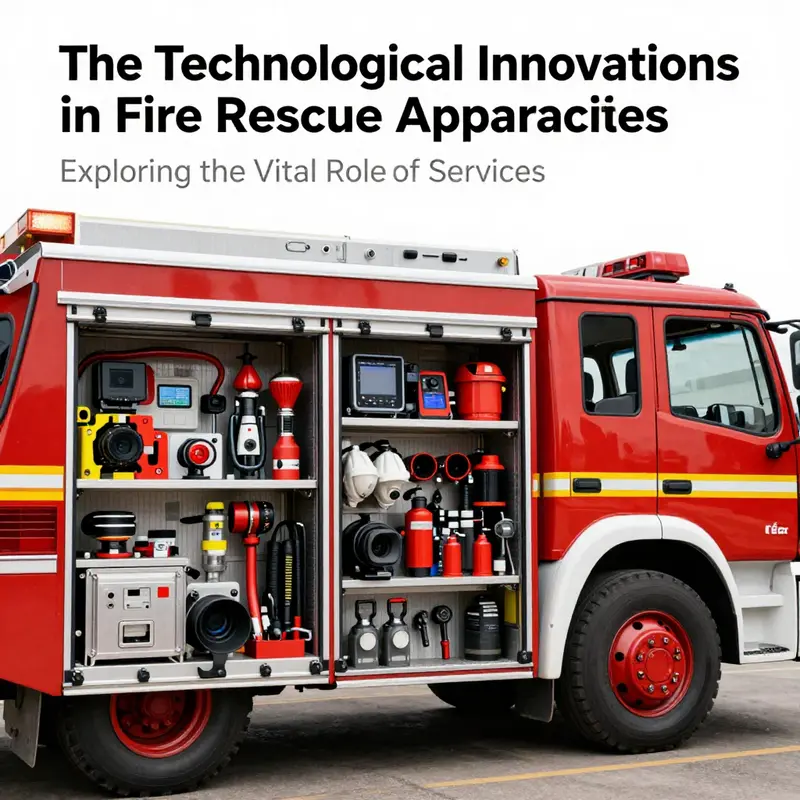
Technology has long stood as a force multiplier in fire rescue, turning what used to be a matter of bravado into a disciplined orchestration of sensors, machines, and human judgment. A fire rescue apparatus is not merely a vehicle with a tank; it is a rolling command post, a lifeline, and a platform for rapid, layered intervention. The modern apparatus integrates propulsion, water delivery, ventilation, rescue tools, and medical care into a single ecosystem that must operate under pressure, in smoke, and at unpredictable scales. At its core, the apparatus represents a commitment to speed without sacrificing safety, to reach victims quickly while maintaining the stamina of the crew that will work around the clock through a shift and into the night.
Across districts, fire departments have shifted from pure brute force toward systems that anticipate needs and adapt to conditions. This shift is powered by the infusion of intelligent systems: thermal imaging cameras that pierce zero visibility, GPS and mapping tools that keep crews oriented when street layouts, smoke, and weather confound the sense of place, and real-time data analytics that feed dashboards with the status of pumps, hoses, and power supplies. With these capabilities, a captain can see the tone of the fire as if it were a musical score, spotting hotspots, tracking nozzle pressure, and coordinating multiple units as if conducting an ensemble.
Among the most consequential advances are remote-controlled firefighting robots. When human entry would put responders at unacceptable risk, a robot can step through doors, breach windows, or cross volatile floors. A robot carries a high-pressure water cannon, is equipped with gas sensors, and streams live video back to the command post, enabling decisions to be made without exposing crews to danger. The robots extend the reach of the apparatus and the reach of the team, turning the unknown into data that can be analyzed and acted upon in seconds rather than minutes.
Drones have moved from curiosity to capability. In pre-incident planning, they map building layouts, roof access, and potential fuel loads. In active scenes, they survey structural stability, identify unrecognized hazards, and deliver essential items to ground crews in time-sensitive ways. The synergy between ground operations and aerial reconnaissance reshapes how responders prioritize tasks and allocate resources, often reducing the time to locate victims and disrupt the progression of a fire or collapse.
Inside the crew compartment, wearable technology has become a core safety mechanism. Smart helmets and body-worn sensors monitor heart rate, core temperature, and respiratory status, streaming alerts to the incident commander when a responder’s condition deteriorates or when a critical threshold is crossed. These measures protect lives on the ground and offer a data-rich narrative for post-incident health assessment. At the same time, augmented reality displays embedded in visors overlay building schematics, evacuation routes, and hazard maps onto the firefighter’s field of view, guiding decision-making in the smoke and chaos. This fusion of perception and information reduces cognitive load at the moment of action, letting the wearer focus on the task while the system handles the heavy lifting of situational awareness.
Vertical rescue, one of the most technically demanding tasks, has benefited from innovations in mobility and attachment systems. Modern apparatuses coordinate with specialized climbing aids that allow firefighters to ascend towers or stairwells with improved control and safety. The integration of smart sensors along those ascent paths can monitor grip, torque, and position, providing feedback to the rescuer and to the command staff. When a building towers above, the combination of mechanical efficiency, robotics assistance, and real-time mapping makes the ascent not only possible but safer and more predictable. These developments reflect a broader principle: as the environment grows more dangerous or dynamic, the apparatus must extend its reach in ways that reduce risk to the human operators while preserving or increasing efficacy.
Operationally, the apparatus becomes a platform for rapid decision-making, not just a means of transport. Real-time data analytics merge with canalized workflows that guide crews through suppression, rescue, and medical care in a sequence that minimizes time to relief. A properly configured vehicle maintains a continuous handshake with the incident command center, vehicle-side software, and the wider digital ecosystem of the department. Through dashboards, crews receive alerts on equipment status, battery charge, water pressure, and hose integrity, so there is no guessing about readiness when the siren sounds and the lights flare. The practical backstage of this technology is maintenance discipline: sensors for pumps and tanks report anomalies, and the system prompts routine checks before, during, and after deployments. Reliability becomes not a convenience but a shared standard for every shift and scene.
One of the most compelling implications relates to how this technology can scale across different contexts. In resource-constrained environments, customizable vehicle configurations can be tailored to local terrain and budgets. The idea is not to imitate distant prototypes but to translate core capabilities into reliable, cost-effective, and fully supported solutions that meet the community’s needs. The path toward this goal often involves partnerships that bridge engineering, training, and service networks, ensuring that newer technologies do not outpace the organization that must steward them. For readers interested in this translational approach, one can explore cases where vehicles are adapted to fit rough terrain, limited infrastructure, or diverse response requirements while maintaining interoperability with existing equipment and training programs. Customized Firefighting Vehicle Solutions for Developing Countries.
Beyond the large apparatus, the ecosystem includes smaller, lighter platforms that can be deployed in the interior or outside of a structure to scout, deliver, or assist, further expanding the reach of trained teams. In the same breath, designers and researchers emphasize human factors: intuitive interfaces, predictable automation, and fail-safe redundancies that ensure the system remains a partner rather than a mystery under stress. The human operator remains central, but the threshold at which human input is required continues to shift toward higher levels of strategic decision-making while automation handles routine or dangerous tasks. This collaboration yields a more resilient public safety answer, capable of standing up to the most challenging emergencies while safeguarding responders from harm.
As these innovations spread, the literature of practice grows alongside it. Training towers, live drills, and certification standards all adapt to the new capabilities, ensuring that crews know how to use the tools safely and effectively. The integration of theory and practice becomes essential, where instructors translate sensor feedback and AR overlays into tangible skills that can be applied in the field. The result is not a single device but an integrated system of tools, protocols, and habit that makes a fire rescue operation quicker, smarter, and safer.
With the pace of change accelerating, fire departments also consider the ethical dimensions of adopting advanced technologies. Data security, privacy in the heat of response, and the possibility of overreliance on automated systems are carefully weighed against the potential gains in speed and safety. The aim is to preserve human judgment as the central driver of decisions while leveraging technology to expand situational awareness and to minimize exposure to harm. These are not contradictions but complementary forces in the modern emergency response paradigm. In this light, the apparatus becomes a case study in how communities balance innovation with stewardship, ensuring that the most vulnerable are protected by thoughtful and transparent deployment of technology.
Finally, as the article on technology in fire rescue apparatuses suggests, the trajectory points toward even more seamless integration of sensors, analytics, and smart mobility. The next generation of apparatuses may include more autonomous capabilities, more resilient communications networks, and more adaptive power and water management systems. For responders, this trend translates into faster scene assessment, better resource management, and the confidence to take on the most demanding incidents with a larger margin of safety. For communities, it promises more reliable service delivery and improved outcomes at the moments that matter most. The technology will not replace the courage of the firefighters; it will elevate it by smoothing the path to effective action when every second counts.
Interoperability across agencies matters as much as hardware prowess. The best-equipped unit is of little use if it cannot exchange data with neighboring departments, hospitals, and incident command centers during large-scale emergencies. Open architectures and standardized data formats enable sensors, mapping tools, and wearable devices to speak a common language. When a city hosts a regional training exercise or a multi-jurisdictional response, the equipment can compose a single operational picture rather than a mosaic of isolated streams. The emphasis on interoperability also extends to the integration with mutual aid networks, hospital telemetry, and air rescue coordination, ensuring that the flow of information remains consistent from the first alarm to the last patient handoff.
Maintenance and lifecycle considerations finally shape how rapidly these advances translate into real-world readiness. Predictive maintenance uses sensor feedback to anticipate failures before they occur, reducing downtime and extending the life of pumps, batteries, hoses, and electronic components. The cost of ownership becomes a factor as fleets must balance upfront procurement with ongoing service, software updates, and technician training. In practice, the most successful implementations blend vendor support with in-house capabilities, cultivating a knowledge base that keeps equipment reliable even in regions with limited access to specialized technicians. The reliability of the apparatus arises not only from rugged hardware but from disciplined lifecycle management that aligns technical ambition with budget practicality.
As the fire service moves toward greater reliance on automated systems and intelligent monitoring, the ethical dimension remains essential. The greatest promise of technology is realized when it serves people—victims, responders, and communities—without compromising privacy, safety, or human judgment. Engineers and fire professionals collaborate to ensure that automated alerts, location data, and health metrics are protected and used with consent and transparency. In this sense, the apparatus becomes a vehicle not only for rapid response but for responsible innovation, where the right balance between autonomy and accountability guides every deployment, drill, and policy decision. The coming era invites a broader conversation about how cities plan, invest, and train to sustain progress that benefits all who rely on the fire service.
External reference: https://www.fireengineering.com/technology-in-fire-rescue-apparatus
On the Frontline and in Motion: The Fire Rescue Apparatus as the Core of Modern Emergency Response
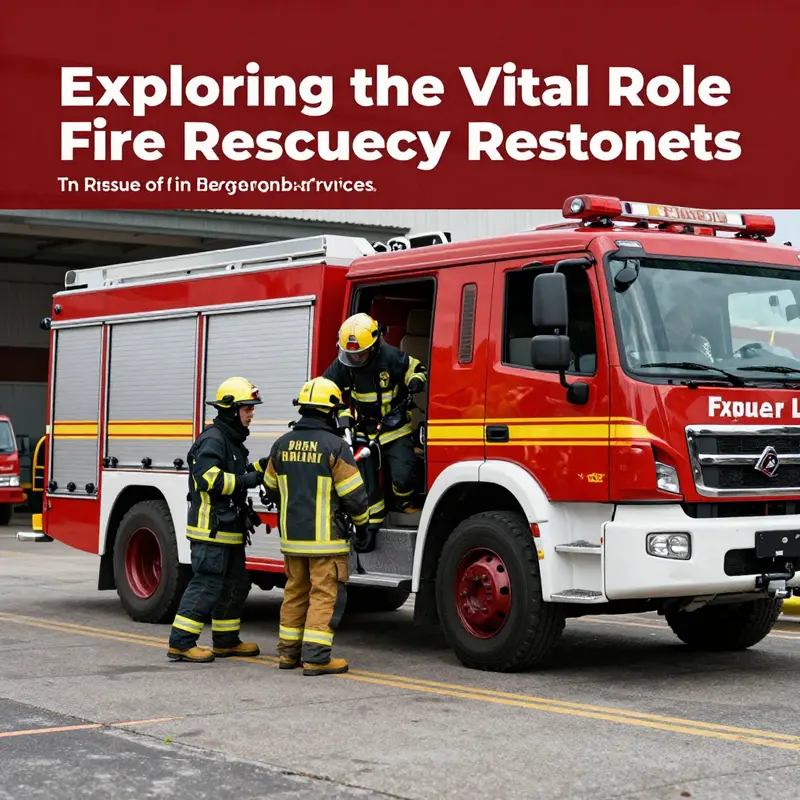
In cities where the skyline holds a dense weave of residential towers, commercial complexes, and intricate infrastructure, emergencies arrive with a blunt demand for speed, coordination, and precision. The fire rescue apparatus functions as more than a vehicle; it is a mobile platform for command, a lifeline for victims, and a shield for bystanders. Its design embodies a philosophy: bring the right tools to the right place at the right time, and do so in a way that integrates with every other element of the response network. This means a chassis that can maneuver through crowded streets, compartments that organize critical equipment for rapid access, and systems that connect suppression, rescue, medical support, and incident command into a single, coherent effort. The apparatus is the first responder’s fulcrum on which the weight of a community’s safety rests, and it operates within a larger ecosystem that stretches from the street to the emergency operations center, from the patient on the curb to the hospital bed, and back again into the choreography of future drills and real incidents.
At the core of every fire rescue apparatus lies a deliberately simple, yet profoundly capable, set of capabilities. A robust water supply is the lifeblood of suppression work. The pump must be able to deliver a sustained stream at high pressure through large-diameter hoses to reach the seat of a fire quickly, even in dense urban environments where access is constrained. The water system often includes different modalities: steady stream for direct attack, surge or foam-capable configurations for specific fire types, and a controlled, expandable supply that can link to a community’s hydrant network when needed. Hoses, couplings, and reels are arranged in a way that allows an operator to recognize the right line for the task and deploy it without delay. Beyond water, the apparatus carries a spectrum of tools for rescue and rapid access: ladders and ground ladders that extend a firefighter’s reach to upper floors; cutting equipment capable of breaching walls or vehicles; stabilization gear that keeps the scene safe during delicate extrications; and a well-ordered set of medical supplies that can provide immediate care while transport to a medical facility is arranged. These are not separate items but a system—an overlapping toolkit where each element supports the others in a dynamic and often dangerous environment.
The layout and engineering of a fire rescue apparatus are as much about anticipation as they are about reaction. Compartments are designed to minimize wasted motion. A firefighter returns from a mission with a range of potential needs—from ventilation to stabilization, from rope rescue to emergency medical care—and the apparatus is expected to have a reliable home for each item. But readiness is not only about keeping things in place; it is about keeping the system itself resilient. Pumps require regular maintenance, hoses necessitate careful inspection for wear and tear, and ladders must operate smoothly after months of exposure to weather and road grime. Readiness also means redundancy. In the face of a high-rise fire, where a single hose line may not suffice, crews rely on multiple lines and the ability to deploy extendable monitors that can deliver a large, controlled jet from a safe distance. In such moments, the apparatus stands as a conduit between the fire department and the unfolding emergency, a bridge that links the scene with the strategy that governs it.
Within this framework, the apparatus doubles as a command post in motion. Modern responses demand a level of coordination that extends beyond a single incident commander with radio chatter. The vehicle becomes an information hub, hosting communications gear, incident management software, and a basic level of situational awareness that can be shared with other responding agencies. This coordination is essential in complex scenarios, such as when responding to structural fires in mixed-use districts where civilian evacuations, utility crews, public safety communications, and medical responders must operate in a shared space. A well-equipped apparatus provides the physical space and the digital lifeline needed to synchronize these diverse threads into a unified response. In practice, this means the crew can rapidly assess the scene, communicate evolving priorities, and ensure that every action—whether it is a ventilation strategy to remove heat and smoke, a search-and-rescue operation, or a coordinated shift in suppression tactics—flows with minimal friction.
High-rise venues illuminate the most demanding aspect of a fire rescue apparatus’s role: vertical access and rescue. In these environments, access points may be limited, stairwells congested, and the time pressure extreme. The apparatus thus carries equipment tailored to these vertical challenges, including ladders and climbing systems that extend reach and enable safe passage for trapped occupants. It also holds tools for lifting and stabilizing structural elements that could shift during an extraction. The real power of the apparatus in vertical contexts is the ability to bring a capable, ready team to a critical height and to do so without waiting for a separate, slower process to scale the building piece by piece. This is where training and familiarity with the equipment translate directly into lives saved. Firefighters practice on drills that simulate the uncertainty of a high-rise scenario, a practice that strengthens muscle memory and reduces hesitation when real calls come in. Regular exercises underscore an essential principle: the apparatus is a platform for action, not a symbol of readiness, and its true value emerges when the crew can act decisively under pressure.
The January 6, 2026 drill conducted by the Xianning Municipal Fire and Rescue Department at Yihaoyuan in Jingui Community, Fushan Street, Xian’an District, offers a concrete example of how a modern fire rescue apparatus functions within a broader emergency response framework. The drill involved more than ten fire trucks deployed to simulate complex high-rise firefighting scenarios. It underscored the apparatus’s vital role in emergency command coordination, on-site suppression, and multi-agency collaboration. Such exercises are not mere demonstrations; they operationalize the theory of readiness into tangible improvements in procedures, communication, and resource allocation. When multiple teams converge on a scene, the apparatus acts as the central node that binds suppression, extraction, medical care, and safety oversight into a coherent effort. The result is not only faster action but smarter action—where the timing of water application, the placement of aerial devices, and the sequence of rescue operations are guided by a rehearsed, shared understanding of how the incident is evolving.
The details of this drill, and the way the apparatus and personnel interoperate within it, reveal a lot about how modern urban emergency response has evolved. It is not enough to know what equipment exists; it is equally essential to know how it is deployed, how it communicates with other responders, and how it adapts to the constraints of the built environment. The drill demonstrated that the apparatus is not a static artery of response but a dynamic platform that can reconfigure itself to meet changing conditions at the scene. For instance, once initial suppression is established, the same platform can pivot to conduct victim extrication, to coordinate with EMS teams for triage and transport, and to reallocate pumps and lines to prevent a backflow of pressures that could compromise both the scene and the crews. In high-rise scenarios, this adaptability is particularly critical. Vertical rescue requires more than reach; it requires a synchronized rhythm between the ground and the higher levels of the building, a rhythm that only becomes reliable when the apparatus and its crew have rehearsed it until it becomes second nature.
A core takeaway from such drills is the reinforced bond between equipment and people. The apparatus is a conduit through which experienced judgment, training, and teamwork are released into the street. The more proficient crews are at operating under pressure, the more effectively they can harness the apparatus’s capabilities. Training translates into operational competence: the speed with which crews connect water to a standpipe, the precision with which they deploy ladders at outside corners, the confidence to deploy cutting tools on a compromised structural member, or the poise to administer life-saving care in the back of a moving vehicle before the patient reaches the hospital. These moments are not abstract; they are lived experiences where time is measured not in minutes but in breaths saved, in breaths breathed by a rescued occupant or a soot-stained survivor who sought the tremor of a doorway in which to take shelter.
What emerges then is a picture of the fire rescue apparatus as a living system. It is shaped by the demands of urban life—dense layouts, high-rise risks, and a spectrum of hazard environments—yet it remains adaptable to new risks and evolving technologies. The partnership with training institutions, fire departments, and cross-agency collaborations underlines a broader truth: the apparatus is not merely a tool, but a platform for continuous improvement. The lessons learned from drills feed back into procurement decisions, maintenance protocols, and the design of future response strategies. This feedback loop helps ensure that when a real emergency arises, the system is not just ready to act but ready to improve with every operation and every drill. The public safety net becomes stronger because the apparatus embodies the field’s commitment to ongoing readiness and to turning every incident into a learning opportunity.
In this evolving landscape, the human element remains central. The firefighters who operate the apparatus bring decades of training, discipline, and intuition to scenes that demand rapid, coordinated action. The crew’s ability to read a building, to anticipate a tunnel of smoke or a shifting load on a stairwell, and to adapt on the fly will always shape outcomes more than any single gadget. Yet the gadgets—pumps, hoses, ladders, cutting tools, and medical kits—are the reliable scaffolding that supports that judgment. They transform intent into action, and action into outcomes that preserve life and minimize damage. The synergy between equipment and operator is not a luxury; it is the baseline of modern emergency response that allows communities to respond with both speed and care.
For readers curious about how these concepts translate into day-to-day practice and continual improvement, the broader body of emergency response discourse emphasizes a simple yet powerful idea: the apparatus is a connecting thread that binds suppression to rescue, medical care to scene safety, and incident management to resource readiness. It is the thread that, when pulled, reveals a tapestry of coordinated action. The result is not a single moment of courage but a sustained, disciplined capability that can shift the balance in the most challenging scenarios. In the end, the apparatus is more than steel and hoses; it is a living commitment to public safety, a moving testament to a community’s resolve to protect life and property even when the clock is racing against them.
As this understanding deepens, practitioners and scholars alike emphasize one practical implication: ongoing engagement with training materials, drills, and policy developments reinforces the apparatus’s effectiveness. This ensures that the people who rely on it do not become dependent on routine but stay agile enough to respond to unforeseen configurations of danger. In such a culture, the apparatus is not a fixed object but a continually evolving instrument of safety and service—a reminder that, when every second matters, the right vehicle can make the difference between triumph and tragedy. For those exploring how to stay connected with the latest conversations about fire safety and equipment design, the FIRENRescue blog offers a clear, accessible perspective on embedded training, field readiness, and the human factors that keep emergency responders effective in the crucible of real events. FIRENRescue blog
The Xianning drill and similar exercises also underscore the necessity of sharing knowledge across jurisdictions. Real incidents can take many forms, and the more agencies learn from one another’s drills, the more resilient the entire system becomes. When a city’s responders practice together, they learn to speak a common operational language, interpret shared signals, and move with a unity that reduces confusion at the critical moment. The cross-pollination of ideas—from how teams manage the placement of water streams to how medical teams triage and stabilize patients en route to hospitals—adds a layer of strategic depth to every response. The end result is a safer city, not because it has the most advanced gadgetry, but because it has the most coherent, practiced, and adaptive response capability. The apparatus serves as both the instrument and the symbol of that capability, a tangible reminder that preparedness is a communal endeavor, built on regular, disciplined practice and a shared commitment to public welfare.
From a policy perspective, the path forward includes continued investment in equipment reliability, upgrades in scene command technology, and the strengthening of interagency coordination mechanisms. The lessons drawn from drills that mirror the complexity of modern urban environments should guide future procurement and deployment strategies. The focus is not merely on expanding capacity but on ensuring that capacity is deployable—on the ground, in stairwells, and along the corridors that connect neighborhoods with the heart of the city’s emergency response system. As communities grow, the fire rescue apparatus must grow with them, maintaining its role as the frontline platform that turns risk into manageable challenge and fear into a plan of action. The content of this chapter thus serves as a reminder that the apparatus is a dynamic bridge between the urgency of a moment and the steady discipline of a well-prepared team, an instrument through which life-saving decisions become practical, repeatable, and humane.
For readers who wish to explore further regulatory and operational perspectives related to this topic, a detailed official report on the Xianning drill provides a comprehensive account of procedures, incident management practices, and the tactical learnings drawn from the exercise. It is a useful reference for understanding how broad principles translate into concrete, scene-level actions in high-rise firefighting scenarios. See the official Xianning drill report here: https://www.xnxfj.gov.cn/xxgk/tzgg/202601/t20260107_145678.html
Redefining What a Fire Rescue Apparatus Is: Integrating Autonomy, Intelligence, and Sustainability for Proactive Emergency Response
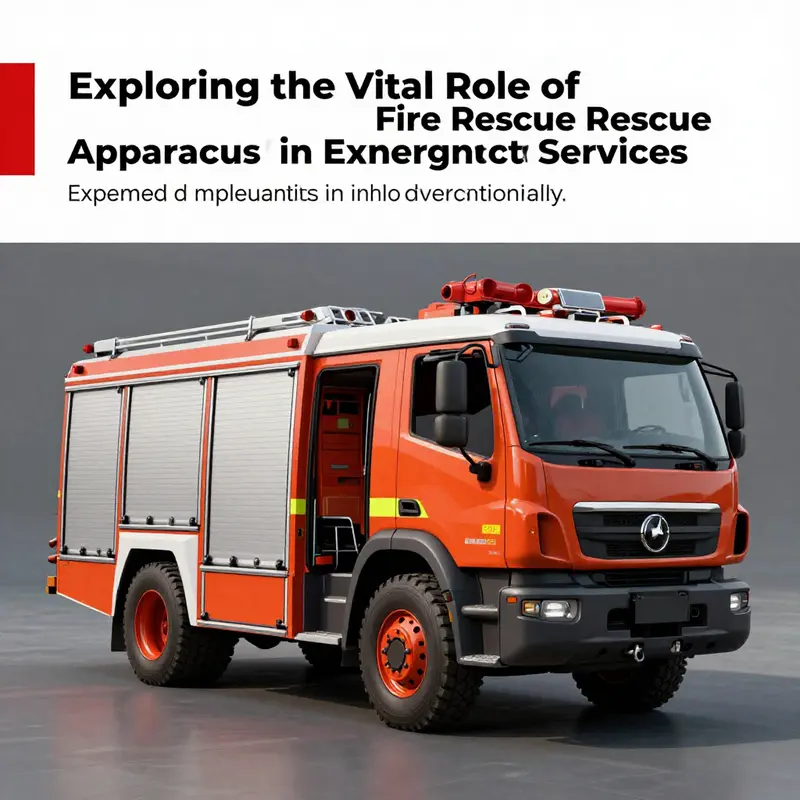
A fire rescue apparatus is no longer a simple, solitary tool rolling toward the blaze. It is becoming a dynamic ecosystem, a networked ensemble that stretches beyond one chassis to span aerial, ground, and digital domains. In urban canyons and remote frontiers alike, the apparatus is now expected to sense, decide, adapt, and endure in ways that extend far past the reach of traditional hoses and pumps. The core idea behind this evolution is straightforward: protect responders, save lives, and stabilize the incident faster by leveraging a continuum of intelligent systems that operate in concert. It is a shift from an object—an engine with a ladder and a set of tools—to a living architecture of capabilities that can be deployed, reconfigured, and scaled to meet the demands of a crisis where every second can alter the outcome. The impetus for this shift comes from familiar pressures and new ones alike: increasingly complex fire scenarios, the threat of structural failure in taller buildings, toxic or unknown atmospheres, and the enduring need to minimize exposure risk for human crews. As cities grow and the types of emergencies expand, the fire rescue apparatus must become a platform for proactive intervention, not merely reactive response. In this sense, what a fire rescue apparatus is becomes inseparable from how it is designed, how it communicates, and how it draws on a broader technology ecosystem to inform decisions in real time. The future, then, lies in a holistic approach that treats the apparatus as a system of systems—an integration of autonomous agents, intelligent sensing, resilient materials, and digital intelligence that aligns with the calm, disciplined tempo of professional firefighting while pushing the boundaries of what can be accomplished under dangerous conditions. The transformation is not about replacing human judgment with machines; it is about enhancing judgment with timely data, coordinated action, and safer pathways to reach, assess, and rescue people who are trapped or endangered. In that sense, the evolving fire rescue apparatus becomes a kind of mobile command and execution hub, capable of shaping the earliest moments of an incident as decisively as it responds in the later stages of suppression and recovery.
The move toward autonomy and distributed operation sits at the center of this transformation. Unmanned aerial systems, once deployed primarily for reconnaissance, are increasingly integrated into a broader mission profile. They operate in coordinated swarms that can divide a scene into zones, relay communications, and deliver targeted extinguishing agents where access is obstructed or hazardous to place a human line. Imagine tethered ducted-fan drones that can reach high-rise floors within minutes, maintaining a stable position while dropping precise quantities of suppressant just where they are needed. The concept is not a single clever trick but a distributed capability that reduces time to rescue, opens blocked escape routes, and buys responders the space to execute more careful, deliberate actions. On the ground, compact robots designed to withstand extreme heat and dense smoke move through rubble, collapsed debris, or stairwells where visibility is almost non-existent. Some of these machines are configured with four-legged gait or hybrid wheel-leg systems that can traverse irregular terrain with greater stability, and others carry small, precisely aimed projectiles or dispensers that can breach a door, create a vent, or deliver suppressants to specific pockets of fire. When these tools operate in tandem—air and ground units controlled by an integrated AI—their effect is a kind of orchestral precision: zones are scanned, hazards are mapped, and the right resource is deployed at the right moment to prevent a firefighter from becoming another variable in a dangerous equation.
A second pillar of the new apparatus reality is intelligent, modular ground platforms that reconfigure themselves to match the task at hand. A modern fire vehicle is not just a truck with a fixed ladder; it is a multi-function platform that can adopt a vertical access strategy for high-rise attacks, a stabilization role for structural assessment, or a rapid-deploy tool for rescue in confined spaces. Think of a step-ladder robot capable of sensing its surroundings, making decisions, and operating autonomously across more than ten discrete tasks—from searching for heat signatures to breaching through barriers and applying suppression in tight corridors. This agility requires a locomotive makeup that blends mobility with payload efficiency, so that the same platform can carry sensors, tools, and flight-ready payloads without compromising stability or speed. The human operator, far from being displaced, becomes a conductor of a small orchestra: directing the tempo, supervising the mission, and stepping in only when creative problem solving or nuanced judgment is necessary. The goal is not to replace risk with automation but to transform risk into a well-managed variable, one that can be anticipated, mitigated, and, when possible, prevented altogether by preemptive action.
Material science also plays a critical role in redefining what the apparatus can endure and accomplish. Firefighting remains a physically demanding endeavor, and the tools that carry a team through a mission must be lighter, stronger, and more durable than their predecessors. Innovations in PPE have already delivered heat resistance well beyond earlier benchmarks, enabling responders to operate longer in hostile environments. Beyond personal gear, bio-based and nano-composite fire-retardant coatings applied to buildings and equipment are extending passive protection, reducing heat transfer and delaying the spread of flame. Lightweight alloys, including titanium variants, contribute to exoskeletal systems that increase strength-to-weight ratios while preserving mobility. These exoskeletons are not mere exoskeletons in the literal sense; they are assistive systems that transfer load, support endurance, and protect joints during long, physically demanding operations. They allow responders to carry heavier tools and perform more precise, controlled movements without sacrificing stamina. In practice, the effect is a cascade: better protective clothing supports more aggressive intervention, which in turn makes advanced robotics more effective, and the whole chain expands the envelope of what can be achieved without compromising safety.
To coordinate all these moving parts, the digital backbone must be equally robust and sophisticated. Digital twin technology is moving from a planning tool to an on-scene decision support system. By integrating Building Information Modeling, geographic information systems, real-time sensor feeds, and precise personnel tracking into a single, interactive 3D model of the incident, commanders gain a shared situational awareness that rivals the best media playbacks but is grounded in reality. The potential is more than pretty visuals; it is predictive power. When AI analyzes historical data and live inputs, it can forecast fire behavior, structural integrity changes, and potential collapse points with high confidence. In practical terms, this translates into smarter allocation of resources, safer entry plans, and earlier interventions that can prevent escalation. Across agencies, standardization of these digital systems would translate into better interoperability and more rapid mutual aid, so that a local incident can be managed with the same coherence as a regional operation. The shift toward digital twins is complemented by a broader embrace of sustainable power and green technology. Hydrogen-powered propulsion, solar charging for drones, and energy storage solutions are being considered as a means to extend mission endurance while reducing environmental impact. Even the smallest devices—such as low-maintenance, long-life smoke detectors that can operate in remote locations—play a role in this green transition by reducing the need for frequent battery changes and servicing.
If the fire rescue apparatus is moving toward a distributed, intelligent, and sustainable future, what does that mean for the people who rely on it every day? It means the profession must evolve in step with technology. Training, certification, and ongoing education become even more critical as new skills—system integration, data interpretation, autonomous operation, and maintenance of advanced materials—enter the spectrum of routine duties. The procurement and lifecycle management of such a system must reflect a commitment to reliability, resilience, and ease of repair in tough environments. Maintenance becomes more than keeping a machine functional; it becomes ensuring that the entire network remains synchronized, that sensors stay calibrated, that software updates are tested against real-world scenarios, and that data privacy and cybersecurity considerations are treated as essential components of mission readiness. In this sense, the future apparatus is not a static asset but a evolving alliance among humans and machines, designed to be upgraded as new capabilities emerge and as the demands of incidents change.
This integrated vision naturally invites reflection on the professional path that supports it. The role of formal credentials and ongoing professional development becomes more pronounced as the apparatus grows more sophisticated. The path to mastery involves understanding not only fire dynamics and rescue techniques but also how to read a digital twin, how to coordinate a drone ground team, and how to maintain the health of a modular system that may adapt to different urban landscapes or industrial settings. The idea is to cultivate a workforce that can navigate both the tactical realities of a blaze and the strategic implications of a networked, data-driven response. In other words, the future fire rescue apparatus is as much about people as it is about machines. A smart apparatus depends on smart operators who can interpret data, make informed decisions under stress, and adapt to evolving mission profiles with both confidence and humility. Within this context, a single internal link to resources that help guardrails for professional development can be a valuable companion. For instance, readers may explore the broader conversation about fire safety certificates and how they support a career path in this rapidly changing field. the vital role of fire safety certificates in your career journey.
As these threads come together, the overarching narrative becomes clear: a fire rescue apparatus is not merely the sum of its parts, but the planned, tested, and trusted orchestration of tools and minds. It embodies a shift from reactive to proactive response, from solitary capability to networked collaboration, and from heavy dependence on human stamina to a balanced convergence of automated precision and human judgment. It is a system designed to anticipate, to adapt, and to endure long enough to secure a path to safety for all involved. The chapters of this story are not written in the design room alone, but in the field, where drones map seams in a building while robots secure stairs and responders navigate smoke with confidence. It is a vision that respects the complexity of real-world incidents while offering a blueprint for making decisions faster, safer, and more effectively than ever before. The promise is not a distant dream but a practical trajectory—one that agencies can pursue with thoughtful investment, careful planning, and a commitment to integrating new capabilities without sacrificing the foundational strengths that define the firefighting profession. The future of fire rescue apparatus design and implementation, in short, is a story of convergence and collaboration, where autonomy, intelligence, adaptability, and sustainability converge to redefine what a fire rescue apparatus is and what it can achieve when people and machines work together under pressure.
External resource: https://www.xinhuanet.com/energy/20260131/c_1128763445.htm
Final thoughts
Fire rescue apparatuses represent a critical investment in public safety and emergency preparedness. Their components, guided by modern technology and thoughtful design, ensure the safety and effectiveness of firefighting operations. As we look to the future, continued advancements in technology and sustainable practices will only enhance these vital resources. Organizations and communities looking to improve their emergency response capabilities will find value in understanding and integrating the innovations within these emergency response vehicles.