
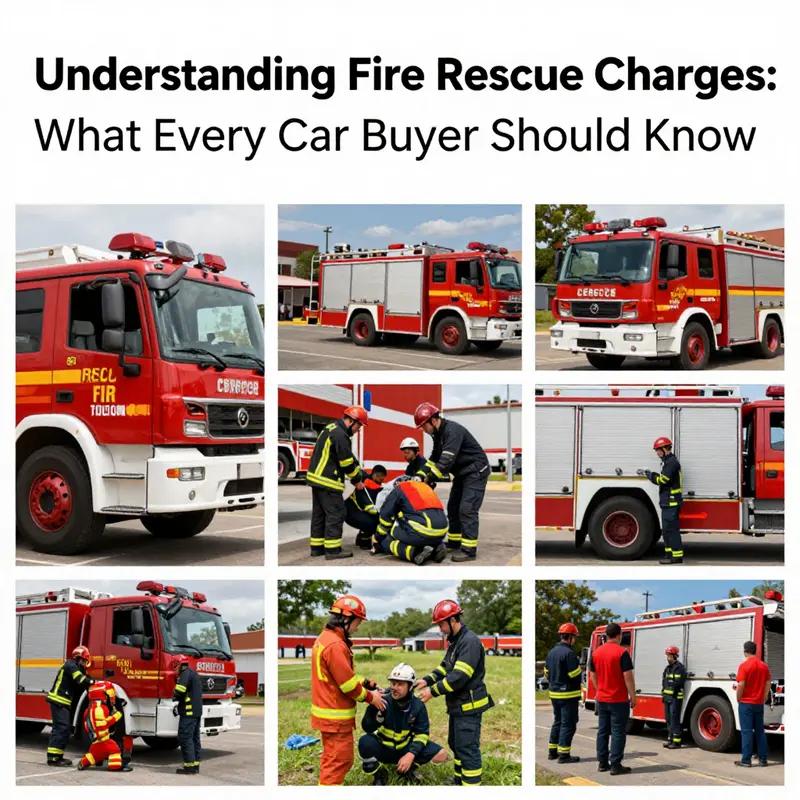
Fire rescue services are critical for public safety, yet the question of whether they charge for their services can be complex, especially for individuals and businesses in the automotive sector. As auto dealerships, individual car buyers, and fleet buyers navigate the intricacies of potential charges, it’s crucial to understand how fire rescue operates—whether they charge for emergency responses, what non-emergency fees may apply, and how insurance factors into these costs. This article walks through the essential aspects of fire rescue charges, providing insights that will empower readers to make informed decisions regarding emergency service provisions and financial responsibilities.
When Help Is Free: How UK Fire and Rescue Funding Shapes Charges and Exceptions
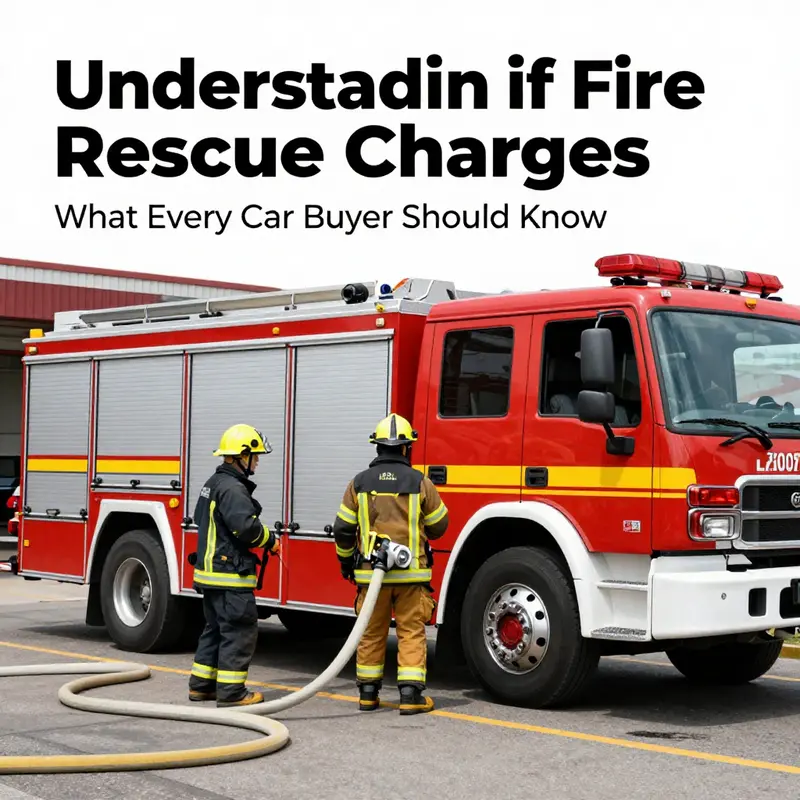
When help is free is more than a slogan in the UK; it is a guiding principle that shapes how fire and rescue services respond to emergencies. Firefighters and rescue crews are expected to attend genuine emergencies without hesitation, and members of the public should never delay calling for life-saving help because of cost concerns. This chapter explains how that principle works in practice, why it exists, how the services are funded, and the limited circumstances when costs can fall on individuals or organisations.
At the heart of the system is public funding. Fire and rescue services receive the bulk of their operating budgets through local government funding and council tax. Those allocations cover staff salaries, training, appliances, equipment, station upkeep, and routine response activity. Central grants and other funding streams may supplement local budgets, but the operational expectation is the same across regions: emergency attendance is provided as an essential public safety function. Because the structure rests on collective funding, the immediate act of sending crews to a burning building, a medical emergency, or a road crash is not itemised as a bill to the person in distress.
The legal and practical arrangements reflect public policy priorities. Emergency calls must be answered promptly whether they come from a smartphone or a public payphone. Payphones are required to permit free access to emergency numbers, ensuring no technical or financial barrier delays contact. That access underscores an important point: the policy exists so a person can seek help instantly, regardless of their means. Removing a direct charge for emergency attendance reduces the risk that a life could be lost while someone hesitates because of cost uncertainty.
That clarity about free emergency response does not mean there are no costs connected to emergencies. When an incident results in property damage, the repairs and rebuilding costs are usually matters for the property owner’s insurer. Individuals who have insurance will typically work with their provider to fund repairs and cover losses. If a property owner lacks insurance, they may face direct costs for repairs and rebuilding. Fire and rescue services do not convert emergency attendance into a repair bill, but the financial consequences of the event itself—clean-up, rebuilding, temporary accommodation—can be significant and rest with the owner or their insurer.
There are also focused exceptions to the “no charge” approach, although they are narrow. Services may pursue costs when an incident is not a genuine emergency or when the response resulted from deliberate misuse. False alarms that arise from negligence or reckless behaviour can lead to a financial penalty. For example, repeatedly ignoring the need to maintain a commercial alarm system, or deliberately raising a false alarm, can trigger charges or enforcement action. The aim is not revenue generation, but accountability and deterrence. Charging in such cases is typically a last resort after warnings and education have failed.
Beyond deliberate misuse, another context where charges can surface is in the provision of non-emergency or specialist assistance. Fire and rescue crews sometimes provide planned, non-urgent support—such as standby duties at large public events, fire safety advisory visits for businesses, or specialist training and assistance. Those services often fall outside the remit of emergency attendance and can be subject to cost recovery agreements. Event organisers commonly meet the cost of dedicated safety cover and advice required for large gatherings. Such arrangements help ensure that the normal emergency response capacity remains focused on unplanned incidents.
Specialist equipment and contractor involvement can create another layer of complexity. A standard emergency attendance uses routine equipment and crew time covered by the service budget. But if an incident requires costly, non-standard resources—major specialist contractors, extended hazardous-materials containment, or long-term salvage operations—the expenses for third-party contractors may ultimately be recovered from the responsible party where appropriate. When an incident involves criminal activity, insurers or the courts may become involved in allocating financial responsibility.
Where liability is clear, civil recovery is possible. If a fire was caused by deliberate or grossly negligent acts by a named individual or business, the fire and rescue authority may be able to seek recovery through civil proceedings. That pathway is separate from day-to-day charging policy. It addresses responsibility for avoidable losses rather than routine service provision. In practice, local authorities and fire services balance the legal avenues for recovery with the administrative cost and public perception of pursuing individual claims.
Insurance acts as the practical bridge for most households and many businesses. A home or commercial insurance policy normally covers fire damage and associated costs, so the insured party does not receive a bill from the fire service itself. Insurance also shapes expectations about repair, relocation, and rebuilding. For uninsured property owners, the financial fallout can be acute. In such situations, seeking advice from local authorities, charities, or support organisations can help people access temporary housing or financial aid while they recover.
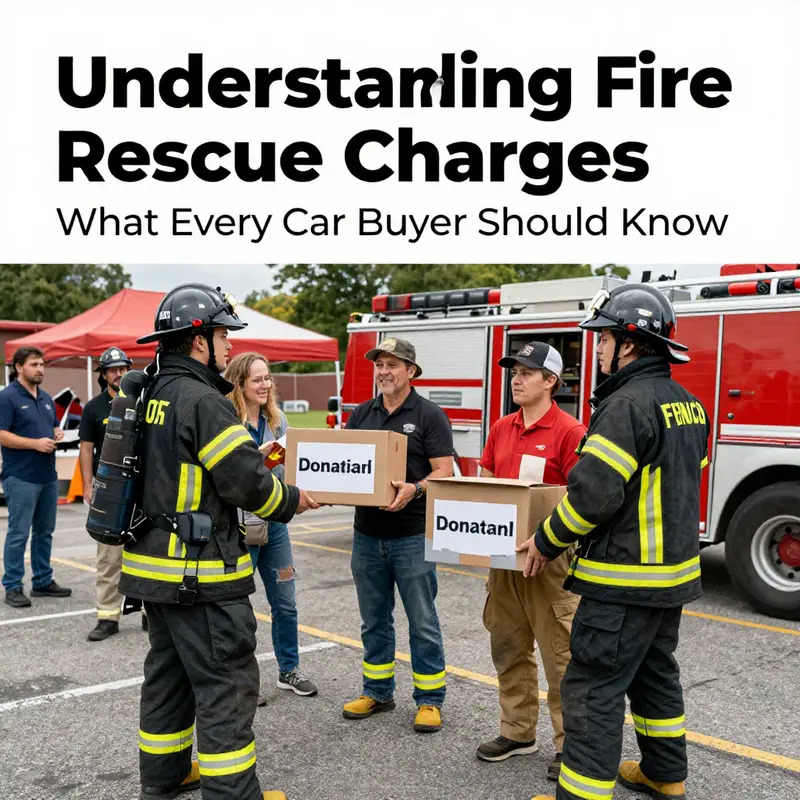
It is also worth noting the role of community contributions and voluntary income streams. Some fire and rescue services work with community groups and accept donations that fund non-essential activities, education programmes, and community resilience projects. These voluntary funds never replace the statutory funding model for emergency response. Instead, they supplement outreach and prevention work, improving long-term safety without shifting the cost of emergency attendance onto individuals in crisis.
Public awareness and prevention remain core to keeping overall costs down. Fire safety campaigns, building regulations, and targeted inspections reduce the number of incidents requiring emergency attendance. When fewer preventable fires occur, fewer costly recoveries and repairs are needed. Prevention creates a virtuous cycle: investment in public education and regulation reduces the number and severity of emergencies, which supports the sustainability of the collective funding model.
Finally, how should an individual approach the practical question of costs after an incident? First, assume that the emergency attendance itself will not produce a bill. Seek immediate medical or rescue help without hesitation. After the incident, contact your insurer and local authority to understand next steps for repairs or temporary accommodation. If you receive correspondence suggesting a charge for response, clarify whether the incident was classified as an emergency, a false alarm, or a planned non-emergency service. Ask your local fire and rescue service for their policy on charges and for written justification if any costs are proposed.
If your circumstances create a risk of being asked to pay, local services usually provide advice about hardship support and referrals. Councils and charities often have mechanisms to assist people recovering from a major incident. Where deliberate misuse or criminal behaviour is involved, expect an investigation and possible legal follow-up. Otherwise, the prevailing outcome remains consistent: emergency attendance in the UK is provided without direct charge to those needing help, and the community collectively funds that life-saving service.
For more detail on UK policy and guidance from senior fire officers, consult the National Fire Chiefs Council website for official materials and local contact information: https://www.nfccc.org.uk. If you’d like broader perspectives and practical resources about fire safety and training, see the Fire n Rescue blog for articles and guidance: Fire n Rescue blog.
Beyond the Alarm: Understanding Non-Emergency Charges in Fire Rescue and Their Community Impacts

Understanding non-emergency charges in fire-rescue services involves recognizing the line between urgent life-saving actions and routine, cost-recovery activities. In the United States, emergency responses are typically funded through local taxes and municipal budgets, ensuring free-at-point-of-service care for life-threatening needs. Yet in many communities, non-emergency services such as technical rescues, access-related calls, or inspections may incur fees. These charges aim to cover the costs of readiness—personnel, equipment, training—without compromising the ability to respond to future crises. The policy question centers on fairness, transparency, and affordability, and many departments publish fee schedules or offer waivers and hardship programs.
Policy patterns vary: some places bill non-emergency services to the patient or their insurer; others bundle non-emergency costs into general taxes or insurance. Insurance can cover medical treatment and some associated services, but non-emergency charges may be billed directly to individuals or their insurers depending on jurisdiction and policy. Public-facing documents and demand for information help residents anticipate possible charges and seek relief if needed.
Public discussion also touches prevention and risk reduction: better home safety and proactive maintenance can reduce the likelihood of non-emergency calls, preserving resources for true emergencies. Data from NFPA and other bodies illuminate funding patterns and help policymakers design systems that balance universal access to emergency care with prudent cost-recovery for non-emergency services.
Residents can engage by reviewing fee schedules, asking about waivers, and advocating for transparent governance. Fire departments may host community information sessions and publish FAQs to clarify when a service is considered emergency vs non-emergency and what charges may apply. In the end, the goal is a safe, resilient community where core public safety remains universally accessible, while non-emergency costs are managed in a fair, affordable way.
National data, including NFPA findings on fire-service funding, provide context for local decisions and can help residents understand how their communities fund readiness and prevention. For further context, consult NFPA’s Fire Service Funding resources and jurisdiction-specific fee schedules.
After the Alarm: Navigating Insurance Coverage and Billing in Fire Rescue

When the siren slices through the street and flames lick at a rooftop, the immediate perception of risk is clear: lives and property are on the line, and the public safety system responds with practiced urgency. Yet behind the crackle of hoses and the clang of ladders lies a quieter, less visible calculus about how fire rescue services are funded, billed, and reimbursed. The question does not admit a single yes or no. In the United States, the backbone of emergency response is funded through local taxes and municipal budgets, a framework designed to ensure rapid response regardless of a caller’s ability to pay. Still, the actual economics of a run can be layered with exceptions, billing practices, and policy choices that shift the burden in subtle ways. To understand why a department might bill for certain services—and why the same department may answer a basic emergency at no out-of-pocket cost to residents—requires tracing the threads of public funding, insurance structure, and the kinds of services that fall outside core emergency response.
In the field, the most visible principle remains intact: a primary emergency response—the first fire attack, the medical triage, the life-saving expedition—belongs to the realm of essential public safety. This is why many departments in many communities do not bill residents for the initial response. The logic is simple and principled: emergencies demand immediate mobilization, time is of the essence, and the public should not face financial barriers at a moment when the state has a mandate to save lives. This baseline is consistent with the public service ethos that underpins municipal firefighting and rescue operations. The more intricate questions emerge when the incident expands beyond the immediate firefight into activities that are not part of a standard response, or when costs accrue in ways that insurance or local budgets do not automatically cover. In these cases, the department’s billing posture can diverge from the broad rule of free emergency response.
Non-emergency services are a common arena where charges can arise. Vehicle extrication after crashes, especially in scenarios where occupants are not trapped or where the situation is resolved quickly, can be billed as non-emergency or special rescue. Likewise, technical rescues—confined-space retrievals, rope systems, or delicate operations that require a high level of equipment and expertise—often carry a different pricing structure than a straightforward fire attack. The logic is not arbitrary; it rests on the difference between a public-safety imperative and the allocation of specialized time, personnel, and gear that extends beyond what a standard response anticipates. In practice, many departments set rates that reflect the labor hours expended, the equipment deployed, and the opportunity costs of diverting teams from other critical missions. The possibility of a bill in these situations underscores why residents sometimes encounter a financial aftertaste even when the initial emergency has been resolved.
Specialized equipment use also factors into the billing equation. Aerial ladders, heavy rescue tools, atmospheric monitoring gear, and other advanced apparatus can be necessary for certain incidents. If such equipment use is required and the services are not fully absorbed by insurance or by the department’s general budget, a fee may be charged. The decision to bill for specialized resources often involves a blend of policy, insurance guidelines, and local governance, creating a mosaic of practices from one jurisdiction to the next. People frequently ask whether their homeowner’s policy or automobile coverage will absorb these charges, and the answer depends on both the incident’s nature and the policy language. The complexity of these arrangements is why transparency from local departments and clear communication from insurers matter so much in practice.
Insurance and billing practices intertwine in a way that shapes the actual out-of-pocket experience for residents. Even though the primary emergency response is typically funded publicly, charges may flow through the system in the form of insurance reimbursements or direct billing to third parties. In many cases, fire departments render medical treatment or property-related services that are billable to health insurers or property insurers. When this happens, the homeowner’s or business’s policy may come into play, and the ultimate cost to the individual may be largely mitigated by the deductible, limits, and terms of coverage. The common arc is this: an emergency response is provided, a medical treatment or specialized service is documented, a claim is filed with the relevant insurer, and payment is routed through a chain that may leave the resident with little or no out-of-pocket exposure, provided coverage is in place and appropriate claim processes are followed. Yet the system is not flawless. Insurers can dispute charges or negotiate what is payable, and there are scenarios where an individual without adequate coverage could face a bill. In rare and difficult circumstances—such as gaps in insurance, disputes over the nature of the service, or incidents that trigger non-covered charges—residents may receive statements they cannot easily ignore. This is where the concept of financial assistance programs and hardship policies becomes not just a courtesy but a necessary safeguard. Local governments and fire departments often maintain programs designed to prevent a firefighting bill from becoming a financial catastrophe, recognizing that public safety is more than a budget line item; it is a social contract.
Policy variability across jurisdictions adds another layer of texture to the discussion. Some departments operate with budgets that absorb most costs, presenting a clean, no-charge front for emergency response. Others maintain explicit billing frameworks for non-emergency services or for incidents driven by negligence. The line drawn between emergency, non-emergency, and negligence-based charges is not merely bureaucratic; it reflects a community’s values and its fiscal strategy. It also places a premium on residents understanding their own coverage. A homeowner who has reviewed their policy, confirmed the presence of fire coverage within a standard homeowners policy, and ensured that their medical and property damage claims align with what is typically reimbursable will find fewer unpleasant surprises. The alternative—facing a bill after a crisis—taps into the psychology of risk, where fear of a financial burden compounds the trauma of the incident itself. The aim, then, is clarity: to demystify billing practices before a crisis, not to shroud them in ambiguity when the sirens wail.
Within this landscape, fire insurance emerges as a central pillar of financial resilience. Fire insurance, whether embedded in standard homeowners policies or offered as standalone products, provides a shield against the economic consequences of fire damage. The policy structure, however, matters as much as the existence of coverage. Replacement-cost basis policies promise to restore a dwelling and its contents to new equivalents, often with fewer deductions for depreciation. Actual cash value policies, by contrast, factor in wear and tear and age, reducing the paid amount accordingly. For a resident facing a bill related to fire or fire-related damage, knowing which valuation approach applies can be decisive. Regular policy reviews are not a luxury but a practical habit. Homeowners must align their coverage with the evolving value of their home, the size and quality of their possessions, and the risk profile of their neighborhood. As fire risk factors shift—with aging electrical systems, more frequent extreme weather events, and evolving building codes—the gap between perceived protection and actual protection widens if policy review is neglected. It is not only about whether a policy exists, but whether it is calibrated to the current asset base and risk exposure.
The question of how a billing practice aligns with insurance commitments becomes even more nuanced when one considers the timing of charges. In many communities, the initial emergency response carries no immediate out-of-pocket obligation for the resident. Any subsequent charges—whether for an extrication, a non-emergency rescue, or the use of specialized equipment—will depend on the policy coverage and the department’s billing rules. This nuance underscores why residents should treat a fire incident as not just a crisis event but a moment that tests both their insurance literacy and their financial preparation. A household that keeps up-to-date insurance information, understands the limits and deductibles, and maintains documentation from the incident stands a better chance of a smooth reimbursement process. Conversely, misunderstanding the terms or delaying a claim can translate into delayed relief or unexpected bills. The human consequences of these financial mechanics are real; they affect how families recover and how communities sustain resilience after a fire.
To put the pieces together, imagine a typical scenario in which a fire department responds to a blaze and a medical team administers care. The emergency response itself may be covered by municipal funding. If the patient needs hospital care, the insurer takes the lead, with the hospital and EMS agencies coordinating reimbursement. If extrication or a non-emergency technical rescue is performed, the department may bill for time, personnel, and equipment, with the expectation that the insurer or the patient’s policy will cover the cost where applicable. In jurisdictions with transparent pricing and clear policy language, the process can proceed with minimal friction. In places where billing is opaque or where residents lack adequate coverage, confusion and anxiety can escalate. A well-informed approach, anchored in proactive policy review and open lines of communication with the fire department and insurer, can transform a potential stress point into a manageable process.
For readers seeking practical guidance, the imperative is to translate the abstract into actionable steps. Begin with a careful review of your homeowners or renters policy, ensuring that fire-related incidents and medical treatments are adequately covered and that you understand the basis of any reimbursement. Check whether a replacement-cost or actual cash value approach applies to your belongings, and verify if riders or endorsements are necessary to capture higher-value items. Next, talk with your local fire department or city government about their billing practices. Even if the emergency response itself remains free, ask for a written explanation of potential charges for non-emergency services and the criteria used to determine when fees apply. If charges do arise, consult your insurer promptly to confirm coverage and file claims within the required timelines. Keep copies of incident reports, invoices, and correspondence so that the claim pathway remains traceable. In parallel, explore any hardship programs offered by the department or the city. These programs are designed to prevent an accident from becoming a fiscal crisis and reflect a policy choice that public safety is a shared responsibility.
As this chapter moves toward a close, the thread that remains central is balance—between universal public safety and the financial mechanisms that sustain it. Insurance coverage provides a crucial safety net that complements public funding, but it does not absolve residents of the need to understand how billing works and what is reliably covered. The interplay between policy design, billing practices, and consumer awareness shapes the lived reality of households in crisis. The goal of that understanding is not merely to avoid bills but to empower households to recover with dignity, knowing that the system is designed to cushion the worst outcomes while maintaining an accessible standard of care for all. For further reading on how fire insurance operates and how reimbursements flow, see the external resource: https://www.insurance.com/fire-insurance/what-it-covers/.
Rallying for Safety: Community Support Shapes Fire Rescue Financing
The question of whether fire rescue incurs a charge touches a core debate about how societies organize protection in moments of crisis. In many places, the emergency response itself is funded as a public safety function and treated as essential infrastructure. It is typically provided because a community must be protected regardless of wealth or insurance status. Yet the finances depend on budgets, grants, insurance workflows, and donor programs. Non emergency work or specialized resources can carry charges, with the payer often being the patient, the insurer, or a government program, depending on policy frameworks.
Outside the United States, financing patterns vary and can illuminate different approaches. Civic participation and donor networks can supplement public funding, helping communities improve equipment, training, and preparedness. Examples show neighbors organizing fundraisers or donations that bolster resilience while preserving universal access to core emergency response.
The takeaway is that emergency response remains free at the point of service in most places, while non emergency or specialized services may involve costs. The most resilient models blend predictable public funding with voluntary contributions to extend prevention programs and rapid-response capacity, without compromising universal access.
Final thoughts
The charging practices of fire rescue services reveal a landscape designed primarily for public safety, ensuring that emergency responses remain accessible to all. Understanding the distinctions between emergency and non-emergency charges—along with the nuances of insurance billing—is essential for individuals and automotive businesses alike. As communities work together to sustain fire rescue capabilities, knowing how to navigate these financial aspects empowers all stakeholders to make informed choices about their vehicle safety and emergency readiness.