Rescue ladder fire trucks represent a critical asset in urban firefighting, capable of reaching impressive heights to mitigate fire hazards effectively. These specialized vehicles are essential for reaching upper levels of buildings and ensuring the safety of both firefighters and civilians. Understanding the various capabilities of these fire trucks, from common models to advanced innovations, informs urban planning and emergency response strategies. This article meticulously examines the operational heights of rescue ladder fire trucks, detailing their specifications, advancements, and implications for firefighting efficacy in urban environments.
Climbing the Skyline: The Real Reach of Rescue Ladder Fire Trucks and What It Means for High-Rise Firefighting
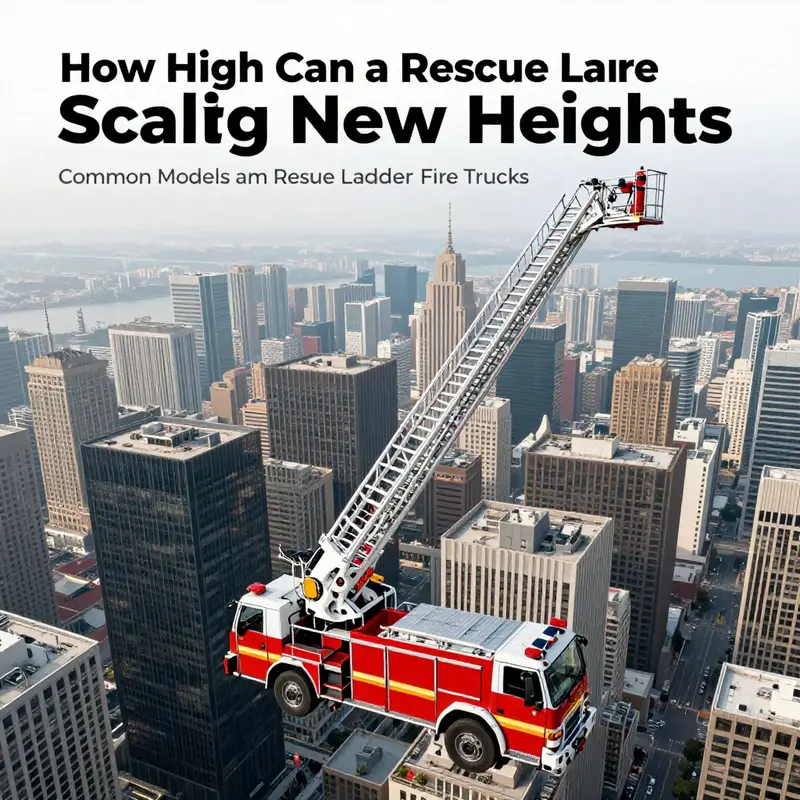
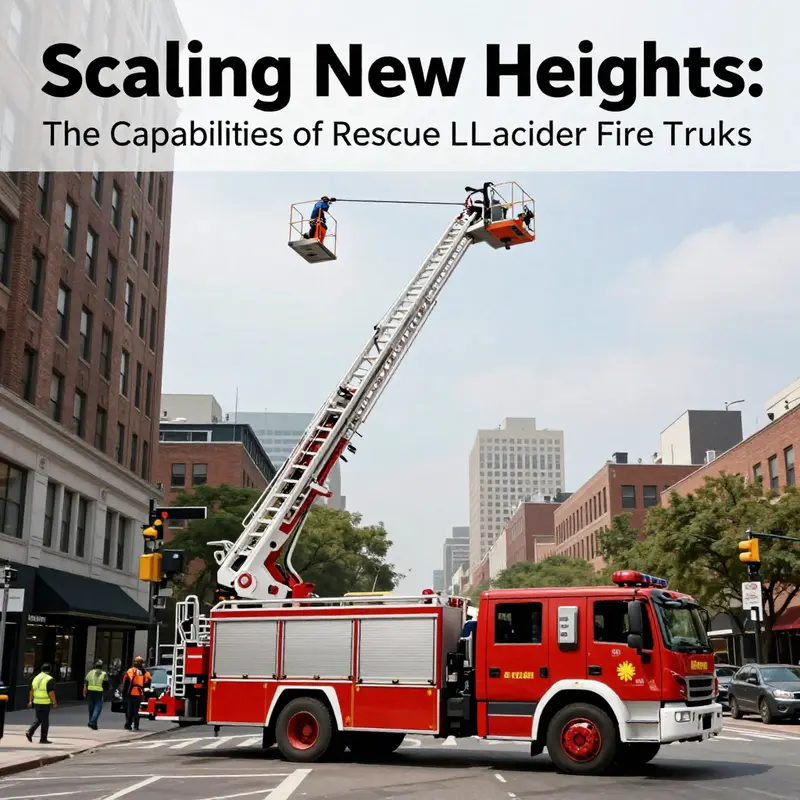
When steel meets smoke, the height a rescue ladder fire truck can reach becomes more than a number. It shapes how crews approach tall fires, how building codes influence equipment, and how districts plan for emergency response in dense skylines. The practical question is not simply how high a ladder can extend, but how high a platform can operate with stability, accuracy, and safety. This distinction matters because the maximum extension of a ladder is only part of the story. The working height—the distance at which a firefighter can confidently perform tasks—depends on a web of factors that interact with the geometry of the truck, the strength of the ground, the weight of the water delivery, and the dynamics of wind and weather. In turn, these realities guide decisions from municipal budgeting to daily crew rotations and training programs. Across the spectrum, rescue ladder configurations fall into a few broad categories, each with its own typical ceiling and operational sweet spot. Common platform ladder trucks, for instance, are widely used in many cities to tackle high-rise rescues. Their maximum working heights generally span from the low two dozen meters up into the high sevenies. This range translates to roughly six to twenty-six stories, assuming a standard floor height. Within that bracket, a 55-meter platform truck is commonly cited as capable of reaching around seventeen stories, depending on factors like boom geometry and stabilizing conditions. The numbers are useful, but they tell only part of the story. A city that experiences frequent mid- to high-rise incidents may value a ladder with a lower nominal height but with superior reach in practice, steadiness, and speed. In contrast, specialized operations may push toward higher ceilings, where the ladder assembly must remain deployable within the constraints of road access, turning radius, and load limits. These considerations lead specialists to categorize equipment along a continuum—from more versatile, mid-range platforms to high-capacity systems designed for extraordinary heights. The most common commentary among operators is a reminder that height is only as useful as the corresponding ability to control, fix, and deliver water or rescues at the target level. Hence, the operational concept of “working height” becomes central. It is the height at which firefighters can effectively deploy tools, perform patient care, and manage hose lines or other equipment. It accounts for the ladder’s reach and the crew’s ability to maneuver around the arm, the truck’s stabilizers, and the ground beneath. Modern departments often weigh these considerations against the cost and maintenance implications of highly specialized gear, and many opt for adaptable fleets that can cover a wide range of scenarios rather than chase the very top end of the scale. Beyond common platforms, advanced platform ladder trucks lift the ceiling higher still, offering capabilities that are increasingly relevant for dense urban cores where high-rise architecture dominates. Some modern high-capacity configurations can reach well beyond the standard range, with maximum working heights that push into the hundreds of meters. Such figures reflect purposes that extend past the traditional fireground into search-and-rescue in exceptionally tall structures or preemptive rescue planning for events with extreme scenarios. In this upper tier, the ladder assemblies become more than ladders; they resemble mobile cranes with multi-section booms, telescoping and folding mechanisms, and counterbalancing systems designed to preserve stability while maintaining a workable reach. The numerical ceiling in this class has crossed a remarkable threshold in the industry. A few extreme platforms are documented as achieving or surpassing the hundred-meter mark, which translates to roughly thirty stories or more under ideal conditions. It is easy to be impressed by the raw height, yet the practical implications remain nuanced. The tallest configurations introduce considerations about wind sensitivity, dynamic loads, and the weight of the water they may carry for firefighting operations. They also demand expansive counterweights and robust chassis, along with trained operators who understand the interplay of hydraulics, geometry, and weather. Media coverage and industry reports have highlighted extraordinary examples of reach that capture the imagination. One class of note is the ultra-high-reach vehicles, which include platforms around the ninety-meter range and beyond. These machines are designed for very tall structures and specialized missions. Even more striking are the accounts of record-setting arms that extend beyond one hundred meters, supporting complex mechanical systems to stabilize and direct a high-tension hose stream or a rescue crew to a distant window. In some cases, manufacturers describe configurations with six-section telescoping booms combined with three-section folding elements, producing a rare blend of reach and compact transit when retracted. Such designs illustrate how the frontier of rescue ladder technology is less about a single number and more about a continuum of capability that teams can bring to bear on different scenarios. The operational takeaway for fire departments is that ceiling height alone does not determine capability. The maximum extension figure is a headline, but the real value lies in how the apparatus performs under fireground constraints. Wind gusts can tilt the boom and alter the effective reach at height. The weight of water, a necessary factor for many operations, has a direct impact on both reach and stability. Each scenario tests the balance among hydraulics, ballast, tires, stabilizers, and the skill of the crew. These are the forces that decide whether a ladder can lock securely, extend smoothly, and position a firefighter with precision. For departments where budgets must stretch across a broad range of needs, this balance becomes the central decision point. An emphasis on versatility often yields the most practical outcomes: a fleet capable of shallow climbs for quick evacuations and deeper reaches for larger structures, with enough redundancy to cover maintenance downtime or unusual architectural features. In this way, the selection of a platform ladder is less about chasing the highest possible height and more about aligning the vehicle’s capabilities with the city’s risk profile and building stock. For readers seeking broader perspectives on adaptability and fleet design, consider exploring customized firefighting vehicle solutions that emphasize tailoring to diverse terrain and budgets, a topic that speaks to the realities of many departments facing constraints and opportunities in equal measure. Customizable firefighting vehicles tailored for developing countries offers a lens on how fleets can be engineered to maximize utility without sacrificing safety or reliability. In contexts with limited resources or special local needs, the emphasis often shifts toward modular capabilities, streamlined maintenance, and simplified training—principles that resonate across a wide spectrum of high-rise scenarios. The practical import of all these considerations comes down to planning and preparedness. Communities with dense urban cores must ensure that pump-and-extend capabilities align with building layouts, rooftop access, and the possibility of simultaneous operations on multiple fronts. This means not only hiring skilled operators but also investing in regular training that keeps teams fluent in the choreography of deployment, stabilization, and rescue. It means conducting regular scenario drills that stress wind conditions, pressure management, and rapid transfer of patients from elevated locations. It also means maintaining a robust maintenance regime so the complex hydraulics, booms, and folding mechanisms stay responsive when every minute counts. The technology will continue to evolve, driven by advances in materials, controls, and analytics. Yet the core principle remains constant: reach must be usable, controllable, and safe within the environmental realities of the city. For those who want to anchor these ideas in reputable benchmarks, a formal codification exists in records that capture the extraordinary ends of the spectrum. The Guinness World Records, for instance, has documented height-related feats tied to firefighting platforms and water application capabilities, underscoring how far the field has pushed the envelope while reminding readers that the practical mission still hinges on reliable performance at operational heights. External reference: https://www.guinnessworldrecords.com
Raising the Ceiling: Advanced Rescue-Ladder Fire Trucks and the Quest for Ultra-High Reach
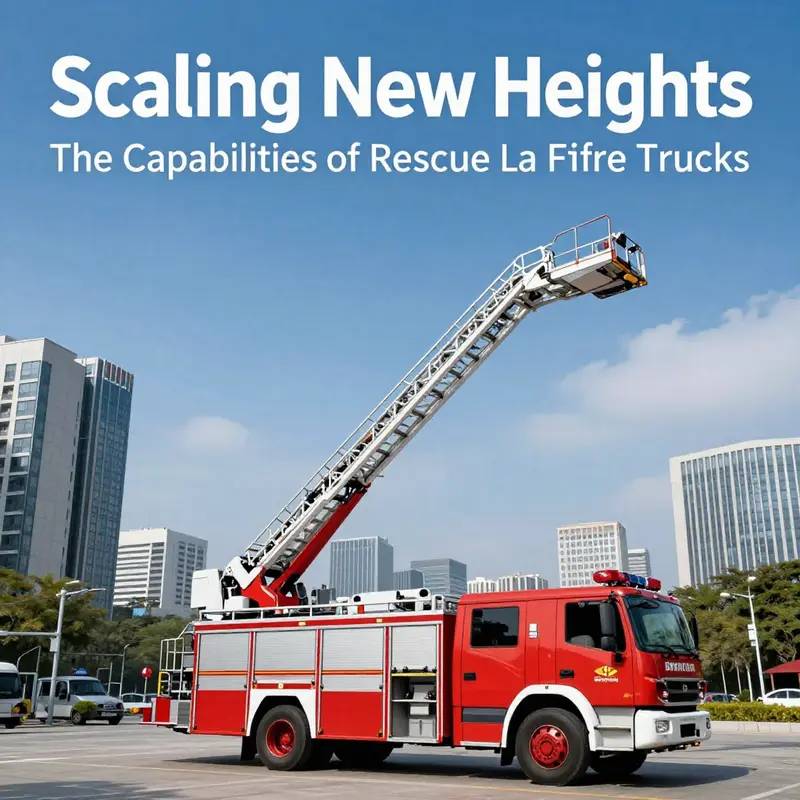
The skyline shapes the way cities breathe, and the firefighting toolkit must rise with it. When people ask how high a rescue ladder fire truck can reach, they are really asking how far current engineering, hydraulics, and safety science can push the limits of vertical rescue and high-level firefighting. The answer is not a single number but a spectrum that reflects purpose, economics, and the evolving demands of modern urbanism. At one end, standard aerial ladders typically offer a working height from roughly 30 meters to 60 meters. That range covers many common high-rise incidents, allowing crews to reach dozens of occupied floors with a combination of vertical reach and aerial advantage. Yet even within that broad band, there is a substantial difference between a ladder that simply extends and a platform that can operate a live crew above the truck’s chassis. The distinction matters because the presence of a powered platform changes both the reach and the way water, rescue teams, and equipment are deployed. The more advanced configurations are designed for rapid access to upper floors, to maneuver around exterior walls, and to support complex rescues where interior stairs and elevators may be compromised or overwhelmed by heat, smoke, and crowd movement.
Beyond the standard range lies the ambition of modern fire services to confront ultra-high-rise structures. In recent years, the upper echelon of rescue equipment has moved toward platforms capable of reaching well beyond the conventional envelope. Some high-end designs promise working heights in the vicinity of 101 meters, a figure that translates to roughly 33 or 34 stories depending on how a building floors its height. That ceiling does not imply every job can be done at that altitude, but it signals a capability that can dramatically alter the calculus of a high-rise incident. In practical terms, 101 meters equates to access to a substantial portion of a tall structure’s exterior, enabling firefighters to perform rescues and apply water or foam streams from an elevated vantage point when interior access is severely restricted. When a community considers the need for such a capability, it is as much about the potential to save lives as it is about the logistics of deploying and operating a vehicle of such scale.
The reach spectrum also includes intermediate ranges that fill a critical gap between the ordinary and the extraordinary. Some platforms offer ranges that begin around 69 meters and extend to about 101 meters. Others may sit in a lower tier, with working heights up to 72 meters or so, which still correspond to roughly 24 to 25 stories. These numbers do not tell the full story, because reach is coupled with stability, wind resistance, and the ability to deploy a crew safely. A platform’s reach is only as useful as its ability to remain steady on its outriggers, to rotate smoothly, and to provide a secure working deck where firefighters can operate, assess conditions, and perform rescues without compromising their own safety. The practical takeaway is clear: the raw number—how high the ladder can go—must be interpreted in light of the conditions on the ground, the structure’s exterior architecture, and the operational plan.
In ordinary urban firefighting, a typical fire department might rely on ladders and platforms that top out near 50 meters. That limit represents a balance between mobility, cost, maintenance, and the ability to reposition quickly between incidents. But the last decade has seen a deliberate push toward higher reach where the exterior of a high-rise becomes an option rather than a barrier. The engineering challenge is substantial. Telescoping sections must extend while maintaining structural integrity under dynamic loads. The platform has to be stabilized against the forces of wind, load shifts, and operator movements. Lifting and rotating a heavy, fully equipped crew high above a street requires careful control systems, redundancy in hydraulics, and meticulous maintenance to prevent failures at critical moments. The human factor remains central: a skilled crew must interpret wind conditions, weight distribution, and the building’s geometry to determine whether an elevated operation is feasible or whether interior egress remains the safer path.
The reality of deployment is mixed. While the potential is there, access to the highest reaches is geographically uneven. A relatively small fleet—dozens at most—serves major urban centers with the capability to confront the rare and dangerous extreme-height scenario. The distribution of these vehicles tends to concentrate in provincial capitals and large metropolitan areas, where the demand for ultra-high-rise rescue, specialized firefighting, and rapid safety interventions justifies the expense and ongoing maintenance. In many cities, the majority of calls arise from mid- or mid-upper-rise structures, which means standard platforms continue to be the workhorse of daily firefighting operations. This landscape creates a dual reality: the power to reach the sky exists, but it is not universally available where and when it might be needed most. Agencies must balance investment in high-reach platforms with the equally vital tasks of fire prevention, interior renovation of stairwells, and the training of crews to handle a full spectrum of incidents.
Technically, the difference between a high-reach platform and a conventional aerial ladder hinges on the configuration and capabilities of the platform. An aerial platform integrates a powered, stabilized platform that can carry firefighters, breathing apparatus, tools, and sometimes water or foam delivery systems. The operator uses both the platform’s articulation and the truck’s base to position the crew with precision. Stability becomes a centerpiece of safety protocols, because extending booms to extreme elevations amplifies the risk of swaying or unintended shifts. Wind speed, gusts, and the building’s own shape can create challenging conditions that demand strict operating procedures, wind limits, and, in some cases, postponement of exterior operations in favor of interior firefighting. The end user must understand when exterior access provides a meaningful advantage and when it introduces unacceptable risk. In many high-visibility extinguishments, the exterior approach can deliver breakthrough advantages—opening lines of sight to windows, easing rescue paths, and allowing crews to address fires at the source from above—while in other moments it remains a supplementary tactic rather than the primary method.
The strategic implications extend beyond the incident itself. When patching together a city’s firefighting posture, planners weigh the benefits of ultra-high reach against the realities of maintenance, training, and ongoing cost. Equipment of this scale requires specialized maintenance regimes, dedicated technicians, and rigorous inspection cycles. The life cycle cost—acquisition, operation, and eventual replacement—often drives decisions about how many units a city or region can sustain, and how those units fit alongside other critical capabilities such as rapid interior access, elevator-assisted rescues, and incident command scalability. In this context, the ascent toward higher reach is not a solitary race; it is a coordinated program that depends on ergonomic platform design, driver-operator training, and a robust emergency response ecosystem that can deploy the right tool at the right height and the right moment.
The urban risk landscape also shapes expectations. As cities continue to grow taller, the share of buildings exceeding 100 meters becomes a growing concern. Figures from global urban assessments show that there are thousands of structures exceeding 100 meters and even more above 200 meters. The gap between this tall-building boom and current firefighting capabilities underscores why ultra-high reach devices command attention in planning discussions, standards development, and national safety programs. The challenge is not merely to chase a higher number but to ensure that every meter of reach is matched by reliability, speed, and the capacity to operate safely in demanding conditions. It is in this synthesis of reach, stability, and crew readiness that the real value of advanced rescue-ladder platforms emerges. They extend the firefighter’s reach while also compounding the responsibility to train, maintain, and operate these systems with the utmost discipline.
For readers seeking a broader perspective on how firefighting equipment integrates with career development and safety culture, see the FireRescue blog. This resource offers context on training pathways, certification considerations, and the evolving landscape of safety practices that accompany ever more capable gear. FireRescue blog
Looking ahead, the calculus of high-rise rescue will continue to blend evolving materials science, control systems, and structural engineering with the lived realities of city environments. The most effective solution is rarely a single gadget but a coordinated suite of capabilities: exterior high-reach access when warranted, interior mobility to navigate stairs and corridors, and a well-practiced team ready to switch tactics as conditions change. Ultra-high reach devices expand the set of viable options during a crisis, yet they also remind us that the ultimate goal remains straightforward—saving lives with speed, precision, and unwavering safety. The ascent of these platforms is a signal of progress, not a replacement for the hard-won competence of firefighters who train, drill, and operate within a system designed to protect communities under pressure. External reference: 101-meter aerial platform specifications.
Reaching the Unthinkable: How Specialized Rescue Ladders Redefine Heights in Modern Firefighting
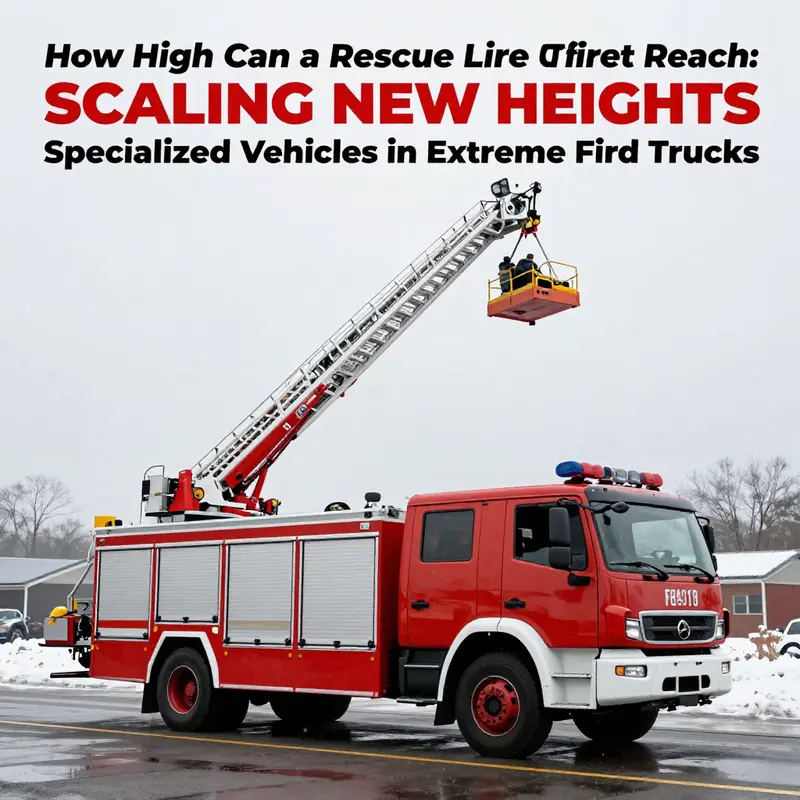
The city’s silhouette tells a story of height and hazard, of glass and concrete that loom beyond ordinary human reach. In the heart of that story lies a quiet but decisive calculation: how high can a rescue ladder fire truck extend to save lives and halt a fire’s advance? The question hinges not just on motor power or hydraulics, but on a careful balance of reach, stability, and room to work safely around a collapsing facade. In this narrative, height is a tool, not a miracle. The working height of standard aerial platforms typically anchors a practical range well below the very top floors of the tallest towers. Fire departments routinely deploy ladders in the 30- to 60-meter bracket, translating to roughly 10 to 20 stories depending on floor height and local construction. This range covers the vast majority of high-rise emergencies within most cities and explains why many departments rely on a fleet of ladders calibrated for urban cores, where street widths, wind, and obstructions shape every deployed arc of the boom. Yet even within this already demanding discipline, the physics of elevation—weight, balance, wind resistance, and the operator’s line of sight—limits what is feasible in the most unforgiving scenes. A ladder is a bridge between ground-level safety and a rescue corridor that can swing above a street obstacle course, but its length must always contend with stability, manpower, and the practicalities of handling a heavy, dynamic platform. In short, reach is never a solitary metric; it is a snapshot of a system calibrated for real-world constraints, where speed, control, and risk management ride alongside height on every deployment.
From there, the topic ascends into the realm of specialized vehicles designed to push beyond the ordinary and address extreme emergencies. In recent years, a class of rescue ladders has emerged that can tower above the typical urban skyline, reaching up to 101 meters in controlled configurations. This is not merely a longer ladder but a different kind of tool, a multi-section, hydraulically powered system designed to extend a platform high over narrow streets, across gusting winds, and onto the upper envelopes of very tall buildings. The idea of a 101-meter reach conjures images of a rescue stage that can serve 20-, 25-, or even 30-story structures when the situation warrants it. It also invites a set of logistical considerations: the platform’s weight, the footprint required for stabilization, and the crew’s ability to operate safely at extreme heights while coordinating with water supply and ventilation needs below. In environments where a building’s form and surrounding streets create a labyrinth of access challenges, such specialized platforms become not mere luxuries but essential capabilities for life safety and rapid incident containment.
To understand what makes these specialized forms possible, it helps to parse the architecture of the arm itself. Large, tall platforms rely on multi-section main booms that telescope outward as they rise. A typical extreme design might feature a five-section main boom, an articulated arm section, and a secondary fly arm, each segment contributing to overall reach and maneuverability. The mathematics of extension is not simply additive; it is a careful choreography. Each joint must absorb the load of the platform, the operators, and any suspended equipment, while remaining responsive to operator input amid unpredictable wind gusts. The maximum working height claims a single figure, but the effective height—how high rescuers can work with comfort and control—depends on the platform’s outreach, its horizontal reach, and the stability envelope established by outriggers and counterweights. In some configurations, the reach can be complemented by outreach as a separate parameter, enabling operators to perch the basket over the edge of a balcony or to stride out over a street canyon to reach a higher corner of a tower. In practice, teams plan for a balance: enough height to contact the target zone, sufficient outreach to avoid structural interference, and a duty cycle that keeps the crew safe while they perform patient care, rescue, or hazard mitigation one lift at a time.
While the 101-meter class marks a high-water mark for contemporary design, the story of reach continues beyond that apex. There are still mid-range behemoths capable of raising a platform roughly 72 meters, designed to address the majority of tall buildings that dot many urban cores. These platforms often merge multiple functions into a single trailer‑mounted system: personnel rescue, rapid material transport, high-pressure water supply, and even foam delivery for specialized firefighting scenarios. The configuration of such platforms emphasizes versatility: the operator can negotiate tight streets, compensate for urban wind patterns, and deliver a steady stream of water or foam while a crew works aloft. In this range, height and reach align with a broad spectrum of cities, ensuring that high-rise emergencies remain actionable even when a city does not routinely maintain the most extreme machines. The practical value of a 72-meter class is clear: it covers a substantial share of tall residential and commercial towers, often with enough freedom to maneuver around façades, setbacks, and parapets that would otherwise impede a lower, bulkier solution.
Yet height, however striking, sits within a larger framework of real-world constraints and evolving urban demands. The engineering marvel that enables a tall ladder also imposes tradeoffs: greater reach typically means heavier apparatus, broader footprint, higher road-grade requirements, and more complex stabilization needs. An urban street with limited space for outriggers, a roadside obstruction, or a narrow alley can transform a seemingly feasible lift into a delicate ballet of balance. Wind is a silent variable at height; a few meters of gusts can translate into sway at the work position, demanding conservative load limits and disciplined crew technique. The consequence is a spectrum of operational realities: standard high-rise work can be accomplished with 30 to 60 meters of reach; exceptional incidents call for a specialized platform capable of sweeping into the 90s or beyond, while always respecting safety margins and the manual dexterity of the crew—and the readiness of ground teams to support water supplies, rescue operations, and rapid evacuation. In this sense, the question “how high is high enough?” becomes an ongoing negotiation among the dynamic forces of the scene, the building’s geometry, and the equipment’s physical limits.
Against this backdrop, the current landscape reveals a pattern of selective deployment. As of recent years, the most capable 101-meter class solutions exist in limited numbers, concentrated in major regional hubs where large populations, complex skylines, and frequent high-rise incidents justify the investment. This distribution underscores a broader trend in emergency response: cities must weigh the benefits of extreme reach against cost, maintenance, and the specialized training required to operate at such heights. The gap between everyday demand and peak capability is not simply a matter of hardware; it is a question of readiness, resilience, and the ability to mobilize specialized equipment when conditions demand it. Even within a country or region, urban density, street geometry, and the presence of tall clusters can dictate whether a 101-meter apparatus becomes a common fixture or a rare asset kept in reserve for extraordinary events. Meanwhile, the majority of high-rise emergencies in most cities can still be managed with platforms in the mid-range, where speed, maneuverability, and steady performance align with the typical architectural and infrastructural fabric. This nuanced spectrum—standard, mid-range, and specialized long-reach platforms—frames the answer to the initial question with a more textured clarity: high reach is real and technically achievable, but it is always bounded by the interplay of physics, geography, and human judgment.
What emerges from this deeper look is a picture of a firefighting ecosystem thoughtfully tuned for height. Training and certification become as important as hydraulic prowess and mechanical design. Operators must understand not just how to extend a boom, but how to stabilize a base under uncertain ground conditions, how to coordinate a multi-member team across a tense, wind-racing platform, and how to manage water supply and rescue tasks while perched hundreds of feet above the pavement. In this sense, access to height is as much about preparation as it is about apparatus. For professionals considering the career path or for communities planning their emergency response capabilities, the message is consistent: height is a powerful instrument, but only when backed by rigorous training, disciplined maintenance, and strategic integration with other fire suppression and rescue tools. For those whose focus lies in building safer skylines, that integration begins with a recognition that specialized high-reach platforms are not a luxury; they are fundamental enablers of life safety in the most severe urban scenarios. As cities continue to grow upward, the conversation about reach will remain central, refined by new materials, smarter stabilization systems, and ever more sophisticated control interfaces that promise greater safety at greater heights. To those stepping into the field, the journey toward mastery of high-rise rescue is a careful ascent—one that respects the limits of gravity, the physics of leverage, and the unwavering human imperative to save lives at the edge of the world above the street. The path is long, but the outcome—a window of chance for those trapped in the upper stories—keeps the pursuit relentlessly important. For readers seeking to deepen their understanding of fire safety and the professional milestones that accompany this demanding work, resources on certification and continuous training offer a practical bridge to the expertise described here. You can explore one such pathway through the fire safety certificates resource, which underscores how formal credentials support the on-the-ground skill needed to operate at extreme heights. fire safety certificates and career journeys.
External resource for further context on the strategic role of long-range platforms in high-rise emergencies can be found here: https://www.sohu.com/a/555627827_121335
Raising the Height Bar: A Global Comparative Analysis of Rescue Ladder Reach and Its Implications for Firefighting Strategy
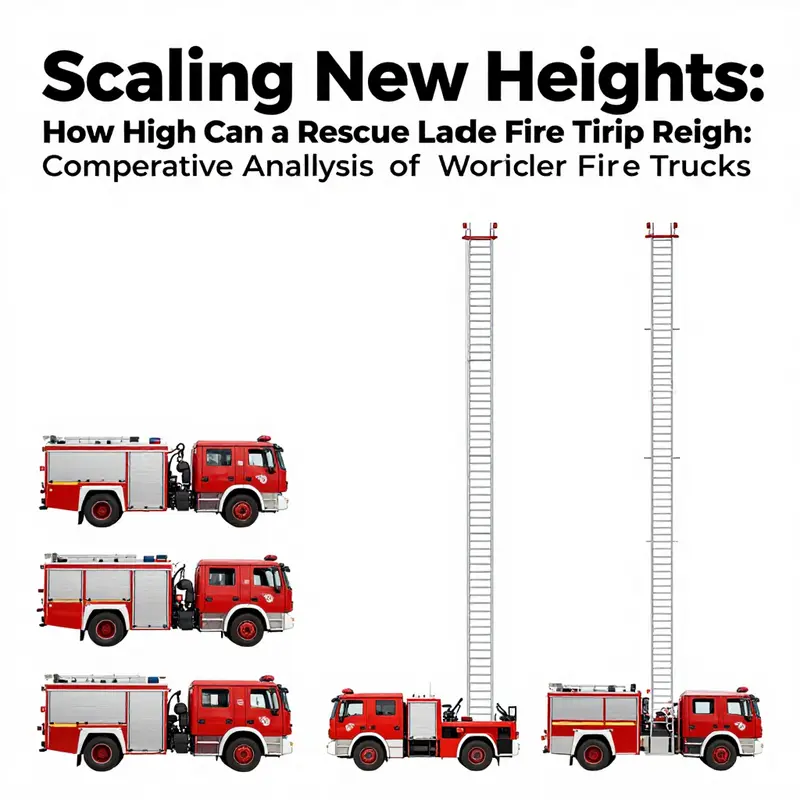
Height is not a vanity metric for rescue ladders; it is a decisive factor that shapes how firefighters reach, assess, and rescue in tall structures. The straight line of a ladder or platform may promise access higher above the ground, but the true measure rests in how that height translates to real-world capability: the speed of deployment, the stability of the apparatus, and the margin for error when winds howl and stairwells narrow. In the best systems, a long, carefully engineered boom is paired with precise hydraulics, robust stabilizers, and a control system that translates human intention into safe, steady motion. When a crew leans toward the top of a tower, every fraction of a degree of wind influence, every shift in weight, and every moment of throttle response can determine whether a rescue becomes a triumph or a hazard. Height, in this sense, becomes a theatre in which physics, training, and strategy converge to save lives.
Across the globe, the range of working heights begins with standard urban fleets and stretches toward the extraordinary. In routine city firefighting, platforms commonly extend to roughly 30 to 60 meters. Those figures align with the practical needs of midrise environments, where stairwells are accessible, access routes are clear, and the geometry of buildings supports efficient maneuvering. Yet to imagine firefighting as a fixed ceiling risks obscuring the dynamic reality of modern urban rescue. The tallest platforms, designed for unique and demanding scenarios, push the envelope far beyond the everyday. In some markets, exceptionally tall systems have reached heights that resemble the upper floors of the tallest city blocks. These are not mere novelties; they are deliberate responses to the threat posed by extremely tall structures, gentrified skylines, and densified urban cores where traditional ladder operations would struggle to reach the needed rescue point.
Among the most striking developments are platforms capable of operating at heights well over 100 meters. Reports and technical tallies indicate a threshold beyond which the act of raising and extending the boom becomes a coordinated exercise in geometry and resilience. An operational height of 113 meters has appeared in the record books for a domestically developed, multifunctional elevated platform system. That figure, while exceptional, highlights a broader truth: the frontier of rescue ladder reach is not a single number but a spectrum defined by design intent, regulatory environments, and the evolving needs of cities with towering silhouettes. At the same time, there are proven high-end platforms that can reach about 101 meters, offering the ability to reach roughly 31 stories with a combination of extended reach and robust stabilization. These heights are not about demonstrating bravado; they reflect a calculated balance between reach, weight, stability, and operational practicality on diverse sites. In many markets, engineers and fire chiefs alike weigh the feasibility of pushing higher against the realities of road access, weight limits, and the long-term maintenance demands of highly complex booms.
To ground these reflections in the real world, consider how a five-axle or similarly configured chassis supports a long, multi-section boom. While the exact configurations vary, the core engineering challenge remains consistent: longer booms demand stronger counterweights, more precise gyroscopic stabilization, and smarter control logic to prevent oscillations that could endanger the crew. A multi-stage main arm, combined with articulated and fly arms, expands the radius of operation while increasing the potential for lateral sway. In practice, this means that attaining greater height often comes with a tighter working radius and a more constrained set of configurations. The operator must choose between a high reach with a smaller grip on nearby obstacles or a broader, steadier reach that is slightly lower but more controllable within the confines of a cluttered urban scene. These trade-offs are not abstract. They shape where a platform can be positioned in relation to a burning facade, how close firefighters can approach a window, and how much time a crew can allocate to a rescue attempt before auxiliary considerations, such as smoke movement and heat flux, change the calculus.
The strategic implications of height ripple into tactical doctrine. A taller platform can open lines of access to floors that would otherwise remain unreachable with standard ladders. It can give crews the option to perform vertical rescues without aggressive, high-risk stair traversals and can create opportunities to deploy life-saving equipment, such as thermal imaging sensors or light rescue apparatus, from a vantage point above the immediate hazard. Yet height alone does not guarantee success. Wind conditions, roof geometry, and the surrounding urban clutter can cap the practical usefulness of even the tallest booms. In higher winds, traction and control systems become critical, and the crew must anticipate air movement that could cause drift or oscillation. Even a small miscalculation can translate into a dangerous swing across the face of a building. That is why training and rehearsals emphasize not only how to command a ladder but how to read the environmental cues that dictate safe operation at height. The safest outcomes emerge when height is integrated with a disciplined, context-aware approach to deployment.
The global landscape of high-reach platforms also highlights a spectrum of design philosophies and market realities. In the high-end tier, platforms with heights approaching or exceeding 100 meters are typically designed for complex urban cores or special response roles where standard ladders would be insufficient. These machines balance reach with advanced stabilization, on-board water delivery options, and sophisticated control interfaces. In many markets, a subset of platforms features integrated capabilities that extend beyond vertical reach, such as the ability to deliver a fire stream from a height with precision, leveraging a spray pattern that can reach upward into difficult wind conditions. The capacity to project water or foam from elevated positions introduces another layer of firefighting strategy, one that can complement direct access to a rescue scenario by cooling the façade and creating safer escape routes for occupants.
At the same time, domestic and regional fleets often reflect different priorities. In some jurisdictions, the focus is on achieving substantial lift heights with a cost-conscious perspective, emphasizing reliable serviceability and widespread support networks. In others, the emphasis is on ultra-high reach as a strategic asset, even when such platforms require more intensive maintenance, specialized training, and a robust logistical footprint to keep them ready for action. The discrepancy between these approaches reveals a central truth: the optimal height for a rescue platform is not a universal constant but a negotiated outcome among need, budget, infrastructure, and operational philosophy. For communities facing tall building growth, the question becomes not merely how high a ladder can go, but how that height integrates with the rest of the firefighting ecosystem—water supply capabilities, incident command, search and rescue workflows, and interagency coordination.
In this light, the journey toward higher reach is also a journey toward more thoughtful procurement and better-informed maintenance planning. When decision-makers assess potential platforms, they weigh several variables beside raw height. They examine stability systems, load limits, service intervals, and the availability of trained technicians within the region. They scrutinize the lifecycle costs, recognizing that a higher-capacity system may demand greater investment in spare parts and specialized tooling. They also consider the broader urban context: road widths, bridge clearances, and the ability of a city’s fleet to transport a platform to incident sites without obstruction. All of these considerations point to a fundamental insight: height expands capability only when it is supported by a holistic, sustainable architecture of training, logistics, and governance. To enterprises exploring adaptable solutions for diverse terrains and budgets, a compelling path forward lies in customizable, regionally tailored firefighting fleets. For a deeper look at how such customization can be designed for developing countries, see this discussion: customized-firetrucks-for-developing-countries-comprehensive-solutions-for-diverse-scenarios-with-high-cost-efficiency-and-reliable-service.
In the end, the ascent toward greater height is not merely about adding stories to a truck. It is about expanding the tactical envelope while preserving safety, reliability, and rapid response. The most effective platforms are those that harmonize reach with maneuverability, stability with control, and ambition with prudent risk management. The global catalog of platforms—ranging from modest-height workhorses to multi-hundred-meter giants—reveals a landscape shaped by urban form, by the logic of emergency response, and by the enduring human imperative to reach those trapped above the smoke, swiftly and securely. This is the essence of the comparative analysis: height is a critical dimension, but its true value emerges only when paired with the systems, training, and service networks that keep every high-reach platform ready for action. External technical reference for further technical depth is available here: https://www.zoomlion.com/en/products/fire-fighting/zoomlion-dg113-multifunctional-elevated-platform-fire-truck/.
Raising the Reach: How Aerial Ladders Shape Urban Firefighting Tactics
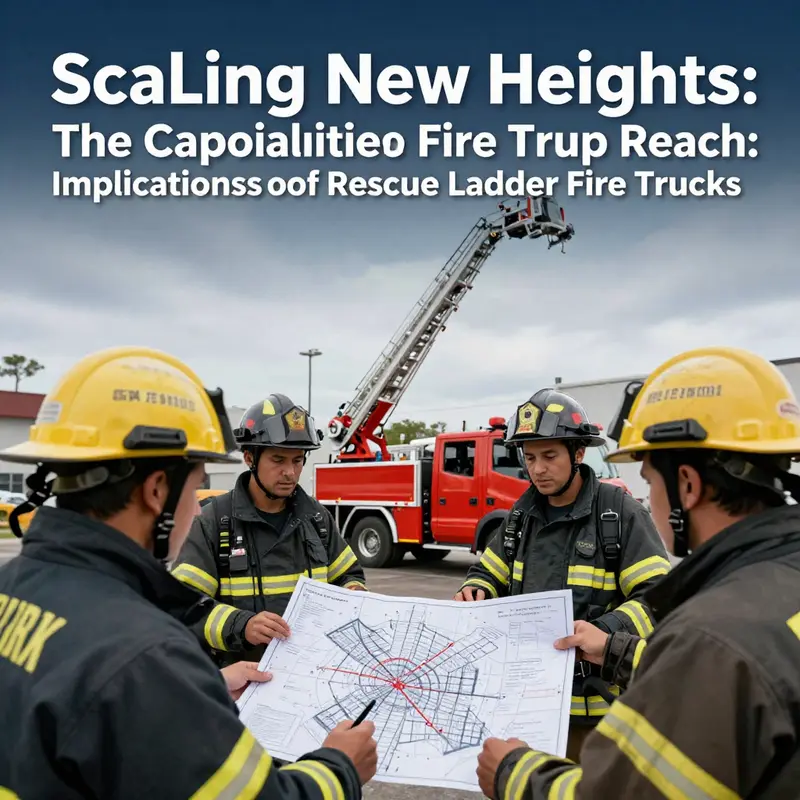
When people ask how high a rescue ladder fire truck can reach, the answer is not a single number. It depends on the model, the design of the boom, and the configuration that a city’s fire department prioritizes. In many urban settings, the working height of a standard aerial ladder or platform truck falls in a broad range—from roughly 30 meters, corresponding to about 10 stories, to 60 meters, or around 20 stories. This spectrum is not merely technical trivia; it reframes how responders approach a fire in a dense cityscape. In recent years, fire services have reported capabilities at the upper end of this range in specialized fleets, with some high-capacity, purpose-built apparatus reaching gains well beyond the typical urban envelope. What stands out is that today’s urban firefighting potential is not limited to mid-rise access; it stretches toward the upper limits of city skylines, albeit with important caveats about stability, deployment time, and the availability of viable anchor points on the building exterior. As a result, command decisions in an incident scene hinge as much on the height of the apparatus as on weather, ground access, and the building’s architectural features. The practical reality is that reach translates into tactical options that shape every phase of response—from entry to ventilation, rescue, and egress for occupants and firefighters alike. While many departments rely on trucks that can reach roughly 30 to 60 meters, a minority of fleets are designed to push beyond these bounds, with a maximum working height that can approach and, in rare configurations, exceed one hundred meters. This is not an abstract figure. It defines the difference between a direct attack from the exterior and the need to improvise alternative strategies that often consume valuable time and resources. For urban planners, building owners, and the public, this variability underscores a core truth: the geometry of a city—the height and spacing of its structures—directly shapes firefighting tactics and safety margins. The height envelope available to responders determines whether smoke and heat can be vented from elevated windows, whether the interior stairwells can be used safely by occupants, and how quickly crews can deploy a rescue line or an escape route to those trapped on higher floors. In this sense, the ladder’s reach is not just a tool; it is a determinant of strategy under pressure, working in concert with water supply, crew safety procedures, and the availability of access points on a building’s facade. The question, therefore, is not only “How high can it go?” but also “What does that height enable on the ground and at the window line?” For most mid- to high-rise emergencies in an ordinary city, a 30-meter to 60-meter reach covers the vast majority of structures, enabling a direct interior tactic from above, rapid roof access for ventilation, and a clear path for occupants needing to evacuate through an elevated refuge. Yet when confronted with towering facades or buildings with setbacks that complicate ground-to-window reach, the strategic calculus shifts. High-rise incidents demand reliable coordination among aerial teams, ground crews, and the building’s exterior features—balconies, fire escapes, and rooftop access—that can serve as stepping stones for rescue or as staging points for ventilation operations. In such circumstances, height becomes a gateway to alternative approaches rather than a standalone solution. The extended reach of advanced fleets, while impressive, must be weighed against the dynamic conditions of an ongoing fire. A higher boom magnifies the importance of stabilization and angle, since any movement at the base amplifies the risk of tipping or loss of control when the platform is extended over complex terrain or into gusty wind. Articulation—the way the boom bends and folds—inevitably shapes how a team can place a nozzle, a personnel cage, or a search-and-rescue basket. A lengthy, highly articulated boom can reach over protruding balconies or across a sloped roof line, but it also introduces mechanical complexity that requires careful crew training and meticulous maintenance. In practice, the height question becomes a balance: the aim is to maximize reach while preserving precision, stability, and safe access paths. This balancing act informs fleet composition in several practical ways. Fire departments must align the city’s architectural profile with the capabilities of the apparatus they deploy. A city dominated by mid-rise blocks with tight street grids might derive the most value from multiple mid-range aerials, ensuring rapid deployment across neighborhoods. In contrast, a city with significant high-rise clusters, irregular skylines, or frequent tall-building incidents may opt for vehicles with greater vertical reach and enhanced platform control, accepting the trade-offs in weight, cost, and maintenance. Importantly, this planning is not static. As new building designs push facade geometry in novel directions—additional setbacks, larger glass panels, and atypical corner treatments—fire services continually reassess how height translates to real-world tactics. The goal is to preserve enough reach to attack from above while maintaining full situational awareness, rapid deployability, and crew safety. Even with a maximum reach approaching the upper hundred meters in specialized configurations, the effectiveness of a ladder apparatus is not guaranteed by height alone. A ladder is only as capable as its operator, the stability of the vehicle on uneven ground, and the presence of a viable exterior anchor point for deployment. The most effective high-reaching platforms integrate with ventilation strategies, enabling crews to vent heat and smoke from elevated positions, create safer egress routes for occupants, and support swift entry for rescues. They also serve as a force multiplier for search operations, allowing firefighters to quickly assess upper-floor conditions and coordinate with interior teams while remaining protected from heat and smoke. The integration of reach with ventilation, rescue, and access requires sophisticated coordination and training. Firefighters must be prepared to shift tactics as conditions evolve, moving from a direct exterior attack when possible to interior lines of operation augmented by elevated access when needed. The right combination of reach, boom articulation, and operator proficiency can shorten the time to locate trapped residents, establish safe egress corridors, and deliver life-saving interventions at height. The training implications are clear: mastery of aerial operations demands dedicated, ongoing education, scenario-based drills, and an emphasis on stability and safety protocols at every height. In this light, the chapter’s theme extends beyond a single measurement. It invites a broader consideration of how the fire service equips itself to handle a city’s vertical growth. A modular approach to apparatus, where height targets are matched to building stock while maintaining flexible response options, can yield a more resilient system. It also highlights the importance of cross-disciplinary collaboration—between city engineers who shape the skyline and the departments that protect it. For firefighters, the path forward includes not only refining the mechanical reach of their platforms but also investing in the soft capacity that makes reach effective: precise risk assessment, clear command structures, and access to continuous training and certification. Fire teams should pursue opportunities to learn from a spectrum of incidents, translating lessons on height into better pre-fire planning, building assessments, and pre-incident information sharing with occupants and building owners. This is where the practical value of knowledge becomes tangible for communities. A city that understands the implications of ladder reach can design evacuation plans that leverage elevated egress routes, coordinate with building management to maintain exterior access points, and communicate expectations for occupant behavior during high-rise emergencies. It can also influence urban design guidelines, encouraging facade features and balcony arrangements that provide practical anchors or safe staging areas for ladder operations. In the end, height is a critical parameter, but it is not the sole determinant of success. A cargo of factors—stability, distance to the fire, wind, exterior architecture, and the skill of the crew—interact to produce outcomes that either save lives or miss critical moments. The best practice is a holistic approach that treats reach as one part of an integrated, dynamic system designed to protect urban inhabitants. The reader can enrich this understanding through formal training in fire safety and rescue techniques, a pathway that links equipment capabilities with practical, on-the-ground execution. For those seeking to connect this chapter to hands-on preparation, consider exploring ongoing training and safety certificates as part of your professional development. Fire Safety Essentials Certification Training. The chapter’s core message remains: height matters, but it matters most when it is part of a deliberate, well-practiced response that aligns with a city’s unique architectural reality. As urban skylines continue to rise, so too will the need for thoughtful, adaptable strategies that maximize the value of every meter of reach while safeguarding both the public and the responders who rely on it. For readers who want to place this discussion in a broader context, further reading on high-rise firefighting strategies and safety standards can be found through established safety resources: https://www.nfpa.org
Final thoughts
Rescue ladder fire trucks are pivotal in modern firefighting, extending capabilities that significantly impact urban emergency response. With heights ranging generally between 30 to 60 meters and advancing to specialized vehicles reaching as high as 101 meters, understanding these specifications informs safer and more effective firefighting techniques. As urban landscapes grow taller, the importance of having high-reach fire apparatus becomes increasingly crucial. Fire departments must utilize these insights for better planning and enhanced operational effectiveness in their communities.