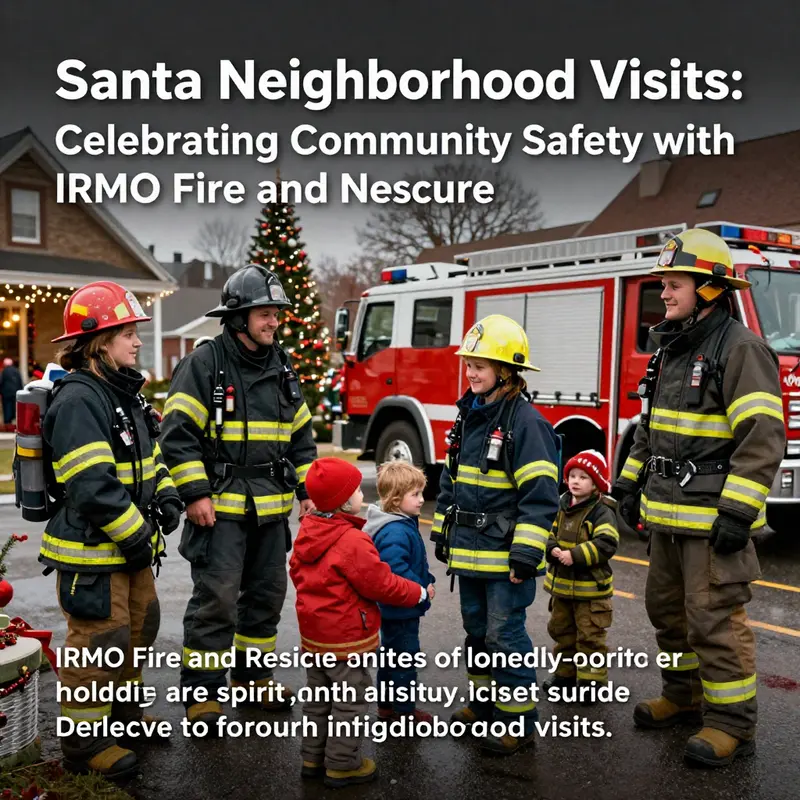
As communities come together to celebrate the festive season, the IRMO Fire and Rescue Department plays a pivotal role in Santa neighborhood visits. These visits not only celebrate the holiday spirit but also serve a greater purpose of educating residents on important fire safety measures and emergency preparedness. Throughout this article, we will delve into how these neighborhood visits contribute to community engagement, promote fire safety, and emphasize the necessity of emergency preparedness education, providing an integrated understanding of the multifaceted role that the IRMO Fire and Rescue Department plays during the holiday season.
Santa, Sirens, and Safety: How IRMO Fire and Rescue Turns Neighborhood Visits Into Holiday Outreach
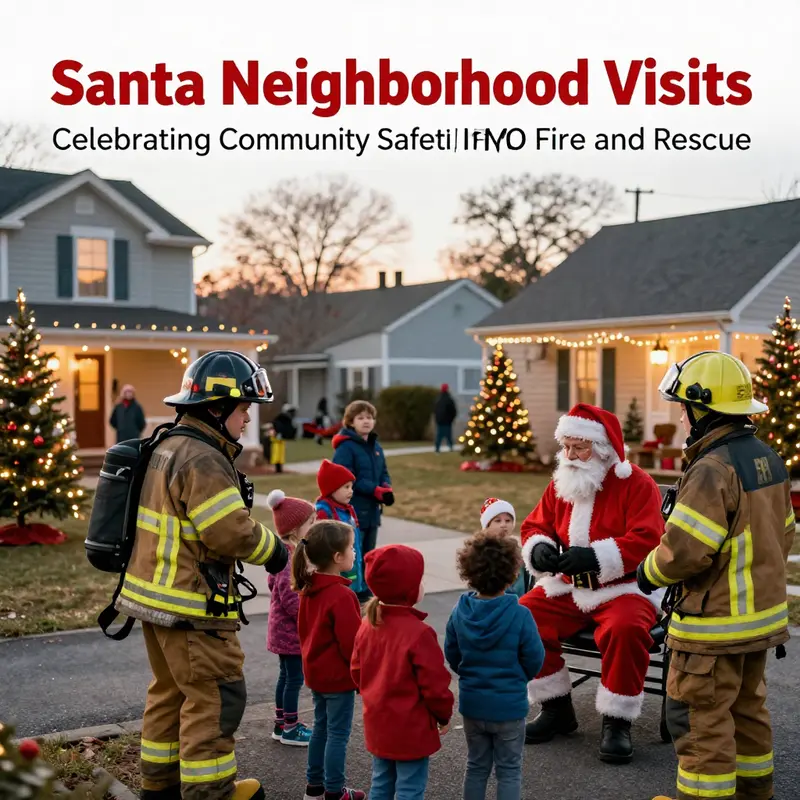
The holiday season casts a particular glow over neighborhoods where the IRMO Fire and Rescue Department makes its rounds. Not because the sirens scream through the night, but because the scene shifts to a warmly lit front yard where a red-suited Santa stands beside a gleaming fire engine, and firefighters in their bright turnout gear welcome children with open, steady faces. In these moments, the department’s Santa neighborhood visits become something more than festive photo opportunities. They are carefully designed engagements that blend celebration with education, camaraderie with preparedness, and public service with personal trust. The essence of these visits lies in the simple truth that safety grows most robustly when it sits alongside everyday joy. When families see firefighters in the midst of holiday cheer, they witness a familiar, human side of emergency responders—people who are ready to help, who understand kids, and who take the time to speak plainly about what to do in the event of danger. That juxtaposition—the warmth of a familiar holiday figure and the steady assurance of trained professionals—creates a platform where important survival skills can be learned in a friendly, nonthreatening setting. In practical terms, these visits are opportunities to reinforce a message that might otherwise feel abstract: safety is a family affair, not a lone task, and preparedness is a habit best formed in moments of calm rather than crisis.
The structure of a Santa neighborhood visit, as conducted by IRMO Fire and Rescue, is built around accessibility, repetition, and trust. December calendars fill with appearances that often travel from one pocket of homes to another, sometimes anchored by community centers, schools, or local faith-based organizations. The visits are small enough to feel intimate—neighbors chatting on the porch, kids peering up at a towering ladder, parents lingering to ask questions about smoke detectors or home escape plans—yet they are broad in impact. Each encounter usually begins with a warm greeting, a brief introduction of the crew, and a quick, playful moment with Santa that invites children to share their dream wish lists or to describe a safe escape route in their own homes. But behind the smiles lies a deliberate cadence: a gentle, age-appropriate education embedded within the flow of conversation, demonstrations, and hands-on experiences.
What makes these moments meaningful goes beyond the spectacle. Firefighters who participate in Santa visits bring a set of core messages that they weave into demonstrations, storytelling, and interactive activities. They remind families that fire safety is not a one-off drill but a daily practice. The conversations often cover the practical steps of home preparedness, such as having working smoke alarms, testing them regularly, and designing a two-exit plan for every room. Children hear stories about being safe, not scared, and they learn why rules like keeping pathways clear, turning off stoves, and dialing emergency numbers matter when something unexpected occurs. The presence of Santa is more than a seasonal charm; it is a bridge that makes the safety education feel relevant and memorable. When kids see Santa and the firefighters together, the lesson lands with a warmth that a traditional classroom setting cannot always achieve.
The physical space of a Santa visit is also purposeful. Fire engines and equipment are often displayed in a way that invites curiosity without danger. A hose lay or a checklist for home safety can be shown in a kid-friendly manner, while a firefighter explains how different tools work and why certain safeguards exist. The equipment becomes a tangible reminder of the everyday readiness that families should practice. In these exchanges, the outreach team also tends to smaller details that matter—explaining the importance of practicing escape plans as a family, offering tips for maintaining safe conditions during winter weather, and advising parents on how to select and test smoke alarms that suit their home’s layout. The tone remains calm, confident, and respectful, which helps families feel comfortable asking questions, admitting uncertainties, and sharing concerns they may not have voiced during a hurried weekday afternoon.
Community trust is not built in a single visit; it is cultivated across a season of shared moments. IRMO Fire and Rescue embraces a broader philosophy of public service that views neighborhood encounters as a form of ongoing relationship-building. The Santa visits create predictable touchpoints where residents can re-encounter the same responders, see familiar faces, and observe consistent safety messaging. This continuity reinforces a sense of dependability. When something urgent happens later, families are more likely to recall the friendly figures they met at a holiday gathering and to reach out for guidance rather than fear the unknown. In this way, the Santa visits function as a bridge between festive fellowship and practical safety, linking the emotional resonance of community celebration with the rational, actionable guidance that protects lives.
Education during these visits is skillfully balanced with celebration. Firefighters recognize that young children often respond better to concrete, memorable steps than to abstract advice. So they translate key concepts into simple actions: “two ways out, and a plan for meeting at a safe spot,” “crawl low under smoke to stay safe,” and “practice, practice, practice.” These messages are reinforced through interactive moments—for example, parents and children might simulate a quick home escape drill in a controlled, safe setting under the watchful eye of a responder who can explain what to do if a real alarm sounds. The educational core is not delivered as a sermon but as a shared, collaborative exercise that invites participation. Even in the festive environment, the element of seriousness remains, because the city’s safety hinges on ordinary families adopting prudent habits, not on heroic firefighting deeds alone.
The Santa visits also highlight a broader public service ethos that extends beyond emergency response. IRMO Fire and Rescue uses these opportunities to connect residents with broader safety resources, including programs that support ongoing preparedness and skill-building. The department’s outreach approach places emphasis on accessibility: responders take the time to answer questions about winter heating safety, appliance cords, and the practicalities of smoke detector maintenance. They encourage residents to consider not only what to do in case of fire, but how to prevent one from starting in the first place. In this way, the visits are not isolated events but nodes in a network of community safety education, linking children, families, and neighbors to a shared understanding of risk and resilience.
The value of Santa neighborhood visits grows from the everyday behaviors they cultivate. When families leave a visit with a clearer plan for home safety, with a better sense of how to coordinate family drills, and with a positive impression of the responders who will answer calls for help, the city’s safety culture gains depth. Children who remember Santa and the firefighter who explained exit routes may grow into teenagers who insist on checking smoke detectors in their own living spaces or who encourage their parents to develop more robust emergency plans. Adults, in turn, gain reassurance that local responders are both present and approachable, ready to help at moments that are not emergencies but everyday opportunities to strengthen wellbeing. In this sense, the Santa neighborhood visits function as a soft infrastructure for public safety—an ongoing, relational form of prevention that complements the rapid response work that defines the department’s day-to-day life.
For residents seeking specificity about when and where a visit will occur, the practical path remains straightforward: check the official channels of IRMO Fire and Rescue for schedules and community calendars, and consider subscribing to neighborhood alerts where available. These visits are typically seasonal, concentrated in December, and coordinated to maximize reach across different parts of the community. The scheduling-minded resident will note that, while spontaneity has its charm, the most impactful visits come with advance notice that allows families to prepare, invite neighbors, and arrange safe spaces for children to meet Santa and the crew comfortably. In this way, the holiday outreach preserves its spontaneity while ensuring inclusivity and safety.
The narrative of Santa neighborhood visits is not insulated from wider conversations about safety standards and best practices. As part of a broader culture of care, IRMO Fire and Rescue’s outreach resonates with national standards and resources that underpin everyday protection. For readers who wish to situate these local efforts within a national context, organizations like the National Fire Protection Association offer guidance and materials that reinforce the messages delivered during these community events. That alignment helps ensure that the lessons learned in a festive yard are consistent with evidence-based practices across communities nationwide. To explore such resources, one can visit the NFPA website, which provides extensive information on fire prevention, preparedness, and safety education. The Santa visits in IRMO thus become a microcosm of a larger public-safety ecosystem, connecting personal experience with data-driven guidance and broad community norms.
Internal linking to related practical resources can further enhance a family’s ability to translate a visit into lasting safety habits. For example, residents who want to deepen their understanding of safety fundamentals can engage with programs like Fire Safety Essentials Certification Training, which can be explored here: Fire Safety Essentials Certification Training. This kind of resource complements the conversations sparked by Santa visits, offering a pathway from curiosity to credentialed knowledge and sustained behavior change. The combination of holiday warmth and structured learning helps ensure that safety is not merely taught but absorbed, practiced, and valued as part of daily life. As the season unfolds and the visits come and go, the shared experiences ripple outward: neighbors who become a little more prepared, families who practice together, and a community that sees its fire and rescue team not only as responders in good times and bad but as neighbors who care during every season of the year.
In sum, IRMO Fire and Rescue’s Santa neighborhood visits embody a philosophy of public service that treats safety as a communal habit, not a single act. They knit together celebration, education, and trust into a pattern that strengthens the social fabric of the district. The result is a community that greets the holiday with joy and leaves it with a clearer understanding of how to look after one another, how to plan for emergencies, and how to reach out to local responders when help is needed. This is the enduring value of these festive outreach efforts: they slow down the rush of the season long enough for residents to see safety as a shared commitment—and to believe that those responsible for protecting them truly are, in Santa’s words and in the responders’ deeds, here for good.
External resource: https://www.nfpa.org
From Fire Safety to Festive Cheer: How IRMO Fire and Rescue Connects with Neighborhoods
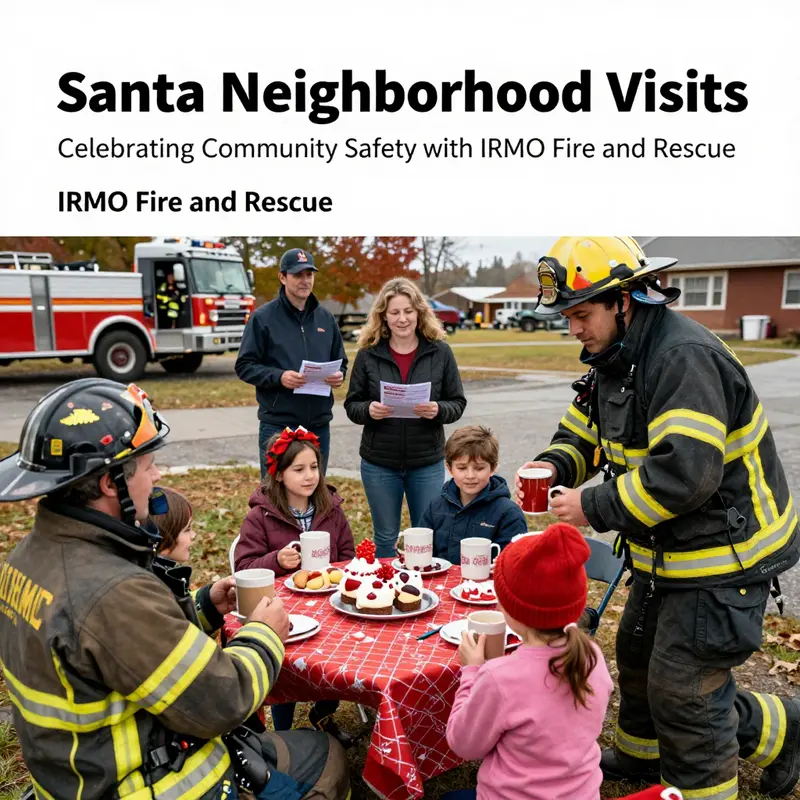
Community presence is more than response; it is relationship-building and education. IRMO Fire and Rescue has developed a consistent approach to community engagement that blends practical safety outreach with events that build trust. Their efforts aim to reduce hazards, raise awareness, and make the department familiar and approachable to residents. Understanding these programs explains why residents often ask whether IRMO brings seasonal activities, like Santa neighborhood visits, as part of those outreach strategies.
IRMO’s engagement work centers on public education programs. These sessions cover core topics such as smoke alarm placement, escape planning, cooking safety, and safe heating practices. The curriculum is tailored to different audiences. For families, presentations focus on child-friendly fire prevention steps. For older adults, the emphasis shifts to medication safety, mobility considerations, and smoke alarm maintenance. Materials are practical and actionable; volunteers and staff demonstrate how to test alarms and how to create simple, repeatable escape plans. By teaching small, specific actions, the department reduces barriers for residents who want to improve home safety but do not know where to start.
Youth outreach is a major thread woven through IRMO’s calendar. Firefighters visit schools, youth clubs, and summer programs to share safety lessons in ways that stick. Demonstrations combine hands-on learning with the visual impact of emergency vehicles and gear. Young people are encouraged to ask questions, try on turnout jackets, and see equipment up close. This reduces fear and builds familiarity with first responders. The goal is twofold: instill life-saving habits early, and nurture positive relationships between children and the department that last into adulthood.
Fire prevention campaigns give IRMO the chance to target seasonal risks. In winter, the focus shifts to heating safety and holiday decorations. In summer, the messaging highlights outdoor fire risks and safe grilling practices. Campaigns are timed to community patterns and local incident data. In some neighborhoods, the department supplements broad messaging with targeted visits. These tailored interactions ensure that residents receive relevant, timely advice that fits their living situations.
Participation in local events is where education meets visibility. IRMO attends fairs, parades, and block parties to distribute information and answer questions. Staff and volunteers use these events to demonstrate simple practices, such as how to check a smoke alarm and how to make a home fire escape plan. The presence at public gatherings allows the department to reach people who may not request a formal safety visit. It also creates informal opportunities for neighbors and firefighters to build rapport in relaxed settings.
Neighborhood visits are a flexible tool in IRMO’s toolkit. A visit might be a follow-up to a public campaign, a scheduled presentation for a homeowners association, or a walk through a complex where residents have requested guidance. These visits often include smoke alarm checks, distribution of educational materials, and short demonstrations that show how quickly fires can spread. They are designed to be non-intrusive and practical. For many residents, a brief visit from IRMO is the nudge they needed to install alarms or review an escape plan.
Seasonal and holiday activities are part of that flexible approach. While core programs focus strictly on safety, IRMO also recognizes the value of community rituals. Festive engagements create positive memories and broaden the department’s reach. Local traditions, such as holiday appearances, help normalize interactions between first responders and families. Activities with a light, community-focused tone make residents more likely to remember safety advice given in those moments.
This is where the question of Santa neighborhood visits fits naturally. IRMO’s official communications describe a willingness to participate in local celebrations, depending on staffing and operational needs. Seasonal appearances are often scheduled through community event requests. When Santa visits are feasible, they are integrated with safety messaging—offering simple reminders, handing out literature, and sometimes providing small, safety-themed giveaways such as batteries for smoke alarms. The intent is to pair the joy of the season with practical steps that protect homes during a time of increased fire risk.
Organizing a neighborhood visit with a holiday theme involves coordination. Event request procedures ensure that operational readiness is not compromised. The department balances community requests with staffing levels, emergency coverage requirements, and safety regulations. Requests that come early in the season are easier to accommodate. When visits are confirmed, IRMO works with organizers to set safe routes, identify meeting points, and clarify what resources will be available on site. This attention to planning keeps events delightful and safe for everyone.
Equity and accessibility are also core considerations. IRMO prioritizes outreach in neighborhoods with greater vulnerability—areas with older housing, a higher proportion of older adults, or limited access to safety resources. Programs are adjusted to meet language and mobility needs, and the department partners with local organizations to reach residents who might otherwise miss outreach. Seasonal activities, when scheduled, follow the same equity lens to ensure that the benefits reach those who need them most.
The human side of these programs matters. Firefighters who take part in community engagement develop skills beyond emergency response. They learn how to communicate risks clearly and kindly. They practice cultural competence and patience. Over time, repeated presence in neighborhoods reduces fear and builds trust. Residents who have seen the same crew at a holiday event often feel more comfortable calling with a question or reporting a hazard.
Measuring impact shapes how IRMO refines its efforts. The department tracks activities, attendance, distributed materials, and follow-up visits. They review incident patterns to see if targeted outreach corresponds with fewer house fires or faster alarm activation. Feedback from community members also guides program development. When residents report that a visit prompted them to install alarms, IRMO notes that success. When organizers request additional language support, the department adapts. These iterative adjustments keep programs relevant and effective.
Collaboration extends the department’s reach. IRMO partners with schools, faith groups, neighborhood associations, and social service organizations. These partnerships create channels for reliable information and help amplify messages. Partner events often include co-branded materials that combine safety guidance with practical resources, such as links to local assistance for smoke alarm replacement. Collaboration ensures that seasonal and year-round outreach happens efficiently and with community context in mind.
For residents who want to arrange a visit—holiday-themed or otherwise—the department encourages direct contact. Requests should include date preferences, location, and the nature of the event. Early contact increases the chance of scheduling. If the department is unable to fulfill a request due to operational constraints, they often suggest alternatives, such as a station visit, a printed safety packet, or a classroom presentation. These options keep the conversation moving forward, even when a neighborhood route is not feasible.
IRMO’s approach demonstrates a balance between celebration and mission. Neighborhood visits, including seasonal appearances, serve multiple purposes: they deliver safety education, strengthen community ties, and make emergency services relatable. Whether a visit includes Santa or a straightforward smoke-alarm check, the outcome is the same—better-informed residents and safer homes. To explore the suite of training offerings that often accompany these outreach efforts, see the department’s related education resources on Fire Safety Essentials Certification & Training.
For the most current information about specific neighborhood visit programs or seasonal appearances, the department maintains a community engagement page that lists initiatives and how to request a visit: https://www.irmofireandrescue.org/community-engagement
Santa, Sirens, and Safety: How IRMO Fire and Rescue Brings Neighborhood Christmas Visits Education and Trust
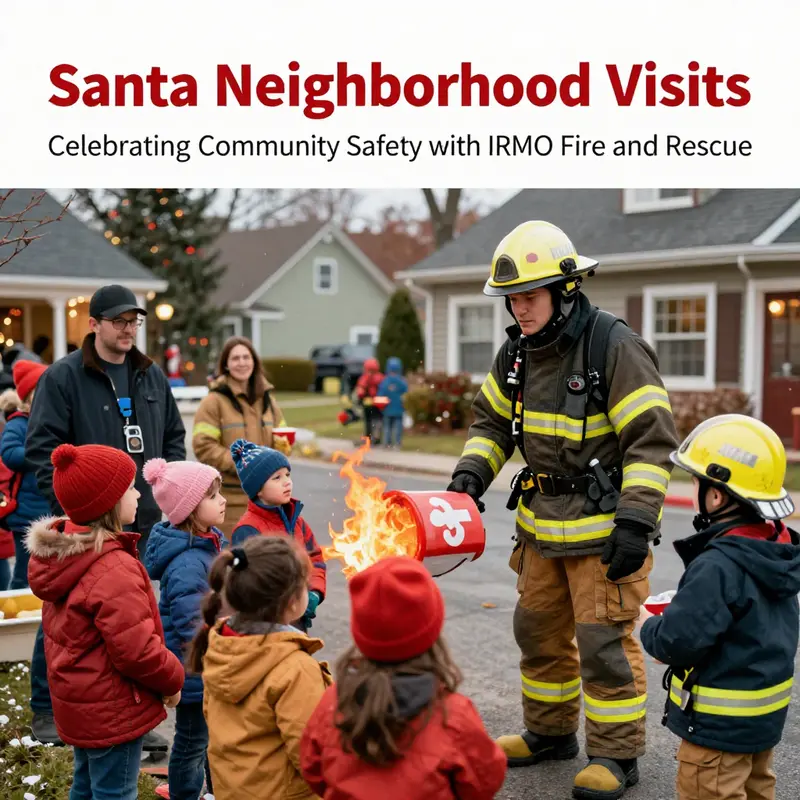
When the holidays arrive, the rhythm of a town often shifts from routine to ritual. In Irmo, that shift includes a distinctive tradition: Santa visits that are coordinated with the IRMO Fire and Rescue Department. These visits are more than festive photo opportunities; they are deliberate community education moments woven into a beloved seasonal ritual. The department does not simply drop by with red suits and holiday cheer. They arrive with a purpose rooted in safety, preparedness, and relationship-building. In a time when homes glow with strings of lights and the scent of pine fills living rooms, the IRMO crew recognizes a real opportunity to connect warmth with practical knowledge. Their neighborhood outreach during the Santa visits translates public safety into a shared, approachable experience. The goal is not only to reduce risk during a high-activity season but to empower residents with habits that endure long after the final bell tolls on Christmas night.
Central to this approach is the understanding that the holiday season creates a distinct safety landscape. Electrical hazards rise as families decorate with more lights and electronic inflatables. Candles, menorahs, and other festive flame sources may appear in more homes, sometimes in places where supervision is limited or distractions are frequent. Open flames, overloaded circuits, and unattended cooking contribute to fire risk in ways that are amplified when guests are present and routines are altered. IRMO Fire and Rescue responds to this reality by folding safety education into the Christmas visitation circuit. The department takes seriously the need to protect not only the physical spaces where people celebrate but also the social spaces where neighbors connect. By modeling careful behavior and sharing practical tips in the presence of Santa, they normalize prudent safeguards and make safety feel like a natural outgrowth of the season’s generosity.
The structure of IRMO’s Santa visits reflects a careful balance between celebration and instruction. The program often begins with the familiar sight of firefighters alongside Santa, signaling reassurance and trust. But as the moment passes from staged photo opportunities to informal conversations, the emphasis shifts toward concrete safety messages that families can act on. The outreach team integrates training elements that extend beyond a single event, aligning with broader community education goals. Volunteers, sometimes including retired firefighters or local partners, are briefed on the day’s objectives and the specific hazards most common to holiday settings. This preparation is not academic abstraction; it translates to practical know-how that residents can apply in their own homes and neighborhoods. In practice, a Santa visit becomes a mobile classroom where the charcoal-gray and red of turnout gear contrast with the red suit of Santa in a way that underscores the partnership between safety professionals and the public they serve.
An essential facet of the initiative is the training that underpins every encounter. Training for Santa volunteers and event organizers covers several core areas. First, there is a focus on identifying potential fire hazards in a variety of environments—from living rooms crowded with holiday décor to community halls filled with a temporary audience. The team models how to quickly recognize signs of overloaded outlets, improper extension cord use, and ignition sources that are too close to combustibles. Second, there is guidance on the safe use of holiday decorations, including how to manage open flames or scented candles and how to position lights and displays so they do not create pinch points or tripping hazards. Third, the curriculum emphasizes emergency preparedness. Families are reminded not only of prevention strategies but also of the steps to take if a fire should occur: know two exits, plan a family meeting place, practice a quick fire drill, and ensure every level of the home has a working smoke alarm. The training is practical and repeatable, designed so that volunteers can adapt to different houses, street layouts, or community venues without sacrificing the core safety messages.
The tangible outputs of this training appear in the everyday interactions during the visits. Firefighters distribute informational flyers that distill safety concepts into clear, memorable guidance. In many cases, the team pairs these materials with short demonstrations: a quick walkthrough of how to test a smoke alarm, a demonstration of safe extension cord placement, or a reminder about candle placement and the importance of supervising open flames. These demonstrations are concise and approachable, designed to respect the festive mood while leaving a lasting impression. The combination of visual cues, direct conversation, and take-home resources helps ensure that the lessons do not fade as Santa packs up his sleigh and the parade of lights winds down. The aim is to embed a mindset of preparedness that families can carry into the new year and beyond.
The messages conveyed during the Santa visits are deliberate and consistent, reinforcing a set of practical, repeatable practices. Fire safety becomes a positive habit rather than a list of prohibitions. The core messages include: keeping candles away from flammable materials, unplugging holiday lights when leaving the home or going to bed, and maintaining a working smoke alarm on every level of the home. These simple, repeatable rules resonate with households that are busy, distracted, or juggling a dozen other seasonal tasks. They are messages that parents can impart to children in real time, turning a Santa moment into a teachable moment about everyday safety. The communication style remains warm and respectful, acknowledging the joy of the season while gently guiding families toward safer choices. The Santa outreach, therefore, is not about fear or scolding; it is about partnership, shared responsibility, and the sense that a safety-minded home is the best gift a family can give itself.
Beyond the immediate home visits, IRMO’s program seeks to extend the impact through broader community engagement. The department works to ensure that Santa visits dovetail with ongoing education efforts, reinforcing safety concepts at a pace that suits a community calendar. For residents who host neighborhood gatherings, the department provides a framework for safe event planning, including tips on venue layout, crowd management, and emergency readiness that can be applied to school fairs, block parties, and other seasonal celebrations. This continuity is crucial: it creates a recurring touchpoint between residents and their local firefighters, transforming what might be a single festive event into a sustained relationship rooted in mutual care. Over time, residents begin to recognize the firefighters not only as responders to emergencies but as neighbors who bring reliable information, practical supports, and a steady presence during a season that emphasizes togetherness. The Santa visits become a trusted platform for long-term safety education, a bridge between the excitement of the holidays and the responsibilities that keep families secure throughout the year.
An important dimension of the initiative is the way it honors the role of volunteers and community organizers who help bring these visits to life. Training sessions are designed to empower the people who coordinate events, prompting them to ask critical questions about layout, crowd flow, and accessibility. By equipping volunteers with a clear understanding of hazard zones and emergency procedures, IRMO makes the visits safer to execute and easier to scale. The collaborative approach ensures that Santa, the responders, and the residents work in concert rather than as separate actors. When a community group sees that safety is woven into its festive fabric, participation grows richer and more inclusive. Children learn to spell resilience with Santa as a visible reminder, and adults gain confidence that safety can be integrated into holiday cheer without dampening the spirit of celebration.
Throughout all of this, the core objective remains consistent: to reduce the likelihood of fire-related incidents during a season marked by heightened activity, while empowering households with practical actions that persist beyond December. The Santa visits serve as a conduit for reliable knowledge, a lived demonstration of how local responders serve as educators and partners. The broader impact is measured not only by the reduction in near-misses or the number of homes visited but by the enduring habits that families adopt. When a child learns to check a smoke alarm after seeing it demonstrated at a community event, when a parent plans a candle-safe holiday setup after a conversation with a firefighter and Santa, the chapter closes on a note of real-world relevance. The lessons extend into January and February, into the kitchen during holiday cooking, into the living room when string lights go up again, into the streets when a neighbor’s home is tested by winter weather. The IRMO team understands that safety is not a seasonal flavor; it is a continued practice that makes community life safer and more cohesive.
For readers seeking to explore the practical underpinnings of these outreach efforts, one relevant resource focuses on safety essentials that align with the kind of training and certification that volunteers in these programs often pursue. See the Fire Safety Essentials Certification Training entry for more on the foundations of structured safety education and the kind of preparation that supports events like the Santa visits. The material reinforces how professional practice translates into everyday guidance people can use at home. Fire Safety Essentials Certification Training.
The Santa neighborhood visits undertaken by IRMO Fire and Rescue thus emerge as a thoughtful, community-centered model of public safety outreach. They merge holiday delight with practical lessons, building trust and equipping families with workable strategies for staying safe during a season of celebration. In doing so, IRMO demonstrates a broader truth: when emergency responders invest in education at the neighborhood level, they cultivate resilience across the community. The Christmas lights shine a little brighter, not just because of the glow they cast, but because the people who illuminate them also know how to protect what matters most. And as Santa waves from the curb, children and adults alike carry away a simple, powerful takeaway: safety is a shared gift we give to one another. External resources offer additional context for those who want to explore official guidelines on fire safety and emergency preparedness, such as broad safety frameworks available through international guidelines and organizations at the following link: https://www.unsm.un.org/fire-safety.
How IRMO’s Santa Neighborhood Visits Teach Emergency Preparedness and Build Community Resilience
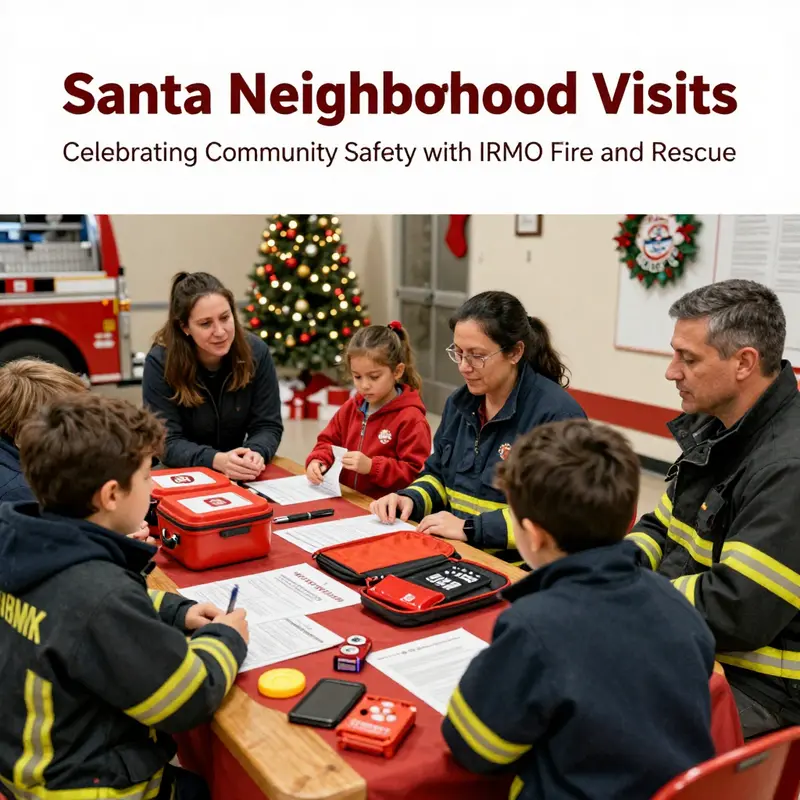
IRMO Fire and Rescue’s Santa Neighborhood visits are more than festive goodwill. They are a carefully planned platform for emergency preparedness education that reaches families where they live. These visits blend approachable community engagement with practical life-saving instruction. That combination makes complex safety concepts accessible to people of all ages and backgrounds.
During a Santa Neighborhood visit, IRMO personnel present core safety messages in informal settings. Firefighters and educators introduce simple steps that prevent fires and reduce harm. They explain the function of smoke alarms and demonstrate how to test and maintain them. They walk families through escape plans, highlighting two exits from each room and a predetermined meeting spot outside the home. They also emphasize a small set of priorities: early detection, quick evacuation, and calling for help. The straightforward nature of these messages increases the odds that residents will remember and act on them during a real emergency.
Children are a central audience in these visits. Presenters use age-appropriate language, props, and role-play to make lessons memorable. A child who practices crawling low under simulated smoke fumes learns more than if they only hear the phrase “stay low.” A hands-on activity that shows how a home fire spreads imparts an intuitive sense of danger and timing. These interactive moments shift knowledge into muscle memory, which can be decisive in stressful moments. Schools and families benefit because children often share what they learn with caregivers. That ripple effect multiplies the impact of each neighborhood stop.
Equally important is IRMO’s attention to diverse communication needs. Neighborhoods are rarely homogeneous. Residents may speak different languages, have varying literacy levels, or face mobility and sensory challenges. IRMO tailors messages to these realities. They use visual aids, translated materials, and demonstrations that don’t rely solely on written instructions. For residents with limited mobility, they discuss building-specific evacuation options and emphasize alert systems. These adjustments ensure that preparedness education is inclusive and practical for the whole community.
Neighborhood visits also allow IRMO to connect preparedness instruction to tangible, actionable services. Technicians can check and install smoke alarms. They can review the placement of extinguishers and advise on combustible storage. They can help residents register medical conditions with local emergency databases when appropriate. Offering these concrete interventions during a friendly visit removes barriers to action. People often intend to make safety improvements but procrastinate. When a trained responder offers help on the spot, those intentions become immediate changes.
From a public safety strategy perspective, these visits are cost-effective. Investing in education reduces the frequency and severity of emergencies. Research consistently shows that community-level disaster education lowers injury and mortality rates. Preparing residents to act quickly minimizes property loss and streamlines emergency response. That ripple effect reduces downstream costs for both families and emergency services. Training that prevents one house fire or improves evacuation in a flood zone can justify the resources used for multiple community visits.
IRMO also uses its neighborhood presence to reinforce broader emergency planning. Fire safety is a gateway topic that leads naturally to other preparedness areas. During visits, staff discuss family communication plans, emergency supply kits, and local shelter locations. They encourage households to practice drills and to review insurance and document storage. This holistic approach recognizes that resilience is not built from a single action. It arises from a set of connected habits practiced over time.
Measuring the effectiveness of outreach is part of IRMO’s approach. Field staff collect anecdotal feedback from residents and track concrete actions, such as smoke alarm installations. They monitor changes in community behavior through repeat visits and through partnerships with schools and local organizations. This data helps refine messages and prioritize neighborhoods with higher risk. Over time, such feedback loops create a targeted, evidence-based outreach program rather than a one-size-fits-all campaign.
Training firefighters and outreach staff in communication techniques is essential to this work. Good technical knowledge alone does not guarantee effective education. Emergency communicators must understand adult learning principles and how to present complex subjects simply. They must be comfortable leading children’s activities and answering diverse questions. IRMO invests in training that focuses on verbal clarity, visual instruction, and community engagement. This investment pays off in calmer, more receptive interactions and better outcomes in real emergencies.
Partnerships extend the reach of the visits. IRMO collaborates with schools, community centers, and neighborhood associations. These partners help schedule events, identify vulnerable households, and amplify preparedness messages. Partnerships also create continuity; school-based programs can reinforce lessons children receive during a visit. Local non-profits often assist with follow-up services. Together, these networks transform a single visit into a broader culture of readiness that persists after the team leaves.
The educational dimension of Santa Neighborhood visits also supports mental preparedness. Knowing what to do reduces panic. Residents who have practiced evacuation steps and who recognize alarm signals feel more confident. That confidence translates into faster, more organized action during an incident. Emergency education addresses both behavioral responses and the emotional readiness needed to perform under stress.
On a community level, these visits enhance trust between residents and emergency services. Seeing firefighters in a non-crisis role changes perceptions. Residents learn that the fire department is there to help prevent emergencies, not just to respond to them. That goodwill fosters cooperation during incidents. A community that knows and trusts its responders is more likely to follow evacuation orders and to share critical information during an emergency.
IRMO’s approach aligns with international research on disaster education. Studies emphasize tailored communication and hands-on learning. They show that education must be culturally appropriate and repeated over time to have lasting effects. IRMO’s neighborhood visits reflect these principles, offering repeated contact and practical demonstrations across demographic groups. This evidence-based design increases the chances that lessons stick and that residents apply them when it counts.
Finally, these visits contribute to broader resilience beyond immediate safety. A prepared household recovers faster after an incident. Families who know emergency contacts, maintain important documents, and have practiced evacuation are better positioned to rebuild. In aggregate, those resilient households create neighborhoods that withstand and recover from disruptions more efficiently.
For those seeking practical next steps, IRMO’s Santa Neighborhood visits are an accessible entry point to broader safety practices. Residents can request a visit, learn simple home improvements, and access resources that support ongoing preparedness. For professionals and community organizers, the visits offer a model: combine approachable engagement, tailored messaging, and practical services to produce measurable safety gains.
For further guidance on communicating during crises and on the principles of disaster education, the Coursera course on Disaster, Crisis, and Emergency Preparedness Communication provides a strong evidence base and practical tools. You can explore that resource here: https://www.coursera.org/learn/disaster-crisis-emergency-preparedness-communication
For additional local training resources, consider exploring the organization’s materials on Fire Safety Essentials certification training at https://firenrescue.net/blog/fire-safety-essentials-certification-training/ . These resources align well with the in-person lessons taught during neighborhood visits and help sustain preparedness long after the season ends.
Final thoughts
The Santa neighborhood visits conducted by IRMO Fire and Rescue truly encapsulate the spirit of community and safety. These initiatives not only spread holiday cheer but also prioritize essential fire safety education and emergency preparedness awareness. By seamlessly integrating festive celebrations with important safety lessons, IRMO Fire and Rescue fosters stronger community ties and enhances the overall safety and well-being of the residents. As we embrace more holiday seasons, the ongoing efforts of IRMO Fire and Rescue serve as a reminder of the crucial role local organizations play in supporting and protecting our communities.

