
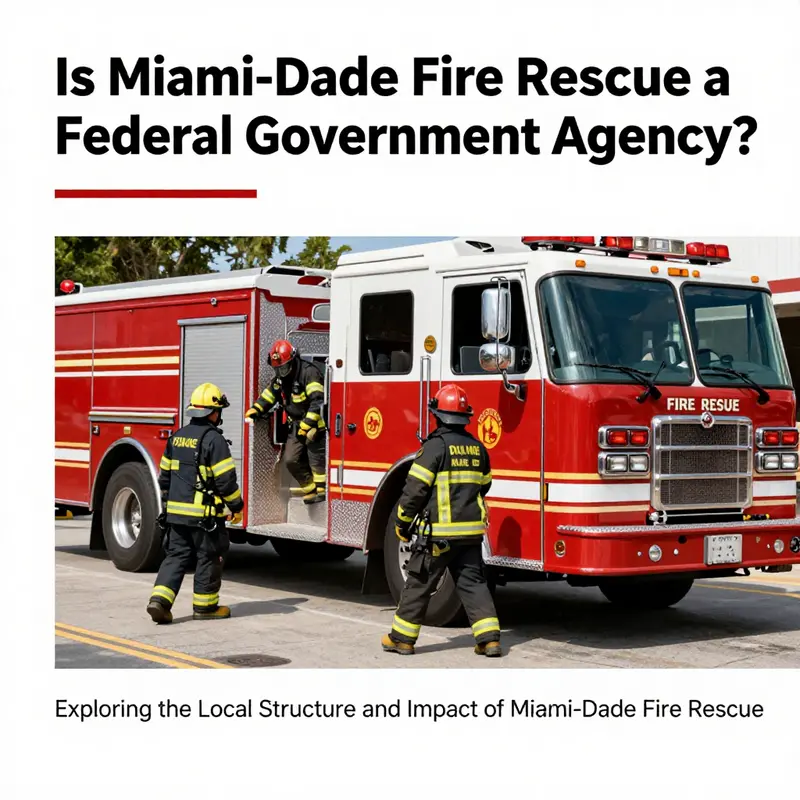
Miami-Dade Fire Rescue (MDFR) serves a critical function within Miami-Dade County, Florida, focusing on emergency response, fire protection, and medical services. As citizens and officials scrutinize the organizational structure of emergency agencies, it is essential to clarify whether MDFR operates under federal jurisdiction or as an independent local government entity. This article unfolds across several chapters, beginning with an examination of whether MDFR is a federal agency. Subsequent sections will delve into its local roles and responsibilities, the legal frameworks differentiating it from federal agencies, the significant emergency services provided, and finally, its engagement with the community and other local organizations. By understanding each aspect, readers will receive a comprehensive view of the unique position held by MDFR in the emergency services landscape.
Local Authority, Not Federal: How Miami-Dade Fire Rescue Operates Within County Government
Understanding the jurisdiction and authority of a large fire-rescue organization requires more than a one-line answer. Miami-Dade Fire Rescue (MDFR) is a robust public safety organization, but it is not an arm of the federal government. It functions as a county-level agency that provides essential emergency services to residents and visitors across Miami-Dade County, Florida. This distinction matters for how the department is funded, how it answers to elected officials, and how it coordinates with other agencies during routine calls and major incidents.
MDFR’s role is straightforward in concept but complex in practice. The department delivers fire protection, emergency medical services, technical rescue, hazardous materials response, and specialized support for unique incidents. These responsibilities align with what many people expect from a fire-rescue organization, yet the source of authority and oversight is local. Miami-Dade County establishes policies, allocates budget, and appoints leadership that guides MDFR’s operations. That local governance shapes priorities, response frameworks, and community risk reduction strategies. As a county agency, MDFR must adapt to the demographic, geographic, and political realities of the region it serves.
Financially, the distinction between local and federal control is visible in budget sources. MDFR’s funding comes primarily from county revenues, including property taxes, municipal allocations, and fees tied to local services. These funds cover firefighter salaries, training, apparatus, station maintenance, and capital projects. While MDFR may receive occasional federal grant funding or participate in federally funded programs, those streams supplement county funding rather than replace it. Federal grants are typically competitive and project-specific; they do not transform a county agency into a federal one. The department remains accountable to county leadership and residents, whose tax dollars sustain its daily operations.
Operational authority follows a similar pattern. MDFR develops its response protocols, staffing models, station locations, and mutual-aid agreements based on local needs. The department coordinates closely with neighboring municipal fire departments, county law enforcement, emergency management, and public health partners. This networked approach enables MDFR to scale responses for large incidents while maintaining a clear county-based chain of command. On complex or multi-jurisdictional emergencies, MDFR will work within state and federal frameworks—such as requesting support through state emergency management or working alongside federal agencies—but those interactions are collaborative rather than supervisory.
Legal and regulatory oversight further distinguishes MDFR from federal entities. Local ordinances, county codes, and state laws define many of the department’s responsibilities and limits. Florida state law sets standards for emergency medical services and firefighter certification, influencing training requirements and scope of practice. At the same time, federal occupational health and safety regulations or environmental mandates may apply to specific activities. However, such federal regulations apply across jurisdictions and do not convert local agencies into federal ones. MDFR maintains its identity as a county organization that complies with applicable state and federal laws where required.
Public perception sometimes blurs these boundaries. Large, professional fire-rescue agencies like MDFR often have resources, specialized teams, and interagency partnerships that resemble federal capabilities. They may operate marine units, urban search and rescue teams, air rescue helicopters, and hazardous materials response teams. Their size and capabilities make them indispensable in regional emergencies and resilient in the face of major disasters. Still, the operational resemblance to federal teams is a reflection of scale and specialization rather than jurisdictional status.
The relationship between MDFR and federal programs is pragmatic. Federal funding programs can bolster local preparedness, training, and equipment. Federal agencies may also provide technical assistance, intelligence, or subject-matter experts during certain incidents. For example, in a federally declared disaster, federal agencies can supplement local and state efforts with funding, logistics, or specialized personnel. But the initial responsibility for response remains local. MDFR acts first within the county, and federal involvement typically follows through formal requests or declarations that trigger intergovernmental support.
State partnerships also shape MDFR’s work. The department coordinates with Florida’s emergency management apparatus to share resources and align response plans. State-level mutual aid systems allow MDFR to both send and receive support during major incidents, ensuring that help can flow where it is most needed. These state-facilitated mechanisms preserve local control while enabling scalable response across jurisdictions.
Community accountability is another hallmark of a county agency. MDFR’s leadership is accountable to county officials and ultimately to the public. Service standards, station placement, and budget priorities are influenced by elected representatives and the needs expressed by neighborhoods. Public meetings, budget hearings, and community engagement shape how the department evolves. That visibility and local responsiveness help maintain a direct line between community expectations and service delivery.
Training and professional standards underline the department’s competence. Firefighters and paramedics within MDFR complete rigorous certification and continuous training to meet state and national standards. For professionals seeking foundational or advanced credentials, resources on fire safety certification and training provide a useful background to the kinds of skills MDFR nurtures. Those interested in training pathways can learn more from external resources on fire safety essentials and certification. These pathways ensure personnel are prepared for the full range of emergencies they may face in the county context.
Operational integration also extends to technology and information sharing. MDFR participates in region-wide communication systems, incident management platforms, and data-sharing initiatives that improve situational awareness and coordination. These systems facilitate interoperable responses with law enforcement, public health, and emergency managers. While some of these platforms are influenced by federal standards or grant programs, the systems are deployed and managed at the local or regional level to meet specific needs.
Understanding MDFR’s place within the governmental landscape clarifies roles during major events. In a local fire or medical emergency, MDFR is the primary responder. In a catastrophic event that exceeds local capacity, MDFR will leverage mutual aid, state support, and, if necessary, federal assistance following formal procedures. That layered model balances local knowledge and authority with the ability to scale using broader resources when needed.
Miami-Dade Fire Rescue exemplifies how a large, capable agency operates effectively within county government while engaging productively with state and federal systems. Its authority, funding, and accountability remain rooted locally, even as it coordinates across levels of government to enhance public safety. For authoritative details about the department’s structure, services, and public information, consult Miami-Dade Fire Rescue’s official site.
For more on training pathways that support professionals in fire and emergency services, see the resource on Fire Safety Essentials: Certification & Training: https://firenrescue.net/blog/fire-safety-essentials-certification-training/
External reference: https://www.miamidade.gov/firerescue
From County Corridors to Emergency Frontlines: Understanding Miami-Dade Fire Rescue as a Local Government Authority
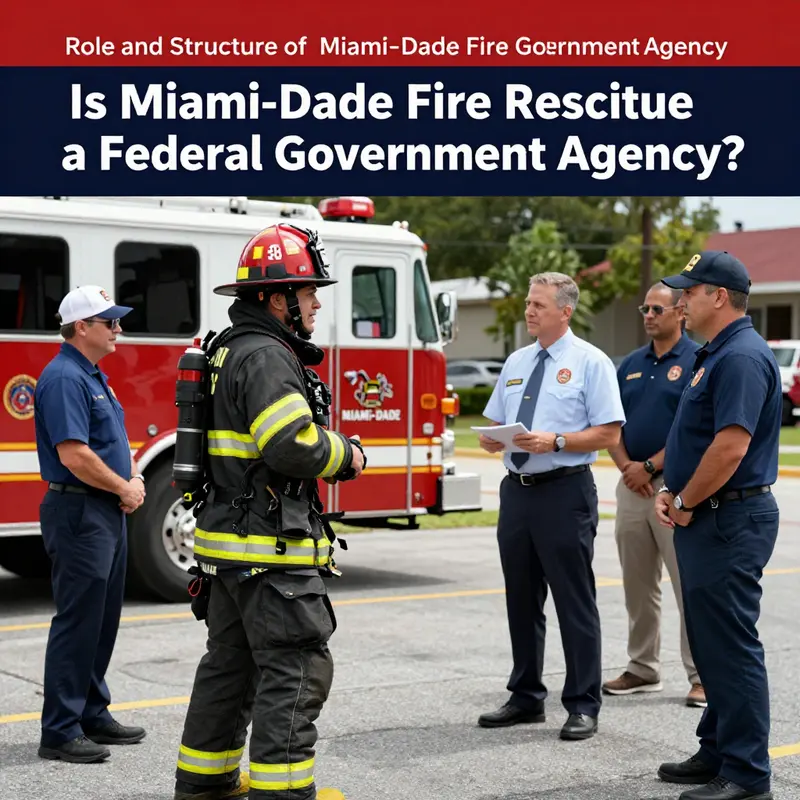
When people ask whether Miami-Dade Fire Rescue (MDFR) is a federal government agency, the answer is straightforward and meaningful: MDFR is a local government agency that serves Miami-Dade County under county governance, not a federal entity. This distinction matters because it shapes how the department is funded, how it sets priorities, and how it coordinates with neighbors, state agencies, and the federal apparatus when large-scale disasters occur. MDFR’s day-to-day work unfolds in the same neighborhoods it serves, from high-rise districts to suburban corridors, where the line between local accountability and public safety responsibility is most tangible. The county’s residents do not rely on distant headquarters for protection; they rely on a locally anchored organization that operates within the public authority of the Miami-Dade County Commission and beneath a chain of command that starts with the County Manager and the Chief Fire Marshal. In this context, MDFR’s identity is inseparable from the broader fabric of local government, where policy, budgeting, training, and emergency response decisions are made close to the communities affected by fires, medical emergencies, or natural hazards. The local character of MDFR is not a reflection of insularity but a deliberate design to provide rapid, culturally informed, and accountable public safety services that can adapt to the county’s diverse urban and suburban landscapes.
Inside the county framework, MDFR is organized to deliver a continuum of services that protect life, property, and the environment. The department operates under the authority of the Miami-Dade County Commission, which sets the strategic direction, allocates resources, and oversees policy. A Chief Fire Marshal leads MDFR and reports to the County Manager, ensuring that the department’s operational needs align with the county’s overall public safety strategy. This governance structure supports a model in which local elected and appointed officials remain closely engaged with frontline realities—how quickly crews reach a fire scene, how medical care is integrated in the field, and how prevention programs resonate with residents from different neighborhoods. The local governance model also means MDFR’s success hinges on community trust, transparent budgeting, and consistent performance metrics that reflect the county’s priorities: rapid response times, high-quality medical care, rigorous prevention efforts, and robust disaster readiness.
From a practical standpoint, MDFR is built around a set of core divisions that together create a resilient and responsive public safety enterprise. The Operations division is the engine that drives field response, coordinating the deployment of engines, ladder trucks, rescue units, and specialized teams. This division is the frontline workhorse, ensuring that trained firefighters, who are also paramedics or EMTs in many cases, reach emergencies with the right tools and the right teams. The Training division supports this mission by maintaining a steady stream of professional development opportunities, certifications, and scenario-based drills. The emphasis on ongoing education ensures that personnel stay current with evolving fire codes, medical protocols, and rescue techniques, which is essential for a department serving a sprawling, densely populated county.
Prevention stands as a critical pillar in MDFR’s strategy to reduce risk before a call is ever made. Fire inspections, code enforcement collaboration with building officials, and targeted outreach programs are the visible faces of prevention. This division translates complex safety standards into accessible guidance for homeowners, business operators, and community groups. The Emergency Management division, meanwhile, coordinates preparedness and response for large-scale incidents, facilitating interagency collaboration and ensuring that MDFR remains integrated with state and regional emergency plans. Administration provides the necessary backbone—human resources, budgeting, policy development, and internal controls—that keeps the department capable, compliant, and accountable to the public it serves.
The equipment and personnel that sustain MDFR reflect the scale of a county as large and varied as Miami-Dade. A large fleet of fire apparatus—from ladder trucks that reach towering façades in urban skylines to engine companies that patrol the many neighborhoods framed by high-density corridors and quieter suburban streets—travels alongside rescue units and hazardous materials response capabilities. The department also maintains specialized apparatus and teams trained for technical rescues and mass casualty incidents, recognizing that emergencies rarely fit a single mold. Personnel comprise career firefighters and paramedics, supported by engineers, technicians, dispatch personnel, and administrative staff. This blend of hands-on skills and professional support creates a cohesive system capable of rapid decision-making and sustained operations during extended incidents.
MDFR’s role in emergencies extends beyond the traditional image of firefighting. In one stark example from recent memory, the Champlain Towers South collapse in Surfside on June 24, 2021, demonstrated MDFR’s leadership in multi-agency coordination, search and rescue operations, and long-term recovery efforts. In that moment, a local department assumed a central coordinating function, aligning resources from neighboring jurisdictions and state agencies, establishing unified command, and maintaining a long-term focus on the affected community. The Surfside experience underscored a principle that animates MDFR’s approach to public safety: in real crises, local authorities sit at the heart of the response, guiding the flow of information, the allocation of scarce resources, and the implementation of recovery strategies that communities will rely on for years to come. This is not a denial of federal involvement in emergencies, but it is a reminder that the primary, immediate response, accountability, and long-term resilience are anchored in local governance.
Community safety cannot be achieved in isolation from prevention and public education. MDFR’s prevention work extends from routine inspections to community outreach that translates fire codes into practical actions for residents and businesses. The department’s public education initiatives address everyday risks—from kitchen fires to electrical hazards—and emphasize preparedness, home safety planning, and the importance of well-maintained smoke detection. The organization’s commitment to prevention is reinforced by its training programs, which prepare firefighters and paramedics not only for the technical demands of a call but also for the responsibility of educating the public, promoting safer environments, and modeling professional standards for the next generation of responders. For readers curious about the broader path to professional readiness, a resource on fire safety essentials certification training offers practical insights into how ongoing training translates into safer communities. You can explore that resource here: fire-safety-essentials-certification-training.
Interagency coordination is a hallmark of MDFR’s effectiveness, especially given Miami-Dade’s density, diversity, and exposure to a wide range of hazards. While MDFR is a local entity, it routinely engages with police, emergency management offices, regional hospitals, and state emergency networks to ensure a harmonized response. In major incidents, MDFR operates within established incident command systems that allow multiple agencies to work under a common structure. This capacity to collaborate, while maintaining local control and accountability, is a defining feature of MDFR’s public safety model. The department also participates in mutual-aid agreements that allow neighboring jurisdictions to support one another during large-scale emergencies, a practical acknowledgment that danger does not respect jurisdictional lines. The balance between local leadership and regional cooperation is essential for resilience: residents count on a system that can mobilize quickly at home, while also leveraging broader networks when an event exceeds the capacity of a single agency.
Beyond the immediate tactics of fire suppression and emergency medical care, MDFR embodies a broader mission that links governance, service delivery, and community trust. Local government channels influence staffing decisions, budgeting priorities, and policy directions that shape every response, from the earliest dispatch to the last patient transport or the closing of a relief center. Accountability flows through clear reporting lines, routine audits, and public-facing metrics that reflect response times, patient outcomes, training completion, and inspection coverage. The county context also frames how MDFR adapts to evolving risks—flooding in low-lying areas, wildfire threats in adjacent landscapes, or extreme heat events—and how the department plans for a future that may demand different resources, new techniques, or expanded community partnerships. This local orientation is not a limitation but a strategic advantage. It enables MDFR to tailor solutions to the county’s specific neighborhoods, languages, cultures, and economic realities while building a public safety culture that is responsive, humane, and durable.
For readers who want to see how the local identity of MDFR translates into everyday service, consider how prevention and preparedness touch households and businesses alike. The department’s work is not merely about fighting flames; it is about safeguarding daily life, from the moment someone calls 911 to the period of recovery and rebuilding after a disaster. And because MDFR operates under the oversight of the Miami-Dade County Commission, residents have a direct channel to influence public safety priorities through local governance processes. This is a distinctive strength of a county-based system: it is designed to be closer to the communities, more nimble in addressing local needs, and more accountable to local taxpayers who fund the service. In this sense, MDFR’s structure and role illustrate a broader truth about emergency services in large, diverse metropolitan regions: resilience rests on a robust local backbone, reinforced by regional collaboration, rather than a distant, centralized federal model that may not mirror the community’s immediate concerns.
External resource: https://www.miamidade.gov/fire-rescue
Borders of Authority: Why Miami-Dade Fire Rescue Is Not a Federal Agency and How Local Fire Services Interact with the Federal Disaster System
Miami-Dade Fire Rescue stands as a cornerstone of local safety, serving a densely populated and geographically diverse county that stretches from coastal neighborhoods to inland suburbs. It is a municipal entity, born from county and city governance, funded through local tax bases and budgetary processes, and guided by state law rather than federal policy. This distinction matters because it frames how MDFR operates, how it plans for everyday emergencies, and how it responds when disaster scales overwhelm local capabilities. In simple terms, MDFR is not a federal agency. It answers to Miami-Dade County and the local jurisdictions within the county, binds itself to Florida statutes, and aligns with county priorities about staffing, equipment, and service delivery. Yet the label alone cannot fully capture the complexity of how local fire and rescue services function within a broader, layered emergency management system that includes state authorities and federal partners when a crisis exceeds local capacity.
The backbone of MDFR’s legal and regulatory framework rests on state and local authority. Within the state of Florida, MDFR operates under Title XLVI of the Florida Statutes, which articulates the powers and duties of fire prevention and protection agencies across the state. This statutory scaffold sets the minimum standards for fire suppression, emergency medical services, hazardous materials response, and related operations. It provides the baseline that ensures departments like MDFR can perform their core mission while maintaining consistency with a statewide framework. Beyond statutory duties, MDFR must comply with regulatory requirements from the Florida Department of Health, the Florida Fire Prevention Code, and accreditation standards from the National Fire Protection Association (NFPA). Those standards serve as both a floor and a compass: they ensure safety practices meet recognized benchmarks and that MDFR can demonstrate quality and reliability in its service delivery.
On the ground, local ordinances enacted by the Miami-Dade County Commission translate state requirements into concrete policy. These ordinances shape operational policies, budgeting decisions, staffing levels, and equipment procurement. They determine how quickly a fire station can be established in a growing neighborhood, how many paramedics are assigned to a given shift, and what kinds of apparatus are maintained in the fleet. This is governance in action: the local layer sets the tone for responsiveness and accountability in the everyday work of protecting lives and property. In this sense, MDFR’s day-to-day decisions reflect a lived balance between strict compliance with state standards and the flexible, sometimes improvisational needs of a complex urban and suburban landscape.
Nevertheless, the interwoven nature of emergency response means MDFR does not operate in a vacuum. Open channels exist for collaboration with federal agencies, particularly in scenarios that surpass local reach or involve cross-jurisdictional stakes. When disasters strike on a scale that taxes local resources—whether due to a tropical storm, a hurricane, a mass casualty incident, or a wildfire threatening multiple jurisdictions—federal involvement is invoked through mechanisms grounded in law and policy. The Stafford Act is the primary gateway through which federal assistance becomes available in officially declared disasters. Under this framework, FEMA can provide funding, logistics, and coordination support through the National Response Framework. Importantly, federal aid supplements rather than overrides MDFR’s local command and control. Local incident management remains the organizing principle, and federal actors operate within the framework defined by state and local leaders, ensuring coherence across the response.
Coordination with federal agencies can take several shapes, from formal joint task forces to memoranda of understanding that spell out roles and responsibilities. Agencies such as the U.S. Coast Guard, Customs and Border Protection, and the Bureau of Alcohol, Tobacco, Firearms and Explosives may intersect with MDFR under agreed-upon protocols. These interactions are not wholesale transfers of authority; they are disciplined, purpose-built collaborations designed to address specific situations—maritime rescue operations, port-related security or safety concerns, or investigations into arson or hazardous materials incidents that cross federal and state lines. The legal architecture guiding these interactions draws on broader federal statutes and executive orders that define jurisdiction, coordination, and liability during multi-agency responses. In such moments, MDFR remains the primary responder at the local level, while federal agencies contribute specialized capabilities, resources, or regulatory power as needed.
To understand why the federal connection exists at all, it helps to consider the practical realities of urban preparedness. Miami-Dade County embodies a high-density population, a dynamic built environment, and frequent exposure to coastal hazards. The complexity of emergency incidents in this setting requires a robust system that can scale quickly. MDFR’s accreditation by the NFPA and its adherence to the Florida Fire Prevention Code and state statutes ensure that basic competencies and safety protocols are consistently applied. Yet no single agency—local, state, or federal—can address every contingency in isolation. The federal dimension enters most clearly in funding for large-scale recovery, specialized equipment for extraordinary hazards, and national-level coordination that helps align local responders with broader national priorities. The National Response Framework is the playbook through which MDFR and its federal partners coordinate, share information, and orchestrate resource distribution during a major event.
This layered structure does not imply ambiguity about who leads. The local fire rescue leadership maintains command of on-scene operations, a principle that preserves rapid decision-making and accountability. Federal involvement is situational and time-bound, activated through declared emergencies and guided by memos and agreements that specify what assistance looks like and how it should be integrated. In practice, MDFR’s integrity and efficiency derive from a clear division of labor: local understanding of the community’s vulnerabilities and strengths, state-level clarity on regulatory expectations, and federal support that augments capacity when crises are severe or span multiple jurisdictions. The result is a resilient system in which authority is distributed yet coordinated, and where the public can rely on a predictable chain of command regardless of the scale of the emergency.
Public perception often blurs these boundaries. There is a natural curiosity about whether a local fire department might be a federal agency in disguise, or whether federal funds somehow restructure local governance. The reality is more nuanced: MDFR’s status as a municipal department means its legitimacy and authority arise from the county and state, not from the federal government. This distinction matters not just for political reasons, but for operational clarity. The county must validate its budgetary allocations, staffing plans, and equipment purchases through public processes that ensure transparency and community accountability. When federal relief becomes available, it is an addition to the local response, not a replacement for local leadership. The federal role reinforces capacity, enhances capabilities, and accelerates recovery, which ultimately serves the public welfare but does not rewire MDFR’s fundamental authority.
For those seeking a practical understanding of how the training and safety culture underpinning MDFR translate into real-world outcomes, consider the emphasis on standardized competencies and continual learning. Local departments, including MDFR, increasingly align with NFPA standards through ongoing certification, drills, and interagency exercises. These efforts not only improve response times and patient outcomes but also ensure a shared language across agencies that must work together under a unified incident command. The emphasis on training is not a cosmetic feature; it is foundational to maintaining readiness in a landscape where the types of calls evolve—from structure fires and vehicle crashes to specialized hazmat responses and swift-water rescues. Keeping this mindset front and center helps communities trust that their local responders are prepared, even as they anticipate federal support in extraordinary circumstances.
Finally, this chapter invites readers to recognize that the legal and regulatory architecture surrounding MDFR is not a dry ledger of rules but a living map of how safety runs through a community. The county’s governance, the state statutes, and the federal framework collectively describe a system designed to protect people, property, and environments that are uniquely Miami-Dade. The result is a multi-layered network in which MDFR provides immediate, on-the-ground protection and urgent life-saving services, while federal agencies contribute additional layers of capability when the scale or scope of an incident demands it. In that sense, MDFR’s identity as a municipal agency remains intact, even as it participates in a broader, national conversation about disaster readiness and resilience. For readers seeking more on the practical side of fire rescue and safety education, see the Fire Safety Essentials Certification Training resource. It offers a gateway into the kinds of standardized practices that help local departments operate with consistency and confidence, within the larger federal safety framework. Fire Safety Essentials Certification Training.
For a deeper dive into the official regulatory landscape and interagency cooperation, the official Miami-Dade County page provides authoritative context on how MDFR fits into county governance and public safety strategy: https://www.miamidade.gov/firerescue. This resource complements the narrative here by grounding the discussion in primary sources and current policy in a way that highlights how local action, state oversight, and federal partnership intersect in real emergencies.
Not Federal, Fully Local: The Services, Boundaries, and Community Impact of Miami-Dade Fire Rescue
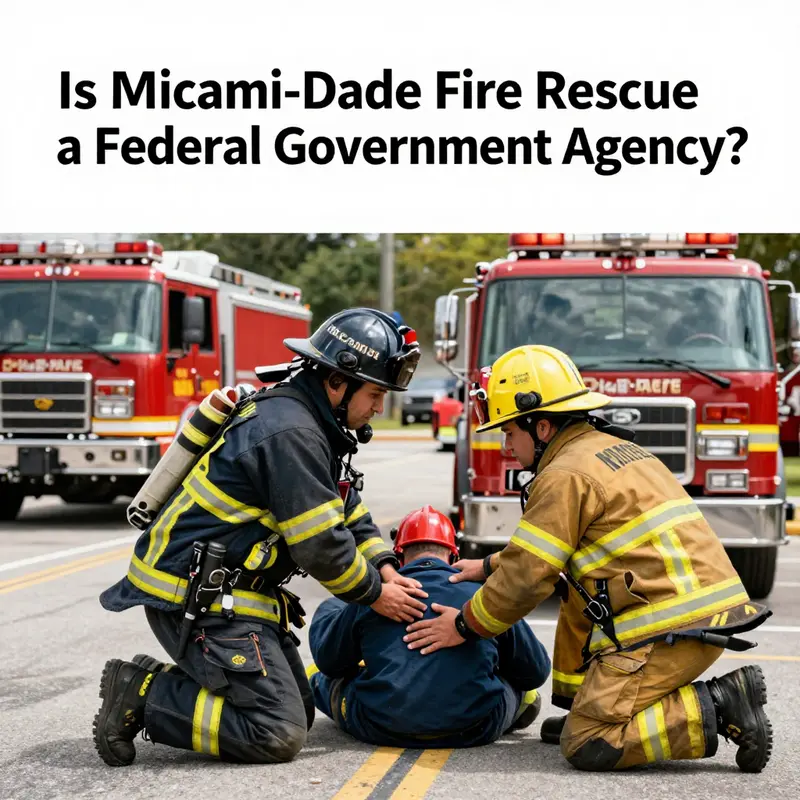
Miami-Dade Fire Rescue (MDFR) operates as a cornerstone of public safety within Miami-Dade County, a municipal and county-level system that exists squarely outside the federal framework. This isn’t a tale of distant agencies with overlapping jurisdictions; it is a story of a local department whose authority, funding, and daily decisions are rooted in the counties and cities it serves. Understanding MDFR begins with a simple clarification: while the federal government maintains national standards and some shared resources for emergency response, MDFR is not a federal agency. It is a local government entity charged with protecting life and property across a densely populated urban core and a sprawling suburban landscape. That proximity to the communities it serves shapes every facet of its work, from response times to budget choices, training priorities to community engagement. In this light, the chapter that follows frames MDFR not as a stand-alone curiosity about government structure, but as a living system whose functions illuminate how local emergency services keep pace with growth, risk, and shifting needs.
MDFR’s service portfolio is broad, reflecting the complexity of modern public safety. Fire suppression remains a central mission—firefighters respond to fires in residential neighborhoods, commercial districts, and wildland interfaces where urban sprawl meets natural vegetation. But fire protection in a place like Miami-Dade demands more than extinguishing flames. Technical rescue capabilities, including vehicle extrication after crashes and high-angle rescues in challenging terrain, are embedded in daily practice. The department’s hazard materials response teams operate with careful coordination, guarding communities from the spread and impact of dangerous substances, whether from industrial incidents, transportation accidents, or unforeseen releases. In parallel with rescue and mitigation, MDFR provides medical first response with paramedic-level capabilities, delivering advanced care at the scene before hospital transport when seconds count. EMS operations extend into ambulance transport and patient handoffs, ensuring continuity of care as patients move from crisis to clinical settings.
One cornerstone of MDFR’s reach is its Air Rescue Division, which leverages helicopter assets to shave precious minutes off response times in hard-to-reach scenes. In a county with geography that includes dense urban cores, coastal zones, and large parklands, air support can be the difference between rapid medical intervention and prolonged instability. The airborne component is not a luxury; it is a practical response tool designed to extend the reach of ground units, enable rapid disaster assessment, and assist search-and-rescue missions when terrain or weather challenges block access. The 24/7 operational tempo ensures life-saving interventions are available around the clock, a critical feature given the unpredictable cadence of emergencies—from overnight medical calls to multi-vehicle collisions stretching across hours of the evening.
The local impact of MDFR’s work reverberates through everyday safety and extraordinary crises alike. In day-to-day terms, the department’s readiness translates into faster incident stabilization, reduced casualty rates, and more efficient medical transport for residents who rely on timely care. The agency’s presence in communities acts as a deterrent to fires and hazardous conditions through proactive inspections, public education, and collaborative planning with neighborhoods, schools, and business districts. In larger events—natural disasters, large-scale accidents, or public-safety emergencies—the department’s capacity to mobilize, coordinate, and adapt under stress becomes a public good that residents do not always consciously notice until a crisis emerges. The narrative of MDFR’s local service is therefore not only about the dramatic rescues but also about the reliable, quiet competence that keeps neighborhoods safer every day.
Yet the chapter of local service comes with its own set of tensions. The economic footprint of operating advanced equipment, particularly the air rescue helicopters, has weighed on budgets and sparked discussions about sustainable funding. Fire union officials and other stakeholders have pointed to the substantial ongoing costs required to maintain a fleet, ensure trained staff availability, and stay current with evolving safety standards. When communities expand or shift, so do the costs of maintaining high-capacity response systems. Against this backdrop, funding mechanisms such as impact fees collected from new developments within designated benefit districts have emerged as a practical approach to offset some of the incremental costs associated with enhanced emergency services. These fees, collected within carefully defined geographic boundaries, help ensure that the county’s growth contributes to the services that support it, rather than shifting all burdens onto existing taxpayers. The concept is not new, but in a county as dynamic as Miami-Dade, it raises important questions about equity, sustainability, and governance.
The administrative and policy structure behind MDFR reinforces its local orientation. The department operates under county and city oversight, with governance rooted in local policies and regulations. This arrangement promotes accountability to residents and business owners who fund the services, and it enables MDFR to calibrate its operations to demographic shifts, traffic patterns, and the changing intensity of urban development. The boundary between local authority and federal influence is clear in practice: MDFR complies with state mandates and federal- and state-supported safety frameworks, but it does not fall under federal control. The result is a responsive system that can tailor its strategies to the characters of different neighborhoods—from high-density urban corridors to suburban neighborhoods with expanding commercial activity and growing traffic volumes.
In contemplating the local impact, it is essential to recognize the role of community partnerships. MDFR’s effectiveness hinges on relationships with law enforcement, public health agencies, school systems, and the private sector. Joint training exercises, mutual-aid agreements, and shared emergency operation centers create a cohesive response network that stretches across jurisdictional lines while preserving the department’s local identity. These collaborations underscore a broader truth: in a sprawling county where risk profiles vary widely from one community to the next, the ability to synchronize resources quickly is a function of local governance, not federal direction. The county’s data infrastructure, including GIS systems that map fire-rescue resources and district boundaries, informs decisions about deployment, staffing, and capital investments. The connection between data, policy, and on-the-ground action is a practical demonstration of local capability in action.
An important facet of the local approach is public-facing education and accessibility. MDFR’s presence in schools, community centers, and neighborhood events helps residents understand basic safety practices, the reasons for high-skill responses, and the long arcs of emergency readiness. When communities understand how MDFR operates, they can participate more effectively in risk reduction—whether through proper storage of hazardous materials at home, safe vehicle occupancy practices, or adherence to building codes that reduce fire risk. This educational role also reinforces the local, accountable nature of the agency. As a municipal entity, MDFR reflects the values and priorities of the neighborhoods it serves, answering to residents first and foremost, with a cadence and cadence changes that reveal the pulse of the county’s public safety needs.
The chapter would be incomplete without acknowledging how MDFR connects to the broader question of federal involvement. The simple answer—that MDFR is not a federal agency—does not diminish the importance of federal standards, federal funding opportunities, or national best practices. MDFR participates in statewide and federal-aligned training programs, leverages federal grants when available, and aligns with national benchmarks for EMS, fire safety, and technical rescue. Yet all of these elements are implemented through local channels, implemented by locally elected officials and county executives who set priorities for staffing, equipment, and emergency medical capacity. That structural distinction matters for residents who experience MDFR’s service and for readers who seek to understand how emergency response systems are built and sustained in a densely populated, highly diverse region.
For readers seeking a concrete sense of how growth shapes the funding framework, consider the role of Fire Rescue Impact Fee Benefit Districts, a mechanism that ties new development to the costs of enhanced emergency services. The county’s GIS data provides a clear map of where these districts operate and how funds are allocated to support air operations, staffing, and equipment. This framework demonstrates that local funding choices, while sometimes contested, are designed to keep service levels responsive to population growth rather than letting costs drift outside the reach of the communities they serve. In this context, the debate over long-term sustainability becomes a conversation about local priorities, fiscal responsibility, and the capacity of a county to adapt to changing risks without compromising public safety.
In the spirit of practical insight, a recommended touchpoint for readers who want to connect the theoretical with the experiential is to explore related resources that speak to career pathways and safety certifications. For example, a piece on the importance of safety credentials can illuminate how individuals prepare to join MDFR’s ranks and contribute to the continuity of service. Readable, career-oriented guidance offers a human face to the department’s technical prowess and reminds readers that the strength of a local fire-rescue system rests on a pipeline of trained professionals who translate policy into action on the ground. You can find a concise discussion of this pathway here: Unlocking Your Future: The Vital Role of Fire Safety Certificates.
Where this chapter ends, the conversation continues about how infrastructure, governance, and community engagement sustain a local emergency service in a rapidly changing environment. MDFR’s story is not about a distant federal mandate but about a living, locally grounded force that stabilizes daily life and responds decisively when the unpredictable occurs. It is a narrative of speed, skill, and shared responsibility—an embodiment of what it means for a community to bear the costs and reap the benefits of robust, locally controlled public safety.
For those seeking official context on district boundaries and administration, the county’s Fire Rescue Impact Fee District data offers a precise geographic and policy reference. Access to the underlying boundaries and budgetary implications helps illuminate how growth translates into service delivery decisions and how residents can participate in the ongoing conversation about funding, accountability, and public safety priorities. External readers may consult the county GIS resource at this link: https://gis.miamidade.gov/arcgis/rest/services/Planning/FireRescueImpactFeeDistrict/MapServer/0
Local Roots, Broad Reach: How Miami-Dade Fire Rescue Builds Community Partnerships Without Federal Control

Local roots shape how Miami-Dade Fire Rescue (MDFR) approaches community engagement. The agency is organized and governed at the county level, yet its daily work extends far beyond municipal boundaries. This creates a dynamic where MDFR must balance local accountability with collaboration across jurisdictions and with federal partners when needed. The result is a networked approach to public safety: MDFR remains a municipal agency, but it operates as a hub for coordinated preparedness, training, response, and resilience across Miami-Dade County.
MDFR’s community engagement begins with familiar civic connections. The agency participates in local chambers of commerce, neighborhood associations, and civic groups to maintain two-way lines of communication. These relationships are not symbolic. They foster practical outcomes such as coordinated public safety messaging, planning for large community events, and targeted outreach to vulnerable populations. Regular involvement with community organizations helps MDFR identify specific local risks—transportation corridors, high-rise vulnerabilities, or language access needs—and to design programs that reduce those risks.
Recognition and visibility form another part of community engagement. Public ceremonies and awards allow MDFR to honor first responders and to highlight the human side of emergency services. These events strengthen community trust and encourage volunteerism and civic support. For example, MDFR leaders and personnel frequently participate in local ceremonies where their presence underscores the department’s commitment to service. Such visibility reinforces the message that MDFR is accountable to the residents and businesses that fund and rely on its services.
Partnerships extend into education and prevention. MDFR conducts public education campaigns on fire safety, hurricane preparedness, and emergency medical awareness. These campaigns are tailored for diverse audiences across the county and often use community partners to reach harder-to-reach groups. Schools, faith-based organizations, senior centers, and multilingual media partners amplify MDFR’s messages. The department also provides demonstrations and training at community centers, helping residents adopt simple, lifesaving behaviors such as creating evacuation plans or installing smoke alarms correctly.
Training and exercises are central to MDFR’s collaborative model. While the department trains its own personnel to high standards, it also invites and joins neighboring agencies in joint drills. These exercises simulate real-world disasters—hurricanes, structural collapses, mass casualty incidents—and test communications, resource sharing, and incident command systems. Joint training reduces duplication, clarifies roles, and enhances interoperability. It also builds personal relationships among responders, which pay dividends during actual emergencies when rapid coordination matters most.
MDFR’s collaboration with neighboring fire departments and municipal emergency services strengthens mutual aid arrangements. Mutual aid allows resources to flow where they are most needed during peaks of demand. In practice, this means apparatus, specialized teams, and personnel can be dispatched across municipal lines under prearranged agreements. Mutual aid is particularly crucial in large-scale events that overwhelm a single jurisdiction’s capacity. These arrangements are rooted in local governance and mutual agreements rather than federal control.
When incidents escalate to larger scales, MDFR works with state and federal partners. Coordination with the Florida Division of Emergency Management ensures state-level resources and planning integrate with county efforts. When disasters cross thresholds, MDFR and county authorities may seek federal assistance from agencies such as the Federal Emergency Management Agency (FEMA). Such collaboration does not change MDFR’s status as a county agency. Instead, it represents a pragmatic approach: draw on all available resources while retaining local command and accountability. Federal agencies provide supplemental capabilities, funding, and technical expertise during major incidents, but they do not supplant the operational control of the county.
This layered partnership model—local, regional, state, federal—relies on clear governance and shared systems. MDFR uses established incident command structures to ensure clarity during multiagency responses. Shared communications protocols, interoperable radio systems, and joint planning documents make coordination smoother. These tools reduce friction and speed decision-making during high-pressure situations.
Public-private collaboration is another dimension of MDFR’s engagement. The department partners with businesses for event safety planning, emergency preparedness exercises, and infrastructure protection. Businesses often provide venues for training, access to specialized equipment, or logistical support during evacuations. In return, MDFR offers risk assessments and guidance on emergency planning tailored to industry needs. These partnerships improve community resilience by aligning private-sector continuity planning with public emergency response capabilities.
Outreach to vulnerable and multilingual communities is a priority. Miami-Dade County is diverse in language, culture, and housing types, and MDFR adapts its outreach accordingly. The department produces materials in multiple languages and works with community leaders to ensure culturally sensitive messaging. Targeted programs address high-risk groups—seniors, non-English speakers, low-income households—giving them practical tools and clear guidance before and during emergencies.
Youth engagement is another long-term investment. MDFR runs programs to introduce young people to fire safety and potential careers in emergency services. These efforts build public safety awareness and create pathways for recruitment that reflect the county’s demographics. Youth programs include station visits, classroom talks, and hands-on demonstrations. Such experiences demystify emergency work and encourage the next generation to see public service as a viable career.
MDFR’s commitment to continuous improvement shows in its adaptation of new practices learned through collaboration. Lessons from joint exercises, after-action reviews, and peer exchanges feed back into training curricula, equipment procurement, and operational priorities. This feedback loop ensures that collaboration yields tangible operational improvements, not just formal agreements.
Internally, MDFR fosters a culture that values partnerships and community input. Firefighters and staff are encouraged to engage with local stakeholders and to participate in community events. This grassroots engagement helps the department stay responsive to evolving community needs and to build trust before a crisis occurs.
The department also leverages modern communication channels to keep the public informed. Social media, community newsletters, and public dashboards allow MDFR to broadcast timely information during incidents. These platforms also support two-way communication: residents can ask questions, report concerns, and receive localized guidance. Effective communication reduces confusion during emergencies and supports coordinated public action.
For those interested in the department’s operational milestones and community-focused projects, MDFR sometimes highlights special initiatives such as new training facilities or equipment dedications. These milestones often involve community partners and underscore the shared investment in public safety. For a related example of a training milestone and its community significance, see the firefighter training tower dedication content.
Throughout all these interactions, governance remains local. MDFR answers to county leadership, elected officials, and the residents it serves. Collaboration with external agencies enhances capability, but it does not alter the department’s municipal status. This local accountability anchors MDFR’s approach to community engagement: the department is both of the community and a partner to a wider network of agencies when circumstances demand broader coordination.
For more information on MDFR’s ongoing community engagement and partnerships, visit the department’s official site: https://www.miamidade.gov/firerescue
Final thoughts
In conclusion, Miami-Dade Fire Rescue is firmly established as a local government agency, distinct from federal oversight. With a resolute focus on providing essential emergency services, this organization plays a pivotal role in ensuring the safety and well-being of Miami-Dade communities. Its framework operates under local laws, emphasizing autonomy in responding to emergencies and fostering community engagement. Understanding this structure not only enhances collaborative efforts among local agencies but also reinforces public trust in the vital services provided. As we regard MDFR’s impact, it remains a testament to the critical importance of local agencies in managing community safety effectively.