Finding the Fire and Rescue in Jane Eyre
Jane Eyre’s bedroom-fire scene prompts two questions from students and teachers. Which chapter is Rochester rescued in? And why does the same scene sit on a different page in every copy?
The answers are short. The rescue happens in Chapter 15, and the page number depends on the edition in your hands.
The fire starts and ends within a single chapter, early in Jane’s time at Thornfield. Citing the chapter instead of a page keeps the reference stable whichever printing you use.
Pagination shifts for ordinary reasons: typeface, page size, margins, and whether the publisher adds an introduction, notes, or divides the novel back into its original three volumes. None of that touches the chapter itself. To find the scene in your own copy, it helps to know which page the fire appears on and why that can differ from a classmate’s.
Dissecting the Fire Scene: Jane’s Agency and Rochester’s Secret
What Happens in the Scene
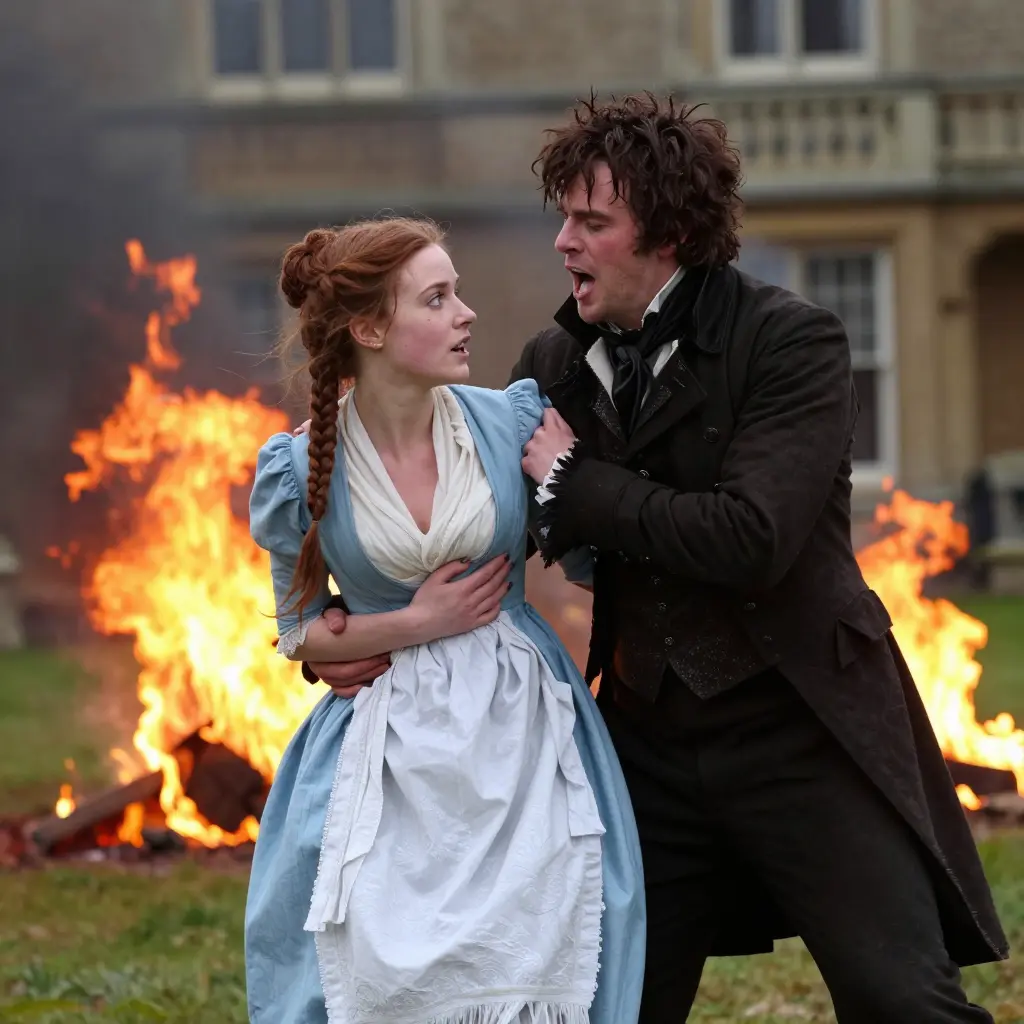
In Chapter 15, Jane is lying awake at Thornfield when she hears a low, suppressed laugh at her chamber door, then a sound that “gurgled and moaned.” She opens the door, finds a candle burning in the gallery and the air dim with smoke, and follows the smoke to Rochester’s room. His bed curtains are on fire and he is still asleep.
She cries “Wake! wake!” and shakes him, but he only murmurs; the smoke has stupefied him. She grabs the basin and ewer from his washstand, both full, and throws the water over the bed and over Rochester. Then she runs back to her own room for her water-jug and douses the bed again until the flames are out. The drenching finally wakes him. For readers tracking where this celebrated rescue falls in the novel, the placement matters as much as the action.
Rochester’s reaction is understated. He asks whether she saw or heard anything strange, then tells her it was Grace Poole and asks her to keep quiet: “You are no talking fool: say nothing about it.” The household is given a different story — that a candle left burning caught the curtains and that Rochester put the fire out himself.
What the Scene Reveals
The scene works on two levels. Literally, Jane finds the fire, chooses water over shouting, and puts it out. It is the first time she acts on her own judgment to protect Rochester, and it shows the composure the novel has been building in her: she does not wake the house, and she does not talk.
For Rochester, the same night is an exposure. He is helpless in his own bed and owes his life to his governess. That he suspects the fire was deliberate comes through in his answer — he blames Grace Poole and swears Jane to silence, folding her into a secret she never chose. The pattern of their relationship starts here: her nerve, his concealment, and an intimacy built in a dark room.
Mapping the Rescue: The Layout of Rochester’s Bedroom
The diagram is a rough plan, not an illustration: it reduces Rochester’s bedroom to the positions that matter for the rescue. The bed sits along the far wall, the door opens onto the gallery Jane comes from, and the bed hangings are burning.
Read the arrows as Jane’s path — she comes in from the corridor, crosses to the bed, and throws water on the burning drapes. The plan is only a shortcut; the scene itself belongs to Chapter 15, and where it falls in your copy depends on the printing.
- Bed: where Rochester lies asleep, along the far wall.
- Door and corridor: the way in for Jane, who hears the laugh and sees the smoke in the gallery.
- Directional arrows: Jane’s path from the doorway to the bed and the flames.
- Water: the basin and ewer on Rochester’s washstand, then Jane’s own water-jug from her room.
- Flames: the burning bed hangings.
The plan keeps the eye on movement and distance, which is what makes the rescue read as urgent.
Because editions differ in type size, paper stock, front matter, and whether the novel is split into volumes, the page on which Jane rescues Rochester shifts from copy to copy — the episode itself never moves. In every standard edition the bedroom fire occurs in Chapter 15 (the only later fire is the burning of Thornfield in Chapter 36), so the chapter is fixed while the page drifts. That distinction is what you want to remember when you quote or cite the scene. You can see how readers have long hunted for it in this guide to the Rochester fire scene and its page numbers. The table below compares five widely used editions.
| Edition / Publisher | Year | Editor or Series | Volume Arrangement | Approx. Page of Fire Scene (Ch. 15) | Notes on Pagination Differences |
|---|---|---|---|---|---|
| Penguin Classics (Black Classics) | 2006 | Edited with an introduction and notes by Stevie Davies | Single volume | approx. 168 | Compact setting with running notes; dense type pulls the scene slightly earlier than older printings |
| Oxford World’s Classics (Oxford University Press) | 2019 | Edited by Margaret Smith; introduction and notes by Sally Shuttleworth | Single volume | approx. 176 | Generous margins and a substantial scholarly introduction push the text a few pages later |
| Norton Critical Edition (W. W. Norton) | 2016 (4th ed.) | Edited by Deborah Lutz | Single volume | approx. 155 | Includes contextual essays and criticism bound in the same book, so the novel’s own pages sit earlier |
| Bantam Classics (Bantam Books) | 1987 | With an introduction by Joyce Carol Oates | Single volume | approx. 189 | Mass-market trim with smaller pages means more sheets for the same text, shifting the scene later |
| Signet Classics (Penguin Random House) – common school edition | 2008 | With an afterword by Erica Jong | Single volume | approx. 163 | Widely assigned in classrooms; sturdy trade pages give a mid-range value that varies with printing run |
The page numbers are approximate on purpose: two printings of the same edition can differ by several pages, so treat every figure above as an estimate rather than a fixed coordinate.
If you cite the fire scene, name the chapter (Chapter 15) plus your edition and year, and treat the page number as optional. Reprints, font changes, and added critical material all nudge the pagination, but the scene itself stays put.
Where Does the Fire Scene Land? Comparing Page Numbers Across Editions
Readers ask a simple question — what page does Jane rescue Rochester from the flames? — and there is no single answer. The scene always arrives in Chapter 15, on the night Jane hears the laugh and finds smoke coming from Rochester’s room. Everything around it changes: type size, margins, paper trim, introductions, and the small choices every publisher makes. The chart below plots the approximate page number of that rescue across six well-known editions.
[Chart: bar chart titled “Where Rochester Is Rescued: Fire-Scene Page Numbers Across Jane Eyre Editions,” with editions on the x-axis and page number of the fire scene on the y-axis.]
https://firenrescue.net/wp-content/uploads/2026/10/chart-jane-eyre-bar-chart.webp
The spread comes down to three things. Page density: a compact modern paperback fits a chapter onto fewer leaves than the 1847 three-volume edition, which was set in generous type for lending-library readers. Front and back matter: introductions, notes, chronologies, and appendices can push the scene dozens of pages in either direction. Reprint choices: facsimile and deluxe editions sometimes reset the text while keeping wide margins or illustrations, which moves Chapter 15 later. The rescue’s position follows the book’s design, not Brontë’s text, which is why your copy may put the flames on a different page than your neighbor’s. Before trusting any page number, confirm which chapter Rochester is rescued in.
How to Locate the Fire Scene in Any Edition
Every edition of Jane Eyre numbers its pages differently, so chasing a page number rarely works. The scene stays fixed; its position does not. Navigate by structure instead — the chapter is reliable, the page is not.
Start With the Table of Contents
Open the table of contents and look for the chapter number, not a page. In standard editions, the fire is in the chapter where Jane hears the strange laugh and finds the gallery full of smoke. Note the number and jump to that heading.
Use Searchable Ebook Functions
In a digital copy, search instead of scrolling. A distinctive phrase works better than a general keyword: “the curtains were on fire,” or the line Jane cries when she finds him, “Wake! wake!” A unique phrase lands you within a few paragraphs of the rescue in any layout.
Rely on Consistent Chapter Headings
Chapter headings rarely change, even across editions and translations. “Chapter XV” in one printing is “Chapter XV” in the next, however widely the page counts differ. Anchor to the heading and let the page number fall where it may.
Consult a Concordance or Study Guide
A concordance or study guide maps key events to chapters, giving you a fixed reference point when you are unsure where to begin. For a quick companion reference, see our Jane Eyre fire scene page guide.
Used together, these methods will get you to the scene in any copy, print or digital.
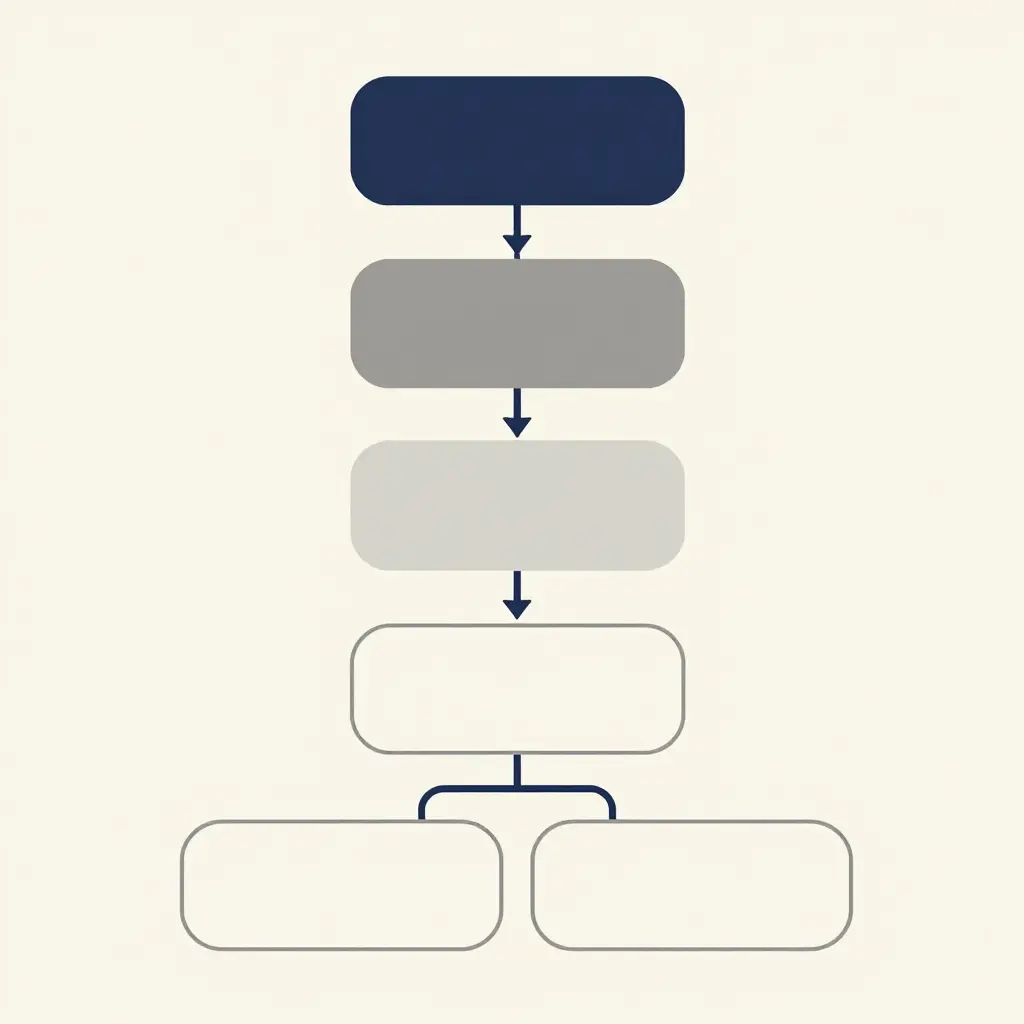
Image brief for the design agent
Goal: A clean, flat 2D flowchart that visually maps how a reader can find the fire scene in Jane Eyre across any edition – without a single word printed on it.
What to depict (as abstract steps only):
- Step 1: Open the book (shown as a simple closed box at the top).
- Step 2: Check the table of contents (a second box, connected by a downward arrow).
- Step 3: Locate the chapter number (a third box).
- Step 4: Confirm the scene (a fourth box).
- Step 5: Use search in a digital edition (a fifth box).
- Final branch: After the last box, split into two side-by-side boxes to suggest the two endings – confirming the scene in print versus confirming it in a digital copy.
Style rules:
- Flat, minimal, and strictly diagrammatic.
- Simple rounded rectangles and thin straight arrows only.
- Limited palette: three muted tones (soft navy blue, warm gray, pale cream) on a light background.
- Generous white space and uniform line weight.
Hard constraints:
- No text, words, labels, letters, or numbers anywhere in the image.
- No people, faces, or realistic scenes.
- No book illustrations or period details.
Placement note: Position this image away from the comparison table and the bar chart so the layout stays balanced and easy to scan.
Frequently Asked Questions
Jane Eyre Fire Scene FAQ: Which Chapter Is Rochester Rescued In?
The fire in Rochester’s bedroom takes place in Chapter 15 of Jane Eyre. Jane is lying awake when she hears a strange laugh at her door, finds the gallery dim with smoke, and discovers the bed curtains ablaze. She puts the fire out herself; Rochester never wakes until the water rouses him. So “which chapter Rochester is rescued” has a one-word answer: 15. You can read more background in our guide to the Jane Eyre rescue scene.
Which Volume Contains the Fire Scene?
In the original three-volume 1847 edition, Chapter 15 closes the first volume. Most modern single-volume printings drop the volume headings entirely, so you may never see a “Volume I” label. The chapter number stays consistent, which makes it the most dependable way to locate the scene.
Who Sets the Fire?
The novel implies it is Bertha Mason, Rochester’s secret wife confined to the third-story attic. The laugh Jane hears at her door is Bertha’s, and Rochester covers for her by blaming Grace Poole. Bertha’s laughter runs through the Thornfield chapters, and it comes right before the flames are discovered.
Who Rescues Rochester from the Fire?
Jane Eyre does. She is awake, finds him asleep while his bed burns, and puts the fire out with water from his washstand and from her own water-jug. It is the first time she saves him, and it changes how the two of them deal with each other.
Why Do Page Numbers Vary Between Editions?
Page numbers shift because each publisher selects its own font, font size, line spacing, paper trim, and margins. Introductions, footnotes, and appendices also push the main text onto different pages. An abridged or large-print version paginates differently again. That is why page 150 in one printing can equal page 122 in another.
Can I Find the Scene by Page Number in a New Edition?
No. Page numbers belong to a single printing and give no stable reference across editions. Use the chapter number instead (Chapter 15), or a keyword search for “fire,” or a quotation such as “the curtains were on fire.”
Key Takeaways: Chapter 15 and the Case for Chapter-Based References
Two points matter. The bedroom fire and Rochester’s rescue both happen in Chapter 15: Jane, awake in her room, follows the smoke, finds his bed ablaze, and puts out the flames before he is seriously hurt. Page numbers are not a reliable anchor, because typesetting, trim size, font, leading, and editorial additions all move Chapter 15 around. Two readers with different editions will find the fire on different pages.
So cite by chapter. Students can quote the same passage whatever copy they own, teachers can plan lessons around classroom sets, and book clubs can discuss the scene without comparing page numbers. Chapter numbers survive reprinting, and as readers move between print, digital, and audio, they remain the clearest way to point everyone at the same moment. For a closer look at how the variations play out, see this guide to the Jane Eyre fire scene and page references.
Fire as Symbol and Theme in the Thornfield Bedroom Scene
Hidden Passion, Danger, and Secrecy in the Flame
The fire carries more than one meaning. Literally it is danger — “Tongues of flame darted round the bed: the curtains were on fire.” But fire in the novel also signals passion, and the blaze in Rochester’s chamber reads as the appetite he normally keeps banked. It is tied to Bertha Mason as well, the hidden presence on the third floor whose laugh precedes it. The fire makes the concealed visible: what Rochester will not say shows up as smoke and heat.
Secrecy is part of the image. Rochester covers the evidence, Jane keeps his confidence, and by morning the room shows no public trace. The hearth, usually a figure of domestic warmth, here does the opposite. Thornfield’s calm surface is covering something combustible, and the novel says so through the fire rather than through any character’s explanation.
The Rescue and the Growth of Jane and Rochester’s Relationship
The rescue is a turning point. Jane is the only one who responds, and Rochester survives because of her nerve. The governess, socially beneath him, becomes the one who saves him, and the dependence runs both ways. The night also binds them through a secret the rest of the household does not share. A bond built on a hidden fact will not stay comfortable, and this one does not; it foreshadows the fire that eventually destroys Thornfield. Readers who want the chronology can find it in this note on the rescue scene’s chapter placement.
Fire does more than advance the plot. It is passion with no safe outlet, danger without warning, and secrecy made physical — one image holding the novel’s worry about desire, concealment, and two people who cannot yet speak plainly to each other.
Further Reading and Related Resources
If you are leading a book club through Charlotte Brontë’s Jane Eyre or writing about the fire, these next reads may help.
-
Jane’s Rescue and the Rochester Fire Page – Walks through the Thornfield blaze scene by scene, including how Jane’s quick action saves Rochester and why the episode anchors the novel’s turning point.
-
Fire Safety Essentials and Certification Training – A practical look at the real-world fire safety knowledge and training that Brontë’s fictional disaster only gestures toward, handy for grounding classroom discussions.
-
The Meaning Behind a Fire and Rescue Service Motto – How rescue services compress courage and duty into a single phrase, an echo of the nerve Jane shows when she risks herself for another.