
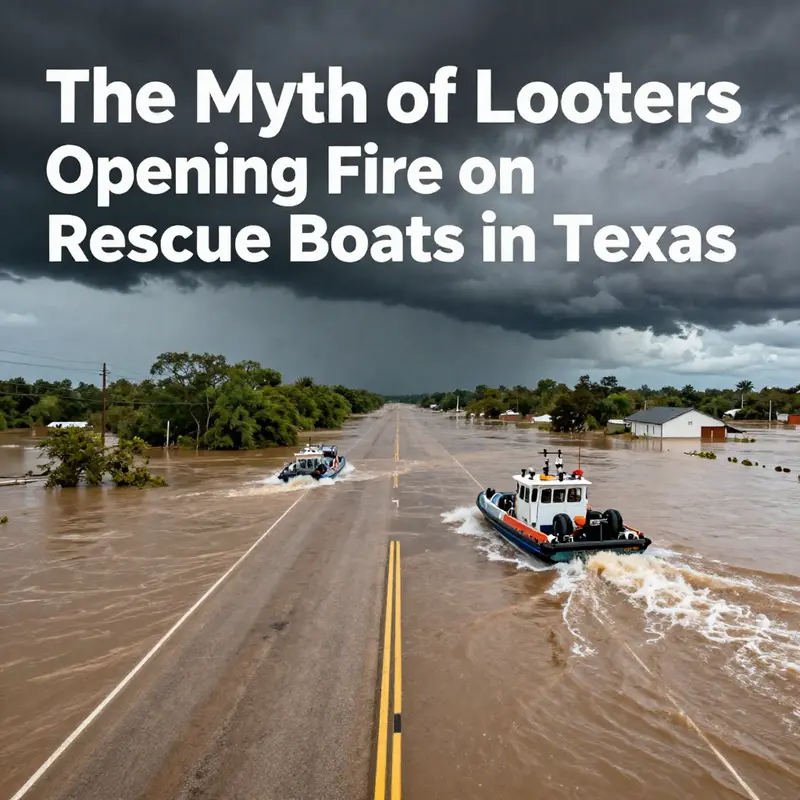
In July 2025, Central Texas experienced catastrophic flooding that resulted in significant loss of life and a coordinated emergency response. While stories about looters opening fire on rescue boats have circulated, investigations reveal no evidence supporting such claims. This article delves into the real circumstances surrounding the flood, including casualty numbers, the challenges faced during rescue operations, government responses, and the implications for public safety. Each chapter aims to provide a comprehensive understanding of this crisis, focusing on factual information rather than unverified rumors.
Looters, Fire, and Rescue Boats: Separating Fact from Fear in Texas Flood Rescues
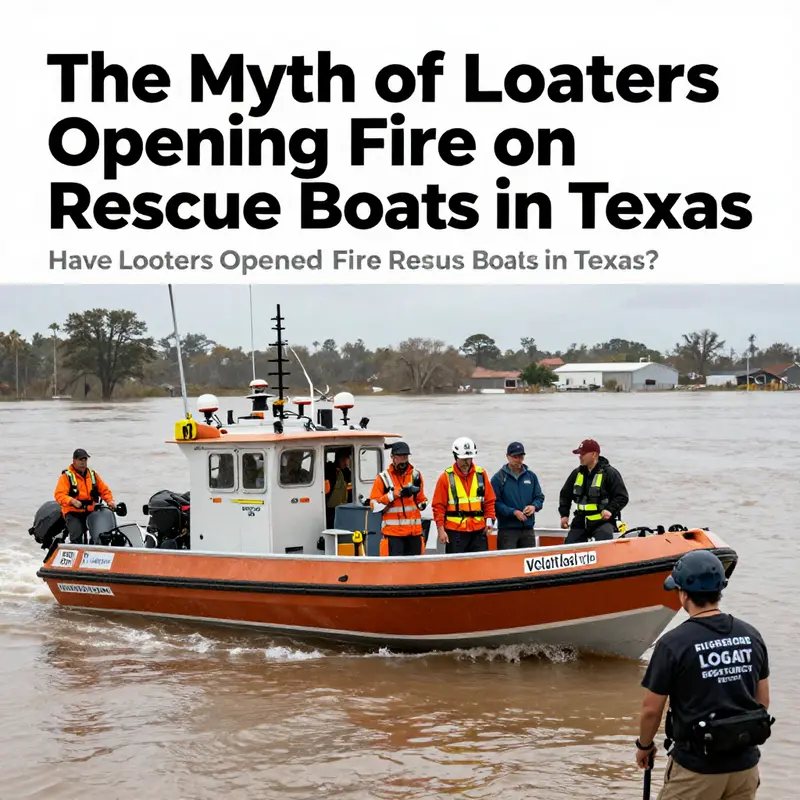
The July floods carved a memory into Central Texas that would be recalled in the same breath as the state’s enduring cattle, sun, and stubborn hope. Water rose with a relentlessness that turned neighborhoods into islands and streets into rivulets of current. In the tumult, a series of questions circulated faster than the helicopters that circled above: Were looters exploiting the chaos? Did armed individuals open fire on rescue boats as they threaded through flooded avenues to pull people from rooftops and windows? The available records, grounded in official briefings and careful reporting, offer a clear, at times sobering, answer: there is no credible evidence that looters opened fire on rescue boats in Texas during these flood rescues. Yet the absence of gunfire did not erase the fear, nor did it erase the ethical demand that the public, responders, and reporters alike carry: separate rumor from reality, and never mistake haste for certainty when lives are at stake.
What happened on the water and in the neighborhoods around the Guadalupe River and other flood zones was not a cinematic showdown, but a sustained effort of coordination, courage, and care. Rescue teams moved with a measured cadence, the soundscape of their work punctuated by the hum of drone rotors, the thump of engines, and the occasional shout over the roar of wind and rain. The rescue operation drew on a broad alliance: local fire departments, state agencies, and federal partners, all contributing to a choreography of access that could keep pace with the water. Reports indicate roughly 850 individuals were rescued, with more than 400 participants involved in the search and rescue efforts. The scale of that operation speaks to the magnitude of the disaster, but also to the discipline of the responders who refused to be overwhelmed by the flood’s advance.
The factual frame is important because it anchors a much more human story: the people who lived through the flood, the families torn from routines, and the communities that clung to one another as the waters rose. In Texas, a state accustomed to storms both natural and man-made, there is a long institutional memory about how to respond when warnings come and warnings fail, when the river exceeds its banks and when the landscape becomes a map of risk. In July 2025, that memory translated into a response in which the primary concern was not sensational headlines but the practical safety of rescuers and the people they were trying to save. Boats navigated through debris and currents, helicopters abated their hover to reduce fatigue on crews, and drones offered a calm, aerial procurement of information that could guide ground teams to pockets of people stranded in attics or trees. The weather posed another hazard as relentless rainfall created shifting currents and flooded lanes that could undermine a rescue if not anticipated. In these conditions, the question of looters—whether they posed a risk to rescue operations—was not simply a matter of crime statistics, but of the credibility of information, the integrity of emergency communications, and the ethics of reporting.
The public accounting during this disaster aligns with what emergency management professionals often insist: to perceive danger without letting fear distort judgment. In the Texas floods, there were indeed past episodes of looting in other storms or in other cities—most notably after Hurricane Harvey in 2017, when some reports described theft in exposed storefronts and homes. But even then, there were no confirmed cases of armed looters targeting rescue boats. The emphasis in these events tends to be on securing safe corridors for responders, maintaining clear lines of communication, and deploying law enforcement to deter opportunistic crime while not interfering with the urgent work of saving lives. The absence of such violent incidents in the Texas floods becomes meaningful when set against the backdrop of how disasters can quickly become laboratories for rumor and rapid amplification of unverified claims. In an age where information travels at the speed of a like button, the risk is not merely misinforming the public but creating a perception of danger that can hamper rescue operations and erode trust in emergency leadership.
To understand why the rescue effort proceeded with a focus on protection rather than confrontation, it helps to consider the structure of the response. Federal authorities activated emergency protocols, with a federal emergency declaration enabling the mobilization of resources and funding that could sustain a long-duration response. FEMA coordinated the response, a testament to the federal-state partnership that underpins large-scale disaster management. The presence of high-level visitors or public assurances from national leaders often becomes a focal point for questions about safety and security, and in this instance, officials cited the essential principle of safeguarding both the public and the rescuers. The narrative that emerges is not one of dramatic gun battles or rogue actors but of a concentrated, multi-agency effort to move people out of harm’s way while simultaneously preserving the integrity of rescue operations. The practical reality is that boats, radios, night vision devices when necessary, and a carefully staged sequence of rescue missions all functioned to maximize safety rather than to escalate risk.
What danger did exist was the danger of water itself. Floodwaters, even when not laced with sudden threats, can mutate quickly, shifting from manageable streams to powerful torrents that drag vehicles, debris, and even people in ways that defy easy movement. Responders learned to respect the water as a force with a memory and a temperament of its own. The ethical obligation that accompanies such power is clear: rescue teams must maintain strict protocols to protect life, including maintainable routes for retreat, redundancies in equipment, and continuous situational updates to prevent missteps. In the absence of credible reports of violence, the emphasis turned to the steady, often unsung labor of the responders—those who risk their own safety to ensure others do not drown in the flood’s reach. Those who watched from shorelines or in the relative safety of high ground found a different hazard: misinformation, fatigue, and the emotional weight of fear. The resilience of families, neighbors, and volunteers is an enduring feature of Texas flood narratives, and it repeatedly shows up in the stories of the rescued—parents clutching photographs of children, elders guided to dry ground, and teenagers assisting one another to keep morale intact as the water crept closer to thresholds that had once signaled safety.
Within this tapestry, one recurring thread deserves attention: the way information circulates in the absence of a single, definitive on-scene narrative. Local law enforcement and emergency management officials worked to dampen rumors by providing regular, factual updates through official channels. They stressed the importance of safety over spectacle and cautioned residents and the wider public against approaching rescue sites in ways that could interfere with operations. This prudent communication strategy was essential as people sought to understand what was happening and why. Even when social media amplified rumors—some of which claimed armed looters had targeted boats—the authoritative voice of responders served as a counterweight, gradually shaping a more grounded understanding of risk. The lesson extends beyond the Texas floods: in disaster scenarios, credible information is as critical as the resources deployed. When the two align, communities can make informed choices about protective actions, and responders can maintain the functional tempo necessary to save lives without becoming prey to fear itself.
For practitioners and researchers who study disaster response, the Texas events offer a case study in how rumor management intersects with operational safety. The absence of verified violent encounters on the water does not render concerns about security moot, but it does suggest that the framework of protection and deterrence, when effectively implemented, can keep both responders and civilians out of danger. The security posture in these operations is not about showcasing a warlike stance; it is about preserving the capacity to perform life-saving work while minimizing risk. In practice, that means secure perimeters, coordinated staging areas, and a respect for the channels that move people to safety without drawing on chaotic confrontation. It also means acknowledging the reality that fear will travel faster than facts, especially when communities are flooded, hungry, anxious, and waiting for news about loved ones. The challenge for journalists, researchers, and public officials is to translate the fear into careful scrutiny of evidence and to resist the urge to turn every claim into a headline—an ethical stance that protects the integrity of the narrative as the flood waters recede and the real work of recovery begins.
This is not a story about sensational confrontation but about the arduous, methodical work of rescue under physically punishing conditions. It is also a reminder that disaster-response credibility rests on the alignment of several factors: timely warnings, rapid deployment of trained personnel, the availability of equipment capable of withstanding harsh weather, and an information ecosystem that distinguishes between rumor and verified fact. In the Texas floods, the record shows the latter prevailed. There were no verified reports that looters opened fire on rescue boats, a conclusion supported by the consistent messaging from authorities and the absence of corroborating eyewitness or law-enforcement testimony to that effect. The absence of such incidents does not erase the fear that naturally accompanies catastrophic weather, but it does support a narrative of resilience: trained responders, disciplined operations, and communities that come together to rebuild when warnings become memory and memory becomes action.
For readers seeking ways to understand or contribute to safety and resilience in future disasters, there is value in focusing on the practical, repeatable elements of the response. Training in essentials of fire and rescue safety—such as navigation through floodwaters, risk assessment in moving-water environments, and the ethical coordination of multi-agency responses—forms the backbone of a resilient system. Those who pursue such training can use the knowledge to safeguard themselves and others, and to contribute to a culture of careful, evidence-based reporting. For professionals looking to strengthen their own safety practices, resources on fire safety essentials certification training can offer a grounded, accessible starting point. The aim is not to anticipate every future hazard but to empower responders and citizens with the habits and knowledge that reduce harm when danger is both present and uncertain.
As the floodwaters receded and the long process of recovery began, the discourse around security and risk in Texas moved from the heat of reaction to the slower, steadier work of rebuilding trust. Investigations, after-action reviews, and public briefings would carry forward the lessons learned—lessons about how to balance vigilance with compassion, how to prevent rumor from distorting reality, and how to maintain the momentum of rescue missions even as water levels fell. The absence of violent incidents targeting rescue operations should not be mistaken for complacency. It underscores a commitment to the most fundamental principle of disaster response: first, do no harm; second, save as many lives as possible; third, restore normalcy with a steady, evidence-based approach. These are not abstract ideals. They are the operational DNA that keeps rescue boats moving through the last reaches of floodwater and the communities they serve intact.
For readers who want a broader historical perspective, it is also instructive to compare this Texas episode with other disasters where chaos and rumor tested the resilience of emergency systems. In every instance, credible reporting and disciplined operational protocols proved essential to preventing unnecessary risk. The Texas floods, with their combination of intense rainfall, rapid water rise, and complex rescue challenges, reinforce the principle that the most powerful tool in a disaster is not a weapon but a well-structured response. In the end, the chapter on looters and security concerns confirms a crucial distinction: fear is loud, but facts, carefully gathered and responsibly communicated, are louder still. And when those facts point to a lack of violent interference with rescue boats, they also point toward a narrative of competence, courage, and communal resilience that can guide recovery long after the waters have gone down.
External context is also a reminder of the ways past events shape present expectations. The Hurricane Harvey experience, cited in national reporting, demonstrated that looting occurred in some areas during storms, but did not document armed attacks on rescue operations. This historical pattern helps frame current assessments and underscores why officials emphasize safety and evidence over speculation during ongoing emergencies. As Texas continues to rebuild and communities reflect on what happened, the focus remains on protecting lives and strengthening the systems that make rescue possible. The absence of violent disruption to rescue boats, while not a triumph in itself, becomes a data point in a larger narrative about effective disaster management and the discipline needed to prevent harm in the midst of chaos. In that sense, this chapter does more than answer a question about looters. It contributes to a broader understanding of how communities endure, how safety protocols evolve, and how truth, not rumor, becomes the compass guiding both reportage and response in the face of nature’s unpredictable force.
External resource for historical context: https://www.apnews.com/article/hurricane-harvey-looting-texas-2d3a4f1b5c9e4a6b8e1f3b2a1c0d5f7e
The Eye of the Flood: Debunking the Myth of Looters Opening Fire on Rescue Boats in Texas
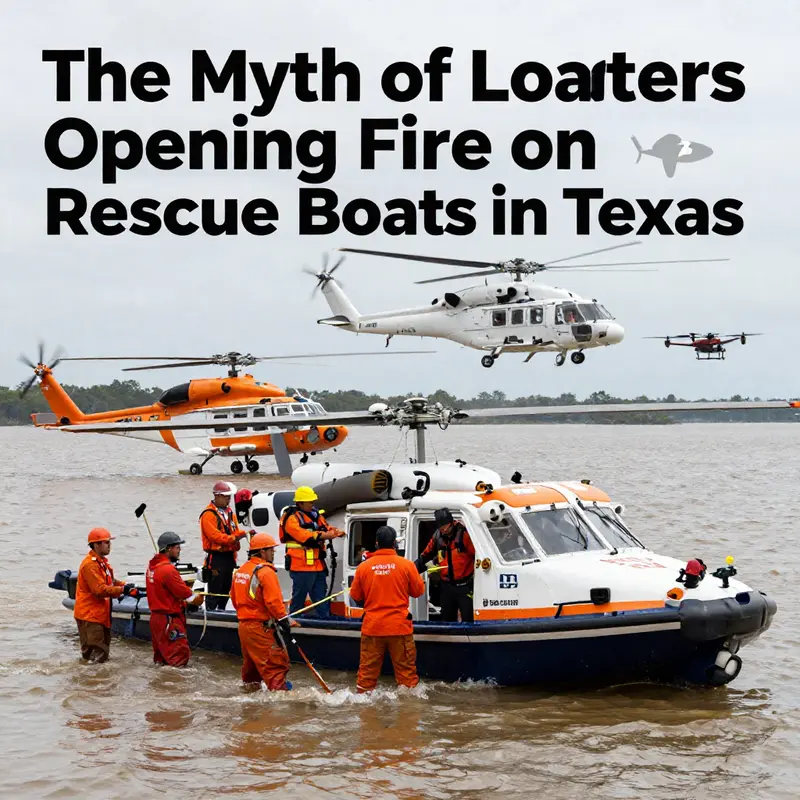
Water can rise with a force that seems to erase the very ground underfoot. In Texas, 2025 brought a catastrophe that tested every dimension of emergency response: a rapid, unrelenting flood that overwhelmed homes, displaced communities, and stretched rescue services to the limit. Early reports painted a stark tableau: dozens of lives lost, hundreds immersed in danger, and ongoing search and rescue operations beset by continuous downpours and shifting currents. Official tallies described at least 82 people confirmed dead with dozens more missing, including a crew of campers who vanished along the Guadalupe River. In the midst of the chaos, roughly 850 individuals were rescued, with more than 400 people involved in the ongoing search and rescue efforts. Teams fought through a storm that did not simply threaten from above but pressed inward from every angle—winds, swirling debris, water that moved with a purpose, and a landscape that changed from hour to hour. Booms of thunder, the whine of rotor blades, and the rasp of ropes and pulleys formed a soundtrack that spoke to a disaster unfolding on multiple fronts. The federal response sharpened quickly into focus as well: a federal emergency declaration was signed, FEMA coordinating the broader response, while state and local authorities marshaled National Guard units, law enforcement, and volunteer organizations, all working under a unified command structure designed to prevent duplication of effort and maximize life-safety outcomes. In that context, the real conversation about rescue operations was not the rumor mill but the precise, often grueling work of getting people out of harm’s way and into safety, often with little more than hours of daylight, and with weather that could swamp a shoreline or a culvert in minutes.
The broader arc of disaster in Texas carries echoes of earlier, more publicized floods—most notably the catastrophic floods in 2017 associated with Hurricane Harvey—where water rising faster than most could react created a theater in which responders learned, adapted, and improvised in real time. Those experiences did not vanish with the end of the weather events; they informed how agencies planned for, deployed, and sustained operations under continuous strain. Rescue missions depended on a combination of boats to navigate flooded streets, helicopters to reach locations inaccessible by land, and drones to map hazards and locate survivors. They required seamless coordination across agencies, from local fire and police departments to state emergency management offices, and finally to federal partners who could provide specialized equipment, additional manpower, and essential resources such as temporary housing, medical care, and water safety supplies. Each element of this coordinated response was designed to reduce risk to both victims and rescuers, even when the environment itself became an adversary.
In such moments, however, rumor travels faster than water. Across social feeds and informal networks, questions about looters and violence occasionally surface, sometimes as a consequence of the chaos that accompanies catastrophic events. In the Texas floods, the claim that looters opened fire on rescue boats drew attention precisely because it would represent a dramatic shift from the more familiar hazards of floodwaters—currents, debris, and electrocution risks—to a confrontation that would require law enforcement to pivot from search and rescue to crime suppression in mid-rescue. Yet, after careful review of official reports and corroborated accounts from agencies on the ground, there is no credible evidence or verified documentation indicating that armed looters targeted rescue teams in these operations. While isolated incidents of looting have occurred in some disasters, these actions have not included gunfire directed at rescue personnel during the Texas flood response. The absence of such events in the formal records is not a mark of complacency; it is a testament to the focus and discipline of responders who prioritized life-saving actions above all else, even in the face of an environment that could have swallowed boats, crews, or continuity of mission in a single, violent surge.
The real dynamics of the rescue effort reveal a different story—one about resilience, precision, and the physics of water. Rescuers faced currents that shifted with every thunderclap, weather patterns that could reconfigure a flooded street into a swift river overnight, and the persistent challenge of debris—logs, broken glass, submerged vehicles—that could snag a boat or injure a rescuer. The risk calculus was constant and exacting: speed and reach had to be balanced with safety protocols, and decision-makers needed timely information to determine where to deploy assets and how to sequence rescues. In many instances, the most harrowing moments came not from a gunshot or confrontation but from the environment itself—water that could suddenly surge into a doorway; a vehicle that could drift into a culvert with a trapped occupant inside; a collapsing porch or wall that could threaten both victims and rescuers. These threats required a layered approach to safety. Boats operated under the constraints of visibility, radio communications, and the need to avoid creating additional hazards for people already in danger. Helicopters provided aerial reconnaissance and rapid extraction of individuals in the hardest-to-reach pockets, yet they were limited by weather and the risk of rotor wash on unsteady water surfaces. Drones offered a degree of real-time hazard mapping, allowing crews to chart safer routes and identify clusters of people in need of help, all while keeping eyes trained on the bigger picture of weather patterns, water levels, and shifting flood lines.
Within this framework, the myth of armed looters opens a window into how communities grapple with fear and uncertainty in the aftermath of disaster. The fear of violence can amplify the sense of vulnerability among survivors and responders alike, feeding rumors that can distract from the urgent, shared mission of rescue and relief. The truth is that disaster response is a high-stakes, high-stress enterprise that leans on training, discipline, and collaboration. It relies on established protocols that stress triage, safety, and rapid mobility, with teams moving in a relay of roles: incident command coordinating resources, rescue crews rapidly deploying into flood zones, medical teams ready to treat injuries or exposure, and logistics specialists ensuring that food, water, and shelter reach those who need them most. The narrative that emerges from this work is not one of chaotic fear but of focused effort under pressure, with responders drawing on every asset to maximize the odds that a mother, an child, a elderly neighbor, or a stranded family can be reunited with safety.
The importance of preparation cannot be overstated. Training is a cornerstone of effective flood response, shaping how teams read water, make decisions, and communicate under duress. In the aftermath of such events, inspections, debriefings, and after-action reports distill lessons learned into practical improvements for future responses. A chapter of experience—learned through drills and real incidents alike—highlights the value of readiness that goes beyond equipment and vehicles. It encompasses the crew’s confidence in their own procedures, the clarity of the incident command system, and the trust built among partners across jurisdictions. The emphasis on training is echoed in the ongoing discourse about safety certifications and professional development. A resource that encapsulates this idea is the emphasis on fire safety essentials certification training, which underlines how formal qualifications reinforce prudent practice in the field and support the repeatable, scalable response that flooding demands. For readers exploring this chapter, the internal resource anchors a broader understanding of how individual readiness translates into collective capability on the ground: Fire Safety Essentials Certification Training.
Beyond the immediate rescue, the Texas flood response also foregrounded the social dimensions of disaster. Communities came together to protect each other, sharing shelter, food, and information while public agencies worked to restore services and maintain transparent communication. The federal government, coordinating through FEMA, played a crucial role in mobilizing resources, supporting local response, and ensuring that the long arc toward recovery could begin as soon as the water receded. The presence of the National Guard and other civil authorities demonstrated a multi-layered approach to governance in crisis: a careful balance of enforcement, safety, and humanitarian relief designed to prevent chaos from eclipsing rescue. The aim was not merely to remove people from danger but to preserve the social fabric of neighborhoods that would rely on neighbors, faith groups, schools, and small businesses to rebuild in the weeks, months, and even years ahead.
In the longer view, the Texas floods offer a useful case study in how communities absorb shock and adapt. The absence of credible reports of violence against rescuers does not imply an absence of risk; it acknowledges instead the reality that a well-coordinated response can reduce both the immediate danger to life and the potential for secondary harm from disorder. This understanding dovetails with the broader imperative of disaster readiness: invest in training, practice, and the infrastructure that supports rapid, safe evacuation and recovery. It also invites the public to engage with official channels for information, to verify claims before sharing them, and to recognize the quiet but essential labor of those who venture into harm’s way to bring others out of it.
As a narrative thread that carries forward from the immediate crisis into the next chapters, this chapter would not shy away from analyzing the balance between fear and fact. It would not gloss over the tragedy of lives lost or the pain of families waiting for news. Yet it would insist that the most trustworthy account of events emerges not from sensational rumors but from the disciplined, data-informed reports produced by federal, state, and local authorities. Those reports illuminate how rescue operations unfold under pressure, how safety protocols are tested and refined, and how communities can rebuild with greater resilience in the wake of flood. In this sense, the flood is not merely a challenge to endure; it is also a catalyst for improved response, stronger preparedness, and a culture that values accuracy as a public good. For readers who want to connect the practical, on-the-ground realities with the policies that shape them, the text invites a closer look at the resources that guide this work and the training that sustains it.
To anchor this discussion in concrete steps and ongoing learning, consider engaging with resources that emphasize the practical aspects of safety and preparedness. For instance, the fire-safety essentials training referenced earlier provides a framework for how responders build and maintain the competencies that allow them to move quickly, think clearly, and act decisively when every second counts. By centering training as a core element of disaster response, readers can appreciate why myths surrounding violence in disaster zones can distract from the real work of rescue and recovery and why verified information remains essential for public trust.
In the end, the Texas floods of 2025 underscore a fundamental truth about disasters: the most meaningful impact is made not by sensational headlines or rumors, but by the steady, coordinated work that gets people out of danger and back to safety. The absence of armed confrontation in rescue zones does not absolve the broader danger; it highlights instead the priority of systematic response, the value of interagency cooperation, and the enduring commitment of frontline workers who, even in a season of rain, hold the line for their communities. The narrative moves forward with the expectation that future chapters will examine how recovery unfolds, how communities rebuild, and how the lessons learned become the groundwork for better preparedness next time around. Meanwhile, the record stands as a reminder that truth, verified through credible reporting and official channels, is the anchor that keeps the public informed and the response focused on saving lives.
External resource for further context: https://www.fema.gov/disaster/4369
Fact, Fear, and the Rescue Lines: Debunking the Myth of Looters Opening Fire on Texas Rescue Boats
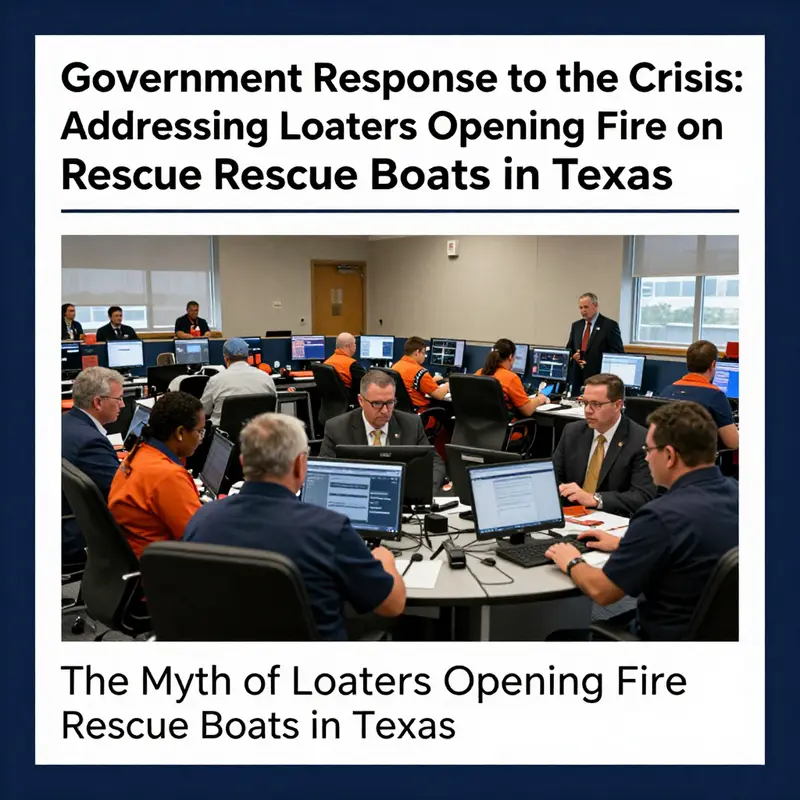
When disaster presses in on a place like Central Texas, the ground seems to tilt in two directions at once: the raw, liquid force of floodwater and the volatile currents of rumor. In July 2025, relentless rainfall turned rivers into moving barriers that swallowed roads and strand countless people. Rescue teams—civilian volunteers, local responders, air units, and vessel crews—stretched across the landscape, navigating fast-swelling channels, shifting debris, and silts that masked what lay beneath the surface. The story that emerged from the floodwaters centers on endurance and coordination: hundreds of rescues, families reunited, and a broad, multiagency response that sought to blanket the affected area with safety, information, and aid. Yet amid the work of boats, helicopters, and drones, a narrative took root that did not reflect the operations on the water. The claim that looters opened fire on rescue boats did not find corroboration in the evidence available to researchers or to the agencies charged with tracking every incident known to law enforcement and emergency management. In a crisis, it is not unusual for fear to outpace verified fact. But it is equally essential that the record be kept straight, not to blunt the heat of fear but to preserve trust between responders and the communities they serve, which is the real currency of rescue when every minute counts.
To understand how rescue work unfolds in such conditions is to glimpse a choreography born from necessity. Floodwaters surge with a stubborn, unpredictable persistence, sweeping through neighborhoods with currents that can reverse in an instant. Boats become lifelines as streets become streams and bridges become memory. The numbers from the Texas operation tell a quiet story of magnitude: hundreds of responders, dozens of boats of varying sizes, a fleet of helicopters, and a growing network of drones that map the flood’s evolution and locate those still in danger. The operational tempo is high, yet disciplined. Crews deliberate risk against need, balancing the imperative to reach as many people as possible with the imperative to keep rescuers as safe as possible. In such settings, the emphasis is on verified, timely actions, not on sensational claims that cannot be substantiated by on-scene reports and official records.
The government response to the flood, as documented in the public record, further anchors the narrative of organized, authorized action. President Trump signed a federal emergency declaration, a step that unlocks resources and coordinates the integration of federal, state, and local capabilities. The Federal Emergency Management Agency (FEMA) mobilized to support the state’s needs, from sheltering displaced residents to supplying essential equipment for search and rescue. When a crisis reaches this scale, the response becomes a system—one component feeding into another, a web of agreements, priorities, and shared information. DHS leadership visits and oversight create a reassuring signal to communities that their safety is a national priority, even as the work on the ground remains intensely local: water rescues in shallow neighborhoods, high-water operations along riverbanks, and the careful orchestration of aerial surveillance that keeps both civilians and responders out of harm’s way. Such details matter because they convert fear into a plan and fear’s static energy into movement toward safety and recovery.
Despite the emotional pull of dramatic stories, the factual record from the Texas flood emphasizes resilience and method over mayhem. There were, indeed, dramatic moments—rescuers pulling elderly residents to safety over the glint of water, volunteers sharing flashlights and towels as night fell, and families clutching photographs and blankets as they found temporary refuge in shelters. The weather’s insistence and the sheer scale of displacement created a challenging environment in which a single rumor could take on a life of its own. In these moments, the role of official communication becomes critical. For communities facing the unknown, the dissemination of accurate, timely information matters more than the speed of a breaking headline. The absence of evidence for looters firing on rescue boats does not erase the fear that rumors can generate; rather, it highlights the importance of evidence-based reporting, clear guidance from authorities, and ongoing updates that reflect the evolving situation on the ground. In this regard, the Texas response aligns with best practices observed in large-scale FEMA operations: rapid risk communication, transparent sharing of rescue metrics, and an emphasis on civilian safety as the central objective of every operation.
The mechanics of rescue work during a flood demand a particular kind of literacy—not just the ability to swim or to pilot a boat, but the capacity to assess risk in real time. Rescuers contend with currents that carry them toward submerged obstacles, with downed power lines that lurk beneath the surface, and with shifting eddies that can complicate navigation. The work demands precise teamwork: captains and crew coordinating with spotters, medical teams, and relay points to ensure that every person brought to safety receives necessary care. In this environment, an unverified claim about weapon use would not only distort the public’s understanding of the events but could potentially complicate on-the-ground safety and response priorities. It could lead to misallocated resources or unnecessary precautions that slow the pace of rescues. By contrast, the actual record shows a disciplined focus on the line between water and land, between danger and safe passage, and between the public’s need for information and the trust that sustains that information exchange.
A deeper layer to the narrative rests in how communities recover after the last boat leaves and the last drone footage is uploaded. The flood left behind a landscape of damaged homes, disrupted schools, and the long, patient work of rebuilding trust. Stories of missing children—those, tragically, including ten girls and a camp counselor connected to a mystery camp along the Guadalupe River—underscore the human stakes of the disaster. These stories remind readers that the press of a disaster is not only about what is seen on the water but also about what is recovered from memory, what is restored in schools and neighborhoods, and how agencies coordinate to prevent further harm in the weeks and months that follow. The presence of a robust search-and-recovery effort, the deployment of shelters, and the arrival of federal resources all become elements of a larger arc: a community’s movement from crisis to resilience, from rumor to verification, from helplessness to capable, organized action.
Within that arc, the support structures for responders themselves are crucial. Training and certification play a central role in maintaining a high standard of safety and effectiveness. The lifecycle of readiness for rescue work—from predeployment planning to on-scene execution and postmission debriefing—depends on an ethos of continuous improvement. Rescuers rely on compact, transferable skills learned in formal training that emphasize risk assessment, personal protective measures, and interagency cooperation. The professional vocabulary of the operation—command, control, communications, and coordination—becomes not a jargon but a shared operating system that enables dozens of agencies to work in tandem under pressure. The value of such preparation becomes evident when one reflects on how crews faced with high water and uncertain debris managed to keep every operation legitimate, legal, and focused on saving lives. In this context, one can see how a community’s confidence in its rescuers is as vital as the rescue itself. The presence of certified, well-trained teams helps ensure that operations remain transparent, accountable, and oriented toward civilian safety, rather than veering toward sensational narratives that might otherwise fracture trust at the moment when it matters most.
The challenge to public perception is ongoing, long after the water recedes. The presence of social media feeds that flash dramatic opinions alongside factual updates means that authorities and journalists must navigate the difficult terrain between immediacy and accuracy. The Texas experience offers a case study in how to reconcile the impulse to report quickly with the obligation to verify. When we see a claim that a looter opened fire on rescue boats without corroboration from law enforcement or emergency management logs, it invites caution. The lesson here is not that rumors never appear, but that the burden of proof must rest with those who make extraordinary assertions. In a well-functioning disaster response, the veracity of every claim is checked against on-scene reports, incident logs, and the consolidated timeline of rescue operations. The absence of any evidenced incident involving gunfire against rescue boats is consistent with the broader pattern of careful, measured action that defined the Texas response. This pattern is reinforced by the visible presence of federal coordination, state leadership, and local responders who pushed forward with the imperative to reach every person in danger while maintaining the highest possible safety standards for both civilians and rescuers.
The narrative, then, emerges not from a single sensational moment but from sustained, collaborative action. Families who were separated by floodwaters found relief as crews unlocked access to safety corridors, as clinics became emergency hubs, and as volunteers offered not just towels and water but a shared sense of solidarity. The moral center of the story is thus not a dramatic confrontation but a steady, daily commitment to preserve life in the most dangerous conditions. The rescue boats did their work under the watchful skies and the steady rhythm of coordinated operations. In the weeks that followed, communities would begin to map the path to recovery: assessing structural damage, coordinating housing and financial assistance, and rebuilding schools and businesses. The absence of a violent attack on rescue teams does more than confirm a lack of contact between looters and responders; it reinforces the idea that in times of crisis, law, order, and humanitarian concern can coexist with urgency and grit. It invites a broader reflection on how information, policy, and public memory interact to shape the understanding of what happened and what was possible when people chose to act in concert rather than to sow fear.
To those who were on the ground, the work was not abstract. It was tactile and immediate: the feel of a rope guiding a raft toward a porch, the hiss of a helicopter rotor cutting through the rain, the glow of a flashlight sweeping over waterlogged yards, the steady voice of a captain directing crews through stairwells filled with water, the quiet reassurance of a nurse preparing a relief kit for a family huddled in a shelter. The chapters of this disaster write themselves in the physical evidence of boats that carried more than people; they carried trust. The public record reflects not only what happened in terms of numbers or headlines but what happened in the silence between actions—the moments when a child’s small hand disappears into a rescuer’s glove, or a mother’s tearful smile returns as a child is handed to a relative amid the calming cadence of a medic’s instructions. In such instances, the fear of looting or violence recedes as the concrete, measurable work of saving lives takes precedence. The myth of a violent encounter on the water, if unsubstantiated, serves less to illuminate danger than to distract from the protection that responders continually provide. Yet the presence of such rumors also presents an opportunity: to deepen the public’s confidence in the mechanisms of disaster response, to validate the experiences of those affected, and to model a culture of accountability that can withstand the pressure of rumor in future crises.
In looking ahead, the Texas flood response offers a blueprint for how to balance speed with safety, urgency with accuracy, and local knowledge with federal coordination. It shows that a well-functioning rescue campaign depends on more than the ability to reach people quickly; it depends on the ability to keep people informed with honesty, to deploy resources transparently, and to anchor every action in the central aim of preserving life. The myth that looters opened fire on rescue boats does not survive the scrutiny of the record, and that absence matters just as much as the presence of remarkable courage. For communities still rebuilding, for families seeking closure after the flood, and for responders who carry the memory of those days, the truth offered by a careful, evidence-based account is a form of aid in itself—a kind of rescue that endures even after the water has finally receded.
The practical takeaway for readers and professionals alike is clear. Preparedness, clear communication, and interagency collaboration constitute the backbone of effective rescue operations in flood scenarios. If you are a responder yourself, consider how your training translates into real-time decisions when every second counts. If you are a member of the public, the lesson is to seek information from trusted authorities and to support those who work under impossible conditions to keep people safe. And if you are a policymaker or community leader, the Texas episode underscores the value of investing in both people and systems: robust training that translates into battlefield competence, and a communication infrastructure that makes accurate, timely updates the default rather than the exception. The convergence of these elements—the on-the-ground grit of rescuers, the strategic oversight of federal and state authorities, and the disciplined consumption of information by the public—creates a narrative not defined by fear but defined by resilience.
For those who want to explore this topic further and connect it to a broader discourse on safety culture and emergency preparedness, the discussion around essential training and certification remains central. See the resource that emphasizes the fundamentals of safety readiness: fire safety essentials certification training. This connection reminds us that the readiness of individuals and teams is the quiet engine that powers every large-scale operation, from floods to fires, and that the integrity of the response rests on the steady practice of safety principles and the disciplined execution of well-practiced procedures. In the wider context of disaster response, such preparation translates into real lives saved and communities held together by a shared conviction that truth matters, even when it is complicated by the storm’s noise. External context and guidelines from federal agencies further anchor these efforts, directing how resources are allocated and how information is communicated to the public. For those seeking official frameworks that shape how such a response is organized, consider consulting broad disaster-response guidelines and historical case studies that illuminate the interplay between local action and federal support. Further reading: https://www.fema.gov.
Flood Frontlines: Public Safety, Emergency Management, and the Reality Behind Looters and Rescue Boats in Texas
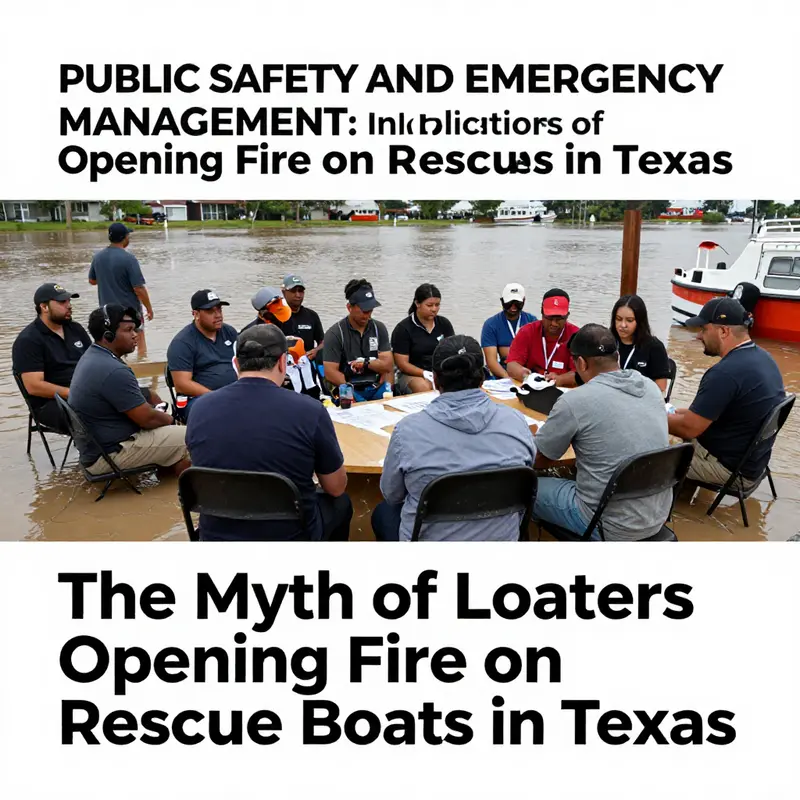
In the wake of the July flood that swept across Central Texas, the landscape of public safety and emergency management shifted from routine planning to high-stakes improvisation. The heart of the story is not a single dramatic moment, but a sustained, multiagency effort that stretched responders, resources, and communities to the edge and then kept them there. The water rose with a stubborn persistence, turning streets into channels, homes into pontoons, and schoolyards into stuttering echoes of evacuation orders. As responders moved through the floodwaters by boat, by air, and by drone, the work demanded a level of coordination that only appears in the most severe, prolonged disasters. It required weather-ready teams, preexisting mutual aid agreements, and a public communications apparatus capable of meeting fear, uncertainty, and rumor with clarity and care. And amid the currents and the sirens, a key takeaway emerged with surprising clarity: while the risk of violence in such crises is never zero, the immediate and recurrent hazards of flood rescue operate on a different plane—water, debris, collapsing structures, fatigue, and the fog of continuous rainfall that complicates every decision.
From the outset, officials painted a picture of a flood that did not discriminate by county lines. The disaster overwhelmed roads that were once navigable, forcing responders to improvise with boats, helicopters, and drones in a relentless search-and-rescue effort. About 850 people were rescued, and more than 400 responders and volunteers shared the workload across multiple jurisdictions. The numbers alone reveal the scale: a vast, dispersed operation requiring timely, accurate information to allocate scarce resources. The flood’s deadly toll—at least 82 confirmed deaths and dozens of missing persons, including ten girls and a camp counselor associated with a mystery camp along the Guadalupe River—underscored the human stakes that drive every contingency plan and field decision. In times like these, emergency management becomes less about following a plan and more about shaping a living, evolving set of responses to evolving conditions on the ground.
Crucially, the discourse around looters and violence during the rescue phase remained grounded in evidence. The account from agencies and observers across the operation offered no substantiation for reports that looters opened fire on rescue boats. That absence of evidence matters, not to minimize the dangers faced by responders, but to clarify the public safety narrative. In the thick of a crisis, rumors can travel faster than boats can—or should—move. Misinformation has a way of distorting risk, shifting attention from the immediate physical hazards to speculative threats that may or may not exist. The reality was that rescuers confronted treacherous currents, submerged debris, and the physiological strain of double shifts in the heat and humidity. These factors, rather than potential confrontations with looters, dominated the immediate danger calculus for responders.
The story of the Texas flood, however, is not simply one of preventing violence. It is a chronicle of how public safety and emergency management adapt to a disaster that strains the limits of weather forecasting, warning systems, and intergovernmental coordination. The federal layer of response—alerted by a presidential emergency declaration and coordinated by FEMA—intersected with state and local authorities, each with distinct but overlapping responsibilities. The presence of federal coordination did not erase local vulnerabilities; rather, it amplified the capacity to respond when local resources were stretched thin. It also highlighted critical questions about preparedness: Were warning systems sufficiently granular to anticipate rapid rises in water levels along tributaries? Could communities at the flood’s edge be reached quickly enough to evacuate before waters cut off major routes? Answers to these questions arrived in post-event analyses, even as responders pressed forward in the moment, building a composite picture out of ever-changing situational reports.
The flood’s human cost sharpened the ethical and operational edges of emergency management. The search and rescue missions unfolded in a domain where uncertainty is the only constant. The decision to deploy a mix of boats, helicopters, and drones reflects a layered approach to risk: water rescue demands speed and reach; air assets provide breadth and altitude; drones offer real-time reconnaissance and casualty assessment in areas inaccessible by water. Each modality has strengths and vulnerabilities. Boats are tethered to water conditions and patient stability; helicopters depend on weather windows and landing zones; drones must be trusted to reveal hazards without endangering operators. The layered approach allowed responders to pivot as conditions evolved, reducing redundant efforts and accelerating the recovery of those still afloat or trapped. Yet even with this orchestration, the operation was not without friction. Continuous rainfall complicated navigation and slowed the pace of ground operations. Floodwaters carried tree limbs, shifting banks, and hidden culverts that could suddenly alter a rescue route. In such settings, the moral weight of every mission is measured not only by lives saved but by the margins of safety preserved for those who carry out the rescue.
The flood also tested the way communities understand risk and how authorities communicate it. If warnings arrive too late or appear inconsistent, public trust frays. If warnings are too alarmist, people may become desensitized to later alerts. In this Texas episode, officials leaned into transparent updates about conditions, including ongoing risks of swift-water currents, debris hazards, and potential aftershocks of rainfall. They pressed for realistic expectations about what rescue teams could achieve each day, what routes remained accessible, and where people should shelter or evacuate. The emphasis on clear, consistent messaging was not only a matter of public safety; it was a corrective against rumor and panic. In the absence of violence as a recurring threat, the narrative that took center stage was the physical risk that water imposes on every channel of rescue operation, from the riverbank to the command post to the front lines of the boat crews.
A critical dimension of the narrative concerns the capabilities and limitations of warning systems and preparedness. The flood exposed the ongoing tension between meteorological science and community readiness. In the weeks after, discussions about weather forecasting accuracy, flood forecasting models, and the timeliness of evacuation orders gained prominence in public forums and internal reviews. The event highlighted that even the best forecasts cannot fully anticipate localized flooding patterns or rapid hydrographs in tributaries. Consequently, emergency managers must translate probabilistic forecasts into actionable decisions—where and when to stage resources, which neighborhoods to prioritize for rescue, and how to sequence evacuations. This translation is as much about communication and leadership as it is about hydrology and logistics.
The public safety implications extend beyond the immediate rescue operations. After-action reflections point to the need for sharper criteria for resource pre-positioning, more agile mutual-aid frameworks, and more robust training in high-water operations. The role of leadership at the intersection of FEMA, state agencies, and local jurisdictions becomes visible in these moments: decisions about where to allocate boats, how to coordinate with law enforcement for safety and security, how to protect vulnerable populations in shelters, and how to sustain responders who work long hours under intense stress. It is in these convergence zones—where policy, practice, and people meet—that the resilience of a region is tested and, ideally, strengthened. The Texas experience underscored that resilience is not an impulse that arrives in a crisis; it is built through sustained investment in people, capabilities, and systems that can be scaled up when the disaster grows beyond the reach of any single agency.
In the days and weeks that followed, communities began to absorb the wrenching costs of the flood: homes damaged or destroyed, families displaced, and the quiet trauma of those awaiting news on missing relatives. The emphasis on routine safety—hazard recognition, safe travel in floodwaters, and the proper use of life jackets and flotation devices—took on renewed urgency. Yet resilience also involves recovery and reconciliation. Local leaders, responders, volunteers, and survivors mapped routes toward healing—mental health supports, housing assistance, and job continuity programs—so that the response could yield durable benefits beyond the immediate rescue phase. The absence of violent incidents during the rescue phase did not erase the risk of other dangers, and it did not diminish the imperative to learn from what happened. The flood offered a set of lessons that can inform future emergencies: the need for faster, more precise warning dissemination; the importance of flexible, interoperable communications across jurisdictions; and the value of continuous training that keeps responders ready for the unpredictable shapes a disaster can take.
The chapter’s arc converges on a core idea: public safety and emergency management are a living system. They depend on informed citizens who understand risk, on responders who carry out life-saving tasks with discipline and care, and on institutions that maintain readiness even when the skies remain burdened by rain. In this frame, the Texas flood is less a single event than a stress test for a whole network of safety. It asks whether communities can tolerate long, difficult relief operations without losing sight of what truly matters: the people who are endangered by the flood and the ones who rush toward danger to help them. It asks whether the warning systems in place can shape choices in real time, and whether leaders can maintain trust when every day on the ground requires a new calculus of risk and resource. It also asks what the absence of an observed threat—such as looters firing on rescue boats—truly signifies. The absence does not imply that danger is gone; it indicates that, in this instance, the most immediate hazards were water, weather, and structural instability. In the end, the story of public safety and emergency management in Texas during this flood is a story of focus: focusing on the conditions at hand, the needs of the most vulnerable, and the ongoing ethical obligation to learn, adapt, and improve.
For responders and citizens alike, ongoing education in safety practices remains essential. The value of training that emphasizes core safety principles is clear: it reduces the gap between potential danger and practical action. Fire-safety essentials certification training offers a practical framework for understanding risk, recognizing hazards, and applying protective measures under pressure. This kind of training helps public safety personnel stay grounded in fundamentals while navigating the complexities of a large-scale flood response. It also serves the broader community by reinforcing a culture of preparedness, enabling individuals to make safer choices when water rises and roads disappear. As communities rebuild, the lessons from the Texas flood—about preparedness, coordination, and the limits of prediction—will shape how residents and responders approach future emergencies. The aim is not to anticipate every possible scenario but to strengthen the capacity to respond swiftly, protect the most vulnerable, and maintain trust when information is evolving and conditions are unforgiving.
Ultimately, the Texas flood narrative is a reminder that public safety and emergency management are not dramas with a neat climax. They are ongoing processes that require vigilance, humility, and a commitment to evidence over rumor. The absence of violence during the rescue operations should not overshadow the dangerous reality of floodwaters and the non-stop effort required to save lives. It should instead reinforce the principle that preparedness and disciplined response can mark the difference between rescue and loss. When the waters finally recede and the investigations begin, the focus will turn to how to translate what was learned into better warnings, faster mobilization, and more robust protections for those most at risk. In that sense, the chapter on flood response in Texas is not an ending but a beginning—an invitation to strengthen public safety and emergency management so that communities are better equipped to face the next storm, whatever its form may be.
External resource: https://www.fema.gov
Final thoughts
In summary, while the narrative of looters opening fire on rescue boats during the flooding in Texas has surfaced, it remains unsubstantiated by any credible evidence. The reality of the situation was characterized by severe challenges in rescue operations, significant loss of life, and commendable efforts by both government and community members. Addressing misinformation surrounding such incidents is crucial for maintaining public trust and ensuring that emergency management focuses on the pressing needs during crises. The need for readiness and support in future emergencies cannot be overstated, as communities learn and grow from these experiences.

