
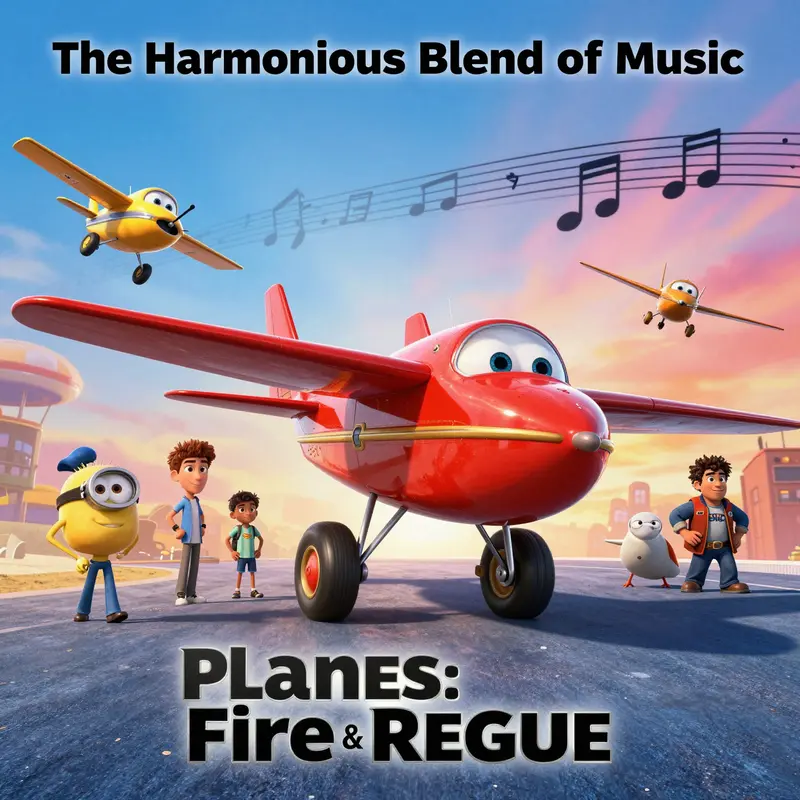
Music plays a pivotal role in storytelling, particularly in animated films like Planes: Fire & Rescue. Composed by the talented Mark Mancina, the soundtrack serves as an emotional backbone, enhancing both the adventurous spirit and the heartfelt moments of the film. This article explores the various elements of the soundtrack, including Mancina’s original compositions, the significance of original songs, and iconic tracks that contribute to the film’s energy. Readers will gain an appreciation for how each component works together to create a memorable auditory experience that complements the narrative.
Flight Path of Sound: Mark Mancina and the Music That Carried Planes: Fire & Rescue
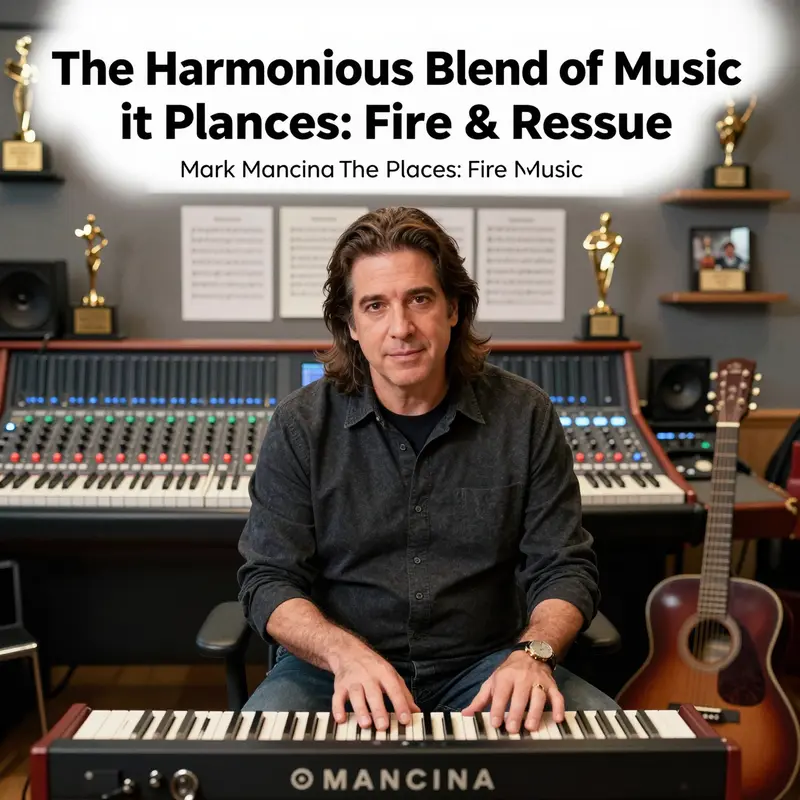
When a film about brave pilots and firefighting teams takes to the screen, its music often becomes the second pilot, guiding the audience through turbulence and relief alike. In Planes: Fire & Rescue, that guiding force is Mark Mancina, a composer whose work has long bridged the gap between animated adrenaline and emotional truth. Mancina’s original score for the 2014 film channels the urgency of high-stakes missions and the quiet, stubborn courage of a team that refuses to abandon a late-night vigil over a blazing hillside. His approach leans into the cinematic language that animated features demand, yet it remains deeply musical, a living organism of brass, strings, percussion, and woodwinds that moves with the plot rather than merely accompanying it. The music is never a detached ornament; it is the wind that pushes Dusty forward and the rain that cools the heat of a close call. It is at once expansive and intimate, a characteristic Mancina hallmark that fans of his work will recognize in even the film’s most compact moments.
From the first minutes, Mancina fashions an architecture of motifs that mirror the film’s dual pulse: the outward sweep of aerial adventure and the inward turn toward personal growth. The main title theme announces a bold, heroic tone, a musical doorway into a world of airstrips glittering in morning light and hangars humming with engine test runs. Yet the score does not treat heroism as a single sweep of fanfare. It refines the idea, threading a lineage of smaller, more fragile ideas through the larger theme so that risk never fully leaves the room. This is not a score that shouts about action; it unpacks the action’s shapes, letting the audience sense the geometry of a rescue mission—the approach, the turn, the climb, and the moment of relief that follows a successful mission. Mancina’s orchestral energy is balanced by moments of restraint, where silence and breath become musical phrases in their own right. It is in these quieter passages that the score reveals its emotional core: Dusty’s evolving sense of purpose and the unspoken trust that grows among the crew when every decision might hinge on a split second.
The sonic palette Mancina selects is both tactile and cinematic. You can hear the rumble of distant engines as if the film itself were breathing with the rhythm of the sky. The percussion skeleton provides propulsion during chase sequences, while the brass lines rise like a heat shimmer over a wildfire’s edge. In tracks that lean toward danger—moments of high alert when a fire seems to outpace even seasoned pilots—the music quickens, the tempo tightens, and the orchestration tightens its grip, signaling urgency without overstatement. In the calmer, more reflective moments, Mancina allows space for piano, delicate strings, and wind instruments to carry Dusty’s inner monologue—his fear, his insistence on learning, and the stubborn resilience that will carry him from novice to capable teammate. The interplay between risk and recovery is not merely narrated by the visuals; it is scored in real time, with the instrument choices and melodic shapes echoing the narrative’s emotional weather.
Among the musical pieces that anchor the film’s emotional arc, there are several that function almost as character voices. A piece devoted to the heat of a wildfire conveys the raw physical pressure of firefighting—the way heat, smoke, and wind conspire to obscure a rescue path. Mancina writes with a sense of forward propulsion, letting the strings snap into motion and then settle into longer, breathier phrases as the team recalibrates its plan. A softer, more contemplative cue accompanies Dusty’s training arc. It is in these softer moments that the score becomes a mirror, reflecting Dusty’s growth from a machine of speed into a steely, humane presence who understands that the job is about more than performance—it is about responsibility, teamwork, and courage tempered by humility. The score thus travels with Dusty through training and doubt alike, never letting the audience forget that the character’s humanity is the soundtrack’s through-line.
Tucked within Mancina’s broader musical tapestry is the contribution of a vocal element that adds a lyrical dimension to the film’s emotional landscape. An original song, performed by Spencer Lee, is woven into the narrative to punctuate key emotional beats and to crystallize a moment of resolve for Dusty. Co-written by Mancina and Michael Smidi Smith, the song offers a vocal counterpart to the instrumental themes: it gives voice to aspiration, longing, and a clarified sense of purpose that the character gradually discovers. The collaboration between Mancina and the songwriter team demonstrates how a film’s music can operate on multiple planes at once—as a structural spine for action, a sonorous confidant for intimate scenes, and a chorus that resonates in the viewer’s memory as Dusty’s own internal vow to persevere. The choice to place a vocal center within an action-driven narrative is a deliberate counterbalance; it invites the audience to feel the character’s emotional weather as keenly as they hear the engine roar.
In addition to these intimate and lyrical elements, Mancina’s score anchors itself in a more expansive, almost anthemic energy during pivotal moments of triumph. The film also features the kind of high-energy, crowd-pleasing moment that can hinge on a single, iconic musical gesture. In a sequence that brings together spectacle and emotion—the moment when the crew is tested against a ferocious blaze—the score collaborates with a familiar, iconic rock-inflected energy. The choice to integrate this ardent, recognizably charged music within an animated rescue narrative is a testament to Mancina’s willingness to blend contemporary sonic touchstones with timeless orchestral craft. It signals to the audience that even when the situation calls for precise technique and careful planning, the human heartbeat—the excitement of being alive and part of a team—needs a soundtrack that can rise with it. The effect is not to overshadow the action but to amplify it, to turn a sequence into a shared experience where the audience feels what the characters are feeling, at once exhilarated and protective.
The score’s legacy is as much about its structural cleverness as its immediate emotional impact. Mancina demonstrates a physician’s precision with tempo and mood, calibrating cues so they support the story’s pace without ever overpowering it. The music becomes a steadying force, guiding younger viewers through intense moments while offering a nuanced map of Dusty’s internal journey for older listeners who might appreciate the layering of motifs and counter-motifs. In this sense, the score performs a dual function: it is both a narrative voice for the film’s action and a companion for the more intimate drama of a pilot training to shoulder responsibility. The balance Mancina achieves—between propulsion and gravity, between the thrill of flight and the humility required of those who save lives—makes the music an intrinsic part of the storytelling, not merely an accessory.
For listeners who wish to explore the music in a more contemporary listening context, the official soundtrack is available on streaming platforms, offering a direct line into Mancina’s orchestral architecture and the vocal contributions that accompany Dusty’s ascent. The album presents the complete musical arc of the film, from the bustling energy of opening flight sequences to the quiet, resolute conclusions that sit like a calm after a storm. The experience makes clear how Mancina’s work for this film fits into his broader career, a career marked by a command of dynamics, a talent for crafting memorable melodic lines, and an instinct for matching musical mood to character arc with surgical precision. It is a reminder that film music, even in the most playful animated settings, can aspire to the same depth and resonance as more adult, ostensibly serious cinema.
In keeping with the film’s multi-layered production, the score also sits at the intersection of sound design and musical composition. The propeller hum, the crisp rush of wind over a wing, and the crackle of radio chatter all provide a sonic canvas against which Mancina paints his themes. The result is a score that feels lived-in, as if the air itself carries notes and cadences the listeners can follow. The music thus does not merely accompany the film’s visuals; it invites the audience to inhabit the aviators’ world. And in that inhabited space, the emotional stakes become legible in the music as clearly as they are in the dialogue and the film’s carefully staged action.
For readers seeking a deeper dive into the film’s production or a broader view of its musical landscape, the film’s broader blog ecosystem offers a wealth of context and reflection at firenrescue.net/blog. The writings there connect the dots between on-screen storytelling, the crew’s craft, and the ongoing conversation about safety, training, and the courage required to serve in high-risk environments. This is where the music’s impact is often discussed in relation to the film’s broader themes about teamwork, preparedness, and the quest to meet one’s limits with skill and solidarity. The score’s respectful integration into the film’s world-building stands as a model for how music can function as an essential element of character development and world-building in animated features.
If you want to hear Mancina’s musical argument in its purest form, the soundtrack’s listening experience is a revealing guide to how the composer translates emotion into sound, how he negotiates tempo with intent, and how he builds thematic resonance that persists beyond a single scene. The album’s tracks, including the main title and the more intimate cues, illuminate Mancina’s craft—the way a single motif can be transported through the film’s various emotional climates, evolving changes in texture, mood, and orchestration without ever losing its core identity. Listening through the score, one can hear how the composer’s choices mirror the film’s narrative architecture, and how the music, like Dusty’s evolving pilot’s perspective, grows more confident and capacious as the story unfolds.
In summary, Mark Mancina’s work on Planes: Fire & Rescue stands as a clear demonstration of how music and image collaborate to shape memory. The score’s athletic energy aligns with the film’s adventurous tempo, while its tender, reflective moments establish an emotional rhythm that makes the story’s stakes meaningful. The vocal contribution adds to that emotional depth, providing a concrete, human voice for a journey that could otherwise have remained entirely cinematic. Together, these elements form a soundscape that is at once exhilarating and intimate, a sonic counterpart to the film’s visual spectacle and its most intimate moments of character revelation. That balance—between scale and sensitivity, between victory and responsibility—embodies the artistry Mancina brings to this aviation narrative. The music, in other words, is not just heard; it is felt, guiding the audience through the film’s ascent, its danger, its cooperation, and its ultimate affirmation of courage.
For those who wish to explore the listening experience beyond the cinema, the soundtrack is available on streaming services, allowing the listener to step into the film’s world and hear Dusty’s story sung in orchestral color and vocal clarity. The music invites repeated listening, inviting listeners to notice how the themes return, mutated and strengthened, each time they reappear on the score’s map. This is the kind of score that rewards attentive listening, in which the emotional arc is not only seen on screen but carried within the listener as a memory of flight, of teamwork, and of the quiet bravery that keeps countless skies safe. The result is a soundtrack that remains accessible to fans and newcomers alike, a testament to Mancina’s enduring capability to fuse motion, emotion, and melody into a single, enduring flight path. Listen closely, and the music reveals how a composer can make a story’s heartbeat audible even when the audience cannot see the characters in the moment—only feel them, riding the current of sound toward a hopeful horizon.
External resource: Listen to Mancina’s complete soundtrack on Spotify: https://open.spotify.com/album/5tBqXQKfNjJv9pRgDmLlZP
Wings of Sound: How Mancina’s Score and Country Voices Shape Dusty Crophopper’s Courage in Planes: Fire & Rescue
The soundtrack of Planes: Fire & Rescue does more than accompany the action on screen. It acts as a second narrator, guiding the audience through Dusty Crophopper’s transformation from a high-speed racer to a frontline hero. In this film, music takes on a strategic role, threading together moments of quiet resolve and bursts of wildfire chaos with a sense of communal bravery. The musical language blends three seemingly distinct strands—an expansive orchestral score, emotive pop and country songs, and a few carefully chosen rock cues—into a single, coherent audio tapestry. At the center of this tapestry is Mark Mancina, a composer whose work has long thrived at the intersection of heart and spectacle. Mancina’s original score provides the backbone of emotional continuity, while the vocal tracks and diegetic energy of the rock and country selections provide color, pace, and texture for scenes that range from intimate self-doubt to erupting fires and jubilant rescues. The result is a soundtrack that feels essential to the film’s identity rather than merely decorative ambiance, a musical portrait of courage in motion.
Three anchor tracks define the emotional spine of the experience. First is the heartfelt ballad Still I Fly, performed by Spencer Lee and co-written by Mancina along with Michael Smidi Smith. The song’s gentle melody and reflective lyric constellation sit with Dusty’s inner weather—the fear, the stubborn desire to keep moving, and the belief that perseverance can bend even the fiercest winds toward hope. The lyric title itself encapsulates the film’s overarching message: moving forward is not about avoiding danger, but about choosing to face it with steadiness and grace. In the wildfire sequences, Still I Fly becomes the quiet pulse beneath the roar of flames, a reminder that courage often wears a soft, almost whispering form before it becomes a shout.
A second vein runs through the soundtrack as buoyant, character-driven country songs. Brad Paisley contributes Runway Romance, a tune that marries aviation imagery with lighthearted longing. It is a musical breath of air between near-disasters, a moment that humanizes the pilots and technicians who populate Dusty’s world with warmth and humor. The track does more than entertain; it reveals how relationships can tether a pilot’s sense of purpose to a larger life beyond the next airstrip or fire break. The third main strand, All In, is an anthem of determination and teamwork. Its driving rhythm and assertive vocal energy evoke the firefighter tradition—generation after generation answering the call with unflinching commitment. The song’s insistence on going “all in” mirrors the film’s second act, when Dusty chooses to risk everything for the team and the communities they serve. These two country tunes do more than accompany the hero’s arc; they frame the social and emotional ecosystem around Dusty as a place where personal growth thrives through shared sacrifice.
Yet the power of the Planes soundtrack does not stop at the door of vocal performance. Mancina’s original score weaves in tension and tenderness through a seamless orchestral vocabulary. In scenes of chaos, the music swells with bold brass, urgent percussion, and soaring strings that mimic the improvisatory tempo of a wildfire front advancing through a national park. A track like Fire! carries the kinetic energy of a line of planes ripping through smoke and heat, while Lightning Storm Fire layers atmospheric strings and metallic hits to evoke the storm-riven air and the peril that teams must weather together. The score calibrates pacing with surgical precision: moments of stillness become a surface for introspection, and sudden crescendos cue the audience to the imminence of danger. Conversely, tracks such as Sad Mayday and Dusty Crash Lands give voice to loss and vulnerability, letting the audience feel the fallibility that comes with heroic aspiration. In these moments, the orchestra does not overwhelm character emotion; it amplifies it, letting the viewer inhabit Dusty’s fear and then exhale with him when relief arrives.
A central strength of Mancina’s approach lies in how the score and the songs converse rather than compete. The main title theme—Planes: Fire & Rescue – Main Title—sets an epic stage that feels both cinematic and intimate. It introduces Dusty’s world as one defined by purpose and peril, inviting the audience to ride alongside the characters from the very first frame. As the narrative unfolds, the score doesn’t simply support the on-screen action; it deepens it. The orchestral lines thread through the melodic hooks of the songs, allowing moments of pop- and country-inflected warmth to bloom without losing the film’s sense of urgency. This fusion resonates particularly in the wildfire sequences, where the emotional density of the ballad and the grit of the country anthems are braided into Mancina’s percussion-forward impact. The result is a listening experience that feels as layered as the characters’ motives: Dusty’s personal growth is echoed in a music that is equal parts vulnerability and resolve.
Behind the scenes, the deliberate juxtaposition of genres serves a broader storytelling purpose. The country songs carry a sense of community and shared history, nodding to the film’s celebration of teamwork and service. The ballad provides a reflective counterpoint, inviting viewers to reflect on the costs and rewards of stepping into danger to protect others. The score supplies the film’s mythic spine, translating professional courage and practical skill into a sonic language that can be felt in the bones as well as heard in the ears. This musical ecosystem mirrors the film’s dual world: the fantastical, talking-aircraft universe where friends battle flames with cleverness and grit, and the real world outside the screen where firefighters train, collaborate, and risk their own safety to save others. In this way, the Planes soundtrack does not simply decorate the action; it becomes a conduit for empathy and admiration, inviting the audience to believe that heroism comes from a combination of personal resolve and collective effort.
The interplay between the score and the songs is not accidental but thoughtfully engineered to sustain momentum across the film’s runtime. The conversations between orchestral textures and vocal lines create a dynamic rhythm that reflects Dusty’s evolving sense of purpose. When he faces a moment of self-doubt on a treacherous wildfire mission, Still I Fly rises as a counterpoint to the fear, offering a reminder that motivation can be quiet yet mighty. When the action peaks, Runway Romance and All In lend a communal energy to the scene, signaling that the stakes are not only about personal glory but about the resilience of a crew that must rely on one another to survive and succeed. Mancina’s scoring philosophy—that music should be felt as a shiver of possibility before it becomes action—pervades the entire listening experience. The soundtrack thus becomes an emotional map of Dusty’s growth, a guide through the film’s most turbulent hours and toward a moment of communal triumph that feels earned and earned again through sacrifice.
For audiences who crave a deeper connection to the world of firefighting beyond the screen, the soundtrack also offers a bridge to real-world training and preparation. The film’s music harmonizes with the values of readiness, teamwork, and continual learning that define fire and rescue work in real communities. The emotional resonance of the ballad and the two country tracks can be seen, in a broader sense, as a reminder that resilience has many voices and that courage can be both personal and shared. In that light, the music invites viewers to consider how personal stories of perseverance dovetail with collective acts of service, much as a crew on the ground must synchronize skills, judgment, and trust to bring a blaze under control and protect lives.
The soundtrack’s enduring appeal can be traced to its ability to function as both a narrative engine and a memory scaffold. The melodies linger after the screen fades, inviting listeners to recall not only the thrilling visuals but the quiet moments of decision and doubt that make Dusty’s journey meaningful. The score’s emotional arc is complemented by the longevity of the vocal tracks, which continue to speak to fans about bravery, romance, and resolve in ways that feel human rather than cinematic. The album’s availability on major streaming platforms makes this listening experience accessible, ensuring that new audiences can discover these themes in their own time and space. The official release represents a complete listening journey that captures the film’s tonal range—from intimate confession to explosive action—without sacrificing clarity or emotional honesty.
In the broader context of how music can shape animated adventure stories, Planes: Fire & Rescue stands as a clear example of how a thoughtfully composed score and a carefully curated set of vocal performances can collaborate to illuminate a hero’s path. The score’s vocabulary of brass and percussion, the ballad’s intimate cadence, and the country tracks’ communal cadence together produce a sonic landscape that is as character-driven as the performances on screen. The music gives Dusty a voice that is both his own and a chorus of those who stand behind him, reinforcing the film’s central belief that heroism arises from a blend of personal grit and collective care. For educators, filmmakers, and music lovers, the Planes soundtrack offers a compelling case study in how music can become a character in its own right, guiding audiences through fear, doubt, camaraderie, and ultimately, courage.
To experience the full arc of these musical threads, listeners can explore the official soundtrack on Spotify, where the instrumental scores and vocal tracks sit side by side in a single listening journey that mirrors the film’s emotional compass. For those curious to see how music and storytelling align in a practical sense, a related discussion of the craft and training behind such cinematic soundtracks can be found in the FireRescue blog’s exploration of professional development, including insights into how training environments cultivate the discipline that makes both real-world rescue work and its cinematic representations possible. Explore this perspective at the firefighter training tower dedication article. firefighter training tower dedication.
In the end, the Planes: Fire & Rescue soundtrack demonstrates how music can accompany action without ever eclipsing it. The interplay of Mancina’s orchestral backbone, Spencer Lee’s heartfelt ballad, and Brad Paisley’s country anthems creates a musical ecosystem that mirrors the film’s core message: heroism thrives when individuals commit to a shared purpose and are willing to face danger for others. Dusty Crophopper’s evolution from racer to rescuer is not only a story of skill and bravery but a testament to how sound can elevate meaning, making the audience feel the weight of every decision and the release of every successful rescue as if it were happening in their own world. The soundtrack invites listeners to hear courage as an ensemble performance, where every voice—instrumental or human—contributes to a larger harmony that outlasts the screen and invites us to keep moving forward, together.
External resource: https://open.spotify.com/album/6a5XJdR9Z3mBwKqQcVrjGk
Melodic Rescue: How Original Songs Power Planes: Fire & Rescue’s Soundtrack
Music in Planes: Fire & Rescue is more than a decorative swell beneath action and emotion. It acts as a narrative current, guiding viewers through moments of risk, doubt, and triumph with a clarity that words alone could hardly achieve. While the film’s instrumentally crafted score provides the backbone of tempo and mood, its original songs add a distinct human voice to Dusty Crophopper’s ascent from a self-dating aviator of racing circuits to a trusted firefighter who faces fear head-on. This blend—an atmospheric score anchored by vocal tracks—creates a soundscape that feels both cinematic and intimate, a deliberate fusion that mirrors the film’s core themes of perseverance, teamwork, and sacrifice. In tracing the soundtrack’s architecture, we glimpse how the human voice, when positioned alongside an orchestral engine, can carry a story forward with a momentum that pure orchestration sometimes lacks. The result is a soundtrack that does not simply accompany the action; it participates in the action itself, becoming a vehicle for growth and resilience.
At the center of this sonic landscape stands Mark Mancina, the seasoned composer who crafted the film’s original score and helped shape its musical identity. Mancina’s approach to Planes: Fire & Rescue blends the immediacy of action cues with melodic lines that lodge themselves in memory long after the screen fades. The score’s signature pieces—evocative themes that rise and fall with the film’s arc—are paired with a set of original songs that push Dusty’s inner journey into a more personal register. The score gives listeners a sense of altitude and urgency, while the vocal tracks supply a heartbeat—an emotional throughline that anchors the audience to the character’s evolving sense of purpose. The main title theme, for instance, opens the door to a world of hot sun, high winds, and the possibility of heroism; it is a listening invitation that promises both adventure and tenderness, a balance that Mancina has long learned to strike when working on animated projects that demand emotional nuance as much as excitement.
Among the original songs, one stands as the film’s emotional core. “Still I Fly,” performed by Spencer Lee, is more than a melody; it is a compact anthem of perseverance. The lyrics resonate with the film’s central transformation, mirroring Dusty Crophopper’s arc from a plane who once doubted his place to a leader who stands tall in the face of danger. The refrain—Still I Fly—encapsulates a refusal to be defined by past limitations and a commitment to move forward, even when the path is uncertain. The song’s tempo—upbeat and buoyant—elevates moments of struggle into something uplifting rather than defeated, turning danger into a kind of manageable test of character. In this light, the music becomes an instrument of narrative propulsion, guiding emotional tempo the way Dusty steers a rescue through a smoke-filled canyon. The effect is not merely to accompany action moments but to amplify the courage that underpins each decision, from entering a burning hangar to guiding teammates through a collapsing structure.
The songwriting partnership behind these vocal moments also matters. “Still I Fly” was co-written by Mark Mancina alongside Michael Smidi Smith, a collaboration that reflects how the film’s music sits at the intersection of composition and storytelling. This collaboration yields a vocal arc that feels authentic to a character who learns to trust his own voice under pressure. The lyricism is accessible, almost anthemic, but never simplistic; it invites listeners to identify with Dusty’s struggle and to share in the sense of momentum that comes from choosing to push ahead when fear would rather pull one back. The reach of the song goes beyond the movie’s diegesis, entering the fan landscape as a touchstone for resilience in everyday life—the kind of takeaway that can turn a memorable film moment into a personal reminder to persevere.
But the soundtrack’s reach extends beyond a single track. Brad Paisley contributes two songs that blend country-pop warmth with the film’s adventurous energy. “Runway Romance” offers a playful yet poignant counterpoint to the action, capturing Dusty’s oscillation between identity and destiny. The tune’s light-hearted texture does not undermine the gravity of his mission; instead, it humanizes him, reminding viewers that pilots and rescuers are rooted in relationships, dreams, and the occasional longing for a simple connection amid chaos. Paired with the film’s broader themes, the song underscores a more holistic portrait of a hero—one who carries both a burning sense of duty and a soft acknowledgment of vulnerability. In a similar vein, “All In” translates the commitment to a vivid the-sky-is-the-limit philosophy. Its propulsive rhythm and resolute vocal delivery align with Dusty’s decision to fully embrace his new vocation, reinforcing the message that purpose is forged through total, sometimes risky, investments of time and energy.
Thematic resonance sits at the heart of these musical choices. The original songs are not mere background accents; they function as narrative milestones that punctuate key character shifts and dramatic turns. They offer musical landmarks that guide the audience through Dusty’s evolving self-concept—from a pilot who improvises under pressure to a firefighter who steadies others under pressure. In this way, the soundtrack’s vocal moments create a parallel track to the instrumental score, each reinforcing the other to deepen emotional engagement. The fusion of contemporary vocal pop with an orchestral heartbeat mirrors the film’s broader aesthetic: grounded in realism where possible, yet elevated through a cinematic sensibility that makes fantastical firefighting feel emotionally tangible. The songs provide a contemporary emotional vocabulary that resonates with audiences of all ages, while the score ensures that the film’s action never loses its momentum.
The soundtrack also reveals a willingness to experiment with sonic textures that cross genre boundaries. The inclusion of a powerful rock element in a family-friendly animation scene—an all-time favorite rock anthem placed at a pivotal moment—speaks to a willingness to juxtapose familiar musical signposts with the film’s own genre conventions. The contrast can be startling in the best possible way, jolting viewers into heightened awareness of the stakes while keeping the moment emotionally legible. The deliberate timing of such a track during a crucial rescue sequence underlines how music can recalibrate a scene’s impact, reminding viewers that heroism is not a one-note virtue but a spectrum of feelings—excitement, fear, relief, and wonder—each amplified by a different sonic color. The result is a soundtrack that feels both intimate and expansive, capable of guiding a child’s gaze toward a life-saving act and, at the same time, offering adults a layered listening experience they can revisit and unpack.
From a production perspective, the synergy between Mancina’s score and the original songs reflects a thoughtful process of musical storytelling. Mancina’s themes provide the scaffolding for the film’s emotional journey, while the vocal tracks land at critical emotional pitch points. The collaboration with songwriters and performers introduces a human voice that can articulate change with a clarity often harder to achieve through instrumentation alone. The interplay between the score’s formal precision and the songs’ melodic warmth creates a dynamic that makes the film’s auditory world feel coherent and alive. In practice, this means moments of high tension are balanced by songs that invite listeners to invest in Dusty’s inner life, turning the viewer’s attention from the immediate danger to the larger question of what it means to choose courage over fear.
For audiences, the effect of these original songs is lasting. They often emerge as the most memorable elements of the film, accessible enough for a first-time listener to enjoy, yet nuanced enough to reward repeated listening. The songs become touchpoints for fans; they serve as catalysts for reflection on Dusty’s journey and, by extension, on real-world ideas about resilience and teamwork. The music encourages a sense of shared purpose, a feeling that, no matter how large the sky, a crew can rely on one another to see a mission through. This resonance helps the Planes: Fire & Rescue soundtrack stand apart not only as a collection of tunes but as a cohesive emotional ecosystem—one where every track, be it a soaring orchestral cue or a chorus of determined voices, contributes to a larger narrative about growth, sacrifice, and the enduring power of hope.
For readers who want to explore the broader conversation about how media representations of fire safety intersect with real-world practice, a visit to the FireRescue blog can provide additional context and discussion about safety culture and training. the firenrescue blog.
If you would like to hear the original motion picture soundtrack in its full form, including the songs that anchor Dusty’s journey, the official release offers a complete listening experience that complements the film’s emotional arc. You can access the direct soundtrack release here: https://music.apple.com/us/album/planes-fire-rescue-original-motion-picture-soundtrack/1468257930
Thunderstruck Above the Runway: AC/DC and Planes: Fire & Rescue
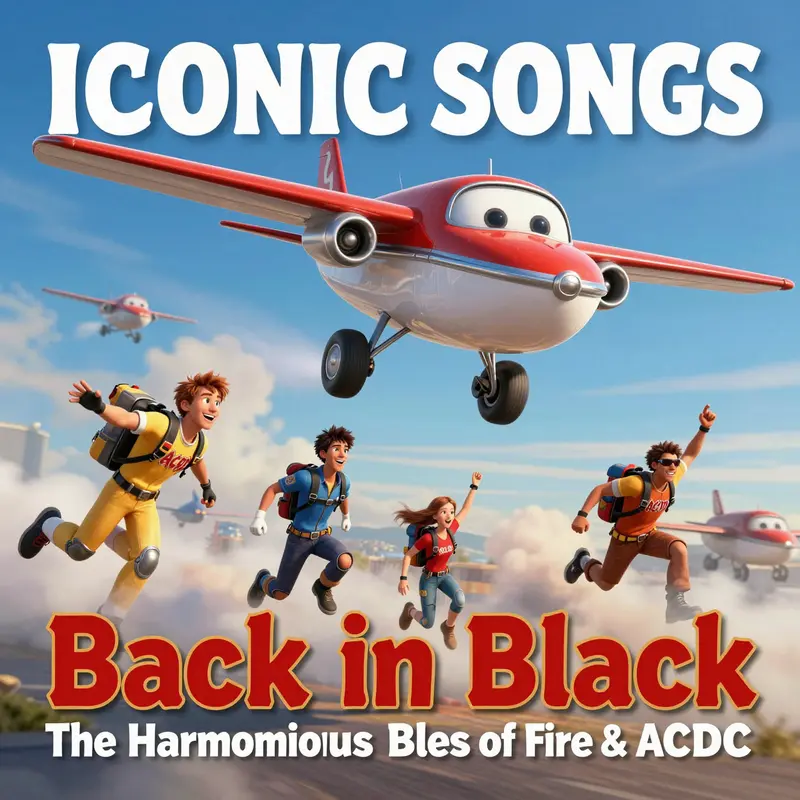
In Planes: Fire & Rescue, the soundtrack is a conversation between orchestral craft and rock energy. Mark Mancina’s score for the film provides the emotional spine with themes that travel from calm planning to high-stakes action. Interwoven with a guitar-driven energy, the rock moments punctuate aerial sequences and underscore the daring teamwork of the crew. The result is a layered listening experience that respects real-world firefighting while letting the excitement of flight sprint alongside it. The juxtaposition of measured orchestration with raw rock intensity helps translate courage, doubt, and camaraderie into a soundscape that audiences feel as much as hear. This musical dialogue invites viewers to experience the mission not just as a sequence of images but as a shared heartbeat that quickens with the engines and slows with the crew’s moments of resolve.
Final thoughts
The soundtrack of Planes: Fire & Rescue is a vital component that enhances the film’s storytelling through carefully crafted music by Mark Mancina, alongside the emotional depth provided by original songs like ‘Still I Fly’ and the energetic boost from tracks like AC/DC’s ‘Back in Black’. Each musical piece seamlessly ties into the narrative, embodying themes of bravery, teamwork, and adventure. As viewers are transported into the lush world of animated aviation, the music remains a powerful driving force that resonates long after the film ends. Understanding this connection deepens our appreciation of the art of film scoring and its impact on audience engagement.