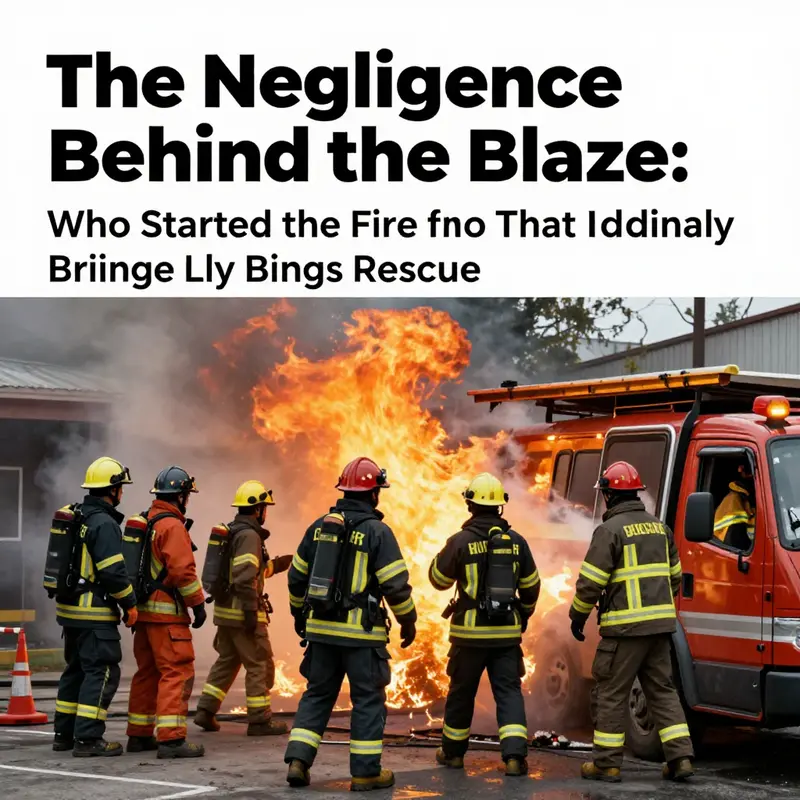
Understanding the interplay of negligence in fire incidents is critical for all involved in construction and emergency response. This article delves into a notable case where a fire, inadvertently sparked by a construction worker’s negligence, resulted in significant rescue operations. Through examining the role of negligence, the implications of construction work on fire safety, and the rescue operations that followed, we aim to shed light on accountability and preventative measures for future incidents. Each chapter will unravel vital components of this intricate scenario, helping individuals and businesses mitigate risks associated with similar situations.
From Carelessness to Call: The Paradoxical Rescue Sparked by a Fire Started in Negligence
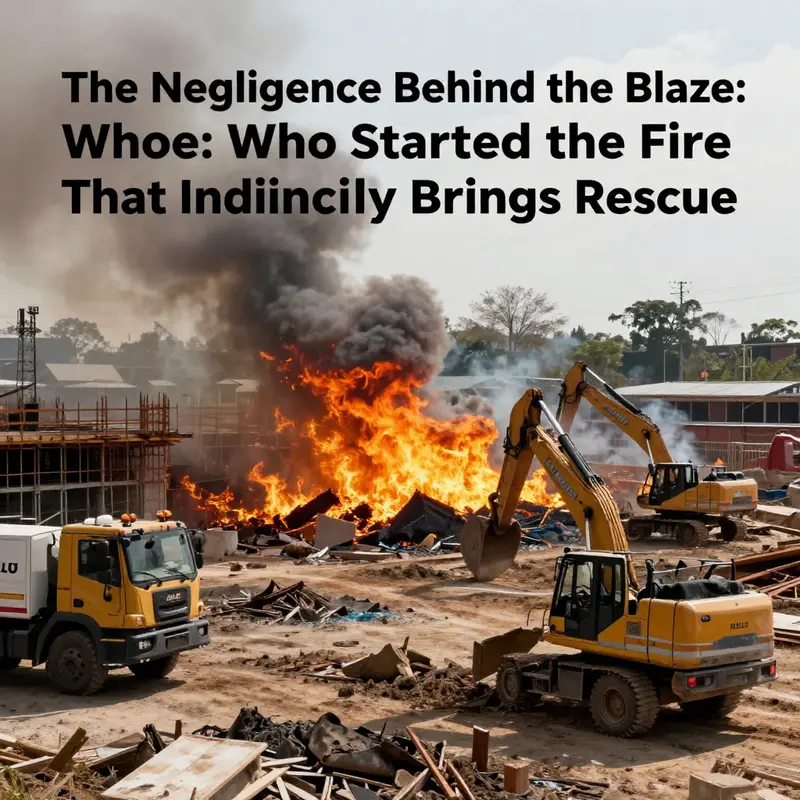
Sparks carve a path through an ordinary day and reveal a paradox that haunts safety discourse: a fire started through negligence can still summon help strong enough to rescue. In the long arc of fire history, there are moments when a careless act, a momentary lapse, or a failure to clear ignition sources sets a blaze in motion. The irony is stark. The same blaze that begins with a moment of neglect often becomes the very signal that draws emergency responders, alarms the neighborhood, and triggers coordinated rescues that save lives. This chapter explores that paradox with careful attention to the mechanics of ignition, the social mechanisms of response, and the ethical lessons that emerge when negligence and rescue collide on the same flame.
Consider the concrete scenario that anchors many readers’ imaginations: a construction worker on a roof, wielding welding or cutting tools. The work is necessary, the project important, the time pressing. Yet in the push to complete tasks, a critical safeguard is missed. Flammable materials—solvents, rags, coatings, or other combustibles—are not properly cleared from the work zone. A handful of sparks, a stray ember, or an overheated tool head can ignite the nearby fuel sources with alarming speed. What begins as a controlled act of labor unfolds into a chain reaction that tests the limits of a building’s structural integrity and the readiness of the responding teams. The worker’s intent matters less than the ignition risk created in a moment when safety protocols falter. The event is not a spectacle of malice; it is a cautionary tale about the everyday costs of neglect.
The paradox intensifies when we observe how rescue arrives. A fire, sparked by neglect, rapidly becomes a call to action for neighbors, colleagues, and professionals trained to respond. The first alarm might come from a supervisor, a passerby, or a nearby crew who notices smoke and hears cracking timbers. The response is swift, driven by a sense of duty and the imperative to prevent a worse outcome. Firefighters arrive with hoses, fans, and specialized equipment. They navigate heat and smoke, identify the source of ignition, and execute a plan that aims to contain the blaze while preserving life and property. In many cases, the very visibility of the fire—the bright glow, the crackle, the sudden surge of heat—serves as a siren, not only for those who must escape but for those who must search and rescue.
The narrative of negligence is, at heart, a narrative about human fallibility under conditions of risk. People err, tools fail, and safety systems sometimes falter. Yet the same human agents who may have erred become the agents of rescue. This is not a naïve celebration of error but a sober reminder that real-world safety depends on the entire chain of prevention, detection, response, and recovery. Each link in this chain has its own fragile balance. If even one link is weak, the accident can escalate. If all links are strong, the same accident might be contained early, and rescue might never be necessary. The irony is that the fire can expose this vulnerability and, in doing so, catalyze improvements that protect people in future incidents.
In examining such cases, it is crucial to distinguish between intent, negligence, and prevention culture. Intentional arson or deliberate destruction is not the focus here. Instead, the emphasis rests on ordinary human conduct—imperfect, hurried, sometimes inattentive—that creates a hazard in the first place. Negligence is rarely a single moment. It tends to be a pattern of decisions: insufficient risk assessment, skipping safety checks, insufficient clearance of flammable materials, a rushed schedule, or a miscommunication about hot work procedures. Each factor alone can be manageable; together they become a vulnerability that a spark can exploit.
To understand how a fire started in one setting can become a rescue trigger in another, we can look to the broader body of evidence compiled by safety organizations and researchers. A well-documented line of inquiry in both literature and practice notes that everyday fires are most often linked to routine, familiar activities. Cooking equipment, electrical faults, and careless disposal of smoking materials appear with notable frequency in fire causation statistics. The National Fire Protection Association, for instance, highlights that a significant share of residential fires arises from everyday activities that involve ignition sources and flammable materials. The 2023 NFPA fire statistics underscore this pattern, even as they remind us that the consequences of these fires can be severe and the opportunities for prevention remain substantial. The same fire that begins with a negligent act may, in its course, reveal weaknesses in safety culture, trigger rapid emergency response, and end with a life saved through swift intervention. The numbers speak to a broader truth: prevention is not a one-off act but a continuous practice that must be woven into daily operations, especially in high-risk environments such as construction sites and industrial facilities.
This intertwining of negligence and rescue invites a deeper reflection on how communities, workplaces, and responders manage risk. When a blaze originates from a moment of carelessness, the immediate human response is often a chain of alarms, calls, and swift mobilization. The first responders must interpret the evolving scene with limited information, often in volatile conditions. Their decisions—where to establish a perimeter, how to deploy water or foam, which entrances to secure—must be made with imperfect knowledge and a high tolerance for uncertainty. The rescue then becomes a test of coordination: arriving units must connect with on-site crews, communications must bridge different organizations, and the public must be guided to safety. The irony here is that the very act of neglect, which could have produced a sustainable disaster, instead awakens a collective capacity to intervene.
A crucial aspect of this paradox is the social dimension of risk and resilience. In communities where safety culture is strong, the response to a neglected hazard tends to be more prompt and more organized. People know the signs of trouble, understand the importance of reporting hazards, and recognize the value of following prescribed procedures for hot work, storage of flammable materials, and emergency egress. In less prepared environments, the same neglect can be amplified by chaos, confusion, and delays. Yet even in the presence of weakness, the rescue impulse persists. The fire may reveal gaps in training or enforcement, but it also exposes the readiness of neighbors, security personnel, and professional responders to intervene when danger surfaces. The rescue, then, is a testament to social cooperation under pressure, not a simple counterpoint to negligence.
In exploring these dynamics, it is important to weigh the ethics of accountability. If neglect can precipitate a life-saving intervention, how should individuals and organizations navigate the tension between blame and improvement? The answer lies not in blame alone but in learning and reform. Safety is a system, not a person. A single lapse can expose a system’s vulnerabilities, but it can also prompt a sequence of corrective actions: reinforcing hot-work permits, clearing combustible materials, installing better containment, improving daily pre-job briefings, and ensuring robust fire watch protocols. In many cases, changes are not instantaneous. They unfold through investigations, policy revisions, and cultural shifts that take time to permeate through teams and sites. Yet these changes are precisely what convert a tragic moment into a turning point, reducing the likelihood of repetition and increasing the odds that a later incident will be met with swift and effective rescue.
The fire on a roof, sparked by a failure to clear flammables before welding, serves as a concrete case study in this chain of cause and effect. Welding and cutting are essential tools in construction and maintenance, but they carry intrinsic risk when ignition sources are present. The duty to manage those risks is continuous: verify that solvents and rags are stored away from the work zone, ensure flame-resistant barriers are in place, maintain a clear line of sight for observers and spotters, and enforce strict hot-work permits. When any of these elements is compromised, the likelihood of a spark finding fuel increases dramatically. The rescue that follows is, in some sense, a test of how quickly and effectively the system responds. Do alarms cut through the noise of a busy site? Do supervisors recognize a fuel-rich environment and halt operations before ignition occurs? Do fire-watch personnel, trained and equipped, stand ready to act if a spark escapes containment? The answers to these questions are not merely technical; they are reflective of an organization’s safety culture and its commitment to life over throughput.
The irony that such a fire can lead to rescue rests on the universal truth that danger and aid coexist in human systems. A fire signals distress, and distress calls forth help. The presence of flames or smoke functions as a loud speaker that gets attention, mobilizes resources, and clarifies responsibility. In that sense, the very phenomenon that created the risk simultaneously makes the risk visible to those who can intervene. This is not a trivial observation about the sensational side of fires. It is a reminder that the human response to danger is adaptive and communal. Firefighters, inspectors, engineers, and managers converge to assess the scene, stabilize the situation, and guide people to safety. Each professional brings a set of tools and a mindset tuned to interrupt the chain reaction that began with a negligent act. Their collaboration embodies a broader principle: safety is a shared obligation, and rescue outcomes depend as much on coordination as on courage.
To understand how this principle operates across contexts, it helps to integrate insights from ongoing education and training. The field emphasizes preventive practices that reduce ignition opportunities and improve detection. It also emphasizes proficient response when prevention fails. In this regard, the ongoing emphasis on training and certification becomes essential. For instance, robust training programs that cover the risks of hot work, proper storage of flammable materials, and emergency response protocols can lower the probability that negligence will escalate into disaster. Conversely, these programs also prepare responders to act with speed and precision when alarms ring and the scene demands rapid, coordinated action. The practical takeaway is clear: prevention and response are two halves of a continuous loop. They reinforce each other, and they thrive in cultures that value safety as a core organizational principle rather than a compliance checkbox.
The literature on fire causation and response often returns to an essential insight: prevention is as much about culture as it is about procedure. When workers view safety checks as meaningful rather than bureaucratic hurdles, compliance becomes an lived habit. When supervisors model careful behavior and insist on clear communication, the risk of a spark turning into a conflagration diminishes. And when communities understand that the rescue is not an anomaly but a trained and rehearsed capability, the meaning of a near-tragic event shifts. It becomes a motivating example for continuous improvement rather than a punitive moment of fault-finding. The moral weight shifts as well. If negligence can trigger a life-saving response, then the correct moral aim is to reduce negligence itself—through education, accountability, and supportive systems—while also strengthening the mechanisms that transform danger into protection.
In this vein, public engagement and policy play pivotal roles. Public safety campaigns that emphasize housekeeping around ignition sources, clear labeling of hazardous materials, and the maintenance of fire barriers contribute to a culture where risks are anticipated rather than ignored. On job sites, clear lines of authority, visible supervisory oversight, and regular drills help ensure that even when a worker is pressed by deadlines, the safety net holds. When emergencies occur, the same community that pays attention to safety before a fire also notices and supports the rescue effort. Neighbors who call in alarms, colleagues who monitor for signs of trouble, and the responders who interpret evolving conditions—all become part of a shared system of care that recognizes the value of every life and the cost of neglect. This perspective reframes negligence not as mere failure but as a driver of learning and improvement that can, in the long run, reduce both the likelihood of ignition and the severity of outcomes when ignition does occur.
The chapter would be incomplete without acknowledging the human dimension of those who respond. Rescue workers bring more than equipment; they bring trained judgment under pressure, the restraint to avoid unnecessary risk, and the capacity to negotiate competing demands: protect lives, protect property, and preserve the scene for investigation. Their work often unfolds in minutes that stretch into hours and in conditions that push human limits. The irony that a neglectful start can culminate in a well-executed rescue underscores the resilience and professionalism of these responders. It also serves as a reminder that resilience is built through preparation, not chance. The more thoroughly a site is prepared, the less likely a negligent moment will escalate into a tragedy. And when prevention fails, a well-coordinated and disciplined response becomes the second line of defense that can save lives and prevent broader harm.
For readers seeking a practical synthesis of these ideas, the takeaway is not simply to condemn negligence but to cultivate a comprehensive safety program that aligns daily work with emergency readiness. It means investing in training that emphasizes both the science of ignition and the art of rapid response. It means creating systems that actively solicit reporting of near-misses, preemptively identify ignition hazards, and maintain open channels for communication across all levels of a project. In such environments, the paradox of the fire—its origin in neglect and its destination in rescue—becomes a catalyst for progress rather than a mere anecdote of misfortune.
As this exploration draws toward a close, it is helpful to acknowledge the limits of any single narrative. Real-world incidents vary widely in their specifics: the type of fuel involved, the materials around the ignition source, the weather conditions, the proximity of occupants, and the layout of the building. Yet the underlying pattern persists. When a fire starts from a moment of negligence, the ensuing chain of events often reveals both the fragility and strength of the systems designed to protect people. The same flame that exposes a site’s vulnerabilities can also illuminate pathways to safety improvements, better training, and more effective rescue operations. In that sense, the fire that ironically brings rescue serves as a mirror—reflecting both what went wrong and what can be done right next time. It invites engineers, safety professionals, and communities to honor the memory of those lessons with ongoing action, not with despair, and to treat every risk as an opportunity to refine the balance between human error and human help.
To connect this discussion to ongoing practice, consider how a typical project or facility can translate these lessons into tangible steps. Start with a rigorous hot-work protocol that requires a clear, documented clearance of flammable materials; implement a dedicated fire-watch role when tools generate heat or sparks; and ensure that all workers receive refreshed training on recognizing ignition hazards and on reporting potential problems without fear of reprisal. Build a culture that treats safety checks as essential as any production milestone, and tie incentives to near-miss reporting and proactive hazard mitigation. Invest in simple, robust measures such as accessible extinguishers, clearly marked exits, and unobstructed egress routes. Encourage a culture of communication where a worker can pause a task if they notice an overlooked risk, and where supervisors respond promptly to concerns, not with admonition, but with support and solution.
In the end, the paradox of negligence and rescue is not a call to romanticize error but a call to wisdom. It invites us to recognize that fires do not stand alone. They are signals of a larger system in motion—a system that must be designed for safety, tested under pressure, and continuously improved after each incident. The rescue that follows a negligent start is a form of mercy built into the fabric of emergency response. It shows what people can achieve when training meets courage, when policies meet practice, and when communities decide that protection is a collective responsibility worth pursuing relentlessly. By examining this paradox with clarity and humility, we can honor the lives at stake and strengthen the safeguards that help prevent fires from becoming tragedies in the first place.
For readers who want to delve deeper into the practical dimensions of fire safety and how negligence intersects with rescue in real-world settings, there are resources that summarize the broader landscape of fire causes and responses. A useful starting point is a community-focused resource on fire safety training and preparedness, which can offer guidance on how to translate these insights into everyday practice on job sites and in households alike. Fire Safety Essentials Certification Training provides an accessible introduction to the core competencies that underpin effective prevention and response, helping individuals develop habits that reduce risk and strengthen readiness. In addition to training, organizations should consult authoritative data to inform their prevention strategies. For an authoritative, data-driven overview of fire statistics and the factors that contribute to both ignition and successful rescue, see the National Fire Protection Association’s fire statistics series. External readers can explore the NFPA’s Fire Statistics page for comprehensive data and analyses that illuminate the complex relationship between cause, response, and outcome. External resource: https://www.nfpa.org/News-and-Research/Data-research-and-publications/Fire-statistics
When Negligence Ignites Salvation: The Paradox of Fires That Bring Rescue
Fire, a force both destructive and life-sustaining, often presents paradoxes wherein it simultaneously threatens and saves. In exploring who started the fire that ironically brings rescue, one must navigate both real incidents and symbolic narratives. The imagery of fire blazing under tragic circumstances yet signaling salvation is famously embodied in literature, especially in William Golding’s Lord of the Flies. Here, the fire’s dual nature manifests powerfully: sparked by reckless human action, yet becoming the lifeline for rescue. This chapter delves into the complex relationship between human error, fire safety failures, and the unforeseen salvation such fires can precipitate.
The scenario unfolds in Lord of the Flies when Jack, a headstrong boy on an island with others stranded, ignites a fire meant for cooking their hunted pig. This act, executed in a frenzy, unintentionally produces a massive smoke signal visible to a passing naval officer who then intervenes, ultimately rescuing the boys from their descent into savagery. In this sense, Jack’s fire is both a destructive force and a beacon of hope—highlighting how human recklessness can inadvertently provoke salvation. This paradox invites reflection on the broader thematic of fire’s unpredictable power.
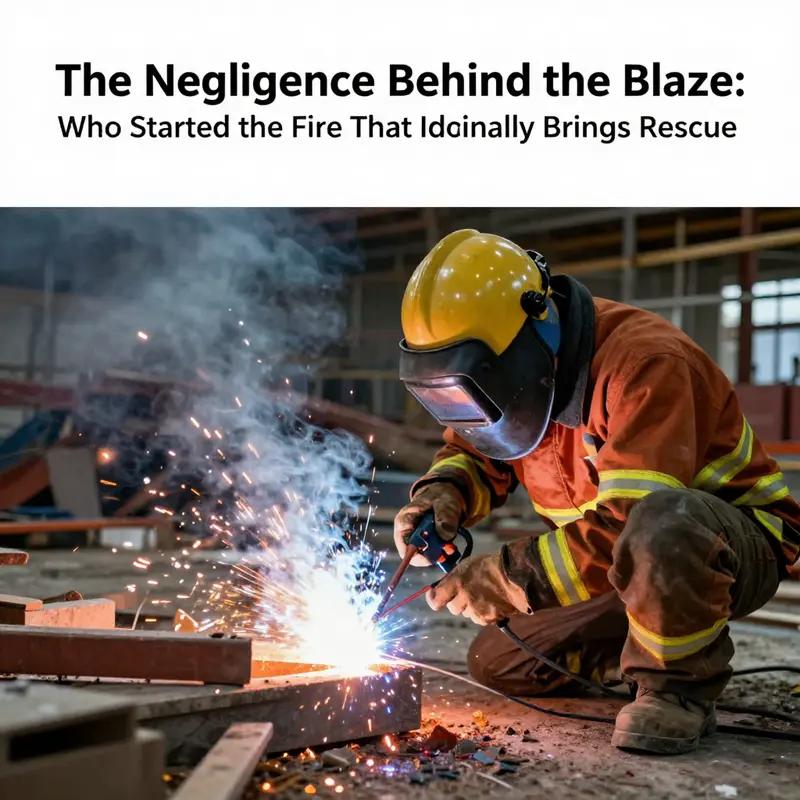
In the real world, such contradictions also surface, albeit under different circumstances. Consider the fire that erupts from a construction site due to negligence—a welding torch sparks flammable debris left uncleared on a rooftop, igniting an intense blaze. The construction worker’s failure to adhere to safety protocols sets the stage for disaster. The ensuing inferno mandates fire department intervention, initiating rescue efforts that save lives or prevent worse calamities. Here, the fire’s origin is rooted squarely in human error and oversight, yet its very presence calls forth the mechanisms of protection and preservation emblematic of firefighting and rescue professions.
The common thread between these narratives—one fictional, the other grounded in reality—is how unintentional ignition signals the need for salvation. In both cases, fire serves as a harsh reminder of human fallibility while functioning as a stark signal that galvanizes rescue. The complexity of these situations urges a closer inspection of fire safety culture, the fallibility of individuals, and emergency response systems designed to counteract such crises.
To understand the conditions leading to fires like the rooftop incident, we must acknowledge the critical importance of rigorous safety standards in construction and maintenance operations. Welding and cutting involve high temperatures and sparks, and when combustibles are not properly cleared, the risk of ignition grows exponentially. Ignoring these standards, whether through poor planning, rushed work, or lack of training, can have catastrophic consequences. Moreover, construction workers who overlook fire safety protocols inadvertently become instigators of emergencies that demand rapid and resource-intensive rescue.
Such emergencies underscore the pivotal role of firefighting agencies. Their preparedness to respond swiftly to calls triggered by fires like these saves lives and limits property damage. The irony is that the very negligence that starts a fire lights the fuse for rescue operations, fully spotlighting the bravery and expertise required of first responders. It is this relationship between human error and professional salvation that defines many fire-related incidents.
The literary example from Lord of the Flies deepens this reflection by illustrating how fire’s symbolism transcends the practical realm. Jack’s fire, born from primal instincts and recklessness, becomes the pivotal signal that ends the boys’ ordeal. This moment dramatizes human culpability intertwined with the hope for redemption. It also comments on society’s complex gaze at fire: as a tool for survival and a force to be feared and controlled.
The novel’s depiction reminds us that fire safety is not purely a technical matter but also a human one, shaped by intent, awareness, and communal responsibility. On construction sites, the consequences of ignoring fire safety protocols are tangible and measurable in property damage and risk to lives. On a symbolic level, Jack’s fire challenges readers to think about how humanity’s primal impulses can ignite situations that spiral out of control yet paradoxically open pathways to salvation.
In modern fire safety discourse, lessons from incidents inspired by negligence elevate the importance of comprehensive training and regulatory oversight. For example, ensuring that construction workers receive certified fire safety education is vital. These credentials not only teach practical skills—such as properly clearing flammable materials before welding—but also instill a culture that recognizes the heavy responsibility borne by those working in inherently risky environments.
Investing in fire safety certification and training is a preventive measure with far-reaching benefits. It reduces the chances of accidental fires and ensures that workers and supervisors understand emergency protocols before chaos unfolds. This proactive approach helps minimize the paradoxical situation where a fire starts from negligence but only then triggers lifesaving efforts. Building a workforce well-versed in fire safety principles creates a shared accountability framework that directly impacts rescue outcomes.
As fire departments adopt increasingly sophisticated methods, the synergy between fire prevention, rapid emergency response, and ongoing public education becomes critical. Customized firefighting vehicles and specialized equipment tailored to diverse urban and rural environments improve reaction times and effectiveness in these rescue operations. Ensuring that emergency responders are well-equipped and trained complements the preventive efforts, closing the loop from ignition to salvation.
In sum, the question of “who started the fire that ironically brings rescue?” invites us into a multidimensional dialogue about human error, responsibility, and the paradoxical nature of fire. Whether inspired by literary symbolism or grounded in the realities of construction site negligence, this question emphasizes the delicate balance between risk and safety, chaos and control. It urges industries, policymakers, and communities to recognize that every spark born of carelessness not only threatens but also summons the collective effort to restore order and save lives.
For a deeper exploration of the literary origins and implications of this paradox, the BBC’s detailed summary and analysis of Lord of the Flies provide enriching insight into how the fire in Golding’s novel signals both destruction and unforeseen rescue: BBC Bitesize Literature Guide.
To further appreciate the real-world dimensions of fire safety and prevention rooted in professional training, readers can explore the critical role of certification in enhancing emergency preparedness and career development in this field at fire safety certification and training. This resource illuminates how structured education can transform fire hazards into manageable risks, reducing the likelihood that negligent actions lead to fires and subsequent rescues.
By marrying lessons from literature with real-world fire safety experiences, this chapter highlights how understanding fire’s dual identity enables us to better prepare, prevent, and respond to emergencies that arise—not just in theory but in tangible life-saving practices.
The Spark Behind the Lifeline: How a Child’s Basements Fire Became a Lifesaving Rescue
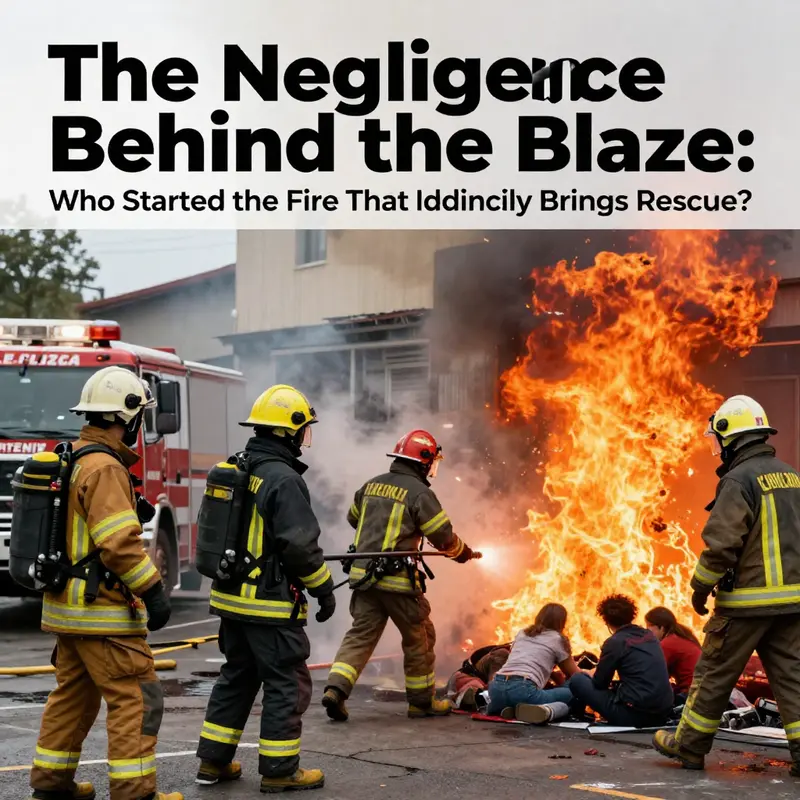
The night began with the usual rhythms of a street that never fully sleeps, a row of houses bearing the quiet weight of routine and memory. In the basement of a neighboring house, a child played with the unhurried curiosity that belongs to early childhood—but with a misjudged sense of the peril that lurks in everyday objects. A spark, perhaps from a forgotten lantern, a stray cigarette end, or a fault with a lamp, found a fragile ready-made tinder in the basement corner, where belongings had been stored without a second thought. What followed was not a grand orchestration of destruction, but a rapid, almost cinematic acceleration of small acts—an impulse, a breath held too long, a grandmother’s voice drifting upstairs into a room filled with the crackle of flame and fear. The ignition was not malicious; it was not a calculated choice. It was the inadvertent result of childhood play colliding with a material world that often disregards the consequences of casual neglect. In the dim light, the child did what children do when curiosity gets the best of them: he touched a thing he was told not to touch, and the flame was quick to answer his touch with a hungry, hungry bright that leaped from one object to another. The grandmother, a figure of morning routines and lingering warmth, was nearby but not present to this particular moment of danger, because the child had not yet imagined the possibility that a small flame could rewire the entire night.
What happened next unfolded with the stubborn, terrible certainty of flame itself: heat and smoke found the pathways through walls, up stairs, and into shared air. The basement grew hot enough to soften the bonds between boards and nails; a two-story house, robust in its construction, suddenly woke with the inevitability of a fever dream. The fire did not announce itself with a chorus of alarms. It did not announce itself at all to the untrained eye as anything other than a stubborn, stubborn nuisance until the smoke thickened and began to pour into the rooms above. People inside the affected houses, including a grandmother who had never learned to treat the basement as a volatile space, suddenly faced an emergency that required more than instinct. It required a plan, a presence, and a readiness that many in the neighborhood did not recognize they themselves possessed until seconds after danger first pressed in.
Nearby, life’s rhythms shifted in the face of the emerging danger. The mother who would have calmed a frightened child could not reach him across the widening doorways of the living space because the air itself seemed to push back. Doors that usually stood open to invite warmth and conversation were now obstacles to be navigated with care. The smoke, black and almost tactile, traveled along the ceiling, pooling at corners, and then traveling along the stairwell, a path of increasing peril that required someone to interrupt the trajectory with courage and clear-eyed action. In those moments, an off-duty firefighter named Roben Duge became the human hinge around which rescue would pivot. His life and his work, the sum of 5,000 days spent in uniform and regular shifts that blurred into the ordinary, found their limit in a single decision made on impulse. He was walking home from work when he saw thick black smoke and heard the cries of those trapped within the building. He did not pause to assess the risk in abstract numbers or to debate whether the situation complied with formal procedures. He moved toward the danger as if he were stepping into a familiar doorway that opened only for those who refused to look away.
Duge’s response was not a cold calculation of risk but a visceral reaction to human distress that echoed in a deeper reservoir of experience. The sounds of children screaming—an ache that reminded him of his own three children—propelled him forward with a speed that could not be matched by planners or bureaucrats. In the smoky curtain of air, he found a grandmother who clutched the arms of a chair as if anchoring herself to a moment before the flame could claim her. He pulled the grandmother toward safety with a strength built from years on the street and years of nights spent listening to the weather of fear. He reached two children crouched in a kitchen that to them had become a shelter only to be abandoned at a sudden sign to flee, and he gathered them into his arms as he moved. The rescue was not the chore of a single act but the culmination of multiple gestures—of not stopping, of trusting a response more than fear, of interpreting the world in terms of who still needed to be saved and how quickly. The grandmother, whose voice had trembled from the fear of being left behind, found herself pulled toward the exit, toward the night air that offered more than relief from heat; it offered a narrative reconstitution of safety. In those moments, the line between private peril and public courage blurred until there was only the immediate task of getting people out of a burning house and away from a danger that threatened to swallow their past and their future in the same breath.
The rescue did not happen in isolation, and it did not occur without a price. The fire, fed by the realities of the basement contents and the materials of the house itself, burned with a ferocity that could have overwhelmed a single rescuer. But the composition of the scene—one off-duty firefighter, a grandmother, two children, and the surrounding neighbors—made a chorus of action possible. A neighbor who kept a careful eye on the smoke and flames as they rose might have called the fire department and waited, perhaps with a heart sinking, for the professionals to intervene. Instead, Duge moved first, and in moving, he created a path for others to follow. The grandmother, whose face had pale traces of tears and dust, felt a tremor pass through her as if she were being steadied by something larger than herself. The children, whose fear had been paralyzing, felt a buoyancy return as a hand appeared from the smoke and reached through the haze to pull them into a future that could still hold the possibility of good news. It is almost tempting to imagine a world in which a single voice spoke with the loud authority of policy and procedure; Yet this moment was defined by the quiet revolution of a human body navigating a space of heat and fear, guided by an instinct to save lives before a fear of culpability or consequence could take root.
What is most remarkable about the sequence is its irony. The fire began with an act of innocent play from a child in the basement of a neighboring house. The child did not intend to cause harm, and in the same breath, did not even know the magnitude of what could unfold. The grandmother, who may have believed she was supervising a simple evening, could not anticipate the chain reaction that would turn a family’s dip into danger into a test of composure and skill for a man who had trained his eyes toward rescue as a daily discipline. The irony lies in the paradox that a spark meant to charm and amuse one child becomes the ignition of a scenario in which that same type of spark becomes the necessary trigger for a lifeline extended to strangers in need. The rescue is not simply the story of a brave act; it is the narrative of how a community responds when the ordinary citizen becomes a temporary guardian and the flame that threatened to erase a moment of family life is transformed into a moment of mercy. The rescue, in other words, is a secondary gift given by a moment of danger to the very people who did not anticipate its arrival, and to the person who could respond in time to pull them from the edge of ruin.
As the smoke eventually began to thin and the fire diminished, the upstairs rooms cooled and the air grew clearer. The grandmother and the children who had cried out in the darkness learned that a stranger’s strength can become their strongest shield. Duge, for his part, did not linger on bravura or the applause that often follows a dramatic rescue. He remained focused on ensuring everyone in the residence reached a place of safety, a process that included directing them toward fresh air, guiding them away from lingering hazards, and staying with them as paramedics checked for injuries and smoke exposure. The quiet after the incident—when the neighbors assembled on the curb, watching the blaze dance in the distance, when the street lights flickered back to life—was a reminder that rescue is rarely a solitary episode. It is the result of a chain of small, deliberate actions taken by people who refuse to look away when danger is in reach. The grandmother, who had been the nucleus of the family on that block for years, would perhaps reflect later on the role of a child’s curiosity in provoking catastrophe and the equally important role of a neighbor’s courage in reversing a narrative that might otherwise have had a tragic ending. The children, whose lives had been threaded through with fear and relief in the same breath, would grow with the knowledge that a stranger’s hands had extended toward them in the worst moment and had refused to let gravity win.
From a broader perspective, this incident invites readers to consider not only who started the fire but how communities respond when a spark travels beyond the intent of its ignition. The child’s action—an act of play that showed how easily a basement can harbor unseen danger—was the trigger that brought attention to a building in distress and, by extension, to the vulnerabilities that exist on every street. It is a stark reminder that risk does not always arrive in the form of obvious malice or deliberate neglect. Sometimes risk is the consequence of ordinary life misreading ordinary spaces. In response, society’s safety infrastructure—the firefighters who train, the neighbors who stay alert, the families who practice escape plans—demonstrates its value not in perfection but in preparedness and compassion. The rescue becomes a living case study in how a local emergency can reveal a network of readiness that most people only recognize in retrospect, after seeing the faces of those saved and hearing the tremor of their voices as they recount the moment when help appeared just in time.
The episode also offers a window into how public memory frames incidents like this. The initial instinct is to identify a clear culprit, to locate the spark and pin responsibility on someone who could have prevented it. But the details that surface in the days that follow often complicate that impulse. The child’s inadvertent ignition and the grandmother’s fear present a narrative of shared responsibility: one act that created risk, another act that preserved life. It is this complexity that makes the chapter of rescue both credible and instructive. In the aftermath, the community reflects on what could be done differently to prevent such occurrences without stigmatizing curiosity or punishing innocence. The human dimensions—memory, fear, relief, gratitude—are not easily distilled into a simple cause-and-effect equation. They are lived experiences braided together by the actions of people who decide to act when it would be easier to wait, to hesitate, or to retreat.
In contemplating the sequence, it is instructive to consider how those who do not know the firefighters personally still owe a debt to the courage they witness in moments like these. The narrative becomes a shared script for resilience: a citizen’s urgent call, a neighbor’s quick assessment, and a professional response that blends instinct with training. The chapter invites readers to appreciate how individual choices—like a child’s decision to light something out of curiosity, or a passerby’s choice to intervene rather than extinguish their own sense of safety—converge into a collective act of mercy. The grandmother’s safe exit and the two children’s uninjured arrival at a place of safety become a quiet testament to the possibility that a community can turn danger into a story of recovery when it refuses to yield to fear.
As this chapter threads through the fabric of the broader article, it anchors its argument in a simple, undeniable truth: the origin of danger does not erase the value of saving lives. The story of the basements fire and the rooftop rescue indicates that rescue is not solely the province of those trained to respond to danger with specialized tools. It belongs to anyone who acts with courage when the clock is running, who reaches into the smoke and pulls toward hope, who keeps faith with those who cry out for help, even when those cries might echo from a place where fear first learned its name. The ironies embedded in this incident—an innocent spark that becomes a lifeline—serve not to amuse but to admonish and inspire. They remind us that safety is not a finished project but a living process that requires vigilance, empathy, and a willingness to step forward, even when the ground underfoot feels uncertain.
For readers seeking practical avenues to extend the lessons of this episode into everyday life, the chapter encourages engagement with foundational safety resources—resources that empower ordinary people to become responders when seconds count. The idea is not to glamorize peril but to honor the quiet courage that saves lives in the corridors and kitchens of homes, on the sidewalks of neighborhoods, and in the spaces between fear and relief. Those who wish to deepen their understanding of the mechanics of rescue and the ethics of quick action may find value in exploring accessible safety conversations and training opportunities that emphasize practical, hands-on readiness. In this spirit, readers can consult enduring guides on basic fire safety, escape planning, and the everyday steps that households can take to reduce risk without compromising the warmth and trust that family life depends on. The irony of the night—the spark in a basement that becomes the call to life for others—serves as a constant reminder that preparedness does more than prevent tragedy. It actualizes the possibility that rescue can arrive not just as a formal procedure but as a lived, shared obligation that begins with a single act of awareness and ends with a night saved and a family kept intact.
The narrative thus circles back to the larger purpose of the article: to explore how seemingly small beginnings can culminate in acts of great mercy. It prompts readers to ask how many such beginnings occur on their own blocks, waiting to be noticed, waiting to be answered. It suggests that every neighborhood has a potential Roben Duge among its residents—the kind of person who, in a split second, becomes a shield for those who cannot flee on their own. And it invites audiences to consider how communities can cultivate conditions in which such courage is not rare but routine—through education, through regular drills, through conversations about what to do when smoke alarms sound, and through a shared respect for the fragile line between danger and safety. If the child’s basement spark teaches anything, it is that risk is always present, but so is the possibility of rescue. The possibility is real precisely because there are people who will act when the moment demands it, even if the cause of the crisis was a momentary lapse in vigilance. In this sense, the fire that began as a misadventure became a catalyst for a story in which resilience, mercy, and the unheralded bravery of an off-duty firefighter prevail over fear and ash. The neighborhood owes its gratitude to a person who turned toward danger, not away from it, and to a moment in time when the line between danger and salvation proved to be thinner than it appeared on the surface.
For further reflection on how communities translate this kind of incident into ongoing safety culture, readers may explore resources focused on foundational safety competencies and career pathways in emergency services. Practical, accessible training can empower more people to act with the same calm urgency that Duge demonstrated on that night. This understanding helps bridge the gap between tragedy and resilience, between an unintended ignition and a tested response, and between a frightened child and a family that would someday tell the story of how they were saved by hands that arrived just in time. The chapter thus closes not with a definitive verdict about whose fault the fire was, but with a gratitude that the chain of human response can bend toward mercy even when the spark originates in error. It is a reminder that rescue is a social act, part hazard, part hope, and wholly built from the courage of ordinary people who decide to act when the clock is their enemy.
External resource: The New York Daily News report offers a contemporaneous account of Roben Duge’s actions and the community impact of the night’s events. https://www.nydailynews.com/new-york/fire-rescue-neighborhood-fire-roben-duge-fdny-20250107
Final thoughts
The case of the fire that ironically brought rescue serves as a powerful reminder of the consequences of negligence within construction settings. The responsibility lies not only with individuals but extends to organizations to ensure thorough safety protocols are implemented and adhered to. By understanding the factors that contribute to fire hazards and the aftermath of such incidents, we can develop stronger preventative measures, training, and awareness, ultimately paving the way for safer work environments for everyone. Essential changes in practice and policy can significantly mitigate risks, making it crucial for all stakeholders to prioritize safety.