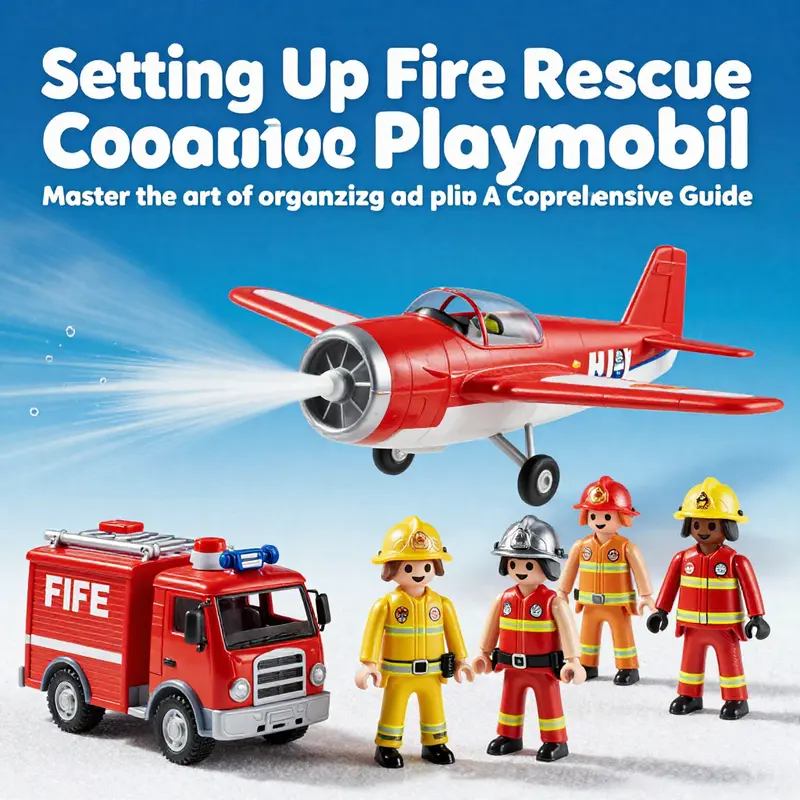
Engaging in imaginative play with Playmobil Fire Rescue characters fosters creativity and teamwork, making it immensely relevant for caregivers and educational settings alike. This guide offers a structured approach to effectively set up, position, and create rescue scenarios with the Fire Rescue characters, particularly focusing on the Playmobil 71463 Fire Water Aircraft & Firefighter set. Each chapter provides essential insights and step-by-step instructions to enhance the play experience, ensuring that every child can dive into their rescue missions with clarity and enthusiasm.
From Box to Brave Rescue: Unboxing and Organizing Fire Rescue Characters for Imaginative Play
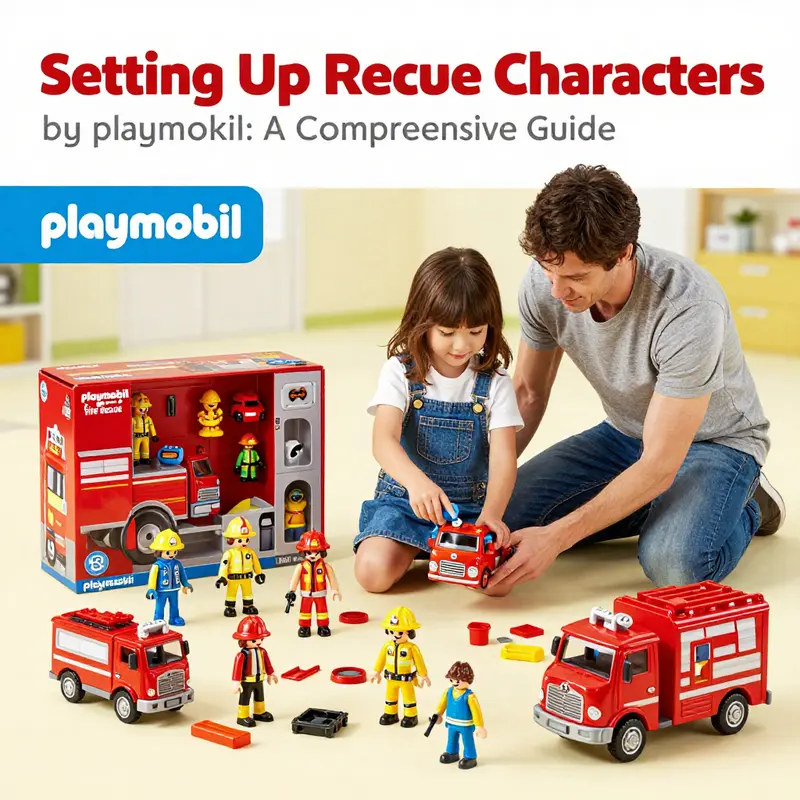
When a box arrives containing a set of fire rescue figures, vehicles, and accessories, it is more than a simple unboxing moment. It’s the doorway to a space where imagination becomes a practical tool for learning, collaboration, and empathy. The first steps are tactile and deliberate—carefully opening the packaging, laying everything out, and taking a moment to notice how each piece fits into a larger rescue story. The unboxing ritual, done with patience, creates an intentional starting point. It signals that a clutter of plastic parts can become a coordinated team, each piece with a role in the mission to save lives and safeguard communities. The lure of a water aircraft that can skim a lake, the sturdy ladder that reaches a second floor, the hoses, the axes, and the tiny figures with helmets—these are not mere toys. They are tools for building language, narrative sequencing, and social understanding. Children learn to pause, assess, and plan. They learn to allocate tasks, communicate under pressure, and celebrate small victories when a scene comes together and a rescue unfolds with clarity and care.
The organization that follows unboxing matters just as much as the excitement of the first reveal. Sorting contents into broad categories—figures, vehicles, and accessories—turns playtime into a reliable map. Figures include firefighters, victims, bystanders, and perhaps a medic or a rescuer. Vehicles can range from compact fire responders to larger water-landing craft and support cars. Accessories encompass hoses, ladders, tools, barriers, and even tiny flames that become dramatic props for the drama of a blaze and the order of a safe response. This sorting isn’t a sterile chore; it’s a scaffolding that supports spontaneous storytelling. When pieces are grouped, children spend less time hunting for parts and more time evolving scenes. They can quickly assemble a scene, swap a firefighter’s role from a pilot to a rescue technician, or switch out a tool to reflect a new challenge in the story. The act of organizing becomes a prelude to robust play, a quiet rehearsal for the problem-solving that will follow.
Within the sorting ritual there is a clever opportunity for personalization. A figure customization line, with interchangeable helmets, protective gear, and tools, invites children to craft unique heroes for each mission. This isn’t merely cosmetic. It allows a child to reflect multiple roles within a single story—the brave responder who descends with a safety rope from a roof ladder, or the calm strategist who directs a water rescue from a boat deck. The ability to adjust gear and attire mirrors real-world practices where uniforms, equipment, and responsibilities can evolve across shifts and scenarios. This kind of personalization fosters ownership: the child is co-creator, not just a spectator. When a child designates a specific helmet color or tool as belonging to a particular rescuer, the narrative deepens. The character becomes a character with a history, capable of leading a cohort through tense but controlled simulations of danger and care.
A larger, more complex set—one with multiple vehicles and interactive components—offers a chance to explore systems thinking within play. In many of these bigger configurations, the vehicle modules are designed to be modular; parts can be swapped, reoriented, or extended to adapt to different missions. This modularity is a gentle introduction to engineering concepts, encouraging children to hypothesize how a formation of responders might approach a scenario. They can decide whether the team will stage a water-based extraction, a ground attack on a staged blaze, or a distant, coordinated response requiring signals, barriers, and a staging area. The beauty of such a setup is in the flexibility: the same core pieces can be reorganized into a dozen distinct scenes, each with its own tempo, challenge, and resolution. Even as the child experiments with configurations, the adult observer witnesses critical thinking in action—planning ahead, testing a sequence, and adjusting tactics based on the unfolding narrative.
To make unboxing less overwhelming and more sustainable as a regular routine, many caregivers find it helpful to establish a simple, recurring organizational rhythm. A small, transparent storage solution or a divided tray keeps figures upright and ready for quick deployment. Labeling each section with a few clear cues—figures, vehicles, and accessories—reduces setup time and minimizes the risk of losing tiny pieces. When pieces are lost, the child learns to search methodically, to reflect on which category the missing item would belong to, and to communicate needs clearly. This practice translates beyond play: it cultivates habits of care, inventory awareness, and responsibility that can carry into daily life. The goal is not to create a sterile museum-like display but to offer a ready-made playground where stories can begin in seconds and evolve with minimal friction.
In the middle of the unboxing and organizing process, it is valuable to invite a sense of storytelling that anchors the pieces to people and place. A calm instruction from an adult—like describing the scene: a lake at dawn, a distant building on fire, silhouettes of rescuers ready to respond—gives children a narrative compass. They can begin by placing a firefighter near the cockpit of a water-landing craft, another on a ladder poised against a facsimile building, and a victim figure at a pretend shoreline awaiting aid. The setting matters: a lake, a dock, or a street corner can offer different challenges and rhythms for the mission. The more concrete the context, the more the child’s language and reasoning have to stretch in order to coordinate both the action and the safety margins. Roles emerge almost organically—pilot, firefighter, medic, rescuer—each with responsibilities that fit into the story’s flow. The play becomes less about moving pieces and more about moving ideas: asking questions, proposing solutions, and evaluating outcomes after each turn in the narrative.
As confidence grows, a subtle but meaningful shift can occur. Children begin to recognize that organization is not a final destination but a dynamic process that supports fluid storytelling. They learn that a well-organized set allows rapid reconfiguration when an unexpected complication arises—perhaps a “stormy weather” factor means the watercraft must reposition, or a bystander needs brief shelter behind a barrier. The unboxing rhythm thus becomes a rehearsal for adaptability, teaching that preparedness includes both the physical arrangement of pieces and the mental flexibility to alter plans while maintaining safety and care. Even the most careful unboxing leads to creative improvisation later in the play session, and that improvisation is where resilience and collaboration bloom.
In parallel with these organizing practices, it is important to reflect on safety and development. The process of sorting and assembling introduces early math and spatial reasoning: counting the number of figures, estimating the reach of a ladder, gauging distances between a boat and a shore, or aligning a hose’s path from a vehicle to a pretend fire. It also invites early literacy moments as children narrate what they are doing and why, labeling actions like “rescue,” “evacuate,” and “contain.” The social dimension is equally rich. Children practice turn-taking as they assume different roles, listen to peers’ ideas, and negotiate which part of the scene needs attention first. They observe cues of leadership and support, noting how a calm voice or a clear plan can steer a mission toward success. The unboxing-and-organizing phase, therefore, becomes a foundational practice that supports future, more elaborate missions while anchoring play in skills that matter in growing minds.
To weave these strands together, the narrative thread can be reinforced with a gentle, internal compass for ongoing play. A recurring routine might involve a five-minute “scene setup” where the child builds the initial rescue tableau, followed by a five-minute “problem-solving sprint” where they introduce a scenario that tests planning, communication, and tool use. After that sprint, a brief “debrief” can help articulate what worked, what could be improved, and which roles felt most effective. This cadence keeps play purposeful rather than episodic, making the unboxing and organizing phase a launchpad for extended, meaningful interaction. It also creates a bridge to the later chapters that discuss assembling the vehicle and executing a full rescue operation. The chain—from unboxing to organization, to action—mirrors the real-world progression of a rescue mission and provides a safe, manageable frame for children to explore the responsibilities and teamwork at its heart.
For readers seeking further guidance on how organized play intersects with safety and structured learning, there is an accessible resource that expands on the broader theme of preparedness and development. Fire Safety Essentials Certification Training offers insights into how organized activities can support safety awareness and skill-building in young learners. This linked resource frames play as a medium for practicing common-sense safety habits in a child-friendly way, emphasizing the importance of clear communication, role clarity, and preventive thinking alongside imaginative exploration. By engaging with these ideas, caregivers can elevate unboxing and organizing from a delightful ritual to a meaningful educational moment that reinforces care, cooperation, and critical thinking. Fire Safety Essentials Certification Training
The unboxing and organizing phase is not an endpoint but a doorway. It signals the transition from anticipation to action, from the curiosity of discovery to the discipline of setup, from solo play to collaborative storytelling. The first task—unboxing with care—sets a tone of reverence for the pieces and a respect for the stories they carry. The second task—organizing with intention—transforms a heap of parts into a coherent team ready to respond. The third task—defining roles and rehearsing scenarios—cultivates language, empathy, and problem-solving. And the final piece—maintaining, storing, and revisiting the setup—ensures that the play environment remains welcoming, safe, and ready for the next mission. Each of these steps reinforces a larger principle: that disciplined preparation can amplify the joy of play while supporting the developmental gains that parents and educators seek.
As you close the lid on the storage box and place the organized components into their dedicated containers, you are not merely tidying away a toy collection. You are preserving a framework for recurring play experiences that can adapt to a child’s growing imagination and expanding vocabulary. The unboxing-and-organizing moment thus becomes a stabilizing foundation for the entire cycle of play—from quick, spontaneous missions to longer, multi-scene adventures that require sustained attention, collaborative problem solving, and a compassionate touch when someone in the story is in danger. It is in these quiet, careful moments that children learn the most about themselves as capable problem-solvers and empathetic teammates. The chapters to come will build on this foundation, guiding you through the next steps of assembling the vehicle, enabling the features, and launching into more complex rescue narratives while keeping the core values of safety, cooperation, and creative play front and center.
External reference: https://www.playmobil.com/en/products/71603-fire-brigade-mega-set
Crafting Fire-Rescue Dramas: A Step-by-Step Guide to Assembling Miniature Firefighters and Vehicles
The appeal of toy-scale rescues lies not in the action alone, but in the quiet choreography that builds credibility for the drama. When you set up a fire-rescue scene with miniature figures and vehicles, you become a director of a tiny, persuasive universe where danger is imagined, and teamwork is the real engine of the story. The process is more than assembly; it is an invitation to nurture curiosity, practice problem solving, and expand vocabulary as children narrate what they see, hear, and feel. The goal is a cohesive, immersive moment where the audience can follow the beat of a rescue without becoming overwhelmed by complexity. With a few thoughtful steps, the components—figures with helmets and hoses, a vehicle with rotating lights, a hydrant, and a handful of scenery props—combine to form a stage where careful positioning, tactile exploration, and improvised dialogue spark a living, evolving scenario.
Begin with a calm, unbox-first mindset. Open the packaging slowly, lay everything out, and give each piece a moment of inspection. A well-organized setup helps children understand how each tool fits into the larger mission. Common elements include a fire-rescue vehicle, several firefighter figures with different gear, a civilian figure who becomes the heart of the mission, and a modest toolkit of accessories: ladders, hoses, barriers, a hydrant, and perhaps a flame or two to set the stakes. As you arrange the pieces, invite children to narrate what they see. This moment of description—“Here is the hydrant. Here is the ladder”—is more than labeling; it trains observation, attention to detail, and the habit of verbalizing plans before acting. The scene begins in the mind before it moves into the hands.
As you advance from unboxing to assembly, the logic of the model’s design guides the flow. The vehicle is typically modular, with a side slot where a ladder attaches, and a space in the cab or rear where a firefighter figure can sit or stand. The hose reel or water cannon may anchor to the front or back of the unit, and doors or a detachable roof often open to reveal interior space for the crew. When you attach components, do so with gentle, deliberate movements. Demonstrate how the ladder swings into position, how the doors slide or hinge, and how the cabin roof can be removed to access the driver’s seat. This repetition, underpinned by a steady pace, helps children master fine motor skills while reinforcing the cause-and-effect relationship that makes the play feel authentic. It is not merely a toy assembly; it is a rehearsal of coordination, planning, and patience.
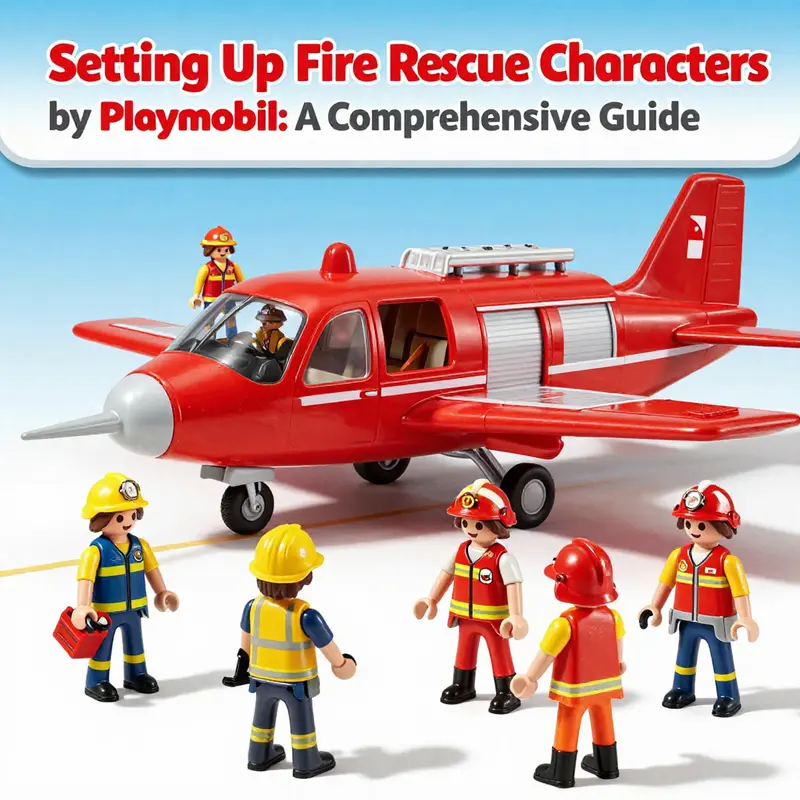
With the vehicle assembled, attention turns to the scene itself and the choreography of characters. A single firefighter figure can pilot the craft or serve as a ground captain, while others take on roles such as hose operator, ladder crew, or medic. The civilian figure usually embodies the stakes—someone waiting for rescue, or perhaps a bystander directing the responders. Position these figures with an eye toward story balance. Place the civilian near the danger zone—near a mock-up of a building or a pretend fire flame—so the rescue becomes the central objective. The firefighters form a perimeter around the scene, their gestures suggesting communication and teamwork: one points toward the danger, another slides open a panel, a third steadies the ladder. The beauty of such scenes lies in their flexibility; the same starter kit yields dozens of storytelling possibilities depending on the questions asked and the problems posed by the players.
To deepen the play’s realism, integrate accessible features that invite interaction without complicating the setup. Movement is a powerful ally in this regard. If the set has articulated doors, a rotating light, or a water-spray mechanism, encourage children to operate these elements to simulate real-life rescue dynamics. The moment the water gun fires or the ladder stretches, the pretend danger becomes tangible, and the story moves from static display to active problem-solving. Yet the emphasis remains on safe, shared play: adults guide, not dominate, and children decide who is in danger, what tool is needed, and how to deploy it. This autonomy is crucial for building confidence and empathy, because the child must consider not only the “how” of the rescue, but the “why” behind each action—why the civilian needs help, why the team uses a particular tool, and what safety practices are essential on a real-sounding mission.
As the scene grows, so too does the narrative. The firefighters can trade roles; one minute they are rescuers, the next they become water-jet operators, or perhaps scene managers directing traffic around the mock incident. The fluidity of roles mirrors real emergency work, where teams adapt to shifting conditions. When a flame piece is added, children often respond by detailing a plan: secure the safety zone, deploy the hose to douse the flames, assist the civilian to safety, and then assess any injuries or hazards. This sequence keeps play organized and purposeful. It also provides a natural opportunity to weave dialogue into the action. Phrases like “Stay back,” “I’ve got you,” and “We’ll get you to safety” become repeated motifs that reinforce calm communication under pressure. In this way, the play becomes a language-rich exercise, where storytelling drives the mechanics rather than merely repeating motions.
The scene’s props deserve thoughtful placement beyond mere decoration. A hydrant placed at the edge of the play area signals water access and a boundary for the action. Road barriers help simulate traffic management and create a zone that requires deliberate planning—how do responders approach the site without compromising bystanders? The flames, while symbolic, should be used sparingly to avoid visual intensity overwhelming younger players. In moderation, they supply the stakes and prompt decision-making: when to advance, when to retreat, where to position responders for maximum effectiveness. The textures and colors of each prop offer sensory cues that help ground the drama in a believable world. The noise of the imagined siren, the slap of a ladder rung, and the soft clack of a door hinge all contribute to an immersive atmosphere. Children notice these details and, in their noticing, grow better at following sequences and adjusting plans on the fly.
A well-constructed rescue narrative thrives on the balance between action and reflection. After a rescue is simulated, pause to review what happened and why. Ask questions that prompt analysis: Was the civilian in a safe location? Were the responders positioned to maintain line of sight and communication? Could the setup be rearranged to reduce risk or speed up the operation? This reflective pause reinforces critical thinking and helps children articulate problem-solving steps. It also nurtures a sense of responsibility and ethical consideration—the idea that every action in a rescue mission has consequences for others. In practice, this means encouraging children to consider safety first, both for the characters and for themselves during play. It also invites a gentle discussion about real-world safety concepts such as crowd control, safe distances, and how emergency personnel work with the public during an incident. When these conversations arise naturally, the play becomes a bridge between fantasy and foundational safety literacy.
The narrative architecture of the scene often mirrors the child’s evolving interests. Some players lean toward vehicle customization, imagining ways to upgrade the truck’s capacity or adapt it to different environments. Others gravitate toward the drama of search and rescue, crafting more elaborate buildings, more complex obstacles, and longer missions. The beauty of miniature firefighting play is that it supports customization without overwhelming complexity. A child can start with a simple layout and gradually introduce new elements—a second civilian, a makeshift dock, a hill for a watercraft scenario, or a taller building with multiple floors to rescue from. This gradual layering of complexity mirrors how real training and practice build competence: start with core skills, then add challenges that require integrating those skills with creative thinking.
To support sustained engagement, consider how to document or revisit the play. A simple photo diary or a notebook of scenario ideas can help children recall what they tried, what worked, and what they want to attempt next. This kind of traceable play history not only validates the child’s ideas but also helps adults tailor questions that guide future sessions. For example, if a child enjoyed coordinating a multi-figure rescue around a vehicle, an adult could propose a new mission that requires more precise timing or a different tool. The aim is not to produce a finished script but to cultivate a culture of curiosity, experimentation, and shared problem solving. The process itself—unboxing, assembling, positioning, playing, reflecting, and revising—becomes a loop of learning that feels dynamic and collaborative rather than static and instructional.
In the broader view of play, this mode of setup aligns with early safety and literacy goals. The act of handling small, articulated figures and accessories improves fine motor control and spatial reasoning, while the deliberate choice of scenes, dialogue, and roles strengthens oral language, listening, and social negotiation. Children learn to negotiate space and time—how long a mission should take, where to place each character for the most believable action, and how to pace the drama so every participant remains engaged. A well-led session nourishes empathy as children imagine fear, relief, and gratitude, then translate those feelings into compassionate, cooperative behavior during play. In short, setting up fire-rescue characters is not simply about recreating a fire scene. It is a small-scale rehearsal for teamwork, safety awareness, and the communication skills that underpin real-life response. The imaginative frames created through play often carry forward as children grow into more complex interests, including storytelling, design thinking, and even future safety careers.
If you seek a broader perspective that complements this hands-on approach, you can explore related ideas about safety literacy and training in the Fire Safety Essentials Certification Training resource. This background can enrich play by offering vocabulary and concepts that translate into more informed, responsible scenarios. For a quick reference on how such training emphasizes fundamentals like risk assessment, communication, and teamwork, this internal resource provides accessible, age-appropriate framing that can be woven into ongoing play sessions. Fire Safety Essentials Certification Training.
For players who crave a deeper, model-by-model reference, it can be helpful to consult the official assembly guides that accompany many sets. These manuals provide precise steps for attaching components, aligning moving parts, and understanding any built-in features. They are invaluable when a new piece joins the scene or when you want to verify a particular sequence without sacrificing the flow of play. When a parent or caregiver steps in to guide a session, the goal is to preserve the sense of discovery while ensuring that the handling remains gentle and safe for small hands. If a guide is missing, you can usually download a digital version from the manufacturer’s support site, ensuring that even late additions to the play world can be integrated with fidelity to the original design. The exact steps may differ from model to model, but the underlying principles—clear roles, realistic sequencing, and a calm, constructive play environment—remain consistent across sets.
As the session closes, the emphasis should be on kindness and care. Storage is a small but meaningful part of the ritual. Gently wipe pieces with a damp cloth to remove fingerprints or residue from play, then return components to their designated places in a box or tray. A tidy scene not only protects the pieces but also signals an end to the story, inviting a new chapter tomorrow with fresh ideas and renewed curiosity. The quiet routine of cleanup reinforces responsibility and respect for the tools of play, while also making room for the next adventure to begin without hesitation. In this way, the act of setting up fire-rescue characters becomes a sustainable habit rather than a one-off activity. The child, the caregiver, and the story all benefit from rhythm, repetition, and the gentle discipline of orderly, thoughtful engagement.
The journey from unboxing to storytelling is, in essence, a mentorship in miniatures. It teaches how to observe, plan, and execute with care; how to communicate clearly under pressure; and how to imagine compassionate outcomes in the face of danger. It is a reminder that play can carry serious lessons without becoming didactic. The best sessions honor the child’s perspective, invite curiosity, and celebrate progress, not perfection. They leave room for improvisation, adaptation, and growth, turning a simple table into a living station where rescue crews, civilians, and bystanders share one goal: to see everyone safe and sound. And when the last piece is placed and the last dialogue is spoken, the scene lingers in the mind as a blueprint for collaboration, problem solving, and imaginative resilience—the true, quiet reward of building fire-rescue dramas with miniature figures.
For readers who wish to explore related ideas beyond the table, consider visiting the broader community of resources that celebrate practical safety training and emergency preparedness. These avenues can inspire new configurations, broaden the kinds of scenarios you explore, and help keep play aligned with real-world safety values. While the toys provide a sandbox for exploration, the ethical and practical framing comes from the conversations and reflections you weave into each session. This is how a simple set of figures becomes a living classroom that grows with a child’s questions, a parent’s guidance, and a shared sense of purpose.
External resource for further reference: https://www.playmobil.com/en/support/assembly-instructions
null
null
Building Imagined Lifelines: Crafting Fluid Fire-Rescue Scenarios with Playmobil Figures
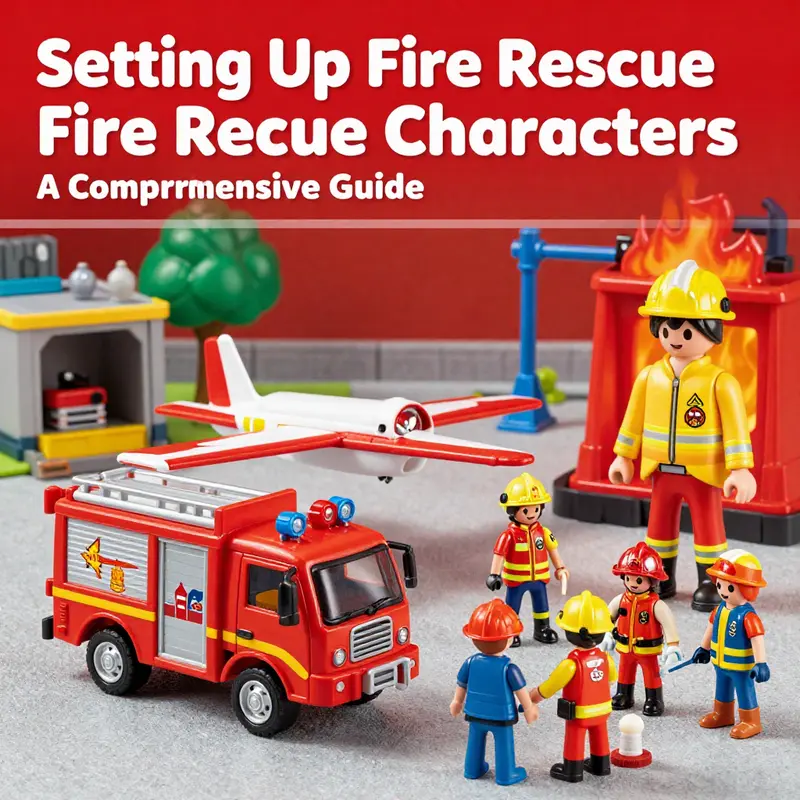
In a corner of the playroom, a small world comes alive whenever the figures stand ready to answer the call. The appeal of Playmobil for fire-rescue storytelling isn’t just in the figures themselves, but in the way a scene can be built, shifted, and reimagined with ease. A simple round of unboxing becomes a narrative invitation: lay out the firefighter, the pilot, and the rescuer; spread the hoses, ladders, and stretchers; and place a water-capable aircraft or a sturdy rescue vehicle nearby. The magic lies in how the pieces invite children to answer questions aloud—Who is in danger? Which tools will help the team save the day? How does teamwork change the odds? When approached with intention, this kind of play becomes more than entertainment; it becomes a rehearsal for empathy, communication, and creative problem-solving. The playset’s design supports this by offering interchangeable parts and modular configurations, so scenes can evolve without becoming repetitive. A child can switch roles in an instant, moving from pilot to firefighter to medical rescuer as the story progresses, which mirrors real-world rescue operations where roles shift to meet evolving needs.
The initial step—unboxing and organizing—sets the tone for the session. Rather than scattering pieces across the floor, gather them into a chosen play zone. This deliberate act signals that playtime is mission time. Place the figures in their starting positions: a captain at the aircraft controls, a team of responders ready on the dock, and a patient awaiting extraction nearby. The possibility to position characters across a single scene mirrors the complexity of real rescues, where responders must coordinate across distances, communicate clearly, and anticipate potential obstacles. The figures themselves are designed with attention to detail that supports storytelling: clothing and equipment cues hint at different roles, while adjustable parts enable quick customization. Children learn to identify the tools they need before the operation begins, a simple habit that translates into more purposeful play.
Assembling the vehicle—if assembly is required—becomes less about construction and more about planning. Read the instruction steps as a story beat list: wings unfold to reveal a vehicle that can meet both land and water challenges, landing gear deploys, and a cockpit canopy opens to welcome crew and passengers. Even if this is the first time a child has put the model together, the process becomes a narrative rehearsal. Each connection point is a possible plot twist: a snapped hinge might become a difficult landing, a missing piece a reason to improvise with an alternate tool or a substitute prop. The modular design invites experimentation. Children quickly discover that the same scene can support a water-rescue sequence one day and a dockside fire-suppression scenario the next, simply by reconfiguring the positions of the figures and the accessories. The flexibility is not accidental; it is a deliberate design choice that mirrors how real responders adapt to changing conditions on the ground, on the water, or atop a floating platform.
Positioning the characters with intention reinforces the narrative’s clarity. A designated pilot can handle aerial support, guiding a water-landing operation, while a firefighter on deck takes charge of ground operations, and a rescuer coordinates patient care and extraction. The idea of role distribution matters for the child’s understanding of teamwork. When a child assigns roles—pilot, firefighter, medic, or harbor responder—they begin to recognize how different skill sets contribute to a complete mission. This recognition is not merely about labeling; it’s about appreciating how each role informs the others’ decisions. It’s also where interchangeable parts become teaching tools. If a firefighter needs to shift to a medical response, the child can swap a helmet for a medical bag or adjust a vest to match a new duty. The physical act of customization reinforces the concept that rescuers adapt to needs as a scene unfolds.
Creating a scenario is where imagination and structure meet. A lake, a distant building, a dockside pier—these are not just backdrops but problem frames. A fire-water aircraft landing on a lake to assist a neighboring blaze creates a sequence with staging, response time, and resource allocation. The child can set up a chain of events: a call comes in, the team deploys, the aircraft touches down, water is sprayed to create a cooling zone or to douse a flame, and a patient is isolated and transported for care. The play space then expands as other sets or household items become part of the environment: a cardboard warehouse silhouette, a tree line made from twigs and paper, or a simple cardboard dock that can be moved to suggest a changing coastline. The scene’s physicality matters because it anchors the story in a shared world where actions have visible consequences. When the water-spray function is activated, it becomes a tangible cue for the child to narrate how the water helps control the fire, while keeping the language precise enough to reflect the sequence of steps in a real rescue.
A core advantage of exploring these play scenarios lies in the way the figures’ versatility expands storytelling possibilities. Rescue-team figures include professionals with interchangeable components that allow multiple identities without crowding the narrative with new characters. This flexibility encourages children to imagine a wide range of emergencies, from a routine medical triage to a multi-site evacuation, without needing new figures for every plot twist. The ability to mix and match equipment and personas also teaches problem-solving: which tools will be most effective in a given situation? How can a team adapt a plan when an obstacle arises? These are not merely pretend-play queries; they are an invitation to reason about practical constraints, resource management, and clear communication under pressure.
The ecosystem of play—figures, vehicles, and accessories—also invites integration with broader rescue storytelling. When a child wants to extend the scene, it is easy to connect the rescue team narrative with other playsets that depict ambulances, hospitals, or police units. The compatibility is a meaningful feature: it models how different services coordinate in real life, highlighting the importance of interagency cooperation. Children can stage a multi-stage emergency where a fire is contained by responders on the ground, medical teams triage at the edge of the scene, and a hospital unit receives the wounded for ongoing care. The result is a coherent, evolving narrative that feels authentic because it mirrors the way real teams operate across spaces and disciplines. In this sense, the play experience moves beyond simple toy interactions toward a holistic understanding of emergency response that includes planning, execution, and after-action reflection.
To deepen this sense of realism without losing the playfulness, consider weaving dialogue into the action. Simple, repeated phrases keep the storytelling accessible while reinforcing problem-solving language. For example: “We’re ready for water support.” “Clear the area; bring the stretcher.” “Hydration and triage first; transport second.” Such lines encourage children to think aloud about priorities and sequencing, turning a visually engaging scene into a spoken, collaborative plan. The dialogue provides a scaffold for social interaction, helping children negotiate roles, share ideas, and practice turn-taking, all while maintaining the narrative’s forward momentum. The act of speaking through a mission helps children internalize the steps that professionals follow during real-life emergencies: assess, stabilize, extract, and transport. It is not about repetition for its own sake but about building a shared language that can be used across multiple scenarios.
The benefits go beyond language and storytelling. When children design these scenes, they cultivate a mindset of collaboration, critical thinking, and resilience. They learn to anticipate risk, assess available resources, and adjust plans when new information arrives. They practice patience as they rearrange a scene for a more efficient flow. They also learn empathy, recognizing the urgency of the situation and the need to support others through careful, deliberate actions. In a world where such soft skills are valued almost as much as technical know-how, the value of this kind of play becomes evident. And because the play is self-directed, children can explore at their own pace, returning to the same scene after a break with fresh ideas about how to solve a problem differently.
Caring for the play world is part of maintaining this learning loop. After playtime, wipe pieces clean with a damp cloth, focusing on plastic surfaces that may collect dust or small smudges. A dedicated container or tray helps keep the scene intact and reduces the chance of missing pieces during storage. When reorganizing for the next session, take a moment to reflect on what worked well and what could be changed. Perhaps the dock area needs more height variation to simulate a flood-prone shoreline, or a second patient could be introduced to practice multi-patient triage. The act of arranging for future play reinforces planning and iterative improvement, mirroring how real rescue teams debrief after an incident to refine tactics and teamwork.
The broader value of these Playmobil-based rescue narratives extends beyond playtime. They offer a gentle, hands-on way to introduce concepts of safety, teamwork, and emergency response to young audiences while avoiding fear by placing emphasis on preparedness and cooperation. The stories can be used to anchor early discussions about fire safety, the importance of calling for help, and the role of professionals who work together to save lives. For families and educators, integrating such narratives with age-appropriate safety conversations can help children internalize both the seriousness and the hopeful possibilities of emergency response. The activity becomes a bridge between imaginative play and real-world learning, where lessons about communication, planning, and mutual aid are embedded in a compelling, age-appropriate context.
If you want a broader frame for how play supports teamwork and training in real-life contexts, you can explore resources that discuss the role of training and tower-based readiness in firefighter education. This background helps connect the playful scenario-building with established practices in the field, reinforcing the idea that the child’s pretend missions are a doorway into serious concepts about cooperation, risk assessment, and adaptive thinking. The connection is not a one-to-one map but an invitation to see how play can mirror and illuminate the foundational principles that guide professional practice.
External resource: Playmobil’s Rescue Team lineup demonstrates how interchangeable figures and modular accessories enable expansive storytelling without crowding the scene with new characters. For deeper visuals and official details about the toy line, view the external resource linked here: https://www.playmobil.com/en-us/products/71400-rescue-team
Within the chapter’s ongoing exploration, one internal reference remains particularly relevant. The practice of framing scenarios as collaborative missions finds resonance in dedicated discussions about firefighter training and tower-based readiness. For readers seeking a complementary perspective on training frameworks and the kinds of teamwork that underlie successful rescues, consider the article on firefighter training tower dedication. This piece offers a conceptual companion to the imaginative play you’re orchestrating at home, linking hands-on play to structured educational pathways and reflective practice. You can read more at Firefighter Training Tower Dedication.
Final thoughts
By engaging in the step-by-step process outlined in this guide, caregivers can create a rich and imaginative play environment that fosters critical thinking, creativity, and collaborative skills among children. Setting up Fire Rescue characters by Playmobil not only enhances playtime but also allows for structured learning experiences through role-play and scenario creation. This ensures that every play session is not just fun but meaningful, echoing the spirit of teamwork crucial in emergency response.