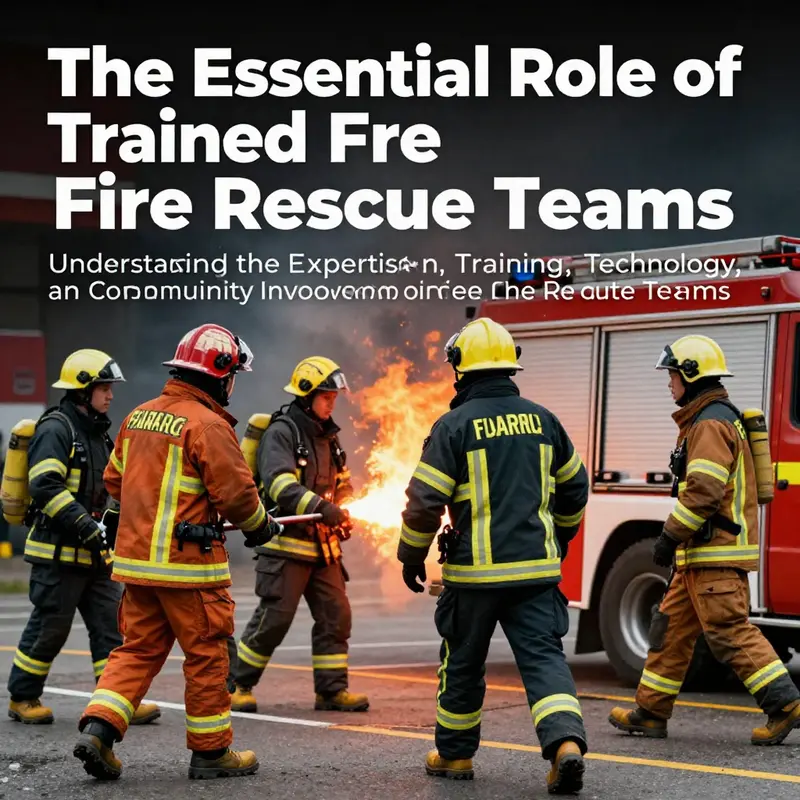
In today’s world, the demand for trained fire rescue teams is critical. These specialized units are equipped to handle not just firefighting, but a variety of emergencies such as natural disasters and hazardous material incidents. Their effectiveness arises from a blend of specialized skills, comprehensive training regimens, and advanced technologies that ensure a rapid and proficient response. This article explores the dimensions that make trained fire rescue teams integral to public safety, focusing on their specialized expertise, rigorous training, advanced equipment, structured management, and community engagement. Each chapter delves deeper into these aspects, illustrating how these teams epitomize professionalism and preparedness in crisis situations.
The Silent Edge: Specialized Skills and Tactical Mastery That Shape a Trained Fire Rescue Team
A trained fire rescue team is more than a group of capable individuals; it is a living system built to anticipate danger, adapt to shifting conditions, and execute life-saving functions under pressure. The chapter you are about to read threads together the core capabilities that distinguish a professional unit from a collection of volunteers or general responders. It is a narrative of specialized skills taught through relentless practice, reinforced by disciplined thinking, and sharpened by the disciplined use of technology. In the most demanding emergencies, the difference between success and failure often hinges on how well a team can fuse technical proficiency with tactical judgment, coordinating every move so that risk is managed as a shared, live calculation rather than a series of isolated actions. The result is not merely speed or brute strength; it is a refined intelligence that can see around corners of unfolding hazard and keep faith with the mission to save lives and protect property.
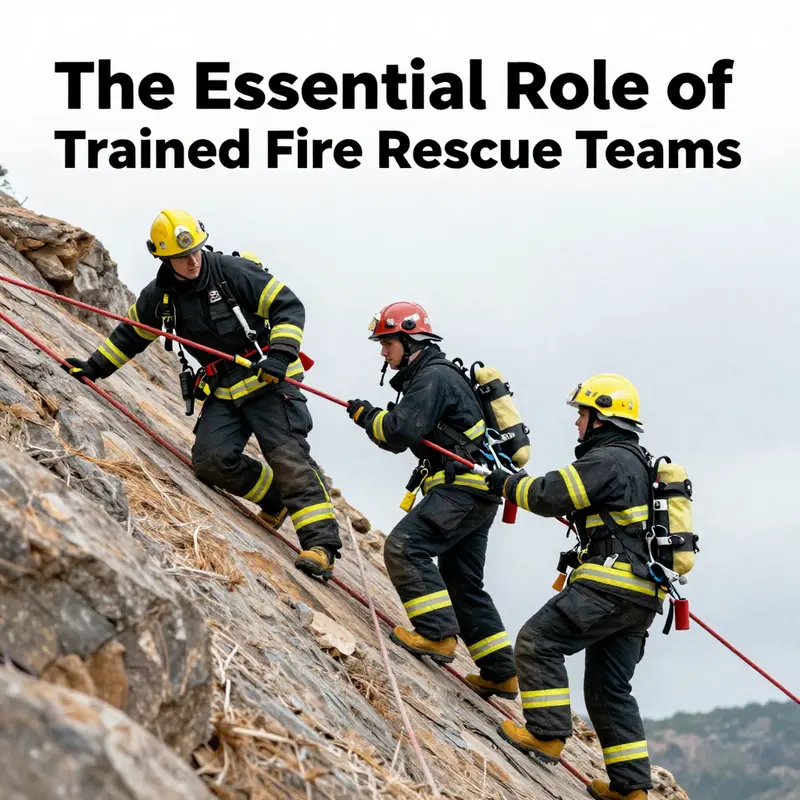
At the heart of this capability lies specialized technical rescue operations. Teams train to execute high-angle rope rescues, confined-space entries, and urban search and rescue missions with a precision that makes the seemingly impossible possible. In high-angle scenarios, the rope systems, anchor points, and belay protocols must perform flawlessly under gravity, noise, and urgency. In confined spaces, darkness, lack of air, and movement constraints demand exacting order—entry teams must be able to assess a choking environment, set up protective barriers, and extract a victim without creating new hazards. Structural collapse salvage adds another layer of complexity: the dynamics of shifting debris, unseen voids, and unstable remains require commanders and crews to read rubble like a chessboard, anticipating where a collapse could shift or re-engage. Water rescue adds a different cadence, demanding buoyancy, currents, and fatigue management. The Shanxi Mobile Force and similar units exemplify this blend of hands-on practice with the right tools—portable pumps, wind-powered extinguishing devices, and rescue ropes that allow rapid, controlled extraction even in challenging water environments. These are not mere gadgets; they are the essential enablers of a careful, systematic approach to danger where every decision reduces risk for victims and responders alike.
Firefighting tactics, too, are a field of specialized craft within the broader mission. Modern teams must master both structural and wildland fire scenarios, where fire behavior is a moving target shaped by wind, fuel, and geometry. Understanding how a fire will evolve in a stairwell, a mezzanine, or an underground garage directs where to position teams, how to ventilate, and which lines to lay first. The ability to read heat signatures and thermal differentials is critical. Infrared thermal imaging becomes a flashlight in smoke, revealing hotspots and locating trapped individuals before brute force work begins. The Yunnan Linchuan Fire Rescue Brigade’s emphasis on infrared imaging illustrates how technology complements human senses, turning what could be a dangerous guess into a data-informed strategy. The same discipline applies to wildland settings, where terrain, weather, and flame behavior demand tactical flexibility—flares of ignition can shift a plan, and crews must pivot without losing cohesion. In every scenario, tactical mastery means moving through complexity with a calm, deliberate tempo, not rushing to an action that might exacerbate danger.
EMS capabilities sit alongside firefighting and rescue as a foundational pillar. Across modern fire services, many firefighters are also trained as Emergency Medical Technicians or paramedics, ready to provide medical care at the moment of entry or during extraction. The immediate stabilization of airway, breathing, and circulation can determine outcomes in minutes and often makes the difference between survival and tragedy. EMS training broadens the team’s capability to act as a conduit for life-saving care, ensuring that once a victim is reached, medical aid flows seamlessly from the point of contact to definitive care. This integration of medicine into emergency response reflects a broader professional ethos: responders are guardians of the vulnerable, equipped not only to fight flames but to cradle life in its most precarious moments.
Hazardous Materials (HazMat) response introduces another demanding discipline. Chemical spills, toxic releases, and unknown contaminants require protective strategies, decontamination procedures, and a disciplined approach to containment. HazMat responders bring specialized PPE, detection equipment, and a choreography of “control zones” that isolate, identify, and mitigate danger while safeguarding bystanders and responders alike. The precision of HazMat work is a reminder that fire rescue is a system with many moving parts; it demands not only courage but careful risk assessment, adherence to protocols, and a readiness to escalate or de-escalate depending on what the evolving scene reveals.
Command and control capstone the technical and tactical layers of a professional unit. Incident command systems ensure that leadership, resources, and communications align under pressure. Leaders must translate rapidly changing information into coordinated action, prioritizing life safety, incident stabilization, and property protection. This is not a single skill but a repertoire: scene size-up, risk-benefit analysis, resource ordering, and a continuous feedback loop from the field to the command post. Strong command and control relies on the readiness of every role within the team, on the reliability of communication networks, and on the discipline to adhere to established protocols even when the situation flickers with uncertainty.
The training that births these competencies is as important as the competencies themselves. It is a rigorous, ongoing regimen that blends physical conditioning with scenario-based drills, both real and simulated, to create a habit of calm action under fire. Physical conditioning targets daily demands—endurance for long deployments, strength for lifting and manipulating heavy gear, and agility for rapid repositioning in tight spaces. The Ningbo Fire Rescue Brigade has emphasized injury prevention through targeted back and core rehabilitation programs, underscoring a practical truth: a trained team is not only capable, but durable, able to endure the repetitive stresses of demanding operations without breaking down. This is crucial because resilience is not merely a personal virtue but an organizational one; it allows a unit to train harder, recover faster, and deploy more reliably when real emergencies arise.
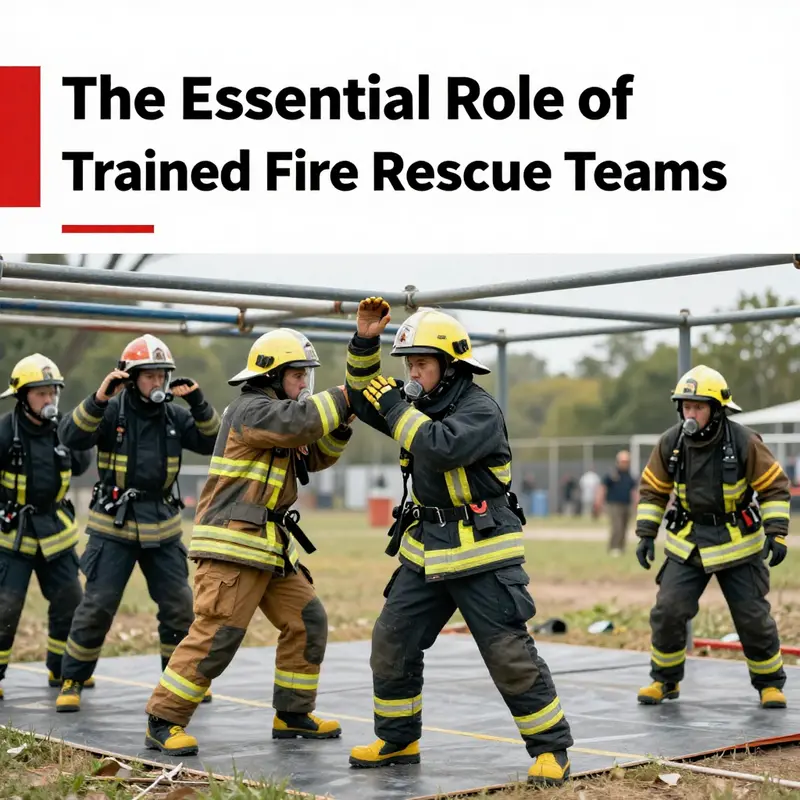
Scenario-based drills form the heart of tactical learning. Regular simulations—forest fires, structural collapses, and large-scale incidents—bring the abstract into the tangible. Such drills test coordination, decision-making under pressure, and the ability to shift strategies as conditions evolve. They emphasize the interplay between different units, agencies, and specialties, cultivating a shared mental model that makes interagency responses smoother in real emergencies. The mental and emotional dimension of training—cultivating what some call a “battle spirit” or the willingness to face danger with composure—receives formal attention too. National and regional training philosophies highlight courage and the resolve to press forward even when the flames seem insurmountable. This is not bravado; it is a cultivated discipline that anchors every action in purpose and deliberate risk management.
Technology extends the reach and precision of human effort. Intelligent command systems, supported by real-time data across 5G networks, connect field crews to command posts, equipment to logistics, and sensors to situational awareness dashboards. This is how teams avoid silos during chaos: a shared picture of the scene that informs each decision, from resource allocation to routing and split-second tactical shifts. The equipment carried by modern crews—portable pumps, ladders, thermal imagers, and drones—expands what is physically possible while keeping responders out of harm’s way whenever feasible. Yet technology does not replace human judgment; it enhances it. The best teams learn to fuse data, experience, and instinct, turning information into timely actions that protect lives and reduce collateral damage.
The organizational backbone of a trained fire rescue team is equally essential. Clear roles and a robust chain of command prevent chaos when the pressure spikes. Regular maintenance routines ensure equipment readiness; a tool that fails at the critical moment can reverse a mission’s outcome. After-action reviews and “battle case discussions” anchor continuous improvement, allowing teams to mine lessons from even partial successes and from failures alike. This systematic learning is how a team evolves—from a capable ensemble to a high-performing unit whose reflexes are honed by reflection and calibrated by evidence. It is the quiet, everyday work that makes dramatic rescue possible when the worst events strike.
All these layers cohere into a single, compelling form: a trained fire rescue team is an integrated, adaptive, and highly capable force. They are not merely responders but protectors who anticipate danger, coordinate under pressure, and translate knowledge into lifesaving action. Their expertise spans the physics of fire, the psychology of danger, the chemistry of HazMat, the medicine of EMS, and the logistics of large-scale response. They practice relentlessly not for show but for the hard realities of emergencies where a second’s delay can cost a life. The interplay of specialized skills, continuous training, advanced technology, and disciplined management creates a capability that outstrips mere bravery. It is the disciplined craft of a team that has learned to read a scene before it explodes, to move together with purpose, and to stand between a vulnerable public and the worst that nature can unleash. For readers seeking a window into the hard practice that underwrites these capabilities, the hands-on reality of training towers and dedicated drills offers a concrete glimpse into how theory becomes muscle memory and how courage becomes second nature in the path of rescue. firefighter training tower dedication.
Training Under Fire: How Elite Fire Rescue Teams Turn Theory into Real-World Readiness
A trained fire rescue team is not simply a group of brave individuals who know how to fight a flame. It is a living system forged in rigorous study, relentless practice, and a culture that treats safety, precision, and adaptability as non-negotiable. The essence of readiness lies in the seamless blending of theory and practice, where every rule learned in a classroom is reinforced by drills that mimic the worst moments of real emergencies. In this light, the comprehensive training regimen becomes the beating heart of any elite unit. It is the ongoing process that converts potential into performance, ensuring teams can face a spectrum of hazards—fires in modern structures, natural disasters, hazardous materials incidents, and the most demanding technical rescues—with confidence and calm.
One of the clearest demonstrations of modern preparedness is the true smoke and fire training that has come to define advanced programs. Known in practice as a cornerstone of realism, this approach reconstructs the heat, smoke, and disorientation of actual blazes, allowing crews to experience the look and feel of true emergencies without the real-world danger. In 2025, Chinese fire services advanced this philosophy through a tightly integrated regimen that couples 16 theoretical modules with immersive, high-fidelity drills. At the Yulin City Fire Training Base, a 15-day program brought together 108 personnel from 13 regional brigades to work through a curriculum designed to stress-test judgment just as much as technique. The modules cover essential topics such as fire dynamics, water jet techniques, and the use of fixed firefighting systems, but the real weight lies in the practical portion: more than six-tenths of the training time was devoted to hands-on practice, with nearly a third specifically dedicated to true smoke and fire drills.
That balance between head and heart is by design. Trainees move from theoretical concepts into the core execution of fire attack, search and rescue, and rapid ventilation under conditions that feel as close to real life as possible. The facilities themselves are part of the realism. Industrial diesel heaters generate intense heat, smoke generators create dense atmospheres, and smoke furnaces reproduce the layered environments crews must navigate in tall buildings, basements, or confined spaces. These upgrades raise the fidelity of practice, enabling students to experience thermal layering, visibility loss, and heat exposure in a controlled setting. The aim is not to scare or overwhelm recruits but to inoculate them against shock, to teach them how to conserve energy, and to trust their training when every breath is hard to come by.
Specialized scenario-based learning expands this foundation into a broader repertoire of tactics and decision-making under pressure. Chongqing’s annual fire rescue task force exercises highlight core competencies such as preventing flashover and backdraft, cooling thermal layers, and protecting water streams during interior operations. The drills are not merely about hitting targets; they are about maintaining crew integrity, communicating clearly when chaos swirls, and applying protective principles that preserve both life and team members. In addition to these core drills, field visits to battery manufacturing facilities reflect the growing reality of lithium-ion battery fires—a modern hazard that requires particular attention to thermal runaway, venting, and rapid disengagement from hazards with minimal exposure time.
Even the most practical drills rely on the strength of reflection. War case reviews conducted in a first-person narrative format encourage participants to walk through past incidents as if they were living them again, identifying risks, missteps, and opportunities for improvement without the sting of blame. This technique helps shift culture from reactive firefighting to proactive learning. It also reinforces a crucial mental discipline: calm, deliberate assessment under pressure. The emphasis on “battle spirit” and courage—concepts echoed by national leaders of fire rescue services—becomes more than rhetoric when trainees repeatedly practice the mental adjustments needed to climb a mountain of flames or cross seas of heat with composed judgment and precise action.
Beyond the more dramatic elements of true smoke and fire, a robust training regimen integrates advanced technology and systemic coordination to build a unified operating picture. Modern teams do not rely on gut instinct alone; they rely on intelligent command systems and integrated communications that bring data, maps, thermal imaging, and live feedback into a single, navigable stream. Even during training, students learn to interpret the output of thermal cameras, assess structural integrity, and coordinate with multiple units using real-time data. This preparation is essential because real incidents rarely unfold in isolation; they demand collaboration across agencies, rapid adaptation to evolving conditions, and the capacity to pivot tactics as facts change.
The equipment loop is an extension of the training loop. Trainees practice with a range of tools that, in combination, create a force multiplier: portable pumps for rapid water delivery, aerial ladders for elevated access and rescue, thermal imaging to pierce smoke, and drones for reconnaissance and monitoring in hazardous spaces. Each piece of gear is treated not as an end in itself but as a capability that must be integrated into an articulate tactic. The result is a team that deploys, repositions, and withdraws with a fluidity that looks almost choreographed yet remains deeply responsive to unforeseeable dangers.
This level of sophistication does not arrive by accident. It requires a disciplined structure and a culture of continuous improvement. Clear hierarchy and role definitions ensure that every member knows what is expected in any given moment. Regular maintenance and readiness checks make sure equipment does not fail when it is needed most. But perhaps more importantly, the regimen emphasizes systematic learning as an ongoing obligation. After-action reviews, battle case discussions, and near-miss investigations are integrated into every unit’s cadence. The aim is not perfection but the relentless narrowing of gaps between what is possible and what is actually delivered in the field.
The training message is reinforced through a blend of theory, high-stakes practice, and hazard-specific education. The Li-ion battery field visits, for example, reflect a forward-looking stance: the fire service cannot be complacent about new technologies and the unique hazards they bring. Crew members learn the signs of thermal runaway, the safest strategies to isolate and cool a battery fire, and the procedural precautions that reduce exposure risks. In doing so, they gain not only technical competence but also the confidence to improvise responsibly when routine plans meet the unexpected. This is the hallmark of a trained team: the ability to adapt quickly without compromising safety or effectiveness.
A pivotal dimension of the regimen is resilience—mental and emotional stamina built through repetition under fatigue and pressure. The training culture frames courage not as reckless bravery but as disciplined, focused action under stress. This mindset is essential when confronting the most unforgiving environments: high-rise interiors where visibility vanishes in seconds, forests where the wind shifts direction without warning, or industrial sites where hazardous materials demand careful handling. It is a form of psychological conditioning that enables a crew to stay present, communicate clearly, and execute with precision even when every instinct urges haste.
The 2025 deployment of these practices across China illustrates how a comprehensive training program informs every layer of response. It begins with the classroom, where firefighters learn the physics of heat and flame, the dynamics of water application, and the protocol for ventilation and interior attacks. It continues through the hands-on portions, where the numbers on a whiteboard translate into muscle memory and muscle memory translates into safer, faster actions during real incidents. And it culminates in the systemic components of readiness: an integrated command system, a disciplined structure, and an unbroken commitment to learning from every operation. In this sense, training is not a separate activity from field readiness; it is the principal source of it.
For readers seeking deeper context on how training methodologies evolve in contemporary fire services, the synthesis of practices described here aligns with broader industry reporting and academic analysis. The combination of true smoke and fire exercises, advanced facilities, scenario-based learning, and field-specific hazard education demonstrates a template that many agencies are adopting, adapting, and refining to suit their local environments and risks. It is a model that respects both the art and the science of rescue work.
As readers reflect on what constitutes a trained fire rescue team, it becomes clear that readiness is not a single skill but a living ecosystem. It requires people who are physically fit, technically capable, and mentally prepared to act decisively under pressure. It demands equipment that works when called upon, coordinated systems that share knowledge in real time, and a culture that treats ongoing education as a duty and a privilege. It requires a commitment to learn from every incident, to challenge assumptions, and to honor the lives at stake with every decision. And it hinges on the ability to translate intense preparation into calm, humane action when a community needs help most. In that sense, the true measure of a trained fire rescue team is not just what they can do in a drill, but how effectively they can apply those lessons in a rapidly changing, irreversible moment of crisis.
For further exploration of how these approaches are evolving and to see related discussions on training infrastructure and curriculum development, readers may consult additional sources. A representative account of the latest developments in fire rescue training methodologies is available at the external resource: https://www.chinanews.com.cn/gn/2025/06-04/10752396.shtml. In addition, for readers seeking practical insights into facility design and instructional priorities, many departments maintain focused programs and case studies that illuminate how training environments translate into field readiness. Within our own resource network, you can explore articles on firefighter training towers and related immersive facilities, such as the discussion found in the linked piece on firefighter training tower dedication. This material helps illustrate the tangible ways in which training spaces shape the culture and capability of modern rescue teams.
Tech at the Frontline: How Advanced Tools Shape a Trained Fire Rescue Team
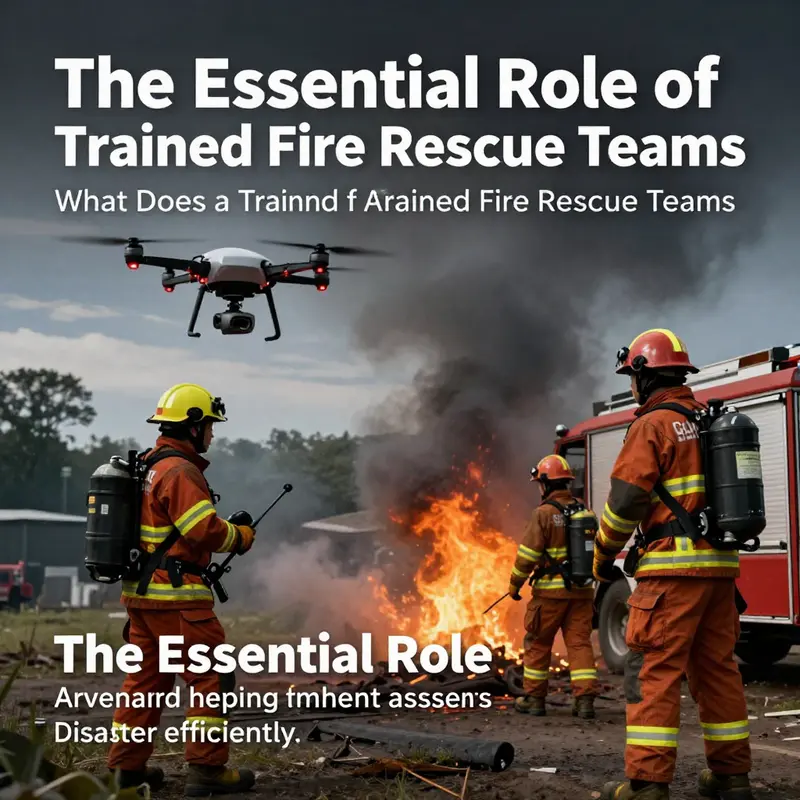
A trained fire rescue team today operates at the intersection of human courage and machine-supported precision. The most effective teams are not defined by the gadgets they carry alone, but by how seamlessly their gear integrates with disciplined training, rigorous decision-making, and a shared commitment to public safety. In complex emergencies, the frontline is a living ecosystem where advanced technology enhances a responder’s senses, expands their reach, and protects their lives while enabling faster, more accurate actions. The result is not a collection of tools but an integrated system that allows skilled firefighters to move from reactive responses to proactive problem solving.
At the heart of this system are specialized mechanisms that extend a firefighter’s reach into environments that are too dangerous for human presence. Firefighting robots, for instance, stand as sentinels at the edge of danger. These ground-based machines can advance toward a blaze, deliver suppressants through high-pressure nozzles, and perform targeted operations without exposing crew members to extreme heat, unstable debris, or lingering toxic fumes. The robots are not mere novelties; they are force multipliers that change the calculus of a response. In large-scale industrial or structural fires, their ability to approach a fire source, apply water or foam directly where it is needed, and retreat to a safe distance can significantly shorten the window between ignition and control. The presence of such autonomous or remotely operated assets frees human teams to focus on tasks that require judgment, dexterity, and teamwork—areas where experience remains essential.
Thermal imaging is another pillar of modern rescue operations. Thermal imaging cameras provide an infrared view of a scene, revealing hotspots, hidden flames, and people behind walls or beneath smoke. Worn on helmets or carried as handheld devices, these cameras transform smoke-filled uncertainty into actionable heat maps. For responders, TICs are not simply about locating fires more efficiently; they are about locating human life amid chaos. When compressed air and heat distort visibility, the ability to identify a warmth signature through layers of smoke becomes a life-and-death advantage. The continuous feedback from TICs feeds directly into interior attack strategies, ventilation plans, and rescue routes, allowing commanders to allocate crew positions with greater confidence and adjust tactics in real time.
Communication systems form the backbone of coordinated action. Modern teams operate with wearables that transmit real-time data on location, vital signs, and environmental conditions. GPS-enabled turnout gear keeps a precise track of every firefighter’s position, even in the most challenging urban mazes or subterranean settings. Interoperable radio networks ensure that multiple agencies can share information instantly, avoiding miscommunication when time is a critical factor. This level of connectivity is not a luxury; it is a necessity in large incidents where dozens of responders, multiple units, and potentially diverse jurisdictions must work in concert. The result is a shared mental model of the emergency that travels with every responder rather than being suspended in a chain of verbal updates.
Smart personal protective equipment takes the safety net one step further by turning suits and gloves into sentinels. Embedded sensors monitor vital signs such as heart rate, respiration, and core temperature while tracking environmental conditions like ambient heat and gas presence. If a firefighter shows signs of distress, or if the suit detects dangerous fluctuations in temperature or toxic exposure, automatic alerts are routed to the incident command and nearby teammates. Such feedback loops are not optional safety features; they are essential to prevent injuries and ensure that the team can adapt quickly when conditions deteriorate. The wearable technology also assists in maintaining a sustainable tempo over the course of a long incident, helping crews pace themselves while staying within physiological limits.
Drones have become indispensable in urban search and rescue, providing an aerial perspective that would be impractical or dangerous to obtain from the ground. Equipped with high-resolution cameras and thermal sensors, they can survey collapsed structures, assess roof integrity, and locate survivors from a safe vantage point. In the chaotic uncertainties of a building collapse or a post-disaster scene, drones offer a reconnaissance layer that informs decision-making without putting rescuers at risk. They can map terrain, identify structural weaknesses, and highlight zones of potential entry or egress. This situational awareness supports a more strategic allocation of manpower and equipment, enabling teams to coordinate a more measured, efficient response even under pressure.
The way these tools come together reflects a broader shift in fire rescue practice: the move from isolated interventions to coordinated systems. Intelligent command platforms—fueled by rapid data collection, analysis, and sharing—connect frontline crews with remote specialists, engineers, and medical teams. In such ecosystems, data streams from TICs, wearable sensors, drones, and robots converge into a single command view. This integrated picture allows incident commanders to visualize risk, forecast outcomes, and adjust resource distribution on the fly. The 5G-enabled networks and platform-based data management enable near real-time decision support, transforming what used to be a sequence of rushed moves into a carefully orchestrated response.
Of course, technology does not erase the human element. Training remains the backbone of effectiveness and safety. A trained team rehearses under sensor-laden simulations that mimic the pressures of real incidents—from the claustrophobic corridors of a burning high-rise to the unpredictability of a confined space rescue. Physical conditioning and injury prevention continue to be foundational, with programs designed to strengthen the back, core, and joints in ways that survive the demands of long-duration operations. Mental resilience is equally critical. The courage to confront flames and the discipline to maintain calm under threat are cultivated through deliberate practice, after-action reviews, and a culture that prizes courage and calculated risk-taking. The National Fire Rescue Bureau’s emphasis on daring to climb mountains of fire and cross seas of flames is not rhetoric but a call to maintain composure and clarity when every decision could matter most.
The integration of science and stamina extends to equipment maintenance as well. Regular checks, preventive servicing, and systematic readiness create a reliable platform on which all technologies rely. A well-maintained robot, a calibrated TIC, or a trusted drone is only as effective as the team that knows how to deploy it under pressure. That is why standard operating procedures, clear roles, and rigorous rehearsals remain essential. In the best teams, lessons from each mission—whether a triumph or a near-m miss—feed into post-incident discussions that sharpen tactics for the next call. These battle case discussions are not about assigning blame but about extracting practical insights for continuous improvement. The result is a professional culture that treats failure as a stepping-stone toward greater readiness and safety.
Within this ecosystem, the choice of training resources matters. Prospective and current responders can deepen their understanding of how technology overlaps with practice by engaging with the broader learning community and relevant coursework. A pathway to building competence often begins with foundational certifications and progresses toward specialized qualifications that address HazMat, technical rescue, or swiftwater operations. For individuals looking to expand their preparedness, there are dedicated programs that emphasize certified safety principles and hands-on skill development. Fire safety essentials certification training, for example, offers a core set of competencies that align with the expectations of modern fire rescue work and provide a solid platform for more advanced study. This kind of training helps ensure that personnel can interpret data from sensors accurately, operate complex devices safely, and contribute effectively to the team’s shared mission. Fire Safety Essentials Certification Training
The trend toward technologically augmented response also invites reflection on ethics and public accountability. The more data we collect and the more devices we deploy, the greater the responsibility to protect privacy, ensure safety, and maintain transparency about how these tools influence decision-making in life-and-death situations. Yet in practice, technology serves as a force multiplier that reinforces the core purpose of a trained fire rescue team: to safeguard lives and property, maintain public trust, and restore order as quickly and safely as possible. When engineers, trainers, and responders collaborate, the result is a resilient system that can adapt to emerging threats, whether a new chemical hazard, a sprawling urban fire, or a disaster scenario that stretches resources to the limit. This adaptability does not emerge by accident; it grows from a disciplined culture that values continuous learning, meticulous preparation, and a willingness to evolve in step with technology.
In sum, what characterizes a trained fire rescue team is not simply the list of equipment it can deploy, but the way that equipment is embedded in a disciplined, continuously evolving practice. Firefighting robots, thermal imaging, advanced communications, smart PPE, and drones each contribute a layer of safety and capability. Yet their true power comes from the systematic training, post-incident analysis, and shared commitment that binds technology to human performance. The frontline is thus a place where science and service converge: a space where data becomes intuition, machines extend human reach, and courage steadying the helm guides a team through the peril toward rescue and relief. For readers seeking to understand the full arc of what a trained fire rescue team does, the answer lies not only in the tools they wield but also in the culture of preparation that makes those tools sing in concert when danger calls.
External resource: https://www.fireengineering.com/technology/firefighting-robots-and-smart-ppe-the-future-of-fire-safety/
Structured Courage: How Professional Management Shapes a Trained Fire Rescue Team
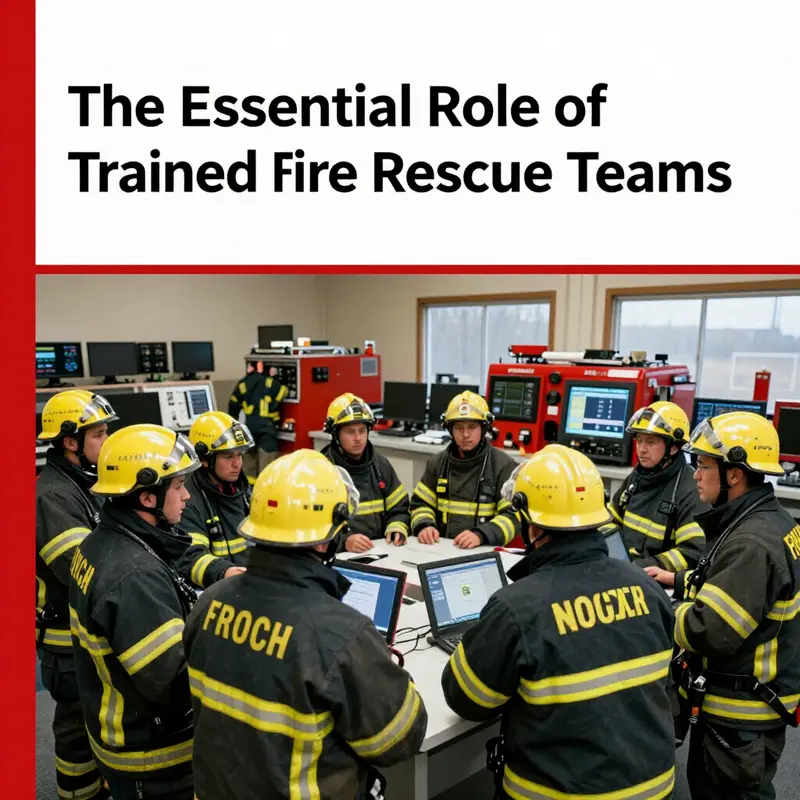
A trained fire rescue team is more than a collection of capable individuals; it is a carefully engineered organism built from clear lines of authority, standardized preparation, and interoperable systems. The professional structure that underpins this kind of team is the quiet engine of readiness, turning potential into reliable action under pressure. In practice, that structure rests on three interlocking pillars: an organized command framework that coordinates diverse expertise; a rigorous and standardized training culture that keeps everyone sharp; and disciplined safety, accountability, and learning processes that ensure continuous improvement even after the smoke clears. Together, they translate the abstract promise of readiness into the concrete ability to protect lives and property when every moment counts. Within this framework, the team does not simply react to emergencies; it operates as a cohesive unit that can adapt to fires, natural disasters, hazardous materials incidents, technical rescues, and other complex events with confidence and precision.
The first pillar is organizational structure, which provides the skeleton of the operation and a living map for decision making in chaos. At a national level, many systems are built around unified command concepts that allow multiple agencies to work in concert. In some large national reforms, a centralized fire rescue authority establishes standards, policy, and performance expectations while local governments shoulder deployment and on‑the‑ground execution. This dual channel—policy and deployment—creates a balance between consistent national guidance and the nimble responsiveness of local units. Within that balance, individual teams are organized with explicit hierarchies and roles. Every member—from commanders and firefighters to drivers, safety officers, and communications specialists—knows their responsibilities and how their work fits into the broader mission. When a fire erupts in a high‑rise building or a riverbank is threatened by floodwater, the chain of command keeps information moving in the right direction, reducing confusion and enabling rapid, coordinated action.
The second pillar—training and certification—is the engine that keeps the structure effective. Professional programs move beyond generic drills toward specialized, scenario‑driven preparation that mirrors the complexity of real incidents. For example, a city’s fire rescue brigade might implement a comprehensive training program that develops teachers, demonstrators, organizers, and evaluators. This approach rests on three foundations: theory, practice, and reflective discussion. The theory piece builds a shared mental model about tactics, safety, and decision making. Real scenario practice tests that model forest fires, building collapses, or large‑scale traffic incidents push teams to apply that theory under stress while coordinating with partners. Finally, teaching discussion and critique help translate experience into improved performance, with lessons codified into updates to procedures and drills. This kind of structured pedagogy ensures that knowledge is not merely possessed but correctly applied and passed along.
Contextually, many regions have advanced beyond generic urban firefighting to address terrain, weather, and equipment realities that shape field performance. A training outline that encompasses basic training, professional skills, tactical research, and concurrent validation across multiple cities demonstrates a commitment to standardized excellence while acknowledging regional needs. Demonstration teams across numerous urban and rural settings ensure that the curriculum remains practical and adaptable, not theoretical. Such standardization does not erase local flavor; it ensures that across different precincts, the same core competencies and safety expectations prevail, enabling interchanging teams to operate smoothly when mutual aid is required. The result is a cadre of responders who share a common language, a common frame of reference, and a predictable, reliable approach to the most challenging scenes.
Safety protocols and accountability form the third pillar and, in many ways, the most tangible evidence of professional discipline. A rigorous safety culture protects both the public and the responders themselves. Specific guidelines are woven into training, not bolted on afterward; for instance, safety control specifications are integrated into curricula so that every exercise begins with risk assessment, continuous monitoring, and defined stop conditions. Regular assessments sustain readiness: biannual general exams, annual random checks, and ongoing performance reviews ensure that skills do not become stale and that new procedures are assimilated promptly. Beyond internal measures, professional structures often extend into community engagement and hybrid forces, illustrating a modern, inclusive approach to public safety. Be it micro‑fire stations at construction sites or volunteer squads that operate under supervision, the goal remains the same: maintain high standards, ensure accountability, and protect the public with integrity.
The integration of technology is inseparable from this professional framework. Command and control systems have evolved to rely on real‑time data, rapid analysis, and seamless interagency communication. Intelligent command platforms, which can leverage evolving networks and sensor feeds, enable commanders to visualize evolving conditions, track personnel and assets, and coordinate responders across sectors with greater speed and accuracy. The equipment carried by teams—portable pumps, aerial ladders, thermal imaging cameras, and reconnaissance drones—serves as force multipliers, extending human capability while maintaining safety margins. This technological backbone does not replace judgment; it amplifies it, providing a clearer picture of the scene and more reliable information for decisive action. Importantly, the integration is designed to be robust and sustainable. It emphasizes interoperability among units, resilience against outages, and ease of maintenance so that systems remain available when they are needed most.
The professional system also cultivates a particular ethos that binds structure, training, and safety into a cohesive way of operating. A trained fire rescue team carries a battle spirit—a calm courage under pressure, a willingness to confront danger, and a disciplined adherence to process even when adrenaline runs high. This culture grows from repeated exposure to challenging drills and reviews, from debriefings that frankly examine what worked and what did not, and from a shared commitment to public service. The practice of post‑incident reviews, often styled as battle case discussions, is a telling indicator of maturity in the field. Leaders and frontline responders come together to dissect scenes, then translate insights into tactical refinements, updated checklists, and improved training modules. This ongoing loop—experimentation, learning, and implementation—ensures that the team does not merely react to events but evolves in anticipation of them.
For teams building or evaluating this kind of professional framework, a practical touchstone is the emphasis on structured training pathways that connect to everyday operations. The emphasis on core competencies—critical thinking under pressure, precise communication, safe risk acceptance, and disciplined execution—manifests in every milestone of a responder’s career. A robust program will point to clear objectives, measurable outcomes, and transparent accountability, all of which reinforce confidence in the team and in the public they serve. Anyone exploring a career in this field should recognize that formal certification, continuous learning, and exposure to diverse incident types are not optional add‑ons; they are prerequisites for reliability in the face of uncertainty. For those seeking to deepen their understanding of training basics, a common reference is the broader curriculum on fire safety and certification training, which emphasizes the gradations of knowledge and the practical pathways that lead to mastery. fire safety essentials certification training.
Taken together, the professional structure and management of a trained fire rescue team represent a balanced fusion of organization, preparation, and accountability. A unified command system channels expertise and authority where it belongs, while standardized training ensures that every member speaks a common professional language. Rigorous safety protocols and repeated assessments anchor performance in reality, not idealized theory. The smart use of technology accelerates situational awareness and operational coordination, but it neither dispenses with human judgment nor erodes the obligation to act with discretion and care. This is how a team becomes greater than the sum of its parts: a responsive, adaptive, and cohesive force that can meet the demands of fires, natural hazards, and manmade emergencies alike. The structure is not static; it is designed to evolve with new challenges and new tools, always with the aim of safeguarding lives and protecting communities.
As the chapter closes on the professional architecture of a trained fire rescue team, the threads of command, training, and safety converge into a single, disciplined practice. The public relies on a force that looks orderly on paper but moves with decisive confidence in the field. And the team relies on a rhythm of learning, testing, and refining that keeps it ready for the unpredictable realities of serving as guardians in times of crisis. The result is not only a well‑drilled unit but a living system capable of sustaining high performance through the most demanding conditions, a system that embodies the promise implicit in the question of what a trained fire rescue team is: a professional, adaptive, and relentlessly capable organ of public safety. External resource: https://www.nfpa.org/.
Beyond the Sirens: Building Community Resilience Through Prevention and Partnership in Trained Fire Rescue Teams
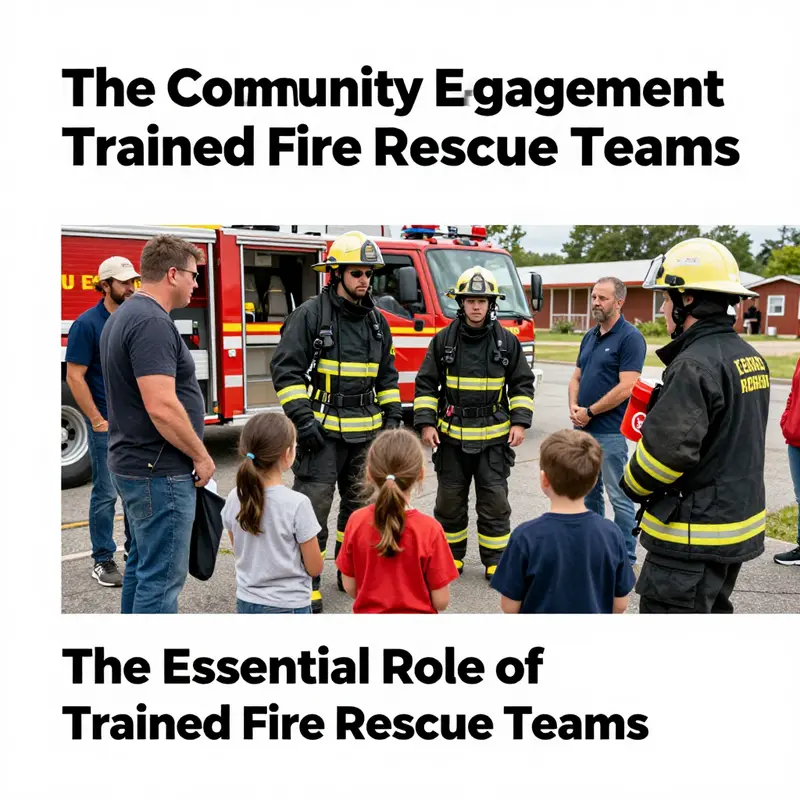
A trained fire rescue team operates as more than a rapid response unit. Its strength lies in a deliberate blend of specialized skills, disciplined training, cutting‑edge technology, and a deep, living connection with the communities it serves. When we examine what a trained team does, we see a continuum that starts long before the alarm and extends far after a blaze is extinguished. Prevention, preparedness, and public partnership form the backbone of this approach. The Shanxi Mobile Team, a representative example discussed in recent practice, illustrates how prevention is not a separate program but an integral mode of operation that redefines what it means to protect lives and property in a landscape that is constantly shifting with weather, development, and social change.
Central to this vision is a model of community engagement that turns emergency services from distant authorities into local allies. The Shanxi Mobile Team has embraced a four‑link mechanism—joint defense, joint training, joint duty, and joint support—as a practical framework for embedding itself in the fabric of the communities it serves. This arrangement is not merely about proximity; it is about co‑designing response protocols with residents, neighborhood associations, schools, businesses, and other public safety agencies. The effect is twofold: it increases trust and it makes the coordination during crises smoother and faster. When a community knows its responders, when residents understand the basics of evacuation routes, alarm signals, and shelter procedures, the likelihood of a calm, orderly response rises. In flood, fire, or chemical incidents, this trust reduces hesitation and increases the effectiveness of whatever measures are deployed.
Prevention follows this same logic of proximity and partnership. It begins with intelligent monitoring systems that leverage the latest in data connectivity, such as 5G networks and real‑time data streams from a centralized command platform. On high‑risk land, such as forest and grassland areas, these systems provide full‑spectrum surveillance around the clock. They don’t just detect a spark; they map heat signatures, track weather‑driven risk factors, and feed predictive insights into decision‑making. The result is an early‑warning capability that shifts the dynamic from sudden, reactive firefighting to staged, preemptive action. This shift is crucial in environments where a small ignition can rapidly escalate into a landscape‑scale emergency, threatening communities and ecosystems alike.
The prevention repertoire extends beyond sensing to action. Remote water delivery systems and mechanical firefighting tools enable responders to reach distant or rugged terrain without sacrificing efficiency. Drones serve as eyes in the sky, providing reconnaissance, situational awareness, and rapid assessment of a scene before personnel enter dangerous zones. Thermal imaging cameras allow teams to see through smoke, locating hot spots and hidden fires that could flare up again after an initial containment. This technology interacts with human judgment in a continuous loop: data informs tactics, tactics generate more data, and the cycle repeats until the danger is contained or eradicated.
Yet technology alone does not create resilience. It is the interplay with training that transforms tools into credible capacity. Proactive training in these contexts is relentless and realistic. Physical conditioning remains foundational, but it is complemented by scenario‑based drills that reproduce the complexity of real incidents. In Yangqu County’s multi‑scenario exercise held on January 28, 2026, participants tested forests, urban interfaces, and multi‑agency coordination. Such drills are not performances for spectators; they are exercises to refine the tempo of action, the clarity of communication, and the humility required to recognize when decisions need adjustment under pressure. The discipline of practice ensures that when a real event occurs, the team can translate knowledge into timely, effective action, with less room for confusion and fewer opportunities for error.
The mental and emotional dimensions of readiness are equally important. A culture of “battle spirit,” with courage and calm under danger, anchors every decision. This mindset helps responders manage fear, sustain focus, and maintain ethical judgment when lives are at stake. It also supports the longer arc of prevention: when personnel carry this resilience into the public sphere, they become credible messengers about risk, safety habits, and the steps individuals can take to reduce danger. Public education becomes a natural outgrowth of capability, not a separate add‑on. The team’s presence in schools, community centers, and local events helps translate technical know‑how into practical, everyday habits—clear exits, safe storage of hazardous materials, and the avoidance of risky behavior around fire sources.
Crucially, the professional structure and management of trained teams reinforce this integrated approach. A well‑defined hierarchy, established roles, and standardized procedures ensure that every member understands their duties and can execute under stress. Regular maintenance of equipment and a culture of readiness mean that the tools are reliable when needed, not only during demonstrations. Post‑incident reviews—often termed battle case discussions—are not about assigning blame but about extracting lessons that feed back into training, protocols, and prevention strategies. The emphasis on learning creates a living system that evolves with emerging threats and changing community needs. In this sense, prevention is not a static plan but a dynamic process that grows from experience and evidence.
The four‑link collaboration with local forces is a particularly revealing facet of how prevention and engagement operate in practice. Joint defense means that the community has a shared responsibility for recognizing risks and initiating protective actions. Joint training aligns the skills and expectations of public safety actors, reducing the friction that can slow response. Joint duty clarifies when each agency or group should take the lead and when to support others, minimizing chaos at the scene. Joint support ensures resources—personnel, equipment, and information—are shared efficiently, enabling a layered, flexible response that can shift as conditions change. This model is more than bureaucratic coordination; it is a social contract that encodes safety into the daily life of a community. Regular drills with the public, instead of purely internal rehearsals, become opportunities to practice evacuation, sheltering, and friendly warning systems. The public experiences safety as a practiced certainty rather than a theoretical ideal, which in turn sustains long‑term behavior change.
In this ecosystem, prevention is not an optional add‑on but a core function of what a trained fire rescue team does. The team uses its technical proficiency to safeguard not only lives but livelihoods and ecosystems. Forest and grassland management, for instance, becomes a shared responsibility where prevention requires active collaboration with land managers, forestry departments, and local residents who understand local ignition patterns and seasonal risks. The smarter, more interconnected the system, the more the prevention effort reduces the need for emergency interventions, and when interventions are necessary, they are more precise, less invasive, and better coordinated with the surrounding community.
Public engagement also means transparency and accountability. By inviting residents to participate in planning—through town halls, school programs, and neighborhood drills—the team demonstrates competence and care. The community sees that responders are not distant saviors but trusted neighbors who speak plainly about risk, demonstrate protective practices, and model disciplined behavior under stress. In this way, prevention becomes civic literacy—an shared language about safety that empowers people to act appropriately when danger emerges. The result is a resilient social fabric in which people not only endure emergencies but also reduce the likelihood of their occurrence through informed action and vigilant stewardship of local environments.
The chapters that follow will build on this understanding by examining how such integrated prevention programs connect with broader organizational culture, workforce development, and policy support. They will explore how training curricula, drills, and community outreach are designed to reinforce a proactive stance toward risk rather than a purely reactive one. The overarching arc remains clear: a trained fire rescue team is an adaptive, proactive force whose strength rests on disciplined technique, continuous learning, and the enduring trust it earns by working openly with the communities it serves. This is the core of what it means to be a modern responder—where protection, prevention, and partnership converge to keep people safer, every day and in every season.
External resource: https://www.nfrc.gov.cn/news/2026/0131-shanxi-mobile-team-drills.html
For further context on practical safety training that underpins these capacities, see fire safety essentials certification training.
Final thoughts
Overall, trained fire rescue teams are a vital component in maintaining public safety and emergency preparedness. Their specialized skills, continuous training, state-of-the-art technology, and structured approach make them exceedingly effective in dealing with a variety of emergencies. Additionally, their commitment to community engagement not only helps to mitigate risks but also fosters a sense of security and trust among the public they serve. Understanding the complexities of their roles helps highlight the necessity of investing in such teams for the future safety of our communities.