
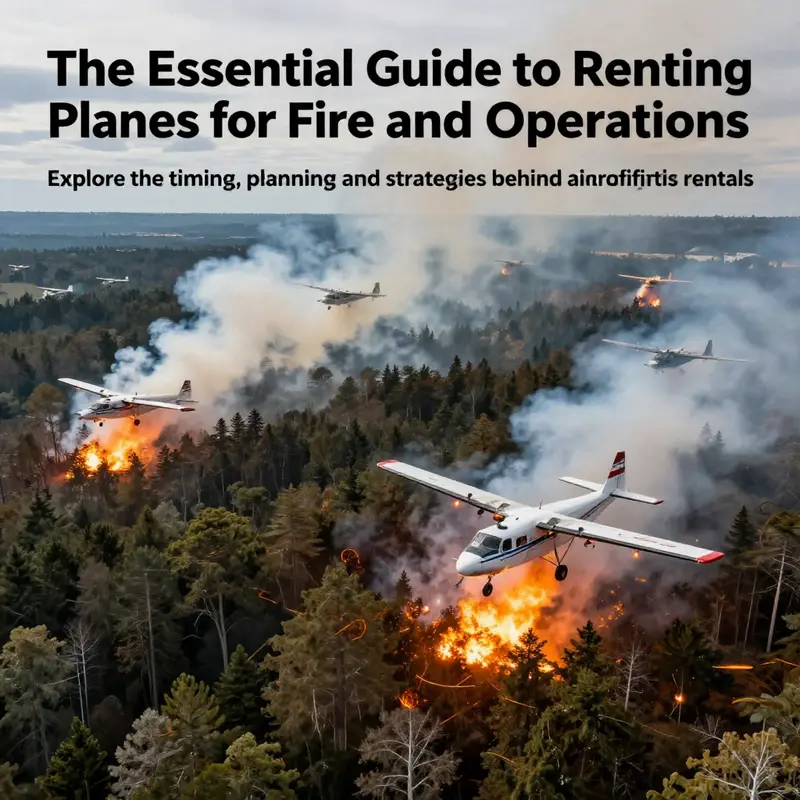
Understanding the nuances of renting planes for fire and rescue operations is crucial for effective disaster management. Organizations tasked with emergency responses must navigate the complexities of seasonal demands, regional policies, and emergency protocols. This comprehensive guide explores when planes can be rented for these vital operations, focusing on the significance of timely preparation, budgeting strategies for regional planning, the role of pre-established agreements, and analysis of real-world case studies that highlight rapid response rentals. Join us as we delve into each chapter to equip your organization with insights for effective fire and rescue operations.
Seasonal Wings and Urgent Skies: How Aerial Firefighting Rentals Blend Planning and Crisis Response
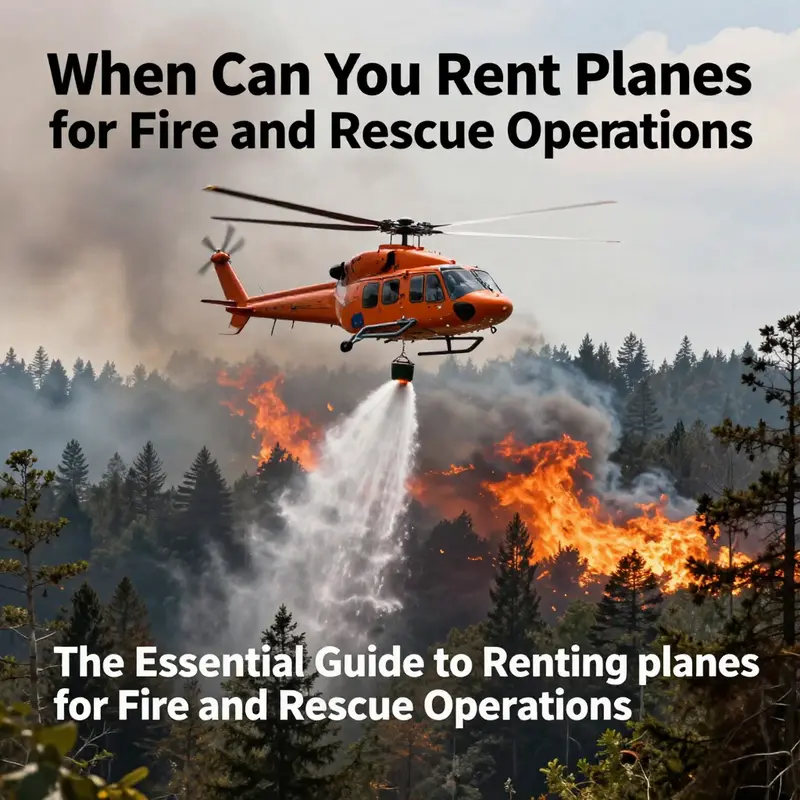
Airborne fire and rescue operations hinge on a careful balance between long-range planning and rapid, on‑the‑ground flexibility. The chapter you are about to read traces how rental aircraft—ranging from helicopters to large fixed-wing platforms and an expanding fleet of unmanned systems—are integrated into regional and national emergency frameworks. The backbone of this approach is simple in concept but complex in execution: prearranged, seasonally driven capacity that sits alongside fast‑track activation during crises. The result is a dual rhythm where aerial assets are staged like a weather eye over a landscape prone to sudden danger, ready to be summoned when forecasts turn threatening and when calamities erupt without warning.
In practice, the timing of renting planes for fire and rescue is determined by the season, geography, and the policy architecture that governs emergency response. Fire risk is not uniform; it shifts with climate, vegetation, slope, and human activity. The arid pockets of a province may burn most fiercely in late winter or early summer, while other regions endure a calmer season with occasional spikes tied to heat waves or lightning. In these patterns, rentals become a strategic instrument rather than a reactive fix. When authorities forecast a high-risk window, planning offices lock in capacity months in advance, allocating budgets and negotiating terms that ensure aerial assets can be deployed with minimal delay when the fire season begins. This forward planning is not merely about owning or leasing equipment; it is about aligning air operations with ground crews, weather services, and airspace coordination so that aircraft can reach the scene with the shortest possible transit time and without disrupting civilian aviation.
A compelling example of this forward‑leaning approach can be found in a country with vast forested frontiers and climate-driven risk that must be managed at multiple scales. Provinces have embraced a model where leased aircraft provide both light and heavy aerial capabilities for forest and grassland fires, surveillance, and rapid response. In one province, the procurement plan for the coming year explicitly includes renting drones and rotary-wing platforms for a defined block of days per unit. The intent is not merely to have several machines perched on a pad; it is to guarantee a baseline of aerial capacity precisely when fire danger peaks. In this framework, rentals can amount to dozens of days of operation within a single season, with the possibility of extending or accelerating based on evolving risk assessments. Such arrangements reflect a broader national strategy to broaden aerial firefighting capacity through pre‑established agreements with private or commercial operators. They also illustrate how long‑term policy documents, including forest fire prevention plans and emergency management blueprints, translate into concrete, calendarized capability.
The logic of this approach is reinforced by concrete numbers and planning milestones. Budgets are prepared long before the first flame flickers, and the approval process is tied to annual or semi-annual cycles. For example, a provincial emergency management department may earmark significant sums for aviation emergency capabilities, ensuring funds are available to cover rental costs, maintenance, crew deployments, and support services. This budgeting discipline is essential because it creates a predictable fiscal path for partners in the rental ecosystem. It also signals to local governments, fire protection districts, and forest authorities that aerial options will be there when needed, rather than appearing only as a contingency after a crisis has started. Pre‑agreements with aviation service providers—covering tasking, basing, maintenance, and the dispatch of multiple platforms—are the counterpart to these budgets. They reduce friction at the moment of activation and allow a swift, coordinated response as ground crews report to the scene and air traffic control clears routes for rescue flights.
The operational tempo of these arrangements is equally deliberate. Rentals are typically activated through established protocols that outline who orders, who screens, and who approves the deployment. A central emergency management department may issue a pre‑planned flight plan that coordinates with national aviation authorities, ensuring the airspace above the affected area is managed to prioritize rescue and suppression flights. In many jurisdictions, the activation sequence also requires a formal request from the incident commander on the ground, rapid validation by the coordinating agency, and an urgent negotiation of any special airspace restrictions or sequencing needs. The practical upshot is that during a calm day before fire season, a basing site may gear up by bringing in technicians, fuel, and maintenance crews to ensure the fleet can be deployed within hours. When a crisis strikes, this preparation translates into real speed: aircraft take off with minimal modernization delays, and the on‑scene coordination with air traffic control is already exercised under established safety protocols.
Another layer of sophistication in this model lies in the concept of pre‑positioned readiness. Where weather and landform create predictable risk—such as dry seasons in forested regions—authorities often place a small number of aerial platforms on standby within or near high‑risk zones. These not only shorten response times but also enable a more graduated use of airpower. Early in the season, the fleet might focus on reconnaissance and early suppression, with larger, more capable platforms reserved for peak danger periods. The presence of a readyable fleet also changes how on‑the‑ground teams plan their operations. Firefighters know that aerial support can arrive in hours rather than days, which informs how they stage hoses, create firebreaks, and coordinate with nearby aviation resources. This synergy between ground and air is a hallmark of modern aerial firefighting and an essential element of the rental model’s legitimacy.
The human dimension of these arrangements cannot be overstated. Renting aircraft is as much about pilots, maintenance crews, and mission planners as it is about the machines themselves. Training for aerial firefighting requires specialized competencies in aircraft handling under smoky conditions, navigating in rugged terrain, and coordinating with air traffic control during emergencies. The aviation partners engaged under long‑term contracts must satisfy stringent safety standards, sustain an on‑hand inventory of spare parts, and maintain an agile operations cell capable of dispatching aircraft to diverse theaters—whether a remote mountain basin or a congested urban interface. These human factors shape the economics of rentals, influencing decisions about how many aircraft to maintain in a standby posture, how many hours are allocated for training and maintenance, and how to price the marginal cost of a sudden deployment during an emergency.
The scope of rental catalogs is broad and continually evolving. In the field, operators may lend light aerial platforms for rapid reconnaissance and spot suppression, while heavier platforms—whether aircraft or amphibious modalities in appropriate environments—are reserved for large-scale fires where ground crews would otherwise be overwhelmed. Even within this spectrum, the strategic logic remains consistent: a country or region seeks a layered asset mix that provides both quick reach and sustained endurance. In practice, this means that a single season may see a blend of assets deployed in tandem, each selected for specific tasks, from early detection and mapping to direct attack and water or retardant delivery. The appeal of this approach lies in its adaptability; it acknowledges that no one asset can solve all problems and that the most resilient response depends on a carefully choreographed ensemble.
The urban dimension adds a distinct set of considerations. City environments demand rapid, precise aerial support that can operate within dense airspace and close to tall structures. In some centers, specialized drone systems complement manned aircraft by delivering instant situational awareness and aiding in high‑rise fire scenarios. These drones can be deployed quickly, providing real‑time imagery and thermal data that guide decisions about where to deploy ladders, how to route ground teams, and when to escalate to heavier air operations. Even though drones may operate under different regulatory constraints than manned aircraft, their integration into city response plans demonstrates how rentals and leasing arrangements can bridge multiple layers of aerial capability. The overarching principle remains identical: aerial assets, whether piloted or unmanned, are part of a synchronized system that enhances the effectiveness of the entire emergency response.
The sovereignty and safety framework around air operations further shapes when and how renting occurs. The international and national authorities responsible for airspace management set the rules for prioritizing rescue flights and for ensuring that emergency missions can proceed even when civilian traffic is heavy. Organizations that coordinate aerial firefighting activities work within these rules, leveraging formal guidelines and informal arrangements to strike a balance between efficiency and safety. The global reference point for this work is an international aviation federation and its emergency response guidance, which underscores the principle that airspace must be managed with the priority of life safety during crises. In practice, this means air navigation services can clear routes, pre‑authorize certain corridors, and supervise the sequencing of multiple aircraft to avoid conflicts and minimize ground risk. In short, the airspace itself becomes an ally in the rental strategy when emergencies demand rapid, unimpeded access to affected zones.
The numbers behind these concepts illuminate how planners translate ideas into actions. While the exact figures will vary by jurisdiction and year, the pattern remains: annual or semi‑annual budgeting, long‑term agreements with operators, and explicit triggers that convert planned capacity into active deployments. A typical cycle includes a forward budget, the tendering of agreements that cover a range of aircraft types and service levels, and a signed pre‑positioning plan that determines where assets will be stationed during high‑risk periods. When a crisis arises, a streamlined escalation process—backed by clear authorities and reliable contracts—enables an almost instantaneous mobilization. This orchestration reduces the risk of delays and keeps the focus where it belongs: safeguarding lives, protecting property, and preserving ecosystems as fires advance or retreat.
For readers following practical career paths or organizational designs, a critical takeaway is that rentals are not a workaround for poor preparedness. They are a concrete extension of a well‑funded, policy‑driven readiness framework. The evidence from different regions suggests that when governments commit to aerial resilience, they craft a dual architecture: a predictable, seasonally anchored baseline of available capacity and a fast‑track emergency channel that can override routine schedules when risk spikes. This structure is reinforced by data from real‑world deployments, where early readiness has translated into faster response times, higher success rates in extinguishing fires before they spread, and safer coordination between air and ground operations. In other words, rentals work best not as a makeshift solution but as a carefully integrated element of a comprehensive emergency management system.
The literature and practice also emphasize practical steps readers can take if they are considering engaging in aerial rentals for fire and rescue. Start with a clear risk assessment that identifies the fire seasons, likely escalation scenarios, and the geographic hot spots within the service area. Build a multi‑year budgeting plan that accommodates both the seasonal leases and the potential for urgent, unscheduled activations. Develop pre‑agreements with reputable aviation service providers that cover not only aircraft availability but also maintenance, pilot availability, and support services. Align this with airspace coordination offices and national emergency management authorities to ensure that when the moment arrives, dispatch is seamless and safe. Finally, maintain a flexible asset mix that can scale in response to the severity of a fire season or the complexity of an urban incident, recognizing that different moments require different combinations of speed, reach, and endurance.
For those who want a concise nod to the practicals and policies that shape these decisions, consider this reminder: official and up‑to‑date information on aircraft rental availability is typically published through local emergency management departments or government procurement portals. While the specifics vary across jurisdictions, the underlying logic is consistent: plan thoroughly, agree in advance, and activate through established protocols. The practical effect is a system in which aerial assets arrive on the scene not as improvised stops along the way but as a predictable, integrated element of a broader emergency response architecture. In this sense, the question of when you can rent planes for fire and rescue operations becomes less about the date on a calendar and more about the readiness of a network—budget, contracts, training, airspace coordination, and incident command—ready to converge the moment danger crosses the threshold from potential into reality. And as climate patterns continue to shift and fire seasons extend or intensify in various regions, this convergent system will likely become more dynamic and more essential to protecting communities, landscapes, and lifeways.
For readers seeking additional perspectives on emergency air operations and global coordination, the International Civil Aviation Organization offers a comprehensive framework for air traffic coordination during emergencies, including the prioritization of rescue flights and the management of airspace to support life safety missions. This international context helps frame national and regional practice, underscoring that rentals are most effective when aligned with shared standards and interoperable procedures. External reference: https://www.icao.int/icao/en/Pages/Home.aspx
Internal resources can also offer practical insights and case studies from practitioners on the front lines. For those exploring the human and organizational dimensions of aerial readiness, the FIRE Rescue Blog provides a broad repository of narratives and analyses that illuminate the realities of planning, contracting, and deploying aerial assets in crisis. Readers may find real‑world commentary, process descriptions, and lessons learned that complement the technical and policy perspectives discussed here. firenrescue.net/blog/
As the chapter closes, the central idea remains: renting planes for fire and rescue operations is most effective when it operates within a disciplined, layered system. Seasonal readiness and on‑demand activation are not conflicting approaches but two sides of a single strategy that recognizes the inevitability of extreme fire events and the necessity of rapid, well‑coordinated aerial response. The arc from planning and budgeting to deployment is a continuum that, when managed with clarity and purpose, transforms aerial assets from ancillary tools into core components of resilient emergency capability. In the end, the most compelling reason to rent planes is not simply to add more sky power but to ensure that, come the dry season or the sudden blaze, human lives and communities have the protection they need, delivered through a responsive, well‑structured, and safely managed aerial capability.
null
null
When the Skies Are Closed to Delay: How Pre-Established Air Rentals Power Fire and Rescue Readiness

When the skies threaten with smoke and fire, communities rely on a calm, prepared choreography rather than a last-minute scramble for gear. Renting planes and other aerial assets for fire and rescue operations is not a spontaneous procurement; it is the fruit of long, careful collaboration among government agencies, firefighting organizations, and private aviation partners. The aim is straightforward: guarantee rapid access to air support when it is most needed, while keeping crews, aircraft, and airspace operations safe and compliant. In practice, this means building a lattice of pre-established agreements that spell out what assets are available, under what conditions, for how long, and at what cost. The result is not a single action but a predictable rhythm of readiness that can scale up during a severe fire season and scale down again as risk recedes. The geography, climate, and governance structure of a place shape that rhythm, but the core logic remains universal: preparedness is built in advance so response is swift in the moment of crisis. It is this approach that allows rental arrangements to bridge the gap between routine budgeting and surge capacity, turning aerial firefighting from a reactive measure into a proactive commitment to public safety.
Across the globe, these arrangements are anchored in formal contracts and long-term planning rather than ad-hoc purchases. In regions with frequent wildfire exposure, the economic and operational case for pre-arranged access is compelling. Agencies rely on a mix of fixed-wing air tankers that can carry and drop retardant, helicopters able to scoop water or transport crews, and drones that extend situational awareness and assist with suppression tasks in difficult terrain. Each platform has a distinct role, and the real strength comes from leveraging their complementary capabilities through tightly coordinated dispatch and airspace management. The contracts themselves specify performance standards, maintenance obligations, crewing requirements, and minimum response times. This framework creates predictable workflows: a dispatch center, an established air traffic coordination plan, designated refueling hubs, and clear lines of authority for activation during emergencies. The value is measured not only in the speed of deployment but also in the reliability of service, the safety of operations, and the accountability of outcomes under high-pressure conditions.
The practical logic of pre-established agreements is underscored by concrete regional examples. In China, several provinces align their procurement cycles with seasonal risk, ensuring that air assets are empowered for forest and grassland fire monitoring and suppression during the periods when danger is greatest. For instance, one province publicly outlined an intent to rent a combination of large and medium-sized drones for a defined block of the year, recognizing the importance of continuous aerial surveillance and rapid suppression capabilities for vast, remote landscapes. Another province completed the deployment of a small fleet of helicopters and larger drones that would be available year-round for aerial firefighting, reconnaissance, and rapid emergency response. These arrangements reflect a deliberate philosophy: pre-position assets before the hot months begin, then monitor weather and fire behavior to calibrate usage. In practice, this balance between forward deployment and seasonal control helps communities maintain a robust aerial presence without exhausting budgets during any single incident.
The United States also provides a clear illustration of how rental programs operate under emergency management frameworks. When a wildfire season looms with high risk, jurisdictions may call on contracted aircraft from neighboring regions or even from abroad to ensure adequate coverage. A notable example occurred when Los Angeles County activated a cross-border rental in 2019 as part of a forecast of extreme fire conditions; two firefighting aircraft were deployed from Canada to expand aerial support. What these episodes reveal is the essential point: rental plans are designed to be activated quickly when risk indicators rise, not merely to fill gaps after a disaster has begun. The key is that these contracts exist in advance, with defined triggers, dispatch procedures, and performance expectations so that a crisis does not become a waiting game for approvals.
The backbone of these arrangements is the budgeting and contracting process. Governments allocate funds for aviation emergency capabilities in annual or semi-annual cycles, sometimes reserving a dedicated envelope for rapid access to air assets. The budgeting process is not abstract; it translates risk assessments, regional demographics, and historical fire activity into concrete financial plans. In some jurisdictions, a single line item or a series of programmatic commitments covers aircraft leasing, maintenance, fuel, crew training, and contingency leases. The work of turning risk into contracts involves multiple layers of governance: emergency management offices, financial authorities, procurement officers, and legal review. Once the funds are in place, pre-agreements with private or commercial aviation partners are forged, focusing on aircraft types, service levels, maintenance obligations, pilot qualifications, and guaranteed response times. These pre-existing contracts are the enabling infrastructure that makes rapid activation feasible when an emergency unfolds. Of course, the scale and precision of these plans vary by region, but the common thread is a disciplined, predictable framework that converts risk into action with minimal delay.
Operationally, the inventory of aerial assets under rental arrangements spans several modalities. Fixed-wing aircraft offer the workhorse capability for rapid retarding and long-range reach, enabling the creation of containment lines and strategic offsets to ground crews. Helicopters bring unmatched versatility, delivering water or foam to hot zones, inserting crews into rugged terrain, and transporting essential equipment to where larger planes cannot land. Drones provide a different kind of force multiplier: persistent surveillance, high-resolution mapping, and real-time data streams that inform tactical decisions and help optimize air-ground coordination. The orchestration of these tools hinges on robust communication and well-practiced procedures. Dispatch centers coordinate with air operations and ground teams, with planned refueling stops and maintenance windows to maintain readiness. The aim is not simply to have aircraft in the air; it is to ensure the right aircraft are in the right place at the right time, with pilots and flight crews who are familiar with the unique demands of fighting fires from the sky.
Activation mechanics reveal the careful balance between readiness and restraint. Technical readiness encompasses weather assessments, airspace coordination, crew rest, and mission planning. Political readiness involves adherence to policy triggers, budgetary constraints, and interagency authority. When dry spells persist or a region experiences an escalation in fire behavior, pre-agreed triggers—whether meteorological thresholds, fire danger ratings, or incident risk scores—open the rental channels. Dispatch centers work in concert with ground-based command posts to choreograph a multi-layer response: aerial units support ground crews, deliver retardants, scout fire fronts, and relay critical information about flame progress and wind shifts. Because contracts are designed to enable swift action, the interval between decision and deployment can be measured in hours rather than days. The activation protocol may include predefined routes, minimum flight hours, and mandatory safety checks that ensure accountability and traceability for each mission. In this way, the system preserves the delicate balance between speed and discipline, enabling life-saving action without compromising safety or fiscal responsibility.
Geography shapes how rental agreements look in practice, and climate variations further tailor their design. In regions with pronounced fire seasons in the Northern Hemisphere, the calendar itself becomes a planning tool. Authorities codify seasonal pre-positioning, increasing asset availability during typically high-risk months while allowing for a rational downshift when conditions quiet down. Elsewhere, monsoon patterns, prolonged droughts, or shifting land-use patterns require different scheduling logic, but the essence remains unchanged: predictable access to aerial capacity through partnerships that extend beyond a single incident. Mutual-aid arrangements and regional compacts reinforce the model, enabling neighboring jurisdictions to lend aircraft during surges while maintaining control over their own resources. The end result is a resilient aerial network that can respond to a growing spectrum of threats—from fast-moving wildfires to complex, multi-jurisdictional incidents—without compromising safety or incurring prohibitive costs.
The human element—people, processes, and training—binds the system together. Rental sounds straightforward, but the reality depends on meticulous maintenance planning, pilot certification, and airworthiness assurances. Crews must be able to adapt to a variety of aircraft, and airspace procedures can differ by country or region. Training programs tied to these agreements emphasize joint operations, standard operating procedures, and clear communication protocols that ensure smooth coordination among all players. The emphasis on ongoing professional development is not an optional add-on; it is the backbone of reliability when lives and property hang in the balance. Responders need to trust that the rental aircraft will perform under stress and that the crew can work seamlessly with ground teams. The integration of training into the rental framework also helps cultivate a culture of safety, accountability, and continuous improvement. This perspective is echoed in professional development resources that illuminate how training infrastructure supports aerial operations, such as the Firefighter Training Tower Dedication program. Firefighter Training Tower Dedication.
For practitioners seeking authoritative, up-to-date information on availability and regulatory requirements, the path is to consult local emergency management agencies and procurement portals. These sources provide current rules, bid calendars, and contract templates that align with national and regional strategies. They also outline eligibility, pre-qualification criteria, and activation triggers that convert risk analyses into executable rental actions. In addition, case studies and regulatory pages from provinces or states offer practical guidance on how to translate risk, budgets, and interagency coordination into an operational plan. The result is a transparent, accountable process that supports rapid aerial response while preserving safety, fiscal responsibility, and public trust. As with any complex system, the strength lies in the clarity of the agreements, the discipline of the planning cycles, and the continuous collaboration among all stakeholders who share a commitment to protecting communities when fires challenge the limits of ground-based firefighting.
In terms of external resources, this framework is complemented by regional and national programs that provide authoritative, standardized guidance on the operation of aerial firefighting fleets. For an authoritative overview of how air tanker programs operate in practice, see the U.S. Forest Service Air Tanker Program. https://www.fs.usda.gov/main/fire/airtanker
In sum, renting planes for fire and rescue is a practiced, disciplined enterprise built on pre-established agreements, shared risk assessments, and transparent governance. It is not a luxury or a stopgap—it is a core component of modern emergency management. By aligning budgets, contracts, and activation protocols with the realities of local risk, authorities can ensure that aerial capabilities are available when flames threaten lives and livelihoods. The result is a more resilient landscape where communities know that, when danger rises, the skies are ready to answer with speed, coordination, and disciplined responsibility. The practice also serves as a reminder that preparedness is not a one-time investment but an ongoing partnership among policymakers, responders, and partners who collectively keep the public safe under increasingly challenging conditions.
When the Sky Becomes the Frontline: Timing, Contracts, and Rapid Rentals of Planes for Fire and Rescue
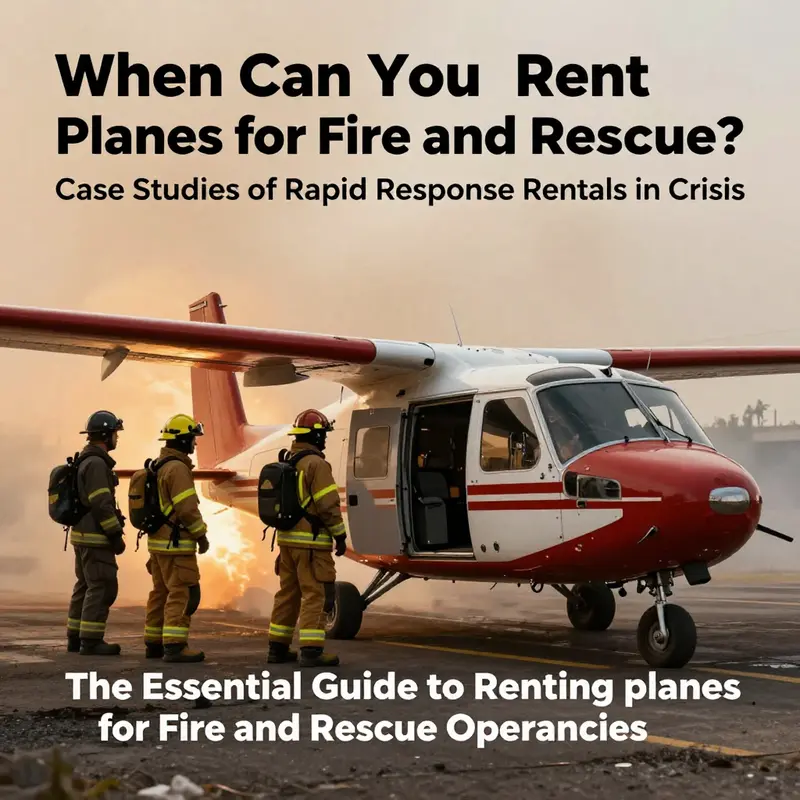
The moment a wildfire or a sudden urban fire threatens lives and livelihoods, the realm above—airspace that once felt distant—becomes a frontline asset. Aerial assets are deployed not as a luxury but as a critical bridging force between detection and containment. Yet the question, “when can you rent planes for fire and rescue?” does not point to a single moment in time. It points to a complex choreography of policy, budgeting, contracts, and the nimbleness of operational partners. In practice, rental decisions are anchored in pre-planned cycles that anticipate risk, with air power carved out of annual or semi-annual budgets. These cycles are not rigid; they are designed to accommodate shifting risk profiles, climate forecasts, and lessons learned from prior seasons. More important, they are grounded in contracts that pre-authorize access to a pool of air assets. When danger rises, these agreements unlock with a familiar cadence, allowing authorities to activate planes, helicopters, and drones without the friction of new procurement in the midst of a crisis. The result is a system in which the sky is prepped, the rosters are ready, and the moment air support is needed, it can surge into action with a minimum of delay.
Across regions, the architecture of rental programs reveals a shared logic: plan ahead, pre-negotiate, and activate swiftly. A national or regional plan binds air operations to a larger emergency management framework. It sets roles for air, ground, and data-enabled surveillance in a single, integrated response network. The aim is to align funding and hardware with personnel so that the air component can scale up or down in step with risk. Given budget constraints, agencies commonly operate on a structured rhythm—annual budgeting with mid-year adjustments and explicit criteria for escalation. Once those plans are in place, authorities sign pre-agreements with private or commercial operators. These contracts specify what kinds of aircraft are available, what missions they can perform, the expected response times, maintenance standards, and the cost framework. When a hazard is detected or declared, activation follows a defined procedure under emergency management rules. It bypasses the slow cycles of ad hoc sourcing, channeling resources to the field within minutes and ensuring a coherent air-ground response. Official channels—emergency management portals, procurement dashboards, and disaster authorities—keep a single source of truth for available capacity and terms, reducing ambiguity during fast-moving events.
In practice, the Chinese context provides a concrete illustration of how this architecture translates into real, measurable readiness. Regions like Yunnan have treated aerial firefighting capacity as an ongoing governance lever rather than a seasonal afterthought. In 2025, Yunnan launched its Forest and Grassland Aviation Firefighting Lease Service, deploying both large and mid-sized drones to patrol and survey for fire risk across forested and grassland landscapes. The plan is designed to maintain a continuous presence in the air, with lease terms that ensure assets are available for surveillance, reconnaissance, and rapid intervention as needed. Looking ahead to 2026, the province outlined a procurement plan that expands the fleet substantially: leasing three large drones and eighty medium drones for as many as 151 days per unit. The emphasis is unmistakable—air assets are integrated into the annual risk management cycle, not summoned only when flames appear. The operational logic is not merely about watching from above; it is about turning detection into earlier intervention, so that a potential ignition is confronted at a stage where suppression can be rapid, focused, and effective. This approach is reinforced by parallel investments in other provinces, each aligning budgeting, contracts, and pre-planned deployments to create a coherent, scalable aerial firefighting capability.
The fiscal dimension of preparation is equally important. Sichuan Province, for example, signaled a decisive commitment in early 2025 when the provincial finance department allocated central funds—almost 150 million yuan—to support the lease of aircraft and drones for forest and grassland firefighting. This outlay is not merely for acquiring machines; it funds the daily surveillance posture, the readiness for immediate suppression, and the rapid mobilization that high-risk periods demand. The funds enable a flexible mix of air assets, including helicopters and unmanned aerial systems, to participate in ongoing patrols, early warning, and direct fire suppression when weather, terrain, or fire behavior compels a quick response. The effect is twofold: it enhances the probability that flames can be contained before they expand beyond control, and it strengthens the logistics chain that moves information, crews, and equipment to the right places at the right times. The Sichuan example demonstrates that finance, when aligned with risk timing, can compress the seconds and minutes that separate detection from decisive action, translating financial flexibility into tangible reductions in fire spread and damage.
Other regional test cases underscore the diversity of approaches within a shared logic of readiness. In Linyi City, Shandong Province, a robust aerial firefighting network had taken shape by the end of 2025, anchored by three helicopters that ensured year-round readiness. Two of these aircraft were leased, with a third recently deployed, all configured to respond within minutes of a fire signal. What stands out in this model is the principle of redundancy and speed. A stand-by fleet stationed in or near high-risk zones reduces reaction times and preserves the capacity to sustain suppression as fires evolve. The structure works in tandem with ground crews, sensor networks, and logistics hubs that coordinate rapid air deployment, map fire perimeters, and establish initial containment lines. The Linyi arrangement demonstrates how a city can translate a strategic commitment into practical, near-instantaneous action when fire risk emerges, emphasizing the synergy between pre-arranged leases, seasonal planning, and on-demand activation.
Technology, too, plays a decisive role in shaping the tempo of air response. The Cixi example, while not centered on a rental decision itself, reveals how advanced detection and communication networks can accelerate the entire cycle from risk to response. In August 2025, an AI-powered fire alarm system detected a factory blaze and transmitted alerts within five seconds. Firefighters were in motion within a minute, and the blaze was contained in under ten minutes. This example illustrates that aerial assets do not operate in isolation; they are embedded in a broader system of sensors, data analytics, and real-time communications that make pre-negotiated air contracts more effective when invoked. In such environments, the air segment becomes the natural amplifier of a rapid response—not a separate agency acting in isolation, but a component of an integrated, technology-enabled emergency management ecosystem. When a drone or helicopter is requested, the decision-maker weighs weather, topography, and the fire’s behavior, then assigns the most suitable asset and uses established channels to coordinate flight paths, airspace permissions, and ground support. The result is a tightly coupled sequence where data analytics feed decisions, while contracts ensure the asset is ready to fly without delay.
The international vantage point offers a sobering reminder that rental aviation is most effective when it sits within a mature, pre-planned framework. In September 2019, Los Angeles County in the United States activated the cross-border rental of firefighting aircraft from Canada as part of its seasonal risk management. This episode shows that rental plans are not casual contingencies but are embedded in long-term contracts and clear emergency protocols. The process requires careful coordination—ensuring regulatory compliance across borders, aligning maintenance cycles, and securing insurance and crew readiness. Yet the key takeaway is not the rarity of cross-border activity; it is the importance of a pre-existing, scalable framework that can mobilize air power swiftly when domestic capacity is stretched by high demand or extreme weather. When risk climbs—whether due to dry conditions, shifting winds, or unprecedented fire behavior—these agreements can be activated with precision, enabling air assets to augment local fleets in a way that can change an expanding fire’s trajectory.
In some regions, pre-positioning goes beyond seasonal planning to address geography and terrain. Jilin Province’s approach demonstrates this nuance by deploying amphibious, multi-role air assets to high-risk, hard-to-access areas ahead of peak fire season. In June 2025, authorities positioned such an aircraft in a remote mountain region, enabling rapid water-based suppression where surface access is limited and where water sources are dispersed. The aim was clear: reduce lead time between detection and intervention by having air power stationed near the places where risk is greatest. This form of readiness emphasizes geography—where fires start, how terrain channels fire, and where water resources can be leveraged—while using rental arrangements to guarantee access to the necessary platforms at the right moment. It is a reminder that rental decisions are nested within a broader matrix of readiness, geography, and seasonal forecasting, rather than a one-off emergency measure.
Taken together, these cases illuminate a practical logic for renting planes in fire and rescue operations. The process is not improvised; it is built on a deliberate architecture of planning, partnerships, and predefined procedures. The budgeting cadence—often annual or semi-annual—establishes the ceiling and cadence for air assets. Pre-agreements with private or commercial operators translate that plan into guaranteed access, with explicit terms for the kinds of missions, response times, and maintenance expectations the partner must meet. When a crisis unfolds, activation unfolds through a formal emergency protocol that leverages standby aircraft, defined mission scopes, and a chain of communication that translates detection into flight orders. On the ground, controllers balance altitude, weather, fuel, and fire behavior to assign the best asset—and to direct when and where to deploy it. The operators, for their part, ensure readiness through routine maintenance, supply line resilience, and crew scheduling that preserves flight credibility in high-stress conditions.
The digital layer is a parallel driver of speed. Real-time weather intelligence, updated satellite imagery, and sensor networks feed the decision-makers and shape flight plans. In crowded airspace or in situations requiring specialized equipment, authorities rely on well-documented flight plans and proactive coordination with air traffic services to avoid delays. The overarching message is clear: rental aviation is a capability anchored in planning, executed through disciplined partnerships, and amplified by data-driven decision-making. It is not a spontaneous act but a disciplined, scalable response architecture designed to protect lives, homes, and landscapes when danger spikes.
For readers seeking the most up-to-date information on availability and terms, the best sources are the emergency management departments and procurement portals of the relevant jurisdictions. For example, in Hubei Province, the Aviation Firefighting Renting Regulations are published on the provincial emergency management department’s site and provide practical details about eligibility, contracting, activation thresholds, and grant conditions. These regulatory artefacts help ensure transparency, accountability, and predictability in how air resources are accessed during crises. They also underscore the value of pre-negotiated frameworks as the backbone of rapid response. Readers should consult official portals and ensure compliance with local requirements, including procurement rules, licensing, airspace restrictions, and insurance obligations. The point is not to replicate a plan, but to understand that the speed of a response is shaped by the strength and clarity of the rules that govern access to aerial assets.
Exploring the broader landscape of aerial firefighting and rapid response can be aided by linked resources that translate policy into practice. For a deeper look at how private and public actors adapt firefighting technology for developing contexts, see the article on customized firefighting vehicle solutions for developing countries. The article delves into cost-effective, reliable, and fully supported options that complement aerial strategies and ground operations. This integration—air, ground, and digital—forms a resilient system capable of delivering suppression quickly where it matters most. For more information on official programs and procurement paths, refer to the Yunnan procurement page that anchors one of the most expansive planning efforts in recent years, describing how up to 151 days of aerial assets per unit can be fielded under pre-arranged leases. This external resource provides concrete numbers to illustrate the scale at which governments are willing to invest in rapid response. The overall takeaway is that disciplined planning, rather than episodic action, defines when and how rental planes enter the fire and rescue equation. See the external resource for context and updates.
External resource: https://www.yunnan.gov.cn/zwgk/zfxxgkml/slyj/202601/t20260106_2532441.html
Final thoughts
The ability to rent planes for fire and rescue operations is a pivotal aspect of enhancing emergency response capabilities. Seasonal needs dictate the demand for rentals, while effective regional planning and budgeting ensure resources are deployed when necessary. Understanding pre-established agreements facilitates quick activation during emergencies, as demonstrated in various case studies of successful crisis responses. By leveraging these insights, organizations can better position themselves to protect communities and save lives through timely aerial firefighting options.