Palm Beach County Fire Rescue offers numerous opportunities for individuals eager to join the firefighting and emergency response community. The hiring process is a crucial aspect, providing insights into when and how candidates can apply for various roles, including firefighter/paramedic positions. Understanding the recruitment schedule, current job openings, application procedures, exam dates, and available resources is essential for aspiring candidates. In this article, we will delve into each of these aspects to equip prospective applicants with the knowledge they need to navigate the hiring landscape effectively.
Timing Your Application: Understanding Palm Beach County Fire Rescue’s Hiring Rhythm
Palm Beach County Fire Rescue hires on a cycle shaped by operational need, retirements, grant funding, and community growth. That means there is no single annual date when hiring opens; instead, positions appear throughout the year as vacancies arise and budgets allow. For anyone planning to join the department as a firefighter, paramedic, officer, or specialist, understanding how and where openings are announced is as important as meeting the training and credential requirements.
Hiring announcements are posted directly by the department and on major job boards. The official careers page is the primary source and the most reliable place to watch for new postings, exam announcements, and application windows. Public safety agencies frequently update that page with specific roles—recent examples include postings for Lieutenants and administrative or investigative roles that carry their own posting dates. External sites also capture snapshots of available positions: at present there are dozens of fire-related job listings for Palm Beach County on major job boards, reflecting the breadth of opportunities across ranks and specialties.
Because hiring is demand-driven, timing your application requires active monitoring and readiness. Treat the process like an ongoing campaign. Keep your certifications current, assemble transcripts and documentation, and prepare for testing and practical evaluations so you can apply the moment a posting opens. Some roles have short application windows; others remain open until filled. The department may accept applications for entry-level firefighter/paramedic positions, lateral hires, or promotional exams for company officers and captains. Each announcement will list application deadlines, exam date ranges, minimum qualifications, and required supporting documents. Reading those details carefully saves time and avoids disqualification for missing paperwork.
Recruitment cadence varies by position type. Entry-level firefighter or firefighter/paramedic recruitments often follow a multi-step timeline: an initial application period, written exam, candidate physical ability test, background and medical screening, and final appointment lists. Promotional or specialty postings—such as Lieutenant, Fire Investigator/Inspector, or EMS Captain—may require a combination of written exams, interviews, and proof of supervisory experience. The department has also posted roles for instructors and support staff, each with its own procedures and timelines.
Public announcements sometimes provide concrete dates that help shape expectations. For example, a Lieutenant role carried a posting date in mid-August of 2025, signaling seasonal hiring activity in late summer. More recently, an adjacent department serving the area posted a Firefighter/Paramedic position on January 30, 2026, demonstrating that recruitments can appear in the calendar’s first months as well. These examples show hiring is distributed across seasons rather than concentrated in a narrow window.
If you are preparing to compete for a firefighter or paramedic vacancy, prioritize three fronts: documentation, fitness, and test preparation. Documentation includes active licenses, EMT/Paramedic, or firefighter certifications, driver’s license, proof of residency if required, and any academic transcripts. Maintain a single organized folder (digital and physical) with certified copies to submit quickly. For fitness, many agencies publish candidate physical ability test standards. Train specifically for those events. For written and scenario-based exams, study departmental procedures, basic incident command principles, and fireground operations. Lateral applicants should emphasize service records and evaluations; promotional candidates must document supervisory achievements and training hours.
Stay plugged into official communication channels. The careers page will be the authoritative source for posting dates and application procedures. Many applicants also sign up for email alerts or follow the department on social media for real-time notices. Local fire service organizations and recruiting events provide opportunities to ask hiring managers questions about expected timelines and the nature of future openings. Participating in ride-alongs, open houses, or recruitment fairs can improve visibility and help applicants understand organizational culture and expectations.
Competitive hiring often includes background checks, medical clearances, and peer interviews. Background investigations might probe work history, driving records, and any legal matters; therefore, transparency and timely documentation are essential. Medical reviews typically include drug screening and fitness-for-duty evaluations. Be proactive about medical records and any accommodations you may need. For unionized positions, collective bargaining agreements may also influence hiring and promotional procedures, so awareness of local labor rules helps candidates navigate timelines.
For those uncertain which job boards to monitor, start with the department’s careers page and add a reputable job aggregator. Aggregators can show a broader landscape of related vacancies across Palm Beach County and neighboring jurisdictions. As of current listings, nearly a hundred fire-related opportunities appear across various platforms, reflecting openings from entry-level fire-rescue roles to specialized positions. While aggregators help with breadth, the official careers page remains the final authority for application instructions and deadlines.
A practical calendar habit is to allot weekly time for hiring reconnaissance. Check the official careers page, scan job boards, review local news for municipal budget decisions that could trigger new recruitments, and reach out to departmental HR with any clarifying questions. When a posting appears, act quickly: many recruitments close within weeks or when a sufficient applicant pool forms. If you miss one cycle, use the interim to bolster credentials or gain experience that strengthens your next application.
Finally, consider complementary steps that improve long-term candidacy. Additional fire safety training or certifications enhance your profile. For those early in their journey, resources on certification and training lay out pathways to meet baseline qualifications and progress professionally. One helpful guide on fire safety certification and training illustrates how targeted credentials can accelerate entry and advancement in fire service careers. Review such resources while monitoring hiring so you remain ready when the next posting appears.
Monitor the official Palm Beach County Fire Rescue careers page for the most accurate, up-to-date hiring schedule and posting details. That page will include active announcements, posting dates, application instructions, and contact points for human resources. When you combine that official information with steady preparation—maintaining certifications, training for physical tests, and organizing application materials—you position yourself to respond quickly and confidently whenever Palm Beach County Fire Rescue opens a hiring cycle.
External source: https://www.pbcgov.org/firerescue/careers
Internal resource: Fire Safety Essentials: Certification & Training
Where to Find Current Openings and How Palm Beach County Fire Rescue Times Its Hiring
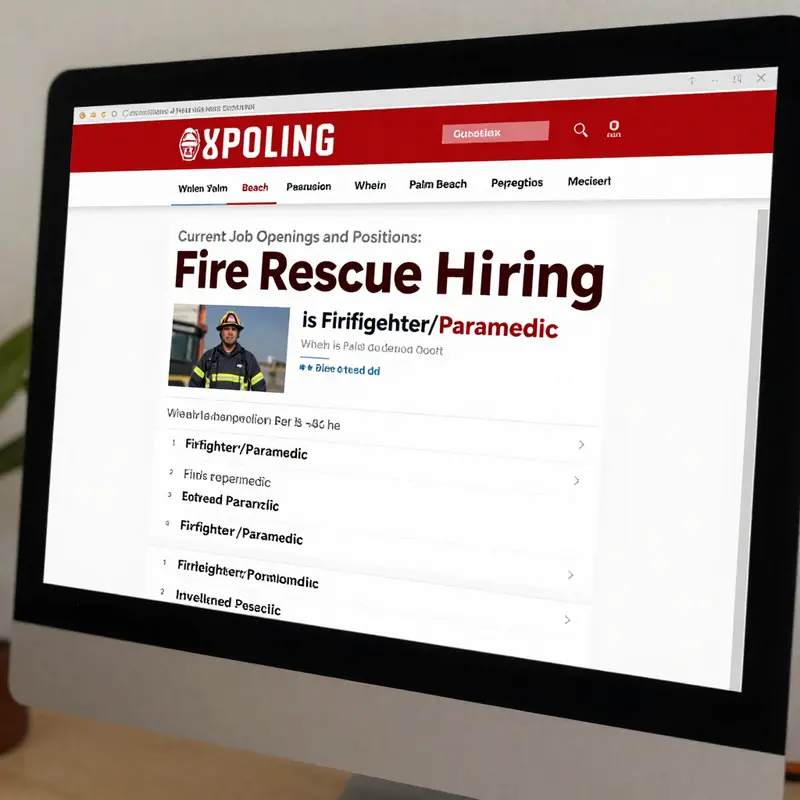
When Palm Beach County Fire Rescue is hiring matters to applicants, career changers, and community members tracking workforce trends. Hiring cycles vary with operational needs, budget approvals, and training capacity. Yet the practical truth is straightforward: the department posts vacancies throughout the year, and those listings are the most reliable signal of active recruitment. This chapter outlines how to spot openings, what roles are commonly available, and where to go for the latest, official hiring details.
Palm Beach County Fire Rescue maintains a steady flow of opportunities. The most frequent positions include firefighter/paramedic roles, which form the backbone of frontline response. Supporting positions also appear, such as training instructors and administrative posts, and sometimes legal or specialized roles tied to departmental expansion. A snapshot from a major job board currently shows 96 fire-related jobs in Palm Beach County, FL. That number changes daily as employers add or remove listings, so it serves as an indicator rather than a promise of specific vacancies.
Watch three primary channels to know when hiring ramps up. First, the department’s official careers page is the authoritative source. It lists open positions, application deadlines, and any required exams or physical agility tests. Second, major job boards aggregate those openings and add wider job descriptions, which can be helpful for comparing roles. Third, local recruitment events and community outreach announcements signal active campaigns and often provide on-the-spot application guidance.
Openings for firefighter/paramedic positions are cyclical but not strictly seasonal. Hiring can accelerate after retirements, budget approvals, or when a new training academy class is scheduled. Recruitment notices typically outline minimum qualifications such as EMT or paramedic certification, age and physical fitness requirements, and high school or equivalent education. They also list preferred qualifications that strengthen an applicant’s chances, including prior firefighting experience, additional certifications, and education in emergency services.
Beyond the core firefighter/paramedic role, departments advertise roles that support operations. These include adjunct instructors who shape training programs, and administrative or legal positions that handle policy, compliance, and risk management. Such roles expand during initiatives that emphasize community programs, training upgrades, or legal work tied to contracts and procurement. If you are flexible and hold transferable skills, tracking these listings can reveal less obvious entry points into the organization.
Real-time updates matter. Job boards refresh frequently, and the count of available fire-related jobs—96 at the time of this writing—reflects active listings across roles. However, relying exclusively on aggregated listings risks missing department-specific announcements. For that reason, cross-reference any job board listing with the official department site before making application decisions. The official site clarifies deadlines, required attachments, and the exact steps for submission.
Application processes often require several parts. Typical elements include an online application, proof of certifications, a resume, and sometimes supplemental questionnaires. For firefighter/paramedic roles, expect physical ability tests and written exams. These evaluations are scheduled in advance and posted with the job announcement. Preparing in advance is wise: physical tests reward consistent training, while written exams reward focused study on relevant emergency procedures and local protocols.
Timing your application improves your chances. Apply early in a posted recruitment window. Departments may accept applications over a period, then schedule exams once enough candidates qualify. Early submission allows time to correct documentation issues and ensures you receive notifications about test dates and orientations. If a job posting states the application period is open until a certain date, treat that as a hard deadline. The official careers page will be precise about cutoffs.
Networking helps. Attend public hiring events, training tower open days, and community safety sessions. Engaging with personnel offers insight into department culture and expectations. If a listing mentions a recruitment event, plan to attend. These events sometimes include fast-track application support, on-site preliminary screenings, and direct conversations with hiring managers.
For candidates preparing long-term, certifications and training are essential. EMT and paramedic credentials are among the most impactful qualifications for frontline roles. Additional certifications—hazardous materials awareness, vehicle extrication, or specialized rescue training—differentiate candidates. If you are building qualifications, consider local training programs and certificate courses. For perspective on certification and training paths that reinforce a public safety career, review resources on Fire Safety Essentials: Certification & Training which outline common credentialing routes and tips for preparing to enter fire-rescue work.
Finally, use a disciplined method to track opportunities. Keep a simple spreadsheet or document listing open jobs, application dates, required documents, and exam schedules. Save screenshots or print confirmations when submitting applications. Set calendar reminders for exam preparation windows and testing dates. These small practices reduce stress and prevent missed deadlines.
For the most accurate, timely hiring information, always consult the official Palm Beach County Fire Rescue careers page. It provides authoritative notices about open positions, required qualifications, and the detailed steps for applying. Job boards offer helpful aggregation and searchability, but the county site contains the definitive recruitment instructions and deadlines.
External resource for official hiring notices: https://www.pbcgov.org/firerescue
The hiring landscape in Palm Beach County Fire Rescue is active and accessible to prepared candidates. Opportunities appear year-round, with firefighter/paramedic posts the most common. Track official postings, build certifications, prepare for physical and written tests, and engage with recruitment events. Those steps keep you ready the moment the department posts the next hiring cycle.
Looking Ahead: Navigating Palm Beach County Fire Rescue Hiring—Procedures, Timelines, and Pathways for Firefighter-Paramedic Careers
Hiring for Palm Beach County Fire Rescue unfolds along a steady rhythm rather than a single, fixed annual date. This chapter follows that cadence, guiding a reader through where to look, what to expect, and how to prepare for ongoing opportunities that pop up as staffing needs emerge. The core message is straightforward: the department maintains an ongoing search for qualified candidates, and the most reliable way to stay in the loop is to monitor the official channels that announce new openings as soon as they become available. While public boards like Indeed may surface a snapshot of 96 fire-related jobs in Palm Beach County, including roles such as firefighter/paramedic, adjunct instructor, and associate attorney, those listings are complements to the primary, authoritative sources. The official Palm Beach County Fire Rescue site and the county’s jobs portal are the two anchors that determine eligibility, deadlines, and the precise steps required to apply. In practical terms, this means that the timing of a given opening can vary with operational demand, funding, and strategic priorities. There is no single annual window to memorize; instead, prospective applicants should adopt a routine of checking postings and preparing in advance for whenever a vacancy appears. This approach aligns with the department’s stated practice of posting new firefighter/paramedic and other positions through official channels as staffing needs arise. When you’re ready to move from interest to application, the most accurate and timely details live on the official platforms, which provide current information about application procedures, eligibility criteria, testing timelines, and any exam dates that accompany a specific recruitment cycle. In other words, the right time to apply is whenever a qualifying posting goes live and you meet the stated requirements. The link to this primary source is straightforward and essential: the Palm Beach County Fire Rescue careers page, which serves as the official repository for announcements and procedures. Applicants should also be aware that the county maintains a broader portal for employment, where many opportunities across departments are listed, including those connected to public safety and emergency services. Checking both the Fire Rescue site and the county jobs portal is a prudent habit for anyone pursuing a career in this field. The nuance to grasp is that hiring timelines are inherently tied to the needs of the agency. A cycle might begin with a new posting, followed by an application window, then a sequence of steps such as screening, testing, and interviews. While the specifics vary by position, the overall arc tends to resemble a process that begins with an online application, moves through eligibility verification and testing timelines, and culminates in a decision announced through official channels. This pattern helps explain why there is no single fixed date to memorize; rather, it is the pattern of ongoing postings that matters. For readers who want a consolidated sense of opportunity, the county’s jobs portal is a valuable compass. It lists all active fire-related jobs, provides comprehensive instructions for applicants, and explains how to apply, what eligibility criteria to confirm, and what testing timelines to expect. The portal is updated regularly, and the page’s cadence often mirrors the department’s staffing needs. In practice, this means that a candidate can prepare in advance—gathering required documents, sharpening physical readiness, and ensuring certifications—while awaiting the appearance of a suitable opening. As you prepare, it’s important to recognize that the application process is designed to be accessible but also rigorous. The postings describe eligibility criteria and testing expectations, and they outline the steps from application submission to the final selection. To stay aligned, candidates should monitor the posting date and read each vacancy’s details carefully. The details typically specify the required qualifications, the process steps, any testing dates, and the order in which the agency will proceed with screenings and assessments. Keeping a close eye on these elements minimizes the risk of missing a crucial deadline and helps ensure readiness when a cycle opens. In the broader sense, the hiring journey for Palm Beach County Fire Rescue is not simply about meeting minimum requirements. It is also about demonstrating preparedness, dedication, and a trajectory toward public service that resonates with the department’s mission to protect life and property. Preparation includes understanding the role’s multifaceted responsibilities, embracing the necessary certifications, and maintaining the physical and cognitive readiness that a firefighter-paramedic position demands. For readers who want a concrete starting point, the official resources are clear: visit the Palm Beach County Fire Rescue careers page for the most current announcements, application steps, and requirements; and explore the county’s Jobs Portal for a broader view of opportunities and the practical mechanics of applying. As part of on-going preparation, many applicants find value in structured training and certification routines that translate directly to the field. A resource worth exploring in this regard is the Fire Safety Essentials Certification Training, which offers insights into the foundational competencies that undergird a professional trajectory in fire safety. The linked article provides guidance on the kinds of certification and training that support a robust candidacy and may help align a candidate’s preparation with the expectations described in posting details. The article can be read here: Fire Safety Essentials Certification Training. This training emphasis complements the practical steps of applying—creating a ready resume, gathering necessary documents, and staying physically prepared for the testing components that often follow a successful application. While the exact sequence of events—such as the order and timing of written tests, physical agility evaluations, interviews, and background checks—varies by opening, the core principle remains: be prepared, be persistent, and monitor the official channels consistently. In this way, candidates convert the unpredictability of hiring cycles into a planned pathway forward. The creative edge of this approach is that it allows individuals to build a continuous readiness routine, rather than reacting only when a vacancy appears. It is a mindset that aligns well with the recurring nature of openings and with the department’s emphasis on sustained readiness across the rank and file of applicants. The practical takeaway is twofold. First, check the official Fire Rescue site and the county jobs portal regularly for new postings, deadlines, and testing timelines. Second, engage with foundational training that strengthens both your candidacy and your long-term competence in fire safety and emergency response. As you navigate this landscape, remember that the most reliable, up-to-date information is posted through official channels, and that those channels are the gateways to applying for roles that can shape a career in public safety. The opportunities are real, the process is well-defined, and the door remains open to talented individuals who commit to the path of service. For ongoing guidance, you can also keep an eye on broader career resources and preparatory materials housed within related outlets, which can provide additional context and practical tips for exam preparation, physical readiness, and interview strategies. When you’re ready to act, make the official source your primary reference point, and let the regular updates from the county’s employment portal guide your steps. External resources can supplement your understanding, but the core, authoritative path stays anchored in the county’s own postings and procedures. External resource: https://www.pbcgov.org/jobs
Timing, Tests, and Tactical Preparation: Navigating Palm Beach County Fire Rescue Hiring Cycles
Understanding when Palm Beach County Fire Rescue hires requires more than watching a calendar. Recruitment follows a cycle shaped by department needs, budget allocations, retirements, and regional demand for emergency services. That means hiring rounds can occur several times a year, but specific dates for written exams, physical ability tests, and application windows are not always posted far in advance. To keep pace with these moving parts, treat your preparation as continuous rather than tied to a single announcement. Adopt a layered approach that combines monitoring official sources, building exam-ready skills, and planning logistics so you can respond quickly when a hiring notice appears.
Start by making the county’s careers page a daily or weekly checkpoint. The official Human Resources careers section for fire rescue is the authoritative source for posting application periods, exam announcements, and step-by-step instructions. Bookmarking that page and subscribing to any available job alerts reduces the risk of missing short-notice openings. When an announcement arrives, it will typically outline minimum qualifications, submission deadlines, and the sequence of assessments—often a written test followed by a physical ability test and then background checks and interviews. Knowing the typical flow helps you anticipate what to prepare and when.
Preparation divides neatly into three practical strands: knowledge and written exam readiness, physical conditioning for the agility and stamina tests, and administrative readiness for paperwork and background screening. For the written exam, focus on core topics that commonly appear: reading comprehension, math applicable to the field, mechanical reasoning, and situational judgment tied to emergency response scenarios. Practice tests and study guides built around public-safety testing formats will sharpen speed and accuracy. Short, consistent practice sessions beat last-minute cramming. Aim to build endurance—multiple practice tests under timed conditions—so you can maintain concentration through the full testing period.
Physical ability assessments demand a rigorous, repeatable training plan that mirrors the test components. These assessments evaluate strength, endurance, agility, and task-specific capabilities such as stair climbs with a weighted vest, sledgehammer hits, dummy drags, and ladder raises. Train with progressive overload and specificity: simulate test events under controlled conditions, then increase intensity or duration week by week. Incorporate mobility work to prevent injury, and schedule rest days for recovery. Consistency in conditioning is crucial because failing a physical test often means waiting until the next hiring cycle to try again. Document your progress so you can present measurable improvements if asked about your preparation during interviews.
Administrative readiness is the often-overlooked third pillar. Keep certifications, licenses, and required documents current and accessible. Many departments require an EMT or paramedic credential for certain roles; maintain those credentials and any continuing education records. Prepare a clear employment history and contact list for references. Be ready for a background check by resolving potential issues early—unpaid fines, unresolved legal matters, or incomplete documentation can delay or disqualify an otherwise qualified candidate. When an application window opens, you want to submit a complete, error-free package within the first few days to avoid technical slowdowns and crowded servers.
Time management and scenario planning provide an edge when an exam is announced. Decide beforehand how you will balance work, family, and travel for exam dates. Arrange transportation and accommodations early if a testing center is distant. Print or download digital copies of required IDs, confirmations, and testing rules. Familiarize yourself with the test location and its schedule. Many candidates lose momentum because logistics consume time the week of the exam; solve those constraints in advance.
A realistic study and training calendar ties months of effort into manageable milestones. Break down study topics into weekly blocks, with monthly mock tests and periodic physical simulations. Track metrics: practice test scores, time to complete physical tasks, and recovery indicators like heart rate and sleep quality. Use those metrics to adjust the plan. If a particular written section lags, add focused micro-sessions. If a physical event is weak, add targeted strength or technique sessions. Small, measurable gains compound into significant readiness by the time a hiring cycle opens.
Peer networks and mentorship accelerate readiness. Join local study groups, training classes, or online forums where aspiring firefighters and paramedics share tips, practice protocols, and moral support. Mentors who have recently navigated the Palm Beach County process can offer insights on exam style, interview expectations, and practical tips for the physical test. If available, attend county-run preparatory workshops; agencies sometimes host informational sessions or practice events aligned with hiring cycles.
When it comes to the actual hiring announcement, respond with speed and accuracy. Submit applications early within the posted window and double-check that every required field and attachment is included. Follow all formatting and submission rules precisely. If an initial test is by invitation after a review of applications, timely and thorough submission improves your chance of being selected. Keep a log of submission dates, confirmation numbers, and contact emails so you can follow up if necessary.
Understand that hiring cycles can shift. Budget adjustments, changes in leadership, and unexpected operational needs may accelerate or delay exams. Maintain readiness even in quiet periods. Use downtime to expand skills, earn additional certifications, or volunteer with community emergency services. These actions strengthen your resume and keep you engaged with the mission.
Beyond preparation, interview and panel readiness matter. Expect scenario-based questions that assess judgment, teamwork, and communication under pressure. Prepare succinct, structured answers that highlight specific actions, outcomes, and lessons learned. Use real experiences from training, volunteer work, or previous employment to demonstrate your fit for the role. Emphasize adaptability and a commitment to continuous improvement—qualities that hiring panels value highly.
Finally, treat the process as iterative. A single unsuccessful attempt is feedback, not a verdict. Evaluate performance honestly, identify gaps, and return to focused training. Many successful candidates refine their approach across multiple cycles and eventually secure positions through persistence and targeted improvement.
For immediate, authoritative details—such as the next posted written exam, physical ability test dates, and application deadlines—refer directly to the Palm Beach County Human Resources fire rescue careers page. That page is the official source for schedules and procedural updates and will provide the most accurate timeline for the next hiring cycle: https://www.pbcgov.org/humanresources/careers/fire-rescue
If you want supplemental resources on certifications and foundational training that align with fire-rescue career requirements, see this practical guide on fire safety and training that complements your preparation: https://firenrescue.net/blog/fire-safety-essentials-certification-training/
By combining consistent study, targeted physical training, thorough administrative readiness, and strategic planning, you place yourself in the strongest position to respond when Palm Beach County Fire Rescue opens its next hiring cycle. Treat preparation as a continuous commitment and be ready to act the moment official announcements appear.
Hiring Windows and Career Ladders: Understanding When Palm Beach County Fire Rescue Recruits and How to Position Yourself
In the landscape of public safety careers, Palm Beach County Fire Rescue operates with a rhythm that mirrors the needs of a growing, diverse community. The chapter ahead explores not just when the agency hires, but how aspiring firefighters and related professionals can align themselves with a process that repeats over time, often in cycles that unfold every year or two. Rather than presenting a single, fixed calendar, the reality is a dynamic cycle shaped by funding, staffing requirements, and the ebb and flow of retirements and expansions. For anyone contemplating a career with Palm Beach County Fire Rescue, the most reliable compass remains the official careers page, complemented by large job boards that reflect active opportunities in real time. The practical takeaway is straightforward: keep a steady watch on both sources, because when the agency posts a new firefighter/paramedic opening, the window can be brief and the competition intense.
The most up-to-date information on current job openings is consistently published on the Palm Beach County Fire Rescue website and on major job boards such as Indeed.com. As of February 10, 2026, a snapshot of Indeed indicates there are 96 fire-related jobs listed in Palm Beach County, FL. Those listings span a range of roles beyond the traditional firefighter/paramedic, including adjunct instructor positions and even associate attorney roles. This mosaic of opportunities underscores the breadth of public safety careers embedded within a single county, and it highlights how recruitment can extend beyond front-line firefighting to support functions like training, policy, and legal compliance. While such roles may capture public attention, the core entry point for many candidates remains the firefighter/paramedic track, a pathway that blends emergency medical care with fire suppression responsibilities.
The official page—pbcgov.org/firerescue—serves as the primary, authoritative source for current openings, exam dates, deadlines, and step-by-step application procedures. It is common to encounter notices of upcoming hiring events, written assessments, and physical ability requirements when new cycles are announced. In practice, those who aim to join Palm Beach County Fire Rescue should prepare to engage with a multi-stage process: first, review the job description to confirmeligibility and the essential qualifications; next, submit an application through the official site by the stated deadline; then, await notification about tests or panels, which may include written exams, physical fitness assessments, and interviews. The sequence can feel routine to past applicants, yet it remains crucial for new entrants to stay aligned with the posted timelines. The system rewards patience combined with diligent preparation and timely action.
The breadth of roles listed on Indeed reflects the ecosystem around a large municipal fire department. While the firefighter/paramedic role embodies the frontline mission of protecting life and property, the presence of adjunct instructors and other professional tracks signals a broader employment ecosystem that supports training, policy development, and legal oversight within public safety. For anyone outside the traditional firefighting lane, these listings illustrate the diverse pathways that can lead to a career in fire rescue—each requiring a distinct set of credentials and a unique onboarding process. It is this diversity that makes the recruitment period both resilient and adaptable, capable of meeting not only the immediate needs of emergencies but also the long-term development goals of the department and the community it serves.
In practical terms, candidates should map their preparation to the information on the official careers page. The site will list current job openings, provide detailed descriptions of duties, required qualifications, and the exact steps to apply. It will also publish deadlines and information about recruitment events, which can be excellent opportunities to gain clarity, demonstrate enthusiasm, and begin building the professional impressions that hiring panels sometimes seek. Because cycles are not fixed to a single date, a disciplined approach helps. Prospective applicants can set up alerts on the official site or routinely check Indeed for new postings, ensuring they do not miss a window between announcements and closing dates. The reality is straightforward: openings exist, but they close, sometimes quickly, and preparation lengthens a candidate’s ability to respond effectively.
Beyond the mechanics of applying, the path to a firefighter/paramedic role is as much about readiness as it is about timing. The qualifications often demanded by public safety agencies include a blend of certifications, practical experience, and a demonstrated commitment to community service. While the specific prerequisites are spelled out on the official posting, candidates typically benefit from obtaining or maintaining relevant certifications, such as emergency medical technician (EMT) credentials and paramedic licensure, along with a strong foundation in physical fitness, background checks, and an ability to work within high-stakes, team-oriented environments. Training culture within fire rescue emphasizes not only technical competence but also the resilience and adaptability required to serve a community with diverse needs, including urban, suburban, and coastal contexts. For individuals who recognize that career development is iterative, the possibility of joining Palm Beach County Fire Rescue becomes more tangible when they cultivate a continuous learning mindset and align their credentials with the department’s expectations.
A useful lens through which applicants can view their journey is to consider the broader educational and safety training ecosystem surrounding fire rescue work. This includes formal coursework, practical drills, and ongoing professional development that support advancement within the department. To reinforce this idea, consider engaging with resources that emphasize the value of safety-focused certification and training as foundational to a career in public safety. For example, a dedicated resource on fire-safety essentials and certification training can serve as a practical guide to building the credentials and confidence needed for entry into the field. Even as applicants focus on calendar dates and application forms, keeping an eye on their own skill-building timeline helps keep them prepared for whatever the next cycle requires. fire-safety essentials certification training offers insight into the kinds of competencies that bolster a candidacy and support ongoing growth once in the department.
In terms of timing, there is no single fixed schedule that applies to every cycle. The county’s hiring windows tend to recur within a broader annual or biennial rhythm, but the exact dates are posted only when a new cycle is imminent. For people who are actively exploring the field, this means adopting a stance of ongoing readiness rather than chasing a single deadline. The official Palm Beach County Fire Rescue careers page is the most reliable reference point for updates on application deadlines, exam dates, and recruitment events. Indeed’s listings should be viewed as supplementary, offering visibility into the volume and variety of current opportunities across the county, but not replacing the formal announcements and procedures published by the agency itself. The interplay between these sources—official postings and broader job boards—creates a practical trajectory: stay informed, be prepared, and respond quickly when a cycle opens.
As candidates move through the process, they often find that the experience itself yields valuable lessons about public safety careers. The recruitment announcements are designed not only to fill positions but to identify individuals who embody a blend of technical capability, teamwork, and a service mindset. The applicant pool can be diverse, ranging from seasoned professionals seeking a change to young entrants testing their resolve against competitive benchmarks. For many, the cycle becomes a catalyst for self-improvement, prompting them to pursue additional training, refine their resumes, and rehearse interviews with an eye toward the public importance of the work. In this light, the hiring window is less a gate and more a doorway—one that opens when the department identifies a need and a person steps forward with the right combination of readiness and purpose.
In weaving together the threads of official announcements, job board activity, and personal preparation, it becomes clear that the question of when Palm Beach County Fire Rescue is hiring is best answered with a practice of vigilance and readiness. The organization consistently resumes its search for qualified individuals through recurring recruitment cycles, and the exact dates shift with time. The recommended approach is simple and practical: monitor the official careers page for current openings, deadlines, and exam schedules; supplement this with up-to-date postings on major job boards; and invest in ongoing training and credentialing that strengthen candidacy for firefighter/paramedic roles and related positions. By maintaining this approach, applicants position themselves to respond swiftly when a cycle is announced, increasing their chances of joining a department that serves a broad and dynamic community. For those who want a concrete starting point, the official page remains the primary reference, with the broader job market serving to illuminate the range of opportunities that exist within Palm Beach County’s public safety ecosystem. External resource: https://www.pbcgov.org/firerescue
Final thoughts
Understanding the hiring procedures and timelines at Palm Beach County Fire Rescue is essential for anyone looking to build a career in firefighting. By familiarizing themselves with the hiring schedules, current job openings, application requirements, and preparatory resources, candidates can enhance their prospects of securing a position. Whether it’s gearing up to apply or preparing for an exam, this comprehensive guide aims to facilitate your journey into a rewarding career in emergency services.

