Fire serves as a multifaceted symbol in William Golding’s ‘Lord of the Flies’, pivoting between hope and destruction. Initially, the boys’ creation of fire reflects their desire for rescue and connection to civilization. As the story unfolds, however, this very fire evolves into a primal force, eventually leading to both despair and unexpected salvation. Understanding this transformation not only highlights the complexities of human nature but also holds broader implications for communities today. This examination will delve into fire’s significance, its initial creation, its transformation into a destructive entity, and, ultimately, its ironic role in their rescue, offering valuable insights into the narrative’s themes surrounding order and savagery.
Who Starts the Fire That Brings Rescue: The Paradox of Smoke, Signal, and Salvation in Lord of the Flies
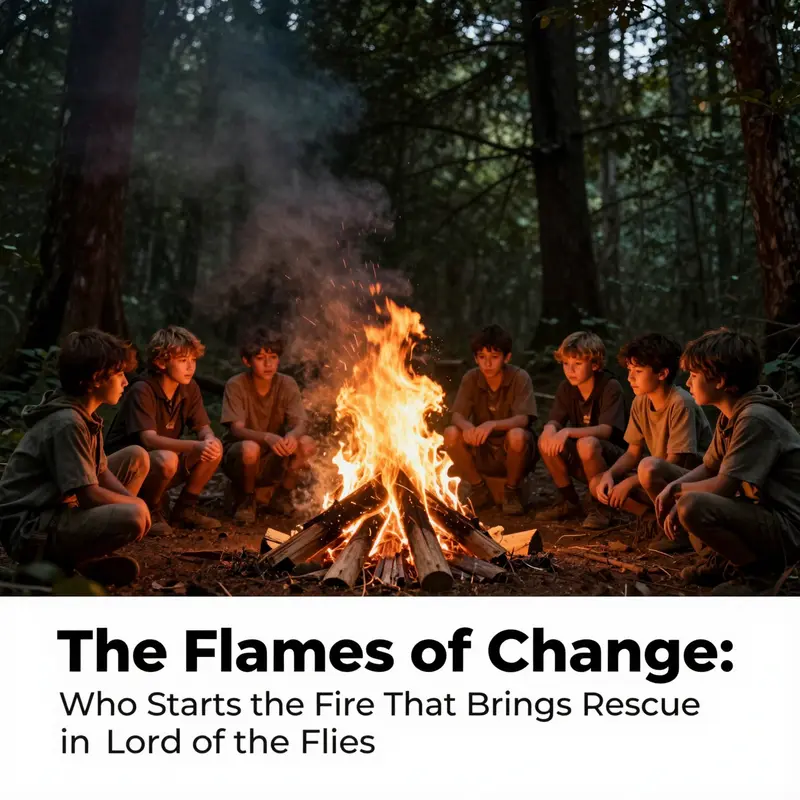
Smoke as a signal, flame as a pledge: the fire on the mountain begins as a civil promise and ends as a mirror of fear. In the opening pages of Golding’s island allegory, Ralph and Jack seize Piggy’s glasses and coax a spark from dry tinder, setting a blaze on the high ledge where the air is thinner and the world beyond the trees feels closer. The signal fire becomes a social contract: if we feed the flame, we belong to a possible rescue; if we ignore it, we risk losing the very claim to civilization we still pretend to uphold. The material act of lighting the fire, done at the summit, is thus also a moral act. It tempers the raw, clip-on energy of youth with the discipline of shared purpose. The cry that accompanies the moment—”Make a fire!”—is not merely a command; it is an admission of dependence, a statement that someone out there must still be looking for them, and that their fate depends on keeping faith with that outside gaze.
The fire’s glow carries both a promise and a warning. It lights up a world that has collapsed into a sand-colored beach and a jungle of rumor and fear, yet it also casts long shadows that hint at what might happen when the flame slips from control. Conflict over leadership swirls around the blaze as much as smoke rises from it. Ralph frames the fire as a public responsibility, a thing that must be tended and kept alive for the sake of rescue; Jack treats it as a trophy and a tool for hunting, a flame that can be marshaled when power calls. The dual nature of fire—that which saves and that which destroys—now becomes a live test of the boys’ emerging identities. In this first use, the fire is a beacon of belonging, a chorus of voices around a common purpose, a fragile sign that determines whether they still believe in a return to the adult world.
As the days wear on, the initial glow acquires a more ominous weight. The tragedy of the littlun with the mulberry birthmark is not only a casualty but a metonym for the consequences of their choices. The fire, which began as a signal for help, becomes an occasion for reckless improvisation and escalation. It is easy to point at the adults not present and blame them for the mess of youth, but Golding forces readers to notice how quickly the flame becomes the instrument of fear: the way it roars up through the needles and leaves, the way it attracts the attention of animals and the unknown, the way it invites more wood and more wind. The failure to sustain the beacon—perhaps the first crack in their shared project—foreshadows a broader collapse: when fear governs decisions, order dissolves, and even the best of intentions can yield catastrophic outcomes.
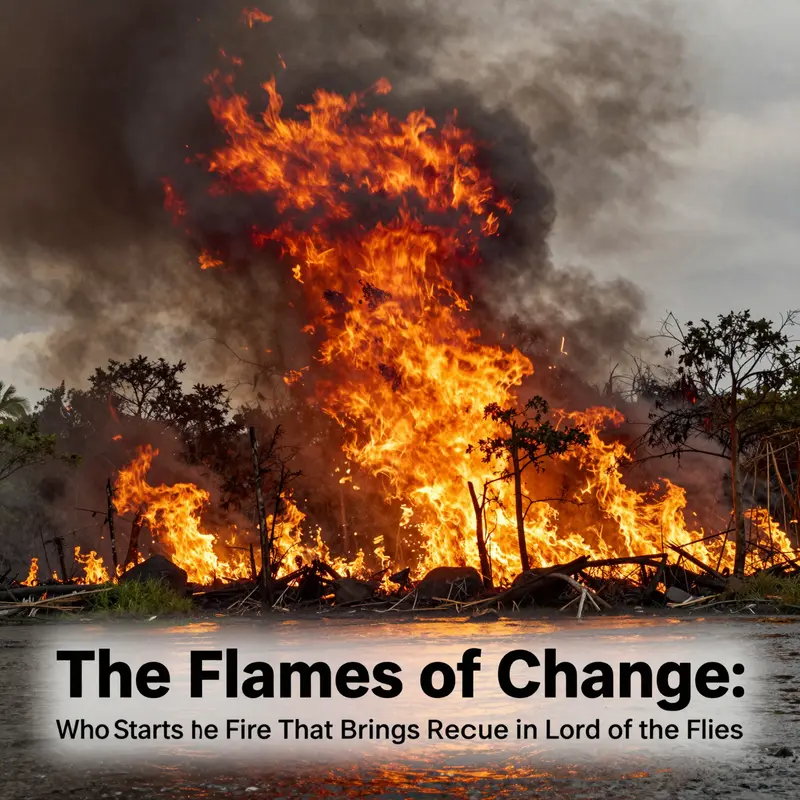
Jack’s tribe embodies this drift away from civilized restraint. With the lure of meat and the thrill of dominance, the hunters lose sight of the need to maintain the signal fire as a lifeline to the world beyond the island. They keep the flame burning only as long as it suits their appetite for control, and in doing so, they discard the very ritual that had once bound them to rescue. A line of ash and embers grows into a wall of smoke; the forest ceiling catches fire, and the island lurches into a blaze that roars into the hills and spits toward the sea. The catastrophe is not proportional to any single misstep; it is the cumulative effect of many small choices that prioritize power over prudence. And yet the irony arrives with the speed of a vessel through a harbor: a roaring column of smoke becomes a beacon for a passing naval ship that would, in a different hand, be the herald of salvation. The ship did not seek out the island because the boys had kept their beacon alive; it saw the fire and, compelled by curiosity and duty, came to see what had happened. The rescue that results thus binds together two kinds of knowledge—the technical skill to start a flame and the ethical insight to restrain its appetite—and shows that salvation sometimes requires tolerating a degree of chaos that civilization would rather suppress.
Golding’s fire, then, is not merely a plot engine; it is a philosophical instrument. It asks: what happens to a group when the routine work of maintaining a public sign of civilization is subsumed by private ambitions and unchecked passions? The answer is not a clean triumph of order but a complex, unsettling portrait in which the flame exposes both the boys’ capacity for care and their capacity for cruelty. The same glow that invites hope also invites risk; the signal that promises rescue can, if mismanaged, become a smokescreen that hides a different truth—namely, that the world you hope to rejoin will require you to confront what you have become in the process of staying alive. The irony deepens when the island seems to die in the blaze, only to be saved by smoke rising from it. The officer’s arrival, with his calm, observational gaze, interrupts the drama and halts before it reaches a final moral verdict. It offers instead a moment of pause—a reminder that rescue can appear in surprising forms and at surging speeds, and that the line between civilization and savagery is thinner than a spark’s wick.
In the broader frame of the chapter, readers are invited to think about how a civilization-in-miniature negotiates the dangerous boundary between control and surrender. The rescue is not guaranteed by the purity of the boys’ intentions; it arrives because someone on the outside notices the smoke and chooses to respond. That response hinges on the world beyond the island, a world where adults still maintain institutions and safety nets, and where a naval officer can briefly restore order by simply being present. Yet Golding makes no easy verdict. The reader is left with the sense that the fire has accomplished a rescue not by virtue but by accident, not by a steady hand but by a rupture in the social fabric. The narrative thereby underscores a grim truth: the impulse to rescue is inseparable from the struggle to control the very instrument that makes rescue possible. To start the fire is to accept responsibility for what follows; to allow it to burn unchecked is to risk losing the very sense of humanity the rescue presupposes.
Bringing a thread of contemporary resonance into the interpretation, the tale can be read as a caution about how communities prepare for and respond to danger. Fire is a shared tool, and safety depends on collective discipline, clear roles, and the ability to read signs—the same elements that undergird modern fire-safety practice. Those who study fire, whether in laboratories or on the field, learn that a signal fire is useless without a plan for maintenance, monitoring, and accountability. The seemingly simple act of lighting a flame becomes a test of governance, of trust, and of the willingness to subordinate momentary advantage to long-term survival. The parallel with real-world safety training is not accidental: every responsible approach to fire begins with the recognition that power to ignite carries with it a duty to restrain, to protect, and to foresee consequences. In the sense, the novel becomes not merely a tale about children on an island but a meditation on what it takes to keep a community safe when the flame demands both courage and restraint. For readers engaged in studying or citing the text, a contemporary anchor helps translate the old parable into present concerns: fire-safety essentials certification training.
Ultimately, the question of who starts the fire that brings rescue in Lord of the Flies is not settled by a name but by the situation’s ethical weather and the weather’s moral shadow. The initial spark belongs to a group that wants to survive and to belong, a spark that can be traced to both Ralph’s insistence on a signal and Jack’s hunger for control. The rescue arrives through the smoke that escapes the rainforest, through a world beyond the island that can still see a signal in the flames, albeit a signal born of fear and disarray. The episode holds up a mirror to the human condition: the same instinct that kindles hope also tempts harm. In the end, rescue is not a reward for virtue but a consequence of the larger world awakening to a problem that the boys themselves could not contain. Golding thus leaves us with a stubborn paradox: the flame that makes rescue possible is the flame that reveals how easily civilization can fracture when tested by fear. The final image, a ship in the distance and a young officer stepping onto a beach stained with ash, becomes a quiet testament to resilience, even as it acknowledges the scar left by the fire.
External resource: https://www.academia.edu/10396857/TheSignificanceofFireinLordoftheFlies
The Spark on the Summit: How Ralph’s Fire Becomes a Beacon of Rescue and the Seeds of Chaos in Lord of the Flies
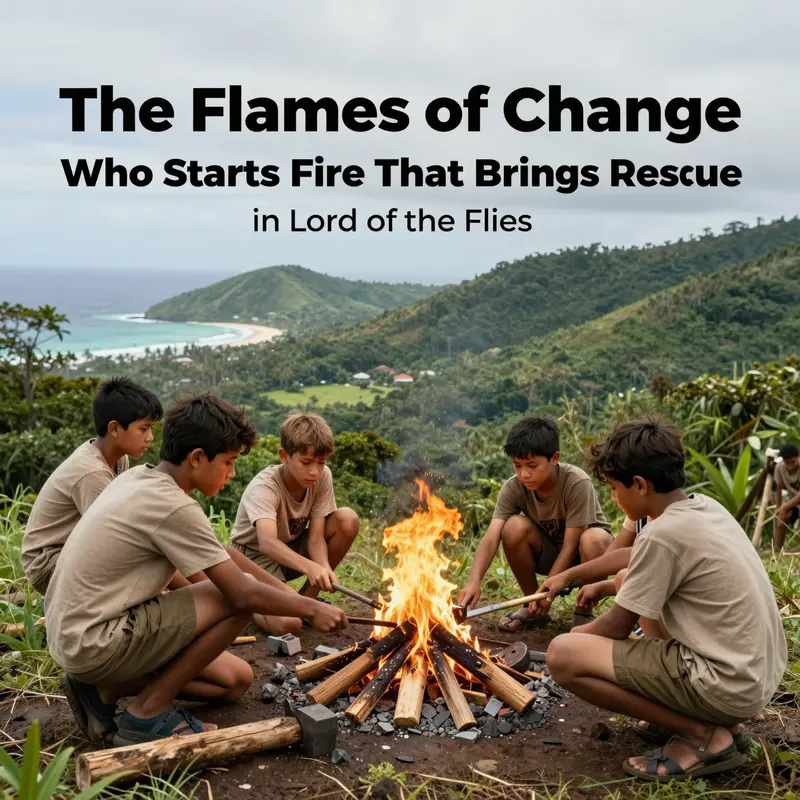
When the islanders first gather on the sand, the rules of their little world are still being hammered into form, and the air feels charged with a promise that the sea has not yet learned to break. The act that will fix their aims in the minds of every boy is not a game but a demand: to be seen, to be found, to be rescued. Ralph, stepping into the role of leader with the instinct of a child who still believes in bright promises, sees the mountain as a vantage, a sentinel, a signal. The fire is not merely a flame; it is a creature they can feed with their longing. In that moment, the concept of civilization—so fragile on a beach where the next wave could be a day’s loss—takes shape as heat, light, smoke, and a plan big enough to hoist a ship from the horizon into their field of sight. The power of the moment rests on a simple, almost technical gesture—the use of light to focus on a flame. Ralph’s realization is practical as well as hopeful: if smoke can draw attention, if attention can draw rescue, then the mountain becomes an antenna against oblivion. The scene is quiet and almost ordinary in its arithmetic: dry leaves, twigs, sunny weather, and Piggy’s glasses angled with care to serve a purpose beyond mere spectacle. Yet the simplicity of the action masks the deeper geometry at work, a geometry that Golding will gradually complicate as the island’s weather turns from sunlit to storming, from signal to spectacle, from rescue to ruin.
The specifics of how the fire is started anchor the moment in a way that feels almost procedural, a counterpoint to the chaos that will soon erode the island’s fragile agreements. It is Ralph who rises to call the assembly, who names the aim with the blunt clarity that a nation’s first constitution might envy: you must keep a fire burning on the top of the mountain because ships and planes will pass, and someone might see the smoke and decide to rescue you. The necessity of survival plays in tandem with a fevered cry for civilization: the smoke will be the world’s eye on them, the signal that they have not vanished into the earth but remain under the gaze of a world beyond the sea. The boys’ ability to carry out this plan depends on an instrument both mundane and almost sacred in its symbolism—the lens of Piggy’s glasses, a tool that can bend sunlight into flame, a parable of intellect harnessing nature for human need. The moment when the sun’s rays are adjusted through the shattered, irreplaceable crystal of those glasses is a brief but electric ceremony. The flame begins as a controlled, purposeful act, a marriage of science and longing, with the leaves catching like a whisper of breath and the smoke rising in a pale column that stains the blue above the island. The fire’s birth is almost ceremonial, a small ritual that marks the first overt assertion of human will against the indifferent, encroaching wilderness.
To read the scene through the lens of the novel’s larger dynamics is to see the fire as a double-edged instrument. On the surface, it embodies the most straightforward instinct for salvation: a beacon that could invite a passing ship, a return to the world they have not fully abandoned, a return to adults who can regulate fear and provide shelter, rules, and the steady, uncomplicated progress of a civilization that has not yet learned to fracture itself into competing tribes. The insistence on keeping the fire alive is a pledge to the future. Ralph’s voice, clear and practical, cuts through the chatter, insisting on a discipline that might seem trivial in a moment of sun-kissed play but becomes the island’s most serious policy. The boy who speaks for the fire carries the weight of responsibility with the gravity of a pilot watching the weather and a statesman weighing the costs of delay. The connection to the outside world is not a vague dream but a real possibility, a tangible thread that links them to an order they have glimpsed back on the shore, in books or in the recollections of grown people who once moved with purpose and restraint.
In that light, the use of Piggy’s glasses to kindle the flame represents more than ingenuity. It symbolizes the idea that intellect, organized thought, and an impulse toward collective welfare can channel energy toward a common good. The glasses are not merely practical; they are a totem of civilization, a reminder that the human mind can bend natural forces to secure a future. The act of striking the spark becomes, in miniature, an argument about what kind of society they intend to build, and whether that society will endure when fear, hunger, and the lure of power press in from every side. The image of the fire, rising and smoke curling into the sky, becomes a map of psychology as well as location. The children, who once chased harmlessly after crabs and shorebirds, now chase a sign of their own survival, a sign that there is still order to cling to, even if the world outside has not yet declared them worth saving.
The ritual of the flame’s creation is inseparable from the social dynamic that makes it possible. Ralph’s leadership is not merely a matter of charisma; it is a skillful orchestration of the group’s disparate impulses. He recognizes that the island’s first structure must be a shared commitment to something larger than any one boy’s private fear. The signal fire embodies that shared commitment, a visible pledge that they have not surrendered to the indefinite rhythm of nature, but have chosen to choreograph a hopeful stance toward the possibility of rescue. In this light, the scene feels almost ceremonial, a quiet moment in which perception, intent, and technique merge. The boys rally around a goal that feels simple and noble, a goal that, if pursued, could reassert their place within the larger human narrative that stretches beyond the palm-fringed horizon. And yet the flame’s birth is also a seedbed for future tension: the same energy that promises rescue can easily become a distraction from the more demanding tasks of building shelter, finding food, and managing fear. The act of lighting the fire thus foreshadows the novel’s central irony and tragedy: what starts as a beacon ends up as a test of the boys’ ability to stay faithful to the discipline that rescue requires.
A closer look at the moral geometry of this moment reveals the delicate dance between order and impulse. The call to keep the fire burning is not imposed from above by a stern authority but emerges from the circle of boys themselves, a democratic impulse that feels progressive at first. It is, in essence, a shared oath to maintain a connection with the world beyond their private island. Yet the island, in its beauty, is also a pressure cooker that intensifies fear and desire. The same fire that could bring a boat over the horizon also draws the attention of the island’s darker impulses—the urge to hunt, to prove prowess, to test limits, to challenge the rules that have kept them from chaos. The glasses, clear and precise, become a symbol not simply of light but of the precision required to sustain life in a fragile system. They demand a careful, almost scientific, approach: dry tinder, patient feeding of small curls of flame, a steady hand to feed oxygen, and a watchful eye for the signs of smoke that could betray them to a world they hope to rejoin.
In this sense, the moment of the fire’s ignition is a turning point not only for the plot but for the boys’ perceptions of themselves. To Ralph, the fire is a tool of civilization and a barometer of their collective will. To Jack, who watches with a different set of eyes, the flame appeals to a different instinct: attention, visibility, control, and the opportunity to stage a different drama in the same theater. The fire’s birth becomes a field of competition as much as a beacon of hope. The mountain, which should be a quiet outpost of rescue, transforms into a stage where competing visions of leadership play out in small, tense scenes around the crackling flame. The very act of feeding the fire becomes a test: will they respect the careful, measured maintenance that keeps the signal alive, or will they let the flame burn with a fiercer light that dazzles their senses and blinds their judgment? This is the seed from which later events will sprout: neglect of the fire in the name of hunting, the mismanagement of attention, and the substitution of a primitive, immediate gratification for the slow, patient work that rescue requires.
The scene thus stands at the crossroads of science and myth, of thought and impulse, of unity and fragmentation. It is a demonstration that civilization is not a given but a choice, a decision to allocate energy toward a future that is not guaranteed but hoped for. The practical achievement of starting the fire—using Piggy’s glasses to focus sunlight, arranging the tinder, keeping a flame alight in a way that can be seen from a distance—appears, at first glance, to be one of the simplest acts available to a group of boys left to improvise their own society. Yet its symbolic load is immense: it embodies the possibility of rescue, the possibility of self-control, and the possibility that intellect and cooperation can prevail over brute need. It is a moment of fragile triumph, one that holds the promise of a public, external validation of their humanity. The irony, already audible in the air, will become more precise as the narrative unfolds: the same fire that is meant to save them will, through carelessness, fear, and a drift toward savagery, become the catalyst for a disaster that will draw a ship to their shore. The smoke that once signaled hope will, in a later hour, signal danger, and the island’s forests will burn as surely as the boys’ social order begins to burn away.
For readers who study the novel with an eye toward how symbolic objects carry moral weight, the fire’s origin offers a compact study in the ethics of survival. The instrument that begins as a tool for rescue is never neutral; it always carries the imprint of who handles it and why. Ralph’s insistence on the mountain fire as a signal is not a mere tactical decision; it is an ethical stance about responsibility, about the duty to connect with others and to preserve a public space where law, reason, and shared norms can still govern behavior. The glasses’ light is a literal lens, but it also functions as a critique of how people read their own capacity to shape the world. If the light can be bent to conjure flame, it can also be bent to illuminate the moral limits of the group. The very process of starting the fire thus invites the boys—and the reader—to weigh the benefits of visibility against the temptations of control, to test whether the flame can sustain both a rescue and a discipline that prevents the flame from devouring its own house.
The chapter’s closing reflection returns to the paradox that frames the entire novel: rescue sometimes comes not by the triumph of justice or reason alone but through a catastrophe that forces the world to notice. The fire’s ascent becomes a visible, audible, and tactile symbol of human longing for order, yet the island’s atmosphere of fear and hunger cannot be ignored. The flames, once a bright thread tying the boys to the human world, will in time become a reminder of how quickly a shared project can unravel when the pressures of power, fear, and appetite overwhelm the will to cooperate. The reader is left with a quiet, uneasy sense that the initial act of starting the fire, though noble in its intent, carries within it the seeds of the very destruction that will later reveal the deep-seated darkness Golding seeks to expose. The rescue that seems so assured at the outset is sharpened by a growing irony: the signal fire, a beacon of civilization, will become, in its own way, the instrument that reveals how far a group of boys can drift from the moorings that keep a society intact. As the fire’s glow etches itself across the night, the island remains an arena where the struggle between order and chaos is only just beginning, and where the first spark will illuminate not only the horizon but the moral terrain on which the boys must decide what kind of future they deserve.
To explore the scene that grounds this chapter in a broader literary frame, many readers turn to established summaries that map the key beats without unwinding the prose’s emotional charge. For a concise overview of this pivotal moment, the SparkNotes Chapter 2 Summary offers a reliable reference that aligns with the themes discussed here. The link provides a clear articulation of how the fire originates, its immediate purposes, and the foreshadowing that signals the coming tension between civilization and savagery. The chapter’s enduring question—whether the beacon can outlast the instinct to conquer the world around them—remains as poignant now as when the boys first struck the spark. The fire’s birth is not merely a plot device; it is the island’s first public declaration that a world beyond the beach has not forgotten them, and it is a question that will haunt every decision they make as the flame grows and the social contract frays.
In this light, the act of starting the fire embodies the dual nature of human invention: it is at once a tool for connection and a test of restraint. The moment can be read as a microcosm of the broader human condition, where ingenuity, hope, and cooperation face the temptations of power, fear, and desire. The initial creation of the fire thus anchors the narrative’s sustained meditation on what civilization costs when it is pushed to the edge. It is not merely the origin of rescue but the origin of a moral experiment. If the island teaches anything, it is that a signal fire is a fragile instrument whose fate mirrors the fate of the society that tries to keep it alight. The chapter lays bare this paradox from the outset: a beacon designed to reach out to the human world can, if mishandled, turn inward and reveal the very shadows it sought to dispel. The spark is, in the end, a test of whether the boys will choose to build a future together or yield to the attractions of power that threaten to collapse that future into smoke and ash.
External resource: SparkNotes Chapter 2 Summary — https://www.sparknotes.com/lit/lotf/summary/chapter-2/
Internal note for further exploration: the concept of a safety-focused, practical approach to fire safety and preparedness remains a critical theme in modern training and education about risk management. For readers who want to connect Golding’s fiction to real-world safety practices, consider exploring resources that discuss the fundamentals of fire monitoring, prevention, and response, such as Fire safety essentials certification training. This real-world material echoes the narrative’s insistence on preparedness, discipline, and the careful stewardship of resources when lives are at stake.”
null
null
Who Starts the Fire? The Ironic Rescue and the Fire’s Double Edges in Lord of the Flies
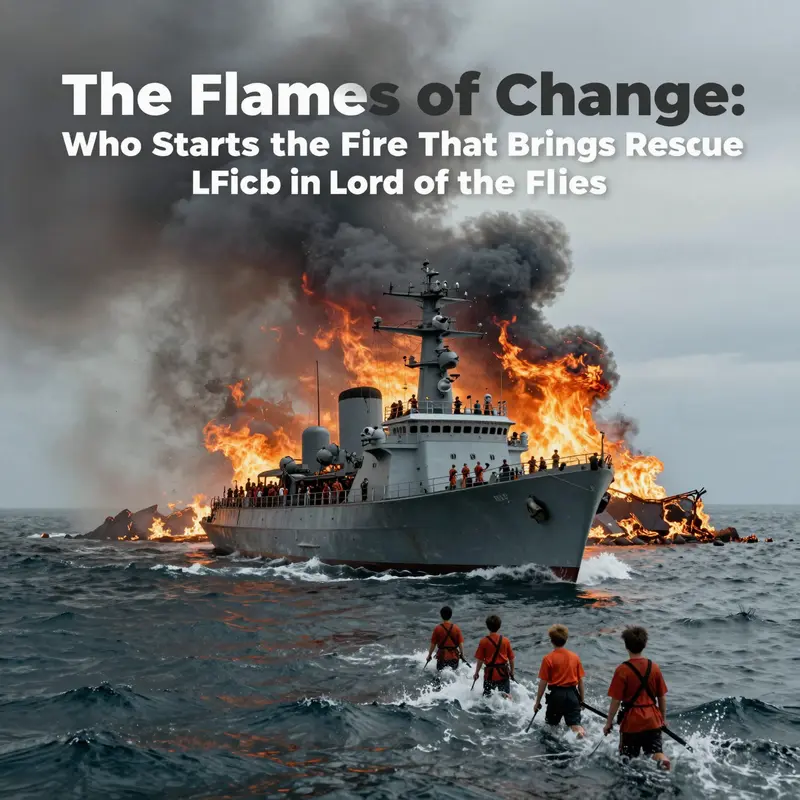
The fire on the mountain in Lord of the Flies operates as a living barometer of the boys civilization and its erosion. It begins as a cooperative beacon, a shared project that binds Ralph, Piggy, and the others to a future beyond the palm trees. The maintenance of the signal fire requires discipline, ritual, and a constant investment of attention, reminding the group that rescue depends on a communal habit rather than individual prowess. Yet as the narrative unfolds, the flame also becomes a test: it can be weaponized by fear and appetite, diverted from its original purpose by those who prefer hunting or power to order. The question of who starts the fire thus becomes less about a single name and more about collective decision and responsibility. The spark originates in a group desire for return, but its direction is steered by the prevailing social dynamics, Ralph’s insistence on order, Jack’s lure of domination, and Piggy’s quiet appeals to civilization. Maintenance shows the fragility of that civilization. A missed hour, a careless log, or a misread wind can turn careful flame keeping into a wildfire. The fire’s behavior mirrors the boys’ moral weather: when cooperation holds, the beacon promises rescue; when fear prevails, it becomes a mirror of chaos. The island’s smoke eventually converges with adult eyes—the navy officer on the horizon—creating the story’s cruel irony. The same blaze that appears to guarantee salvation also reveals how deeply the group has drifted from its oath to build and preserve a common life. The rescue, therefore, is not a triumph of virtue as much as an accident of circumstance born from a volatile symbol. In this light, the phrase starts invites readers to attend to who collectively nurtures civilization under pressure. The fire’s origin lies in shared longing for safety and in a fragile agreement to care for a signal together. Its arc, however, exposes the paradox at the heart of Golding’s novel: fire can light the way home and simultaneously lay bare the boys’ capacity for fear, cruelty, and cunning. Reading the scene invites modern audiences to reflect on leadership, responsibility, and the fragile ecology of cooperation in any community, especially when the horizon is closed and the urge to survive tests the boundaries between civilization and savagery.
Final thoughts
The journey of fire in ‘Lord of the Flies’ poignantly illustrates the duality of human nature. Initially a beacon of hope and civilization, it transforms into a chaotic force reflecting the boys’ descent into savagery. Yet, in a twist of fate, this very fire provides the means for their rescue, emphasizing that even in destruction, there can be a path back to order. The narrative serves as a profound commentary on the fragility of society and the inherent darkness within human beings, drawing attention to the need for balance between civilization and our primal instincts.