The world of gaming offers diverse experiences, and fire and rescue-themed games on Xbox are no exception. These immersive titles not only entertain but provide valuable insights into the realities of firefighting and rescue operations. This exploration focuses on the unique offerings in this niche, from realistic simulations to family-friendly adventures and engaging multiplayer experiences. Each section critically examines these games, providing a comprehensive understanding of how they blend fun with educational value, particularly within the realm of fire and rescue operations.
Ignition of Realism on Xbox: Exploring the Frontiers of Firefighting Simulation
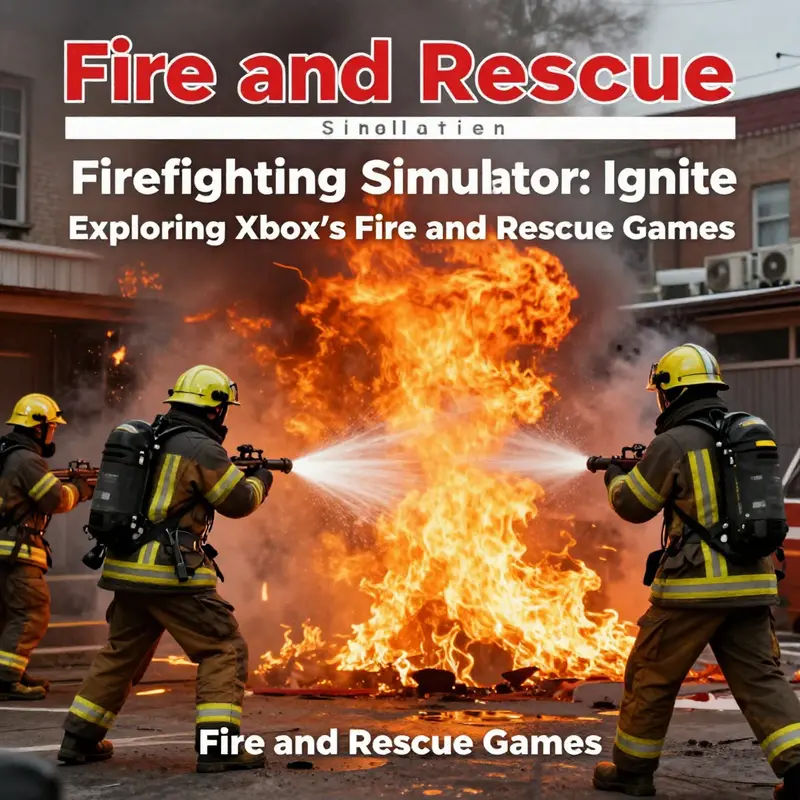
When you ask whether an Xbox library holds a fire and rescue game, the answer unfolds as a spectrum rather than a single, definitive title. On modern consoles, players can encounter experiences that press realism to the fore and others that lean into cooperative rhythm and fast-paced action. What unites them is a shared impulse: to place a player in the role of a responder who must read a situation, marshal limited resources, and coordinate with teammates to save lives and protect property. These games, ranging from methodical simulations to spirited, team-centered challenges, invite players to step into the boots of responders and feel the weight of decisions under pressure. The best of them do not simply digitize firefighting; they evoke the cognitive and physical choreography of urgent response—the way teams communicate, how water pressure and nozzle angles matter, and how every decision can ripple through a building’s heat, smoke, and stability.
At the core of a robust firefighting simulation is cooperation. In the most convincing experiences, you are not merely a lone operator; you are part of a squad that must align timing, tactics, and terrain. Some players take on roles that mirror real-world practice: the one who scouts the floor plan and identifies primary entry points, the one who manages water supply from a truck or hydrant, the teammate who handles ladders and access to upper floors, and others who monitor air supply and radio chatter. The cooperative layer matters as much as the firefighting choreography itself, because rescue is a distributed effort. When a team communicates with clarity under stress, when each member understands how to prioritize life over property and how to balance risk with response, the gameplay transcends mere mechanics to feel like a shared mission.
The settings in these experiences tend to hover between urban environments and infrastructural complexity. A vibrant Midwest city, a dense apartment block, or an industrial complex with a maze of corridors all become stages where heat, smoke, and evolving hazards interact with the player’s decisions. The missions push players to anticipate evolving conditions: how a door can alter the fire’s path, how ventilation strategies change airflow, and how a staircase can suddenly become a hazard as fire consumes structure. The best design makes the player feel the texture of the scene—the warmth on the skin as you advance through a corridor, the hiss and crackle of flames, the dense, shifting smoke that reduces visibility, and the sense that even a minor misjudgment can cascade into a dangerous situation. In these moments, the line between game and simulation blurs, not as a gimmick but as a pathway to authentic risk assessment and practical problem solving.
A central draw is the tactile fidelity of the equipment. Realistic firefighting relies on a precise sequence: donning breathing apparatus, connecting hoses, selecting nozzles for different fuel loads, managing water pressure, and coordinating rapid movement with bulky gear. The handling—how hoses pull when you twist the nozzle, how ladders swing and align, how a firefighter’s center of gravity shifts with each step—conveys a physical language players learn through trial and error. In many titles, the aim is to reflect these sensibilities without sacrificing playability. You feel the effort of adjusting weight and balance when you carry heavy gear up a stairwell, and you notice how a hose line must be managed with deliberate, deliberate cadence, especially when a building’s structural integrity wobbles under heat and collapse risk. That is not merely a flourish; it is the core of operational authenticity. The experience rewards careful planning, situational awareness, and disciplined teamwork more than button mashing or lone heroics.
From a design perspective, the most ambitious entries embrace a step beyond pure recreation and towards ecosystemic simulation. They weave in consequences that extend beyond extinguishing flames. For instance, extinguishing a fire often interacts with the environment in meaningful ways: a hose line can flood a workspace, a dropped object can block a corridor, and smoke can complicate rescue attempts by reducing stamina and visibility. The interface attempts to translate these subtleties into intuitive controls while preserving clarity so that players can focus on strategy rather than deciphering the map. That balance—between depth and accessibility—defines how closely a title can approach professional realism while remaining playable in a couch-and-coop setting. Some critics have noted that even strong simulations can tilt toward repetition over the long arc of a campaign, especially if progression loops are shallow or if mission variety plates into a familiar rhythm. The healthiest responses to this critique are ongoing content strategies and a design emphasis on meaningful experimentation rather than rote repetition. In the best cases, new challenges arrive through periodic updates that reframe familiar spaces, introduce novel hazards, and invite players to apply the same core skills in fresh contexts.
The technical ambitions behind a high-fidelity firefighting sim are evident in the attention to environmental cues. Visuals strive to render fire behavior with convincing density, heat shimmer, and billowing smoke that responds to water and airflow realistically. Sound design plays its part, with the crackle of flames, the hiss of escaping steam, and the creak of a stressed structure providing audible feedback on how a scene is progressing. The lighting often mirrors the mood of a blaze: the glow of ember-lit rooms, the lament of a corridor lit only by the flicker of a flame, and the way shadows shift as the fire’s angle changes. These sensory details function not as mere spectacle but as navigational aids that cue players toward safer paths or reveal hidden dangers. The underlying physics and animation pipelines work to preserve believability: debris shifts in response to water impact, glass shatters in a way that aligns with engine-driven physics, and occupants’ movements respond plausibly to the smoke and heat around them. In short, the convergence of visual storytelling, responsive physics, and cooperative AI or human teammates helps paint a convincing portrait of emergency work without sacrificing gameability.
As with many contemporary console experiences, there is a broader ecosystem of downloadable content and post-release additions that expand what is possible in a firefighting scenario. Season passes or expansion packs usually introduce new environments, missions, and a curated set of vehicles and gear that diversify the sandbox. A common pattern is to present an assortment of fresh fire scenarios—ranging from a warehouse blaze with hazardous materials to a high-rise emergency with limited egress—paired with new vehicle configurations and equipment sets that players can unlock or equip. While the exact flavor of these add-ons varies by title, the promise remains the same: keep the firefighting practice current, keep players engaged through novelty, and reward teamwork with new ways to tackle danger. The appeal of such content is twofold: it sustains long-term interest for veteran players and it invites newcomers to experience the discipline from different angles, whether they prefer the strategic overlay of operations planning or the visceral immediacy of hands-on suppression.
The player community around these experiences tends to center on cooperation, strategy, and shared achievement. Players often reminisce about the sensation of approaching a smoke-blanketed corridor together, communicating in a concise, almost ritualized dialect that echoes real-life professional radio communications. The cultura surrounding the games rewards etiquette and coordination: quick, precise calls about entry points, hose deployment lines, and search-and-rescue priorities can mean the difference between a successful outcome and a failed mission. When this social texture coalesces, the game becomes less about individual reflexes and more about synchronized execution under pressure. It is in these moments that the experience earns its staying power, turning virtual emergencies into rehearsals for collective action that resonate with players who value team dynamics as much as spectacle or challenge.
One practical question players often ask concerns platform reach and the breadth of available experiences in their own living rooms. The firefighting simulation family has generally found a home across contemporary consoles, spanning models that emphasize high-fidelity physics and those that offer more accessible, arcade-like pacing. Xbox players, in particular, can expect a constellation of titles that emphasize rescue-oriented play beyond pure firefighting alone. Some games tilt toward environmental hazards such as wildfires, while others foreground urban search and rescue, water-based suppression, or tactical coordination in hazardous environments. The throughline is clear: these games are not one-off diversions but parts of a growing portfolio that invites players to explore what it means to respond to danger with discipline, teamwork, and precision. For those who crave realism, these experiences provide material fidelity—systems that require you to manage equipment weight, hose pressure, air supply, and structural integrity in a way that mirrors real-world constraints. For those who seek social play, the emphasis on co-op missions and shared objectives offers a compelling reason to team up with friends for a longer campaign rather than a single-session challenge.
For readers who want to align their in-game learning with real-world safety concepts, an accessible starting point is exploring fundamental fire safety knowledge alongside play. A practical pathway is to consult training-oriented resources that outline core concepts such as risk assessment, incident command basics, and common suppression tactics. You can find a concise primer on essential training here: fire-safety-essentials-certification-training. This kind of reference helps bridge play and practice, reminding players that games can illuminate critical habits—like scene assessment, protective equipment use, and teamwork—that are valuable beyond the screen. It also signals a broader point about the value of disciplined, safety-oriented learning in any setting where risk is real and consequences matter.
The availability of these experiences on consoles often intersects with broader questions about access and discovery. Some players look to a single flagship title as the entry point, while others pursue a broader catalog of missions that offer varying scales of danger and complexity. The design philosophy behind these games frequently emphasizes that the strongest experiences are not merely about extinguishing flames but about rehearsing decision-making under pressure, practicing effective communication, and building a shared mental model of how an incident unfolds. In many respects, the value lies less in spectacle and more in the quiet competence that emerges when a team can anticipate the next move, adapt to a shifting environment, and sustain composure as the situation evolves. This is what makes a well-crafted firefighting simulation more than a novelty; it becomes a platform for learning, cooperation, and confidence that can translate into real-world appreciation for the profession and its safety culture.
External reference: https://www.playstation.com/en-us/games/firefighting-simulator-ignite/
Playful Rescue, Real-World Roots: Leo the Firefighter Cat and the Case for Family-Friendly Firefighting-Inspired Gaming on Xbox
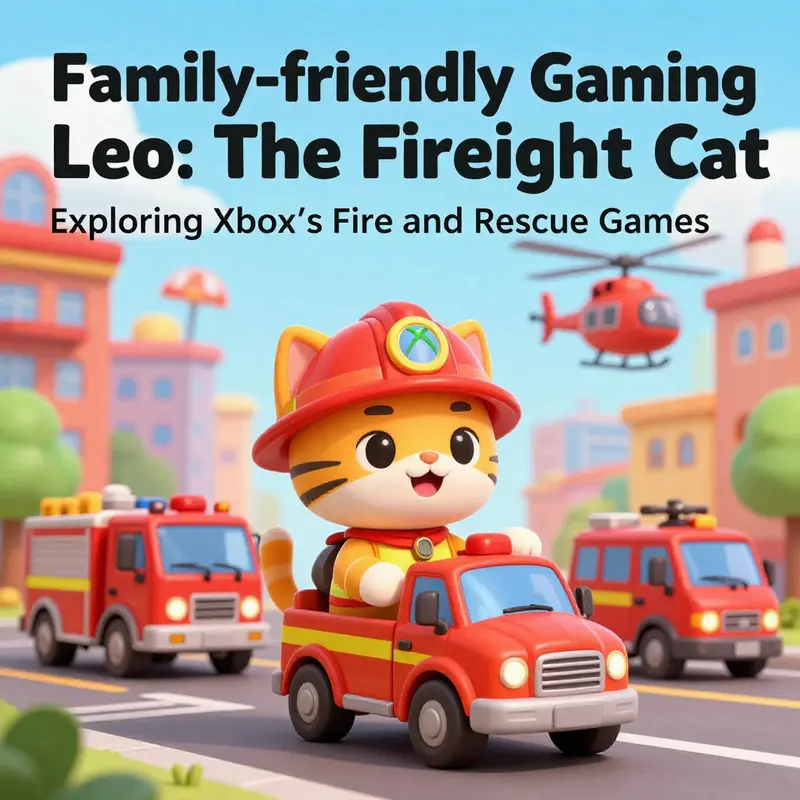
Fire and rescue environments can evoke high-stakes drama and technical prowess, but for families who want a window into those worlds without the intensity of real-life danger, the Xbox library offers a notable counterpoint: a game that stitches courage, teamwork, and curiosity into a warm, child-friendly package. Leo the Firefighter Cat stands at that intersection, a bright, buoyant title that invites players of all ages to step into the paws of a junior firefighter who treats bravery as a communal act of care. The game’s charm comes not from spectacle alone but from the way it translates the texture of rescue work into a playful, accessible adventure. It is a reminder that learning to help others can begin with a smile, a purring mascot, and a mission that feels like a storybook wrapped in a cartoon blockbuster. As part of a broader family-friendly ecosystem on Xbox, Leo the Firefighter Cat embodies how developers can honor the seriousness of danger while preserving the safety, humor, and cooperative spirit that parents and kids crave when they sit side by side at the screen.
The world of Leo is deliberately whimsical, and the design choices reflect a conscious turn away from the realism that sometimes defines firefighting games. The city of Feliopolis—imaginative, vibrant, and endlessly navigable—serves as a stage where 20 missions unfold across environments that range from a candy-coated factory in crisis to a seaplane port that catches the wind with every gust. The missions blend traditional rescue motifs with gentle novelty. A factory fire can become a puzzle about blocking heat with safe barriers and guiding frightened workers to clearly marked exits; a seaplane emergency can morph into a coordinated cross-vehicle sequence that teaches timing and spatial awareness. This is rescue work reimagined for families: no graphic peril, no graphic consequences, but plenty of opportunity to think, coordinate, and cheer when Leo’s quick thinking or deft platforming saves the day.
The range of rescue vehicles is one of the most immediate invitations to imagination. Leo’s squad isn’t defined by fearsome gear alone but by a rotating cast of useful tools that kids can identify and sorbet-sweetly control. Fire trucks, boats, seaplanes, and helicopters become extensions of Leo’s abilities rather than ominous instruments of danger. Each vehicle introduces a new vein of play—driving, dockside maneuvering, aerial navigation—while reinforcing the core theme: in a rescue scenario, different tools are needed, and teamwork makes the mission viable. The playful tone doesn’t flatten the mechanics; it enhances them by offering choices. If a player prefers precision platforming, they can navigate a wrecked warehouse to locate victims and rack up timing-based scores. If a player is drawn to exploration and puzzle-solving, they can chart underwater tunnels or scale vertical routes to unlock hidden paths. The result is a loop of discovery where skills build on each other, and success comes from curiosity as much as courage.
Leo the Firefighter Cat uses its feline protagonist to emphasize approachability without infantilizing its subject matter. Leo’s cat-like instincts—agility, balance, the clever use of space—translate into intuitive mechanics that younger players intuitively grasp. The controls are deliberately responsive, designed so that even first-time players can move with confidence and rerun tricky sections without frustration. The game’s design philosophy embraces incremental challenge: early missions introduce simple sequences of movement and rescue, while later stages layer more complex routes, timing, and environmental hazards. This scaffolding mirrors what families often seek in co-play experiences—the chance for parents to guide younger kids through progressively demanding tasks, while allowing siblings to contribute their own strengths to the shared goal.
The narrative spine is gentle but earnest. Leo’s motivation—courage woven with care for others—offers a positive example of heroism that doesn’t rely on shock value or intimidation. The character interactions are warm and clearly signposted, with clear objectives and supportive feedback when players succeed. The non-violent design, reinforced by a bright, cartoon aesthetic, makes the game welcoming to players who are new to gaming or who want to share a wholesome, lighthearted engine of play. The game’s humor—playful puns, expressive character animations, and joyful moments of discovery—helps maintain a buoyant atmosphere even as missions involve setbacks or tricky sequences. In this way, Leo becomes more than a protagonist; it is a conduit for parental involvement, sibling collaboration, and the shared delight of cooperative problem solving.
From a broader perspective, Leo sits within a family-friendly Xbox lineup that emphasizes accessibility, cooperative play, and educational value alongside entertainment. Its availability on Xbox—and its compatibility with PC via Steam—ensures that families can explore together on the devices they already own, reinforcing the cross-generational appeal that is central to successful family gaming. The game’s inclusion in a bundle with other wholesome titles expands the possibilities for a shared library that spans different moods and play styles, offering a portfolio of experiences that can be tailored to a household’s interests. This ecosystem is not simply about cutting a check for a purchase; it’s about cultivating a space where families can gather around content that models cooperation, curiosity, and resilience. The appeal lies not only in the bright visuals or the gentle pace but in the way the game makes teamwork tangible: Leo moves through environments with companions, or with the player’s help, pooling abilities to overcome obstacles, rescue characters who need assistance, and celebrate small, meaningful triumphs.
One of the compelling features is progression that feels earned yet accessible. The 20 missions are not a distant wall to scale but a curated path that encourages repeat play and experimentation. As players revisit sections to improve timing, discover hidden routes, or unlock costumes for Leo, the sense of growth is steady and encouraging. The unlockable costumes—while lighthearted—also offer a small, tangible reward for perseverance, signaling to players that skill development has a playful payoff. Customization choices deepen engagement by allowing players to personalize Leo in ways that reflect their own sense of style, while keeping the core gameplay intact and approachable. In a world where many games demand aggressive play or high-intensity sessions, Leo’s family-first design demonstrates that meaningful, immersive experiences can be built around kindness, ingenuity, and cooperation.
Language accessibility and cultural reach are another important aspect that enriches Leo’s value for families. The game is available in multiple languages, which broadens its appeal and makes it easier for households around the world to share the experience in a familiar tongue. This linguistic accessibility is not merely a courtesy; it enhances comprehension of mission objectives, allows for clearer communication among younger players, and invites non-native speakers to participate in a shared adventure without the barrier of language friction. The inclusive approach extends to the visual design, where color palettes and character expressions convey intent in ways that transcend words. Such design choices are deliberate steps toward creating a universally welcoming product—a fitting alignment with the broader goal of family-friendly gaming: to invite families to learn together, laugh together, and grow together through play.
Beyond its immediate appeal, Leo also serves as a gentle entry point for conversations about safety, teamwork, and preparedness. The game’s tone makes it natural to pause and reflect on what rescue work involves in real life, even if the context is fantastical and cartoonish. Parents can use mission moments as springboards to discuss how firefighters prioritize safety, how teams communicate under pressure, and how every member of a crew contributes to a successful outcome. By pairing action with open-ended questions and small, hands-on demonstrations—such as tracing safe escape routes in a pretend play scenario—families can extend the game into real-world learning in a way that is engaging rather than didactic. The same approach translates into the idea of play as preparation: not for fear, but for informed bravery, where curiosity and care are the driving forces.
In the larger conversation about whether there is an Xbox game for fire and rescue, Leo is a vivid example of what family-friendly design can achieve within that theme. It demonstrates that the essence of rescue—timely response, careful planning, and shared effort—can be distilled into a joyful, non-threatening experience that still respects the gravity of the subject. It also underscores that such titles do not exist in isolation. They occupy a space within a cultural landscape of safety awareness, civic-minded storytelling, and interactive learning. When paired with more simulation-focused or multiplayer firefighting games, Leo complements the spectrum by offering a softer entry point that can ramp up confidence and curiosity before players graduate to more demanding gameplay. This progression mirrors how families often learn together: kids bring fresh questions and unbridled enthusiasm, while adults bring context, experience, and guidance. The result is a mutually enriching engagement that extends beyond the screen into shared values about courage, cooperation, and the everyday heroism that small, kind acts can represent.
To readers who want to connect Leo’s playful world with real-world safety culture, there is a natural bridge to authoritative resources and practical learning. For example, the concept of fire safety essentials and certification training—though presented within a game’s whimsy—resonates with the real-life guidance communities use to prepare and protect themselves and others. If you’re curious to explore how the culture and skills reflected in Leo align with actual safety practices, you can learn more at fire-safety-essentials-certification-training. This resource offers insights into foundational knowledge, training pathways, and the kinds of competencies that support safe, responsible work in emergency services. Integrating these real-world ideas with playful imagination helps families see that heroes come from collaboration, discipline, and a willingness to learn, regardless of age or experience.
In this sense, Leo’s world becomes part of a meaningful dialogue about gaming as a bridge—between fantasy and reality, between childlike wonder and adult stewardship, between a cozy living room session and a larger community conversation about safety. The game invites players to step into Leo’s paws, to practice teamwork, and to celebrate the small victories that accumulate into a bigger, brighter sense of capability. It invites parents to participate not as passive observers but as mentors who help translate on-screen challenges into practical, age-appropriate learning moments. It invites siblings to share the journey, each bringing their own strengths to bear on a mission, just as real rescue crews reflect diverse talents and roles. And it invites developers to continue refining the balance: to preserve the charm and accessibility that define family-friendly titles while expanding the depth of play in a way that still feels welcoming and safe.
As a chapter in a broader discussion about Xbox’s fire-and-rescue themed experiences, Leo demonstrates that family-friendly gaming can stand proudly at the intersection of artistry, empathy, and play. It shows that rescue narratives can be told with warmth and humor without diluting the seriousness of helping others. It proves that children and adults can approach difficult ideas—not with fear, but with curiosity, teamwork, and a shared sense of purpose. In a library that includes more specialized simulations and fast-paced team challenges, Leo gives families a soft landing and a springboard for future exploration. By embracing accessibility, cooperative play, and a generous dose of whimsy, the game creates a space where learning, laughter, and lending a hand to others become a natural, recurring habit. The result is not merely a game about fire and rescue; it is a family-facing invitation to grow together through the kind of play that nurtures resilience, generosity, and mutual trust.
For readers who want to explore further, the broader ecosystem of family-friendly titles on Xbox can offer complementary experiences that echo Leo’s themes while introducing new mechanics and stories. If you’re seeking a way to widen a family game night with cooperative challenges, or you’re looking to spark discussions around real-world safety in a non-threatening context, consider pairing Leo with other gentle, story-driven adventures that emphasize teamwork and problem solving. The goal isn’t to replace real-world safety training but to plant seeds of curiosity that encourage kids to ask questions, observe carefully, and understand how people work together to help others. This is the kind of early literacy—literary not in the sense of words, but in understanding social roles and collaborative problem solving—that sets the stage for lifelong learning and responsible citizenship. In this sense, Leo is not just a game; it is part of a growing, family-centered conversation about how games can reflect, enrich, and gently teach the values at the heart of rescue work.
In sum, Leo the Firefighter Cat offers a luminous entry point into the concept of fire and rescue as a realm of courage tempered by care. It is a title that respects its younger players, honors the adults guiding them, and invites families to share a rhythm of play that is uplifting, educational, and endlessly engaging. Its 20 missions unfold like chapters in a picture book of bravery, each one reinforcing the idea that heroism can be playful and inclusive. The game’s achievements aren’t merely measured by points or costumes but by the smiles that appear across a couch or a bed and by the conversations that begin when a mission ends and Ellie or Leo’s success becomes a shared moment of pride. In the end, Leo reflects a truth worth carrying into any discussion of fire safety and public service: courage shines brightest when built on a foundation of empathy, cooperation, and the joy of learning together.
External resource for further context: Leo: The Firefighter Cat on Xbox Store
Cooperative Heat: How Multiplayer Fire-and-Rescue Games Forge Teamwork and Tactical Play
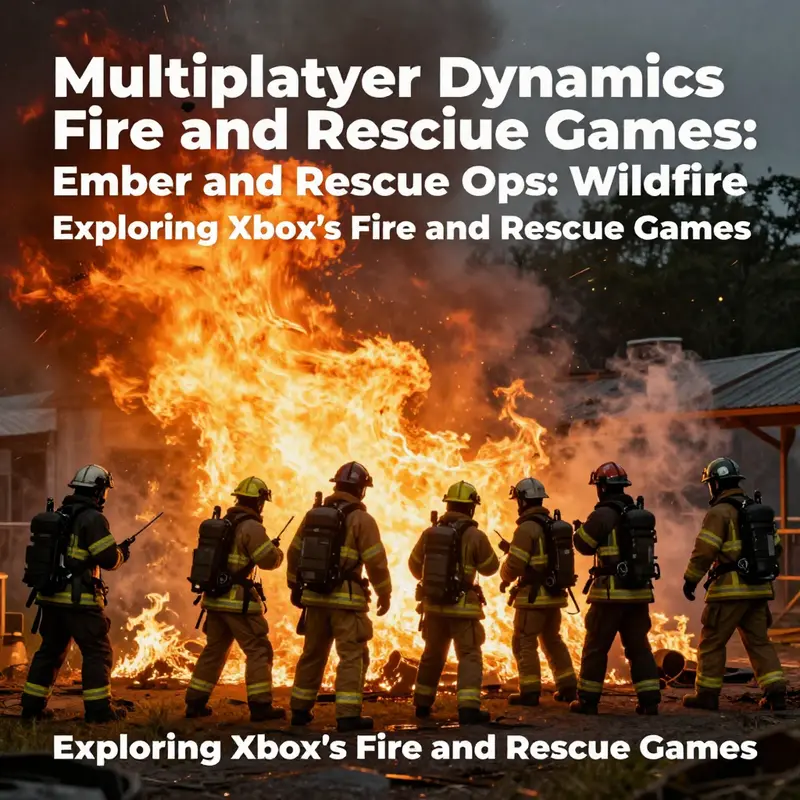
Cooperative Heat: Multiplayer Dynamics in Fire-and-Rescue Games
Multiplayer fire-and-rescue games make teamwork the primary gameplay engine. Players do more than share objectives. They coordinate timing, assign roles, and respond to constantly changing hazards. Two distinct design paths illustrate how this works. One path narrows focus onto micro-level chaos: cramped interiors, unpredictable flames, and physics-driven surprises that force split-second decisions. The other widens scope to include large landscapes, vehicle operations, and resource management where strategy and long-term planning matter more than quick reflexes. Both approaches shape how players communicate, how designers balance realism and fun, and how social bonds form around shared failure and triumph.
At the heart of multiplayer firefighting is role complementarity. A small team of four players often covers a wide task list: entry and suppression, casualty stabilization, demolition or breach operations, and support tasks like hose management or equipment hauling. When designers assign or allow the creation of distinct roles, cooperation deepens. Players learn to trust each other’s strengths. A player who specializes in demolition times their actions so a rescuer can enter a cleared room. Another drives a water truck and times pump pressure for the hose operator. These interdependencies create meaningful incentives to communicate. Even simple mechanics, like limited oxygen tanks or battery life for thermal cameras, become social dynamics. Someone must track resources for the whole group, or the team pays the price.
Communication systems are the nervous system of cooperative firefighting. Voice chat provides immediacy and nuance, but not everyone uses it. In-game pings, quick commands, and task markers offer alternatives. The best systems are low-friction and context-aware: a single button to mark a trapped civilian, a direction-aware ping that points to structural instability, or a one-press request that calls for water support. These tools reduce cognitive overhead while preserving high-stakes tension. They also lower the barrier for casual players who might be overwhelmed by technical jargon and complex command structures.
Environmental dynamism distinguishes firefighting simulations from many other co-op shooters or strategy games. Flames respond to wind, fuel load, and ventilation in real time. Wooden structures char, metal warps, and ceiling supports can fail. These evolving conditions force teams to constantly reassess. A hallway that was safe five minutes ago can become a death trap after a gust shifts the blaze. Consequently, situational awareness becomes a shared resource. Teams that check each other’s lines of sight, call out changing smoke patterns, and rotate roles as conditions evolve will outlast teams that treat scenarios as static puzzles.
Micro-focused titles lean heavily on emergent chaos for fun. When physics models dictate how fire spreads, unexpected chain reactions create memorable moments. A player aiming to clear debris accidentally breaching a pressurized room can ignite a cascade of flames that engulfs an entire floor. Those chaotic failures often translate into laughter and stories among friends. Designers harness this by creating tools that are easy to misuse and hard to master. The reward is a social loop: players tweak loadouts and experiment, then return to the table with new strategies or jokes about their past catastrophes.
Macro-oriented titles complement this by elevating planning. Teams in wildfire scenarios must manage resources across broad areas. Decisions include where to deploy aircraft, whether to perform controlled burns, and how to protect civilian infrastructure while preserving firefighter safety. These high-level choices introduce trade-offs. Sending all crews to protect a town leaves wilderness areas uncontrolled, which may lead to larger blazes later. The tension between immediate rescue and long-term containment yields a different kind of cooperation—one that requires shared situational modeling and trust in teammates’ strategic judgment.
Both design directions benefit from varied game modes. Linear campaign modes let designers craft narrative beats and teach systems progressively. They offer designed tension spikes and controlled escalation. Sandbox or procedurally generated modes, by contrast, sustain replayability and emphasize adaptability. When a game mixes both, it gives players a playground for both learning and experimentation. Teams can practice techniques in a sandbox and then apply refined strategies in more dramatic campaign missions.
Progression systems and equipment upgrades influence how teams evolve. When players can personalize gear, they invest in particular roles and build identity. An upgrade tree that improves hose pressure, adds thermal imaging fidelity, or shortens recharge time for breathing apparatus encourages specialization. Designers must balance these upgrades so no single configuration trivializes the challenge. If power creep diminishes the need for teamwork, cooperative dynamics erode. Well-designed progressions incentivize collaboration by unlocking tools that only work at full potential when used together—such as a drone that marks hotspots for a suppressor, or a pump that requires both a driver and a technician to operate efficiently.
Accessibility and onboarding are crucial in games built around teamwork. Fire-and-rescue systems can be dense and technical. Tutorials that scaffold complexity, showing one mechanic at a time, prevent cognitive overload. Paired with scalable difficulty and optional assistive systems, these tutorials broaden the player base. A short, interactive mission that teaches how to operate a ladder truck or manage a water pump is far more effective than a text-heavy manual. Clear HUD design, contextual help, and repeatable practice scenarios reduce frustration and make cooperative play more rewarding.
Social dynamics in these games can mirror real-world team behavior. Leadership often emerges organically. Someone who communicates clearly and takes initiative becomes the de facto team lead. That role can amplify both positive and negative dynamics. Effective leaders coordinate resources and keep morale high. Poor leaders may micromanage or assign blame, which fractures cooperation. Game features can encourage positive leadership behavior—scoring systems that reward team-wide success, shared experience points, or objectives that require explicit coordination. Conversely, punitive systems that single out individual mistakes can discourage risk-taking and experimentation.
The psychology of shared risk is an important design lever. Fire-and-rescue games succeed when they create a believable sense of danger without making failure feel arbitrary. When players know that a bad decision—like leaving a structure under-supported—has meaningful consequences, the emotional stakes increase. That fear of failure is productive when balanced with agency. Players should feel that skill, communication, and planning can mitigate danger. This balance cultivates flow states where teams operate at peak performance and experience intense satisfaction.
Replayability hinges on unpredictability. Procedural fire models, varied map geometry, and randomized civilian placement ensure each session feels fresh. Permadeath or permanent consequences can make each decision weighty, but they also risk alienating casual players. Many titles adopt a middle ground: severe but recoverable penalties that encourage careful play without crushing setbacks. When combined with social elements—leaderboards, shared mission logs, or community challenges—these systems extend engagement and create social narratives that keep players returning.
Community tools matter. Custom match options, private servers, and tools for content creation let communities craft their own scenarios. Mod-friendly architectures encourage creative safety training scenarios and fan-made missions. These additions lengthen a game’s life and deepen social ties. Community-hosted challenge events, like time-limited rescue drills or themed scenarios, give teams goals beyond the core loop and surface emergent strategies that designers might not anticipate.
Balancing realism and entertainment is a core tension. Realistic mechanics educate and increase immersion. They also risk slowing gameplay or creating steep learning curves. Arcade-like simplifications, meanwhile, enhance immediate fun but may undercut the genre’s identity. The best designs selectively abstract: they preserve key tactical decisions and the feel of firefighting while streamlining tedious elements. For example, simplifying logistics like fuel calculations but maintaining realistic fire spread preserves strategic depth without bogging players down.
Matchmaking and team composition influence the quality of cooperative play. Random matchmaking can pair novices with veterans, which may frustrate both parties. Systems that support role-based matching or allow teams to queue together improve outcomes. Cross-play capabilities widen the player pool but require careful tuning to keep latency and fairness aligned. Social features that encourage friends to play together—party invites, shared progression, and in-game communication channels—strengthen retention and foster better teamwork.
Designers must also plan for toxic behaviors. Griefing, trolling, and repeated sabotage are particularly harmful in games that require trust. Preventive measures like vote-kick, reputation systems, and reports reduce abuse. Positive reinforcement—emblems for good teamwork or badges that celebrate consistent cooperation—can be as effective as punitive systems in cultivating a healthy player culture.
Multiplayer firefighting games also carry potential as informal training tools. Simulated environments let players practice decision-making under pressure. While not substitutes for formal training, well-crafted scenarios can illustrate principles like sectorization, resource prioritization, and team communication. For those interested in how in-game experiences map to real-world preparation, there are resources and community initiatives that explore this intersection. A dedicated write-up on a local training facility offers perspective on how simulation helps practice coordination in controlled environments: firefighter training tower dedication.
Narrative framing and mission design influence tone. Some games use lighthearted aesthetics to make chaotic failure enjoyable. Others emphasize realism and seriousness to convey the gravity of emergency response. Both can succeed if they align mechanics with presentation. A physics-driven, comedic cooperative experience rewards player experimentation and embraces spectacular failure. A strategic wildfire title benefits from solemn stakes and careful pacing. Either approach must keep core gameplay coherent so the multiplayer experience feels unified.
Finally, designer communication and post-launch support shape long-term success. Active balancing, new missions, and community-driven events refresh multiplayer dynamics. Regular updates that address meta issues—overpowered equipment, exploit fixes, or matchmaking tweaks—maintain a fair and engaging playfield. Listening to community feedback, especially from organized teams and content creators, helps prioritize changes that strengthen social play.
Taken together, these design choices show how multiplayer fire-and-rescue games translate real-world teamwork into compelling play. Whether a title confines players to smoke-filled rooms or spreads them across vast landscapes fighting wildfires, effective multiplayer design focuses on clear roles, robust communication tools, meaningful consequences, and systems that encourage cooperative problem-solving. The result is gameplay that rewards coordination and builds shared stories—moments of panic, clever improvisation, and eventual success that teams replay and recount long after a mission ends.
For a closer look at how a physics-driven firefighting title was received by players, see its store page: https://store.steampowered.com/app/1083680/Embr/
Final thoughts
As gaming technology continues to evolve, the genre of fire and rescue-themed games on Xbox holds significant educational and entertainment value. From the serious simulation offered in Firefighting Simulator: Ignite to the whimsical adventures in Leo: The Firefighter Cat, and the teamwork-focused gameplay in Ember and Rescue Ops: Wildfire, these titles present unique perspectives on emergency response. They enrich the gaming experience by imparting knowledge about firefighting and rescue missions, appealing not just to gamers but to anyone interested in the critical nature of these professions. The diverse offerings ensure there is something for every type of player, making these games a noteworthy recommendation within the Xbox library.