
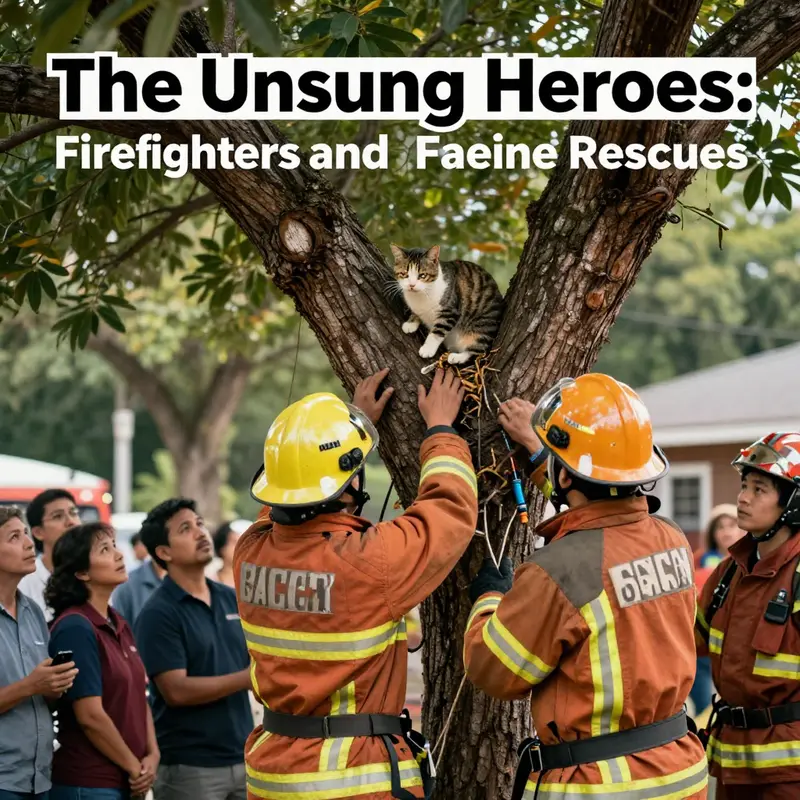
Firefighters are widely recognized for their critical role in safeguarding lives, but an often-overlooked aspect of their work involves rescuing stranded cats. Across various communities, these heroic endeavors shelter not just the animals but also the well-meaning individuals attempting to assist them. This article delves into the multifaceted nature of firefighters’ missions, highlighting significant incidents from around the globe, the unique challenges encountered during these rescues, the safety protocols that uphold the integrity of these operations, and the vital role of public education in these emergencies. Each chapter provides a deeper understanding of how firefighters embody professionalism, compassion, and preparedness when faced with the seemingly whimsical task of rescuing cats from treetops.
Climbing for Care: How Firefighters Safely Rescue Cats from Trees and Protect People in the Process
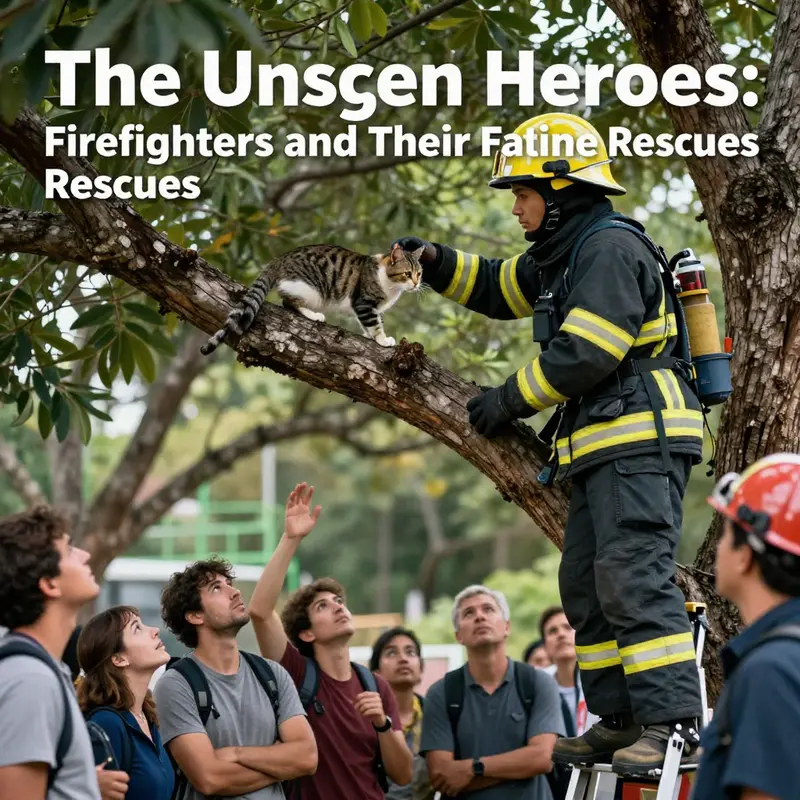
When a cat is perched high in a tree, the scene often unfolds with a mix of suspense and relief. A phone rings, a worried owner appears, and a crew in uniform arrives with calm efficiency. What can look like a simple animal rescue is, in truth, a precise operation that blends patience, technical skill, and a keen understanding of risk. Firefighters encounter these situations frequently, but each incident carries its own variables—tree height, branch structure, wind, and the temperament of an animal that may have never learned to love heights. Across regions, calls come in as pets seek refuge or as curious bystanders become part of the drama. The overarching goal remains constant: recover the animal with the least possible stress to both animal and humans, and ensure everyone safely exits the scene without adding new emergencies to the already tense moment. In this work, that goal is not merely a procedural requirement; it is a reflection of firefighters’ broader commitment to community welfare, extending beyond extinguishing flames to preserving life in a variety of unexpected situations.
A key part of the narrative surrounding these rescues is the dual rescue dynamic that often emerges. In many instances, owners attempt to save their pets themselves, climbing trees or leaning over ledges in a bid to coax a creature back to safety. This impulse, rooted in affection, can quickly turn into peril for the would-be rescuer. The less visible, but equally real, danger is the animal’s unpredictable response—stress or fear can cause sudden movements, complicating an already delicate balance of trust. In such moments, trained firefighters step in not only as technicians with ladders and ropes but as stewards of safety who can translate human concern into a controlled, step-by-step procedure. A notable case from Quzhou, China, on a spring day in 2025 illustrates this balance clearly. A man attempting to retrieve his cat from a nearly ten-meter-tall tree found himself immobilized on the ground, and only then did the team deploy a ladder to reach him. The subsequent use of a hydraulic platform, or cloud ladder, allowed the crew to access the cat from above and secure a calm, unharmed extraction. This incident underscored a simple truth that threads through all cat-in-tree rescues: what begins as a moment of devotion can quickly evolve into a coordinated operation that protects both participants.
The operational backbone of these rescues lies in a blend of traditional and specialized equipment, anchored by a philosophy of control and timing. Ladders set the initial stage, granting access to the animal’s perch while keeping the ground team out of jeopardy. Yet many scenes demand more than standard ladders. When height and terrain exceed a certain threshold, aerial platforms become essential. The cloud ladder, a hydraulic platform, extends reach with stability and measured motion. Firefighters operate from the basket with rope systems and harnesses as needed, but the emphasis always remains on minimizing disturbance to the animal. This approach matters not only for the cat’s welfare but for the safety of bystanders and the rescuers themselves. The training that makes such execution possible often goes beyond what the lay observer sees. It involves rehearsed communication protocols, situational risk assessment, and an understanding of animal behavior to anticipate how a cat might react to approaching hands or strange sounds. In many communities, these sessions also include public safety education, reinforcing the principle that attempting a rescue without proper equipment and expertise can convert a simple pet incident into a dangerous scenario.
The broader context of these rescues is not merely anecdotal; it is a reflection of urban life’s evolving relationship with pets and wildlife. Media reports from different corners of the world recount a spectrum of outcomes—from the light-hearted to the almost perilous. A March 2019 case in San Francisco involved a cat stuck on a telephone pole. After several minutes of coaxing, the cat chose to descend on its own, a reminder that many cats possess surprising self-rescue instincts. But the cautionary tales are equally instructive. In December 2023, in Xiangyang, Hubei Province, firefighters faced a more demanding retrieval when a male cat remained tethered high in a tree for an extended period. Their two-hour operation began with a 6-meter ladder but culminated with a 15-meter extension, underscoring the need for adaptable strategies and the readiness to escalate equipment as conditions demand. The humans involved in such scenarios are not merely passive observers; in some cases, their own attempts at rescue lead to precarious situations that require professional intervention. Stories from Nantong and Shenmu illustrate this risk clearly: individuals who climbed to aid a cat sometimes found themselves in precarious positions, needing rescue themselves. These episodes reinforce a central precaution that public-safety organizations stress: never attempt a high-stakes animal rescue without trained professionals and appropriate protective measures.
Public education emerges as a central thread in the narrative, shaping a culture of safety around animal-rescue calls. Fire departments increasingly view these incidents as teachable moments, opportunities to inform residents about safer alternatives and the realities of risk. The message is simple and consistent: climbing a tree to retrieve a pet can turn into a perilous situation for both the owner and the animal. When a rescue is anticipated or already underway, the sooner you contact professional crews, the better the outcome for all involved. This is not solely about avoiding harm; it is about preserving the trust between a community and its public safety institutions. Firefighters bring more than tools to a scene; they bring a demeanor that reassures anxious owners and helps animals transition from a high-stress moment to a calmer state. The calm, deliberate pace of a successful extraction often belies the intensity of the moment, a dynamic that reflects the discipline and empathy at the heart of professional rescue work.
Beyond the immediate rescue, firefighters’ roles extend to ongoing community support and welfare for urban wildlife and pets. Their presence at these scenes often serves as a reminder that public safety is a composite of prevention, rapid response, and post-incident education. In practice, this translates into engagement with local schools, shelters, and neighborhood associations to promote humane handling of scared animals and to encourage residents to seek assistance early rather than attempting risky DIY rescues. For those seeking to deepen their understanding of how rescues are performed and the standards that guide them, there is value in exploring formal training opportunities that prepare responders for a range of high-stakes scenarios. For example, resources such as Fire Safety Essentials Certification Training offer a framework that emphasizes safety, procedure, and the practicalities of emergency response—an approach that aligns with the fieldwork described here. Fire Safety Essentials Certification Training.
Consider, then, the broader arc of a cat-in-tree rescue. It is a convergence of affection, risk, and expertise, where a firefighter’s preparation turns urgency into a controlled, compassionate outcome. The Quzhou case illustrates this arc with crisp clarity: an owner’s anxious instinct to retrieve a cat gives way to a structured sequence, beginning with a ground-based assessment, followed by targeted access from a higher vantage point, and culminating in a steady, humane return of the cat to safety. The scene then closes with the human participants in good condition and the cat unscathed, a balance achieved through planning, tools, and restraint. In sum, fire departments do play a central, practical role in rescuing cats from trees, but their contribution extends beyond the mere extraction. They model safe behavior, model problem-solving under pressure, and reinforce the social contract that community safety is a shared responsibility.
The relevance of these rescues reaches into everyday life as well. The growing frequency of such incidents reflects how urban landscapes and human-animal interactions continue to intersect in unexpected spaces. It also speaks to the necessity of bridging the gap between instinctive care and structured safety protocols. The public, informed by these accounts, learns not only what happens during a rescue but what to do—or not to do—before professionals arrive. The impulse to act is admirable; the wiser impulse is to preserve life by stepping back and dialing the right number, allowing trained teams to navigate branches, distance, and animal behavior with the measured precision they have honed through years of practice. In the end, the question of whether firefighters rescue cats from trees has a resonant answer: yes, they do, and their work embodies a philosophy of care that prioritizes safety, expertise, and humane treatment for all beings involved.
External resource: https://www.qznews.com.cn/zhengce/20250417/123456.html
Trees, Tails, and Firefighters: A Global Portrait of Cat Rescues from High Places
When a cat climbs and then freezes, the scene is instantly cinematic: a small creature perched on a branchy ledge, the world narrowing to a whiskered face and a scratchy meow that travels through the usual city hum. Yet the image is more than cute drama. It reveals a recurring obligation at the heart of modern emergency response: firefighters, with ladders overhead and harnesses at the ready, often become the neighborhood’s last line of safety for animals in precarious places. Across continents and cultures, the same thread appears in every tale: a feline in a tree becomes a community moment, a test of training, patience, and a careful choreography of risk and care. What looks like a simple rescue is in fact a microcosm of how fire services extend their reach beyond the obvious fire lines to safeguard life in all its forms, and how communities learn to respect the line between initiative and expertise when lives—human and animal—are potentially at stake.
In the urban patchwork of London, a cat once found itself suspended nearly eight meters up a tree, a scene that drew onlookers and animal welfare officers from the RSPCA as partners in problem-solving. The plan remained to coax the animal down, a task that could have spanned hours in a city that values restraint and safety. The firefighters arrived equipped with a ladder truck and the calm that experience affords. After assessing the situation, they concluded that waiting was the wiser course. The cat, likely cold and hungry after more than a day in exposure, finally descended on its own, darting down the trunk and vanishing into shrubs with surprising speed. The incident did not end with a dramatic hoist or a triumphant save; instead, it underscored a shared principle: professionals rely on careful judgment, not bravado, and the animal’s welfare often benefits from patience and environmental awareness. The lesson, as the lead officer kept repeating with a wry smile, was simple but powerful: call in the trained teams, and let animals find their own way home if given time and space. It also offered a reminder to the public that rescues vary widely—sometimes the best outcome is a spontaneous return to ground level, sometimes a careful ascent and descent with specialized gear.
That same spirit of measured response unfolds in other corners of the globe. In Xiangyang, Hubei Province, China, December 2023 photos and reports captured a different rhythm of rescue. A male cat became the center of a two-hour operation that tested city resources and human patience alike. The team began with a six-meter ladder, a practical reach for many ground-level calls. Yet the cat’s perch proved stubborn, and the ladder’s limit became the crisis’s hinge. The responders adapted, bringing in a fifteen-meter ladder and a broader set of tools tailored to the height and the cat’s behavior. The outcome was successful, not through dramatic theatrics but through persistent, methodical work—precisely the kind of decision-making that turns a potentially dangerous scenario into a manageable one for all involved. It’s a reminder that even in our technology-rich era, the most critical variable remains the animal’s safety, and that requires flexibility, patience, and a willingness to escalate tools and technique as needed.
There are moments when the danger feels less about the animal and more about the human who tries to intervene. In Nantong, Jiangsu, a man attempting to rescue his own cat found himself stranded on a window ledge. His experience—dangerous enough to require his own extraction—serves as a cautionary parable about the perils of improvisation. Shenmu, Shaanxi, tells a parallel story: a woman who sought to assist her cat ended up needing rescue herself. These incidents are not anti-human; rather, they illuminate why fire departments emphasize professional intervention. Heights, whether tree or ledge, demand equipment, training, and the disciplined execution of safety protocols. The public is reminded that even well-meaning friends and neighbors can misjudge risk, and that the safest path frequently runs through people who have spent years learning how to weave ladders, ropes, and harnesses into a seamless rescue operation.
The narratives stretch beyond the moments of ascent and descent and reach into the everyday practices that make such rescues possible. Across the Atlantic, in London’s Greenwich and other metropolitan pockets, the dynamic has a familiar cadence. A cat, perched somewhere between the world of birds and the ground’s gravity, becomes a familiar risk for those who share urban space. The Greenwich incident, like many others, ends not with a spectacle but with a decision: to wait, to reassess, to deploy, or to coax. When the cat eventually came down on its own, it was not a defeat of the rescue crew but a quiet vindication of restraint and timing. The firefighters, led by experienced hands, explained that professional involvement matters most when the animal is stressed, frightened, or out of reach for a simple grab. The RSPCA’s involvement in these situations further demonstrates how animal welfare groups and emergency services collaborate to safeguard both the animal and the human volunteers who might otherwise become part of a hazardous sequence of events. The humor that punctuates many of these rescues—the idea that the cat didn’t turn around and thank anyone—belies a deeper truth: the work is about care, not applause.
The global panorama is not limited to a few sensational moments. It is a tapestry of domestic and wild-adjacent environments in which cats—with their intrinsic curiosity and aversion to danger—find themselves high above the street, in eucalyptus trees in Australia, on palm fronds in parts of the United States, or perched on the branches of slender city trees in Japan or North America. In Australia, where native eucalyptus trees shape the skyline in many towns, firefighters repeatedly navigate complex rope systems and harnesses to reach felines that won’t or can’t come down on their own. In the United States, states from Florida to California report routine cat rescues from tall trees; these claims are less about spectacle and more about the practical, iterative approach to safety. Each locale carries its own regional flavor—the ladder trucks and equipment may look different, the weather and daylight conditions shift, and the animals’ behavior varies with climate, hunger, and the instinct to seek shelter. But the throughline remains consistent: trained teams with clear protocols can manage high-risk situations without exposing more people to danger.
This universality is as much about public education as it is about lifting cats. Fire departments and animal welfare organizations repeatedly stress that the safest action is to call in professionals. The decision to pause and wait, to use the right ladder, to set up a harness line, or to reposition a vehicle for better access, all embody the philosophy that safety is not a single skill but a system of interlocking responsibilities. In this sense, cat rescues from trees illuminate a broader truth about emergency services. They are not a single-issue department but a versatile response unit. Their work extends to vehicle accidents, medical emergencies, and community education. The cat rescue, with its gentle humor and occasional missteps, has a way of humanizing the seriousness of their daily labor and reinforcing why public trust matters.
Within this wider view, the professional ethos remains constant: do not improvise at height. Do not attempt to rescue an animal without protective gear or the necessary expertise. The public safety dimension is not about preserving pride but about preserving life. The public’s trust hinges on the perception that firefighters and emergency responders approach each call with a balance of courage, caution, and competence. The cat in the tree becomes more than a moment of relief; it becomes a case study in how communities cultivate a culture of safety around high places. When the ordeal ends with the animal back on solid ground, with the handlers safe and the onlookers reassured, the community gains a quiet confidence in its institutions. It is a sentiment that travels across cities, from a quiet street in Greenwich to a busy thoroughfare in Xiangyang, reflecting a shared commitment to care where it is most needed.
As the practice evolves, so does the training underpinning every successful operation. Firefighters continually refine their methods, training on rope work, high-angle rescue techniques, and the use of personal protective equipment that protects both the rescuer and the animal. The process is not glamorous, but it is essential. It requires patient listening to animal behavior, calm coordination among team members, and a readiness to adjust plans as conditions change. The capability to integrate animal welfare with human safety in a single operation is a hallmark of modern emergency response and a reminder that compassion is a core component of public service. For those preparing for careers in this field, the training pathways emphasize not just technical proficiency but also judgment, teamwork, and the ability to communicate with frightened owners and bystanders. The value of such training is not merely theoretical; it translates into real-world outcomes that save life and reduce risk.
In this light, the cat rescue ceases to be a single anecdote and becomes part of a larger narrative about how communities respond to fear with care, how professionals transform danger into safety, and how animals become ambassadors for the values of service. The episodes from London to Xiangyang, Nantong to Shenmu, reveal more than the mechanics of climbing and lowering. They reveal a system built to protect life, to respect animal welfare, and to educate the public about the importance of professional intervention. They remind us that, in an era of rapid urban growth and ever-tighter safety standards, the image of a firefighter at the ladder’s top is not a novelty but a reassurance—that when a life is at height, trained hands are ready to reach out.
External resource: https://www.rspca.org.uk/news/2021/03/cat-rescued-from-tree-after-48-hours
Calm Claws and Laddered Courage: The Subtle Science of Rescuing Cats from Trees
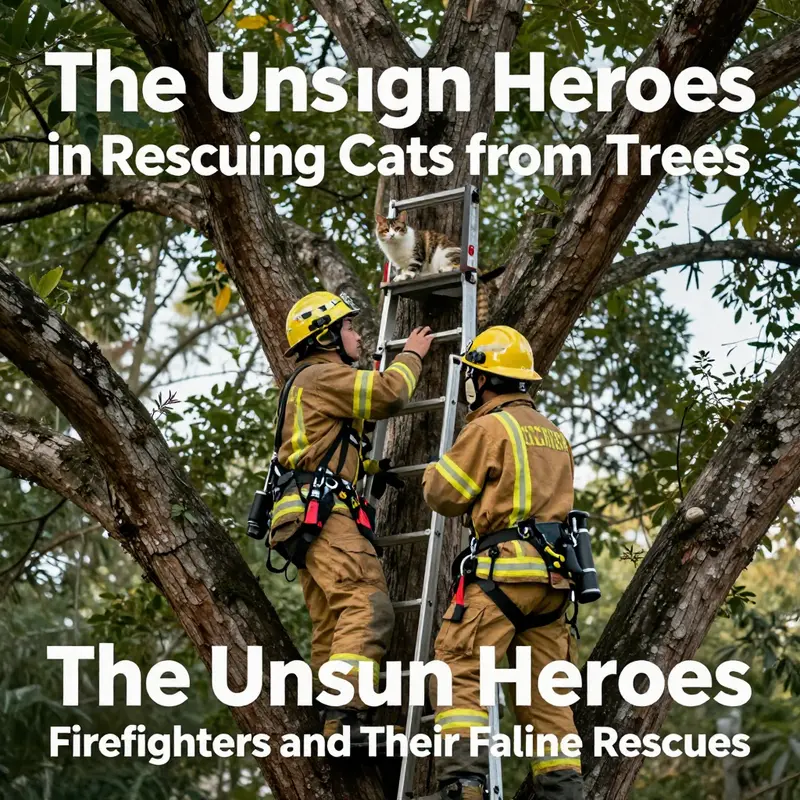
The image of a cat stranded among the higher branches is one that tests more than the strength of a ladder or a hook; it tests the restraint, patience, and empathy that define a successful rescue. Cats perched in trees are a familiar sight in many communities, a reminder that danger in the urban and rural landscape often arrives in small, furry forms. Firefighters arrive not with a dramatic rush but with measured calm, blending practical skill with an understanding of animal psychology. The goal is simple in theory yet demanding in practice: coax the frightened animal to safety while keeping every person involved safe. In real life, the path to that outcome is rarely straightforward and always shaped by the cat in question, the tree that holds it, and the people who answer the call. The challenges begin the moment responders arrive and the cat’s first instinct is to bolt higher up the trunk or to cling to a branch as if the world below were a threat. The cat does not reason with a calm voice or a safety plan; it responds to fear with speed and unpredictability. Climbing trees to reach an animal suspended in a branch is not just a physical feat but a test of restraint as well. The animal’s reflexive need to escape can turn a simple retrieval into a tense standoff. Each movement, each sound, can push the cat deeper into the canopy or coax it toward the rescuers. The reactive nature of felines means that even a passerby who means well may inadvertently escalate the situation by approaching too quickly, making noise, or blocking a retreat. Responders thus enter a delicate space where speed and caution must share the same balance sheet. The first priority is to avoid startling the animal. A soft voice, slow movements, and an opportunity to observe the cat’s own choices often determine the rhythm of the operation. This is not theater; it is a sequence of decisions that hinge on understanding how fear translates into motion. The cat’s decision to move toward or away from a potential threat can open or shut the path to safety. When a cat climbs higher in response to a threat, it is not simply seeking altitude; it is seeking a vantage point from which danger appears distant. Firefighters recognize this push and respond with a blend of technique and empathy. They will often suspend direct approach if the cat seems ready to retreat, instead choosing to create a calm corridor of safety around the area where the animal might descend. In these moments, a small item can become a powerful instrument: food or treats can serve as gentle lures to entice a cat downward. The use of scent-based or food-based cues is less about bribery and more about relaying a nonthreatening signal that the environment below is welcoming and safe. If coaxing fails, responders turn to tools designed for small animal retrieval. Extendable poles with soft nets can reach where a paw cannot, while traps crafted for delicate handling allow responders to cradle a cat without grasping it directly, minimizing trauma and stress. The emphasis is on gentle capture rather than forcing contact. This is where the science of rescue intersects with the art of animal welfare. Physical gear is a means to an ethical end, not a substitute for patience and compassion. In some cases the tree itself may present challenges beyond the reach of standard equipment. The tree’s structure, branch thickness, and the height of the cat can all complicate a straightforward downward path. In城市 environments where trees hide behind power lines or along narrow sidewalks, access becomes a logistical puzzle as much as a mechanical one. When a ladder fails to reach the required height, responders may escalate to higher, more stable platforms or coordinate with professionals who bring specialized climbing gear. The goal remains consistent: to minimize stress and maximize the chance of a safe descent. The interplay between human safety and animal welfare is a constant reminder of why these rescues are viewed as a teamwork-driven discipline. Not every rescue is completed by firefighters alone. In some cases, collaboration with professionals who specialize in tree access becomes invaluable. Experienced tree climbers bring a refined mobility and a different ergonomic approach that can translate into a faster, less dramatic withdrawal of the animal from danger. These specialists can work in urban trees where access is constrained, using technique and the right equipment to reach branches that a traditional firefighting ladder cannot comfortably touch. The inclusion of such experts illustrates a broader truth: a successful cat rescue is rarely a solo performance. It depends on the coordination of roles, the clear communication of intent, and the shared emphasis on the creature’s welfare. The human component of these rescues extends beyond the immediate operation. Public messages from fire departments consistently stress the importance of leaving animal retrieval to trained personnel. The risk to both the animal and the rescuer increases when laypeople attempt their own solutions, such as climbing a tree with improvised gear or trying to coax a cat from a precarious perch without proper equipment and safety measures. Realistic assessments of risk, combined with a steady escalation of equipment and personnel, become a template for safe practice. This is supported by a growing practice of humane deterrents and follow-up education to reduce recurrences. After a rescue, attention often shifts to preventing future incidents. Scent deterrents, along with education about how to maintain safe distances and how to approach a distressed animal in the future, are part of a broader strategy to minimize the need for repeated interventions. The aim is not simply to rescue but to establish conditions under which felines can navigate their environments with less danger. The seasoned responders who perform these tasks are not just technicians; they are stewards of animal welfare. Their preparation includes an understanding that every cat responds differently to stress, that timing is everything, and that the most effective method is the one that preserves the animal’s dignity while restoring it to its home. The narrative of these rescues often points to the value of ongoing professional development. Firefighters continually train to refine their craft and stay in sync with evolving techniques, a process that is illustrated by references to dedicated training resources. For instance, resources like Firefighter Training Tower Dedication offer insights into how teams maintain readiness, practice precision, and plan for complex scenarios that involve height, fear, and delicate handling. The combination of hands on practice and ethical considerations shapes a culture where speed does not trump safety, and speed never compromises compassion. Beyond technique and pace, the experience of cat rescues in trees also raises questions about the human processes around the event. When a cat is stranded, the public stance is to avoid risky improvisations. The rescue paints a broader picture of how communities learn to respond with prudence, patience, and respect for animal life. This narrative echoes in reports from diverse places, including moments when the cat climbs back down on its own or when a rescue takes hours to complete because the animal has found a stubborn perch that requires careful navigation. For those who followed the coverage of such events, these stories reveal a spectrum of outcomes and a shared message: trained teams, equipped with a calm approach, can mitigate danger while preserving the welfare of the animal. The chapters of practice are as important as the outcomes themselves. They offer a template for public education, for the ethos of rescue work, and for the ways in which emergency services connect with the communities they serve. In the end, the act of rescuing a cat from a tree is a microcosm of humane emergency response. It is a reminder that expertise, caution, patience, and empathy can converge to protect life, whether that life purrs softly in a branch or rests safely on the ground. For readers who want to explore how such responses are developed in training and applied under real pressure, the story is a gateway to understanding the broader discipline of rescue work and the continuous effort to balance urgency with welfare. Further context and firsthand reporting on these incidents can be found in the BBC coverage of cat in tree rescues, which highlights the techniques, challenges, and the human elements that shape every successful outcome. https://www.bbc.com/news/uk-england-58294637
When Cats Climb, Professionals Respond: Safety Protocols that Make Firefighters the Best Rescue Option
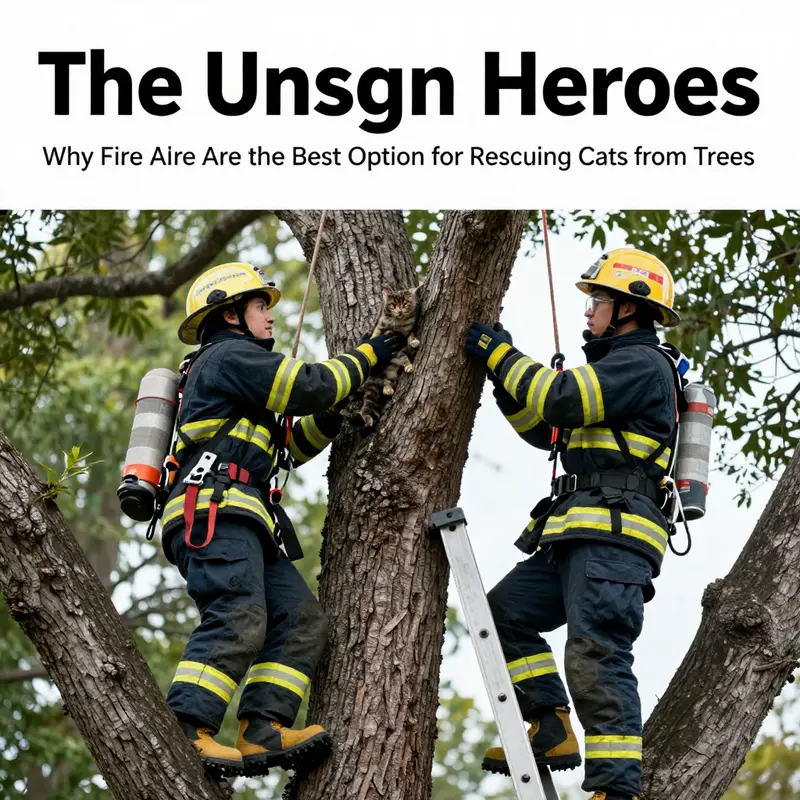
When cats end up stranded high in a tree, the instinct to help can be strong, but the safest path is rarely the quickest. Firefighters bring a deliberate blend of training, equipment, and disciplined procedures that reduce risk for the cat, the rescuer, and bystanders. This is not a matter of bravado; it is a matter of applied science in the field. Across regions, from quiet neighborhoods to busy city streets, these professionals respond to calls about felines perched in branches, then transform a moment of peril into a controlled, low-stress outcome. The routine nature of such rescues belies the careful planning behind every ascent and every wing of the ladder.\n\nConsider the variety of scenarios that shape the work. In March 2019, the San Francisco Fire Department was summoned to retrieve a cat from a telephone pole. The cat, after a tense but brief standoff, found its own way down, which amused the responders yet underscored an important point: not every climb ends in a dramatic save, and not all cats require force to descend. Later, in December 2023, a more intricate operation unfolded in Xiangyang, Hubei Province, where a male cat clung to a tree for about two hours. The responders began with a six meter ladder, then extended to a fifteen meter setup to reach the cat and bring it safely to the ground. These differences illustrate the spectrum of environments, heights, and tree structures firefighters must negotiate. There are even moments when the public attempts to intervene and finds themselves in danger. In Nantong, a man who tried to recover his own cat became stranded on a window ledge, needing rescue, while in Shenmu a woman attempting to assist a cat ended up in distress. Such incidents reinforce the message that professional rescue units exist to manage risk, not to be pushed into risk by well-meaning but untrained hands.\n\nIn this context, the safety protocols that guide professional operations are not mere formalities. Before any movement, a scene is surveyed with a trained eye. The stability of the tree is checked, the cat’s behavior is observed, and any hazards in the surrounding environment are noted—power lines, uneven ground, crowd pressure. The choice of equipment follows strict criteria: an appropriately rated ladder or aerial device, a climbing harness, connectors, and a line system that can be anchored securely to a stable point. The goal is to create a controlled corridor for movement rather than a guesswork ascent. These measures are designed to minimize suffering for the animal, prevent injuries to rescuers, and limit disruption to bystanders. When the approach is planned, the actual ascent becomes a sequence of measured steps rather than a rush to reach the target. A telescoping ladder, a trusted harness, and a tethering plan enable the rescuer to position themselves with minimal motion and maximum control, even when wind or branch movement threatens stability. In a recent international report, a firefighter used a telescoping ladder and a secure harness to retrieve a cat from a 30 foot tree, illustrating how professional equipment and training translate into a successful outcome in difficult contexts. The example also demonstrates the value of calm, precise execution over improvisation.\n\nThe contrast with nonprofessional attempts is sharp. A growing body of evidence shows that when civilians take on the task without formal training, the risks multiply. A study published in the Journal of Urban Animal Management in 2024 found that more than 60 percent of rescues conducted by nonprofessionals resulted in injuries to the rescuer or greater stress and trauma to the animal. The same study highlights the unintended consequences that can arise when enthusiasm overrides technique. A few inexpert attempts end with a frightened cat still perched high in the tree, or a rescuer needing medical attention after a slip or a fall. In other words, speed can become a liability if it substitutes for safe procedure. Firefighters counter this temptation with a culture of safety that starts well before the ladder touches the trunk. They assess the scene, choose the right equipment, rehearse the plan, and then execute with a calm efficiency that comes from training and repetition.\n\nWithin this framework, the public is not excluded from the learning process. Fire departments view cat rescues as part of broader public safety education. They explain why climbs are managed through technical rescue techniques rather than quick improvisation. They emphasize leash lines for the cat when possible, careful positioning to avoid stressing the animal, and the use of a carrier to minimize handling once the cat is on the ground. They also remind people that certain uncertainties—such as the cat slipping or the branch giving way—can shift a routine rescue into a crisis if performed without the proper safeguards. In this sense, the rescue of a cat becomes a lesson in balance: the balance between urgency and patience, between the animal’s fear and the rescuer’s steadiness, and between human impulse and professional protocol. To support ongoing learning, readers can explore resources that highlight the role of training and channel safety. They can visit a resource on Firefighter Training—Tower Dedication for more insight into how discipline and technique shape outcomes in vertical rescues.\n\nBeyond the specifics of equipment and steps, what makes firefighters uniquely suited for these calls is the institutional culture surrounding risk management. The emphasis is on containment and control. Even when the cat seems calm, it’s essential to anticipate flight responses, sudden lurches, or a shift in the branch under load. The dispatcher’s role is to maintain communication with the team, ensuring that the approach and the retrieval align with safety constraints and local regulations regarding operations at height. The chain of command in a rescue keeps decisions deliberate: if environmental conditions shift or if the animal’s behavior changes, the plan is reassessed and adjusted. This ongoing risk assessment is perhaps the most valuable part of professional rescue work. It turns what could be a tense moment into a measured sequence of actions designed to protect life.\n\nThere is also an overarching ethical dimension to these rescues. Firefighters are guardians of both animal welfare and public safety. They intervene to prevent situations that could escalate into dangerous incidents, not to prove a point about courage. They acknowledge the limits of what can be accomplished at height and they act accordingly, knowing when to pause and seek additional resources. This approach often requires collaboration with animal control officers or veterinary teams, who can provide post-rescue care and evaluate any injuries. The result is a coordinated response that treats the cat with care while also recognizing the safety needs of people on the ground. Such coordination helps sustain public trust and contributes to a more informed community that regards professional rescue as the safest path when a cat is stuck in a tree.\n\nThe practical implications of these protocols extend beyond a single incident. For individuals contemplating how to respond when a family pet climbs a tree, the message is clear: do not attempt to improvise a solution from home. The time, skill, and safety culture embedded in professional rescue work are not easily replicated in a garage or backyard setting. The public’s confidence in firefighters stems from the visible competence of a trained team, the reliability of standardized procedures, and the clear outcomes these procedures tend to produce. When a call comes in about a cat stranded in a tree, this confidence is essential to ensuring the quickest possible yet safest resolution. It aligns with the broader objective of preventing unnecessary danger, reduced animal welfare risks, and minimized disruption to the surrounding area. The chain of decisions—risk assessment, equipment selection, controlled ascent, careful handling, and post-rescue care—reads like a compact manual for safety under pressure. And while the stories vary—from a pole in San Francisco to a high branch in Asia—the underlying system remains the same: prepare, protect, and perform with precision.\n\nAn informed citizenry also benefits from accessible, plain language explanations of what makes these operations safe. The more communities understand that trained firefighters apply strict protocols to rescue cats from trees, the less the impulse to intervene without training will prevail. In turn, residents become more likely to rely on emergency services for animal related emergencies and to spread the message that fear of heights should never deter a call for help. In this sense, these rescues function as a bridge between animal welfare and human safety, a reminder that professional responders safeguard both species and spaces.\n\nExternal resource: https://www.theguardian.com/uk-news/2023/mar/15/firefighter-rescues-cat-from-30-foot-tree-in-london
Ladders, Lifelines, and Public Awareness: How Communities Learn to Trust Firefighters in Cat-Tree Rescues
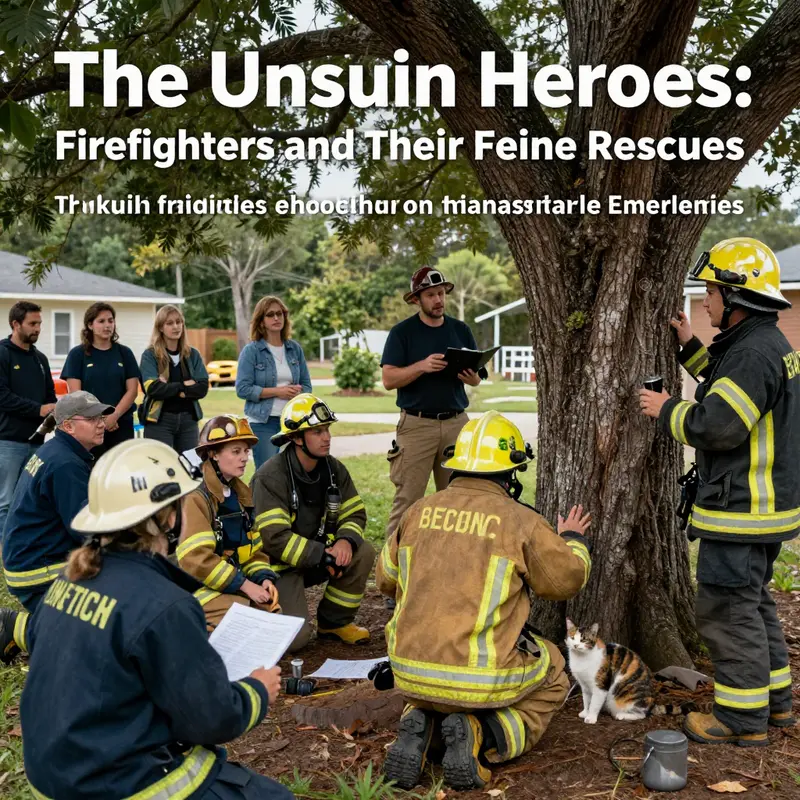
Cats high in trees present a paradox of calm curiosity and sudden risk. The image of a whiskered climber peering down from a branch is familiar in many towns, yet the reality of getting that cat back to safety is far more technical than it appears. Firefighters arrive not as impulsive heroes but as trained responders who coordinate equipment, safety protocols, and patience. The public health logic behind these rescues rests on two pillars: first, that a cat can be distressed and unpredictable when dangling above ground, and second, that a determined person without training can put both themselves and the animal in greater danger. In this light, communities have gradually shifted from parlor-trick talk about “rescuing” cats to a disciplined understanding that professional intervention is the safest path forward. This evolution is not merely procedural; it reflects a broader shift in how people perceive emergencies involving animals and the people who respond to them.
Across cities and countries, reports from seemingly lighthearted incidents also carry a sober undertone. A cat perched on a telephone pole in one region can illustrate the common impulse to improvise. Yet the incident often ends with the cat returning to ground on its own, a small reminder that many felines possess a surprising degree of self-rescue capability. But self-rescue cannot be relied upon, especially when the animal is not just an agile climber but also a potential source of panic for onlookers and a hazard for anyone attempting a risky shortcut. In other cases, the rescue demands a deeper commitment to safety: a long ladder extended toward a height that tests stability; pulleys and harnesses to keep human rescuers secure; and improvised solutions that are quickly tested and adjusted in real time. These cases matter because they reveal that not all tree rescues are equal; some unfold with relative ease, while others require a staged, methodical approach that only trained personnel can execute.
This practical diversity in outcomes feeds into a larger public education narrative. In communities that emphasize preparedness, the message—to call professionals first—reduces the likelihood of injuries and escalations. The logic is simple but powerful: trained responders manage risk, protect bystanders, and use equipment and techniques designed to minimize trauma to the animal. When residents internalize this message, they become part of a safety ecosystem rather than potential complications. A telling local example, though described here in general terms to respect privacy and avoid naming specific businesses, is a municipal approach in which residents are guided to contact a licensed tree service when a cat is stuck. This approach does not merely offload responsibility onto a private contractor; it creates a safer chain of accountability. A trained team brings a structured process to bear: site assessment, risk analysis, the correct choice of equipment and positioning, and a careful retrieval that minimizes fright for the animal and risk for people nearby. Public information campaigns, therefore, do not just tell people what to do; they shape a shared understanding of who is equipped to handle which kind of emergency, and why.
Public engagement in this sphere often extends beyond immediate rescues to broader disaster-awareness education. In some regions, firefighters participate in school programs and community demonstrations that teach practical skills for emergencies, including how to use emergency equipment such as escape ropes and pulleys. Although the core focus in those settings is on human safety, the communicative moment—watching professionals demonstrate safe procedures and answer questions—builds trust in trained responders. Children and adults alike witness how expertise translates into reliable outcomes, and this, in turn, reinforces the principle that professional intervention is not a sign of helplessness, but a rational choice in the face of hazard. The same logic applies when a cat is perched aloft. The visible confidence of a trained team can calm a crowd and reassure a frightened pet owner that the right people are handling the situation.
Within this broader framework, public awareness also must account for the organizational and legal context that shapes how rescues occur. Animal rescue work, especially when it involves liability and welfare considerations, intersects with regulatory landscapes and advocacy debates. In some places, legal requirements and administrative processes create a gap between urgency and access to appropriate resources. Recognizing this, many communities invest in public information platforms that connect residents with certified professionals, clarify what services are offered, and outline what kinds of rescues fall within the scope of trained responders. This alignment—between public information and professional capability—helps reduce panic and encourages a calm, collaborative response when a cat is found in a tree. It also underscores a principle that runs through all emergency response work: never improvise when an experienced team can assess the situation, select the right equipment, and perform a controlled retrieval.
The challenges faced by the organizations that care for animals and the public often mirror the challenges of human emergencies. Large-scale sanctuaries, while vital for animal welfare, operate within a framework of governance, funding, and public scrutiny. Legislative measures intended to improve welfare can simultaneously introduce compliance burdens, making it more difficult for rescue bodies to expand capacity or respond quickly. At the same time, activists who raise awareness about animal welfare sometimes confront online harassment or personal risk. These realities remind us that the ecosystem of rescue is not only about cats suspended in branches but about the people who advocate, educate, and provide pathways to safety. Public awareness campaigns, therefore, serve a dual purpose: they prepare communities for emergencies and they shield those who respond from undue risk by reinforcing the legitimacy and necessity of professional intervention.
So what should communities take away from these patterns? First, the value of early, professional intervention cannot be overstated. A clear, accessible channel to qualified responders—whether through city information pages, official 911-like services, or licensed local contractors—reduces the temptation to improvise in dangerous ways. Second, education is not a one-off event but a continuous process. Public outreach that shows people what responders do, why they do it, and how to seek help builds confidence and cooperation. Third, the culture surrounding these rescues matters. When communities frame animal rescues as a shared responsibility that requires specialized skills, the emphasis shifts from spectacle to safety. This cultural shift also benefits human participants who may be at risk during a retrieval, especially if the cat’s distress prompts sudden or erratic movements.
To reinforce these ideas in a practical way, consider how residents might integrate this knowledge into daily life. If a cat is stuck, the instinct to help is noble, but the safest path is to contact trained responders who can manage fall risk, animal stress, and cornering hazards. Public information campaigns that connect residents to certified services—via city portals or official safety pages—help ensure that help is available when needed. The same campaigns can complement broader disaster-preparedness education, illustrating that the same professional skill set used in human emergencies applies to animal cases as well. The connective thread is clear: communities thrive when people understand the value of trained responders, navigate to reliable resources, and avoid risky attempts that could heighten danger for everyone involved.
As a practical reminder of this principle, residents should look to public information hubs for guidance on how to respond to animal-related emergencies. These resources explain who to contact, what information to share, and how to prepare for a safe and efficient rescue. For further reading on the practical training and public safety approaches that support these outcomes, see the discussion on dedicated safety training resources. fire safety essentials certification training.
External resource: https://www.bremertontown.com/2025/05/11/public-information-education/
Final thoughts
In conclusion, the role of firefighters in rescuing cats from trees symbolizes a blend of compassion and professionalism. Their trained approaches ensure the safety of both the animals and those who may inadvertently put themselves at risk. While many cats possess the ability to rescue themselves, community awareness about these dynamics is crucial. By understanding the complexities and challenges firefighters face during these rescues, public support amplifies the effectiveness of these heroic actions. Encouraging a culture of safety and professionalism can ultimately foster safer outcomes for both animals in distress and the individuals attempting to assist them.