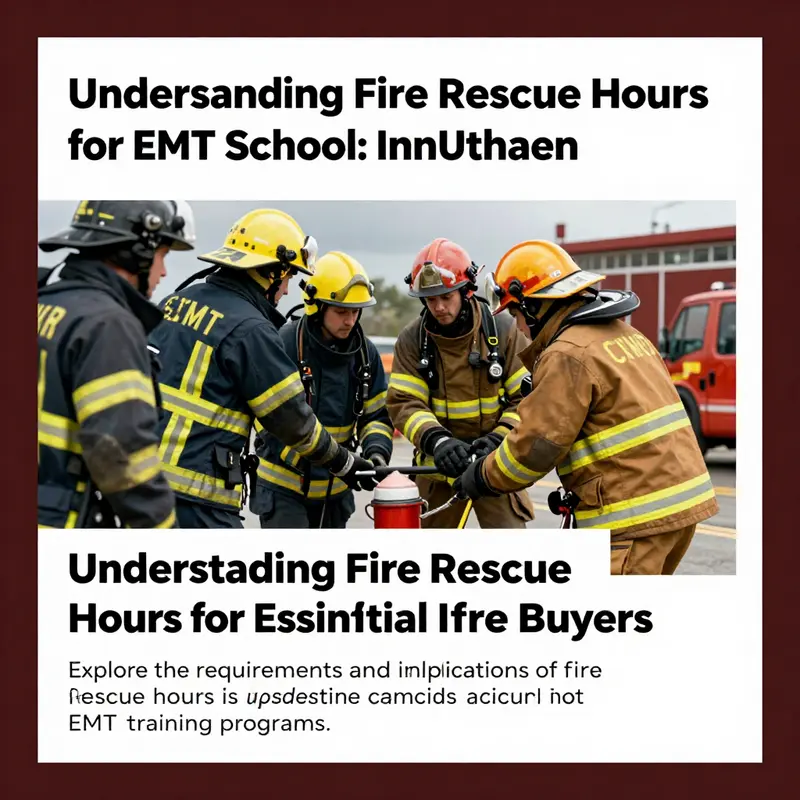
Becoming an Emergency Medical Technician (EMT) is a significant commitment, demanding not only theoretical knowledge but also hands-on experience in real emergency situations. One crucial aspect of EMT training is the number of fire rescue hours required, which can vary across programs and states. This article unpacks the intricate details surrounding fire rescue hours, discussing their importance within EMT school curricula, the variability across different states, and the impact this experience has on training outcomes. Understanding these components is essential for prospective EMT students and stakeholders, including auto dealerships and businesses, who may seek to assist in recruiting qualified EMTs for their communities.
Measuring the Minutes: How Fire-Rescue Hours Shape EMT School and Certification
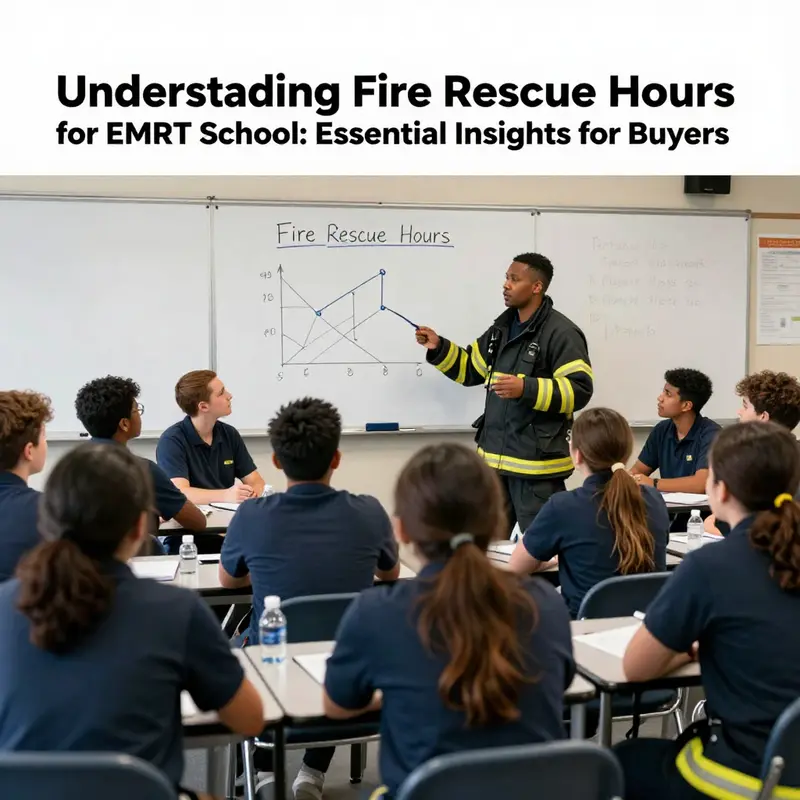
When people ask how many fire-rescue hours are in EMT school, they are touching a moving target. Programs vary by state, by school, and by the partnerships they can forge with local fire and EMS agencies. Yet one constant holds across most curricula: a solid block of hands-on field or clinical experience. In many programs, this experiential core runs in the range of roughly 100 to 150 hours. Those hours are not filler; they are earned on real calls, alongside certified responders, in ambulances, clinics, or fire scenes, under supervision. The objective is practical competence—being able to assess a patient, decide on a plan, and carry it through to safe transport while communicating clearly with teammates and patients.
Beyond the raw hours, there is a question of how that time is scheduled. Some programs embed ride-alongs and field shifts within the weekly timetable, pairing students with paramedics or EMTs for structured experiences. Others require students to complete internships as a separate block, often with a preceptor who signs off on competencies as each milestone is met. Either arrangement aims to mirror the tempo of real emergencies, where pace, accuracy, and teamwork determine outcomes more than textbook theory alone. Students learn to move from the classroom to the back of a moving vehicle without missing steps, to keep a patient at the center of the act of care, and to switch gears from assessment to intervention as the scene evolves.
National standards provide the framework for what counts as adequate exposure, but the exact hour tally that constitutes fulfillment of the field component can differ. The National Highway Traffic Safety Administration and the National Registry of Emergency Medical Technicians describe internship expectations and the conditions under which field experiences may be counted toward certification. They emphasize supervised practice, documented progress, and demonstrated competency rather than a clocked duration alone. Programs may weave internships into the core schedule or assign them as independent experiences, depending on how they partner with local agencies, the availability of ride-alongs, and the capacity of field sites. For students, this means asking precise questions: How many hours will I actually log in this program? How will those hours be supervised and assessed? What counts toward the total required for the NREMT exam? The most reliable answer comes from the school’s EMS coordinator and the state EMS office, supplemented by the official standards on the NREMT site.
The current research landscape confirms a notable point: sources often describe the curriculum in terms of online coursework plus a hands-on skills block at an accredited EMS training center, followed by field experiences. There is not a single universal number for fire-rescue hours published across all EMT curricula. That does not diminish the value of the fire-rescue component; it simply reflects the way training systems adapt to local needs. Students who seek certainty should verify with their program how field time is categorized, logged, and approved, and how it is transferred into the exam eligibility file. It is wise to obtain a written schedule that aligns the field hours with competencies and to request a documented mentor’s signature upon completion of each phase. In practice, the field experience may occur in EMS agencies, in fire departments, or in joint operations that combine medical response with fire-ground procedures, all under a unified supervision model.
Planning for this pathway requires a practical mindset. A prospective EMT student benefits from mapping a realistic calendar that accounts for shifts, clinical days, and the time necessary to study for online modules alongside hands-on practice. The 100- to 150-hour target typically serves as a concrete anchor within a broader curriculum that emphasizes patient assessment, airway management, bleeding control, and transport decisions. It also shapes decisions about pursuing parallel training, such as fire-safety credentials or emergency management certificates, which broaden professional options and deepen understanding of incident scenes. The experience gained through this cross-training helps students appreciate how prehospital care fits into the larger system of care, from bystander first aid to hospital admission.
In the day-to-day reality of EMT training, the fire-rescue environment offers a distinct laboratory. The scene is dynamic; conditions change in seconds, and the team must respond with coordinated actions. Through field time, students observe how triage principles, decision-making under pressure, and effective communication with teammates and patients translate into better outcomes. They also encounter the realities of safety, fatigue, and ethical responsibilities on the front lines. This exposure builds not only technical skill but also the professional judgment that turns knowledge into reliable action. The difference between a patient who improves after transport and one who deteriorates often hinges on the combination of quick assessment, appropriate intervention, and the clarity of the handoff to hospital staff—a sequence that students practice repeatedly during their field hours.
In exploring the catalog of EMT programs, it becomes clear that the journey toward certification is a tapestry of requirements, each thread tied to local practice patterns. Programs that publish clear mappings of field hours, preceptor engagement, and competency milestones help students navigate the path with confidence. When possible, students should seek opportunities that juxtapose urban and rural call experiences, high-acuity scenes with routine transports, to cultivate a well-rounded clinical eye. This breadth matters not only for passing the exam but for performing under pressure in diverse settings. The interweaving of fire-rescue elements with basic prehospital care creates a fuller picture of what it means to respond to emergencies as part of a practiced system of care.
For readers who want to expand their understanding beyond the immediate EMT classroom, there are related avenues of study in fire-rescue training that illuminate how the profession supports broader aims of safety and readiness. An internal resource you can explore is Fire Safety Essentials Certification Training, which offers foundational perspectives on safety principles that underpin emergency response work. This material can help frame the EMT experience within the larger culture of prevention and readiness that characterizes modern fire and rescue services.
As with any regulatory framework, the most trustworthy guidance remains the primary sources. The NHTSA National Standard Curriculum provides the structural blueprint, and the NREMT site outlines the certification pathway and testing prerequisites. By keeping a finger on the pulse of these standards, students can align their expectations with what regulators and employers value most: demonstrated competence, reliable decision-making, and the ability to work as part of a team under pressure. The practical message is simple: while a numeric threshold for fire-rescue hours may vary, the essential outcome is the development of a practiced, dependable EMT who can navigate the tempo of an emergency with calm, clarity, and care. For authoritative details, consult the NREMT site at https://www.nremt.org.
Hour by Hour: How State Rules Shape Fire Rescue Time for EMT Training
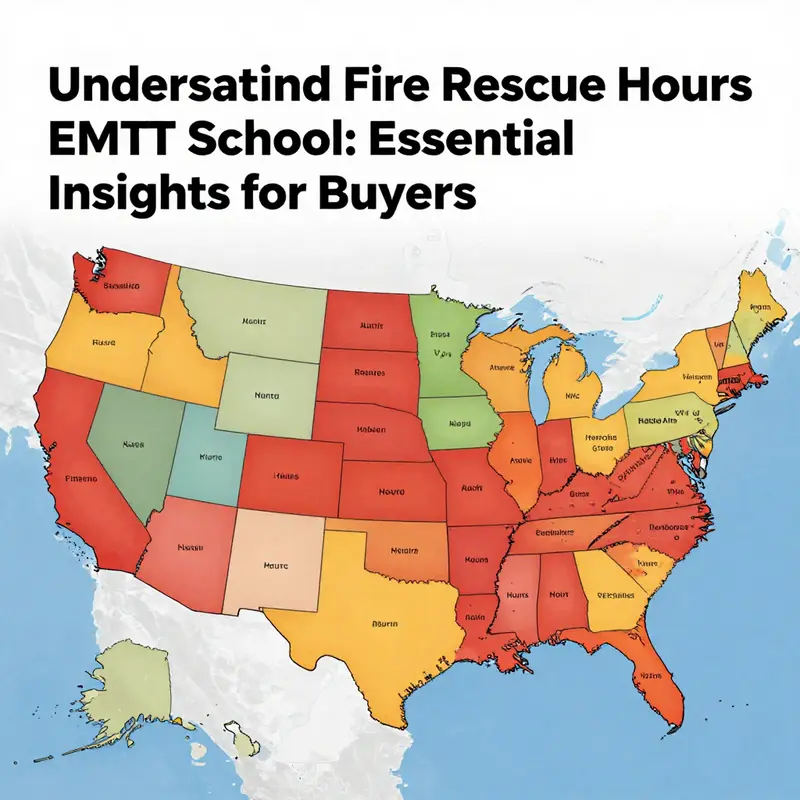
Curiosity about the number of fire rescue hours in EMT schooling often reveals more than a simple tally. It opens a window onto how training is shaped by the places where students learn and work. Across the United States, the hours devoted to field experience and hands-on rescue practice are not identical from state to state. They reflect a broader ecosystem that includes regulatory bodies, the structure of local EMS systems, and the varying demands placed on EMS providers. While national standards exist, the way those standards are translated into concrete hours can look very different depending on where you train. For aspiring EMTs, understanding this landscape is not a distraction from the goal of becoming competent and confident responders—it’s essential to planning a realistic training path that aligns with certification timelines, career goals, and the realities of the communities you intend to serve.
The most immediate driver of hour differences is state regulation. Each state maintains its own scope of practice for EMTs and its own requirements for certification. Some states set a relatively lean floor, often around 100 hours of field or clinical work, while others mandate more than 200 hours. Those numbers are not arbitrary; they echo how states interpret the balance between classroom knowledge and real-world appplication. A state with a broader EMS scope of practice may emphasize extended field internships, as students need to demonstrate proficiency in a wider set of real-life scenarios before they are eligible for certification. Conversely, states with more prescriptive classroom-led curricula may allocate more time to didactic learning, simulation, and assessment, with fewer mandated hours spent in the field. In practice, this means a student in one state might finish the same credential in a semester, while another student could need several additional months to accumulate the required field hours.
Local EMS systems also play a crucial role. The operational fabric—whether a state relies heavily on hospital-based teams, urban 911 response networks, or rural volunteer providers—shapes how field experience fits into EMT education. In dense urban settings, access to a steady stream of real emergencies and supervised field rides can make it easier to meet higher hour requirements. In rural areas, where calls are fewer and longer, programs sometimes integrate more simulation or extended student-led transports to ensure students still graduate with robust hands-on exposure. The consequence is that two students with the same nominal hours may have markedly different exposure to the types of calls they will face on graduation. That variability is not a flaw; it reflects the practical complexities of delivering training that remains relevant across diverse communities and emergency landscapes.
Training standards themselves influence how hours are delivered. Some programs prioritize rapid progression through didactic content, with hours allocated in blocks that can be completed in a single season. Others adopt a more modular approach, weaving field experiences throughout the program and requiring students to earn hours in shorter increments under direct supervision. The net effect is a spectrum: at one end, programs that push toward the minimum hours with a strong emphasis on skill checks and protocols; at the other, programs that embed field work as a core continuous thread, building experiential competence through repeated encounters with evolving patient needs. This continuum helps explain why two graduates of different schools, both certified EMTs, can have distinct rhythms in their educational journeys even when they share a mutual credential on a transcript. The important takeaway for potential students is to look beyond the number alone and examine how a program integrates field time with didactic learning and supervised practice.
From a practical standpoint, the hour differences translate into different pacing and scheduling realities. For students aiming to complete certification quickly, a program that leans toward the lower end of the hour spectrum may be attractive. But speed should be balanced against the quality and intensity of field experiences. Programs that offer more hours may appear slower, yet they can yield deeper familiarity with patient assessment, decision-making under pressure, and the logistics of patient transport in varied environments. These experiences matter when it comes to confidence during certification exams and, more importantly, on the street, where the stakes are real and the margin for error narrow. In this sense, the hours count less as a mere logbook entry and more as a scaffold supporting mature clinical judgment, rapid triage, and effective teamwork under the pressure of time-critical decisions.
The question of hours is also intertwined with outcomes. Some regional data hint that the West region, with its tendency toward more field experience in many programs, has higher pass rates on national certification exams for EMTs. While this observation is not a causal verdict on training quality, it aligns with a broader idea: deliberate, hands-on practice under supervision tends to bolster both knowledge retention and procedural fluency. It reinforces the notion that field time is not simply “extra” but an essential component of competence. Of course, exam success is not the only measure of a strong EMT program. Real-world readiness—how a clinician translates classroom learning to patient-centered care in the chaos of a multi-casualty incident or a home-based emergency—depends on the depth and quality of field exposure, the caliber of mentors, and the program’s ability to simulate authentic scenarios that test critical thinking, communication, and teamwork under pressure.
For prospective students, the message is clear: before enrolling, verify the specific hour requirements with your state EMS office and your chosen program, and ask how those hours are delivered. Some schools publish a breakdown of hours by category—clinical rotations, ambulance field internships, ride-alongs, and simulation labs—and some provide a calendar that shows how field experience is integrated across the curriculum. If you plan to relocate or pursue certification in a different state, also check how hours transfer or adapt to that jurisdiction’s rules. The consistency you seek—recognition, portability of your credential, and a coherent timeline—depends on understanding this regulatory mosaic and choosing a path that aligns with your learning style and career ambitions. A holistic view helps avoid last-minute surprises when it is time to sit for the national exam.
For readers mapping their path, a resource that can illuminate practical next steps is a trusted explainer on fire safety and training basics. It offers broader context for how formal education interfaces with hands-on readiness and ongoing professional development. fire-safety essentials certification training provides a gateway to understand how foundational certifications complement EMT training and how continuing education supports career resilience in the fire and EMS service. While the hours required in EMT programs will continue to vary, the underlying aim remains constant: to create responders who can assess, decide, act, and reassess with competence, compassion, and composure in the flow of real emergencies.
Ultimately, no chapter of EMT education exists in a vacuum. The hours, the supervision, the patient encounters, and the reflective learning that follows all converge to shape a practitioner’s capability and confidence. If you read the hour counts as a rigid gate, you miss the larger design: training that equips responders to navigate rapidly changing scenes, communicate clearly with teammates and patients, and make sound decisions under pressure. In this light, the numbers are a guide, not a verdict. They prompt questions about what you want to experience in training, how you learn best under real-world conditions, and how your chosen program can help you emerge not only certified but ready to save lives. For authoritative details on certification requirements and the official standards you must meet, consult the National Registry of Emergency Medical Technicians (NREMT) website: https://www.nremt.org.
Front-Line Experience, Front-Row Results: How Fire and Rescue Exposure Elevates EMT Training
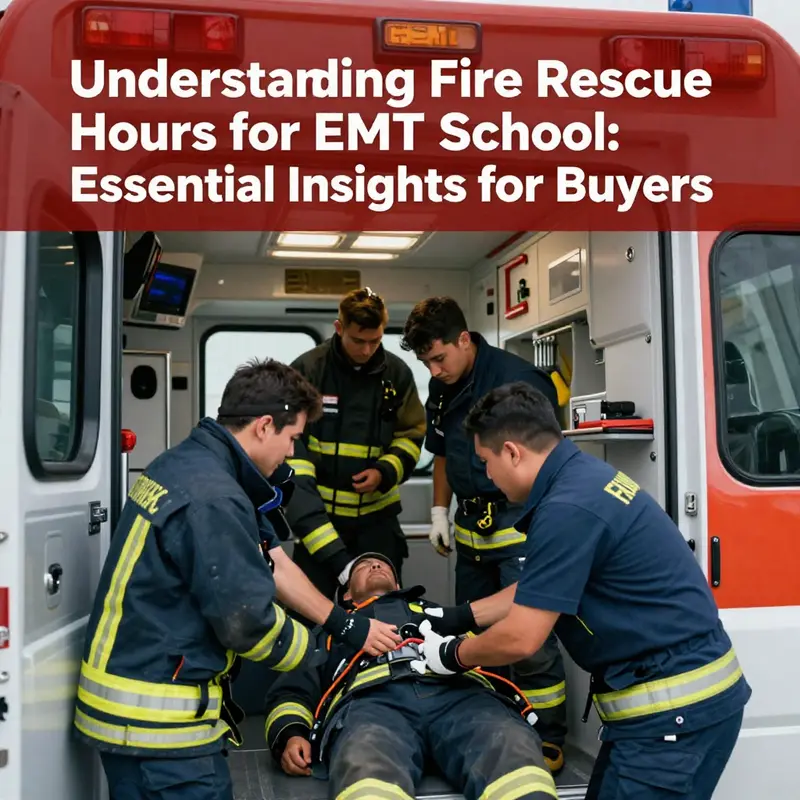
When students ask how many fire rescue hours are needed to complete EMT school, they often hear figures that feel like a moving target. The standard message is that many programs require a substantial hands-on component, typically in the range of 100 to 150 hours of clinical or field experience. Those hours are not mere fill-ins on a ledger; they are the scaffolding that turns classroom knowledge into actionable competence. In practice, the variation is real. Programs differ in how they allocate time to ambulance rotations, ride-alongs with fire and rescue units, and practicums in emergency departments or community-paramedic settings. State regulations and institutional policies shape the exact minimums, which is why prospective students are advised to check with their school and the state EMS office for location-specific requirements. The broad point remains consistent: hours matter, but the quality and intensity of those hours matter even more. The field experience is where theory is stress-tested, where nerves harden into muscle memory, and where the patient’s life can hinge on split-second decisions.
The impact of that immersive, hands-on exposure goes beyond the number of hours logged. It is the difference between performing in a controlled classroom drill and delivering care in the chaos of a real emergency. In high-stress environments, EMT students must rapidly translate assessment findings into a plan, communicate clearly with teammates and dispatch, and implement interventions that can change outcomes in minutes. Fire and rescue settings amplify this pressure, offering a laboratory where incidents unfold with unpredictable tempo and stakes. When students practice airway management, bleeding control, triage, and transport under the watchful eyes of seasoned paramedics, they gain more than skill; they gain a mode of operating under pressure. These experiences cultivate situational awareness, confidence, and the nuanced judgment that no textbook can fully impart.
A powerful exemplar of this principle comes from a real-world incident that underscores how well-prepared learners respond when time is scarce and the margin for error is slim. At UC Davis in 2024, three student employees—Nick Tyler, Itzel Del Rio, and Abigail Lynch—encountered a sudden cardiac arrest during a workout. They had recently updated their CPR and automated external defibrillator (AED) skills, and that refresher translated into immediate, decisive action. They assessed the patient, initiated chest compressions, retrieved and used an AED, and coordinated with emergency services to guide the patient through transport and hand-off. Their actions did not occur in isolation; they reflected a cultivated habit of rapid assessment, disciplined teamwork, and precise execution that comes from hours spent in realistic, high-stakes scenarios. This incident illustrates more than a successful outcome; it demonstrates a pattern in which immersive training becomes a reliable predictor of performance in the field.
The broader literature and professional practice echo this narrative. The National Highway Traffic Safety Administration (NHTSA) and the National Registry of Emergency Medical Technicians (NREMT) set standards that include field internship components, recognizing that the best preparation for EMS duties involves real encounters rather than simulations alone. Programs that integrate or require field internships tend to report improvements in response times, accuracy of procedures, and confidence in decision-making under pressure. In other words, the hours spent outside the classroom are not decorative; they are formative. They help students convert textbook protocols into practiced habits—habits that survive the adrenaline surge of an actual emergency. The UC Davis case aligns with this understanding, and the takeaway is not merely about the people involved but about the learner population as a whole: exposure to fire and rescue operations during training strengthens the proficiency and composure that EMS work demands.
Even as programs celebrate the benefits of immersive experience, there is a practical cadence to how hours are scheduled and tracked. For some institutions, field hours are threaded into the regular curriculum, with supervised rides and stand-alone practice shifts designed to mirror real-world exposure. Others require students to arrange and document external hours under supervision, adding a layer of independence and professional accountability. In either configuration, the central aim remains constant: to align practice with the realities that EMTs will face in the field. This alignment is why a robust, scenario-based approach to training matters so much. Beyond the raw hours, it is the deliberate exposure to variety—cardiac events, respiratory emergencies, trauma cases, and multi-patient incidents—that accelerates capability. When students repeatedly encounter plausible but challenging scenarios, their decision loops shorten, their technical repertoire broadens, and their teamwork becomes second nature.
The UC Davis incident also invites reflection on how training standards translate into measurable outcomes. The National University Emergency Medical Services Foundation notes that institutions recognized for integrating realistic fire and rescue training contribute to measurable improvements in performance metrics. High-fidelity drills, smoke-evacuation practice, equipment handling, and simulated trauma responses all sharpen situational awareness and muscle memory. This convergence of hands-on practice and reflective learning is what makes the hours spent in training meaningful. It is not merely the quantity of time but the quality and density of practice—how often learners are pushed to the edge of their competence and then guided back with feedback and coaching—that determines success rates in real emergencies. The UC Davis story, paired with the broader standards framework, suggests a practical blueprint for robust EMT education: weave intense, realistic scenarios throughout the curriculum so learners move fluidly from classroom concepts to on-scene competence.
In recognizing the value of fire and rescue experience, prospective students can use these insights to shape their own paths. When evaluating EMT programs, look beyond the listed hour totals. Probe how the hours are earned and what kinds of exercises anchor practical work. Seek programs that foreground scenario-based training—drills that replicate smoke-filled rooms or vehicle extrications, team-based decision-making exercises, and real-time communication with dispatch and receiving facilities. Ask about the integration of CPR, AED, and airway management refreshers within ongoing field exposure, because the timing and relevance of those updates matter as much as the updates themselves. It is also prudent to explore partnerships with local fire departments or EMS agencies that routinely host ride-alongs and clinical rotations. Such partnerships can accelerate learning by offering diverse case loads, broader exposure to different EMS cultures, and more opportunities to observe and participate in coordinated response efforts. The payoff can be a tangible reduction in response times and a higher degree of accuracy under pressure, which are the hallmarks of a well-prepared EMT.
For readers seeking a practical thread to follow, the journey into EMT readiness can be framed by a resource that highlights the broader implications of professional preparation. The article on the vital role of fire safety certificates in your career journey provides a useful perspective on how credentialing and continuous training feed into real-world readiness. The discussion emphasizes that foundational certifications are not gatekeeping barriers but stepping-stones that support ongoing competence and timely progression through the ladders of EMS careers. See more here: the vital role of fire safety certificates in your career journey.
In sum, the trajectory from classroom theory to field performance in EMT work is not linear but braided. Hours are a necessary scaffold, yet the true engine is the quality of experiential learning—the kind that compresses time and broadens capability by forcing learners to act decisively in unpredictability. The UC Davis case, the standards set by NHTSA and NREMT, and the ongoing evolution of fire and rescue training together underscore a clear truth: immersive, realistic, and well-supported field exposure transforms EMT students into capable responders who can protect life when every second counts. For those pursuing the path, the implication is straightforward. Seek programs that foreground meaningful practice, prioritize high-fidelity, scenario-driven drills, and cultivate a learning culture where students learn to translate knowledge into life-saving action under pressure. As the chapters of EMT education unfold, it is the front-line experience that often writes the outcomes—and those outcomes, in turn, save lives. For further reading on live-case outcomes and training implications, you can consult the UC Davis report referenced in professional summaries: https://www.ucdavis.edu/news/stories/2025/12/students-save-life-cpr-aed.
Bridging Fire Rescue Practice and EMT Knowledge: Real-World Hours That Shape Ready EMTs
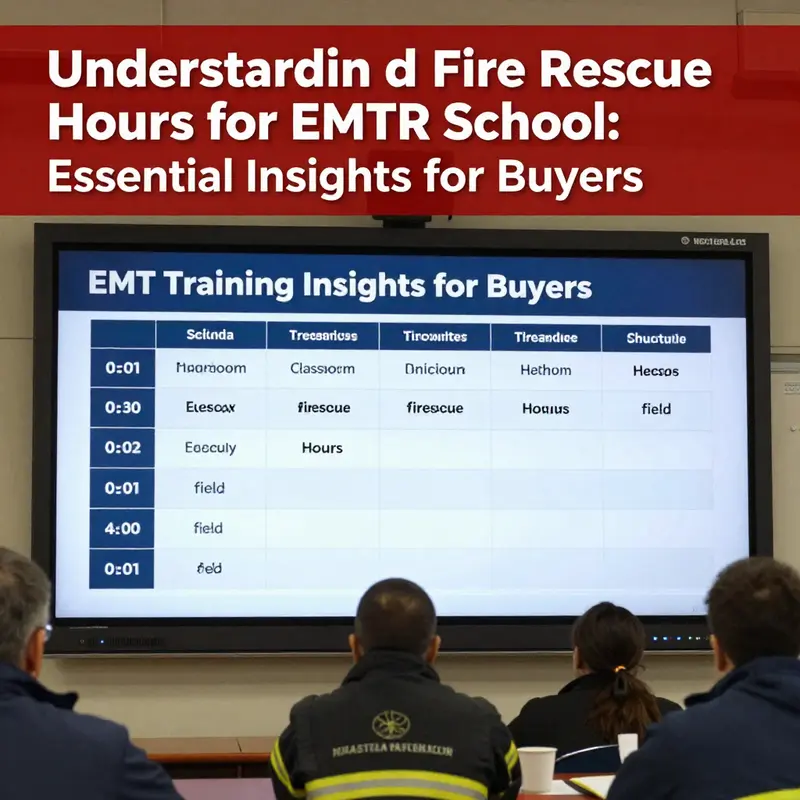
A growing trend in EMT programs is the deliberate integration of fire rescue hours into the curriculum. This collaboration places students in the environments where medical emergencies and rescue operations collide. It helps them observe the full arc of an incident—dispatch, scene assessment, stabilization, possible extrication, and coordinated transport. In practice, students move beyond classroom skills and learn to function on dynamic scenes with hazards and time pressure. The value of this immersion goes beyond technical proficiency; it builds professional resilience, teamwork, and situational judgment. Programs like HEART provide a framework that includes a minimum number of supervised field training hours with local fire rescue units. While reported hours vary by program, the emphasis remains on meaningful exposure that reinforces assessment, decision-making, and communications with multi-disciplinary teams. For students, these hours should cultivate the ability to translate observation into action and to integrate medical care with on-scene priorities. National guidelines and accreditation standards support cross-training and interagency collaboration, but exact hour requirements are decided at the program level and in coordination with state EMS offices. Interested readers should consult their program handbooks and national standards for the latest expectations and opportunities for integrated training.
The Real Hours Behind EMT School: Understanding Fire Rescue Exposure and Certification Standards
When people ask how many fire rescue hours are required for EMT school, the straightforward answer rarely fits on a single line. The truth is more nuanced: hour requirements vary widely by program, by state regulations, and by the institution that delivers the training. What remains relatively constant is the emphasis on hands-on experience—practice in evaluating patients, delivering basic interventions, and coordinating patient transport in real-world settings. In many programs, a substantial portion of the curriculum is built around clinical and field hours, designed to move a learner from textbook knowledge to capable decision-making in the field. A typical program might require roughly 100 to 150 hours of hands-on clinical or field experience. During these hours, students often work alongside certified EMTs or paramedics in ambulances, on fire scenes, or within emergency response teams. They gain exposure to patient assessment, airway management, hemorrhage control, patient packaging, and the legal and ethical dimensions of EMS care in dynamic environments. These hours are not arbitrary add-ons; they are the bridge between classroom instruction and the competence necessary to function under real pressure, where every second counts and a misstep can change a life trajectory.
Yet, the practical hours are not a universal fixed number. Programs weave these experiences into the fabric of the course in different ways. Some push the hands-on elements into an integrated schedule, letting students accumulate hours as part of routine clinical shifts or simulated EMS calls. Others require students to complete the field internship as an independent block, supervised by experienced mentors, after they have completed the core online coursework and prerequisite skills labs. This variability means that a prospective student must look beyond the advertised total hours and examine how those hours are structured. Are the field rotations compliant with local or state EMS guidelines? Do they provide exposure to a broad range of scenarios—from low-acuity calls to high-stress cardiac events or trauma scenes? These questions matter because the quality and breadth of field experiences are as important as the quantity of hours.
At the national level, the landscape is shaped by established standards that influence EMS education, even if they do not always dictate a single, uniform hour count for admission into EMT programs. The National Highway Traffic Safety Administration (NHTSA) and the National Registry of Emergency Medical Technicians (NREMT) set frameworks that touch on field internships and practical competencies. In practice, many programs align their curriculum with these frameworks, ensuring students complete supervised field exposure and a portfolio of skills, patient contact hours, and clinical evaluations that demonstrate readiness for certification. But the crucial point is that the official admission criteria published by the NREMT do not prescribe a specific number of fire rescue hours required before enrolling in an EMT course. Instead, the NREMT’s certification standards center on the completion of approved online coursework and an accredited, hands-on skills program. In other words, the pathway to certification is defined by completing the education and the practical skill components, not by accumulating a fixed pre-admission tally of firefighting or rescue hours.
This distinction matters for students who arrive thinking they must amass a certain boilerplate of rescue time before they can even begin an EMT program. In reality, the emphasis is on meeting the program’s own prerequisites and course milestones. Some learners come from fire departments or rescue squads and bring a wealth of field exposure with them; others come straight from high school or college with little hands-on EMS experience. The common thread is that what you do with the hours matters more than the hours themselves. Programs often value evidence of patient-centered practice, the ability to communicate clearly with teammates and patients, and incident-based problem-solving skills as much as the mere count of shifts completed. Consequently, when planning a path toward EMT certification, it’s essential to consult the specific EMT school or the state EMS office to confirm exactly what hours are required, how they are counted, and what supervision will look like.
The practical implication is that a prospective student should begin with a careful map of options and requirements. It’s wise to contact the EMS education office at the program you’re considering and ask for a detailed breakdown of how many hours are allocated to clinical practice, how they’re documented, and which sites qualify as approved training environments. In many cases, schools will offer a blend of campus-based labs, ride-alongs, and hospital-based practice that collectively fulfill the hands-on hour requirement. If your aim is to enter a cohort quickly, you may prefer a program that integrates field hours into the early weeks of the curriculum, allowing time to apply what you’ve learned in class to real emergencies under direct supervision. If your schedule favors flexibility, you may opt for a program that permits independent completion of field hours under a designated mentor’s supervision. Either way, the key is clarity: know precisely what is expected, how hours are counted, and what support systems exist for completing them efficiently and safely.
In discussing preparation, it’s important to mention a recent development that can affect timing and planning for learners who explore online pathways. There is a well-known online course created by a major health sciences institution that has historically served prospective EMTs. However, as of June 1, 2025, learners registering for that Coursera-based course may find that it no longer grants NREMT certification qualification. The program has undergone updates, and the new version may differ in ways that affect eligibility for certification through that route. For anyone considering this online option, reaching out for current information is prudent. In particular, those interested should consider contacting the program administrators at [email protected] to learn about the latest version and how it integrates with the broader certification pathway. This caution underscores a broader truth: online offerings can evolve, and certification requirements can shift with updates in standards, so always verify current status with the program and the NREMT to avoid last-minute surprises.
With this context in mind, the practical takeaway is clear. The answer to how many fire rescue hours are required for EMT school is not a single figure but a reflection of the program’s design, state rules, and the dynamic standards that govern EMS education. NREMT’s published criteria focus on completing approved education and hands-on training. They do not mandate a fixed pre-admission rescue-hours tally. Your best approach is to examine the exact requirements of the EMT course you intend to enroll in, confirm the state’s EMS office guidelines, and understand how field hours will be scheduled and supervised. When you’re assembling your plan, consider reserving time for a broad range of experiences that push you to observe and participate in diverse scenes—calls with varying severity, patient ages, and rescue challenges. Such breadth, more than sheer hours, strengthens readiness for certification and practical field performance. In the journey from learner to credentialed EMT, the hours you spend in the field should be purposeful, guided, and aligned with the competencies that will most matter when you face the unexpected.
For learners seeking a practical resource aligned with the broader culture of fire and rescue training, there is a widely relevant reference on foundational safety and certification training that many find helpful as a companion to EMT coursework. It’s a resource that emphasizes core safety principles and essential certification steps as you navigate your path toward certification. You can explore it here: fire safety essentials certification training.
In closing, if you want precise figures for a specific program, reach out directly to the program’s admissions or EMS education office. If you need authoritative standards for certification, consult the official NREMT materials and the state EMS office for periodical updates. The landscape is practical and walkable when you approach it with a clear understanding of how hours fit into a comprehensive training plan. External resource: https://www.nremt.org
Final thoughts
In summary, understanding the fire rescue hours required for EMT school is vital for aspiring EMTs and stakeholders in the emergency medical field. These hours are not merely a curriculum requirement; they are a critical component that enhances the practical training experience, ensuring that new EMTs are well-prepared to handle real emergencies. With significant variability across states and integration in various programs, it’s paramount for prospective students and organizations to stay informed about the specific requirements relevant to their location. As the demand for qualified emergency medical personnel continues to rise, being knowledgeable about training prerequisites positions buyers and partners to better support the overall mission of emergency medical services.