
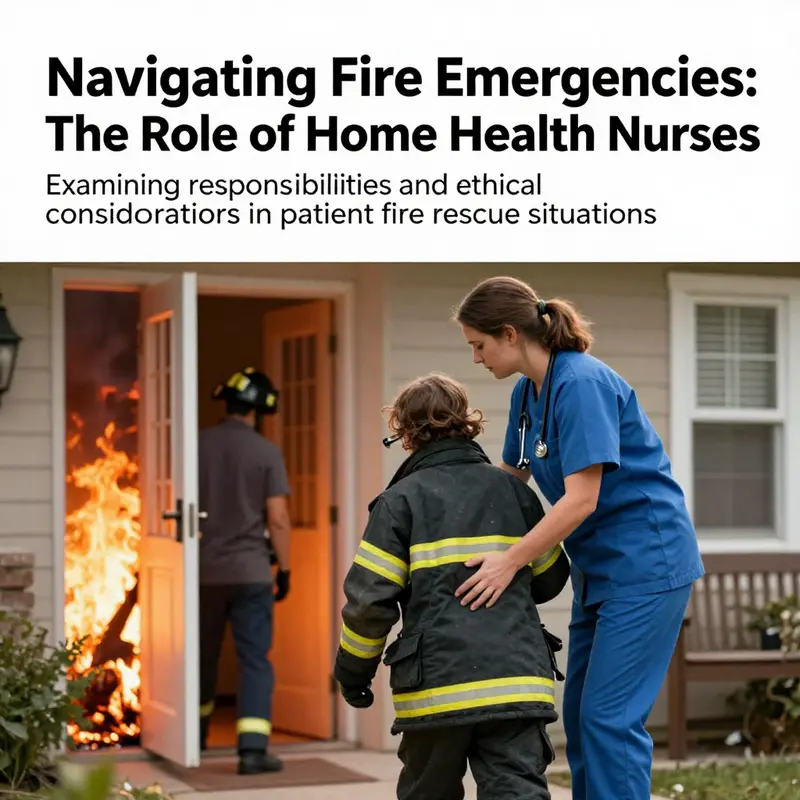
Home health nurses stand at the intersection of compassionate patient care and emergency preparedness. In fire emergencies, the question arises: should they attempt to rescue patients from danger? This complex scenario requires a thorough understanding of their responsibilities, safety protocols, and ethical considerations, as well as best practices for emergency response. Each chapter will illuminate these facets, enabling healthcare professionals to navigate the precarious balance between duty and personal safety, ultimately guiding them in making informed decisions during life-threatening situations.
Duty, Danger, and Discretion: Navigating Fire Emergencies in Home Health Care
A spark trips the quiet morning of a home visit, and the familiar sounds of the patient’s breathing tube or monitored vitals are suddenly overlaid by the crackle of flames and the rising smell of smoke. In that moment, a home health nurse faces a test that sits at the heart of professional practice: how to act decisively for a patient’s safety without compromising one’s own life. The question—should a home health nurse help rescue a patient from fire?—is not easily answered with a single rule. The field demands both clinical acumen and a careful calculus of risk. What unfolds in those minutes is a convergence of training, ethics, institutional policy, and the harsh reality of the environment in which care is delivered. The chapter that follows does not pretend to resolve every scenario the nurse might encounter. Instead, it offers a cohesive, nuanced understanding of how emergency response is navigated in a home health setting, where the patient often depends on the nurse for essential support while the surrounding space may be unpredictable, crowded, and dangerous.
To begin, it is essential to acknowledge the spectrum of guidance that exists around rescue during a fire. On one end, there is a body of professional opinion and emergency preparedness guidance that emphasizes self-safety as the absolute first action. In practice, this means that a nurse must not enter areas where flames, heat, or smoke would place the nurse at unreasonable risk. On the other end, there are scenarios described in emergency guidelines where rescuing a totally dependent patient can be a rational, life-preserving act if it can be done quickly and without compromising safety. Between these poles lies a pragmatic middle: the nurse acts if and only if the risk to both patient and caregiver remains manageable, and the patient’s condition is such that evacuation can be accomplished with minimal delay and effort. This layered approach mirrors the reality of home care, where every situation is different and where the nurse’s responsibilities must be weighed against the immediate danger and the presence of other responders.
Consider the practical implications of this approach. The nurse’s first responsibility, even before the fire is fully understood, is safety. The environment may involve stairs, narrow hallways, or clutter that complicates movement. A patient who is immobile or semi-ambulatory cannot simply walk out of a burning residence; they may require assistance with transfer techniques or the use of a device that the nurse must maneuver while avoiding further harm. In such moments, the nurse must quickly decide whether a brief, coordinated evacuation is possible. If fire proximity, heat, or smoke makes a direct exit unsafe, the prudent choice is to emphasize shielding the patient and preparing for arrival of professional firefighters or other rescue services. The decision is not a failure of compassion; it is a disciplined exercise in professional judgment aimed at reducing harm. The nurse’s obligation then shifts to calling emergency services with precise location details, patient needs, and any special considerations—such as a patient’s implanted devices, oxygen requirements, or mobility limitations—and guiding the patient through steps to stay as safe as possible while help is on the way.
In the moments of a fire, the nurse’s actions are guided by a combination of situational assessment, established protocols, and the patient’s care plan. Assessment begins with a rapid but thorough sweep of the environment: where is the fire, where is the patient in relation to the danger, what exits are clearly accessible, and what obstacles exist that could hinder movement? The assessment must also consider the patient’s condition: is the patient conscious and oriented, can they follow simple commands, and what medical equipment is in use or requires continuous attention? These questions operate in a dynamic context where the fire’s path may shift, smoke may obscure visibility, and the safest route may change within seconds. Given that reality, the nurse prioritizes life-saving actions, with evacuation as the central objective when it can be achieved safely. The evacuation plan is not improvised on the spot alone; it is informed by the patient’s history, the home layout, and preexisting agreement with the patient and family about the preferred means of transfer during emergencies. It may involve moving the patient to an exit corridor, positioning them to minimize respiratory exposure to smoke, or, in the most favorable circumstances, guiding the patient toward a clear exit while staying within the nurse’s own safety limits.
However, the capacity to evacuate safely is not an entitlement, but a condition that must be verified in the moment. The nurse’s clinical judgment is the instrument that translates knowledge into action. It requires experience in body mechanics, patient handling, and the recognition of when a move is too risky. The same clinical judgment that guides routine care—when to adjust a medication schedule, how to respond to a sudden change in vital signs, or how to manage pain—must now operate under the stress of an active hazard. The nurse must recognize when the patient’s ability to participate in self-evacuation is limited and when the patient’s behavior or vital signs indicate compromise. In such cases, simple, rapid actions—calling for help, keeping the patient calm, ensuring a clear route to safety, and protecting the patient from further injury—can be the difference between a successful evacuation and a tragic outcome.
Communication becomes essential in such high-stakes moments. The nurse must maintain clear, concise updates to the emergency dispatcher, providing exact location, patient status, and any devices that may influence the response. The nurse also acts as a lifeline for the patient, offering step-by-step guidance that can stabilize the patient’s anxiety and prevent panic from undermining the evacuation effort. The social and emotional dimensions of care do not vanish in an emergency; they intensify. A patient who trusts the nurse may stay calmer and cooperate more readily, while a panicked or frightened patient may become uncooperative or physically resistant. The nurse’s ability to convey calm reassurance, coupled with practical instruction, turns clinical action into a coordinated, efficient response.
After the immediate danger has passed, the nurse’s responsibilities shift again to post-incident care. The psychological impact of a fire can be profound, and patients may experience continued distress, sleep disturbances, or heightened anxiety. The nurse must monitor for signs of shock, thermal injury, or respiratory complications and facilitate medical follow-up as needed. Documentation becomes crucial: what happened, what actions were taken, what risk factors were present, and what adjustments to the care plan are necessary now that the patient and home environment have experienced a fire event. The goal is not only to respond in the moment but also to learn from the incident and strengthen future preparedness. This includes reviewing emergency protocols with the patient and family, reinforcing evacuation routes, and ensuring that emergency equipment and contact information remain accessible and up to date.
The ethical frame for this critical work is not an abstract discussion but a practical decision matrix. The American Nurses Association has long emphasized that ethical decision-making in emergencies requires balancing patient safety with the nurse’s obligation to personal safety. In practice, that means personal safety takes precedence when a rescue attempt would expose the nurse to significant harm. Yet there are circumstances where the line between safety and rescue blurs—specifically when the patient’s dependence is total and a quick, uncomplicated move toward safety is possible. In those moments, the nurse’s professional duty to protect the patient remains paramount, but it must be exercised within the boundaries of what is safe for both patient and nurse. Ethical decision-making, then, becomes a matter of weighing competing duties in real time, guided by established policies and the overarching aim of minimizing harm.
Training and preparation are not luxuries in home health care; they are foundations for sound action under pressure. Ongoing education in fire safety and emergency response builds the reflexes that allow the nurse to act decisively rather than hesitating at the threshold of danger. This is not a call to heroic risk-taking; it is a call to informed, prudent action. For nurses, the value of preparedness extends beyond the moment of crisis. It shapes daily practice by embedding safety planning into routine visits, ensuring that each patient’s evacuation plan is clear, rehearsed, and aligned with the patient’s abilities. It also means partnering with families to create a home environment that supports safe egress, removes tripping hazards, and ensures that essential devices do not become obstacles in an emergency. The goal is to create a care setting where a fire may occur, but the likelihood of severe harm to patient or nurse is reduced because everyone has rehearsed roles and confidence in the plan.
The role of training is reinforced by practical resources that help nurses translate theory into action. For instance, ongoing fire-safety education and certification training provide the concrete steps and techniques needed for safe patient movement, correct body mechanics, and effective communication with both patients and emergency responders. Such training can sharpen an otherwise ambiguous moment into a sequence of purposeful actions. Within the broader literature on emergency preparedness for home healthcare providers, these competencies are highlighted as essential to protecting patient welfare while maintaining the nurse’s own safety. While no single protocol can anticipate every circumstance, a well-trained nurse who understands when to engage in a rescue and when to defer to professional responders stands a greater chance of preserving life and mitigating harm when disaster strikes.
In weighing the realities of the home health setting, it is helpful to anchor the discussion in the practicalities of most residence types. A small apartment, a single-family home, or a multiunit dwelling each presents unique challenges. A staircase may be a barrier; a hallway may restrict movement; a room may contain oxygen tubing or ventilator equipment that complicates evacuation. The nurse’s action, therefore, is not a blanket directive to rescue but an adaptive response to the environment and the patient’s needs. A quick, orderly exit may be achieved through a planned two-person lift, a sturdy transfer to a chair by the exit path, or guiding the patient to a safer area and sheltering them while help is summoned. In every scenario, the nurse should coordinate with the fire service upon arrival, providing a clear handoff of patient status, the patient’s known medical history, and any devices or medications that require ongoing attention. The aim is a seamless transition from home care to professional emergency care, ensuring continuity of medical support even as the care setting shifts from the patient’s home to the hospital or a shelter.
One practical thread that runs through these considerations is the importance of clear, patient-centered planning in advance. When care plans are developed with the patient and family, the home becomes a safer space because everyone knows the roles to play in an emergency. The nurse’s responsibility expands beyond routine visits to include collaborative emergency planning, which can reduce the uncertainty that otherwise accompanies a fire. This planning includes identifying the patient’s most vulnerable moments, rehearsing steps of evacuation, and ensuring that essential elements—such as vital information about medications, allergies, oxygen needs, and mobility limits—are readily available in a format that can be shared with responders. It also means clarifying the boundaries of the nurse’s role during an emergency and ensuring that the patient and family understand when to defer to firefighters rather than attempting an independent rescue. When families grasp these boundaries, the nurse’s decision-making becomes less about competing impulses and more about a well-understood, safety-oriented protocol that protects life without encouraging risky improvisation.
For readers seeking to deepen their understanding of how to integrate fire safety into home health practice, practical resources and training play a crucial role. The content above aligns with the broader professional emphasis on preparedness, safety, and ethical decision-making in emergencies. It is not a claim that nurses should always intervene in every fire scenario, but rather a nuanced view that supports patient safety through prudent action, rapid assessment, and effective coordination with emergency services. This balanced perspective helps explain why some guidelines emphasize “safe rescue” only when feasible, while others stress the primacy of professional firefighters to conduct complex rescues in dangerous environments. In practice, a home health nurse who has prepared for emergencies—who can assess threats, implement a safe evacuation plan, communicate clearly, and provide post-incident care—stands as a critical link in the chain that protects vulnerable patients when danger emerges.
To reinforce the practical pathway from theory to action, consider the value of ongoing training resources that explicitly address the safety of both patient and nurse. For instance, ongoing training in fire safety and emergency response strengthens decisiveness and confidence in the field. A well-timed, well-phrased handoff to emergency responders is often the decisive moment that ensures timely medical intervention after evacuation. The nurse’s duties extend beyond the door and into the larger network of care, where the goal is not only to move a patient to safety but to secure the continuity of care in the aftermath of a fire. This is why post-incident debriefings, risk assessments, and updates to care plans matter as much as the immediate response itself. In this way, the nurse’s professional responsibilities during emergencies become a continuous loop of preparation, action, evaluation, and learning that strengthens patient safety across the care continuum.
For readers who want to deepen their understanding of how fire safety training translates into everyday practice, a dedicated educational resource provides a meaningful bridge between theory and real-world application. Fire Safety Essentials Certification Training offers a concise, practical framework that aligns with the nurse’s need to assess, plan, and act with prudence when fire is present in the home. It is not a guarantee of perfect outcomes in every scenario, but a reliable support for decision-making under pressure. As the discussion around rescue during fires evolves, the nurse’s role remains anchored in patient safety, ethical practice, professional judgment, and the steady, non-emotive act of guiding a patient toward safety while seeking help from firefighters who have specialized training and equipment. This is not a simple moral equation; it is a professional discipline that blends science, ethics, and compassionate care into one urgent mission.
In closing, the question of whether a home health nurse should help rescue a patient from fire cannot be answered with a universal yes or no. It requires discernment, situational awareness, and a commitment to safety that respects both patient welfare and the nurse’s own limits. The strongest practice emerges from preparation: robust evacuation plans, patient- and family-centered discussions, and regular, scenario-based training that equips nurses to act decisively when seconds count. In that sense, the nurse’s rescue, when it occurs, is the product of a thoughtfully constructed safety net rather than a reflexive act of bravery. It is a testament to the professional stance that prioritizes life, honors patient autonomy, and recognizes that protection and care extend beyond the moment of contact with danger to the entire arc of emergency response and recovery.
External Resource for Further Reading: For additional guidance on emergency preparedness in home health care, see the Journal of Home Healthcare’s discussion on disaster readiness and post-incident care, which provides a framework for integrating clinical judgment with safety protocols in real-world residential settings: https://www.journalofhomehealthcare.com/emergency-preparedness-home-healthcare-providers
When Safe Hands Are the First Duty: Navigating Fire Emergencies as a Home Health Nurse
In the intimate spaces where care is delivered, a fire can transform a routine visit into an urgent test of judgment, ethics, and nerve. For a home health nurse, the impulse to protect a patient is powerful, yet the professional mandate is clear: safety comes first, and rescue should not be undertaken at the cost of one’s own life or the ability to continue providing care. This chapter weaves together the ethical framework, practical protocols, and real-world constraints that shape how a nurse responds to a fire in a patient’s home. It is not a manual for heroic entry into a blaze, but a thoughtful articulation of role boundaries, risk assessment, and the steps that preserve life by preserving the care system surrounding the patient. The guiding principle is simple and hard at once: life safety for the nurse and the patient, followed by rapid connection to professional responders and ongoing medical support as the situation allows.
The core stance rests on a foundational premise shared by safety authorities, professional nursing ethics, and emergency response protocols: a home health nurse should not enter a burning environment to rescue a patient if doing so would expose them to serious danger. This is not a concession to fear or a denial of compassion; it is a disciplined application of risk management that recognizes the limits of a health worker’s scope. The nurse’s primary responsibility is to deliver clinical care, monitor symptoms, adjust treatment plans, and ensure a continuous line of communication with the patient, the family, and the broader health system. When a fire occurs, the nurse’s role shifts toward safety assurance, patient protection within safe parameters, and expeditious activation of emergency services. In this context, the ethics of care emphasize the sanctity of life, the necessity of prudent action, and the prioritization of professional boundaries that enable responders to perform rescues with optimal effectiveness.
From the outset, safety must be evaluated through a practical lens. The nurse must quickly survey the environment for immediate hazards: is the fire confined to a room or corridor, or has smoke begun to obscure exits? Is the path to an outside exit clear, or do doors, stairs, and thresholds present barrier after barrier? Is there a possibility to protect the patient from smoke exposure by sealing off the room or blocking a door with a wet towel, or does attempting to do so risk trapping both of them inside? These questions are not abstract; they translate into decisions that can affect life expectancy for both nurse and patient. In many residential settings, the safest choice is to evacuate the patient along with any family member or caregiver who can assist, while the nurse preserves their own safety and immediately calls for professional help. If smoke is heavy, heat is intense, or exits are blocked, the nurse should withdraw and radio for assistance, because the chance of a safe completion of a rescue mission is outweighed by the risk of fatal outcomes.
The guidance from national safety authorities reinforces this stance. Agencies such as the National Institute for Occupational Safety and Health (NIOSH) and the American Red Cross emphasize the principle of “life first.” They describe how even trained responders face deadly risks in engulfed or structurally compromised spaces, and they advocate for rapid, orderly evacuation and external rescue by firefighters who have the proper training, equipment, and command structures. The emphasis on personal safety is not a negation of care; it is an acknowledgement that a nurse who is injured cannot continue providing medical support or advocate for a patient in need. This is not a denial of responsibility but a reformulation of responsibility: the nurse must first ensure that they can remain a safe, uninjured asset for the patient and for others who depend on timely medical intervention.
When a fire erupts, a nurse’s actions become a chain within a larger emergency response. The immediate steps may unfold as a sequence: first, ensure personal safety by assessing whether the environment is still safe to remain in; second, if safe, assist the patient in moving toward a door or another clear exit path. If the exit is not immediately accessible or if the patient’s mobility is severely limited, the nurse should consider protective measures such as using a damp cloth to cover the door gaps to reduce smoke intrusion and creating a temporary shield while help is summoned. But even these measures are contingent on a real-time risk assessment. They are not a blanket permission to enter a burning area. The key is to avoid a reflex that sacrifices safety in the name of care. The nurse’s duty then becomes twofold: provide reassurance and guidance from a safe location, and support the patient’s evacuation through visible, calm instruction and appropriate calls to emergency services. In this context, the nurse’s voice becomes a bridge to the outside world, delivering critical information about the patient’s condition, cognitive status, and mobility limitations while awaiting responders.
In practical terms, the protocol for a home health nurse in a fire scenario blends preparation with dynamic decision-making. Preparation begins long before a fire starts: thorough home safety assessments, patient education about fire escape plans, ensuring functional alarms, and rehearsing exit strategies that take into account wheelchairs, oxygen equipment, or cognitive impairment. It also involves knowing when to activate internal protocols and inform the agency, so that a standardized, rapid response is triggered. During an incident, the nurse prioritizes the following: sequence first, safety second, rescue third only when it can be done without compromising either party’s safety. If the fire is contained, the exit path is clear, and the patient can move quickly with minimal assistance, a nurse may provide guidance and help coordinate the transfer to safety. If any of those conditions fail—if smoke thickens, if floors are slick with ash, if doors feel hot to the touch—the nurse should step back, secure themselves, and call for help while keeping the patient calm and oriented to the plan of action.
This approach does not imply abandonment of care. On the contrary, it reframes care as a continuum that is interrupted by danger but rescued by professional responders. The nurse remains a pivotal part of the system: they are often the one who knows the patient’s medical history, current medications, and treatment goals best. They can relay this information to firefighters and emergency medical services in a way that enhances the patient’s chances once external rescue begins. The nurse may also provide bedside stabilization after evacuation—for example, managing acute symptoms, supporting oxygen therapy, or monitoring vital signs—until handoff occurs to the emergency department or crisis medical team. The ethical underpinning, echoed by professional bodies such as the American Nurses Association, stresses the duty to act in ways that uphold patient dignity and safety while respecting personal safety boundaries. The ANA ethics framework outlines decision-making principles that accommodate emergency constraints and encourage providers to recognize when risk to themselves could compromise patient care in the long run. In this context, the nurse’s primary obligation is to avoid actions that would endanger both lives and to seek help as the fastest means to secure a successful outcome for the patient and the staff responding to the incident. The ANA’s guidance serves as a compass in moments of crisis, guiding practitioners toward actions that maintain professional integrity without compromising safety. For readers seeking a deeper ethical analysis and policy context, the ethics page from the ANA provides detailed considerations about professional responsibilities during emergencies (https://www.nursingworld.org/practice-policy/nursing-excellence/ethics/).
A critical element in translating these principles into practice is the understanding that the environment shapes the permissible scope of action. In single-family homes with straightforward layouts, a nurse may, under strict safety conditions, assist a patient to evacuate along a direct path to the outside. In high-rise homes or buildings where exits are crowded, blocked, or distant, the risk escalates dramatically. In such scenarios, the safest course is to halt the attempt at rescue within the structure and coordinate a rapid handoff to fire and EMS teams who are trained to perform complex evacuations in smoke-laden, partially collapsed, or structurally compromised spaces. The decision to delay or forego rescue must be based on a careful, real-time assessment of smoke density, heat exposure, visibility, and the stability of egress routes. In many instances, delaying a direct rescue does not equate to inaction; it equates to a strategic shift—protecting the patient from further harm, maintaining clinical stability, and ensuring that external rescue is optimized for a successful outcome.
The chapter would be incomplete without acknowledging the emotional and moral dimensions that arise in such moments. A nurse who chooses to withdraw from a rescue may experience moral distress, especially if the patient is a long-time companion or deeply dependent on daily care. Yet the healthcare system provides avenues to process these burdens: debriefings after incidents, access to counseling, and a robust supervisory framework that reinforces that safe, professional decision-making is a course of care in itself. When families observe a nurse step back, they should be reassured by the presence of a clear plan, the rapid contact with emergency services, and the nurse’s ongoing commitment to the patient’s well-being through post-incident medical care and follow-up. Transparent communication before, during, and after an emergency helps families understand why certain actions were taken and how the care team will continue treatment once the patient is stabilized. In the long run, such clarity supports trust in the care relationship, which is essential when complications arise and care plans must adapt to new realities after a fire.
To connect these ideas to ongoing professional development, consider the value of training and certification that emphasizes real-world safety skills. For example, continuous education around fire safety and emergency response is a practical way to sharpen judgment under pressure, align practices with current guidelines, and reinforce the nurse’s role as a coordinator of care rather than a sole rescuer. For practitioners seeking an integrated approach to safety, resilience, and professional growth, resources that emphasize core fire safety competencies are invaluable. As part of a broader professional learning path, nurses can benefit from structured programs that address evacuation planning, patient handling in emergencies, and effective communication with emergency responders. These competencies do not replace the need for firefighters or EMS in rescue operations, but they enhance the nurse’s ability to protect the patient and to contribute meaningfully to the overall safety of the setting. For those interested in expanding their knowledge in this area, a resource such as Fire Safety Essentials Certification Training offers a practical framework to build these capabilities Fire Safety Essentials Certification Training.
In sum, the question, Should a home health nurse help rescue a patient from a fire? does not admit a simple yes or no. It demands a nuanced response grounded in safety, ethics, and the realities of the environment. The nurse’s immediate priority is to ensure personal safety, which in turn safeguards the patient’s access to continued professional care. When conditions permit, the nurse may assist with evacuation and provide vital guidance to the patient while emergency services are summoned. When conditions do not permit, the nurse focuses on stabilizing the patient as far as possible from a safe location, communicating clearly with the patient and family, and coordinating with responders to ensure the patient’s transfer into care as quickly and safely as possible. This approach aligns with the core safety protocols outlined by authoritative bodies and reinforced by the ethical expectations of the nursing profession. It preserves life, protects the care relationship, and maintains the patient’s trajectory toward recovery even in the face of a terrifying and chaotic event. The practical implications for any home health program are clear: build explicit fire safety and evacuation plans into every home visit, train staff to assess environmental risks with rapid precision, and ensure that every patient has a visible, practiced exit strategy. Only then can a nurse balance compassion with prudence, and care with safety, in the most demanding moments of home health practice. External resource: https://www.cdc.gov/niosh/topics/firefighters/.
null
null
When to Risk Rescue: Practical Guidance for Home Health Nurses Facing a Fire
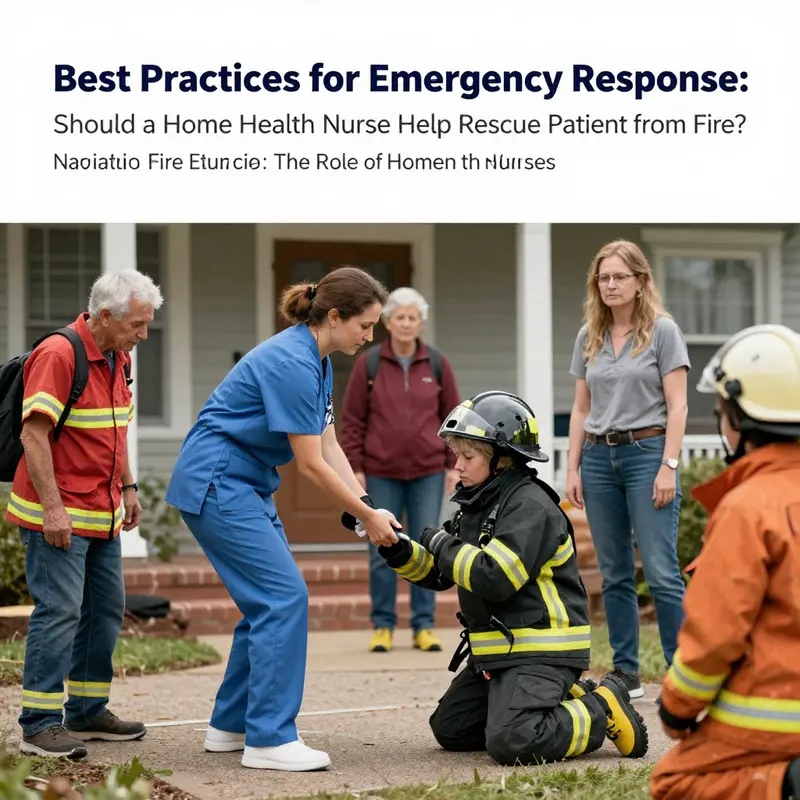
Assess, Act, and Account: a practical approach to fire emergencies for home health nurses
Home health nurses enter private environments to provide essential care. Those environments vary greatly. Fires can start without warning. When a fire occurs, a nurse faces two duties at once: protect the patient and protect themselves. This chapter explains how to balance those duties. It shows how to decide whether to attempt a rescue. It also outlines actions to prepare for, perform, and document safe responses that prioritize survival and reduce harm.
First, the critical rule: personal safety cannot be sacrificed for the sake of heroism. A nurse who becomes a second victim cannot help the original patient or others. That principle guides every decision in a fire. It does not remove responsibility to assist. Instead, it frames the form that assistance must take. Quick, calm assessment is essential. Size up the fire, smoke, heat, exit routes, and the patient’s mobility. Use the RACE concept as a mental checklist. Rescue comes first if you can safely remove the patient. Sound alarm and call emergency services immediately. Contain the fire by closing doors if that is possible and safe. Evacuate to a safe area and await professional firefighters.
Deciding whether a rescue is safe requires a rapid risk assessment. Ask these questions in seconds: Is smoke dense or minimal? Is the fire near the patient or contained in another room? Is the primary exit clear? Can the patient walk, shuffle, or be carried without undue delay? Are oxygen tanks, electrical equipment, or flammable materials present? If any answer raises a major hazard, do not attempt a carry-out rescue. Instead, move the patient only if you can do so without prolonged exposure to smoke or flames. Close doors to slow smoke spread and call 911. Provide instructions to the patient or family by voice or gesture, guiding them to the safest area or the best exit.
Preparation before an emergency reduces ambiguity during a crisis. Learn the home layout on your first visit. Identify all exits, alternative routes, and meeting places outdoors. Know where the patient’s mobility aids, wheelchair, walker, and oxygen are stored. Keep a simple evacuation kit ready. It might include a flashlight, phone charger, a list of medications, and a lightweight blanket. Help patients and caregivers build and practice fire plans. Drills are short and effective. Practice moving from bed or chair to a door, and then to an outdoor meeting point. When a patient cannot move independently, create a staged plan that identifies two people who can assist and specifies how to carry or slide the patient safely if needed.
Specific patient factors change the equation. Patients dependent on oxygen, ventilators, or feeding pumps present higher risks. Portable oxygen supports combustion. Electrical equipment can snag clothing or tubing. For these patients, prioritize moving them out of the immediate hazard zone while minimizing disconnection time. Plan ahead with the patient and family to identify battery backups and quick-disconnect procedures. For wheelchair users, determine whether the chair can fit through doors or whether the patient must be transferred to a blanket or sheet for carry. Practice simple lifts with a colleague during non-emergency visits when possible, and always adhere to safe body mechanics.
Environmental conditions matter too. In single-story homes, exits may be plentiful and quick. In apartment buildings, stairs and corridors can fill with smoke fast. In high-rise settings, do not use elevators during a fire. Elevators may fail or carry smoke. Stairwells can provide escape if not compromised. If escape is blocked, choose a safe room with a smokeless source of fresh air, ideally a balcony or a windowed room. Close doors and seal cracks with cloth to slow smoke infiltration. Signal for help with a phone or visible object, and stay low to the floor to reduce smoke inhalation.
Equipment and tools help but have limits. A fire extinguisher can control small fires if used by someone trained and not directly threatened by heat or smoke. Remember the PASS method for extinguishers: pull, aim, squeeze, and sweep. Do not attempt to fight fires that are spreading rapidly or producing heavy smoke. Personal protective equipment for nurses in the home rarely includes firefighting gear. Simple items like a damp cloth over the nose and mouth reduce smoke inhalation briefly. Avoid entering rooms with dense smoke or intense heat. Heat will transfer even if flames are out of sight.
Communication defines the response. Call emergency services early, and give clear, concise information. State the address, describe the fire and the patient’s condition, and note mobility limitations. If others are present, assign roles. One person should call 911 while another guides the patient. If you are alone, your priority is the patient first if you can safely move them, then the call. If you must retreat to safety, call immediately from the safe area. Use the phone to stay on the line with dispatch if instructed. Their guidance can be lifesaving.
Ethical and legal considerations influence decisions. A nurse’s duty of care does not require self-sacrifice. Professional standards emphasize acting within competence and scope. Agencies often provide explicit emergency protocols and training. Follow those policies. If a rescue attempt conflicts with agency rules, do not proceed alone. Instead, focus on actions that protect both you and the patient, such as calling for help, moving the patient to a safer area if feasible, and using available mitigation techniques. After the event, document every action precisely, including timing, conditions, and communications.
Training increases confidence and reduces risk. Regular emergency preparedness training prepares nurses to make fast, correct decisions. Learn basic fire safety techniques, evacuation strategies, and how to assist patients with specific medical devices. Participate in local drills when available. These skills help nurses recognize when rescue is viable and when containment and notification are safer. For nurses who work in communities with limited resources, connecting with local fire services for joint education improves real-world outcomes and clarifies rescue expectations.
After a fire, follow post-event responsibilities. Ensure the patient receives medical evaluation for smoke inhalation and burns. Arrange transport if needed. Notify your agency and complete incident reports promptly and thoroughly. Provide emotional support to the patient and family. Fires can be traumatic. Follow agency guidance on critical incident stress management. Seek employer support if you experienced harm or near-miss. Debrief with team members to identify what worked and what needs improvement, and update the patient’s emergency plan based on those lessons.
When to help directly and when to step back is not a binary rule. It is a judgment made at pace. The guiding principles are simple and strong: protect life where possible, avoid becoming a casualty, and call professionals when a scene exceeds safe limits. Preparation, quick assessment, clear communication, and adherence to policy make that judgment clearer. Acting decisively and within your scope maximizes patient safety and preserves your ability to continue caring for others afterward.
Home health nursing includes the duty to prepare patients for emergencies. Invest time in creating realistic evacuation plans. Teach family members and caregivers how to respond. Encourage the presence of basic safety equipment. Link patients to community resources for smoke detectors and other preventive measures. Training and planning reduce the need for split-second, hazardous choices.
For more detailed guidance on preparing yourself and your patients for emergencies, consider structured fire safety training that covers practical evacuation techniques and scenario planning. The field of emergency readiness offers useful courses and materials. One accessible resource is a concise training overview on fire safety essentials certification training that addresses key skills for rescue and evacuation.
When a fire occurs during a home visit, your choices matter. Choose actions that keep both you and the patient alive and able to seek professional rescue. Use the RACE framework, assess conditions rapidly, apply planned evacuation strategies, call emergency services, and document the outcome. These steps protect patients and preserve your ability to provide care in the future. For authoritative emergency preparedness guidance tailored to home healthcare providers, see the National Center for Home Health Care resource on emergency preparedness for home healthcare providers: https://www.nchhc.org/emergency-preparedness-for-home-healthcare-providers
Final thoughts
The responsibility of home health nurses during a fire emergency is undeniably complex. While their instinct may be to assist patients in danger, prioritizing safety is paramount. Each chapter of this exploration highlights critical aspects of their roles, emphasizing the necessity of adhering to established protocols and ethical guidelines. By understanding their responsibilities, nurses can better navigate emergencies, ensuring the well-being of both themselves and their patients in crises.