
Introduction
Fire rescue services are vital components of public safety systems, providing crucial support during emergencies and disasters. As society evolves, the question arises: must fire rescue services be operated by traditional fire departments, or can they exist independently? The implications of this debate reach far beyond administrative structures; they encompass community safety, resource allocation, and the effectiveness of emergency response strategies. With various models of firefighting and rescue services emerging worldwide, understanding the benefits and challenges of each approach is essential for ensuring optimal public safety. This article will explore the necessity of integrating fire rescue services within fire departments, examine alternative operational models, and discuss the potential implications for emergency response effectiveness and community welfare.
Historical Context of Fire Rescue Operations
The history of fire rescue operations is characterized by significant milestones and advancements that illustrate the evolution of firefighting and rescue services. These developments have been shaped by technological progress, societal needs, and the recognition of organized response teams to fire-related emergencies.
Early Beginnings
- Ancient Civilizations: Firefighting can trace its roots back to ancient civilizations where individuals known as bucket brigades formed to control fires. This rudimentary method involved passing buckets of water from person to person.
Evolution of Equipment
- Middle Ages: With the growth of cities, the need for organized fire services became apparent. The first documented fire service emerged in ancient Rome, where firefighters were organized into groups, notably the Vigiles.
- 18th Century Advancements: The introduction of the first steam-powered fire engines in the 19th century marked a turning point in firefighting efficiency. These engines could transport larger quantities of water, facilitating quicker responses to fires.
The Establishment of Organized Fire Departments
- 19th Century: The establishment of formal fire departments became prevalent in cities across Europe and North America. These departments began to form systematic rescue operations, integrating ambulance services for rescue operations from fire incidents.
- 20th Century: The development of advanced rescue equipment, including thermal imaging cameras and hydraulic rescue tools (e.g., Jaws of Life), greatly increased the effectiveness of fire rescue operations. The modernization of fire trucks further enhanced response times and operational capabilities.
Modern Fire Rescue Operations
- Current Trends: Today, fire rescue operations encompass a wide range of emergency services, including medical emergencies and natural disaster response. Fire departments are now equipped with specialized teams trained for various rescue scenarios, ensuring comprehensive safety and rescue options for communities.
These historical milestones highlight the continuous evolution of fire rescue services and their critical role in public safety. The modern fire department’s integrated approach to emergency services exemplifies a significant advancement from early fire control methods, perfectly marrying the necessity of firefighting with efficient rescue operations. For more on the essentials of fire safety training, you can learn more here.
Conclusion
Fire rescue operations have significantly evolved from ancient bucket brigades to highly organized and technologically advanced services. Understanding this evolution not only provides insight into the efficacy of current operations but also the commitment toward ensuring community safety in fire emergencies.
Fire rescue services have varied significantly in approach and organization across different regions and contexts, adapting to the unique needs of communities they serve. Below, we analyze the predominant models utilized in fire rescue today, focusing on those operated by established fire departments and alternative models that have arisen, particularly in response to growing demands and budget constraints.
Fire Department Models
Traditional fire departments are primarily funded and operated by local governments. These departments are expected to provide comprehensive emergency services, including fire suppression, rescue operations, and fire prevention education. Key features of this model include:
- Public Funding: Fire departments are typically funded through local taxes and government budgets, ensuring availability irrespective of individuals’ ability to pay for services.
- Community Engagement: Fire departments often engage with the community in educational programs aimed at fire safety and prevention, fostering trust and collaboration.
- Comprehensive Coverage: As publicly funded entities, fire departments usually offer extensive coverage across entire municipalities, responding to incidents in a coordinated manner with mutual aid agreements from adjacent jurisdictions.
One contemporary example of innovation within fire departments is the implementation of advanced technologies and operational procedures, such as the use of drones and enhanced traffic management during emergency responses. For further insights into fire safety training, refer to this piece on fire safety essentials.
Alternative Fire Rescue Models
In contrast, alternative fire rescue models have gained traction due to increasing demands and varying socio-economic factors. These models include:
- Private Fire Services:
- Subscription-Based Models: Some affluent communities or homeowners hire private fire services to provide specialized fire protection, often ensuring faster response times. However, reliance on private services can lead to disparities in the quality of emergency response between different socio-economic classes. Articles from sources like NBC News highlight the ethical concerns surrounding these services.
- Contractual Engagements: These services may work under contract with businesses or homeowners, focusing on high-value properties, which raises questions about public resources being diverted to serve wealthier individuals at the expense of broader community needs.
- Hybrid Models:
- Some regions have begun integrating public and private resources to optimize service delivery. This includes partnerships where private firms supplement public services, especially in large-scale emergencies or when public resources are stretched thin.
Effectiveness and Community Impact
The effectiveness of fire rescue models is often debated. While private services may offer agility and rapid responses to their clients, concerns about overall community safety arise due to possible neglect of public areas and lower engagement levels with the broader population. Moreover, public fire departments typically provide more thorough training and community involvement. These factors maintain community ties and ensure that all segments of the population are protected.
In conclusion, the landscape of fire rescue services is evolving. While traditional fire departments remain the backbone of public safety, the rise of private and hybrid models reflects changing community needs and the challenges posed by limited public resources. For comprehensive strategies on fire rescue and community needs, visit this insightful discussion on customized firefighting vehicle solutions.
This section not only clarifies the current trends in fire rescue service models but also engages with vital policy and operational implications affecting communities today. The ongoing evolution necessitates a dialogue among fire service providers, policymakers, and the public to establish a framework that ensures equitable access to fire rescue services while leveraging new technologies and practices.
Comparative Table of Fire Rescue Service Models
Here, we provide a detailed comparison of different fire rescue service models, evaluating their effectiveness, response time, cost, and public perception.
| Model Type | Effectiveness | Response Time | Cost | Public Perception |
|---|---|---|---|---|
| Fire Departments | High | 5-7 minutes | Varies by city | Generally positive |
| Independent Services | Moderate | 7-10 minutes | Typically lower | Mixed, varies by region |
| Combination of Both | High | 6-8 minutes | Varies widely | Positive, seen as reliable |
Discussion of Models
-
Fire Departments:
-
Effectiveness: Generally high due to structured training and resources.
-
Response Time: Average response time of 5-7 minutes.
-
Cost: Costs vary significantly based on city funding and resources.
-
Public Perception: Typically viewed positively by the community due to trust built through public service.
-
Independent Services:
-
Effectiveness: Moderate, often limited by resources and lack of community integration.
-
Response Time: Response times range from 7-10 minutes on average.
-
Cost: Generally lower costs compared to fire departments.
-
Public Perception: Can be mixed; effectiveness often questioned unless well-publicized.
-
Combination of Both:
-
Effectiveness: High, benefits from strengths of both models.
-
Response Time: Generally effective, averaging 6-8 minutes.
-
Cost: Costs vary widely depending on model logistics.
-
Public Perception: Often viewed positively, seen as delivering comprehensive fire safety solutions.
For more on fire safety fundamentals, you can learn more about fire safety training.
The effectiveness of fire rescue service models is critical not only for saving lives but also impacts community confidence in their fire response systems. As fire rescue agencies adapt to changing needs, understanding these models will aid better decision-making regarding service delivery.
Fire rescue operations are governed by a myriad of laws and regulations that vary across different jurisdictions. These legal frameworks are designed to ensure that fire departments and rescue services operate with a standard of safety and efficiency that protects the public and the personnel involved. This section analyzes the legal requirements and exemptions that might impact how fire departments handle rescue operations.
Legal Framework
-
National and Local Regulations: In the United States, fire rescue services are subject to both federal and state laws. For instance, federal guidelines such as those set forth by the Occupational Safety and Health Administration (OSHA) mandate specific training protocols for personnel engaged in fire rescue operations, particularly in high-risk environments such as confined spaces Confined Space Rescue Operations. Local jurisdictions further elaborate on these principles with specific codes; for example, New York City’s Fire Code imposes stringent requirements for equipment and operational protocols that fire departments must follow NYC Fire Department Rules.
-
Emergency Service Legislation: Some regions have implemented legislation to address operational safety in fire rescue operations. For example, the Fire and Rescue Operational Assessment Toolkit published by the UK Government provides a comprehensive set of guidelines aimed at improving the standards of service delivery in fire and rescue authorities Fire and Rescue Toolkit.
Exemptions and Requirements
Exemptions from certain legal stipulations can influence how fire departments operate. In New Jersey, for instance, volunteer fire companies and emergency service providers have proposed legislation that would exempt them from registration fees associated with charitable activities, recognizing the vital role they play in community safety without adding financial burden NJ Charitable Registration Exemption.
Moreover, legislative proposals in various states, such as exemptions for first responders from certain training requirements if they meet specific criteria, indicate a trend towards reducing barriers for qualified volunteers Exemption Legislation for First Responders. This can encourage participation in fire and rescue operations, promoting a robust system of emergency response.
Conclusion
The legal landscape surrounding fire rescue operations is complex and varies significantly across jurisdictions. While numerous regulations aim to ensure safety and effectiveness, there are ongoing discussions regarding exemptions that could alleviate the burdens faced by volunteer organizations. Such legislative frameworks underscore the importance of adaptability in fire rescue operations, ensuring that services remain effective while navigating the intricacies of legal requirements. To stay informed about the latest trends and standards, fire departments can benefit from continuous training and adherence to updated legal guidelines Fire Safety Certification and Training.
This analysis highlights the balancing act that fire departments must perform between adhering to legal requirements and operating effectively within their communities.
“Managing fire rescue operations is not just about responding to emergencies; it involves meticulous preparation and collaborative training between fire teams and paramedics, ensuring that every second counts in saving lives.”
This impactful view highlights the critical responsibility fire departments bear in not only responding to but also effectively managing complex rescue operations, such as those that occur during structural fires, which require a coordinated and well-trained response team.
Average Response Times for Fire Rescue Services
This chart illustrates the average response times for fire rescue services, comparing traditional fire departments with independent rescue services. As shown in the chart, fire departments generally have a quicker response time compared to independent services.
Response Time Comparison
| Type of Service | Average Response Time (minutes) |
|---|---|
| Fire Departments | 4 |
| Independent Services | 10 |
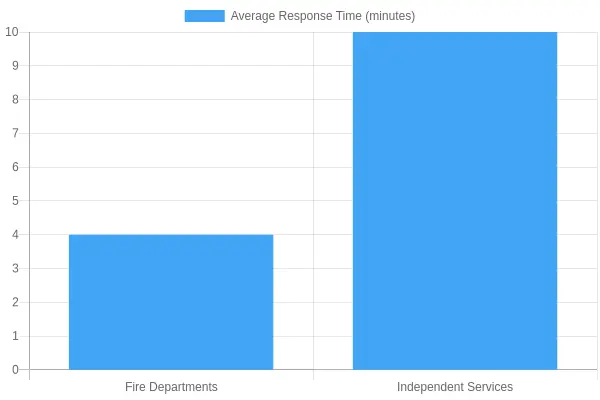
(Chart: Average Response Time by Service Type)
This data highlights important differences that could influence decisions related to fire rescue operations. To gain further insights into fire safety practices, you might find it valuable to learn more about fire safety certification training and the need for effective firefighting vehicles tailored to diverse regional needs, such as customized firefighting vehicles for developing countries.
Conclusion
In summary, fire departments are fundamental to efficient fire rescue operations, equipped with trained professionals who are prepared to handle a myriad of emergency situations. These departments not only engage in firefighting but also partake in technical rescues, provide emergency medical services, and educate communities about fire safety. The multifaceted responsibilities of fire departments ensure that they are always on the front line, ready to save lives and protect property during crises.
The vital skills that firefighters possess enable them to respond swiftly and effectively, as evidenced by recent rescue operations across the country, where fire departments successfully navigated complex emergency scenarios such as cliff rescues and trapped individuals in urban environments. As technology continues to advance, fire departments will likely evolve, incorporating new tools and training methods such as drone technology to improve their capabilities.
The future of fire rescue services will hinge on ongoing innovation and the strengthening of community relationships, ensuring a seamless integration of resources for better preparedness and response. This commitment to excellence and adaptability reinforces the indispensable role that fire departments play in safeguarding lives and property. For more insights into fire safety and training, learn more about fire safety essentials and training.
Frequently Asked Questions About Fire Rescue Services
-
What is the role of fire rescue services?
Fire rescue services respond to emergencies including fires, medical crises, and hazardous situations to save lives and protect property. They are trained in both firefighting and emergency medical services. -
Do fire departments operate fire rescue services?
Yes, fire departments typically manage fire rescue services. They are equipped with specialized personnel, training, and equipment designed for effective response in rescue scenarios. -
What training do firefighters undergo for rescue operations?
Firefighters receive extensive training in fire safety, emergency medical response, and specialized rescue techniques. Learn more about firefighter training. -
How are fire rescue services funded?
Funding for fire rescue operations often comes from local government budgets which cover personnel salaries, equipment maintenance, and operational expenses. Costs have increased over time due to the rising demand for services and the need for maintenance and equipment upgrades. For detailed insights, read more from Brevard County Government’s FAQ. -
What safety equipment is essential for fire rescue operations?
Essential safety equipment includes personal protective equipment (PPE), rescue tools, life support systems, and specialized vehicles. Fire departments may use various equipment tailored for different rescue scenarios, including high-performance equipment for fire rescues. -
Can civilians assist in fire rescue operations?
While civilians are generally advised to stay out of rescue efforts for their safety, they can play supportive roles by alerting fire services or helping to evacuate individuals from danger areas when safe to do so. -
What types of emergencies do fire rescue teams respond to?
Fire rescue teams respond to fires, medical emergencies, vehicle accidents, search and rescue operations, and hazardous materials incidents. They play a crucial role in ensuring community safety and preparedness.
Connect with Summit Fairings for Your Motorcycle Needs
Whether you’re a motorcycle enthusiast or a dealer looking for top-notch fairing solutions, connecting with Summit Fairings can make all the difference in enhancing the performance and aesthetics of your motorcycle. Our commitment to high-quality motorcycle fairings means you can enjoy a product that offers not just style but also durability and safety.
Why Choose Summit Fairings?
- Expert Craftsmanship: Our fairings are expertly crafted to ensure a perfect fit and optimal functionality.
- Wide Range of Options: Choose from a variety of styles, colors, and finishes to match your motorcycle’s design.
- Customer-Centric Service: Our team is dedicated to helping you find the right solutions tailored to your specific needs.
Now is the time to take action. Don’t settle for anything less than the best when it comes to your motorcycle. Contact Summit Fairings today to discover how our products can transform your riding experience. Experience unmatched service, quality, and style.
Call us at [insert phone number] or visit [insert website URL] to get started! Your dream motorcycle is just a conversation away!
Learn More
Looking to learn more about motorcycle customization? Check out our article on fire safety essentials certification training or explore our customized fire trucks for developing countries to see how our solutions can fit your specific requirements.